Best Off-Grid Solar Kit for a Boat
Many boat owners dream of the freedom that comes with extended cruising, quiet anchorages, and reduced reliance on noisy generators or shore power. The reality, though, is that keeping your boat powered reliably can be a constant headache, especially when you're far from the marina. From charging your electronics to running essential navigation equipment and keeping the fridge cold, finding a silent, sustainable energy source is paramount. This comprehensive guide is designed to cut through the confusion and help you identify the best off-grid solar kit for your unique boating lifestyle, ensuring you have reliable power wherever your adventures take you.
Why Off-Grid Solar is Essential for Your Boat
Ah, the open water! There’s nothing quite like the tranquility of a secluded cove or the thrill of sailing under a clear sky. But let’s be honest, that tranquility can quickly be shattered by the drone of a gasoline generator, and the thrill can turn to anxiety if your essential electronics start to blink out. This is where off-grid solar truly shines for boaters, offering a silent, reliable, and environmentally friendly alternative to traditional power sources.
The Allure of Silent, Sustainable Power
Imagine waking up to the gentle lapping of waves against your hull, rather than the clatter and fumes of a generator sputtering to life. That’s the dream off-grid solar delivers. For those of us who cherish the peace of nature, whether anchored in a remote bay or simply enjoying a quiet evening at the dock, the silence of solar power is priceless. It allows you to truly immerse yourself in the marine environment without contributing noise pollution or carbon emissions, a huge win for both your serenity and the planet.
Beyond the quiet, there’s the sheer independence. When you’re relying on solar, you’re not dependent on finding shore power connections or lugging jerry cans of fuel for a generator. Your power source is literally overhead, constantly replenishing your batteries as long as the sun is shining. This newfound autonomy means you can venture further, stay longer, and worry less about your power budget. It’s about more than just electricity; it’s about a lifestyle of self-sufficiency and freedom that many of us crave when we head out on the water. Plus, in the long run, the savings on fuel and marina hookup fees can really add up, making it a sound financial investment for any long-term boater. For a deeper dive into the economics, check out our guide on Off-Grid Solar Cost for a Boat.
Overcoming Marine Environment Challenges
Now, let’s be realistic. Boating isn't always smooth sailing, and neither is setting up an off-grid solar system on the water. The marine environment is famously harsh. You've got constant exposure to saltwater spray, intense UV radiation, relentless wind, and the inevitable vibrations and movement that come with being on a vessel. Not to mention the limited space! These aren't minor inconveniences; they are significant factors that demand careful consideration when selecting components for your off-grid solar kit.
Most standard residential solar equipment simply isn’t designed to withstand these conditions. Saltwater is notoriously corrosive, capable of eating through metal components and degrading electrical connections in no time. UV rays can prematurely age plastics and sealants, leading to cracks and leaks. And those beautiful waves? They translate into constant jostling, which can stress mounting hardware and wiring if not properly secured. This is why when we talk about the "best" off-grid solar kit for a boat, we’re really talking about systems engineered specifically for durability and resilience in this unique and challenging setting. You need robust, marine-grade components that are built to last against nature's relentless forces.
Decoding the Core Components of a Marine Solar System
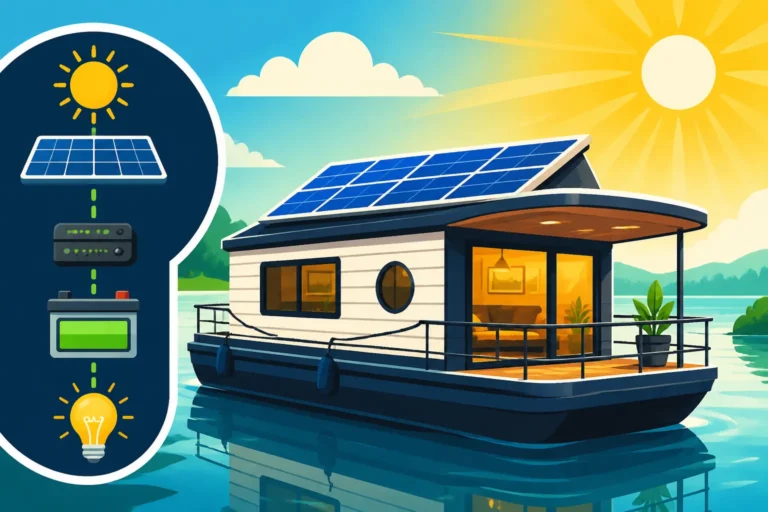
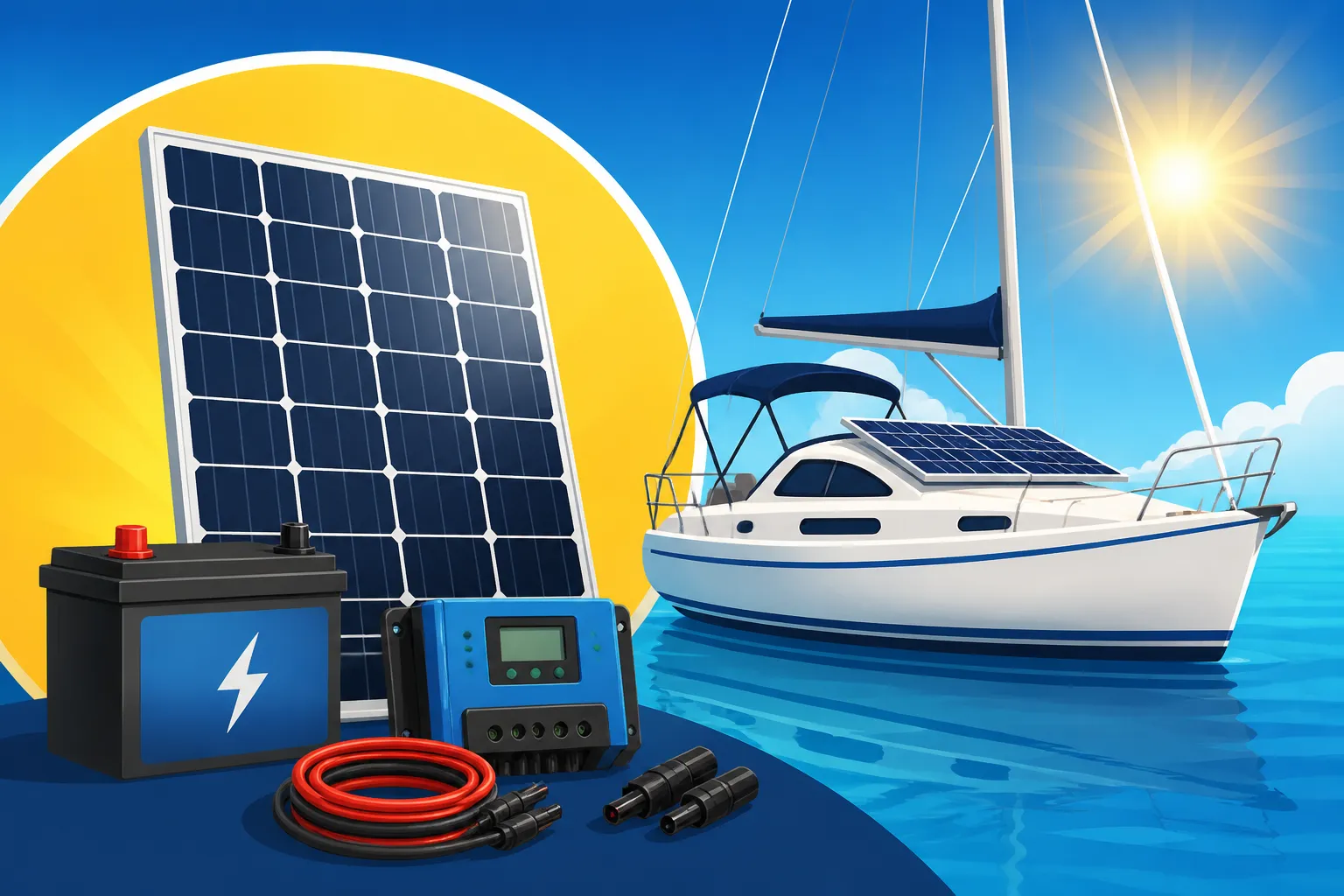
Just like a boat has its essential parts – the hull, the engine, the rudder – an off-grid solar system for marine use is made up of several critical components that work in harmony. Understanding each piece is key to building a reliable and efficient power system that won’t leave you adrift in the dark. It’s not just about slapping some panels on deck; it's about a carefully integrated system designed for maximum performance and longevity on the water. For a general overview, our article on Off-Grid Solar System Components Explained is a great resource.
Solar Panels: Your Energy Harvesters on the Water
The solar panels are your primary energy source, converting sunlight into electricity. On a boat, space is always at a premium, and the panels need to be able to withstand the elements. This means you’ll often be looking at different panel types than what you'd see on a rooftop.
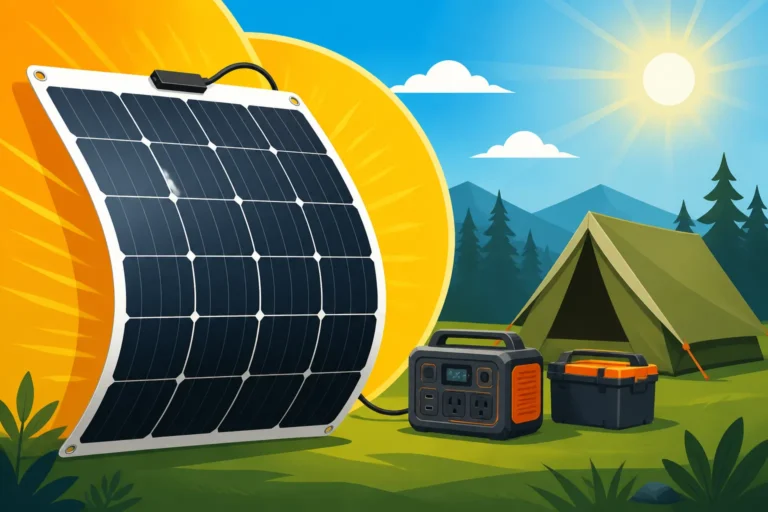
You typically have a few choices here: rigid, semi-flexible, and fully flexible panels. Rigid panels, often framed in aluminum and protected by tempered glass, are the most efficient and durable, offering the best power output per square foot. However, they are heavy, bulky, and require robust mounting, often on davits, arches, or fixed racks, which can be challenging on smaller vessels or those with complex deck layouts. Semi-flexible panels, often made with a less rigid backing, can conform slightly to curved surfaces and are lighter. They’re a good compromise for many boaters, offering decent efficiency without the full weight and rigidity of traditional panels. Then there are fully flexible panels, which are incredibly lightweight and can be glued directly to deck surfaces or even rolled up and stored. While they offer unparalleled versatility and ease of installation, their efficiency is generally lower, and they can be more susceptible to heat degradation, especially if not well-ventilated underneath. The choice often comes down to available space, deck configuration, and how much power you actually need.
Batteries: The Heart of Your Off-Grid Power
If solar panels are the muscles, the batteries are definitely the heart of your off-grid system. They store the energy generated by your panels so you can use it when the sun isn't shining, like at night or on cloudy days. Without a robust battery bank, your solar system is essentially useless after dusk.
For marine applications, you’re almost certainly looking at deep-cycle batteries, designed to be discharged and recharged many times over their lifespan. Historically, lead-acid batteries (like flooded or AGM) were the norm. They are relatively inexpensive upfront, but they are heavy, have limited usable capacity (you shouldn’t discharge them below 50%), and have a shorter cycle life. More and more boaters are now turning to Lithium Iron Phosphate (LiFePO4) batteries. While they come with a higher initial price tag, LiFePO4 batteries offer significant advantages: they are much lighter, have a higher usable capacity (up to 80-100%), charge faster, and boast a dramatically longer lifespan, often thousands of cycles. This means fewer replacements and a better long-term return on investment. If you're pondering the choice, our article comparing LiFePO4 vs Lead-Acid Batteries for Off-Grid can help clarify the decision. When considering the Cost of an Off-Grid Solar Battery Bank, the long-term value of LiFePO4 often outweighs the initial cost. For guidance on specific brands, check out Best Off-Grid Solar Batteries.
Charge Controllers and Inverters: The Brains and Brawn
These two components are the unsung heroes, managing the flow of power and converting it into a usable format for your appliances.
The charge controller is like the system's brain. It regulates the voltage and current coming from your solar panels, ensuring your batteries are charged efficiently and, more importantly, safely. Without a charge controller, your panels could overcharge your batteries, severely damaging them and potentially creating a fire hazard. There are two main types: PWM (Pulse Width Modulation) and MPPT (Maximum Power Point Tracking). MPPT controllers are more advanced and significantly more efficient, especially in varying light conditions, as they can extract more power from your panels. This extra efficiency often makes them well worth the higher cost for marine applications, where every watt counts.
The inverter is the brawn, transforming the DC (direct current) electricity stored in your batteries into AC (alternating current), which is what most of your standard boat appliances and electronics use (like your microwave, laptop charger, or coffee maker). You’ll want a pure sine wave inverter for sensitive electronics, as modified sine wave inverters can damage them or cause them to run inefficiently. Sizing your inverter correctly is crucial; it needs to be able to handle the peak wattage of all the AC devices you plan to run simultaneously. Remember that surge power is important, especially for starting motors in appliances like refrigerators or water pumps. Finding the Best Off-Grid Solar Inverters will depend on your specific power needs.
Precisely Sizing Your Boat's Off-Grid Solar System
This is arguably the most crucial step in putting together your perfect off-grid solar kit for a boat. Get this wrong, and you’ll either be constantly running out of power or paying for a system that’s far larger and heavier than you actually need. Sizing isn't just a numbers game; it's about understanding your lifestyle on the water and building a system that reliably supports it, come rain or shine. For a comprehensive overview, our guide on How to Size an Off-Grid Solar System offers excellent foundational knowledge.
The Critical Load Analysis for Marine Vessels
Before you even think about panels or batteries, you need to know exactly how much power you're going to use. This involves performing a thorough load analysis, which can feel a bit like detective work. Go through every single electrical device on your boat – lights, navigation equipment, radio, fridge, freezer, water pump, charging ports for phones and laptops, even that electric kettle you can't live without. For each item, you need to determine its wattage and how many hours per day you typically use it.
It's not enough to just list them; you need to calculate the daily watt-hours (Wh) for each. For example, a 60-watt cabin light used for 4 hours a day consumes 240 Wh. Your fridge, while only drawing power intermittently, might cycle on and off throughout the day, so estimating its total daily consumption is key. Don't forget parasitic loads – those small draws from electronics that are always "on," like stereos or monitoring equipment. Being brutally honest about your energy consumption is vital. Many boaters underestimate their usage, especially if they plan to live aboard full-time or spend extended periods away from shore power. Our article on How to Calculate Daily Energy Usage provides a great starting point for this often-overlooked step. A simple spreadsheet can be your best friend here! For specific appliance sizing, consider guides like How Many Batteries to Run A Refrigerator.
| Appliance | Wattage (W) | Avg. Daily Use (Hrs) | Daily Watt-Hours (Wh) |
|---|---|---|---|
| Cabin Lights (LED) | 10 | 6 | 60 |
| Refrigerator (12V) | 40 | 12 (duty cycle) | 480 |
| Laptop Charger | 60 | 2 | 120 |
| Phone Charger | 10 | 4 | 40 |
| Water Pump | 100 | 0.5 | 50 |
| Navigation GPS | 15 | 8 | 120 |
| Total Daily Use | – | – | 870 Wh |
(Note: Refrigerator duty cycle is an estimate; actual usage varies based on ambient temp and fridge efficiency.)
Calculating Days of Autonomy for Peace of Mind
Once you have your total daily energy consumption, you need to think about how many days you want to be able to run your boat without any solar input. This is known as "days of autonomy," and it’s a critical factor, especially when sailing in areas with frequent cloudy weather or during winter months with shorter daylight hours. Imagine being stuck in a marina for days due to bad weather or simply wanting to spend a week anchored in a beautiful, remote spot with limited sun exposure. How much battery power do you need to bridge those gaps?
Most seasoned off-grid boaters aim for at least 2-3 days of autonomy. This means your battery bank should be large enough to supply your calculated daily energy needs for that many days without a charge. To determine your battery bank size, you'll take your total daily watt-hours, multiply it by your desired days of autonomy, and then factor in the usable depth of discharge for your chosen battery type (e.g., 50% for lead-acid, 80-100% for LiFePO4). For instance, if your daily usage is 870 Wh and you want 3 days of autonomy with LiFePO4 batteries (80% usable capacity), your calculation would look something like (870 Wh * 3 days) / 0.8 = 3262 Wh. This translates into a substantial battery bank. It's always better to slightly overestimate your needs here than to constantly worry about power.
Considering Future Expansion and Usage Patterns
No one's energy needs remain static, especially on a boat. You might start with just a fridge and lights, but soon you're dreaming of a watermaker, a more powerful stereo, or even an air conditioning unit. When sizing your initial system, it's incredibly wise to consider future expansion. While you don't need to build out a massive system for everything you might want, designing with expandability in mind can save you a lot of headaches and money down the line.
This means choosing components, particularly your charge controller and inverter, that have a bit of headroom. For example, if your current panel array needs a 40A MPPT charge controller, consider buying a 60A one if your budget allows. This way, if you add more panels later, you won't need to replace the controller. Similarly, if your inverter handles your current AC loads, but you know you might want to run a small washing machine in a few years, factor in that potential surge capacity. Think about your usage patterns too: are you a weekend warrior, a seasonal cruiser, or a full-time liveaboard? Your answer will significantly impact the required resilience and capacity of your system. Designing an expandable system from the outset is a smart move for any serious boater.
Navigating the Different Types of Off-Grid Solar Kits for Boats
Once you have a handle on your power needs, the next step is to figure out how you want to acquire your system. There isn't a one-size-fits-all answer, as various kits offer different levels of convenience, customization, and cost. Each approach has its merits and drawbacks, largely depending on your technical comfort level, budget, and specific boat requirements. To help you choose, our article on How to Choose an Off-Grid Solar System is a valuable resource.
Comprehensive Pre-Packaged Kits: Convenience vs. Customization
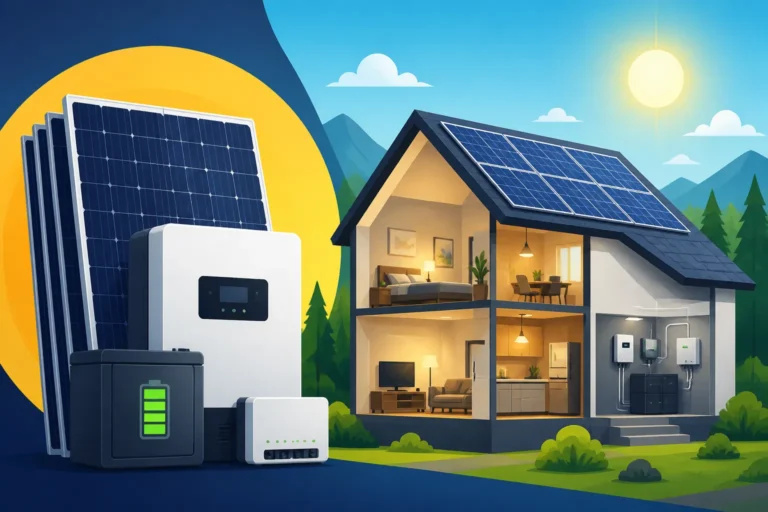
For many boaters, especially those new to off-grid solar, a comprehensive pre-packaged kit can feel like a godsend. These kits are typically assembled by reputable manufacturers and often include all the major components: solar panels, a charge controller, an inverter, and sometimes even batteries and necessary wiring. The biggest advantage here is convenience. The manufacturer has already done the compatibility work, ensuring all components are designed to work together seamlessly. This reduces the learning curve and eliminates much of the guesswork and stress associated with sourcing individual parts.
However, this convenience often comes with trade-offs. While many kits are high-quality, they might not offer the exact specifications or brand preferences you have. You might get an AGM battery when you prefer LiFePO4, or a PWM controller when an MPPT would be more efficient for your sailing conditions. You might also find that the panel sizes or mounting options aren't ideal for your boat's unique deck layout. While popular brands like Renogy and BougeRV offer excellent marine-specific kits, it’s crucial to scrutinize the individual components within the kit to ensure they meet your specific durability and performance needs for the harsh marine environment. It's often a balance between ease of purchase and getting a truly bespoke system.
DIY Component-Based Systems: The Freedom to Build Your Own
On the other end of the spectrum is the DIY component-based system. This approach involves selecting each component individually – panels, batteries, charge controller, inverter, wiring, fuses – and assembling the system yourself or with the help of a marine electrician. This route offers maximum customization. You get to choose the exact brands, models, and specifications that best fit your budget, space constraints, and power requirements. Want high-efficiency SunPower panels, a top-tier Victron Energy charge controller, a powerful Sol-Ark inverter, and robust Battle Born LiFePO4 batteries? Going DIY allows you to mix and match the absolute best for your vessel.
The freedom to build your own system can also be more cost-effective if you're willing to put in the research and labor. You can often find deals on individual components or phase your purchases to spread out the cost. However, this path demands a higher level of technical knowledge and confidence. You need to understand electrical principles, wiring diagrams, voltage drop calculations, and safety protocols. Compatibility between components is entirely your responsibility. If you're not comfortable with electrical work, it's highly recommended to consult with or hire a professional marine electrician for design guidance or installation. But for those who love to tinker and understand their boat's systems intimately, building your own can be incredibly rewarding. Our DIY Off-Grid Solar Installation Step by Step guide can be helpful for those considering this route.
Portable Solar Solutions for Auxiliary Power
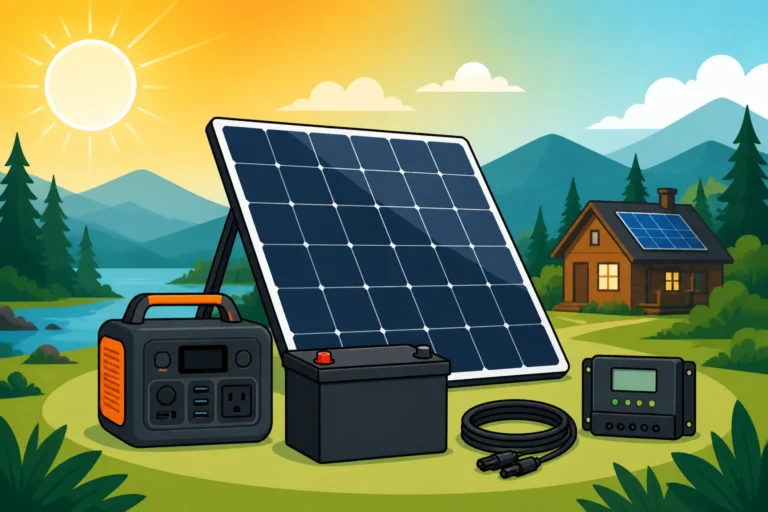
Sometimes, a full-blown off-grid system isn’t necessary, or perhaps you want to supplement your main setup. That's where portable solar solutions come in handy. These are typically smaller, all-in-one units that combine a battery, inverter, and charge controller into a single, often suitcase-style package, sometimes with integrated or attachable folding solar panels. They are fantastic for charging small electronics, running a few lights, or as an emergency backup.
Brands like Jackery, EcoFlow, and Bluetti offer excellent portable solar generators that are perfect for occasional use, shorter trips, or powering specific low-draw devices. You can set them on deck to charge during the day and bring them inside at night. They’re super easy to set up – just unfold the panels, plug them into the unit, and you’re generating power. They require no permanent installation, which is a huge bonus for renters, smaller boats, or those who want maximum flexibility. While they won't power a whole house off-grid, they are incredibly convenient for charging phones, tablets, laptops, drones, or running a small fan. For instance, a Jackery Explorer 1000 with a couple of SolarSaga 100W panels can keep your gadgets humming along nicely for a weekend trip, extending your time away from shore power and giving you that extra bit of power for creature comforts. They also make a great backup if your primary system ever goes down.
Key Factors to Consider When Choosing Your Boat's Solar Kit
Selecting the perfect off-grid solar kit for your boat is a balancing act, a careful consideration of various factors that extend beyond just wattage and amp-hours. It’s about ensuring the system integrates seamlessly with your vessel, withstands the brutal marine environment, and reliably meets your energy needs for years to come. Think about how you use your boat, where you typically sail, and what your priorities are.
Space, Mounting, and Durability on Deck
The first thing any boater considers is space. Deck space is precious real estate, always battling with lines, winches, hatches, and dinghies. How much unobstructed area do you truly have for solar panels? This will dictate the size and type of panels you can realistically install. Rigid panels are generally the most efficient but require solid, often custom-built, mounting structures like arches over the stern or dedicated racks that keep them clear of deck activities and shading. Flexible or semi-flexible panels offer more versatile placement options, conforming to curved cabin tops or even mounted directly onto biminis.
But placement isn't just about fitting them in; it’s about optimizing sun exposure and minimizing shading from masts, booms, sails, or radar arches. You also need to consider the durability of the panels themselves. Marine-grade panels should be designed to resist saltwater corrosion, UV degradation, and physical impacts from occasional falling gear or boarding. The mounting hardware also needs to be marine-grade stainless steel to prevent rust streaks and maintain structural integrity in rough seas. You definitely don’t want your panels flying off in a squall! Proper How to Install Off-Grid Solar Panels is paramount for longevity and safety.
Battery Chemistry and System Voltage Matching
We've touched on battery types, but it's worth reiterating the profound impact battery chemistry has on your overall system design and experience. LiFePO4 batteries, despite their higher upfront cost, are increasingly becoming the standard for marine solar due to their lighter weight, higher usable capacity, faster charging, and significantly longer lifespan. For a boat where weight distribution and longevity are critical, the benefits often far outweigh the initial investment. They also often come with integrated Battery Management Systems (BMS) for safety and longevity.
Matching your system voltage is another critical decision. Most smaller boats start with 12V systems, as many common marine electronics and accessories are designed for 12V DC. However, as your power needs grow, moving to a 24V or even 48V system becomes more efficient. Higher voltage systems experience less voltage drop over long wire runs, allowing for thinner wiring, and can often handle larger loads with greater stability. If you're planning a larger system to power significant AC loads like a microwave or small air conditioner, a 24V or 48V system is almost always the more appropriate choice, integrating seamlessly with more powerful inverters. Carefully consider your current and future needs when deciding on system voltage to optimize your Off-Grid Solar Cost by System Size.
Monitoring, Safety, and Future-Proofing
A well-designed off-grid solar system isn't just about generating and storing power; it's about managing and monitoring it safely and effectively. A good battery monitor, often a shunt-based system like those from Victron Energy, is essential. It provides crucial information like state of charge, current draw, and remaining run time, helping you manage your power consumption and protect your batteries from over-discharge. Without it, you're flying blind, guessing how much power you have left.
Safety features are non-negotiable on a boat. This includes proper fusing and circuit breakers for all circuits, an accessible system disconnect, and robust wiring practices to prevent shorts and fires. All wiring should be marine-grade, properly crimped, and secured to prevent chafing and corrosion. Grounding and bonding of your solar system must also comply with marine electrical standards to prevent stray current corrosion and ensure lightning protection.
Finally, think about future-proofing. Can you easily add more panels or batteries later if your energy demands increase? Are your components from reputable brands that offer good support and have readily available parts? Choosing a modular system or components with a little extra capacity from the outset will save you significant headaches and expense down the line. A Jackery portable power station, for example, can be an excellent small-scale addition that offers extra power for specific needs and can be upgraded easily when new models with greater capacity become available. For comprehensive installation information, refer to our Off-Grid Solar Installation Guide.
Installation Insights and Essential Maintenance for Marine Solar
Installing an off-grid solar system on a boat comes with its own unique set of challenges compared to a land-based system. The marine environment, limited space, and constant motion all demand a meticulous approach to installation and ongoing maintenance. Getting it right ensures safety, reliability, and longevity for your power independence.
Secure Mounting and Marine-Grade Wiring Practices
Mounting solar panels on a boat isn't just about bolting them down; it's about ensuring they can withstand gale-force winds, pounding waves, and constant vibrations. For rigid panels, this often means custom-fabricated stainless steel arches or sturdy deck mounts. These structures must be strong enough to support the panels without flexing or cracking, and the mounts themselves need to be through-bolted with backing plates to distribute the load and prevent hull damage. Flexible panels, while lighter, require careful adhesion to ensure they don't peel off, and consideration for airflow underneath is important to prevent overheating, which can reduce their efficiency and lifespan.
Wiring is another area where cutting corners can lead to disaster. All electrical wiring must be marine-grade (often tinned copper to resist corrosion), properly sized to minimize voltage drop over distances, and secured against chafing and movement. Connections should be made with high-quality crimp terminals, sealed with heat-shrink tubing to prevent moisture ingress, and protected within conduits or cable trays wherever possible. Running wires through bulkheads requires special attention to watertight seals to prevent leaks. Proper How to Wire an Off-Grid Solar System ensures both safety and performance. Don't forget proper fusing and breakers at critical points, especially close to the battery bank, to protect against overcurrents.
Combating Corrosion and Water Intrusion
The battle against corrosion and water intrusion is never-ending on a boat, and your solar system is no exception. Saltwater spray can quickly degrade exposed electrical connections, rust metal components, and compromise the integrity of junction boxes. This is why marine-grade components are so vital. When choosing equipment, look for IP-rated enclosures (e.g., IP67 for waterproof connections) and stainless steel hardware.
Regular inspections are key. Routinely check all electrical connections for signs of corrosion, such as green or white powdery build-up, and clean them with a wire brush and protect them with dielectric grease. Inspect panel frames and mounting hardware for rust or fatigue. Ensure all cable glands and penetrations where wires enter the boat or junction boxes are properly sealed and remain watertight. A small leak can lead to significant problems down the line, including electrical shorts, equipment failure, and even structural damage to your boat. Addressing these issues promptly is crucial for the longevity of your system and the safety of your vessel.
Routine Checks and Seasonal Preparations
Like any complex system on your boat, your off-grid solar setup requires regular maintenance to ensure optimal performance and extend its lifespan. This isn't just about fixing things when they break; it's about proactive care.
Routine Checks (Monthly/Quarterly):
- Panel Cleaning: Salt spray, bird droppings, and dust can significantly reduce panel efficiency. A simple rinse with fresh water and a soft brush or cloth can work wonders.
- Connection Inspection: Visually check all wiring connections, especially at the panels, charge controller, batteries, and inverter, for signs of corrosion, looseness, or damage.
- Battery Health: If you have lead-acid batteries, check electrolyte levels and top up with distilled water if necessary. For all battery types, monitor voltage and temperature. Ensure terminals are clean and tight.
- System Performance: Use your battery monitor to track charge/discharge cycles and ensure the system is operating as expected. Compare actual performance against your anticipated generation.
Seasonal Preparations (Before and After extended use/storage):
- Winterization: If laying up your boat for winter, ensure your batteries are fully charged (and kept that way if possible) and disconnect non-essential loads. Protect panels from heavy snow or ice if stationary in cold climates. Ensure all watertight seals are intact.
- Pre-Season Check: Before launching for the season, perform a thorough inspection of all components. Check for any damage that might have occurred during storage. Test the system under load to confirm everything is working correctly.
Adhering to a consistent maintenance schedule will not only prevent costly repairs but also give you peace of mind that your off-grid solar system will reliably power your adventures. For more detailed tips, you can explore guides like Off-Grid Solar Maintenance Costs.
Disclaimer
Please remember that the information provided in this guide is for general informational purposes only and is not a substitute for professional advice. Off-grid solar system design and installation involve electrical work which can be dangerous if not performed correctly. Always consult with a qualified marine electrician or solar professional to ensure your system is properly designed, installed, and compliant with all applicable safety standards and regulations.