How Many Batteries to Run A Well Pump
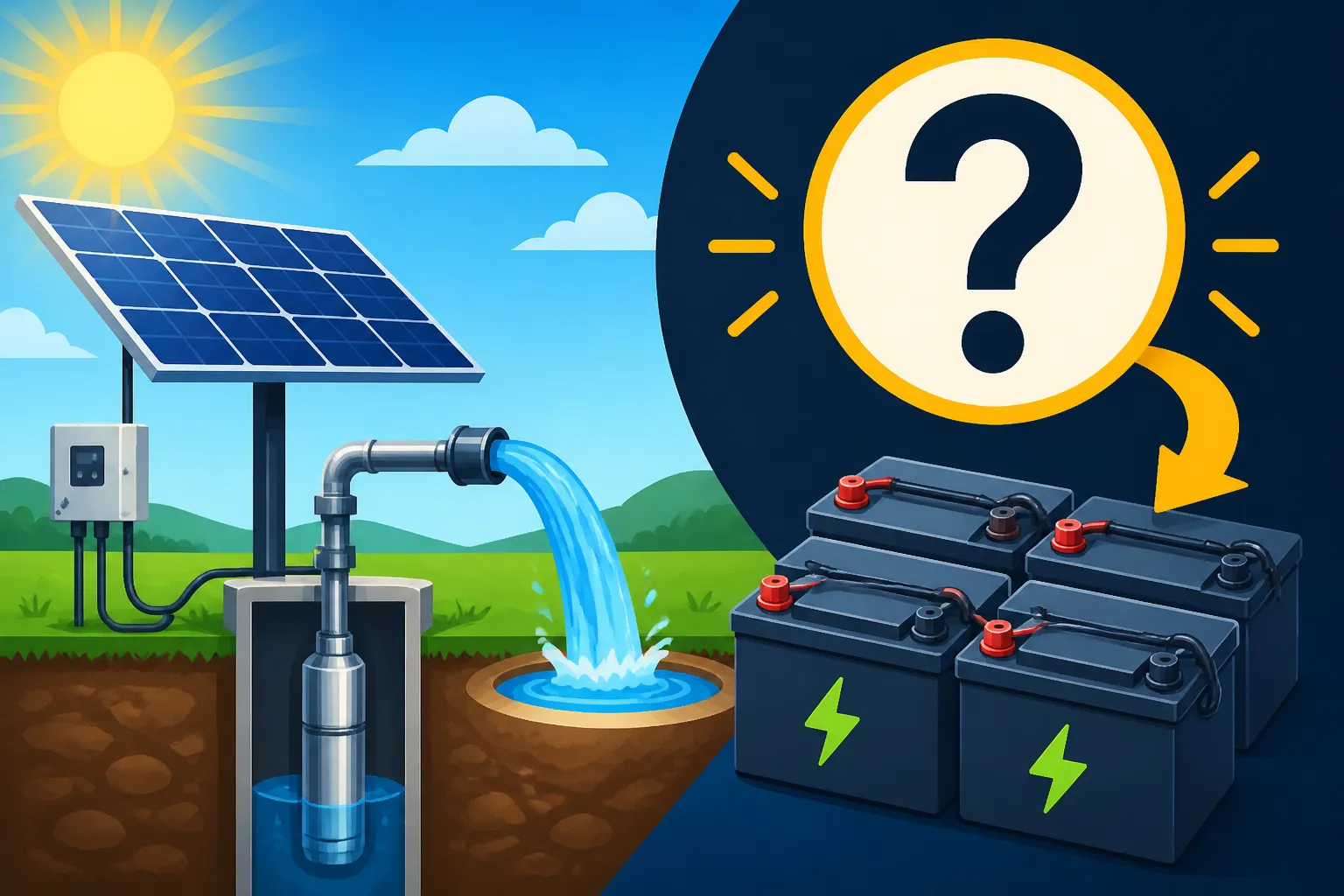
One of the biggest concerns for anyone venturing into off-grid living is, without a doubt, water. You've got your remote property, your dreams of self-sufficiency, but then the reality hits: how do you reliably power that well pump, day in and day out, without the grid? It can feel like a monumental hurdle, especially when you start looking at wattage numbers and battery capacities. This comprehensive guide is here to demystify the process, helping you understand exactly how many batteries you'll need to keep that well pump humming, ensuring your off-grid water supply is as robust as your independent spirit.
Understanding Your Well Pump's Power Needs
Before you can even begin to think about batteries, you need to get intimately familiar with the demands of your well pump. This isn't just about how much water it moves, but how it demands power. Many an off-grid hopeful has underestimated this crucial first step, leading to frustrating brownouts or systems that simply can't handle the load when the pump kicks on.
Peak vs. Running Watts
This is where many people get tripped up. Most appliances have a continuous running wattage, which is what they draw when they're operating steadily. But motors, especially powerful ones like those in well pumps, require a significant burst of power, often called "starting watts" or "surge watts," just to get going. This initial surge can be 2 to 7 times higher than the continuous running wattage, lasting for a split second or a few seconds.
For example, a submersible well pump that continuously runs at 1,000 watts might demand a staggering 3,000 to 5,000 watts for a brief moment at startup. If your inverter and battery bank aren't designed to handle this peak demand, your system will simply shut down, leaving you high and dry. Jet pumps, commonly used for shallower wells, also have a significant surge, though often less dramatic than their submersible cousins. Understanding this difference is paramount. You can usually find these specifications on the pump's data plate or in its manual. If not, a clamp meter can help you measure it directly from a running pump.
Daily Water Usage and Pump Run Time
Once you grasp the power demand, the next step is to figure out how long your pump needs to run each day. This boils down to your daily water consumption. It's easy to overlook just how much water we use, especially if you're coming from a grid-tied home with unlimited supply. In an off-grid scenario, every gallon counts, and every gallon pumped requires energy.
Start by estimating your daily water needs. A typical person might use 20-50 gallons per day for drinking, cooking, washing, and flushing. For a family of four, this could easily be 80-200 gallons. Add in laundry, dishwashing, gardening, or animal troughs, and those numbers can climb rapidly. Let's say your well pump delivers 5 gallons per minute (GPM). If your family uses 150 gallons a day, your pump needs to run for 30 minutes (150 gallons / 5 GPM = 30 minutes). This might seem like a small amount of time, but those 30 minutes of 1,000-watt running power, plus the constant surges, can add up quickly. A good way to track this is to perform an Off-Grid Solar Load Calculation Explained, which helps you itemize every appliance.
Remember that a pressure tank in your water system will store pressurized water, meaning your pump won't cycle on and off for every little demand. It will run less frequently but for longer durations to refill the tank. A larger pressure tank can reduce the number of pump starts per day, which can be easier on your inverter and batteries over the long haul. However, the total volume of water pumped daily remains the same, meaning the total energy expended is similar, just delivered in fewer, larger bursts.
Calculating Your Battery Bank Capacity for a Well Pump
Now that we know what your pump needs, let's translate that into actual battery capacity. This is where the rubber meets the road, and it's essential to be thorough to avoid costly mistakes or an unreliable water supply. This calculation will help you determine How Many Batteries for an Off-Grid System specifically tailored for your well pump.
Steps to Determine Amp-Hours Needed
Determining the exact amp-hours you need involves a few key steps, each building on the previous one. Don't rush this part; precision here means a reliable system later.
-
Gather Your Pump's Specifications:
- Running Watts: This is the continuous power your pump draws when operating. Let's use 1000W as an example.
- Starting/Surge Watts: This is the peak power demand for a brief moment. For our 1000W pump, let's assume a 3000W surge. While batteries contribute to this, the inverter's surge capacity is the primary factor here. However, robust batteries can maintain voltage better during surges, which helps the inverter perform.
- Operating Voltage: Is it a 120V or 240V AC pump? This affects the inverter choice, not directly the DC battery voltage, but it’s good to know.
- Daily Run Time: From our previous estimation, let's say 30 minutes (0.5 hours) per day.
-
Calculate Daily Watt-Hours Consumed:
- Multiply the running wattage by the daily run time.
- Example: 1000W * 0.5 hours = 500 Watt-hours (Wh) per day.
- It's important to remember this is just for the running portion. While the surge consumes extra power, it's so brief that for daily energy consumption purposes, we typically focus on the running wattage. However, your inverter must be sized for that surge.
-
Account for Days of Autonomy:
- How many days do you want your battery bank to be able to power your well pump (and other loads) without any sun or charging input? This is crucial for cloudy weather or emergencies. For a critical load like water, aiming for 2-3 days of autonomy is a common and wise choice.
- Example: If we want 2 days of autonomy for our well pump, we need 500 Wh/day * 2 days = 1000 Wh of stored energy just for the pump.
-
Consider Battery Chemistry and Depth of Discharge (DoD):
- Lead-Acid Batteries (AGM, Gel, Flooded): These typically have a recommended DoD of 50%. Discharging them deeper significantly shortens their lifespan.
- Lithium Iron Phosphate (LiFePO4) Batteries: These are fantastic for off-grid applications due to their ability to be discharged to 80-100% regularly without significant degradation. They also maintain a more stable voltage under load, which is excellent for pumps.
- Example (LiFePO4): If our total energy needed is 1000 Wh, and we can use 80% of the battery's capacity, we need 1000 Wh / 0.80 = 1250 Wh of actual battery capacity.
- Example (Lead-Acid): If we need 1000 Wh and can only use 50% of capacity, we'd need 1000 Wh / 0.50 = 2000 Wh of actual battery capacity. As you can see, the battery chemistry makes a huge difference in the nominal capacity you need to purchase. You can learn more about this in our guide on How Battery Choice Affects Off-Grid Cost.
-
Determine Your System Voltage:
- Common off-grid system voltages are 12V, 24V, and 48V. Higher voltage systems are more efficient for larger loads and longer wire runs, especially for pumps. Let's assume a 48V system for our example.
- To convert Watt-hours to Amp-hours (Ah), you use the formula:
Ah = Wh / V. - Example: 1250 Wh / 48V = 26.04 Ah.
- This is the usable amp-hours needed. To find the nominal capacity in amp-hours, you'd apply the DoD in reverse to this number, or simply apply it to the Wh total as done in step 4.
Final Calculation Formula:
(Daily Pump Watt-hours * Days of Autonomy) / (System Voltage * Usable Depth of Discharge Percentage)- Example (LiFePO4, 48V, 2 days autonomy):
(500 Wh/day * 2 days) / (48V * 0.80) = 1000 Wh / 38.4V = 26.04 Ah.
So, for this hypothetical 1000W pump running 30 minutes a day, you'd need a battery bank capable of providing around 26 Ah at 48V (which translates to roughly 1250 Wh of installed LiFePO4 capacity). For a deep dive into specific sizing, you might find our article on How to Size an Off-Grid Battery Bank incredibly helpful.
Practical Examples and Scenarios
Let's walk through a couple of real-world scenarios to put these calculations into perspective. This will help you visualize what it means for your specific off-grid dreams, whether you're powering a cozy cabin or a bustling homestead. Many popular brands like Renogy offer a range of batteries that can fit these scenarios, and you can often find competitive options on Amazon.
Scenario 1: Small Cabin with Minimal Water Use
Imagine a small hunting or weekend cabin where you primarily use water for cooking, washing dishes, and occasional hand showers.
- Pump: A small 1/2 HP jet pump, 120V AC.
- Running Watts: 750W
- Starting Watts: 1500W (for a very brief moment)
- Daily Usage: 50 gallons total for one person for short stays.
- Pump GPM: 3 GPM
- Daily Run Time: 50 gallons / 3 GPM = ~17 minutes (0.28 hours)
- Daily Watt-hours: 750W * 0.28 hours = 210 Wh
- Desired Autonomy: 2 days (for peace of mind during a cloudy weekend).
- Battery Type: LiFePO4 (80% DoD)
- System Voltage: 24V (a common choice for smaller cabins)
Calculation: (210 Wh/day * 2 days) / (24V * 0.80) = 420 Wh / 19.2V = 21.875 Ah
So, for this cabin, you'd need a 24V LiFePO4 battery bank with at least 22 Ah of usable capacity. If you were looking at 100Ah 12V LiFePO4 batteries (a common size), you'd connect two in series for 24V and 100Ah total nominal capacity. This would give you 2400Wh nominal, or 1920Wh usable, far exceeding your basic needs and providing plenty of buffer. This might seem like overkill, but it demonstrates how quickly basic needs can be met with modern battery tech.
Scenario 2: Family Homestead with Moderate Water Use
Now, consider a full-time family homestead with regular showers, laundry, dishwashing, and maybe a small garden.
- Pump: 1 HP submersible well pump, 240V AC.
- Running Watts: 1500W
- Starting Watts: 4500-6000W (a serious surge!)
- Daily Usage: 250 gallons for a family of four.
- Pump GPM: 6 GPM
- Daily Run Time: 250 gallons / 6 GPM = ~42 minutes (0.7 hours)
- Daily Watt-hours: 1500W * 0.7 hours = 1050 Wh
- Desired Autonomy: 3 days (critical for full-time living).
- Battery Type: LiFePO4 (80% DoD)
- System Voltage: 48V (ideal for larger, higher-power systems)
Calculation: (1050 Wh/day * 3 days) / (48V * 0.80) = 3150 Wh / 38.4V = 82.03 Ah
For this homestead, you'd need a 48V LiFePO4 battery bank providing at least 82 Ah of usable capacity. A common setup might involve a single 48V 100Ah LiFePO4 battery, like those offered by EG4, which would give you 4800 Wh nominal, or 3840 Wh usable, easily covering your 3 days of autonomy for the pump. It's crucial for such a system to consider How to Design for Year-Round Off-Grid Power to account for seasonal variations in sun.
Choosing the Right Batteries and System Voltage
The batteries are the heart of your off-grid system, especially when it comes to demanding loads like a well pump. Making the right choice here will dramatically impact the reliability and longevity of your water supply.
LiFePO4 vs. Lead-Acid for Well Pumps
This is probably one of the most significant decisions you'll make when putting together your off-grid power system. For well pumps, especially those with high surge demands, the choice of battery chemistry is more critical than ever.
Lead-Acid Batteries (AGM, Gel, Flooded):
- Pros: Generally lower upfront cost, widely available.
- Cons:
- Limited Depth of Discharge: As discussed, you can only safely use about 50% of their capacity, meaning you need to buy double the nominal capacity compared to LiFePO4 for the same usable energy.
- Voltage Sag: Under heavy loads, like a well pump starting, lead-acid batteries experience significant voltage drop. This "voltage sag" can cause your inverter to trip or struggle, even if its surge capacity is theoretically sufficient. It's a common frustration that can lead to unreliable pump operation.
- Shorter Lifespan: Typically 3-7 years, depending on care and cycling.
- Maintenance: Flooded lead-acid requires regular watering. AGM and Gel are sealed but still have similar DoD limitations.
- Temperature Sensitivity: Performance drops significantly in cold weather.
Lithium Iron Phosphate (LiFePO4) Batteries:
- Pros:
- High Usable Capacity: 80-100% DoD, so you buy closer to your actual energy needs.
- Stable Voltage: LiFePO4 batteries maintain a much more stable voltage even under high surge loads. This is a game-changer for well pumps, allowing your inverter to operate more efficiently and reliably without tripping.
- Long Lifespan: 10-15+ years or more, with thousands of cycles. While the upfront cost is higher, the Off-Grid Solar Payback Period Explained can often be shorter due to their longevity and performance.
- Lightweight and Compact: Easier to handle and install.
- Low Maintenance: Essentially maintenance-free.
- Temperature Performance: Better cold-weather performance than lead-acid, though still requires care in extreme cold (some have internal heating).
- Cons: Higher upfront cost.
For a critical load like a well pump, the stable voltage and deep cycling capability of LiFePO4 batteries often make them the superior choice, even with the higher initial investment. Brands like Battle Born and EG4 offer excellent LiFePO4 options known for their robust performance and reliability. Consider looking into the Cost to Replace Off-Grid Solar Batteries over the system's lifetime to see the long-term value.
The Importance of System Voltage
The voltage of your overall off-grid system (12V, 24V, or 48V) plays a significant role in efficiency, cost, and component selection, especially for larger loads like well pumps. For any substantial well pump, moving beyond 12V is highly recommended, and 48V is often the sweet spot for full-time off-grid living. Our guide on 12V vs 24V vs 48V: Which to Choose offers a complete breakdown.
-
12V Systems: Best suited for very small loads, like an RV or small van setup where the total power demand is low, and component costs for 12V are generally lower. However, for a well pump, even a small one, a 12V system will draw very high currents (amps) to deliver the necessary power. High current requires very thick, expensive wiring to prevent voltage drop and overheating. It also puts more strain on your inverter. You'll also be limited in how large your inverter can be if you stick with 12V.
-
24V Systems: A good mid-range option for cabins or smaller homes with moderate loads. Current draw is halved compared to a 12V system for the same wattage, allowing for thinner wires and better efficiency. Many charge controllers and inverters are readily available for 24V systems, offering a balance between cost and performance for loads up to a few thousand watts.
-
48V Systems: This is the preferred voltage for larger off-grid homes and anything with high-power appliances like well pumps, air conditioners, or washing machines. Current draw is a quarter of a 12V system for the same wattage. This means much thinner, less expensive wiring, higher overall system efficiency (less power lost as heat), and the ability to run larger, more powerful inverters. While 48V components (like batteries, which you'd often buy as 12V modules and wire in series) might seem more complex initially, the long-term benefits in performance, safety, and scalability are undeniable for a well pump application.
To power a well pump reliably, especially a 1 HP or larger pump, a 24V or, ideally, a 48V system is going to be far more robust and efficient. It minimizes voltage drop during that critical starting surge, giving your inverter the best chance to do its job without breaking a sweat.
Beyond Batteries: Optimizing Your Well Pump Solar System
While batteries are critical, they're just one piece of the off-grid puzzle. To truly run your well pump efficiently and reliably, you need to consider the entire system. Ignoring these other components and strategies is like having a powerful engine but a weak transmission – you'll never get the full performance.
Inverter Sizing and Surge Capability
You could have the most massive battery bank in the world, but if your inverter can't handle the well pump's initial surge, you're going to have issues. The inverter is the component that converts the DC power from your batteries into the AC power that your well pump uses.
Well pumps, as we've discussed, are notorious for their high starting wattage. A quality pure sine wave inverter is essential. Look for an inverter that has a continuous wattage rating above your pump's running watts, but more importantly, a surge rating that is at least 2 to 3 times higher than your pump's continuous running watts, ideally matching or exceeding the pump's actual surge requirement. This surge rating usually specifies how long it can sustain that higher wattage (e.g., 5000W surge for 10 seconds). Without this capability, the inverter will simply trip offline to protect itself, cutting power to your pump. Brands like Victron Energy and Sol-Ark are well-regarded for their robust inverters with excellent surge capabilities, perfectly suited for demanding loads. If you need more help with this, check out our guide on How to Size an Off-Grid Inverter, or specifically, What Size Inverter to Run A Well Pump.
Water Conservation and Storage
This might sound simple, but it's often overlooked. The less water you use, the less your pump needs to run, and thus, the less energy your batteries need to supply. Water conservation is your first line of defense in managing your off-grid power demands.
- Low-Flow Fixtures: Installing low-flow showerheads, toilets, and faucets can dramatically reduce your daily water consumption without sacrificing comfort.
- Water-Saving Habits: Taking shorter showers, turning off the tap while brushing teeth, and only running full loads in washing machines are simple changes that add up.
- Rainwater Harvesting: Collecting rainwater for non-potable uses like gardening or flushing toilets can significantly reduce the demand on your well pump and, by extension, your solar system.
- Adequately Sized Pressure Tank: A larger pressure tank means the pump cycles less frequently, running for longer periods to fill it up. While the total energy expended is similar, fewer start-stop cycles can be easier on your inverter and extend the life of your pump motor.
Every gallon of water you save is a Watt-hour of battery power you don't have to generate or store. This also impacts the overall How to Calculate Daily Energy Usage for your entire system, not just the pump.
Generator Backup and Hybrid Systems
Let's be realistic: off-grid living has its challenges. While solar is incredibly reliable, extended periods of cloudy weather, heavy snow covering panels, or unexpected high usage can leave your battery bank depleted. This is where a backup generator becomes an invaluable asset, especially for a critical load like water.
Many modern off-grid inverter-chargers can integrate seamlessly with a generator. These intelligent systems can automatically start your generator when battery voltage drops to a preset level, or when a large load (like your well pump) demands more power than the batteries can comfortably provide alone. Once the batteries are charged or the demand subsides, the generator shuts off. This provides a crucial safety net, ensuring you never run out of water. A generator can quickly top off your batteries, taking the pressure off your solar array during those sunless stretches. This is a common and practical approach to boost reliability for homes with high power demands. Exploring the Cost of Adding a Generator to Off-Grid Solar might reveal it's a worthwhile investment for peace of mind.
Using a hybrid system that combines solar with a generator backup is not a sign of failure; it's a sign of intelligent, realistic off-grid design. It provides redundancy and resilience, ensuring that essential services like running water are always available, regardless of weather conditions.
| Feature / Type | LiFePO4 Batteries | Lead-Acid Batteries (AGM/Gel) |
|---|---|---|
| Upfront Cost | Higher | Lower |
| Usable Capacity (DoD) | 80-100% (e.g., a 100Ah battery provides 80-100Ah) | ~50% (e.g., a 100Ah battery provides ~50Ah) |
| Voltage Stability | Excellent, minimal voltage sag under heavy load | Significant voltage sag under heavy load |
| Lifespan (Cycles) | Very long (3,000-10,000+ cycles) | Shorter (500-1,500 cycles) |
| Efficiency | Very high charge/discharge efficiency (95%+) | Lower charge/discharge efficiency (75-85%) |
| Weight & Size | Lighter and more compact | Heavier and bulkier |
| Maintenance | Virtually none | Low (AGM/Gel) to high (flooded) |
| Temperature | Good performance, some with low-temp cutoff/heat | Performance degrades significantly in cold |
| Best for Well Pumps | Highly Recommended (stable voltage, high DoD) | Less Ideal (voltage sag, lower usable capacity) |
Disclaimer
The information provided in this guide is for general informational and educational purposes only and is not intended as professional advice. Off-grid solar system design and installation can be complex and involve electrical hazards. Always consult with qualified professionals and adhere to all local codes and regulations when planning or installing your system.