How to Account for Cloudy Days
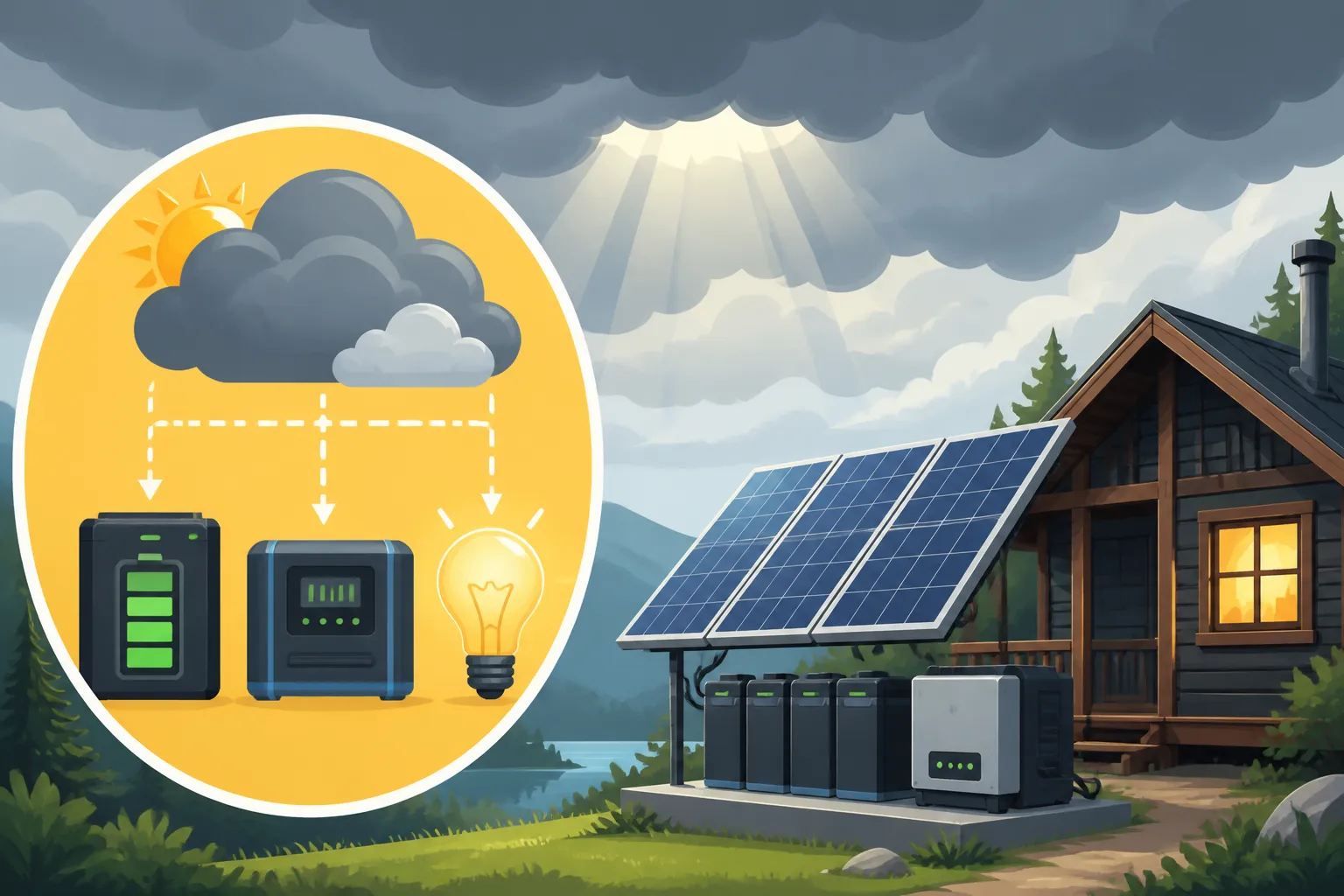
There’s nothing quite like the sinking feeling of watching a week of grey, overcast skies roll in when you’re relying on an off-grid solar system. You start to wonder if your lights will dim, your refrigerator will struggle, or if you’ll wake up to a dead battery bank. It’s a common, legitimate concern for anyone venturing into solar independence, because let's face it, the sun doesn't shine every day. This comprehensive guide is here to tackle that exact problem, showing you how to design and optimize your off-grid solar system to confidently weather those inevitable cloudy stretches.
The Harsh Reality of Cloudy Days and Off-Grid Solar
When you first dream of going off-grid with solar, images of endless sunny days powering your homestead often come to mind. But the reality, especially in many regions, is that nature doesn't always cooperate with our sunshine fantasies. Cloudy days aren't just an inconvenience; they're a fundamental challenge that must be thoroughly addressed in your system design.
The Myth of Constant Sunshine
Many newcomers to off-grid living or RV life envision their solar panels relentlessly pumping out power from dawn till dusk, every single day. The truth is, solar panel output is directly tied to a measurement called "solar insolation," which basically refers to the amount of solar radiation hitting a specific area over time. On a bright, clear summer day in Arizona, you might get 6-7 "peak sun hours" – the equivalent of the sun shining at its midday intensity for that many hours. But head to the Pacific Northwest in winter, or even just experience a typical Midwestern cloudy spell, and those peak sun hours plummet drastically. You might only get 1-2 peak sun hours, or even less, for days on end. This isn't just a minor dip; it's a significant reduction that can easily leave an inadequately sized system struggling to keep up. It’s a rude awakening when you realize your system, which hummed along perfectly under blue skies, can barely charge your phone during a prolonged overcast period.
Why Standard Sizing Falls Short
Many basic solar sizing calculators and kits operate on assumptions of average daily sunlight, which can be misleading for off-grid applications. They might calculate the number of panels needed based on your average daily usage and an average number of peak sun hours for your region. The problem is, "average" doesn't account for variability. An average might include a week of glorious sunshine followed by a week of heavy clouds, masking the fact that your system might be woefully underpowered for the latter.
For grid-tied systems, this isn't as critical because you can always draw power from the utility grid when solar production is low. But for an off-grid setup, there’s no safety net. If your standard sizing doesn't deeply consider these low-production days, you're essentially building a system destined for frustration, daily power rationing, or even complete outages during bad weather. It's why a robust off-grid design focuses not just on average needs, but on worst-case scenarios and ensuring you have enough buffer to ride them out comfortably. This crucial difference is often overlooked, leading to a system that looks good on paper but fails when you need it most.
Understanding Your Energy Needs on Cloudy Days
Before you can effectively plan for cloudy days, you absolutely must have an ironclad understanding of your energy consumption. It’s not just about what you use on a typical sunny day, but what you must have powered when the skies darken, and how much "extra" you might need to carry you through.
Daily Energy Consumption Load Analysis Refresher
The foundation of any successful off-grid solar system is a meticulous How to Do an Off-Grid Load Analysis. This means listing every single electrical device you plan to use, its wattage (how much power it draws), and how many hours per day you plan to use it. Don't just guess; grab the labels from your appliances or use a watt-meter to get accurate readings. Multiply the wattage by the hours of use to get daily watt-hours (Wh) for each item, then sum them up for your total daily energy consumption. For example, a 100-watt light bulb used for 5 hours is 500 Wh. A small, efficient refrigerator might use 600 Wh per day.
What many people fail to do, however, is to differentiate their energy usage between sunny and cloudy days. On a sunny day, you might run a blender for your smoothie, charge all your devices, and power up your workshop tools. But during an extended period of overcast skies, you might consciously scale back. This detailed understanding will allow you to prioritize and cut down on non-essential consumption when necessary, stretching your battery bank further. Remember, knowing your true daily energy usage is the first step in figuring out How Much Battery Capacity You Need.
Identifying Critical Loads for Low-Light Scenarios
Once you have your comprehensive load analysis, it's time to get brutally honest about your critical loads. These are the appliances and devices that absolutely must run, come rain or shine, even during a multi-day storm. Think about things like:
- Refrigeration: Essential for food safety.
- Water Pump: If you rely on a well, this is crucial for daily living.
- Medical Devices: CPAP machines, oxygen concentrators, or anything life-sustaining.
- Basic Lighting: For safety and function, especially in the evenings.
- Communications: Charging phones, laptops, or internet routers for emergencies or work.
Non-critical loads might include things like a microwave, hair dryer, electric kettle, or air conditioner. While lovely to have, these high-draw appliances can quickly deplete your battery bank on a cloudy day. Your strategy for cloudy days might involve simply not using these items, or severely limiting their use. By clearly distinguishing between "wants" and "needs," you can design your system to always cover the needs, with enough flexibility to occasionally power the wants when the sun allows. This prioritization is key to maintaining a functional off-grid life without constant anxiety during bad weather.
The Science Behind Reduced Solar Output
It's not magic, it's physics! Understanding why your solar panels produce less power on cloudy days helps you appreciate the challenges and informs better design choices. It’s more than just "less sun"; it’s about the type of light hitting your panels.
Direct vs. Diffuse Sunlight
Solar panels are most efficient when they receive direct sunlight – those clear, unobstructed rays that cast sharp shadows. This direct radiation carries the most energy and is what your panels are primarily designed to convert into electricity. When a cloud passes overhead, it doesn't just block the sun; it scatters the light.
This scattered light is called "diffuse" sunlight. Think of it like a giant lampshade over the sun. While diffuse light still contains energy, it's far less concentrated and less effective at stimulating the silicon cells in your solar panels. Modern monocrystalline solar panels, like those from Renogy, are generally quite good at capturing diffuse light compared to older technologies, but there's still a significant drop in output. Instead of getting 80-100% of their rated power, you might see them producing only 10-25% of their capacity on a heavily overcast day. This dramatic reduction means that even if your panels are physically large, their effective power generation capability shrinks considerably when the direct sun is hidden.
Impact of Cloud Cover Density and Duration
Not all clouds are created equal when it comes to solar production. A thin, high wispy cloud might only cause a minor dip in output, perhaps 10-20%. A moderately overcast sky, where the sun is still somewhat visible as a bright spot, might see a 50-70% reduction. But dense, thick storm clouds, especially those that linger for days, can slash your panel output by 80-90% or even more. This isn't just about a single hour of low production; it's about the cumulative effect.
The duration of cloud cover is arguably more critical than its intensity for off-grid systems. A single cloudy day is manageable if your batteries are topped off. Two or three days? That starts to test the limits of even well-sized battery banks. A full week of dark, stormy weather, which is not uncommon in many regions during certain seasons, can be truly challenging. This is why when you're considering How to Design for Year-Round Off-Grid Power, you must factor in the longest predictable stretch of poor weather in your location, not just an average. Ignoring this factor is where many off-grid systems fail, leaving people scrambling for backup power when they need it most.
Strategies for Off-Grid Solar Sizing for Cloudy Days
The good news is that you can absolutely design an off-grid system that handles cloudy days with grace. It requires a mindset shift from "just enough" to "more than enough," particularly in two key areas: energy generation and energy storage.
Oversizing Your Solar Array
This is perhaps the most straightforward strategy for mitigating the impact of cloudy days. Instead of sizing your solar panel array to meet your average daily energy needs under ideal conditions, you intentionally install more panels. The goal is to maximize the energy harvest even when the sunlight is weak and diffuse.
For instance, if your daily consumption is 5 kWh and you live in a sunny area with 5 peak sun hours, you might calculate that you need 1000 watts of panels (5000 Wh / 5 hours). However, if you anticipate cloudy periods where peak sun hours drop to 2, that same 1000-watt array would only produce 2 kWh, leaving you with a 3 kWh deficit. By oversizing your array to, say, 2500 watts, you could still generate 5 kWh even on a 2-peak-sun-hour day.
Oversizing does a few things:
- Captures More Diffuse Light: More surface area means more opportunity to catch the scattered photons.
- Faster Recharging: When the sun does peek through, or returns after a storm, a larger array can recharge your battery bank much faster, getting you back to full capacity quicker.
- Compensates for Seasonal Dips: It naturally helps with How Winter Affects Off-Grid Sizing by accounting for lower sun angles and shorter daylight hours.
You might aim to oversize by 25-50% for moderate climates, and even 100% or more for very cloudy or winter-heavy regions. When considering Best Off-Grid Solar Panels, look for panels with good low-light performance specifications, as these can make a marginal difference during overcast periods.
Increasing Your Battery Bank Capacity Days of Autonomy
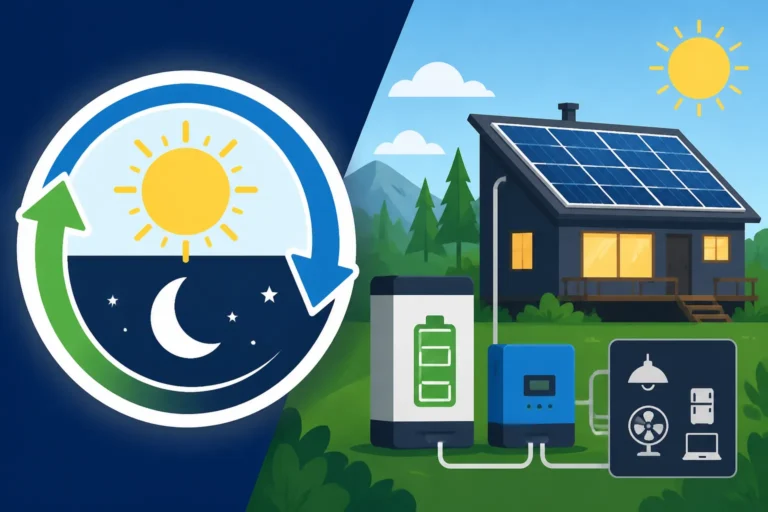
While oversizing your panels helps with generation, the real hero during extended cloudy spells is your battery bank. This is your energy reservoir, the critical component that stores electricity for when the sun isn't shining, whether it's night or a week-long storm. The concept of "days of autonomy" is paramount here. It refers to the number of days your battery bank can power your essential loads without any input from your solar panels or other charging sources.
Many basic systems are designed for 1-2 days of autonomy. For serious off-grid living, especially in areas prone to multi-day bad weather, you should aim for at least 3-5 days of autonomy, and even up to 7-10 days in extreme cases. To calculate this, you need your daily critical load consumption (in Wh or Ah) and the usable capacity of your battery bank. If your critical loads consume 3 kWh per day, and you want 3 days of autonomy, you need a battery bank with at least 9 kWh of usable storage. Remember, not all battery types allow 100% depth of discharge. Lithium iron phosphate (LiFePO4) batteries are excellent because they allow deep cycling without damage, giving you more usable capacity compared to lead-acid options. This is a key factor in How Battery Choice Affects Off-Grid Cost and overall system performance.
Investing in a robust battery bank is often the most significant expense in an off-grid system, but it's where you buy your peace of mind. Check out guides on How Many Batteries for an Off-Grid System and How to Size an Off-Grid Battery Bank to ensure you're making the right choices for your needs. Top brands for reliability and performance in this sector include Battle Born, EG4, and Victron Energy components.
Integrating Supplemental Power Sources
Even with oversized panels and a generous battery bank, there might be times when nature truly conspires against you. This is where supplemental power sources become invaluable. They act as your ultimate backup, ensuring you never run completely out of power, even during the most prolonged periods of low solar production.
The most common supplemental source is a generator. This could be a portable gasoline, propane, or diesel generator, or a larger standby unit. Propane generators are often preferred by off-gridders due to propane's long shelf life and cleaner burn compared to gasoline. A good generator can charge your battery bank directly via an inverter/charger, or power critical AC loads directly when your batteries are low. Having a generator allows you to "top off" your batteries during extended cloudy periods, effectively resetting your days of autonomy. You can explore topics like Cost of Adding a Generator to Off-Grid Solar to understand the financial implications.
Other options, though less common for small residential systems, include:
- Wind Turbines: In windy locations, a small wind turbine can provide a continuous charge, even at night or on cloudy days, complementing solar.
- Hydroelectric: If you have access to a reliable, year-round stream or river with sufficient flow and fall, micro-hydro can be incredibly consistent power, though initial setup can be complex and expensive.
The goal isn't to rely on these sources daily, but to have them available for those emergency situations or extended bad weather streaks where solar alone just isn't cutting it. Planning for How to Add a Generator to Your Design ensures you have a robust, multi-faceted approach to energy independence.
Practical Steps to Design for Cloud Coverage
Designing for cloudy days isn't just about throwing more equipment at the problem; it's about smart, deliberate planning that integrates your energy needs with realistic production capabilities. Let's break down the actionable steps.
Calculating Your "Cloudy Day" Energy Buffer
This step goes beyond your average daily load analysis. You need to identify your absolute minimum daily energy requirement (your critical loads) and then multiply that by your desired days of autonomy for cloudy conditions.
Let's use an example:
- Determine Critical Daily Load: After meticulously tracking, you find your critical loads (fridge, water pump, basic lights, device charging) consume 3,000 Wh (3 kWh) per day.
- Choose Days of Autonomy: You live in a region where multi-day overcast spells are common, so you decide on 4 days of autonomy.
- Calculate Total Usable Battery Capacity Needed: 3,000 Wh/day * 4 days = 12,000 Wh (12 kWh) of usable battery capacity.
Now, consider your battery type. If you're using LiFePO4 batteries, you can typically use 80-90% of their rated capacity. So, for 12 kWh usable, you might need a total rated capacity of about 13.3-15 kWh. If you're using lead-acid batteries (which you shouldn't discharge below 50% to maximize lifespan), you'd need a much larger bank – 12 kWh usable means a 24 kWh rated capacity. This demonstrates why battery chemistry significantly impacts How Much to Budget for Off-Grid Batteries.
Once you have your battery size, you then size your solar array to recharge that bank efficiently, even on those lower-production cloudy days. For instance, if you get 2 peak sun hours on a cloudy day and want to put 12 kWh back into your batteries, you'd need an array capable of producing 6,000 watts (12 kWh / 2 hours). That’s a significant array, highlighting the need to balance battery storage with generation, or embrace supplemental charging.
Adjusting Panel Tilt and Orientation for Winter/Low Sun
Panel placement isn't a "set it and forget it" deal, especially when you're anticipating less-than-ideal sun conditions. Your panel tilt angle plays a huge role in optimizing energy harvest.
- Year-Round Fixed Tilt: If you can't adjust your panels, a common compromise is to set the tilt angle equal to your latitude, sometimes with a slight adjustment (e.g., adding 5-10 degrees for better winter performance).
- Seasonal Adjustments: For serious off-gridders, manually adjusting panel tilt throughout the year can significantly boost winter and cloudy-day performance. In winter, when the sun is lower in the sky, a steeper tilt angle (latitude + 15 degrees or more) helps panels capture more direct sunlight. This also helps snow slide off, preventing further production losses.
- Orientation: Panels should generally face true south (in the Northern Hemisphere) for maximum annual production. However, in some scenarios, a slight east or west bias might be preferred if you have morning or afternoon critical loads that align with sun availability.
Proper panel mounting and careful consideration of shading are also vital. Even a small shadow on one cell can significantly reduce the output of an entire string of panels. Remember to review guides like Best Tilt Angle for Off-Grid Panels and How to Orient Off-Grid Panels for Winter for more detailed advice.
Choosing the Right Components for Reliability
The components you select are your system's backbone. During cloudy periods, when your system is stressed, cheap or incompatible components can quickly become weak links.
- Charge Controllers: Always opt for MPPT (Maximum Power Point Tracking) charge controllers over PWM (Pulse Width Modulation) for off-grid systems. MPPT controllers are significantly more efficient, especially in low-light conditions and when panel voltage differs greatly from battery voltage. They can extract up to 30% more power from your panels compared to PWM controllers, which is a huge advantage when every photon counts. Brands like Victron Energy and Outback Power make excellent, reliable MPPT controllers.
- Batteries: As discussed, LiFePO4 batteries are the gold standard for off-grid due to their long lifespan, high usable capacity, fast charging, and minimal maintenance. While the upfront Cost of an Off-Grid Solar Battery Bank is higher, their total cost of ownership is often lower than lead-acid due to their longevity. Look for reputable brands and ensure they have an integrated Battery Management System (BMS) for safety and longevity.
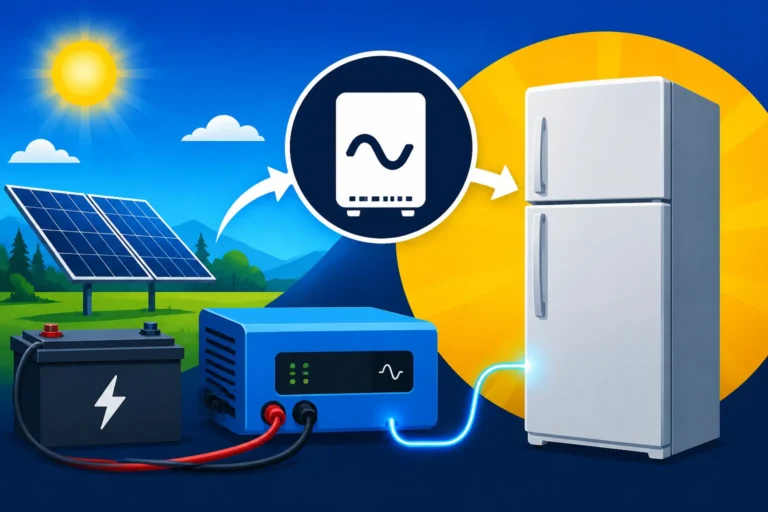
- Inverters: Choose a pure sine wave inverter to ensure clean power for all your electronics, especially sensitive ones. Oversize your inverter slightly beyond your maximum anticipated surge load to handle appliances like well pumps or refrigerators starting up. Renogy offers a range of reliable inverters and complete kits that can be a great starting point for many off-grid setups, easily found on platforms like Amazon.
When building or expanding your system, think about component compatibility. A well-integrated system, where all parts communicate effectively (e.g., Victron's ecosystem with a CCGX or Cerbo GX monitoring system), provides better performance and diagnostic capabilities, which are crucial during demanding cloudy stretches.
Real-World Considerations and Best Practices
Living off-grid with solar means constantly interacting with your power system and making adjustments. It's a dynamic relationship with your energy production and consumption, especially when the weather isn't ideal.
Seasonal Adjustments and Monitoring
Your off-grid energy needs and solar production are rarely static. Summer usually brings long, sunny days and potentially higher loads (like air conditioning), while winter means shorter days, lower sun angles, and often more demanding heating loads if you're using electric heat.
- Seasonal Shifting: Be prepared to shift your energy habits seasonally. In winter, you might rely more heavily on passive heating, wood stoves, or even reduce your critical loads further.
- Active Monitoring: A good battery monitor is your best friend. Devices like the Victron BMV-712 or SmartShunt provide crucial information about your battery's state of charge, current draw, and how much power your panels are actually generating. This real-time data allows you to make informed decisions: "My batteries are at 70% and it's been cloudy for two days; maybe I should run the generator for a few hours today instead of waiting for them to get critically low." Monitoring helps you understand How Many Watt-Hours You Use Per Day and how much is being replenished.
- Generator Maintenance: If you have a backup generator, ensure it's regularly maintained and has fresh fuel. You don't want to discover it won't start when your batteries are at 20% and a blizzard is raging outside.
This proactive approach allows you to anticipate challenges rather than react to crises, ensuring a smoother off-grid experience throughout the year.
The Role of Energy Efficiency
The absolute cheapest watt-hour is the one you don't use. This principle is magnified when you're dealing with the constraints of cloudy days. Every bit of energy you can save directly translates into longer battery life and less reliance on your solar panels or backup generator.
- LED Lighting: Switch all your lighting to energy-efficient LEDs. They consume a fraction of the power of incandescent or even CFL bulbs.
- Efficient Appliances: When purchasing new appliances, always prioritize energy efficiency. Look for Energy Star ratings. For refrigerators, consider highly efficient DC-powered models if your system architecture allows.
- Phantom Loads: Unplug devices not in use. Many electronics draw a small amount of power even when turned off or in standby mode. These "phantom loads" can slowly drain your battery bank over time.
- Insulation and Passive Design: In a cabin or home, good insulation, proper sealing, and passive solar design (windows facing south to let in winter sun) can drastically reduce heating and cooling loads, which are often the biggest energy consumers.
- Smart Usage: Develop habits like showering at midday (if you have an electric water heater) when solar production is highest, or doing laundry on sunny days.
Making your lifestyle and home as energy-efficient as possible is not just an eco-friendly choice; it's a critical strategy for making your off-grid solar system more resilient and less expensive to operate, especially during those challenging cloudy periods.
When to Seek Professional Help
While many aspects of off-grid solar can be tackled by a dedicated DIY enthusiast, understanding the nuances of system sizing for extreme weather, selecting compatible components, and ensuring electrical safety can become complex.
- Complex Scenarios: If you live in a region with unusually long cloudy seasons, or if your energy demands are high (e.g., a full-time family home with a well pump, multiple refrigerators, and modern electronics), getting professional advice can save you a lot of headaches and costly mistakes down the line.
- System Integration: Professionals can help design a fully integrated system where all components—panels, charge controller, battery bank, inverter, and backup generator—work together seamlessly and efficiently. They can also advise on advanced monitoring and automation features.
- Safety and Code Compliance: Proper wiring, grounding, and overcurrent protection are vital for safety. An experienced solar electrician can ensure your system meets all local codes and best practices, even for off-grid installations, which can sometimes have unique permitting requirements.
- Troubleshooting & Optimization: If you've built your system but are consistently running into power shortages during cloudy weather, a professional can diagnose issues, recommend upgrades, and optimize settings to improve performance.
Ultimately, investing in expert consultation for Off-Grid Solar System Design Basics or How to Size an Off-Grid Solar System can provide invaluable peace of mind, ensuring your system is robust, safe, and truly capable of powering your life no matter what the weather throws at you.
Disclaimer
The information provided in this guide is for general informational and educational purposes only. While we strive to provide accurate and up-to-date content, off-grid solar system design and installation can be complex and involve electrical hazards. Always consult with qualified professionals and adhere to local electrical codes and regulations before undertaking any solar project. Improper installation can lead to property damage, injury, or even death.