Best Off-Grid Solar for a Family of Four
Embarking on an off-grid lifestyle with a family of four can feel like a monumental task, especially when you think about powering everything from daily meals and laundry to homework and entertainment. The worry about running out of power, or not having enough to keep everyone comfortable, is a huge and understandable concern. This comprehensive guide will walk you through exactly what you need to consider to design and implement an off-grid solar system that reliably meets the diverse and often demanding energy needs of a busy family.
Understanding Your Family of Four's Energy Needs
When you're planning an off-grid solar system for a family, the first and most crucial step is to get a really good handle on your actual energy consumption. It's not just about the big appliances; it's about all the little things that add up throughout the day with multiple people living under one roof. Skipping this step is like trying to bake a cake without knowing how much flour you need – you're almost guaranteed to come up short.
Daily Appliance Usage Assessment
Let's be honest, a family of four typically means a lot more "stuff" drawing power than a single person or a couple. Think about your refrigerator, which is likely running constantly to keep groceries fresh for everyone. Then there's the washing machine, probably getting a workout a few times a week, if not daily, to handle clothes, towels, and bedding. Don't forget the dishwasher, microwave, toaster oven, and perhaps an electric kettle or coffeemaker that sees frequent use during busy mornings. Each of these appliances, even if used for short bursts, contributes significantly to your overall daily energy footprint.
Beyond the kitchen and laundry, consider lighting throughout your home. A family of four generally means more lights are on in more rooms for longer periods, especially during evenings when everyone is home. If you have a well pump for water or a septic system with an electric pump, those are often critical, high-draw items that need consistent power. It's really helpful to go through your daily routine and make a list of every single electrical item you use, noting how long it's on for. This detailed assessment is the foundation of determining your overall power needs.
Many appliances have labels indicating their wattage, but it’s often more useful to think in terms of watt-hours (Wh) per day, which accounts for how long an appliance runs. For example, a refrigerator might only draw 150 watts when its compressor is on, but it cycles on and off throughout the day, accumulating a substantial amount of watt-hours. Taking the time to perform an accurate How to Calculate Daily Energy Usage or Off-Grid Solar Load Calculation Explained is indispensable. This will prevent you from vastly underestimating your needs and ending up with a system that can't keep up, leading to frustration and potential battery damage.
Accounting for Kids and Digital Devices
In today's world, a family of four often means four times the digital devices. Laptops for remote work or school, tablets for entertainment, smartphones, gaming consoles, smart TVs, and Wi-Fi routers are all essential for modern living, and they all require power. Imagine a typical evening: two kids are on their tablets, one parent is watching TV, and the other is on their laptop. That's a simultaneous draw that can quickly add up, even if each individual device's consumption is relatively small. The cumulative effect of multiple charging cycles and constant usage needs careful consideration.
These devices aren't just used in short bursts; they often run for hours on end, especially in the evenings or on weekends. Plus, don't forget the occasional, but significant, power draw from things like vacuum cleaners, hair dryers, or power tools used for hobbies or chores. Even a simple electric toothbrush charger left plugged in contributes. It's easy to overlook these smaller items, but when you multiply them by four people, the demand grows substantially. Your off-grid solar system needs to be robust enough to handle these regular, everyday demands without leaving anyone in the dark or with a dead device.
It's also wise to consider the habits of children. They might not always remember to turn off lights or unplug chargers, leading to parasitic draws. Designing a system with a little buffer capacity for these real-world scenarios can save you a lot of headaches. Thinking about how many different devices might need charging simultaneously, or how many screens might be on at once, helps you gauge your peak demand. For more detail on estimating appliance power, check out our guide on How Much Solar to Run Lights And Electronics.
Seasonal Variations and Backup Planning
Off-grid living means you're at the mercy of the sun, and the sun isn't always reliable. The amount of sunlight you receive changes dramatically with the seasons. In winter, days are shorter, the sun is lower in the sky, and you might experience more cloudy or stormy weather. This means your solar panels will generate less power precisely when your family might need more – perhaps for indoor lighting earlier in the day, or for running a heater if you're not using alternative heating sources. Conversely, summer days offer abundant sunshine but might bring higher demand for fans or air conditioning.
Planning for these fluctuations is critical. You can't just size your system for the sunniest summer day and expect it to perform adequately in the depths of winter. You need to account for what are known as "days of autonomy" – how many days your battery bank can power your home without any new solar input. For a family, having a few days of autonomy is crucial to maintain comfort and safety during extended periods of bad weather. This often means oversizing your battery bank and potentially your solar array compared to what might seem necessary on paper for an average day.
This is also where backup power solutions come into play. A reliable off-grid system for a family often includes a generator, either a traditional fossil-fuel generator or a larger solar generator like a Jackery system. A generator provides that crucial safety net during prolonged cloudy spells or unexpected high demand, ensuring your batteries don't get dangerously low. Thinking about how much energy your family consumes on its highest-demand days (e.g., a cold, cloudy winter day with everyone home) is paramount for robust system design. Our article on How Many Solar Panels for Off-Grid Living provides further insights into sizing for varying conditions.
Key Components of an Off-Grid Solar System for a Family
Building an off-grid solar system for a family of four isn't about slapping some panels on a roof; it's about integrating several critical components into a harmonious, efficient power-generating machine. Each part plays a vital role, and understanding how they work together is key to a reliable setup.
Sizing Your Solar Panel Array
The solar panels are your energy collectors, the hardworking units that convert sunlight into usable electricity. For a family of four, you're likely looking at a substantial number of panels to generate enough power for consistent daily use, especially if you're planning on running larger appliances like a well pump, refrigerator, or even a washing machine regularly. The total wattage of your solar array directly dictates how much power you can generate on a sunny day.
To determine the right size, you need to revisit your detailed load assessment. Let's say your family's average daily energy consumption is around 10-20 kWh (10,000-20,000 Wh), which is a common range for an efficient off-grid family home. You'll then need to factor in your location's peak sun hours – the average number of hours per day your panels receive direct, strong sunlight. If you live in a region with 4-5 peak sun hours per day, a 5000-watt (5 kW) solar array would theoretically produce 20-25 kWh per day (5 kW * 4-5 hours), which could be a good starting point. However, you'll want to add a buffer for cloudy days, shading, and system inefficiencies.
Therefore, for a family of four, an array between 3,000 to 8,000 watts (3-8 kW) is often necessary, depending on your lifestyle and the efficiency of your appliances. If you aim for a larger buffer, or plan to expand your energy usage in the future, leaning towards the higher end of that spectrum is a smart move. When choosing panels, consider efficiency ratings and physical space available for installation. Higher efficiency panels generate more power in a smaller footprint, which can be advantageous. For a deeper dive, check out our guide on How to Size an Off-Grid Solar System.
The Critical Role of Battery Storage
While solar panels generate power during the day, your family needs electricity around the clock. This is where your battery bank comes in – it's your energy reservoir, storing excess solar power generated during the day for use at night, on cloudy days, or during peak demand periods. For a family of four, your battery bank is arguably the most critical component, as it provides the consistent, reliable power everyone depends on. Skimping here is a recipe for frequent power outages and frustrated family members.
Most off-grid family systems utilize deep-cycle batteries, with popular choices being LiFePO4 (lithium iron phosphate) or, less commonly now, lead-acid (AGM or flooded). LiFePO4 batteries offer a longer lifespan, deeper discharge cycles, and better efficiency, though they come with a higher upfront cost. Lead-acid batteries are cheaper initially but require more maintenance and have a shorter lifespan. For a family, the "set it and forget it" nature and longevity of LiFePO4 often make them the superior long-term investment.
Sizing your battery bank involves calculating your daily energy consumption and deciding on your desired "days of autonomy." For a family, aiming for at least 2-3 days of autonomy is highly recommended. If your family uses 15 kWh per day, and you want 3 days of autonomy, you'd need a battery bank capable of storing at least 45 kWh of usable energy. This is a significant amount of storage and will require multiple large batteries. For more detailed calculations, you can explore resources like How Many Batteries for an Off-Grid System or Best Off-Grid Solar Batteries.
Inverters and Charge Controllers
These two components act as the brains and heart of your off-grid solar system. The charge controller manages the power flowing from your solar panels to your batteries. It ensures your batteries are charged efficiently and, more importantly, prevents them from being overcharged, which can severely damage them. For a family-sized system with a larger solar array, a Maximum Power Point Tracking (MPPT) charge controller is almost always the way to go. MPPT controllers are more efficient than older PWM (Pulse Width Modulation) controllers, especially on cloudy days or when panel voltage varies, ensuring you squeeze every last watt out of your solar array.
The inverter is what converts the DC (direct current) power stored in your batteries into AC (alternating current) power, which is what most household appliances use. For a family home, you absolutely need a pure sine wave inverter. Modified sine wave inverters are cheaper but can damage sensitive electronics and cause motors to run inefficiently or overheat. The inverter's size (its wattage rating) needs to be capable of handling your family's peak power draw – that moment when multiple high-demand appliances (like a microwave, hair dryer, and a few lights) are all running simultaneously. If your inverter is too small, it will trip or fail under load.
A 5000-watt (5 kW) or even an 8000-watt (8 kW) inverter is often suitable for a family of four, depending on appliance choices and simultaneous usage habits. Some advanced inverters also function as inverter-chargers, meaning they can charge your battery bank from an AC source like a generator when solar isn't available, providing seamless backup power integration. Investing in a high-quality inverter from reputable brands like Victron, Sol-Ark, or Outback Power (see our Best Off-Grid Solar Inverters guide) ensures reliability and efficiency for your family's power needs.
Choosing the Right System Configuration
Deciding on the best off-grid solar setup for a family of four involves more than just picking components; it's about how those components are assembled and integrated into a cohesive, reliable system that fits your lifestyle and budget. There are different approaches, each with its own advantages and considerations.
DIY vs. Pre-Built Kits
One of the biggest initial decisions for many families considering off-grid solar is whether to tackle the installation themselves (DIY) or opt for a pre-built, turnkey kit. Both have their merits. A DIY approach, while potentially saving on installation costs, demands a significant investment of time, research, and a certain level of technical aptitude. You'll be responsible for selecting each component – panels, batteries, inverter, charge controller, wiring, and safety devices – and ensuring they are all compatible and correctly installed according to electrical codes. For a family, safety is paramount, so any DIY installation must be done meticulously, perhaps with an electrician checking your work. Our article on DIY vs Professional Off-Grid Solar Cost delves into this trade-off.
On the other hand, pre-built kits or professionally installed systems offer convenience and peace of mind. Many reputable brands offer comprehensive kits designed for various power needs, often with compatible components and detailed wiring diagrams. For a family that might not have the time or expertise for a full DIY build, these kits can be an excellent option. For larger family homes, hiring a professional solar installer ensures that the system is correctly sized, safely installed, and compliant with local regulations, though this comes with a higher upfront cost. Brands like Renogy and EcoFlow offer well-regarded kits and components that can simplify the process, though a full home system might still require professional oversight.
Ultimately, the choice between DIY and a pre-built solution for a family often boils down to balancing budget, technical skill, available time, and your comfort level with electrical work. If you choose to DIY, make sure you thoroughly understand How to Wire an Off-Grid Solar System and all safety protocols. A hybrid approach, where you source components and do some basic work but hire an electrician for critical connections and inspections, can also be a good middle ground.
System Voltage: 12V, 24V, or 48V for a Growing Family
The operating voltage of your off-grid solar system is a fundamental design choice that impacts efficiency, cost, and scalability. For a family of four, whose energy demands are typically higher than a small cabin or RV, system voltage is a particularly important consideration.
- 12V Systems: These are generally suitable for very small setups, like a basic RV or a tiny shed with minimal loads. For a family home, a 12V system is usually insufficient because higher power draws would require extremely thick (and expensive) wiring to prevent voltage drop and overheating. It's not typically recommended for primary family residences.
- 24V Systems: This is a step up and can handle moderate family loads. While better than 12V, a 24V system might still be pushing its limits if you have many high-wattage appliances or significant simultaneous usage. Wiring requirements are still heavier than 48V, but more manageable than 12V.
- 48V Systems: For a family of four with a full-time off-grid home, a 48V system is almost always the recommended choice. Higher voltage systems are significantly more efficient for larger power demands because they carry current at lower amperage, which means you can use thinner, less expensive wiring. This reduces material costs and makes the system safer by minimizing heat generation. Modern inverters and charge controllers are also often designed to operate most efficiently at 48V. As your family grows or your power needs expand, a 48V system provides the most robust and scalable foundation. Choosing How to Choose System Voltage wisely upfront can save you considerable hassle and cost in the long run.
Integrating Backup Power Solutions
Even the most robust solar system can face challenges, especially during extended periods of inclement weather, unexpectedly high usage, or component failure. For a family of four, having a reliable backup power solution isn't just a convenience; it's a necessity for maintaining comfort, safety, and continuity.
The most common backup for an off-grid solar system is a fossil-fuel generator (propane, gasoline, or diesel). When your battery bank gets low due to lack of sun, an inverter-charger can automatically start the generator, use its power to charge the batteries, and then shut down once they're replenished. This provides a critical safety net, ensuring your family isn't left without power during a prolonged winter storm or a week of cloudy skies. You'll want to size your generator to be able to quickly recharge your battery bank and/or directly power your critical loads.
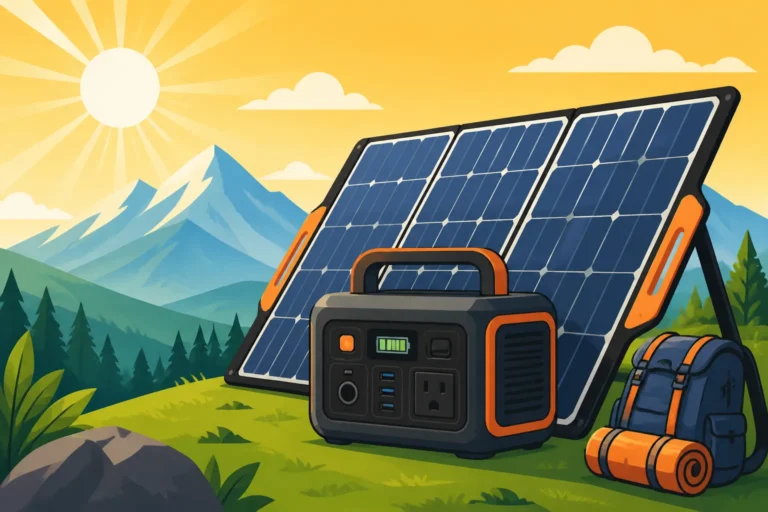
Another increasingly popular option, particularly for supplementing a larger system or for portable needs, is a high-capacity solar generator or portable power station. Brands like Jackery offer powerful units like the Jackery Explorer series that can be charged by their own portable solar panels or from your main off-grid system. These can be incredibly useful for smaller, critical loads during an outage or for individual family members to charge their devices without drawing from the main battery bank. For example, a Jackery Explorer 1000 or 2000 can keep laptops, phones, and even a mini-fridge running for hours, providing a localized backup that doesn't stress your primary system. This can also be a fantastic solution for powering outdoor activities or separate workshops on your property without requiring extensive additional wiring. Consider our guide on Best Solar Generators for Off-Grid for more options.
Having this layered approach to power – a robust solar array and battery bank, backed by a reliable generator, and potentially augmented by a portable solar generator – ensures that your family has continuous access to the electricity they need, no matter what nature throws your way.
Practical Considerations and Budgeting
Going off-grid with a family is a significant undertaking, and it's essential to approach it with realistic expectations regarding both the practical aspects of installation and the financial investment required. A clear understanding of these elements will help ensure a smooth transition and long-term satisfaction.
Installation Complexity and Costs
The complexity of installing an off-grid solar system for a family home is considerably higher than for a small RV or tiny cabin. You're dealing with substantial power requirements, which means a larger solar array, a sizable battery bank, and higher-capacity inverters and charge controllers. All of this necessitates robust wiring, proper grounding, and adherence to electrical codes, even if you're not connecting to the utility grid. For most families, especially if you're building a new off-grid home or converting an existing structure, involving qualified professionals is a wise investment. An experienced solar installer or electrician can ensure your system is designed safely, efficiently, and to code.
Installation costs can vary widely depending on whether you go the DIY route or hire professionals, the complexity of your home's wiring, and the specific equipment chosen. For a comprehensive family-sized system (think 5kW+ array, 20-40kWh battery bank), professional installation could add anywhere from $10,000 to $30,000+ to the equipment cost. This might seem steep, but it minimizes risks, ensures optimal performance, and often includes warranties and ongoing support. For those who choose to DIY, remember that while you save on labor, you'll still incur costs for tools, specialized equipment (like crimpers for battery cables), and potentially an electrician's consultation for critical connections or inspections. Don't underestimate the time and physical effort involved in lifting panels, running conduit, and securely mounting heavy batteries.
Beyond the core solar components, consider additional installation-related expenses such as racking for solar panels (ground mount vs. roof mount), conduit, breakers, fuses, disconnect switches, and any necessary upgrades to your home's electrical panel. Planning for Off-Grid Solar Installation Cost from the outset will prevent unwelcome surprises down the line.
Long-Term Maintenance and Scalability
An off-grid solar system, particularly one relied upon by a family of four, requires ongoing attention to ensure its longevity and reliable performance. While modern solar equipment is remarkably durable, it's not entirely maintenance-free. Solar panels need occasional cleaning, especially in dusty areas or if they accumulate leaves or snow, to maintain optimal energy production. Batteries, especially lead-acid types, require periodic checks of water levels and terminal cleanliness. Even maintenance-free LiFePO4 batteries benefit from monitoring their state of charge and overall health via a battery monitor.
Regular checks of wiring connections, inverter status, and charge controller readings are essential. Knowing Off-Grid Solar Maintenance Costs and what's involved can help you budget your time and resources. proactive maintenance helps identify potential issues before they become major problems, ensuring continuous power for your family. A well-maintained system will last much longer, maximizing your investment and providing years of reliable energy.
Thinking about scalability is also crucial for a family. Life changes, and so do energy needs. Perhaps you'll add more appliances, grow your family, or start a power-hungry hobby. Designing an expandable system from the beginning, such as oversizing your charge controller or inverter slightly, or leaving space for additional battery modules or solar panels, can save you money and headaches in the future. For example, if you initially install a 5kW array, but your inverter can handle 8kW, you have room to add more panels later without replacing the inverter. Similarly, building a battery enclosure that can accommodate more batteries than you initially install allows for easy expansion as your needs grow. This forward-thinking approach is critical for a family's evolving energy demands.
Budgeting for Off-Grid Living
Let's talk dollars and cents. The upfront cost of establishing an off-grid solar system for a family of four is a significant investment, often ranging from $15,000 to $50,000 or more, depending on system size, component quality, and installation method. This figure includes panels, batteries, inverter, charge controller, mounting hardware, wiring, and potentially a backup generator. While it's a substantial sum, it's essential to view it as an investment in energy independence and long-term savings. When considering How Much Does an Off-Grid Solar System Cost, remember that this initial outlay eliminates monthly utility bills and provides a hedge against rising energy prices.
To break it down, here’s a typical cost range for key components for a family-sized system:
| Component | Estimated Cost Range (USD) | Notes |
|---|---|---|
| Solar Panels (5-8kW) | $5,000 – $12,000 | Price varies by wattage, efficiency, and brand. |
| Batteries (20-40kWh) | $10,000 – $30,000 | LiFePO4 is more expensive upfront but lasts longer. |
| Inverter (5-8kW) | $2,000 – $7,000 | Pure sine wave, higher wattage, and integrated chargers cost more. |
| Charge Controller | $500 – $2,000 | MPPT controllers are more efficient and crucial for larger systems. |
| Mounting Hardware | $1,000 – $3,000 | Roof mounts are typically cheaper than ground mounts. |
| Wiring & Safety Gear | $500 – $2,000 | Conduit, breakers, fuses, disconnects. |
| Backup Generator | $1,000 – $5,000 | Optional, but highly recommended for a family. Jackery units are a good portable option. |
| Total Equipment | $20,000 – $61,000+ | This is for components only, before installation. |
Remember that these are averages, and specific needs and choices can shift these numbers. You can find more detailed cost breakdowns in our article on Off-Grid Solar Cost: Complete Breakdown. While the initial investment is significant, consider the long-term savings from not paying utility bills. For many remote properties, the cost of extending utility lines can easily rival or even exceed the cost of an off-grid solar system, making solar a highly cost-effective choice. Developing a realistic budget and understanding How to Budget for an Off-Grid Solar System are crucial steps toward achieving energy independence for your family.
Disclaimer
The information provided in this article is for general informational purposes only and does not constitute professional advice. Off-grid solar system design and installation can be complex and involve significant electrical hazards. Always consult with qualified and licensed professionals (electricians, solar installers) before making any decisions or attempting any installations to ensure safety and compliance with all applicable codes and regulations.