Pre-Built vs Custom Off-Grid Systems
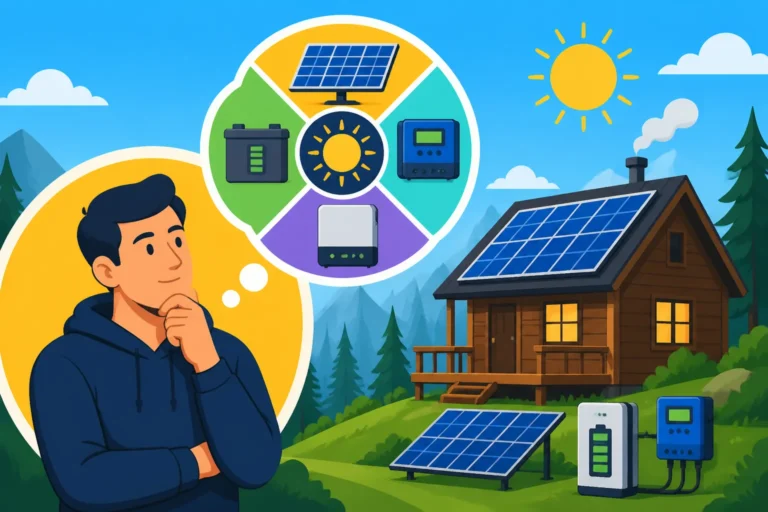
Deciding to go off-grid with solar power is an incredibly exciting step towards energy independence, but let's be honest, the sheer number of choices can feel overwhelming. Many folks find themselves staring at a crossroads: do you opt for the convenience of a pre-built solar kit that promises a streamlined setup, or do you take the plunge into a custom-designed system that offers ultimate flexibility? This comprehensive guide is here to walk you through the nitty-gritty of both options, helping you understand the pros and cons so you can confidently choose the best path for your unique off-grid dreams.
Understanding Pre-Built Off-Grid Solar Systems
When you're first dipping your toes into the world of off-grid living, the idea of a pre-built solar system can be incredibly appealing. It’s like buying a ready-to-assemble furniture kit – all the pieces are there, generally designed to fit together, and often come with instructions. But just like that furniture, there are nuances to consider.
What Defines a Pre-Built System
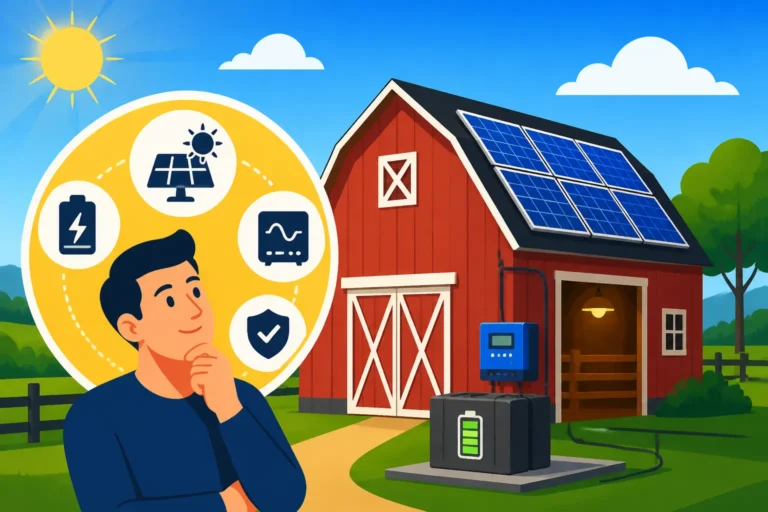
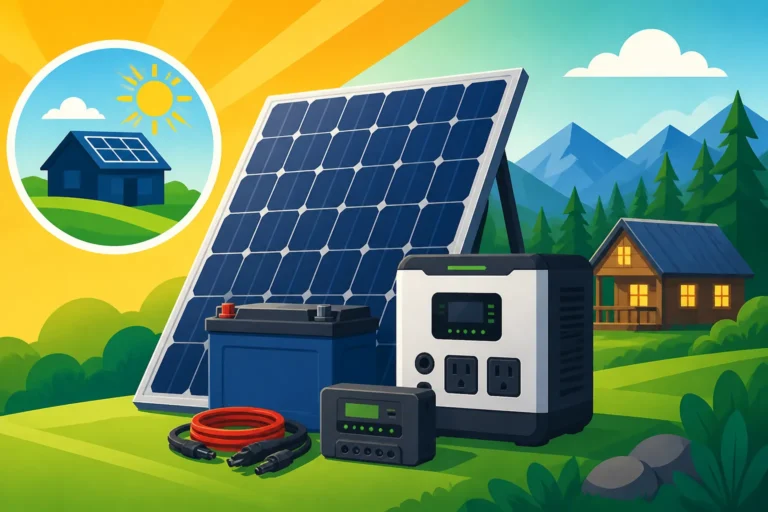
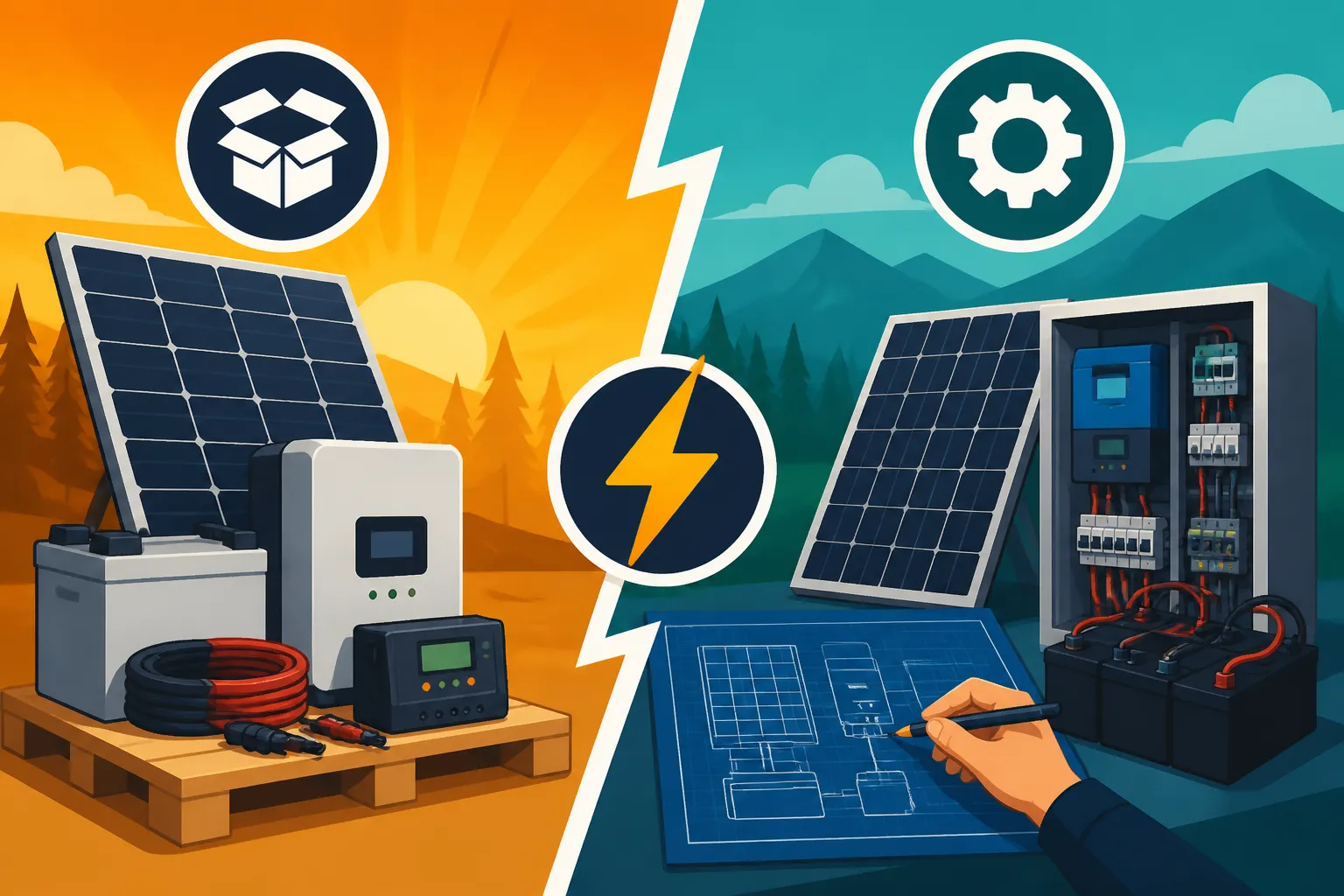
A pre-built off-grid solar system, often marketed as an "all-in-one" solution or a "solar kit," is essentially a package deal. It typically includes the main components you need: solar panels, a charge controller, an inverter, and batteries, all chosen and sized by the manufacturer to work together. Think of it as a curated collection where the guesswork of component compatibility has largely been removed for you. These systems are designed for a specific range of power needs, from small setups for a Cost of a 100W Off-Grid Solar System or a camper to larger ones for a tiny home. The convenience factor is huge here; you don't have to spend weeks researching individual components, calculating amperages, and worrying about whether your inverter will play nice with your battery bank. Brands like Renogy and EcoFlow often offer fantastic kit options that are popular among beginners or those with simpler power demands.
These kits come in various sizes and configurations, but the core idea remains the same: simplicity and ease of installation. They're often optimized for specific applications, whether it's powering a remote shed, providing backup power for critical appliances, or supporting a weekend RV adventure. The beauty lies in their "plug-and-play" or "near plug-and-play" nature, which reduces the complexity that can often intimidate newcomers to solar. While they might still require some basic electrical knowledge for safe connection, they drastically cut down on the advanced design expertise needed for a full custom build.
Advantages of Going Pre-Built
The benefits of a pre-built system often revolve around convenience and peace of mind. For starters, the design and engineering are already done. You don't have to perform complex calculations to figure out How to Size an Off-Grid Solar System or fret over matching your inverter's capacity to your peak load. The manufacturer has already done the heavy lifting, ensuring all components are compatible and sized appropriately for the advertised output. This saves a tremendous amount of time and reduces the potential for costly mistakes that can arise from mismatched components.
Another significant advantage is the simplified installation process. Many pre-built kits come with clear, step-by-step instructions, making them an excellent choice for DIY enthusiasts who might not have extensive electrical experience. Imagine getting a comprehensive manual instead of piecing together information from various forums and product sheets. Furthermore, troubleshooting can be easier because the system is designed as a cohesive unit. If an issue arises, technical support can often guide you through diagnostics for their specific product line. Warranty coverage can also be more straightforward, as you're dealing with one vendor or a limited set of vendors for the entire system, rather than trying to coordinate multiple warranties from different component manufacturers. This can be a huge relief when you're trying to figure out why your system isn't performing as expected.
Common Scenarios Where Pre-Built Shines
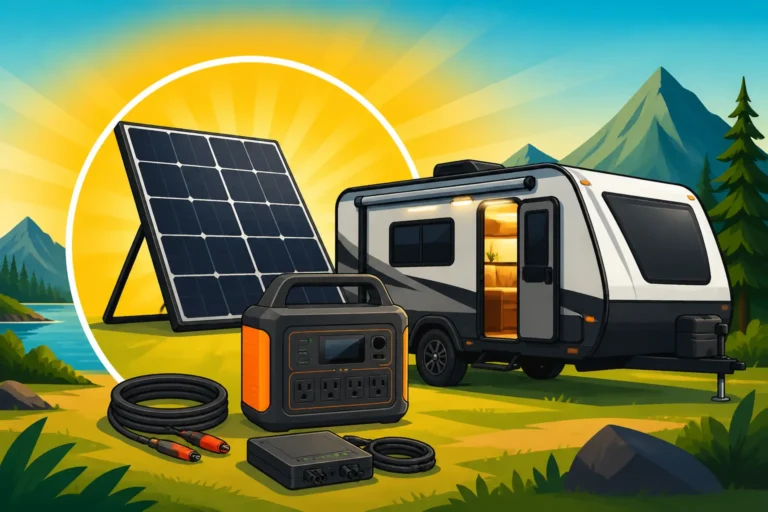
Pre-built systems really hit their stride in specific use cases where the convenience and standardized approach align perfectly with the user's needs. If you're outfitting a small cabin for weekend getaways, powering an RV for adventurous road trips, or setting up a reliable backup power solution for emergencies, a pre-built kit can be an ideal fit. For instance, a basic Best Off-Grid Solar Kit for an RV might include a few panels, a compact inverter/charge controller, and a couple of deep-cycle batteries, perfectly designed for mobile living.
They are also incredibly popular for beginners who are just getting their feet wet with off-grid power. The learning curve is significantly reduced, allowing users to gain practical experience without being overwhelmed by technical complexities. Similarly, if you have a tight timeline for installation, a pre-built system can get you up and running much faster than sourcing individual components and designing a system from scratch. For those looking for a temporary power solution or a system that doesn't need to expand significantly in the future, the cost-effectiveness and ease of deployment of a pre-built kit often make it the best choice. Even for specific tasks, like powering a small pump for a garden shed or providing lighting for a remote workshop, a pre-packaged solution might be all you need, offering a simple and efficient way to bring electricity where it's typically unavailable. Many smaller Best Solar Generators for Off-Grid Use, like those from Jackery, fall into this category, offering a compact, all-in-one power solution that’s ready to go right out of the box.
Diving into Custom Off-Grid Solar Systems
On the flip side, for those who crave ultimate control, precision, and scalability, a custom off-grid solar system is often the preferred route. It's the difference between buying a pre-made suit and having one tailor-made just for you – the fit and functionality are unparalleled.
The Essence of a Custom Build
A custom off-grid solar system is exactly what it sounds like: a power solution built from the ground up, with each component individually selected and integrated to meet your precise energy demands and unique site conditions. This approach involves a detailed How to Calculate Daily Energy Usage for every appliance you plan to run, factoring in seasonal variations, days of autonomy, and future expansion possibilities. You're choosing the solar panels, sizing the battery bank (How Many Batteries for an Off-Grid System), selecting the right charge controller and inverter, and meticulously designing the wiring and safety mechanisms.
This deep dive into customization means you're not just picking a kit; you're engineering a solution. You decide on the specific panel technology (monocrystalline, bifacial, etc.), the battery chemistry (LiFePO4, AGM, flooded lead-acid), and the inverter's surge capacity and waveform (pure sine wave is typically preferred for sensitive electronics). Every decision is made with your specific lifestyle, budget, and geographical location in mind. This level of granular control allows for a system that is perfectly optimized for efficiency, longevity, and performance, truly reflecting the user's vision for energy independence. It also means you need to understand things like Watts vs Watt-Hours vs Amp-Hours Explained to make informed choices.
The Unmatched Benefits of Customization
The primary benefit of a custom system is its unparalleled flexibility and optimization. You're not constrained by the limitations of a pre-packaged offering. This means you can choose specific Best Off-Grid Solar Panels that perform exceptionally well in your climate, or Best Off-Grid Solar Batteries that offer the longest lifespan and best depth of discharge for your budget. If you anticipate your power needs growing in the future, a custom system can be designed with expandability in mind from day one, allowing for easy addition of more panels or batteries later on.
Furthermore, a custom build often results in a more robust and efficient system tailored precisely to your load profile. For example, if you have heavy surge loads like a well pump or power tools, you can select a Best Off-Grid Solar Inverters with a higher surge rating to handle those demands without a hiccup. You can also integrate advanced monitoring systems, backup generators, and specialized components that might not be available in standard kits. While the initial planning and component sourcing may be more demanding, the long-term benefits in terms of performance, reliability, and the ability to adapt to changing needs often far outweigh the upfront effort. This bespoke approach allows for greater energy independence and often results in a system that performs more predictably and efficiently over its lifetime.
When a Custom System is Your Best Bet
A custom off-grid solar system truly becomes the best option when you have complex or very specific energy requirements, or when you plan for long-term, full-time off-grid living. If you're building a Off-Grid Solar Cost for a Whole House or a Off-Grid Solar Cost for a Large Homestead that needs to power a wide array of appliances – from refrigerators and freezers to washing machines, well pumps, and air conditioning units – a custom design ensures that every piece of the puzzle fits perfectly. This is especially true if you're dealing with challenging environmental factors, like extremely cold winters with limited sunlight or areas prone to heavy shading.
For individuals with specific brands or technologies in mind, a custom approach gives you the freedom to pick and choose. Maybe you're keen on Victron Energy components for their renowned reliability and monitoring capabilities, or perhaps you've heard great things about EG4 server rack batteries for their longevity. With a custom build, you're the architect. It's also the ideal choice for those who are highly technically inclined, enjoy the challenge of learning the intricacies of solar power, and want complete control over every aspect of their energy production and consumption. If you're serious about long-term self-sufficiency and view your off-grid system as a permanent infrastructure, then investing the time and effort into a custom design will undoubtedly pay dividends.
Key Components and Considerations
Whether you go pre-built or custom, understanding the core components of any off-grid solar system is crucial. It helps you evaluate kits, make informed decisions for custom builds, and generally speak the language of solar.
Solar Panels: The Foundation of Your Power
Solar panels are, quite literally, the face of your off-grid system. They're the workhorses that capture sunlight and convert it into usable electricity. When considering panels, you'll encounter various types, mainly monocrystalline and polycrystalline. Monocrystalline panels are generally more efficient and perform better in low-light conditions, making them a popular choice for off-grid applications where every watt counts. Polycrystalline panels are typically more budget-friendly but slightly less efficient. The size and quantity of panels you need will depend heavily on your daily energy consumption and the amount of peak sun hours your location receives.
For a pre-built system, the panels are pre-selected, often focusing on a balance of efficiency and cost. For a custom build, you have the freedom to choose panels that optimize for your specific roof space, tilt angle, and budget. You might even consider newer technologies like bifacial panels that can capture sunlight from both sides, increasing overall energy yield. Brands like Renogy and Rich Solar offer a wide range of options suitable for various setups, from small RV systems to large home arrays. Careful consideration of panel placement, shading, and optimal tilt angles is paramount to maximize your energy harvest, regardless of whether you choose a kit or a custom build.
Batteries: The Heart of Off-Grid Storage
Batteries are arguably the most critical component in any off-grid solar system, as they store the energy generated by your panels for use when the sun isn't shining. Without them, you're only powered during daylight hours, which defeats the purpose of being off-grid. The choice of battery technology significantly impacts performance, lifespan, and overall cost. The most common options include flooded lead-acid, AGM (Absorbed Glass Mat) lead-acid, and LiFePO4 (Lithium Iron Phosphate).
LiFePO4 batteries have become incredibly popular for off-grid applications due to their high energy density, longer lifespan (often 10+ years), faster charging capabilities, and the ability to discharge them much deeper without damage compared to lead-acid batteries. While their upfront cost is higher, their longevity and performance often make them more cost-effective in the long run. Lead-acid batteries, especially flooded versions, are more affordable initially but require more maintenance and have a shorter cycle life. For those building a custom system, investing in quality LiFePO4 batteries from brands like Battle Born or EG4 is often recommended for peace of mind and long-term reliability. Pre-built kits might offer various battery options, but custom allows you to truly tailor capacity and chemistry to your exact Off-Grid Solar Load Calculation Explained.
Inverters and Charge Controllers: The Brains of the Operation
The inverter and charge controller are the intelligence and muscle behind your off-grid system, respectively. The charge controller manages the power coming from your solar panels, ensuring that your batteries are charged safely and efficiently without overcharging. There are two main types: PWM (Pulse Width Modulation) and MPPT (Maximum Power Point Tracking). MPPT controllers are more efficient, especially in varying weather conditions, as they can adjust to maximize the power harvest from your panels, making them ideal for larger, more sophisticated systems.
The inverter, on the other hand, takes the DC (direct current) power stored in your batteries and converts it into AC (alternating current) power, which is what most household appliances use. For off-grid living, a pure sine wave inverter is highly recommended. Unlike modified sine wave inverters, pure sine wave inverters produce clean, stable power that is safe for all electronics, including sensitive devices like laptops, medical equipment, and appliances with motors. Choosing the right inverter size means understanding your maximum simultaneous power draw and surge requirements. For a custom build, you might select a robust inverter/charger combination from a brand like Victron Energy or Sol-Ark, which integrates these functions into one powerful unit, offering advanced features and monitoring. Pre-built systems often come with integrated inverter/charge controllers designed to be adequate for the system's intended capacity.
Cost Implications and Long-Term Value
The financial aspect is usually one of the biggest considerations when deciding between a pre-built and a custom off-grid solar system. While the initial sticker price might seem straightforward, the true cost goes much deeper, encompassing installation, ongoing maintenance, and the potential for expansion.
Initial Outlay: Pre-Built vs. Custom
At first glance, a pre-built off-grid solar kit can appear to be the more budget-friendly option, and often it is. The manufacturer benefits from economies of scale, purchasing components in bulk and packaging them efficiently. This can translate to a lower upfront cost for the complete package, especially for smaller systems designed for specific applications like an Off-Grid Solar Cost for an RV or a basic cabin. These kits also often simplify the Off-Grid Solar Kit Price Ranges, offering a clear price point for a complete functional system.
However, this perceived savings can be deceptive if the pre-built system isn't perfectly matched to your actual long-term needs. A custom system, while requiring a larger initial investment in individual components and potentially design fees, often allows you to optimize every dollar spent. You're not paying for components you don't need, nor are you compromising on quality where it matters most. For instance, investing in higher-quality, longer-lasting LiFePO4 batteries in a custom build might cost more initially than the lead-acid batteries often found in entry-level kits, but it will save you money on replacements down the line. It's crucial to look beyond the immediate price tag and consider the total How Much Does an Off-Grid Solar System Cost over its expected lifespan.
Installation Costs and Time Investment
The installation phase is where the cost and time differences between pre-built and custom systems become particularly pronounced. For many pre-built kits, especially smaller ones, the installation is designed to be a DIY affair. The instructions are typically clear, and the components are engineered for easier assembly. This can lead to significant savings on labor costs, as you might not need to hire a professional electrician or solar installer. A DIY Off-Grid Solar Installation Step by Step guide might be all you need, drastically reducing your overall Off-Grid Solar Installation Cost.
Conversely, a custom off-grid system, especially for a whole home, often demands a much higher level of expertise for installation. This might involve complex wiring diagrams (Off-Grid Solar Wiring Diagram Explained), careful panel mounting, intricate battery bank wiring, and precise inverter programming. While a savvy DIYer can certainly tackle a custom build, it often requires more specialized tools, a deeper understanding of electrical codes, and a significant time commitment. Many individuals opt to hire professional installers for at least portions of a custom system, such as the high-voltage wiring, which naturally adds to the overall expense. The time invested in researching, sourcing, and physically integrating each component of a custom system also needs to be factored in as a valuable resource. The comparison between DIY vs Professional Off-Grid Solar Cost often comes down to this trade-off between personal effort and paid expertise.
Long-Term Maintenance and Scalability
Long-term considerations, such as maintenance and the ability to scale your system, also play a vital role in the overall value proposition. Pre-built systems, particularly those with proprietary components or integrated units, can sometimes be challenging to maintain or upgrade. If a specific component fails, you might be limited to sourcing a replacement from the original manufacturer, which could lead to availability issues or higher costs. Expanding a pre-built system to accommodate increased power needs can also be difficult if the original design wasn't built with expandability in mind. You might find yourself needing to purchase a whole new, larger kit rather than simply adding more panels or batteries.
Custom systems, by their very nature, offer greater flexibility in terms of maintenance and future expansion. Because each component is chosen individually, replacement parts are often more readily available from various suppliers. Moreover, if your energy needs grow, a well-designed custom system can be easily expanded. You can add more solar panels, increase your battery bank capacity, or even upgrade your inverter without having to scrap the entire setup. This modularity not only offers peace of mind but can also be more cost-effective in the long run, as you're investing in individual upgrades rather than entirely new systems. Planning for future needs from the outset can significantly affect the Cost of Expanding an Off-Grid System down the road.
Real-World Scenarios and Practical Advice
Let's look at how these choices play out in everyday off-grid living, examining different applications and offering some practical guidance for each.
Small Cabin or RV Setup
For adventurers and weekend warriors, powering a small cabin or an RV is a common entry point into off-grid solar. In these scenarios, simplicity and space efficiency are often paramount. A pre-built solar kit is frequently the hero here. Imagine a compact setup for your RV from a brand like Renogy or Go Power!. These kits usually include a few flexible or rigid panels, a small charge controller, a basic inverter, and perhaps a couple of AGM batteries. They're designed to provide enough power for essential creature comforts like lights, charging devices, and maybe a small refrigerator. The ease of installation means you can often get your Off-Grid Solar Cost for an RV or cabin up and running in a weekend, without needing specialized tools or deep electrical knowledge.
For a hunting cabin or a remote workshop, a slightly larger pre-built system might be perfect. You're typically looking for reliability and straightforward operation rather than complex, expandable capabilities. The goal is to provide consistent power for a limited set of appliances during your stays. While a small custom system could be built, the cost and time investment often don't justify the marginal gains in customization for these simpler applications. The convenience of a plug-and-play solution allows you to focus more on enjoying your off-grid experience and less on system design.
Full-Time Off-Grid Homestead
If your dream is to live completely off the grid year-round, powering a full-size home with all the modern amenities, then a custom off-grid solar system becomes almost a necessity. A pre-built kit, no matter how large, would struggle to meet the diverse and substantial energy demands of a full-time homestead that likely includes major appliances like washing machines, water heaters, and possibly air conditioning. A system for Off-Grid Solar for a Full-Time RV Living or a Cost to Go Off-Grid for a Family Home requires careful planning.
A custom build allows you to precisely calculate your How Many Watts of Solar You Need and How Much Battery Capacity You Need, factoring in daily usage, seasonal variations, and several days of autonomy for cloudy weather. You can select high-efficiency panels to maximize generation, build a robust battery bank with reliable LiFePO4 technology, and install a powerful, pure sine wave inverter capable of handling significant surge loads (like a well pump starting up). This level of customization ensures that your system is resilient, reliable, and perfectly tailored to your family's unique energy footprint. It's about designing a robust infrastructure that won't leave you in the dark during a cold winter spell or without water because the pump can't run.
Emergency Backup Solutions
For many people, off-grid solar isn't about ditching the grid entirely but rather ensuring energy security during outages. For emergency backup, both pre-built and custom solutions have their place. For quick, portable backup for essential electronics and small appliances, a solar generator is a fantastic pre-built option. Brands like Jackery, EcoFlow, and Bluetti offer popular units that combine a battery, inverter, and charge controller into a single, portable box. These are incredibly easy to use: charge them up, plug in your devices, and if the power goes out, you have instant energy. They can be recharged via solar panels, a wall outlet, or your car.
However, if you need whole-house backup for critical circuits like your refrigerator, well pump, or furnace fan, a larger, more integrated system might be necessary. This could be a hybrid approach, where a grid-tied system is augmented with batteries and an inverter capable of isolating from the grid during an outage, or a dedicated off-grid style setup designed solely for backup. While some larger pre-built "power stations" are capable of whole-home backup, a custom-designed system with an automatic transfer switch and robust battery bank often offers greater reliability and capacity for extended outages. It allows for seamless transitions and ensures your most vital systems remain operational.
Making Your Decision: A Comparative Table and Final Thoughts
The choice between a pre-built and a custom off-grid solar system isn't about one being inherently better than the other; it's about finding the right fit for your specific situation.
Weighing Your Priorities
Before making a decision, sit down and honestly assess your priorities.
- Budget: What is your total How to Budget for an Off-Grid Solar System? Are you looking for the lowest upfront cost, or are you willing to invest more for long-term savings and performance?
- Technical Skill Level: How comfortable are you with electrical work, system design, and troubleshooting? Are you a seasoned DIYer or someone who prefers a "set it and forget it" approach?
- Energy Needs: What exactly do you need to power? Is it just a few lights and charging ports, or a full complement of household appliances, including high-draw items like air conditioning or a well pump? (You might find our guide on How to Calculate Off-Grid Solar Needs helpful here.)
- Expandability: Do you anticipate your power needs growing in the future? Do you want the flexibility to add more panels or batteries later on?
- Time Horizon: How quickly do you need your system up and running? Do you have months to plan and build, or weeks?
- Reliability & Autonomy: How critical is uninterrupted power? How many days of cloudy weather do you need to be able to ride out without external charging?
Thinking through these questions will help clarify which path aligns best with your goals and resources. For example, if you're looking for a simple, quick setup for a remote cabin and don't plan on expanding, a pre-built kit like the EcoFlow Power Kit might be ideal. However, if you're planning a lifetime of energy independence in a custom-built home, a robust, expandable system using components from Victron or Sol-Ark will likely be a better investment.
Here's a quick comparison to help solidify your thoughts:
| Feature/Consideration | Pre-Built Off-Grid System | Custom Off-Grid System |
|---|---|---|
| Initial Cost | Generally lower; economies of scale. | Often higher; individual component pricing, design fees. |
| Installation Difficulty | Simpler, often DIY-friendly, clear instructions. | More complex, requires technical expertise, potential for professional help. |
| Design & Planning | Minimal effort, manufacturer-designed, plug-and-play. | Significant effort, detailed load calculations, component research. |
| Component Quality/Choice | Standardized, limited choice, may include lower-cost components. | High flexibility, premium component selection, tailored to needs. |
| Scalability | Limited, difficult to expand or upgrade, may require new kit. | High, designed for future expansion, modular component upgrades. |
| Efficiency/Optimization | Good for intended purpose, but rarely perfectly optimized. | Highly optimized for specific loads and site conditions. |
| Troubleshooting | Easier with single manufacturer support, but proprietary parts. | More complex, requires understanding of individual components. |
| Warranty | Often covers the entire system from one vendor. | Multiple warranties from different component manufacturers. |
| Best For | Beginners, small cabins, RVs, emergency backup, tight budgets. | Full-time off-grid homes, complex needs, long-term investment, technical users. |
Tips for a Successful Off-Grid Journey
Regardless of whether you choose a pre-built or custom system, a few universal tips can help ensure your off-grid solar journey is a smooth one.
First, oversize your system slightly. It’s almost inevitable that your energy needs will grow, or you’ll encounter more cloudy days than anticipated. Building in a little extra capacity from the start can prevent frustration down the road. Our guide on How Much to Oversize Your Solar Array can provide some helpful insights. Second, invest in quality components, especially for batteries and inverters. These are the heart and brains of your system, and their reliability will dictate your overall experience. Third, prioritize safety. Proper wiring, fusing, and grounding are non-negotiable. If you're undertaking a custom DIY build, consider having a qualified electrician review your plans or even handle critical connections, especially when dealing with high voltage. You can find essential information in our Off-Grid Solar Safety and Grounding guide.
Finally, educate yourself. The more you understand how your system works, the better equipped you'll be to maintain it, troubleshoot minor issues, and make informed decisions about future upgrades. There are tons of resources available, including helpful blogs like ours and comprehensive guides such as The Complete Off-Grid Solar Buyer's Guide. Don't rush the process, and remember that building an off-grid system is a marathon, not a sprint. Enjoy the journey towards energy independence!
Disclaimer
Please note that the information provided in this article is for general guidance and informational purposes only. While we strive to offer accurate and up-to-date content, off-grid solar system design and installation can be complex. We strongly recommend consulting with qualified solar professionals or certified electricians for specific advice tailored to your unique situation and to ensure compliance with all local codes and safety regulations.