Off-Grid Solar and Electrical Code
Embarking on the journey of off-grid solar can feel incredibly liberating, but the thought of navigating confusing electrical codes and regulations often throws a wrench into those dreams of self-sufficiency. Many folks get overwhelmed, unsure if their innovative DIY setup will meet safety standards or even if they need to worry about permits when they’re seemingly "off the grid." This comprehensive guide is here to demystify the world of off-grid solar and electrical codes, helping you understand what applies, why it matters, and how to build a safe, compliant, and reliable system, no matter how remote your homestead might be.
Understanding the "Why" Behind Electrical Codes for Off-Grid Systems
When you're dealing with electricity, whether it's from the utility grid or your own sunshine-powered setup, there are inherent risks. Electrical codes aren't just bureaucratic hurdles; they're a collection of best practices and safety standards developed over decades to prevent fires, electrical shocks, and equipment damage. For off-grid systems, these codes are arguably even more critical because you're often your own first responder.
Protecting Life and Property
Imagine waking up in your cozy off-grid cabin to the smell of something burning, only to realize it's a wire in your solar system that wasn't properly sized or fused. Or perhaps a sudden lightning strike damages an ungrounded inverter, sending dangerous surges through your home. These aren't far-fetched scenarios; they're precisely the kinds of incidents electrical codes aim to prevent. The National Electrical Code (NEC), for example, provides detailed guidelines for everything from wire gauges and conduit types to proper overcurrent protection and grounding techniques. Adhering to these standards dramatically reduces the risk of electrical fires, protects against electrocution, and ensures that your system components are installed in a way that minimizes physical hazards. This protection extends not only to you and your loved ones but also to your valuable property – the very home you've worked so hard to make independent.
Ensuring System Reliability and Longevity
Beyond immediate safety, electrical codes contribute significantly to the long-term reliability and lifespan of your off-grid solar system. A properly designed and installed system, following established guidelines, is simply more robust. When components are mismatched, wires are undersized, or connections are poorly made, you introduce points of failure that can lead to intermittent power, reduced efficiency, or even catastrophic equipment failure. For instance, using the correct gauge wire, as specified in codes, prevents excessive voltage drop and overheating, ensuring your panels deliver power effectively to your batteries and inverter. Similarly, understanding How Many Batteries for an Off-Grid System and then wiring them correctly according to code ensures they charge and discharge efficiently, extending their life. A system built to code is a system built to last, providing consistent, dependable power for years to come.
The Role of Standards in a Growing Industry
The off-grid solar industry is booming, with more people than ever seeking energy independence. This rapid growth means new products, technologies, and installation methods are constantly emerging. Electrical codes provide a common language and a baseline for quality and safety across the industry. They ensure that, regardless of the brand of panels you choose or the type of inverter you install, fundamental safety and performance criteria are met. This standardization also makes it easier for professionals to work on different systems and helps manufacturers design products that integrate seamlessly and safely. While many off-grid homeowners might feel a bit outside the "system," these codes truly serve as a valuable resource, offering proven methodologies for safe and effective power generation, irrespective of your connection to a utility grid.
Key National Electrical Code (NEC) Articles Relevant to Off-Grid Solar
The National Electrical Code (NEC), published by the National Fire Protection Association (NFPA 70), is the bedrock of electrical safety in the United States. While individual states and local jurisdictions adopt and sometimes modify the NEC, it remains the primary reference. For off-grid solar, several articles are particularly important to understand.
Article 690: Solar Photovoltaic Systems
This is the go-to article for anyone installing solar. Article 690 specifically addresses the installation of solar photovoltaic (PV) systems, including everything from the wiring and overcurrent protection of PV modules and arrays to the various components that make up the balance of system (BOS). It covers critical aspects like maximum voltage limitations, proper sizing of conductors, disconnecting means, grounding requirements, and even specific considerations for battery energy storage systems (BESS) when integrated with solar.
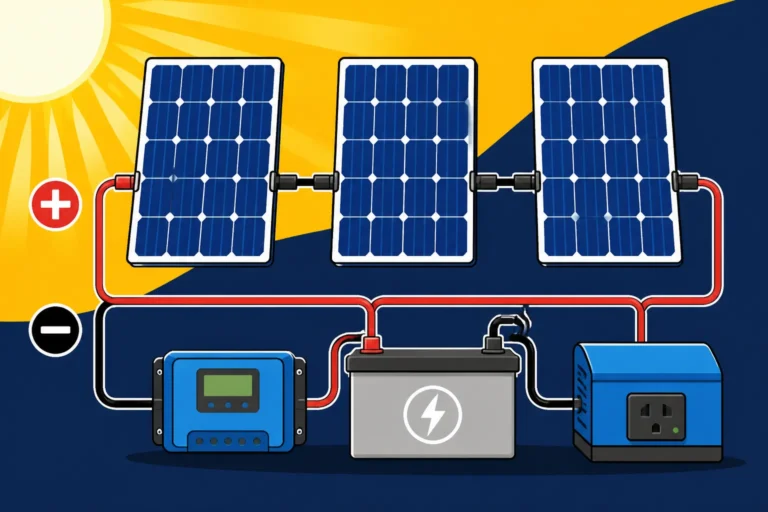
For example, Section 690.8 outlines methods for calculating maximum circuit current, which is crucial for determining the correct wire gauge and fuse size. Without adhering to these calculations, you risk wires overheating or fuses failing prematurely, leading to fire hazards or system shutdowns. The article also provides guidance on rapid shutdown requirements, which, while primarily for grid-tied systems to protect first responders, can influence how you design access and maintenance pathways for your off-grid array, especially if it's near structures. Even if your local jurisdiction doesn't strictly enforce permits for standalone off-grid systems, following the guidelines of Article 690 is simply smart practice for safety and performance. You can find detailed explanations of these requirements in resources like Off-Grid Solar Wiring Diagram Explained.
General Wiring Practices and Overcurrent Protection
While Article 690 is specific to solar, off-grid systems still rely heavily on general electrical wiring principles covered in other parts of the NEC. Articles like 200 (Use and Identification of Grounded Conductors), 210 (Branch Circuits), and 240 (Overcurrent Protection) are fundamental. Article 210, for instance, dictates how circuits are laid out, how many receptacles can be on a circuit, and the types of protection required. This applies whether you're powering a tiny home with a handful of circuits or a larger cabin with multiple living spaces.
Article 240 is absolutely crucial for safety. It details the proper sizing and placement of fuses and circuit breakers to protect conductors and equipment from overcurrents. An undersized breaker won't trip when it should, potentially leading to melted wires and fires. An oversized one might allow a fault to cause severe damage before reacting. Understanding How to Size Fuses and Breakers is paramount. These general articles provide the framework for ensuring all the electrical pathways in your off-grid setup, from your inverter output to your wall outlets, are safe and compliant, preventing everything from small annoyances like frequently tripped breakers to serious hazards. Many components you'd purchase, whether it's a charge controller from Renogy or a breaker panel from Amazon, are designed with these underlying NEC standards in mind.
Grounding and Bonding Requirements
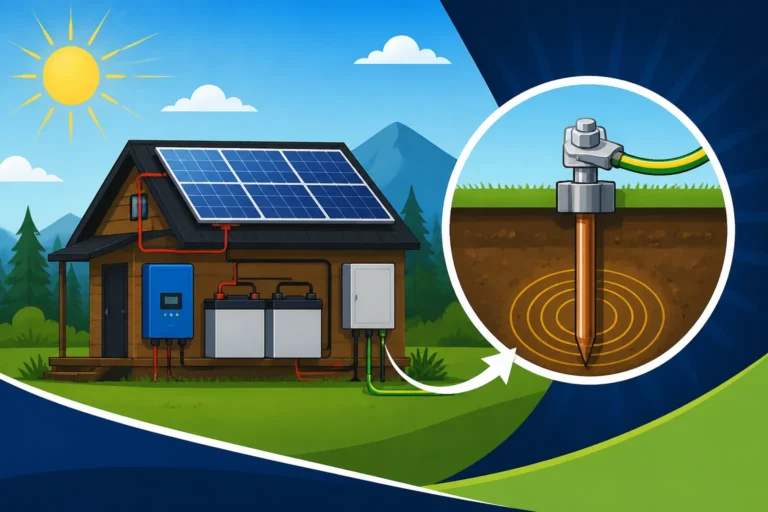
Ask any electrician, and they'll tell you that proper grounding and bonding are non-negotiable for electrical safety. Article 250 of the NEC dedicates itself entirely to this critical aspect. In an off-grid system, establishing an effective grounding electrode system is vital to safely dissipate lightning strikes, prevent dangerous voltage surges, and provide a low-impedance path for fault currents. Without proper grounding, an electrical fault could electrify metal enclosures, tools, or even your water pipes, turning them into dangerous shock hazards.
Bonding, on the other hand, ensures that all metallic components that might become energized are connected together, creating an equipotential plane. This prevents voltage differences between accessible metal parts, eliminating the risk of shock when touching two different metal items simultaneously. This includes your solar panel frames, mounting racks, inverter chassis, battery enclosures, and even the electrical boxes and conduit throughout your structure. If you're looking for more specific guidance, explore content on How to Ground an Off-Grid Solar System. Adhering to these often-complex grounding and bonding rules isn't just about passing an inspection; it's about building a fundamentally safe system that protects against unforeseen electrical anomalies and natural phenomena.
Navigating Local Permitting and Inspection Processes
The biggest hurdle for many off-grid enthusiasts isn't the technical challenge but the administrative one. Local regulations vary wildly, and what's required in one county might be completely different in another, or even non-existent in truly remote areas. However, ignoring these processes can lead to serious headaches down the line, including fines, forced removal of equipment, or difficulties with insurance.
Researching Local Authority Having Jurisdiction Requirements
Before you even buy your first solar panel, your absolute first step should be to identify and contact your local Authority Having Jurisdiction (AHJ). This is typically your county or city building department, planning department, or electrical inspector's office. Don't assume that because you're off-grid, you're exempt. Many jurisdictions still consider any permanent electrical installation, regardless of its power source, subject to their building and electrical codes.
When you contact them, be clear that you're planning an off-grid solar system. Ask specific questions:
- Do I need a permit for an off-grid solar system in this jurisdiction? This is a key question, and you'll often find that the answer varies, as highlighted in the article, Do You Need a Permit for Off-Grid Solar.
- Which specific NEC editions or local amendments do you enforce?
- Are there specific requirements for battery enclosures or panel mounting?
- What documentation (e.g., system diagrams, equipment specifications) do I need to submit with a permit application?
- Will an inspection be required, and at what stages?
Sometimes, you might find that for truly standalone, non-structure-attached systems (like a small portable setup for an RV or shed), permits aren't required. However, if your off-grid system is integrated into a dwelling, such as a cabin or a full-time off-grid home, it's highly probable you'll need one. Even if you buy an all-in-one kit from a brand like Renogy, the installation process still needs to consider local rules.
The Permitting Application Process
Once you've clarified the requirements, prepare to submit your permit application. This usually involves detailed drawings or a single-line diagram of your proposed system. This diagram should clearly show the solar panels, charge controller, battery bank, inverter, disconnects, and grounding points, along with all associated wire sizes, fuse/breaker ratings, and equipment specifications. Many jurisdictions will require a professional engineer's stamp on larger systems, especially if they are complex or involve significant structural modifications.
Don't be intimidated by this; many resources exist to help with basic diagrams, and a good electrical supply house or solar distributor can often offer templates or advice. The key is thoroughness and clarity. Any ambiguity can lead to delays or rejection. This is also where you might reference detailed information on Off-Grid Solar System Design Basics to ensure your plans are robust and well-documented. Be prepared for a review period, which can range from days to weeks, and potentially requests for revisions before approval.
What to Expect During Inspection
If your permit is approved and an inspection is required, an inspector will typically visit your site after the installation is complete, or sometimes at different stages of construction (e.g., rough-in electrical, then final). Their role is to ensure your installed system matches your approved plans and complies with the adopted electrical codes.
Inspectors will check for things like:
- Correct wire sizing and type: Are your wires properly sized for the current they carry? Is the insulation rating correct for the application?
- Proper overcurrent protection: Are your fuses and circuit breakers correctly rated and installed?
- Secure connections: Are all terminations tight and in appropriate junction boxes?
- Effective grounding and bonding: Is your grounding electrode system properly installed, and are all metallic components bonded?
- Disconnects and labeling: Are disconnect switches clearly marked and easily accessible? Is all equipment properly labeled with voltage, current, and warning signs?
- Component ratings: Do your panels, charge controller, inverter, and batteries meet the necessary safety standards (e.g., UL listed)?
- Physical protection: Are wires protected from physical damage? Are battery enclosures properly vented?
Think of the inspection as a final safety check. While it can feel stressful, a good inspector is there to help ensure your system is safe and reliable. If deficiencies are found, they will provide a list, and you'll typically have time to correct them and request a re-inspection. For those seeking specific guidance, the article How to Pass an Off-Grid Solar Inspection provides excellent insights.
Common Off-Grid Solar Code Compliance Challenges
Even with the best intentions, it's easy to overlook certain details when tackling an off-grid solar installation, especially for DIYers. These common pitfalls can lead to code violations, safety hazards, and compromised system performance.
Misunderstanding System Voltage and Wiring
One of the most frequent issues arises from confusion over DC voltages (12V, 24V, 48V) and the implications for wire sizing and component selection. For example, a 12V system drawing 100 amps will require much thicker wires than a 48V system drawing 25 amps to deliver the same power without significant voltage drop or overheating. Many DIYers underestimate the current flowing through their DC circuits, particularly from the solar array to the charge controller and from the battery bank to the inverter.
Running undersized wires can cause excessive heat, leading to insulation breakdown and fire. It also results in substantial power loss, meaning your panels aren't effectively charging your batteries, or your inverter isn't getting enough juice to power your appliances efficiently. The NEC has strict tables for conductor sizing based on current, temperature, and insulation type. It's not just about getting any wire; it's about getting the right wire. A deeper dive into How to Size Wire and Cables is essential to avoid this common mistake.
Improper Overcurrent Protection and Disconnects
Another critical area where mistakes happen is with overcurrent protection (fuses and breakers) and disconnect switches. The NEC requires overcurrent devices to protect every ungrounded conductor in a circuit. This means you need fuses or breakers not just on your main circuits, but also between your panels and charge controller, between your charge controller and battery bank, and between your battery bank and inverter. The sizing of these devices must be appropriate for both the wire gauge and the equipment ratings they protect.
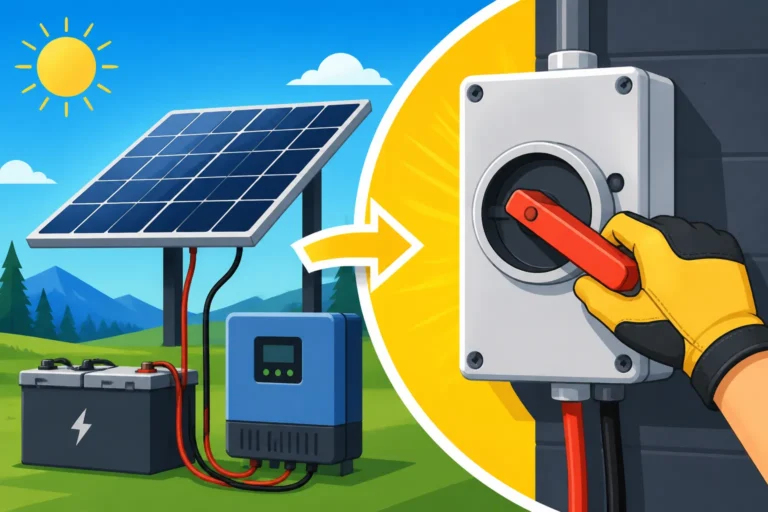
Equally important are proper disconnect switches. These allow you to safely de-energize different parts of your system for maintenance, troubleshooting, or in an emergency. The NEC requires readily accessible disconnects for the PV array, battery bank, and inverter. These disconnects must be rated for the full voltage and current of the circuit they are interrupting. Skipping or misplacing these can turn routine maintenance into a dangerous gamble, making it harder to safely install things like Best Off-Grid Solar Batteries.
Inadequate Grounding and Surge Protection
While we touched on grounding in an earlier section, its importance can't be overstated, and it's frequently misunderstood or improperly implemented in off-grid setups. Simply driving a ground rod into the earth isn't always enough. The entire grounding electrode system needs to be properly designed, including the correct type and number of ground rods, connection methods, and bonding of all metallic components. Without effective grounding, your system is vulnerable to lightning strikes, static electricity buildup, and ground faults, all of which pose severe safety and equipment damage risks.
Furthermore, surge protection devices (SPDs) are often overlooked. While not always explicitly mandated by every local code for every component, installing SPDs on both the DC (panel-side) and AC (inverter-side) circuits can significantly protect your expensive equipment from transient voltage surges caused by lightning or other electrical disturbances. Given the remote locations of many off-grid systems, often exposed to the elements, robust surge protection is a wise investment in system longevity. You can learn more by looking into Off-Grid Solar Safety and Grounding.
Lack of Proper Labeling and Documentation
This might seem minor compared to wiring, but clear labeling is a crucial code requirement that enhances safety and facilitates future maintenance or troubleshooting. The NEC mandates specific labels for solar PV systems, indicating things like maximum voltage, operating current, disconnect locations, and hazard warnings. For example, disconnects need labels indicating what they control ("PV Array Disconnect," "Battery Disconnect").
Detailed system documentation, including a single-line diagram, equipment specifications, and maintenance logs, might also be requested by an inspector or simply prove invaluable for your own use. If you ever need to troubleshoot an issue, expand your system (like when looking to implement Cost of Expanding an Off-Grid System), or sell your property, clear documentation makes everything easier and safer. A well-documented system built with components from trusted suppliers like those found on Amazon or specialized solar retailers like Renogy reflects a professional and safety-conscious approach.
Ensuring Safety and Longevity Through Code Adherence
Adhering to electrical codes for your off-grid solar system isn't just about avoiding penalties or passing an inspection. It's about building a fundamentally safe, reliable, and durable power source that will serve you faithfully for years to come.
Mitigating Fire and Electrical Shock Hazards
This is the paramount reason for electrical codes. Electricity, when improperly handled, can be deadly. Fire is a constant risk when circuits are overloaded, wires are damaged, or connections are loose. Imagine a wire that heats up due to excessive current draw because it's undersized; the insulation melts, causing a short circuit, and suddenly you have an electrical fire starting behind your walls or in your battery enclosure. The NEC's detailed specifications for wire sizing, insulation, conduit, and overcurrent protection are all designed to prevent these catastrophic events.
Electrical shock is another grave concern. High DC voltages from solar arrays or battery banks can deliver lethal shocks. Codes mandate proper grounding and bonding to ensure that exposed metallic parts remain at a safe potential. They also require clearly marked disconnects so that in an emergency or during maintenance, power can be cut off safely. Think about a simple scenario: you're working on your system, accidentally touch an energized component, but because your system is properly grounded, the fault current has a safe path to the earth, potentially tripping a breaker and saving you from a severe shock. This is why following guidelines in a general Off-Grid Solar Installation Guide is so important.
Protecting Equipment from Damage
Off-grid solar components represent a significant investment. Panels, inverters (especially premium ones like those from Best Off-Grid Solar Inverters), and battery banks are expensive and designed for longevity, but they are vulnerable to electrical faults and environmental stressors. Code compliance protects this investment. For example, proper fuse and breaker sizing prevents excessive current from damaging sensitive inverter electronics or causing battery failures. Adequate wire sizing reduces voltage drop, which can stress components operating outside their optimal range.
Furthermore, physical protection of wiring through conduit or appropriate cable management, as specified by code, prevents rodents, UV degradation, or accidental damage from compromising your system's integrity. Battery enclosures, when built to code, ensure proper ventilation for lead-acid batteries (to dissipate hydrogen gas) or provide physical protection for lithium batteries, helping to prevent thermal runaway or damage. By building to code, you're not just safeguarding against immediate hazards; you're engineering a system that will withstand the test of time and environmental factors, maximizing the return on your investment.
Maintaining System Performance and Warranties
An off-grid solar system needs to perform consistently. Any deviation from optimal performance can mean the difference between comfortable living and frustrating power outages. Code compliance directly impacts performance. Correct wire sizing ensures minimal power loss between components, meaning more of the sun's energy makes it to your batteries and appliances. Proper panel array configuration, adhering to voltage limits and string sizing, ensures your charge controller operates efficiently, maximizing energy harvest.
Beyond operational performance, code adherence can also be tied to product warranties. Many manufacturers will void warranties if equipment is installed or operated outside of their specified guidelines, which often align with national electrical codes. For instance, if you install a battery bank without proper fusing and it's damaged by an overcurrent event, the manufacturer might deny a warranty claim. By following recognized standards, you protect your system's operational efficiency and ensure that your manufacturer warranties remain valid, providing peace of mind and financial security for your off-grid lifestyle.
DIY Off-Grid Solar and Code Compliance
For many, going off-grid is synonymous with doing it yourself. There's immense satisfaction in building your own power system. However, the DIY route comes with significant responsibilities, particularly regarding electrical code compliance. It's not impossible, but it requires diligent research and a commitment to safety.
The DIYer's Responsibility and Resources
As a DIY off-grid solar installer, you effectively become the general contractor, electrician, and sometimes even the electrical engineer for your project. This means the onus is entirely on you to understand and adhere to all applicable codes, even if no formal permits or inspections are required in your specific location. Your primary responsibility is safety – for yourself, your family, and your property.
Thankfully, there are abundant resources available to help. The full text of the NEC is available, though it can be dense. Many simplified guides and books specifically tailored to solar installations exist. Online forums, YouTube channels, and even manufacturers like Renogy and Victron Energy offer detailed wiring diagrams, installation manuals, and educational content that often implicitly or explicitly align with code requirements. When purchasing components, always look for UL (Underwriters Laboratories) or ETL certifications, which indicate that the equipment has been tested and meets recognized safety standards. This is critical for ensuring your chosen components, such as a solar charge controller you might find on Amazon, are suitable for safe operation. Take advantage of resources like DIY Off-Grid Solar Installation Step by Step to guide your build.
When to Seek Professional Assistance
While the DIY spirit is strong, there are times when bringing in a professional is not just helpful but essential.
- Permitting Challenges: If your local AHJ requires engineered drawings or specific professional certifications for permit approval, you'll need to hire a licensed electrician or solar installer to review, stamp, or even complete portions of your plans.
- Complex Systems: For larger, more complex off-grid systems powering a full-size home with multiple circuits, high-voltage battery banks, or integration with backup generators, the intricacies of balancing loads, sizing protection, and ensuring proper grounding can quickly exceed a novice's expertise.
- Safety Concerns: If you ever feel uncertain about a particular wiring configuration, grounding technique, or component connection, it's always better to consult a professional. An hour of a licensed electrician's time for a consultation or review can prevent costly and dangerous mistakes.
- Troubleshooting: Sometimes, despite your best efforts, a system might not function as expected. A professional can quickly diagnose issues that might be obscure to an untrained eye.
- Inspection Failures: If your DIY installation fails an inspection, a professional electrician can help identify and correct the deficiencies to ensure compliance.
Remember, seeking help doesn't diminish your DIY accomplishment; it ensures your project is completed safely and reliably.
Phased Installation and Incremental Compliance
For those on a budget or looking to learn as they go, a phased approach to off-grid solar can be very effective. This involves starting with a smaller, simpler system and gradually expanding it over time. This method can also make code compliance more manageable.
You might begin with a basic 12V system for essential loads in a shed, which might fall under minimal permitting requirements. As you gain experience and save more funds, you can then expand to a larger 24V or 48V system to power a cabin, addressing the more stringent code requirements for a dwelling at that stage. This incremental approach allows you to tackle the learning curve in smaller, more digestible chunks. Each phase can be built to code, inspected if necessary, and then seamlessly integrated into the next expansion. This way, you're not trying to master an entire complex system at once, but rather building confidence and expertise one compliant step at a time, echoing principles found in How to Budget for an Off-Grid Solar System.
By understanding the "why" behind these rules, diligently researching local requirements, and never cutting corners on safety, you can confidently build an off-grid solar system that is both code-compliant and a source of reliable, sustainable power for years to come.
Off-Grid Solar Code Compliance Checklist
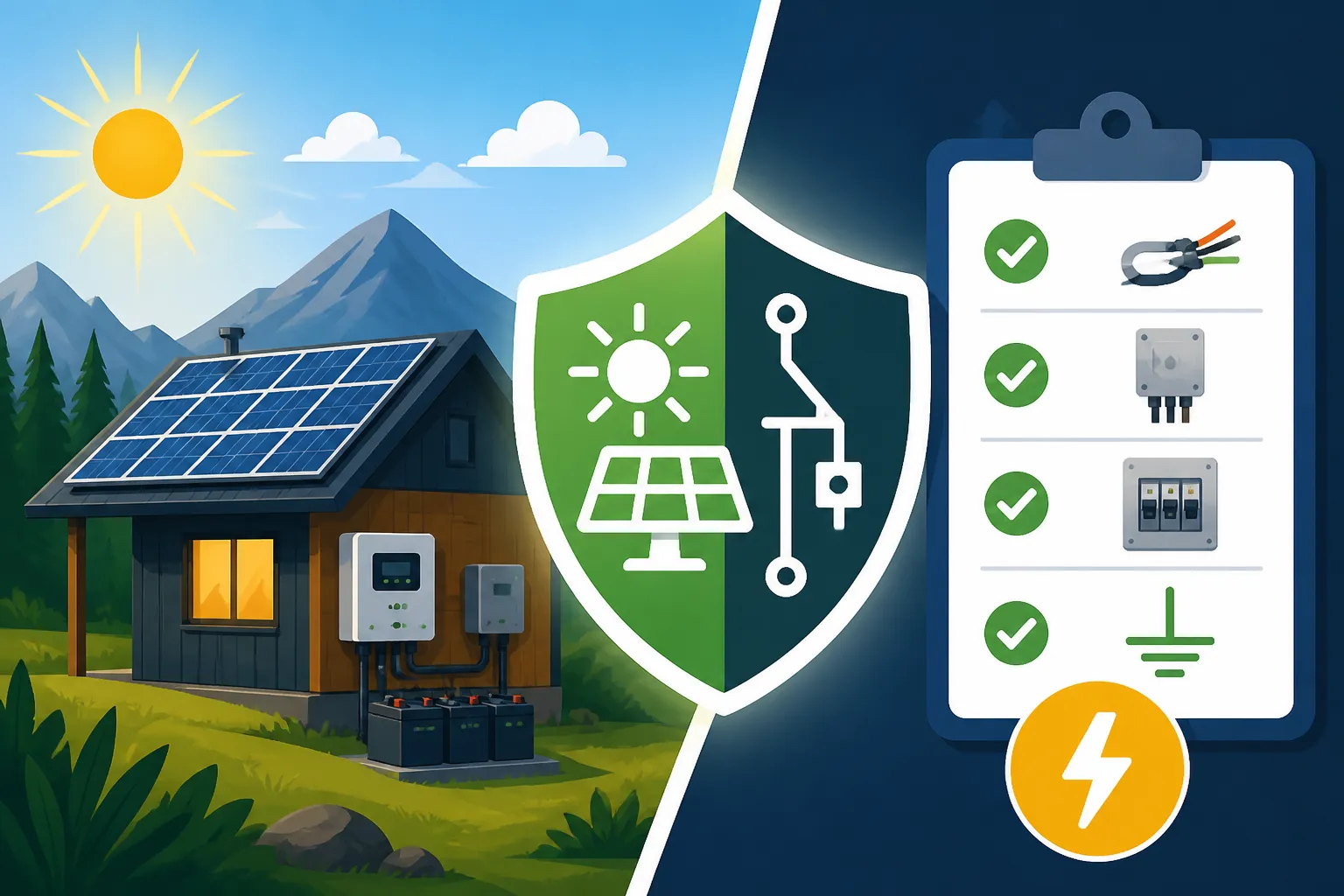
To help you keep track of the most crucial elements when designing and installing your off-grid solar system, here's a handy checklist based on common NEC requirements. Remember, this is a general guide, and local codes may have additional or specific requirements. Always consult your local AHJ.
| Component / Aspect | NEC Article / Common Requirement | Checkpoint |
|---|---|---|
| System Design | Article 690, 210, 220 | [ ] Load calculation performed and accurately determines daily energy usage. |
[ ] System voltage (12V, 24V, 48V) chosen appropriately for system size. |
||
[ ] Single-line diagram (SLD) of the entire system prepared. |
||
| Solar Panels (PV Array) | Article 690.7, 690.8, 690.31 | [ ] Panels are listed/certified (e.g., UL listed). |
[ ] Max PV array voltage (Voc) does not exceed equipment limits or code limits. |
||
[ ] PV array wiring is correctly sized for max current and protected from physical damage (e.g., in conduit or appropriate cable). |
||
[ ] PV array disconnect switch is accessible and clearly labeled. |
||
| Charge Controller | Article 690 | [ ] Charge controller is correctly sized for PV array current and voltage. |
[ ] Overcurrent protection (fuses/breakers) installed on both input (PV) and output (battery) sides, correctly sized. |
||
| Battery Bank | Article 690.71, 480 | [ ] Battery bank voltage is compatible with charge controller and inverter. |
[ ] Battery bank protected by correctly sized overcurrent device (fuse/breaker) at the positive terminal, as close to the battery as possible. |
||
[ ] Battery disconnect switch installed and clearly labeled. |
||
[ ] Batteries are in a suitable, well-ventilated enclosure (if required for type) and protected from physical damage. |
||
[ ] Correct battery cable sizing for expected current draw. |
||
| Inverter | Article 690.62, 705 | [ ] Inverter is listed/certified (e.g., UL listed) and correctly sized for continuous and surge loads. |
[ ] DC input to inverter protected by correctly sized overcurrent device. |
||
[ ] AC output of inverter protected by correctly sized overcurrent device. |
||
[ ] Inverter disconnect switch installed and clearly labeled. |
||
| Grounding and Bonding | Article 250, 690.43, 690.47 | [ ] Main grounding electrode system (e.g., ground rod, UFER ground) installed. |
[ ] PV array frames, mounting structures, and all metallic equipment enclosures are properly bonded to the grounding electrode system. |
||
[ ] Grounding electrode conductor (GEC) and equipment grounding conductors (EGC) are correctly sized and installed. |
||
| General Wiring | Article 200, 210, 240, 300 | [ ] All conductors correctly sized for current and voltage drop. |
[ ] Wires protected from physical damage (e.g., in conduit, armored cable, or properly secured). |
||
[ ] All connections are in appropriate, accessible enclosures (junction boxes). |
||
[ ] Overcurrent protection on all ungrounded conductors. |
||
| Labeling and Safety | Article 690.17, 690.35, 690.53, 690.54 | [ ] All disconnect switches clearly labeled with their purpose. |
[ ] Warning signs for live parts, high voltage, and emergency shutdown procedures are posted. |
||
[ ] Clear identification of circuit sources and destinations. |
||
| Permits & Inspections | Local AHJ requirements | [ ] Contacted local AHJ and determined permit requirements. |
[ ] Applied for and obtained necessary permits (if applicable). |
||
[ ] Scheduled and passed required inspections (if applicable). |
By methodically working through such a checklist, you can ensure that your off-grid solar system is not only functional but also meets the highest standards of safety and reliability.
Disclaimer
This article is for general informational purposes only and does not constitute professional advice. Laws, prices and regulations vary by location and change over time. Consult a qualified professional for guidance on your specific situation.