How to Choose an Off-Grid Mppt Controller
Stepping into the world of off-grid solar can feel exhilarating, but then you hit the wall of technical jargon and endless equipment choices. One of the most common stumbling blocks is figuring out how to choose an off-grid MPPT controller — it often feels like you need an engineering degree just to understand the specs! Many folks get understandably frustrated, worried about making an expensive mistake that will leave their batteries undercharged or their appliances sputtering. This guide is dedicated to demystifying MPPT charge controllers, empowering you with the knowledge to select the perfect one for your unique off-grid setup and ensure your power flows smoothly.
Understanding the Role of an MPPT Charge Controller
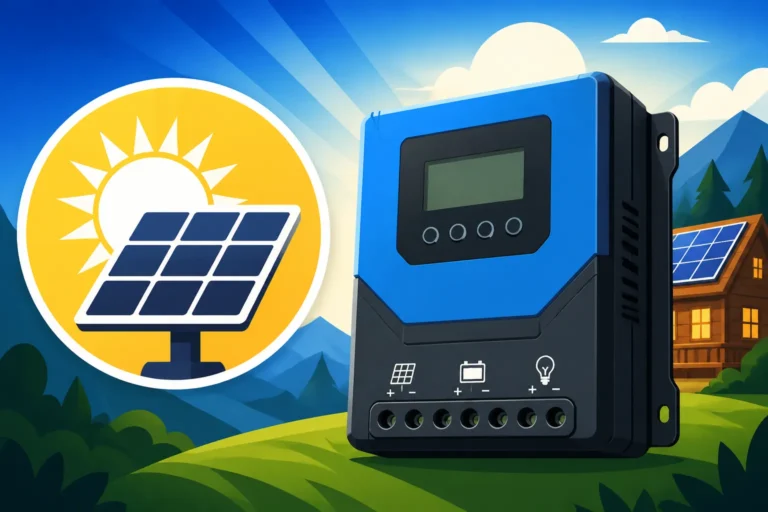
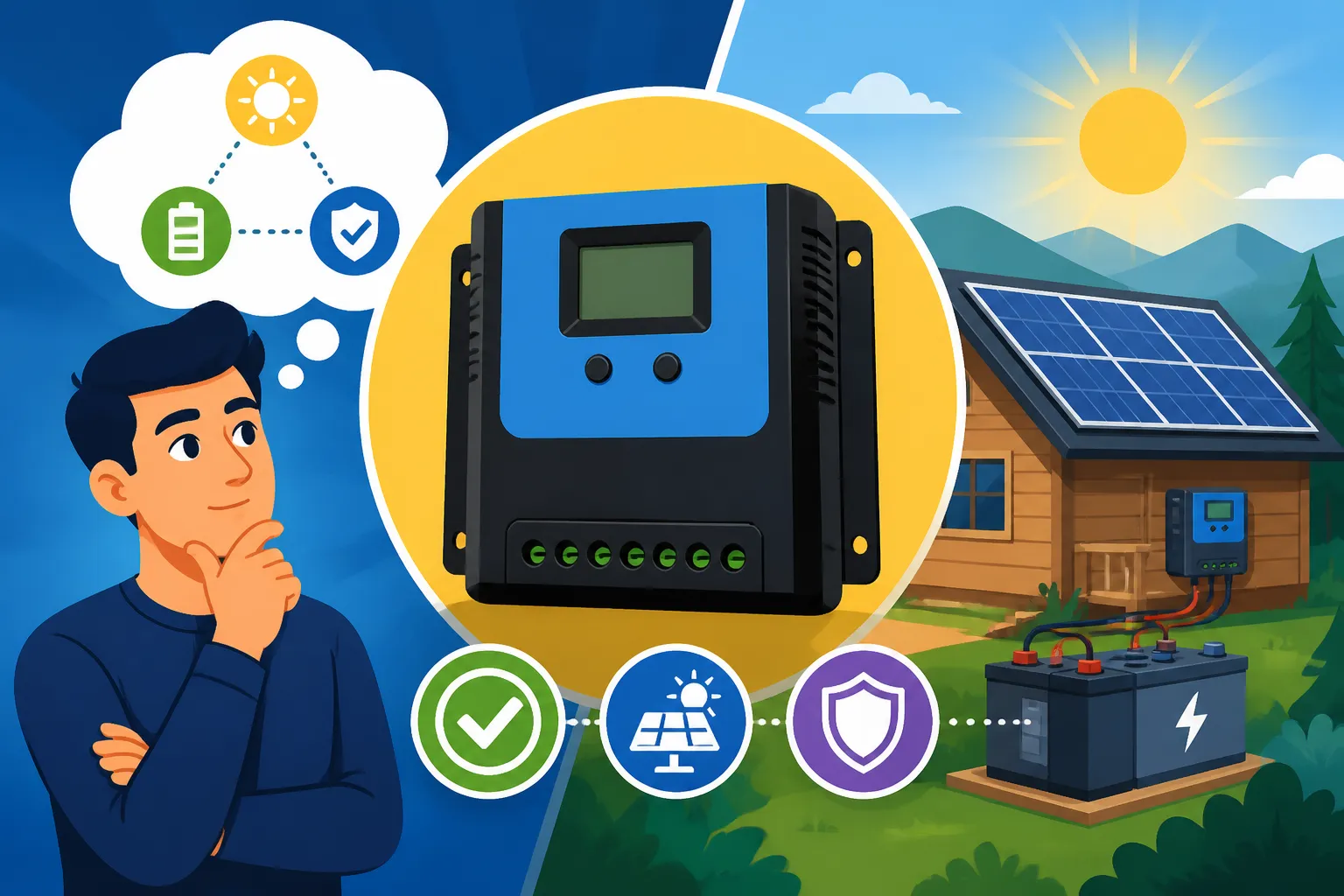
When you're diving into off-grid living, the charge controller is truly the unsung hero of your solar power system. It's not as flashy as your solar panels soaking up the sun, or as powerful as your inverter humming away, but without a good charge controller, your system simply won't perform optimally, and your batteries won't last. The MPPT (Maximum Power Point Tracking) controller is specifically designed to maximize the energy harvest from your solar panels, ensuring that every drop of sunlight is converted into usable power for your battery bank.
The Core Function: Maximizing Power Harvest
Think of your solar panels and your batteries speaking different languages. Your solar panels, especially on a crisp, sunny day, can produce quite a bit of voltage, often more than what your batteries need directly to charge efficiently. If you just hooked them up without a translator, you'd lose a significant amount of potential power. That's where the MPPT controller comes in. It acts as a sophisticated power optimizer, constantly monitoring the voltage and current coming from your solar panels and adjusting them to find the "sweet spot" – the maximum power point – where the panels are most efficient.
This optimization means the controller can take a higher voltage from the panels and convert it into a lower, more appropriate voltage for your batteries, all while increasing the charging current. It's like having a clever conversion mechanism that ensures you're getting the most amp-hours into your battery bank for every ray of sunshine, even as light conditions change throughout the day. This intelligent tracking is what makes an MPPT controller so invaluable for serious off-grid applications, often leading to a 10-30% increase in charging efficiency compared to simpler charge controllers.
MPPT vs PWM: A Quick Comparison
Before we dig deeper into MPPT specifics, it's worth a moment to understand why MPPT is usually the preferred choice for most serious off-grid setups, especially compared to its older sibling, the PWM (Pulse Width Modulation) controller. A PWM controller is like a simple on/off switch. It basically connects your solar panels directly to the battery, allowing the battery voltage to pull the panel voltage down. When the battery is full, it cycles on and off to maintain the charge. This method is straightforward and cheaper, making it suitable for very small systems, like charging a single 12V battery with a single 12V panel for a basic setup.
However, a PWM controller isn't designed to optimize power. It sacrifices potential energy by forcing the panel to operate at a lower voltage to match the battery. This means you’re leaving power on the table, which isn't ideal for situations where every watt-hour counts. MPPT controllers, on the other hand, actively track and convert power, allowing your panels to operate at their optimal voltage regardless of the battery's state of charge. This distinction is critical, particularly when you're looking at how many solar panels for off-grid living or considering a significant investment in your power independence. For anything beyond the most basic lighting or device charging, an MPPT controller is almost always the superior choice for maximizing your solar investment and ensuring consistent power. You can dive even deeper into the nuances in our article on MPPT vs PWM Charge Controllers.
Key Specifications to Consider
When you're staring at a product page full of numbers and acronyms, it's easy to get lost. But don't fret! There are a few core specifications for MPPT controllers that are absolutely non-negotiable and will dictate whether a particular unit is right for your system. Getting these wrong can lead to serious inefficiency, damage to components, or even safety hazards.
System Voltage Compatibility
The very first thing you need to confirm is that the MPPT controller is compatible with your battery bank's voltage. Off-grid systems commonly operate at 12V, 24V, or 48V. While many modern MPPT controllers are auto-sensing and can work with multiple voltages (e.g., 12/24V or even 12/24/36/48V), you must ensure it matches your battery setup. If your battery bank is 48V, a controller rated only for 12V/24V simply won't work, or it will damage components.
Choosing your system voltage, whether it's 12V, 24V, or 48V, is a foundational decision that impacts everything from wiring size to inverter selection. For smaller applications like an RV, a 12V system might be sufficient, while a full-sized off-grid home often benefits from a 48V system due to reduced current and thinner wire requirements, which can save you money and prevent voltage drop. Always verify your existing or planned battery bank voltage before moving on to other specifications. If you're unsure which voltage is best for your setup, check out our guide on 12V vs 24V vs 48V: Which to Choose.
Maximum PV Input Voltage (Voc)
This specification, often labeled as "Max PV Voc" or "Max Solar Input Voltage," is arguably the most critical safety parameter. It tells you the absolute maximum open-circuit voltage (Voc) that your solar array can produce and that the controller can safely handle. Exceeding this voltage will almost certainly damage your MPPT controller beyond repair and could potentially pose a fire risk.
When calculating your total solar array Voc, you need to consider the worst-case scenario: cold temperatures. Solar panels produce higher voltage in colder conditions. So, if your panels are rated at 30V Voc at standard test conditions (STC), they might produce closer to 35-38V in freezing temperatures. You must sum the Voc of all panels wired in series and then factor in a temperature correction. Ensure this corrected maximum voltage is well below your MPPT controller's maximum input voltage rating, leaving a comfortable buffer for safety and reliability. For instance, if you have two 100W panels in series, each with a 20V Voc, your array Voc is 40V. If you're in a cold climate, this could easily jump to 45V. Your controller needs to handle at least that much, and ideally more, often 100V, 150V, or even 250V for larger systems.
Maximum PV Input Current (Isc)
The "Max PV Input Current" or "Max Solar Input Current" specifies the highest short-circuit current (Isc) that your solar array can send to the controller. While less critical for direct damage than voltage, exceeding this rating can cause the controller to limit its output or potentially overheat, reducing efficiency and lifespan.
To calculate your total array Isc, you sum the Isc of all panels wired in parallel. If you have panels in series strings, you'd calculate the Isc of each string and then sum the strings that are wired in parallel. Similar to voltage, you should account for real-world conditions, though temperature effects on current are less dramatic than on voltage. It's wise to leave a small buffer. Many controllers are designed to handle momentary surges, but continuous overcurrent can be problematic. Make sure your MPPT controller can comfortably handle the combined Isc of your solar panel array. This is a vital step in how to size a charge controller correctly.
Output Charging Current
The "Output Charging Current" or "Max Battery Charge Current" indicates the maximum amperage the MPPT controller can deliver to your battery bank. This specification directly affects how quickly your batteries can be charged. A common rule of thumb for lead-acid batteries is to charge them at a C/10 rate (10% of their amp-hour capacity), though modern lithium batteries can often handle much faster charging.
For example, if you have a 400 Ah 12V battery bank, you might want a charge controller that can deliver at least 40 amps (400Ah / 10 = 40A) to charge it efficiently. If you opt for a controller with too low an output current, your batteries will take longer to charge, and you might not fully replenish them during shorter sunny periods. Conversely, an excessively high output current isn't harmful if the battery management system (BMS) or battery type can handle it, as the controller will only deliver what the battery can accept, but it means you're potentially overspending on an oversized controller. Aim for a controller that can deliver sufficient current to charge your batteries within a reasonable timeframe based on your solar array's production.
Advanced Features and Functionality
Beyond the foundational specifications, many MPPT charge controllers offer a suite of advanced features that can significantly enhance your off-grid experience, improve battery health, and simplify system management. These aren't always strictly necessary, but they often provide substantial value, especially for larger or more complex setups.
Battery Compatibility and Charging Algorithms
Not all batteries are created equal, and your MPPT controller needs to be smart enough to know the difference. The best MPPT controllers come with multiple preset charging profiles for different battery chemistries like flooded lead-acid, sealed AGM, Gel, and especially the increasingly popular Lithium Iron Phosphate (LiFePO4) batteries. More advanced units even allow for custom programming of charging parameters (bulk, absorption, float voltages, equalization, temperature compensation).
Using the correct charging algorithm is paramount for battery longevity and performance. Charging a LiFePO4 battery with a lead-acid profile can severely shorten its lifespan or lead to dangerous conditions. Many modern controllers, such as those from Victron Energy or Renogy, offer dedicated LiFePO4 settings or highly customizable options to perfectly match your battery manufacturer's recommendations. This becomes even more critical when you're considering how many batteries for an off-grid system and what specific type they are. Understanding how to choose off-grid battery chemistry is key to this decision.
Monitoring and Communication Ports
In today's connected world, being able to monitor your system's performance remotely or through a user-friendly display is a huge advantage. Many MPPT controllers feature built-in LCD screens that show real-time data like panel voltage, charging current, battery voltage, and historical production. Even better are those with communication ports (like RS-485, CAN Bus, or Bluetooth) that allow you to connect to an external monitor, a dedicated system display, or even your smartphone app.
Brands like Victron are renowned for their robust Bluetooth connectivity and the VictronConnect app, which provides detailed insights into your system's health and performance. This kind of monitoring helps you track how to calculate daily energy usage, identify issues, and optimize your power consumption. For permanent installations or those where you're not always physically present, remote monitoring can provide immense peace of mind, letting you know your system is charging as expected, even when you're miles away.
Built-in Protections and Safety Features
Safety first, always! A good MPPT controller isn't just about efficiency; it's also about protecting your valuable equipment and, most importantly, yourself. Look for controllers that include a comprehensive suite of protection features. These typically include:
- Over-voltage protection: Prevents damage from excessive panel voltage.
- Over-current protection: Shuts down if too much current is drawn or supplied.
- Short-circuit protection: Safeguards against wiring faults.
- Reverse polarity protection: Essential for preventing damage if wiring is accidentally reversed during installation.
- Over-temperature protection: Reduces charging or shuts down if the unit gets too hot.
- Battery overcharge/over-discharge protection: Critical for battery health.
While proper system design and installation, including fuses and breakers, are your first line of defense, these integrated protections in the MPPT controller provide an essential secondary layer of security, making your overall off-grid solar system components explained much safer and more robust.
Expandability and Future-Proofing
Your off-grid power needs might grow over time. What starts as a small setup for a weekend cabin could evolve into a full-time homestead requiring more power. When choosing an MPPT controller, consider its expandability. Some systems allow you to add multiple controllers in parallel to increase charging capacity as you add more solar panels. Others might be part of a modular ecosystem, like many available on Amazon, where different components are designed to integrate seamlessly.
Thinking about future needs means selecting a controller that won't become an immediate bottleneck if you decide to add more panels next year. While you don't need to buy a controller for a 10kW system if you only have 500W now, choosing one that's slightly oversized for your initial setup or one that can easily be paralleled can save you money and headaches down the road. It's all about designing an off-grid solar system that can grow with you.
Sizing Your MPPT Controller Correctly
This is where the rubber meets the road. All the fancy features in the world won't matter if your MPPT controller isn't correctly sized for your solar array and battery bank. Undersizing can lead to wasted power and slow charging, while vastly oversizing might mean you spent too much on a component you don't fully utilize. It's a delicate balance that ensures efficiency, safety, and cost-effectiveness.
Calculating Your Solar Array's Voltage and Current
Before you can choose a controller, you must know the exact specifications of your solar array. This involves understanding how your panels are wired – in series, parallel, or a combination of both (series-parallel).
- Series Wiring: Increases the voltage. If you have two 12V nominal panels (e.g., Voc 22V) wired in series, your total array Voc would be 44V. The current (Isc) remains the same as a single panel.
- Parallel Wiring: Increases the current. If you have two 12V nominal panels (e.g., Isc 5A) wired in parallel, your total array Isc would be 10A. The voltage (Voc) remains the same as a single panel.
You need the absolute maximum Voc (open-circuit voltage) from your series strings and the total Isc (short-circuit current) from your parallel connections. Always, always, always factor in temperature compensation for voltage, as panels produce higher voltage in cold weather. A good rule of thumb is to calculate your Voc at your coldest expected temperature (e.g., -20°C or 0°F) using the panel's temperature coefficient for voltage (typically found on the spec sheet). For every degree Celsius below 25°C, voltage increases by a certain percentage (e.g., 0.3-0.5%). This calculation is crucial for preventing over-voltage damage to your controller.
Matching Controller Capacity to Your System
Once you have your maximum array Voc and Isc, and your desired battery bank voltage, you can match these to the MPPT controller's specifications.
- Input Voltage Match: Ensure your array's maximum Voc (with cold temperature correction) is lower than the controller's maximum PV input voltage rating. Aim for a comfortable buffer, generally 10-20% below the controller's limit. For example, if your calculated max Voc is 120V, a controller with a 150V max input is a good choice.
- Output Current Match: Now, calculate the maximum possible charging current your array can produce into your battery bank. A general formula for this is:
- (Total Panel Watts / Battery Bank Voltage) * 0.75 (for efficiency losses)
- Or, more simply, use the MPPT controller's maximum output current. If your controller is 60A and your battery bank is 48V, it can deliver 60A * 48V = 2880W to your batteries. Your solar array should be sized to deliver at least this much power under ideal conditions (e.g., a 3000W array) for the controller to be fully utilized.
It's generally recommended to slightly over-panel your array (install more watts of panels than the controller's maximum output power) by about 20-30%. This helps ensure your controller hits its maximum output even on cloudy days or when the sun isn't at its peak, maximizing your energy harvest over the course of the day. For example, a 60A 48V controller (2880W) might be paired with a 3500W-3800W solar array.
| System Component | Specification to Match | Calculation/Consideration |
|---|---|---|
| MPPT Controller | Max PV Input Voltage (Voc) | Must be > Array's Max Voc (cold temp adjusted) |
| Max PV Input Current (Isc) | Must be > Array's Max Isc | |
| Max Output Charge Current (Amps) | Determines charge speed; match to battery bank size and desired charge rate | |
| System Voltage (12V/24V/48V) | Must match battery bank voltage | |
| Solar Array | Total Voc (Open Circuit Voltage) | Sum of series-wired panels; adjust for coldest temperature. |
| Total Isc (Short Circuit Current) | Sum of parallel-wired panels/strings. | |
| Total Watts (Wp) | (Voltage x Current) – used to estimate charging power. Consider over-paneling. | |
| Battery Bank | Nominal Voltage (12V/24V/48V) | Must match controller. |
| Ah Capacity (Amp-hours) | Helps determine necessary output charge current from controller for efficient charging. | |
| Chemistry (LiFePO4, AGM, Flooded) | Controller must have compatible charging profiles. |
Accounting for Temperature Variables
We briefly touched on this, but it's worth emphasizing: temperature is a silent, yet powerful, factor in solar system performance. As mentioned, solar panels produce higher voltage in cold weather. Conversely, they produce less voltage and slightly less current in very hot weather, which reduces their overall power output.
Your MPPT controller selection needs to account for the most extreme temperatures your system will experience.
- Cold Temperatures: Crucial for Voc. If you're installing in a place like Flagstaff, Arizona, where winter nights can drop well below freezing, you absolutely must factor in that cold-weather voltage spike. Failing to do so can fry your charge controller when winter hits.
- Hot Temperatures: Primarily impacts panel output. While it won't damage your controller, extremely hot ambient temperatures can cause the controller itself to reduce its output to prevent overheating. If you're in a scorching environment like Phoenix, Arizona, ensure your controller has adequate ventilation and potentially choose one with a higher temperature rating.
Always refer to your solar panel's datasheet for the temperature coefficient for voltage (typically given in %/°C). This percentage tells you how much the voltage changes for every degree Celsius above or below the 25°C STC. This step, while seemingly minor, is a cornerstone of reliable off-grid solar system design basics and critical for the longevity of your components.
Factors Beyond Technical Specs
While the technical specifications are undeniably crucial, they aren't the only considerations when selecting an MPPT controller. Practical factors like brand reputation, durability, cost, and ease of installation play a significant role in your overall satisfaction and the long-term success of your off-grid power system.
Brand Reputation and Customer Support
In the off-grid world, reliability is paramount. You don't want your charge controller failing when you're miles from civilization. This is where brand reputation comes into play. Established brands often have years of experience, rigorous quality control, and a proven track record of producing durable and reliable equipment. Names like Victron Energy, Outback Power, and MidNite Solar are highly regarded in the high-end, full-time off-grid community for their robust and reliable controllers. For more budget-conscious but still reliable options, many folks turn to brands like Renogy or EPEver, which offer good performance for the price, especially for smaller or medium-sized systems.
Beyond the initial purchase, consider customer support. If you run into an issue or have a technical question, can you easily reach someone knowledgeable? Does the company offer helpful documentation or online resources? A product is only as good as the support behind it, especially for complex systems. Checking online reviews and forums for experiences with a brand's customer service can save you a lot of headaches later on.
Durability and Environmental Rating
Where will your MPPT controller be installed? Is it in a climate-controlled cabin, a dusty workshop, or a potentially damp RV compartment? The operating environment significantly influences the type of controller you should choose. Look for controllers with appropriate ingress protection (IP) ratings, which indicate their resistance to dust and water. An IP20 rating, for instance, is fine for an indoor, dry, dust-free environment, but you'll need something like an IP65 or higher for outdoor enclosures or areas exposed to moisture or significant dust.
Consider the operating temperature range as well. If your system is in a shed that experiences extreme heat in summer or freezing temperatures in winter, ensure the controller is rated to operate reliably within those extremes. Many industrial-grade controllers are built to withstand harsher conditions, whereas some budget options might be more sensitive. Robust construction, good heat dissipation (often indicated by large heatsinks), and quality internal components are all signs of a durable unit that will stand the test of time.
Budgeting and Value for Money
Let's be real, going off-grid can be an expensive endeavor, and budgeting is key. MPPT controllers vary widely in price, from a couple of hundred dollars for smaller units to well over a thousand for high-capacity, feature-rich models. While it's tempting to go for the cheapest option, remember the old adage: "buy once, cry once." Skimping on a critical component like your charge controller can lead to inefficiencies, premature battery failure, or the need for costly replacements down the line.
Instead of just looking at the price tag, consider the value for money. Does a slightly more expensive controller offer significantly better efficiency, more advanced battery charging algorithms, comprehensive monitoring, or a longer warranty? These benefits can translate into greater power production, extended battery life, and fewer headaches, ultimately saving you money in the long run. Sometimes, investing a bit more upfront, particularly in the heart of your Off-Grid Solar Cost: Complete Breakdown, pays dividends. You can often find a wide range of reliable options, including various Renogy models and other brands, on platforms like Amazon, allowing you to compare features and prices easily.
Installation and Maintenance Ease
Finally, consider how easy the controller is to install and maintain. Are the wiring terminals clearly labeled and robust? Is the manual comprehensive and easy to understand? For DIY enthusiasts, this can make a huge difference in the installation process. Some controllers offer simple plug-and-play functionality, while others require more intricate wiring and programming. Our guide on how to install an off-grid charge controller can provide more in-depth advice.
For maintenance, most MPPT controllers are relatively maintenance-free. However, some might require occasional firmware updates, or you might want to easily access monitoring data. Controllers with external displays or remote connectivity make this much simpler. Ensure that any necessary access points or ventilation for the controller are easy to get to, especially if you plan to enclose it. Proper wiring practices and using the correct Off-Grid Solar Wiring Diagram Explained will also greatly simplify both installation and future troubleshooting.
Real-World Scenarios and Recommendations
Bringing it all together, let's look at how these considerations might apply to different off-grid setups. The "best" MPPT controller really depends on your specific needs, budget, and power demands.
Small Cabin or RV Setups
For many people, off-grid starts small – a simple cabin, a travel trailer, or a camper van. These setups typically have modest power needs, running essentials like LED lights, a water pump, a small refrigerator, and charging electronics. Here, efficiency is important, but absolute maximum power isn't always the top priority.
- Typical System: 200W-1000W of solar panels, 100-400Ah 12V or 24V battery bank.
- Controller Needs: You'd likely be looking for a 20A to 40A MPPT controller, rated for a maximum PV input voltage around 100V-150V.
- Recommendations: For these setups, many mid-range controllers offer excellent value. Brands like Renogy and EPEver have solid, dependable MPPT controllers that are relatively affordable and come with good monitoring features, often via a basic LCD screen or Bluetooth app. For instance, a Renogy Rover 40A MPPT controller would be a popular and effective choice for a 12V or 24V RV system with up to around 500-600W of panels, offering decent features without breaking the bank. These controllers are typically easy to install, which is a big plus for DIYers building out their Off-Grid Solar Cost for an RV or a tiny home.
Medium-Sized Home Systems
Moving up in scale, a medium-sized off-grid home might have more appliances, including a full-sized refrigerator, microwave, some power tools, and extensive lighting. These systems demand higher power output and robust reliability.
- Typical System: 1kW-5kW of solar panels, 400-1000Ah 24V or 48V battery bank.
- Controller Needs: You'd be looking at 40A to 100A MPPT controllers, often rated for higher PV input voltages (150V-250V) to accommodate longer series strings of panels, which is common in larger arrays.
- Recommendations: This is where higher-quality controllers really shine. Victron Energy's SmartSolar MPPT controllers are a fantastic choice, offering exceptional efficiency, advanced battery charging algorithms, and unparalleled monitoring capabilities via Bluetooth and their robust ecosystem. Outback Power also offers highly durable and programmable controllers, favored by many seasoned off-gridders. These brands, while pricier, offer long-term reliability and features that truly optimize performance for a permanent residence. If you're building a system for Off-Grid Solar for Year-Round Living, investing in these higher-grade components is often justified.
Large Homestead Arrays
For truly extensive homesteads or properties with significant power demands, such as running a well pump, multiple air conditioners, or power-hungry workshops, your solar array will be substantial, and your battery bank will be massive. Redundancy and advanced management become critical.
- Typical System: 5kW+ of solar panels, 1000Ah+ 48V battery bank.
- Controller Needs: Multiple large MPPT controllers (e.g., several 60A-100A units) often networked together, with very high PV input voltage ratings (250V-600V or more) to handle many panels in series.
- Recommendations: At this scale, integrated systems from Victron Energy or Sol-Ark become very attractive. These often combine the MPPT controller, inverter, and sometimes even a charger for a generator into one cohesive unit, simplifying wiring and management. Solutions like the Victron MultiPlus or Sol-Ark hybrid inverters offer not just charge control but also sophisticated power management, generator auto-start capabilities, and detailed diagnostics. These systems are designed for maximum resilience and efficiency, crucial when you're powering an entire lifestyle off-grid. They might be a significant part of your How Much Does an Off-Grid Solar System Cost, but their comprehensive features and reliability are indispensable for such large-scale independence.
Ultimately, the goal is to choose an MPPT controller that strikes the right balance between your system's technical requirements, your current and future power needs, your budget, and your desire for reliability and ease of use. Take your time, do your homework, and don't hesitate to consult detailed product reviews or experienced off-gridders.
Disclaimer
The information provided in this article is for general informational and educational purposes only and is not a substitute for professional advice. Off-grid solar system design and installation can be complex and involve significant electrical risks. Always consult with a qualified solar installer or electrician to ensure your system is safely and correctly designed, installed, and compliant with all local codes and regulations. Always prioritize safety and follow manufacturer instructions for all components.