How Many Batteries to Run Power Tools
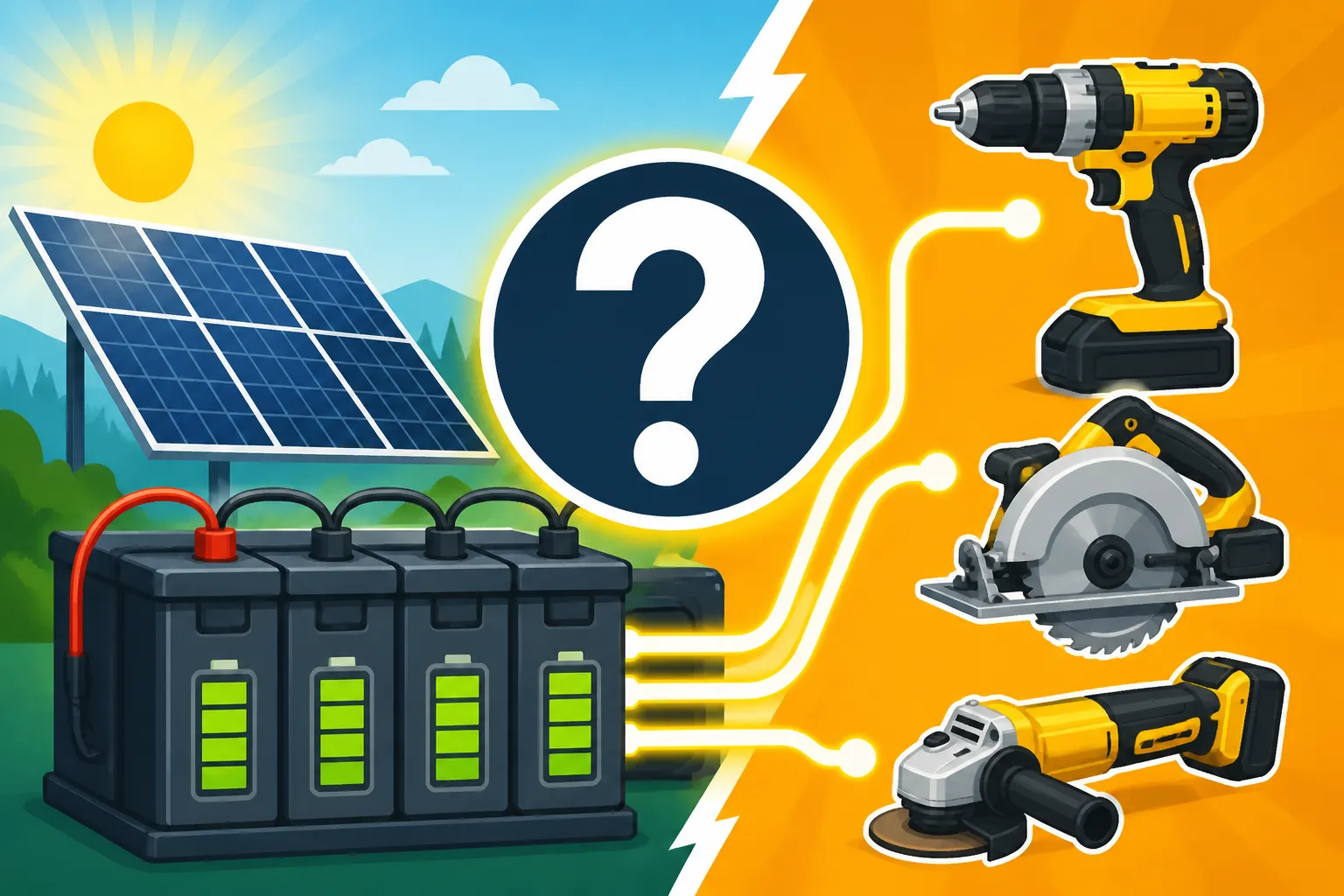
Trying to run your essential power tools off an off-grid solar system can feel like a game of Russian roulette – will the battery bank hold up, or will the inverter groan and shut down right when you need it most? It’s a common frustration for anyone trying to build or maintain their off-grid homestead, RV, or remote cabin without constant grid power. This guide will walk you through the nitty-gritty of determining exactly how many batteries you need to reliably power your drills, saws, grinders, and more, ensuring you have the juice to get the job done.
Understanding Power Tool Demands on Your Battery Bank
When you're looking at your trusty power tools, it's easy to assume they all draw a similar amount of power, but that couldn't be further from the truth. The type of tool, how it starts up, and how long it runs dramatically impacts your battery bank's requirements. This isn't just about throwing a few batteries into a box; it's about understanding the specific energy demands.
Peak Surge vs Running Watts
This is perhaps the most crucial concept to grasp when powering tools off-grid. Most power tools, especially those with motors, have two distinct power requirements:
- Running Watts (or Continuous Watts): This is the power the tool uses once it's up to speed and operating normally. It's usually listed on the tool's label or in its manual. For example, a typical circular saw might run at 1500 watts.
- Starting Watts (or Surge Watts): This is the momentary burst of power a tool needs when it first kicks on. Motors require a significant amount of extra energy to overcome inertia and get spinning. This surge can be two, three, or even four times the running wattage, though it usually only lasts for a fraction of a second. That same circular saw that runs at 1500 watts might demand 3000-4500 watts for a split second upon startup.
Why does this matter so much for your battery bank? Your inverter, which converts the battery's DC power to usable AC power for your tools, must be able to handle both the continuous running watts and the peak surge watts. If your inverter can't handle the surge, it will trip or simply fail to start the tool, no matter how large your battery bank is. The battery bank itself needs to be robust enough to supply that instantaneous burst of power without its voltage dipping too low, which can also cause an inverter shutdown. This is why you need to carefully consider both aspects when sizing your entire system, not just the battery bank.
Energy Consumption in Watt-Hours
While knowing the watts your tools draw is essential, watts alone don't tell the whole story. What truly matters for battery sizing is energy, which is measured in watt-hours (Wh) or kilowatt-hours (kWh). Energy accounts for how long a tool is used. Think of it like this: watts are how fast you're running (speed), and watt-hours are how far you've run (distance).
To calculate the energy consumption for a specific tool, you multiply its running wattage by the number of hours it will be actively used.
- Example: A 1500-watt circular saw used for 30 minutes (0.5 hours) consumes: 1500 Watts * 0.5 Hours = 750 Watt-hours.
- Example: A 500-watt drill used intermittently for a total of 1 hour throughout the day consumes: 500 Watts * 1 Hour = 500 Watt-hours.
You’ll need to do this for every power tool you anticipate using on a given day, and then sum up all those watt-hours to get your total daily power tool energy consumption. This total is the core number you'll use to determine your battery bank's required capacity. Don't forget to factor in all appliances and devices that will be running off your off-grid system, not just power tools, when doing your overall calculation for something like [How Much Solar to Run A House Off-Grid].
Impact of Tool Type and Usage Duration
Different tools, as you might guess, have wildly different power requirements and usage patterns. A small cordless drill might only draw a few hundred watts and be used for short bursts, while a heavy-duty table saw or an air compressor can demand several thousand watts continuously. The key is to be realistic about your usage.
- Intermittent Use Tools (Drills, Impact Drivers): These tools often have high surge demands but are typically used for very short periods. You might use a drill for 10 seconds, set it down, pick it up again, and use it for another 15 seconds. While the running wattage isn't sustained, the frequent starting and stopping can still put stress on your inverter and battery.
- Continuous Use Tools (Circular Saws, Angle Grinders, Sanders): These tools tend to be used for longer, more sustained periods. A circular saw cutting through lumber or an angle grinder working on metal will draw its running wattage for minutes at a time. This sustained draw is what truly eats into your battery capacity and demands a robust battery bank that can deliver consistent power.
- High-Demand, Short-Burst Tools (Welders, Plasma Cutters): These are a special category. While often used for short durations, their power draw can be enormous, sometimes tens of thousands of watts. Powering these off-grid requires a very large inverter and an incredibly capable battery bank, often leading to specialized solutions or the use of a generator.
When you're figuring out How Many Watts of Solar You Need and your battery bank size, be honest with yourself. Are you just occasionally drilling a few holes, or are you planning to build an entire cabin using your solar-powered tools? Your answer will dramatically change the scale of your off-grid battery solution.
Calculating Your Battery Capacity Needs for Power Tools
Now that we understand the power dynamics of your tools, let's get into the actual numbers. This is where we translate those watt-hours into a tangible battery bank size. It's not as scary as it sounds, but it does require a bit of careful calculation.
Step-by-Step Load Analysis for Power Tools
To figure out exactly what your battery bank needs to handle, you'll want to conduct a thorough load analysis. For power tools, this involves a few key steps:
- List All Tools and Their Wattages: Make a list of every power tool you plan to use. For each, find its running wattage and its estimated surge wattage. You can usually find this on the tool itself, in the manual, or by looking up the model online. If you can't find the surge wattage, a good rule of thumb is 2-3 times the running wattage for most motor-driven tools.
- Estimate Daily Usage Time: This is critical. For each tool, estimate how many total active usage minutes or hours you'll use it in a typical day. Remember, this isn't how long the tool is plugged in, but how long it's actually running. For intermittent tools, this might be tough, so try to overestimate slightly.
- Calculate Daily Watt-Hours for Each Tool: Multiply the running wattage of each tool by its estimated daily usage in hours.
- Example: Cordless Drill (500W) x 0.5 hours = 250 Wh
- Example: Circular Saw (1500W) x 1 hour = 1500 Wh
- Example: Bench Grinder (750W) x 0.25 hours = 187.5 Wh
- Sum Total Daily Power Tool Watt-Hours: Add up the watt-hours for all your power tools. Let's say our examples above give us 250 + 1500 + 187.5 = 1937.5 Wh per day just for power tools.
- Consider Other Loads: Don't forget that your battery bank also needs to power lights, refrigerator, phone chargers, and anything else running off your system. Add these to your total daily watt-hour estimate. A comprehensive guide like How to Calculate Daily Energy Usage can help you with this broader calculation.
This total daily watt-hour figure is your baseline. It's the raw energy your battery bank needs to supply each day, before accounting for system inefficiencies.
Accounting for Inverter Efficiency and Depth of Discharge (DoD)
Simply calculating your daily watt-hour usage isn't enough; you need to factor in how efficiently your system uses and stores that power.
- Inverter Efficiency: Your inverter isn't 100% efficient. When it converts DC power from your batteries to AC power for your tools, some energy is lost as heat. Most modern pure sine wave inverters are 85-95% efficient. To account for this, you'll divide your total daily watt-hours by the inverter's efficiency (as a decimal).
- If your tools need 1937.5 Wh and your inverter is 90% efficient (0.90): 1937.5 Wh / 0.90 = 2152.7 Wh needed from the battery.
- Depth of Discharge (DoD): This is crucial for battery longevity. You should never fully drain your batteries. Different battery chemistries have different recommended maximum depths of discharge.
- Lead-Acid Batteries (AGM, Flooded): It's generally recommended not to discharge them below 50% DoD to maximize their lifespan. So, if you have a 100Ah lead-acid battery, you can only realistically use 50Ah of that capacity.
- Lithium Iron Phosphate (LiFePO4) Batteries: These are far more forgiving and can typically be discharged to 80-100% DoD without significant impact on their lifespan. For practical purposes and to extend life, many still aim for 80-90% DoD.
To factor in DoD, you'll divide the required watt-hours (after inverter efficiency) by the usable DoD (as a decimal).
- Continuing our example with LiFePO4 batteries (90% DoD, or 0.90 usable): 2152.7 Wh / 0.90 = 2391.9 Wh of total rated battery capacity required.
- If you were using lead-acid batteries (50% DoD, or 0.50 usable): 2152.7 Wh / 0.50 = 4305.4 Wh of total rated battery capacity required.
As you can see, the battery chemistry and its usable DoD have a massive impact on the size of the battery bank you need! This is a key factor when you're working out How Much Battery Capacity You Need.
Days of Autonomy for Power Tool Operations
What happens on a string of cloudy days when your solar panels aren't producing much power? Or if you have a big project planned where you'll be using tools heavily? This is where "days of autonomy" comes in. Days of autonomy refers to how long your battery bank can power your loads without any new charge coming in from your solar panels.
For power tools, especially if you rely on them for homestead projects, construction, or running a remote workshop, having a few days of autonomy is a smart move. If your daily power tool usage is critical, and you live in an area prone to bad weather, you might want to size your battery bank for 2-3 days of autonomy.
To calculate this, you simply multiply your total required rated battery capacity by the number of days of autonomy you desire.
- Using our LiFePO4 example, if you need 2391.9 Wh of rated battery capacity for one day, and you want 2 days of autonomy: 2391.9 Wh * 2 Days = 4783.8 Wh total LiFePO4 battery bank capacity.
- For a 48V system, that would be 4783.8 Wh / 48V = 99.66 Ah. So, roughly 100 Amp-hours at 48V.
- For a 12V system, that would be 4783.8 Wh / 12V = 398.65 Ah. So, roughly 400 Amp-hours at 12V.
You can learn more about this by reading How to Calculate Days of Autonomy. This robust approach ensures you won't be left in the dark, or more accurately, without power for your tools, when the sun isn't shining.
Choosing the Right Battery Chemistry and Voltage
Once you've crunched the numbers and have a clear idea of your required battery capacity, the next step is selecting the right type of battery and system voltage. This choice isn't just about cost; it impacts performance, lifespan, and even the safety and ease of use of your off-grid system.
Lithium Iron Phosphate LiFePO4 vs Lead-Acid Batteries
When it comes to off-grid batteries, these are the two main contenders. Both have their place, but for power tools, one generally stands out.
-
Lithium Iron Phosphate (LiFePO4) Batteries:
- Pros for Power Tools: LiFePO4 batteries are the clear winner for high-power applications like running tools. They can handle much higher discharge rates (C-rates) without significant voltage sag, meaning they deliver consistent power to your inverter even under heavy load. Their deep depth of discharge (80-100%) means you need less raw capacity to get the same usable energy compared to lead-acid. They also have an incredibly long cycle life (3,000-7,000 cycles or more), making them a long-term investment. Brands like Renogy and Battle Born are popular choices for their reliable LiFePO4 batteries, often found on Amazon.
- Cons: The upfront cost is significantly higher than lead-acid. However, when you factor in their longer lifespan and higher usable capacity, their Lifetime Cost of an Off-Grid Solar System can often be lower over time.
- Best For: Anyone regularly using power tools, needing reliable high-current delivery, and looking for a long-lasting, low-maintenance solution. If you're comparing LiFePO4 vs Lead-Acid Battery Cost, remember to consider the lifespan and usable capacity.
-
Lead-Acid Batteries (Flooded, AGM, Gel):
- Pros for Power Tools: Their primary advantage is a lower upfront cost, making them attractive for budget-conscious projects or very intermittent, light-duty tool use. AGM batteries are sealed and require less maintenance than flooded lead-acid.
- Cons: They struggle with high discharge rates. When you pull a lot of current for a power tool, their voltage can drop significantly (voltage sag), potentially tripping your inverter. Their usable depth of discharge is typically 50%, meaning you need double the rated capacity compared to LiFePO4 for the same usable energy. They also have a much shorter cycle life (300-1,200 cycles) and are heavier and bulkier. Flooded lead-acid batteries require regular maintenance (checking water levels) and ventilation.
- Best For: Very occasional, light tool use where budget is the absolute top priority, or for applications where high-current delivery isn't sustained.
For most off-grid setups that need to power actual power tools, the superior performance and longevity of LiFePO4 batteries usually make them the better, albeit more expensive, choice. You can delve deeper into Best Off-Grid Solar Batteries for more options.
System Voltage: 12V, 24V, or 48V
The system voltage you choose (the voltage of your battery bank and the main DC bus of your system) has a direct impact on how efficiently and effectively you can power high-draw appliances like power tools.
- 12V Systems:
- Pros: Common for smaller RVs, vans, and basic cabin setups. Many smaller DC appliances are 12V. Simpler wiring for small systems.
- Cons: For high-power tools, 12V systems require very thick and expensive cables to handle the high amperage. High current can lead to significant voltage drop over longer distances, reducing efficiency and potentially causing issues for your inverter.
- Best For: Small, portable setups or very light power tool use where only one tool is used at a time, or the tools are low wattage.
- 24V Systems:
- Pros: A good middle-ground. Half the current of a 12V system for the same wattage, meaning thinner wires and less voltage drop. More suitable for moderate power tool use.
- Cons: Still requires reasonably thick wiring for powerful tools.
- Best For: Mid-sized RVs, cabins with a few regularly used power tools, or small workshops.
- 48V Systems:
- Pros: The gold standard for larger off-grid homes and workshops that frequently use power tools. For the same wattage, a 48V system draws half the current of a 24V system and a quarter of a 12V system. This means significantly thinner, less expensive wiring, less voltage drop, and improved overall system efficiency. Many larger, more robust inverters and charge controllers are designed for 48V.
- Cons: Higher initial cost for some components, and fewer readily available 12V DC appliances.
- Best For: Full-time off-grid living, large workshops, or any scenario where multiple high-power tools might be used simultaneously or frequently. If you're running powerful tools like a well pump or an air conditioner, 48V is almost always the way to go. You can also explore How to Choose Between 24V and 48V for more details.
When planning your system, especially if power tools are a primary load, seriously consider a 24V or, even better, a 48V system. It will save you headaches (and money on wiring) in the long run.
Practical Considerations and Real-World Scenarios
Sizing your battery bank is a critical first step, but it's part of a larger interconnected system. Real-world usage brings its own set of challenges and opportunities that you'll want to consider for reliable power tool operation.
Combining Battery Sizing with Inverter Sizing
This point cannot be stressed enough: your battery bank's capacity is only as good as the inverter that converts its power. If your inverter isn't sized correctly for your power tools, your system will fail to deliver, regardless of how many batteries you have.
- Continuous Power Rating: Your inverter's continuous power rating must be greater than or equal to the sum of the running watts of all the tools and appliances you plan to operate simultaneously. If you're just using one circular saw at 1500W, a 2000W inverter might suffice. But if you also want to run a shop vac (1200W) at the same time, you'd need at least 2700W continuous, so a 3000W inverter would be more appropriate.
- Surge Power Rating: This is even more important for power tools. Your inverter's surge rating must be able to handle the highest single tool's starting wattage. If your circular saw surges to 4500W, your inverter needs to have a surge capacity of at least 4500W, even if its continuous rating is lower. Many quality off-grid inverters, such as those from Victron Energy or Sol-Ark, excel at handling high surge loads, which is essential for power tools. You can learn more about What Size Inverter to Run Power Tools and How to Size an Off-Grid Inverter to make an informed decision.
- Pure Sine Wave: Always opt for a pure sine wave inverter when powering sensitive electronics or motor-driven tools. Modified sine wave inverters can damage motors over time and cause tools to run inefficiently or overheat.
Without an inverter that can capably handle both the continuous and surge demands of your tools, your dream of off-grid fabrication will remain just that – a dream.
Gradual System Expansion for Evolving Needs
Many people start their off-grid journey with a smaller system and then expand it as their needs grow or their budget allows. This phased approach is perfectly viable, especially for power tools, but requires some foresight in your initial design.
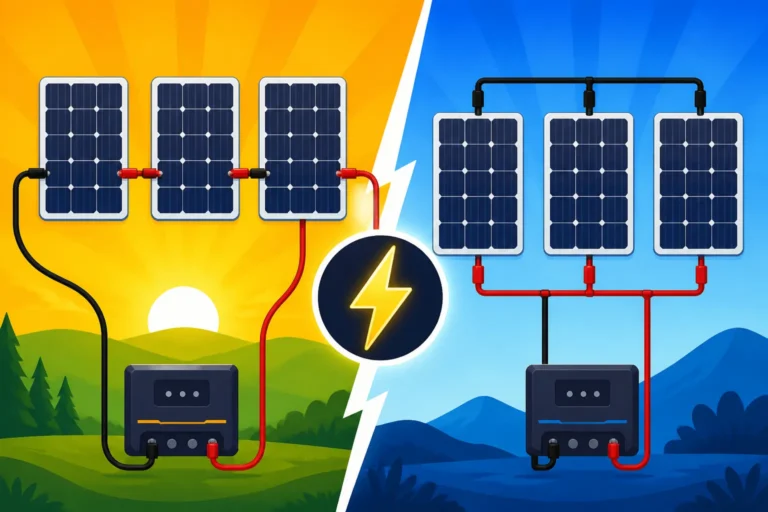
- Plan for the Future: Even if you can only afford a smaller battery bank now, design your charge controller and main wiring to accommodate future battery additions. For instance, if you start with two 12V 100Ah LiFePO4 batteries in series for a 24V system, consider purchasing a charge controller that can handle the input from more solar panels later, and an inverter that has some headroom.
- Modular Batteries: LiFePO4 batteries are excellent for expansion because they can be easily added in parallel (as long as they are the same voltage, capacity, and ideally, from the same manufacturer and batch). This allows you to increase your Amp-hour capacity without replacing your entire bank. For example, if you start with two 100Ah LiFePO4 batteries, you can easily add another two later to double your capacity to 400Ah (at 12V) or 200Ah (at 24V).
- Over-sizing Solar Input: Consider installing more solar panels than your initial battery bank strictly needs during peak sun. This extra charging capacity will come in handy when you expand your battery bank or for those inevitable cloudy days. Understanding Cost of Expanding an Off-Grid System can help you budget for future upgrades.
Starting with a basic system to power essential tools like a drill and then gradually adding batteries and panels to accommodate a circular saw or table saw is a common and practical path to off-grid independence.
The Role of a Solar Generator for Portable Power Tool Needs
For those who only need to run a power tool occasionally, or need highly portable power on a job site away from their main off-grid setup, a high-capacity portable power station (often called a solar generator) can be an excellent supplementary or even primary solution.
- Convenience: Devices like the EcoFlow Delta Pro or Bluetti AC200MAX offer substantial battery capacity (often LiFePO4) and powerful pure sine wave inverters in a single, portable unit. You can charge them from solar panels, your vehicle, or even the grid when available.
- Specific Use Cases: Perfect for quickly tackling a repair at a different location on your property, charging tool batteries, or even running a single high-draw tool for a short burst.
- Cost vs. Full System: While a powerful solar generator might seem expensive initially, it can be more cost-effective than building a full custom off-grid system if your primary need for power tools is infrequent or highly mobile. However, for continuous, heavy-duty workshop use, a dedicated, larger off-grid system will always be more robust and scalable. These devices are often reviewed in guides like Best Solar Generators for Off-Grid Use.
Consider how often and where you'll be using your power tools. Sometimes, a hybrid approach with a main off-grid system for the house and a portable solar generator for tools is the most flexible and realistic option.
Battery Capacity Comparison for Power Tool Use
To give you a clearer picture, here's a table comparing different battery capacities and what they might realistically power in terms of common power tools. This assumes a 48V LiFePO4 system with 90% DoD and 90% inverter efficiency, offering 2 days of autonomy.
| Nominal Usable Battery Capacity (Wh) | Equivalent 48V LiFePO4 Ah | Example Daily Tool Usage | What It Can Power (Realistic) | Notes |
|---|---|---|---|---|
| 1,000 – 2,000 Wh | ~20-40 Ah | 500-1000 Wh | Occasional drill, impact driver, small sander for short tasks (1-2 hours total). | Good for RVs or small cabins with very light, intermittent tool use. |
| 2,000 – 4,000 Wh | ~40-80 Ah | 1000-2000 Wh | Regular drill/driver use, occasional circular saw (1500W for 30-60 min), jig saw, orbital sander. | Suitable for light workshop tasks or frequent DIY projects on a homestead. |
| 4,000 – 8,000 Wh | ~80-160 Ah | 2000-4000 Wh | Daily circular saw (1500W for 1-2 hours), angle grinder, small table saw (for short bursts), shop vac. | Ideal for active workshops or small construction projects. Can handle more demanding single tools. |
| 8,000 – 16,000 Wh | ~160-320 Ah | 4000-8000 Wh | Sustained use of multiple tools, larger table saw, miter saw, air compressor (intermittent). | Excellent for a full-time off-grid workshop or frequent heavy construction. Provides significant power headroom. |
Remember, these are usable capacities, already accounting for inverter efficiency and battery depth of discharge. Your actual daily power consumption from tools will determine where you fall on this spectrum.
Disclaimer
The information provided in this article is for general guidance and informational purposes only, and does not constitute professional advice. Off-grid solar system design and installation can be complex and involve electrical hazards. Always consult with a qualified solar professional or electrician before making any decisions or undertaking any installations. Ensure compliance with all local codes and regulations.