How Much Solar to Run A Cpap Machine
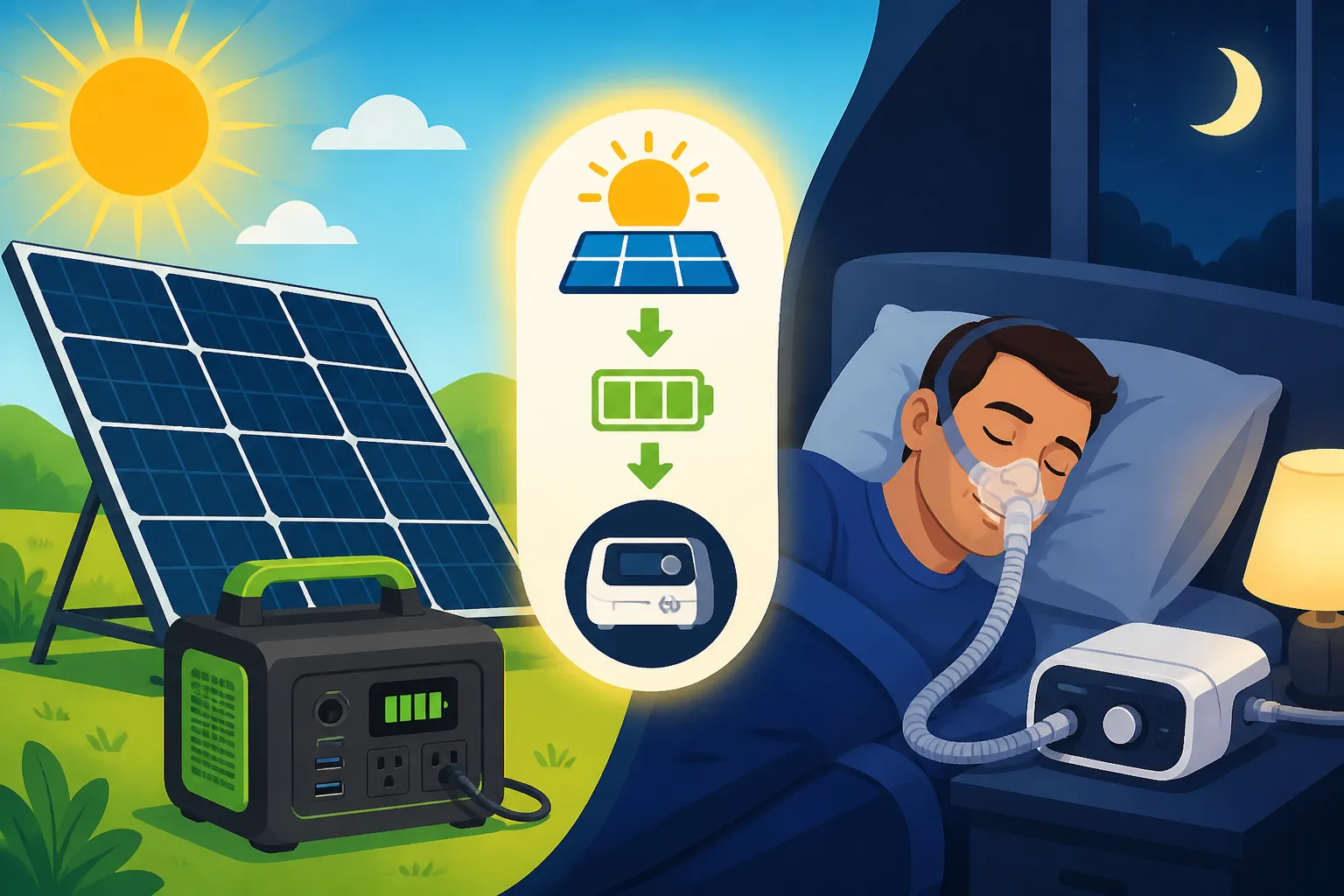
The thought of relying on an off-grid solar system to power something as critical as a CPAP machine can feel incredibly daunting. You're not just thinking about keeping the lights on; you're thinking about your health and uninterrupted sleep, especially when you're out in the wilderness or living off the beaten path. This comprehensive guide is here to walk you through the precise steps of sizing an off-grid solar setup specifically designed to reliably power your CPAP, ensuring you can breathe easy, no matter where you are.
Understanding Your CPAP Machine's Power Needs
Before you even start looking at solar panels or batteries, the very first step in designing an off-grid solar system for your CPAP machine is to truly understand its power demands. It’s not just about plugging it in; it's about knowing the ins and outs of its consumption, which can vary wildly depending on its features and how you use it.
Decoding Wattage, Watt-Hours, and Amps
These terms might sound like technical jargon, but they are absolutely fundamental to sizing your system correctly. Think of it like this:
- Watts (W): This is the instantaneous power your CPAP machine draws at any given moment. It’s like the speed of a car. When your machine is running, this is how much "oomph" it's currently using. You'll often see this listed on the machine's power brick or in its manual. For instance, a basic CPAP might draw 30-60 watts, but with accessories, it can easily jump.
- Watt-Hours (Wh): This represents the total energy consumed over a period of time. This is the crucial number for sizing your battery bank. If watts are speed, watt-hours are the total distance traveled. If your CPAP uses 50 watts for 8 hours, it consumes 400 watt-hours (50W x 8h = 400Wh).
- Amps (A) or Amp-Hours (Ah): Amps refer to the electrical current, and amp-hours are the total current flow over time. While watt-hours are generally easier for most people to grasp when it comes to total energy, amp-hours are vital for battery sizing, especially when dealing with specific battery voltages (like a 12V system). To convert watt-hours to amp-hours for a 12V system, you'd divide the watt-hours by 12V. For example, 400Wh / 12V = 33.3 Ah.
It's common for CPAP machines to list their power requirements on the sticker of the power brick or in the user manual. You might see something like "Input: 100-240V AC, 1.5A" and "Output: 24V DC, 3.75A." The output DC voltage and current are what the machine actually uses. Multiplying these (24V * 3.75A) gives you the DC wattage, which in this case is 90 watts. This 90 watts is what your machine could draw at maximum, often when the humidifier and heated tubing are engaged.
Factors Affecting CPAP Power Consumption
The base CPAP unit itself is usually quite efficient, but it's the creature comforts that really start to eat into your power budget.
- Heated Humidifiers: This is hands-down the biggest power hog in most CPAP setups. Many users find a humidifier essential for comfort, preventing dry nasal passages, but they can easily double or even triple your machine's overall power consumption. A typical humidifier can add anywhere from 30 to 70 watts to your nightly usage. If you're going off-grid, especially in warmer climates, considering if you truly need the humidifier on every night, or perhaps at a lower setting, can significantly reduce your power footprint.
- Heated Tubing: Similar to the humidifier, heated tubing adds another layer of comfort by preventing condensation and ensuring warm, moist air reaches you. However, it also demands more electricity, typically adding another 10-20 watts. Combining both a heated humidifier and heated tubing can push a CPAP machine's total draw well over 100 watts, turning a modest power need into a substantial one for an off-grid system.
- Hours of Use Per Night: This one seems obvious, but it's often overlooked. Do you use your CPAP for a strict 8 hours, or do you sometimes get by with 6, or perhaps need 9-10 hours? Every hour counts when you're calculating your total watt-hour consumption. Be realistic about your typical usage patterns.
- DC vs. AC Power: Most CPAP machines come with an AC power adapter, meaning they take standard wall current. However, many models offer optional DC power converters (often sold separately). Using a DC converter directly from your battery bank is significantly more efficient than running the machine through an inverter that converts DC battery power to AC, and then the CPAP's power brick converts it back to DC. Each conversion step results in energy loss, usually around 10-15% per conversion. Switching to a direct DC connection can save you a noticeable amount of power over a night, extending your battery life or allowing for a smaller, more efficient system.
Calculating Your Daily Energy Requirements for a CPAP
Once you understand the basic power terminology and the features that impact your CPAP's energy draw, it's time to put pencil to paper and figure out exactly how much energy you'll need to generate and store each day. This step is critical; underestimating your needs is a common mistake that leads to frustration and interrupted sleep.
Step-by-Step Load Analysis
Let's break down how to calculate your daily watt-hour consumption for your CPAP machine.
- Identify Base Wattage: Check your CPAP machine's manual or power brick. Look for the DC output voltage and amperage. Multiply these to get the maximum DC wattage. If only AC input is listed, use a Kill-A-Watt meter (easily found on Amazon) to measure actual consumption while the machine is running with your preferred settings. This is often more accurate than manufacturer ratings, which can be inflated for maximum load.
- Factor in Accessories:
- Heated Humidifier: If you use it, add its wattage. A ResMed AirSense 10, for example, typically draws around 30-40W on its own, but with the humidifier active, it can jump to 60-80W, sometimes peaking higher. Let's assume an average of 70W total with humidifier.
- Heated Tubing: If you use it, add its wattage. This might be another 10-20W. Let's assume 15W.
- Determine Total Operating Wattage:
- Example 1 (Basic CPAP, no humidifier/heated tubing): 40W
- Example 2 (CPAP with humidifier, no heated tubing): 70W
- Example 3 (CPAP with humidifier AND heated tubing): 70W + 15W = 85W
- Calculate Nightly Watt-Hours: Multiply your total operating wattage by the number of hours you use the machine per night.
- Example 1 (8 hours): 40W x 8h = 320 Wh
- Example 2 (8 hours): 70W x 8h = 560 Wh
- Example 3 (8 hours): 85W x 8h = 680 Wh
- Add a Safety Buffer: It's always wise to add a 15-20% buffer to your daily estimate. This accounts for variations in power draw, slight inefficiencies, or simply needing to run it a bit longer on an occasional night.
- Example 3 with 20% buffer: 680 Wh * 1.20 = 816 Wh daily.
This How to Calculate Daily Energy Usage is a critical first step. For accurate measurements, especially if you have an older or less common CPAP, consider using a plug-in watt-hour meter. You can find affordable options that simply plug into the wall, and your CPAP plugs into them. They'll give you a precise reading of how many watt-hours your device consumes over a period, making your calculations much more reliable.
Accounting for System Inefficiencies and Days of Autonomy
Your daily watt-hour calculation is a great start, but it's not the whole story. An off-grid solar system isn't 100% efficient, and you need to plan for those inevitable cloudy days.
- Inverter Efficiency Loss: If you're running your CPAP directly on DC power via a dedicated DC converter, you mostly bypass this. However, if you're using your CPAP's standard AC adapter plugged into an inverter, you will experience energy loss. Most good pure sine wave inverters are 85-92% efficient. This means if your CPAP needs 680 Wh, your battery actually needs to provide closer to 750-800 Wh (680 / 0.85 = 800Wh). It's a hidden drain that can quickly add up.
- Battery Depth of Discharge (DoD): Batteries perform best and last longest when you don't fully deplete them.
- LiFePO4 (Lithium Iron Phosphate) batteries: These are the superstars for off-grid living. They can typically be discharged to 80-90% (or even 100% in some cases, though 80% is safer for longevity) without significant harm, offering a huge usable capacity. Many modern off-grid systems, even for smaller setups, opt for LiFePO4 due to their longevity and efficiency. Check out our guide on the Best Off-Grid Solar Batteries for more details.
- Lead-Acid batteries (AGM, Gel, Flooded): These are less expensive upfront but should only be discharged to 50% to maximize their lifespan. Going below 50% regularly will dramatically shorten their life. This means if you need 800 Wh from a lead-acid battery, you actually need a battery bank with 1600 Wh of total capacity.
- Days of Autonomy: This refers to how many days your battery bank can power your CPAP (and other essential loads) without any sun. This is crucial for maintaining power during extended cloudy weather, heavy rain, or even snowstorms. For a medical device like a CPAP, you absolutely do not want to skimp here. Aim for at least 2-3 days of autonomy, possibly more if you're in a region known for prolonged bad weather. Learning How to Account for Cloudy Days is essential for robust system design. If you're building a system for a remote cabin in the Pacific Northwest, for instance, you'd want more autonomy than someone in sunny Arizona.
Let's refine our Example 3 (816 Wh daily with buffer, using AC adapter, aiming for 2 days autonomy with LiFePO4 batteries).
- With Inverter Loss: 816 Wh / 0.88 (assuming 88% inverter efficiency) = 927 Wh needed from the battery.
- For 2 Days Autonomy: 927 Wh/day * 2 days = 1854 Wh total storage needed.
- With LiFePO4 DoD (80%): 1854 Wh / 0.80 = 2317.5 Wh total nominal battery capacity required.
This detailed calculation helps you move from a vague idea of "I need solar" to concrete numbers for your battery bank. If you're wondering How Many Batteries for an Off-Grid System, these calculations form the foundation.
Sizing Your Solar Components for CPAP Reliability
Now that you have a firm grasp of your CPAP's daily energy demands and have factored in system inefficiencies and autonomy, it's time to select the actual hardware. This involves choosing solar panels, a battery bank, an inverter, and a charge controller, all working together seamlessly to keep your CPAP running reliably.
Determining Solar Panel Wattage
Your solar panels are the heart of your off-grid system, responsible for replenishing the energy your CPAP consumes. Sizing them correctly means considering not just your daily usage, but also the amount of usable sunlight your location receives.
The key factor here is Peak Sun Hours, which refers to the equivalent number of hours per day when the sun's intensity averages 1,000 watts per square meter. This isn't the same as daylight hours; it's about the quality and intensity of the sun. A tool like PVWatts Calculator can give you average peak sun hours for your specific location. For example, if you live in Flagstaff, Arizona, you might have 5-6 peak sun hours in summer but only 3-4 in winter. In Seattle, Washington, those numbers would be significantly lower. Understanding Peak Sun Hours Explained is fundamental to proper panel sizing.
To calculate your required solar panel wattage:
- Start with your daily energy need from the battery: From our previous example, let's use 927 Wh per day needed from the battery (after accounting for CPAP usage, buffer, and inverter losses).
- Factor in system losses during charging: There are always some losses as power moves from panels through the charge controller to the battery. A conservative estimate for these losses is around 15-20%. So, your panels actually need to generate more than 927 Wh to deliver that to the battery. Let's assume 15% loss, meaning you need to generate 927 Wh / 0.85 = 1090 Wh from your panels.
- Divide by your location's lowest average peak sun hours: Always size for your worst-case scenario (e.g., winter months) for critical loads like a CPAP. Let's assume you're in a location with an average of 3.5 peak sun hours in winter.
- Calculate required panel wattage: 1090 Wh / 3.5 peak sun hours = ~311.4 Watts.
Therefore, you'd need approximately 315-350 watts of solar panels to reliably power your CPAP machine during the darkest winter days in this hypothetical location. Remember that panels like those offered by Renogy are quite popular for their durability and efficiency in various off-grid setups. It's often a good idea to slightly oversize your array (by 10-20%) to account for less-than-ideal conditions like dirty panels or slightly overcast days that aren't quite "cloudy" enough to count as zero production. This guide on How Many Watts of Solar You Need can help you refine your calculations.
Sizing the Battery Bank for Consistent Power
Your battery bank is your energy reservoir, storing power from your panels for use whenever you need it – especially at night when the sun isn't shining. For a CPAP, a reliable, robust battery bank is paramount.
We previously calculated that for our example CPAP (816 Wh daily, 2 days autonomy, 80% LiFePO4 DoD, factoring inverter loss), we need a total nominal battery capacity of approximately 2317.5 Wh.
To translate this into actual battery sizing:
- Choose your system voltage: For smaller systems like one primarily for a CPAP, a 12V system is often the simplest and most cost-effective. Larger systems for whole homes might use 24V or 48V. Our guide on 12V vs 24V vs 48V: Which to Choose provides a deeper dive. Let's stick with 12V for this example.
- Calculate required Amp-Hours (Ah): 2317.5 Wh / 12V = ~193.1 Ah.
So, you would need a 12V battery bank with at least 200 Ah of usable capacity (for LiFePO4 at 80% DoD, this means a nominal 250Ah battery or two 100Ah batteries in parallel). A single 200Ah 12V LiFePO4 battery would be an excellent choice, or two 100Ah 12V LiFePO4 batteries wired in parallel for redundancy and easier handling. LiFePO4 batteries are truly the way to go for CPAP users due to their long lifespan (often 10+ years), consistent power delivery, and high usable capacity. They might be more expensive upfront, but their total cost of ownership is often lower than lead-acid due to their durability and efficiency. Our article on How to Size an Off-Grid Battery Bank will offer more in-depth guidance.
Selecting the Right Inverter and Charge Controller
These two components are the brains and brawn of your electrical system, managing the flow of power.
- Inverter: If you absolutely must use your CPAP's AC adapter, a pure sine wave inverter is non-negotiable. CPAP machines, like most modern electronics, are sensitive to power quality. A modified sine wave inverter, while cheaper, can potentially damage your machine, cause it to run inefficiently, or void its warranty.
- Sizing: Look at the maximum wattage your CPAP draws (e.g., 85W in our example). Your inverter's continuous watt output should comfortably exceed this. A 300-watt pure sine wave inverter is usually sufficient for a single CPAP, even with humidifier and heated tubing, offering plenty of headroom. If you plan to power other small devices, you might consider a 500W or 1000W inverter, but remember, larger inverters have slightly higher idle draws. For more on this, check out our comparison of Pure Sine Wave vs Modified Sine Wave Inverters.
- Charge Controller: This device manages the power flowing from your solar panels to your batteries, preventing overcharging and optimizing the charging process.
- MPPT (Maximum Power Point Tracking) controllers are generally recommended for off-grid systems, even smaller ones. They are significantly more efficient than PWM (Pulse Width Modulation) controllers, especially in varying light conditions or when the panel voltage is much higher than the battery voltage. This means you'll capture more energy from your solar panels, which is a huge advantage when every watt counts for a CPAP.
- Sizing: The charge controller needs to be sized based on your total solar panel wattage and your battery bank voltage. For example, if you have 350 watts of 12V nominal panels, the maximum current would be around 350W / 12V = 29 amps. You'd want a charge controller rated for at least 30-40 amps to provide a safety margin.
- All-in-One Power Stations: For those who want simplicity, a high-capacity portable power station (often called a solar generator) can combine the inverter, charge controller, and battery into one unit. Brands like EcoFlow or Jackery (you can often find a selection on Amazon) offer excellent solutions that are essentially plug-and-play for a CPAP, though they might not offer the same customizability as a component-based system.
Here’s a summary table for our example CPAP system (8 hours daily, with humidifier and heated tubing, 2 days autonomy, 12V LiFePO4 system, AC power via inverter):
| Component | Calculation / Recommendation | Example Value |
|---|---|---|
| Daily CPAP Use | 85W (CPAP + humid/heat) x 8 hrs = 680 Wh | 680 Wh |
| Daily Battery Need | (680 Wh + 20% buffer) / 0.88 (inv. eff.) = 927 Wh | 927 Wh |
| Total Battery Capacity (Nominal) | (927 Wh/day x 2 days autonomy) / 0.80 (LiFePO4 DoD) = 2317 Wh | 2317 Wh |
| Battery Bank Size (12V LiFePO4) | 2317 Wh / 12V = 193 Ah nominal (Round up to nearest standard size) | 200-250 Ah |
| Solar Panel Wattage | (927 Wh / 0.85 (charging loss)) / 3.5 peak sun hrs = 311.4 W (Round up) | 350-400 W |
| Inverter | Pure Sine Wave, continuous output > 85W (e.g., 300W-500W for headroom) | 300W |
| Charge Controller | MPPT, rated for > (350W / 12V) = ~29A (e.g., 30A-40A) | 30A-40A |
Real-World Considerations and Tips for CPAP Users
Setting up an off-grid solar system for your CPAP is more than just calculations; it's about smart habits and backup plans. Even the most perfectly sized system can encounter unexpected challenges, so being prepared is key.
Optimizing Your CPAP for Off-Grid Use
Every watt-hour you save means a smaller, more affordable solar system and greater peace of mind.
- Switching to DC Power Directly: This is, without a doubt, the single biggest optimization you can make. As discussed, running your CPAP's AC adapter through an inverter introduces significant efficiency losses. Many CPAP manufacturers (like ResMed or Philips Respironics) offer DC converters specifically designed for their machines. These plug directly into a 12V (or sometimes 24V) DC source, bypassing the inverter altogether. This can reduce your nightly consumption by 10-20% and is highly recommended for permanent off-grid setups.
- Turning Off Humidifiers and Heated Tubing: This isn't always feasible or comfortable for everyone, but if you can tolerate it, disabling or reducing the settings for your heated humidifier and heated tubing will drastically cut your power draw. A CPAP that consumes 85 watts with all the bells and whistles might drop to 30-40 watts without them. Experiment to see what you can comfortably manage, especially in warmer or more humid climates where these features might be less critical. Always consult with your doctor or sleep specialist before making changes to your therapy, especially if you have significant issues with dryness or congestion.
- Using a Travel CPAP Machine: If your off-grid usage is for shorter trips or a secondary location, investing in a travel CPAP machine could be a game-changer. These machines, like the ResMed AirMini or Philips Respironics DreamStation Go, are designed to be compact and, crucially, very power-efficient. They often have smaller integrated humidifiers (or no humidifiers) and typically consume less power than full-sized home units, making them much easier to power with a small solar setup or even a portable power bank.
Backup Power Strategies
Even with a perfectly sized system and optimized usage, things can go wrong. A prolonged spell of bad weather, an equipment malfunction, or simply needing more power than expected can leave you in a bind. Having a reliable backup plan is essential for a medical device.
- Portable Power Stations/Solar Generators: These all-in-one units are fantastic for short-term backups or for use when your main system is down for maintenance. Many models from brands like EcoFlow, Bluetti, or Jackery can be charged by solar panels or a wall outlet (when available) and can run a CPAP for several nights. They're often quieter than gas generators and require less maintenance. Keep one fully charged for emergencies.
- Small Gas Generator: For extended cloudy periods or if your main system experiences a significant issue, a small, quiet inverter generator can be a lifesaver. Brands like Honda or Yamaha offer excellent, fuel-efficient models. You can use it to directly power your CPAP (via its AC adapter) or, more efficiently, to recharge your main battery bank. Connecting it properly to your system is key, and our guide on How to Add a Generator to Your Design can help you integrate this safely. Just remember fuel storage and maintenance.
- Having Spare Fully Charged Batteries: For minimal loads like a CPAP, simply having a spare, fully charged LiFePO4 battery (or even a few smaller ones) dedicated solely for CPAP use can provide peace of mind. If your primary system goes down, you just swap batteries. This is especially practical for 12V systems where batteries are easily portable.
Ultimately, powering your CPAP off-grid is entirely achievable with careful planning and the right equipment. By understanding your specific power needs, making smart choices about efficiency, and having robust backup strategies, you can ensure restful nights and peace of mind wherever your off-grid adventures take you.
Disclaimer
The information provided in this guide is for general informational purposes only and does not constitute professional advice. Off-grid solar system design and installation can be complex and involve electrical hazards. Always consult with a qualified solar professional or electrician before designing or installing any solar power system. Ensure all installations comply with local codes and regulations. Relying on an off-grid system for medical devices requires extra caution and redundant backup solutions. We are not responsible for any damage, injury, or other issues that may arise from using this information.