Bluetti AC300 for Off-Grid: Specs and Review
Navigating the world of off-grid power can feel like a real puzzle, especially when you're trying to figure out which portable power station truly delivers the goods for your remote cabin, RV adventures, or just reliable home backup. Many of us have been there, sifting through endless specs, wondering if a particular unit can really handle our demanding appliances. This guide is dedicated to breaking down the Bluetti AC300 power station, delving into its specifications, real-world performance, and whether it’s the right fit for your off-grid dreams, helping you cut through the confusion and make an informed decision.
Unpacking the Bluetti AC300 System
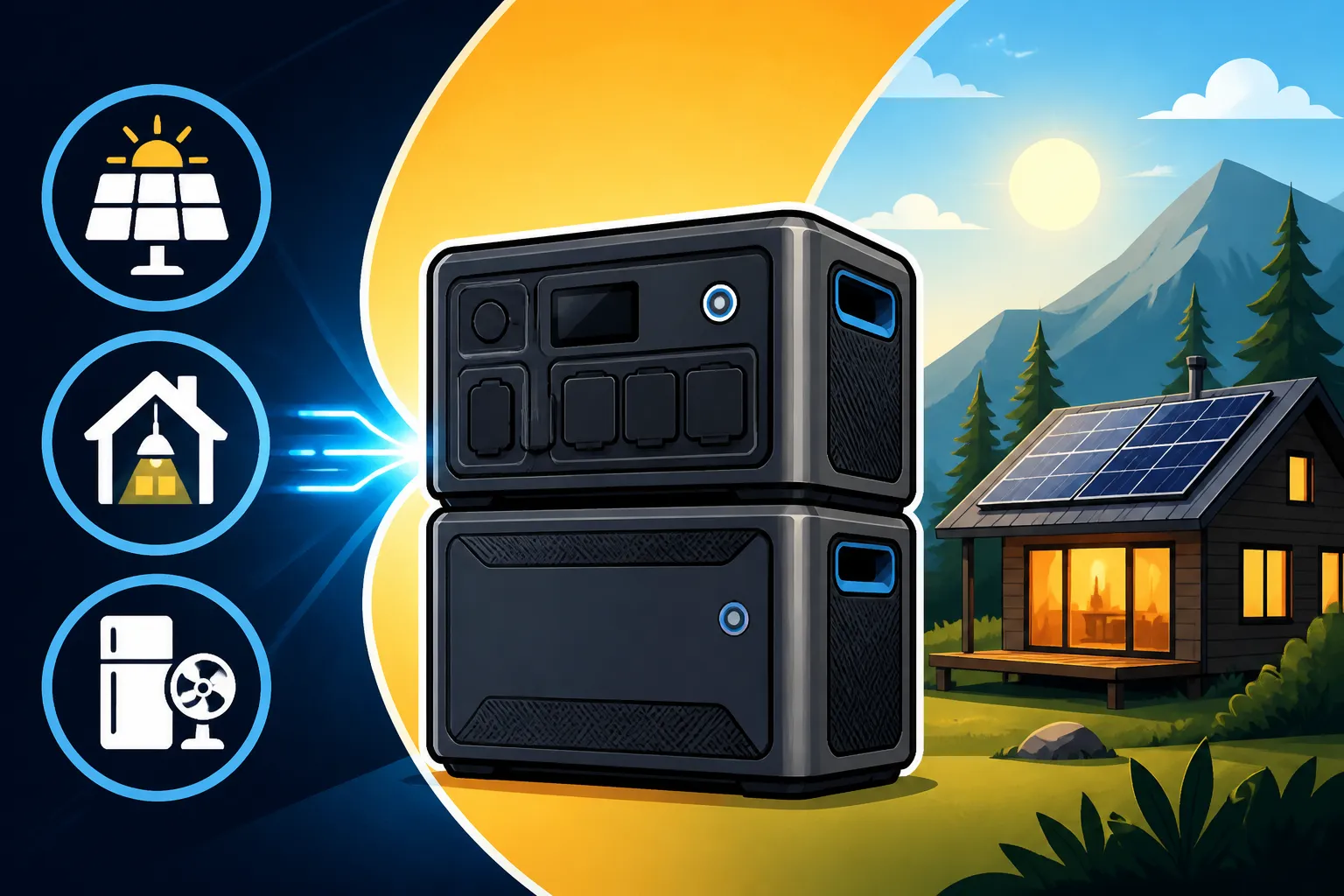
The Bluetti AC300 isn't just another beefy battery in a box; it's a modular power station designed with flexibility and serious output in mind. It really stands out because it separates the inverter/controller unit from the batteries, allowing you to customize your setup more than a typical all-in-one unit. This can be a huge advantage when you're trying to figure out How to Choose an Off-Grid Solar System, as it offers a different approach to scaling your power.
Core Specifications and Features
At its heart, the Bluetti AC300 unit itself boasts a 3,000W pure sine wave inverter, which is crucial for running sensitive electronics without a hitch. This isn't a modified sine wave that can potentially damage certain devices; it's clean, stable power just like you get from the grid. Even more impressive is its 6,000W surge capability, meaning it can handle those initial power spikes from appliances like refrigerators or power tools. For instance, if you're trying to run a well pump for your remote property, that surge capacity can be a game-changer when the pump first kicks on.
What truly sets the AC300 apart is its modularity. It doesn't come with built-in batteries. Instead, it pairs with Bluetti's external B300 battery modules. Each B300 module packs 3,072Wh (watt-hours) of LiFePO4 (Lithium Iron Phosphate) battery capacity. The AC300 can link up to four B300 modules, giving you a colossal total capacity of 12,288Wh, or over 12 kWh! This kind of expandability means you can start smaller and grow your system as your needs (or budget) expand.
The unit also features a robust solar input, capable of accepting up to 2,400W from solar panels, with a dual MPPT (Maximum Power Point Tracking) charge controller built right in. This high solar input means faster recharging times, which is incredibly important for maintaining power autonomy during extended periods off-grid. It also supports simultaneous AC and solar charging, bringing its total input to an astonishing 5,400W when you're really trying to juice it up quickly.
Modular Battery System
The external B300 battery modules are the real workhorses here. Made with LiFePO4 chemistry, these batteries offer a significant lifespan, often rated for 3,500+ cycles to 80% original capacity. Compared to older lead-acid options, LiFePO4 batteries are lighter, safer, and can be discharged much deeper without damage, making them a fantastic choice for any serious off-grid setup. When you consider the Cost of an Off-Grid Solar Battery Bank, the upfront investment in LiFePO4 might seem higher, but their longevity and performance often make them more cost-effective over the long haul.
Connecting the B300 modules to the AC300 head unit is remarkably straightforward, typically involving dedicated cables that ensure a secure and efficient power transfer. This modularity means that if one battery module ever has an issue (which is rare with LiFePO4), your entire system isn't down. You can simply swap out or service that specific module. For RVers or tiny home dwellers, this also means you can place the battery modules in different compartments if space is a premium, giving you more flexibility in your layout.
Imagine you're trying to power a remote workshop. You might start with one AC300 and two B300 batteries, giving you a solid 6 kWh of storage. Later, if you add more power tools or want to extend your operating hours, you can simply purchase another B300 module and easily integrate it, instantly doubling your capacity without needing to overhaul your entire electrical system. This kind of flexibility is a core reason why many choose a system like the AC300.
Connectivity and Control
User experience is key, and Bluetti has put a lot of thought into how you interact with the AC300. The unit features a vibrant, intuitive touchscreen display right on the front. This screen provides real-time data on power input, output, battery state of charge, and alerts. It's incredibly handy for a quick glance to see how your system is performing.
Beyond the physical display, the AC300 also offers smart control via a dedicated smartphone app, accessible through Bluetooth or Wi-Fi. This app allows you to monitor your system from afar, toggle AC or DC outputs, adjust charging parameters, and even receive firmware updates. If you're out exploring and your off-grid cabin is left unattended, being able to check its power status from your phone can provide immense peace of mind. You can even track your How Many Watt-Hours You Use Per Day to better understand your consumption patterns.
Real-World Performance for Off-Grid Living
When you're truly living off the grid, the rubber meets the road with how a power station handles your daily electrical demands. The Bluetti AC300 isn't just about impressive numbers on paper; it's designed to perform in varied real-world scenarios, making it a viable solution for many seeking energy independence.
Powering Essential Appliances
With its 3,000W continuous pure sine wave output and a 6,000W surge capacity, the AC300 is more than capable of running most household appliances. Think about it: a standard refrigerator typically draws 100-200W, a microwave might pull 1000-1500W, and even a small air conditioner could be within its range, depending on its wattage. For those living in an RV or a tiny home, this means you don't have to compromise on comfort. You can run your coffee maker, toaster, hair dryer, or even a smaller electric water heater for a short burst.
Let's consider a practical scenario for Off-Grid Solar Cost for an RV. Imagine you're parked in a beautiful, remote spot. With the AC300 and its B300 battery modules, you could power your RV's 120V outlets, keeping your fridge cold, charging your laptops, and running a fan or even a small portable heater on a chilly evening. The surge capacity is especially helpful for things like vacuum cleaners or power tools that have a high momentary draw when they first start up. The ability to handle these varied loads without tripping means less frustration and more consistent power.
Solar Charging Capabilities
One of the most critical aspects of any off-grid power system is its ability to efficiently recharge from the sun. The AC300 excels here with a maximum solar input of 2,400W. This high input, combined with its dual MPPT charge controllers, means it can convert a significant amount of solar energy into usable power for your batteries. To put this into perspective, if you're using 400W solar panels, the AC300 can handle up to six of them simultaneously.
For optimal performance, you'll want to pair it with high-quality solar panels, perhaps from reputable brands like Renogy or Jackery, that can deliver consistent power. The efficiency of the MPPT controller ensures that even on partially cloudy days, you're getting the most out of your solar array. If you're exploring Best Off-Grid Solar Panels, look for panels that offer good voltage compatibility and durability for outdoor use. Many users find that setting up a portable ground array with several high-wattage panels allows them to quickly top off their B300 batteries during peak sun hours.
During periods of good sunlight, you could potentially fully recharge a single B300 battery module (3,072Wh) in just a couple of hours if you're maxing out the solar input. This rapid charging capability is invaluable for maintaining consistent power availability, especially if you have high daily energy demands or anticipate several cloudy days. You can also explore How Many Watts of Solar You Need based on your usage patterns and local sun hours to size your array perfectly for the AC300.
Expandability and Flexibility
The modular design of the Bluetti AC300 is not just about initial setup; it's about future-proofing your off-grid power solution. Being able to add up to four B300 battery modules means your system can grow with your energy needs. This is a huge benefit for those who might start with a smaller footprint, like a weekend cabin, but later decide to transition to more full-time living or want to power more appliances.
Let's say you begin by powering a simple shed for tools and lights, needing maybe 3 kWh of storage. The AC300 with one B300 battery works perfectly. A year down the road, you decide to turn that shed into a remote workshop, complete with heavier-duty power tools and perhaps a mini-split AC unit. Instead of buying an entirely new system, you can simply purchase additional B300 batteries and integrate them into your existing AC300, expanding your storage to 6 kWh, 9 kWh, or even the full 12 kWh. This phased approach can also help manage the initial How Much Does an Off-Grid Solar System Cost by spreading the investment over time.
This modularity also extends to charging. You're not limited to just solar; the AC300 can charge from an AC wall outlet, a car's 12V port, or even a generator. The ability to combine AC and solar charging for a total input of 5,400W means you can quickly charge the entire 12 kWh system in roughly 2.5-3 hours under ideal conditions. This hybrid charging flexibility makes it incredibly adaptable to various situations, whether you're at home, on the road, or deep in the wilderness.
Pros and Cons of the Bluetti AC300 for Off-Grid
Every piece of off-grid equipment has its strengths and weaknesses, and the Bluetti AC300 is no exception. Understanding these can help you decide if it aligns with your specific needs and expectations for life independent of the traditional power grid.
Advantages for Remote Setups
The Bluetti AC300 brings a lot to the table for those embracing remote living or needing reliable backup. Firstly, its sheer power output and surge capability mean you're not constantly worrying if your appliances will run. That 3,000W continuous output, with a 6,000W surge, is genuinely robust for a portable power station, allowing you to run everything from kitchen appliances to substantial power tools. This is a significant comfort when you're far from any utility pole.
The modular design is another massive plus. You can customize the battery capacity to perfectly match your How to Calculate Daily Energy Usage, whether it's for a bare-bones cabin or a more amenity-rich setup. This also offers incredible flexibility in placement; you can keep the inverter unit accessible while stowing the battery packs in a more out-of-the-way location. The LiFePO4 battery chemistry in the B300 modules provides excellent cycle life and safety, giving you years of dependable service without the constant worry of degradation common with other battery types. For example, Battle Born Batteries are known for their LiFePO4 quality, and the B300 units follow a similar high standard.
Ease of use is paramount, especially for those new to off-grid solar. The intuitive touchscreen and comprehensive smartphone app make monitoring and managing your power simple, even for complex setups with multiple battery modules. You don't need to be an electrical engineer to understand what's going on, which can be a huge relief compared to the learning curve of building a fully custom system. Plus, the high 2,400W solar input with MPPT controllers means faster, more efficient charging from your solar array, making the most of every sunbeam.
Potential Drawbacks and Considerations
While the AC300 is powerful, it's not without its considerations. The most significant one for many is the upfront cost. Building out an AC300 system with multiple B300 batteries can be a substantial investment, particularly if you're aiming for the full 12 kWh capacity. While competitive with other high-end solar generators, it's often more expensive than a basic DIY setup using lead-acid batteries, though the lifespan and performance are incomparable. When looking at Off-Grid Solar Cost: Complete Breakdown, the battery component is often the largest expense, and the B300s are premium products.
Another point to consider is the physical footprint and weight, especially with multiple B300 modules. While modularity allows for distributed placement, each B300 unit weighs around 79 pounds. This means a full 12 kWh system (AC300 plus four B300s) is definitely not a grab-and-go solution. It's portable in the sense that you can move it, but it's not something you'll be casually carrying around. For some mobile applications, this might be a constraint.
Finally, while powerful, for a truly whole-house off-grid setup with heavy year-round loads like multiple large air conditioners or electric heating, even the 12 kWh capacity might require careful management or additional backup generation. It's an excellent choice for targeted power needs, but full home power independence often demands even greater battery banks and solar arrays, as discussed in guides like How Many Batteries for an Off-Grid System or How Many Solar Panels for Off-Grid Living.
Comparing the AC300 to Other Off-Grid Solutions
When considering the Bluetti AC300, it's helpful to see where it fits in the broader landscape of off-grid power options. It occupies a unique niche, bridging the gap between small portable power stations and full-blown custom solar installations.
AC300 vs. Traditional DIY Systems
Many off-gridders choose to build their own solar systems from individual components: solar panels, a charge controller, an inverter, and a battery bank. This approach, outlined in guides like DIY Off-Grid Solar Installation Step by Step, offers ultimate customization. You can pick and choose every part, often optimize for the lowest cost, and deeply understand how your system works. For instance, you could source an inverter from Victron Energy, a charge controller from MPPT, and a custom battery bank, giving you complete control over every parameter. This route typically allows for larger, more permanently installed systems that can handle substantial whole-home loads and extended days of autonomy.
However, a traditional DIY system demands significant electrical knowledge, careful wiring, and often professional installation for safety and code compliance. It involves more complex sizing calculations—like How Much Battery Capacity You Need based on your exact daily usage—and the integration of various components. The AC300, on the other hand, simplifies this dramatically. It's essentially a pre-engineered, integrated system where the inverter, charge controller, and battery management system are all housed or directly connected, ready to go with minimal fuss. While you lose some granular control, you gain immense ease of installation and operation. For many, the plug-and-play nature of the AC300 is a huge time-saver and stress-reducer compared to piecing together a complex system.
AC300 vs. Other Solar Generators
The market for solar generators (or portable power stations) has exploded, with many brands offering compelling options. When comparing the AC300 to others, it's important to look at several factors, as discussed in Best Solar Generators for Off-Grid. Brands like EcoFlow (e.g., Delta Pro) and Jackery (e.g., Explorer series) are strong competitors.
The Bluetti AC300's standout feature against many competitors is its modular battery system. While units like the EcoFlow Delta Pro also offer expandable battery capacity, the AC300's separation of the inverter/controller from the batteries provides a distinct advantage in terms of weight distribution and potentially future upgrades of just one component. Other smaller solar generators might be all-in-one units with fixed battery capacities, which are more portable but less flexible for scaling power.
Consider the table below for a quick comparison:
| Feature | Bluetti AC300 + B300 | EcoFlow Delta Pro | Smaller All-in-One (e.g., Jackery 1000) |
|---|---|---|---|
| Inverter Output | 3,000W (6,000W surge) | 3,600W (7,200W surge) | 1,000W (2,000W surge) |
| Battery Capacity | 3,072Wh – 12,288Wh (modular) | 3,600Wh – 25,000Wh (expandable) | 1,002Wh (fixed) |
| Battery Type | LiFePO4 | LiFePO4 | Li-ion (NMC) |
| Solar Input | 2,400W max | 1,600W (X-Stream, smart home) | 200W |
| Modularity | Inverter separate from batteries | All-in-one, but expandable with smart batteries | All-in-one, fixed |
| Charging Speed | Up to 5,400W (AC+Solar) | Up to 6,500W (AC+Solar) | Up to 200W |
| Best Use Case | Flexible cabins, RVs, workshops | Home backup, heavy RV/tiny home | Camping, light portable power |
As you can see, the AC300 positions itself as a robust, mid-to-large-scale solution that offers excellent expandability and charging flexibility, making it a serious contender for many off-grid applications.
Best Use Cases and Who It's For
The Bluetti AC300, with its robust power and modular design, shines in specific off-grid scenarios, making it an ideal choice for certain individuals and families. It's not a one-size-fits-all solution, but for those it fits, it truly excels.
Mobile Living and Small Cabins
One of the prime beneficiaries of the Bluetti AC300 system is anyone involved in mobile living, such as RV enthusiasts, van lifers, or those with tiny homes on wheels. The unit's portability (even with battery modules) and its ability to handle significant loads make it perfect for powering an RV or providing reliable energy for Cost to Power a Cabin with Solar. Imagine setting up camp in a beautiful, secluded area without worrying about shore power. With the AC300, you can run your RV's microwave, air conditioning (for a few hours, depending on the unit's power draw), refrigerator, and all your electronics. Its ability to accept high solar input means you can quickly recharge your system during sunny days, maximizing your time off-grid.
For small cabins, sheds, or remote workshops, the AC300 offers a fantastic turnkey solution. Instead of grappling with complex wiring diagrams and separate components, you get an integrated system that's ready to power lights, power tools, small appliances, and entertainment systems. Its pure sine wave output protects sensitive equipment, and the LiFePO4 batteries ensure a long, reliable life, even with daily cycling. Whether it's a hunting cabin that needs weekend power or a remote art studio requiring consistent electricity, the AC300 can be scaled to fit diverse energy demands. Many folks purchase from popular online retailers like Amazon for convenience and competitive pricing.
Emergency Backup Power
Beyond dedicated off-grid living, the Bluetti AC300 is an incredibly potent tool for emergency preparedness. When the grid goes down, as it frequently does during storms or other natural disasters, having reliable backup power is not just a luxury—it's a necessity. The AC300 can keep your essential home appliances running: your refrigerator to prevent food spoilage, critical medical devices (like a CPAP machine), lights, and communication devices.
Its ability to quickly charge from both solar panels and an AC outlet (when grid power temporarily returns) means you can efficiently manage your power resources during an extended outage. The sheer capacity of a fully loaded AC300 system (up to 12 kWh) can sustain many households for several days, depending on usage, providing significant peace of mind. This makes it a superior option compared to smaller portable power stations that might only last a few hours, or noisy, fuel-dependent generators that require constant refueling and maintenance.
Phased Off-Grid Builds
For those who are interested in transitioning to off-grid living but feel overwhelmed by the initial investment or complexity of a full system, the AC300 presents an excellent stepping stone. You can start with the AC300 unit and one or two B300 batteries to power your most critical loads. This allows you to experience off-grid living on a smaller scale, understand your actual energy consumption, and gradually expand your system as you learn more and your needs evolve. This methodical approach can make the dream of energy independence feel much more achievable.
You might begin by using it to power a specific section of your home, like a dedicated office or a few essential kitchen appliances, while still being connected to the grid. As you become more comfortable and save up, you can add more B300 battery modules and integrate more solar panels, slowly weaning yourself off grid reliance. This strategy helps to mitigate the upfront Off-Grid Solar Cost: Complete Breakdown and makes the entire process less daunting, empowering you to move at your own pace towards total energy independence.
Disclaimer
Please remember that while we strive for accuracy, the information provided in this guide is for general informational purposes only. Specifications and features of solar equipment can change, and individual results may vary based on usage, environmental conditions, and specific setup. Always consult with qualified professionals and adhere to local codes and regulations when designing, purchasing, and installing any off-grid solar system.