Best 5000W Inverter for Off-Grid
Choosing the right inverter for your off-grid solar system can feel like navigating a maze, especially when you're trying to power a home, cabin, or serious RV setup and need substantial wattage. Many folks find themselves scratching their heads, trying to figure out if a 5000W inverter is truly enough for their needs and which one won't leave them in the dark. This guide aims to clear up that confusion, offering a deep dive into what makes a 5000W inverter tick and helping you pinpoint the best options for reliable, independent power.
Understanding the Heart of Your Off-Grid System: The 5000W Inverter
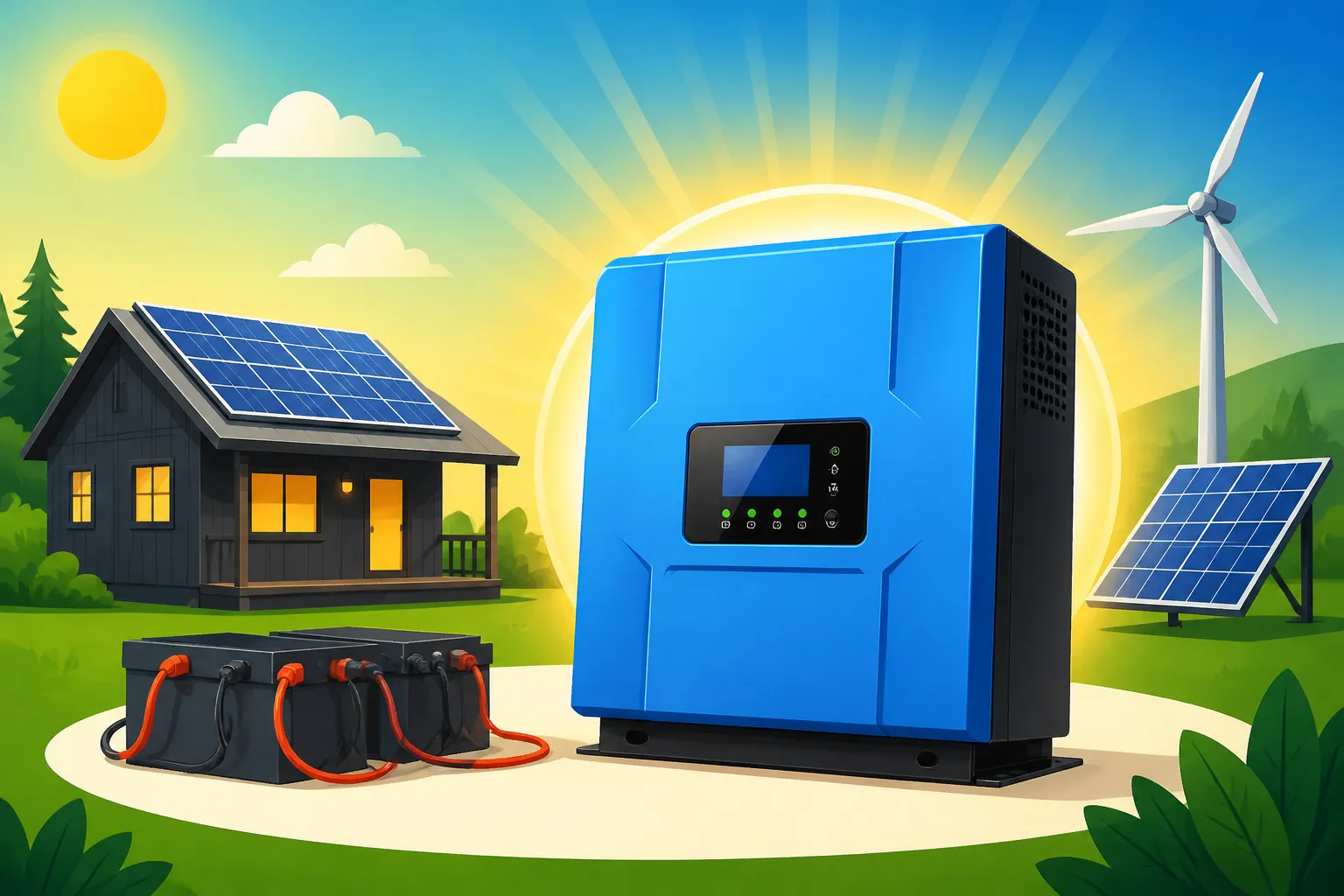
When you're embarking on the journey of off-grid living, your inverter is arguably the most crucial piece of equipment, acting as the bridge between your DC battery power and the AC electricity your appliances need. Think of it as the brain converting the raw energy from your batteries into the usable power for your lights, refrigerator, and even tools. A 5000-watt inverter is a powerhouse, capable of handling a significant load, but understanding its nuances is key to a smooth-running system.
What 5000 Watts Really Means for Off-Grid Living
A 5000W inverter is designed to provide 5000 watts of continuous power. This means it can constantly supply up to 5000 watts to your connected appliances without overheating or shutting down. But there's another crucial number: surge power. Many appliances, especially those with motors like refrigerators, well pumps, or power tools, draw a much higher amount of power for a brief moment when they first start up. This initial spike is called the "surge." A good 5000W inverter will have a surge rating significantly higher than its continuous rating—often 10,000 watts or more for a few seconds—to handle these starting demands without tripping.
For a typical off-grid cabin or a moderately equipped tiny home, 5000 watts continuous power can be quite sufficient. It allows you to run a refrigerator, lights, a TV, computers, and even a microwave or washing machine, though usually not all at the exact same time without careful energy management. It's about balancing your loads and understanding what your appliances truly demand. For a deeper dive into your power needs, you might want to read our guide on how to calculate your daily energy usage.
The Critical Role of Pure Sine Wave Output
You'll often hear the term "pure sine wave" when discussing inverters, and it's not just marketing jargon—it's absolutely vital for any modern off-grid setup. Here's why:
- Mimicking Grid Power: A pure sine wave inverter produces AC electricity that is virtually identical to the power you get from the utility grid. This clean, smooth waveform is what all your sensitive electronics, like laptops, TVs, medical devices (CPAP machines!), and even many kitchen appliances, are designed to run on.
- Protecting Your Appliances: Modified sine wave or square wave inverters are cheaper, but they produce a "choppier" waveform. While some older, simpler appliances might tolerate them, they can cause sensitive electronics to hum, run inefficiently, overheat, or even suffer permanent damage over time. Imagine trying to run a high-tech espresso machine on power that's constantly fluctuating—it's a recipe for disaster. For the longevity and safety of your valuable electronics, a pure sine wave inverter is a non-negotiable feature for any serious off-grid system.
Essential Features to Prioritize in a 5000W Off-Grid Inverter
Not all 5000W inverters are created equal. When you're looking for the best one for your precious off-grid setup, you need to consider a range of features beyond just the wattage. These elements can significantly impact your system's efficiency, reliability, and overall user experience.
Input and Output Considerations
The voltage of your system is fundamental, and your inverter needs to be compatible with it.
- DC Input Voltage (Battery Bank Compatibility): A 5000W inverter typically operates at higher DC voltages to manage the large current draw more efficiently. While some smaller 5000W units might operate on a 24V DC battery bank, most robust models for continuous home use are designed for a 48V DC input. Running a 5000W load at 12V would require an enormous current (over 400 amps!), leading to very thick, expensive cables and significant energy loss. A 48V system dramatically reduces the amperage, making your wiring more manageable and your system more efficient. This choice ties directly into your battery bank design, so understanding how to choose an off-grid battery bank is crucial.
- AC Output Voltage (Appliance Compatibility): In North America, residential AC power is typically 120V, with some heavy-duty appliances like electric ranges, well pumps, or central air conditioners requiring 240V. Most 5000W off-grid inverters will output 120V, but many higher-end models offer a split-phase 120/240V output. This dual-voltage capability is essential if you plan to run any 240V appliances in your off-grid home. Always check the specifications to ensure it matches the needs of your most demanding appliances.
Efficiency and Performance Boosters
An efficient inverter means less wasted energy and more usable power from your batteries.
- High Conversion Efficiency: This measures how much DC power from your batteries is successfully converted into AC power, with the remainder lost as heat. Look for inverters with conversion efficiencies of 90% or higher. While a few percentage points might not seem like much, over months and years, it translates to significant savings in battery cycles and solar panel output. Every watt saved means a happier, longer-lasting battery bank.
- Low Idle Power Draw: Even when no appliances are running, your inverter still draws a small amount of power to stay on and monitor the system. This "idle draw" should be as low as possible, especially in an off-grid system where every watt matters. A few watts here and there can quietly drain your battery bank overnight if you're not careful.
- Integrated Charge Controller and Transfer Switch: Many modern off-grid inverters come as "inverter-chargers," combining the inverter function with a robust MPPT (Maximum Power Point Tracking) solar charge controller and/or a battery charger that can be fed by a generator. Some also integrate an automatic transfer switch, which can seamlessly switch between solar power and a backup generator. These all-in-one units, like those from Sol-Ark or Victron, simplify your wiring, reduce clutter, and often offer advanced energy management features. While they might have a higher upfront cost, the convenience and integrated intelligence are often worth it.
Safety, Durability, and Monitoring
Off-grid systems operate in various conditions, and your equipment needs to be robust and safe.
- Comprehensive Safety Protections: A reliable inverter will have multiple built-in safety features, including protection against overload (trying to draw too much power), over-temperature (running too hot), low battery voltage (preventing deep discharge that damages batteries), high battery voltage (preventing overcharging), and short circuits. These protections are vital for both the longevity of your equipment and your personal safety.
- Robust Build Quality for Harsh Environments: Off-grid locations can expose equipment to dust, humidity, and temperature fluctuations. Look for inverters with sturdy casings, good heat dissipation (often large fans or heat sinks), and components designed for continuous, heavy-duty operation. Some high-quality inverters are even rated for outdoor installation, though most are best kept in a controlled indoor environment.
- Advanced Monitoring and Communication: The best inverters offer sophisticated monitoring capabilities, allowing you to see real-time power production, consumption, battery state-of-charge, and historical data. Many come with LCD screens, but the real power lies in remote monitoring via Wi-Fi or Bluetooth apps. This allows you to check your system's health from your smartphone or computer, troubleshoot issues, and optimize performance without physically being next to the unit. Brands like Victron Energy excel in this area, offering a highly integrated ecosystem.
Top Contenders for 5000W Off-Grid Inverters
When you’re looking at serious 5000W inverter options for off-grid living, you're stepping into a realm of powerful and reliable equipment designed for continuous duty. These aren't just for occasional use; they're built to be the backbone of your independent power system. While the market offers a range, certain brands consistently rise to the top for their performance, features, and durability.
Victron Energy MultiPlus and Quattro Series
Victron Energy is often considered the gold standard in off-grid power, and for good reason. Their MultiPlus and Quattro inverter/chargers are legendary for their robust build quality, exceptional reliability, and extensive feature sets.
- Key Features: A 5000W Victron MultiPlus-II or Quattro will typically offer a powerful pure sine wave inverter, an adaptive battery charger, and a high-speed AC transfer switch. The MultiPlus-II 48/5000/70-50 120V is a very popular model, offering 5000W continuous power, a 70A battery charger, and a 50A transfer switch, all at a 48V DC input. The Quattro series adds a second AC input, making it ideal for systems with two separate AC sources, like shore power and a generator. Victron units are known for their incredibly low idle consumption and high efficiency.
- Why They Stand Out: What truly sets Victron apart is their comprehensive ecosystem. All their components, from charge controllers to battery monitors, integrate seamlessly through their VE.Bus or VE.Direct communication protocols. This allows for unparalleled system control, monitoring, and remote diagnostics via their Cerbo GX device and VRM (Victron Remote Management) portal. You can literally monitor and adjust your system from anywhere with an internet connection. They are premium products with a higher price tag, but their longevity and performance justify the investment for many off-gridders.
- Best Use Case: Full-time off-grid homes, remote cabins, or complex RV setups where reliability, advanced control, and expandability are paramount.
Sol-Ark All-in-One Inverter Systems
Sol-Ark has rapidly gained popularity for its "all-in-one" hybrid inverter solutions, which package an inverter, charge controller, and transfer switch into a single, user-friendly unit. The Sol-Ark 5K (5000W) is a prime example.
- Key Features: The Sol-Ark 5K model is a powerful 48V inverter that provides 5000W continuous output, supporting both 120V and 240V split-phase loads, which is a huge advantage for homes with standard residential appliances. It includes an integrated MPPT charge controller that can handle a substantial solar array, making it incredibly efficient at harvesting energy. It also features a built-in automatic transfer switch and can seamlessly integrate with grid power (if available for backup) or a generator.
- Why They Stand Out: Sol-Ark's strength lies in its simplicity of installation and operation, despite its advanced capabilities. Their units often feature intuitive touchscreens for local monitoring and setup, complemented by a robust online portal. They are designed to be highly versatile, capable of off-grid, grid-tied with battery backup, and hybrid configurations. For those who appreciate a single, powerful box rather than assembling multiple components, Sol-Ark is a fantastic choice.
- Best Use Case: Off-grid homesteads, homes looking for comprehensive grid-tied backup, or those seeking a powerful, easy-to-install all-in-one solution without sacrificing advanced features.
Growatt Inverters (e.g., SPF 5000 ES)
Growatt offers compelling value, providing robust off-grid inverter/chargers that are feature-rich but often at a more accessible price point than some of the premium brands. The Growatt SPF 5000 ES is a well-regarded 5000W model.
- Key Features: The Growatt SPF 5000 ES is a 48V pure sine wave inverter-charger that delivers 5000W continuous power and typically a 10,000W surge. It incorporates a high-efficiency MPPT solar charge controller (often 80A or 100A), capable of handling significant solar input. It supports both 120V and 240V output, making it versatile for most North American homes. Many Growatt models come with built-in Wi-Fi modules for remote monitoring via a smartphone app.
- Why They Stand Out: Growatt shines in providing excellent performance and a broad feature set for its price. They are a popular choice for DIYers and those building a cost-effective yet powerful off-grid system. While their monitoring interfaces might not be as polished as Victron's, they offer all the essential data you need to manage your system effectively. You can often find these units readily available for purchase on platforms like Amazon.
- Best Use Case: Budget-conscious off-gridders, cabins, or workshops that need substantial power without the highest-tier investment, but still demand reliability and essential smart features.
AIMS Power 5000 Watt Pure Sine Inverters
AIMS Power has been a long-standing player in the off-grid inverter market, offering a variety of pure sine wave inverters, including several 5000W models. They focus on providing dependable power conversion for a range of applications.
- Key Features: AIMS Power offers several 5000W pure sine wave inverters, including models with 12V, 24V, and 48V input options (though 48V is recommended for 5000W). They typically feature high surge capabilities, often double their continuous rating, to handle demanding inductive loads. Many of their units include built-in battery chargers and optional transfer switches. Some models are available with split-phase 120V/240V output.
- Why They Stand Out: AIMS Power focuses on straightforward, robust inverter technology. They are often chosen for their reliability and no-frills performance. While they might not have the integrated smart features or ecosystem breadth of Victron or Sol-Ark, they are solid workhorses that get the job done. You can also find them available through various online retailers, including Amazon.
- Best Use Case: Off-grid systems where simplicity and raw power conversion are prioritized, perhaps for more industrial applications or those who prefer to build their system with separate components.
Renogy 5000W Inverter Charger
Renogy is a well-known brand in the DIY solar world, offering a wide array of solar panels, batteries, and system components. Their 5000W inverter charger is a popular choice for those building mid-to-large scale off-grid systems.
- Key Features: The Renogy 5000W 48V Pure Sine Wave Inverter Charger is designed to be a comprehensive power solution. It provides 5000W of continuous pure sine wave AC power and usually features a high surge capacity. Crucially, it integrates an advanced MPPT charge controller (often 60A or 80A) and a multi-stage battery charger. It supports various battery types, including lithium-ion, flooded, and gel, with adjustable charging parameters. Many models also feature an AC input for a generator or shore power, with an automatic transfer switch.
- Why They Stand Out: Renogy products are often favored by the DIY community for their accessibility, comprehensive kits, and relatively competitive pricing. The Renogy 5000W inverter charger simplifies system design by combining multiple critical functions into one unit. While perhaps not as feature-rich as a Victron system, it offers a strong balance of performance, integration, and value, making it an attractive option for many off-grid homeowners and RVers.
- Best Use Case: DIY off-grid home setups, large RVs, or cabin systems where a balance of cost, integration, and performance is desired. It’s an excellent choice for those already familiar with Renogy’s ecosystem or looking for a straightforward all-in-one solution.
Here's a quick comparison of some popular 5000W inverter options:
| Feature | Victron MultiPlus-II 48/5000/70-50 | Sol-Ark 5K | Growatt SPF 5000 ES | AIMS Power 5000W (48V) | Renogy 5000W 48V Inverter Charger |
|---|---|---|---|---|---|
| Continuous Power | 5000W | 5000W | 5000W | 5000W | 5000W |
| Surge Power (approx.) | 9000W | 10,000W | 10,000W | 10,000W | 15,000W (for 20ms) |
| DC Input Voltage | 48V | 48V | 48V | 48V | 48V |
| AC Output Voltage | 120V (Single-phase) | 120/240V | 120/240V | 120V or 120/240V | 120V (Single-phase) |
| Integrated Charger | Yes (70A) | Yes | Yes (80A/100A MPPT) | Optional/Built-in | Yes (60A/80A MPPT) |
| Transfer Switch | Yes (50A) | Yes | Yes | Optional/Built-in | Yes |
| Monitoring | Advanced (Cerbo GX/VRM) | Touchscreen/App | Wi-Fi Module/App | Basic/Optional Remote | LCD/App |
| Typical Cost Range | $$$$ | $$$$ | $$ | $$ | $$$ |
| Best For | Premium, expandable systems | All-in-one residential | Value-focused systems | Robust, straightforward | DIY, integrated systems |
Note: Prices and specific features can vary by model version and retailer. Always check the exact specifications before purchase.
Key Factors to Consider Before Making Your Purchase
Choosing the "best" 5000W inverter isn't just about picking the most expensive or feature-packed one. It's about finding the perfect match for your specific off-grid needs, budget, and future plans. This involves a bit of self-assessment and careful consideration.
Matching the Inverter to Your Power Needs
Before you even start looking at specific models, you need a crystal-clear understanding of your daily energy consumption. This is where a thorough load analysis comes in. You can't just guess!
- Detailed Load Analysis: Sit down and list every single appliance you plan to run. For each, note its running wattage and its surge (starting) wattage. Don't forget how long you'll run it each day. A 5000W inverter can power a lot, but if you have a well pump (often 2000W-3000W surge) and an air conditioner (2500W-5000W continuous, much higher surge) that you want to run simultaneously, a single 5000W inverter might not cut it. You need to identify your peak concurrent load – the highest amount of power you'll draw at any single moment. This will help you determine if 5000W continuous is truly enough, or if you might need to consider a larger inverter or even two 5000W inverters in parallel. Our guide on how to do an off-grid load analysis can walk you through this essential step.
- Peak vs. Continuous Power: Always consider both. A 5000W continuous rating is great, but a weak surge capacity means your refrigerator might not even start. Look for surge ratings that are at least 2x the continuous power, ideally 3x, for appliances with motors.
System Voltage and Expandability
The voltage of your battery bank is a foundational decision that impacts your entire system.
- 48V is the Sweet Spot for 5000W: As mentioned earlier, for a 5000W inverter, a 48V DC battery bank is almost universally recommended. It offers greater efficiency, allows for thinner wiring, and generally provides a more stable and powerful foundation for your system. If you're starting from scratch, strongly consider designing your system around 48V. You can learn more about how to choose system voltage for an off-grid setup.
- Future-Proofing Your Investment: Off-grid living often involves gradual expansion. What starts as a small cabin might grow into a larger home with more appliances. Consider if the inverter you're looking at can be paralleled with another identical unit to double your power output down the line. Many higher-end inverters, like those from Victron and Sol-Ark, offer this capability, allowing you to scale your system without completely replacing your core components. This approach can save you significant money and effort in the long run.
Budget, Warranty, and Support
Let's be real, going off-grid is an investment, and you want to protect it.
- Balancing Cost and Quality: While it's tempting to go for the cheapest option you find on Amazon, remember that your inverter is literally the heartbeat of your electrical system. Skimping here can lead to frustrating breakdowns, damaged appliances, and potentially dangerous situations. Investing in a reputable brand with a proven track record, even if it costs a bit more upfront, often pays dividends in reliability and peace of mind. However, there are excellent value options like Growatt or Renogy that offer a great balance.
- Warranty and Customer Support: A strong warranty (typically 2-5 years) indicates a manufacturer's confidence in their product. Beyond the warranty, evaluate the availability and quality of customer support. When you're off-grid and something goes wrong, you need accessible technical assistance, not an endless automated phone tree. Read reviews and see what other off-gridders say about their experiences with a brand's support. This can be a significant differentiator when troubleshooting complex issues.
Installation and Permitting
Don't forget the practicalities of getting your inverter up and running.
- Installation Complexity: Some all-in-one units, like the Sol-Ark, are designed for relatively straightforward installation, simplifying wiring. Others, like a Victron MultiPlus, might require a bit more technical know-how or the integration of additional Victron components to unlock their full potential. Consider your comfort level with electrical work. If you're a beginner, a simpler kit or hiring a professional for key parts of the installation, especially if you're connecting to a main panel, might be wise. Check out our guide on how to install an off-grid solar system for a broader perspective.
- Permits and Codes: Depending on your location and the scale of your off-grid system, you might need permits and inspections. Understanding off-grid solar permits and codes in your area is critical. An inverter's compliance with safety standards (like UL certifications) can often simplify the permitting process. It's always best to be compliant to avoid potential issues down the road.
Maintaining Your 5000W Inverter for Long-Term Performance
Even the best 5000W off-grid inverter needs a little TLC to keep humming along efficiently for years to come. Proper maintenance isn't just about fixing things when they break; it's about preventative measures that ensure continuous, reliable power and extend the lifespan of your valuable equipment.
Ensuring Adequate Ventilation
Inverters generate heat during operation, especially when running at high loads. This heat needs to dissipate effectively to prevent overheating, which can lead to reduced efficiency, premature component failure, and even system shutdowns.
- Clear Airflow: Make sure your inverter is installed in a location with ample space around it, allowing for unrestricted airflow. Don't box it into a tiny, unventilated closet. If it has fans, ensure they aren't blocked by dust, debris, or other equipment. For inverters with integrated cooling fans, periodically clean any air intake filters to maintain optimal performance.
- Ambient Temperature: While inverters are designed for various operating temperatures, keeping them in a relatively cool and stable environment is ideal. Avoid direct sunlight or installation in extremely hot attics or sheds without additional ventilation. Think about where you'd be comfortable working—your inverter likely prefers similar conditions. A well-designed battery box, for instance, might integrate fans to ensure both batteries and inverter stay at optimal temperatures.
Regular Performance Monitoring and Troubleshooting
Staying on top of your inverter's performance is the best way to catch small issues before they become big problems.
- Utilize Monitoring Systems: If your inverter, like a Sol-Ark or Victron unit, offers remote monitoring via an app or web portal, use it! Regularly check your system's status: input/output voltages, current draw, battery state of charge, and any error codes. This data is invaluable for understanding how your system is performing under different loads and conditions. A sudden drop in efficiency or unusual voltage readings can be early indicators of an issue.
- Visual Inspections: Periodically (quarterly or semi-annually), give your inverter a good visual inspection. Check for any loose wiring, signs of corrosion, bulging capacitors (a sign of internal failure), or any unusual odors. Listen for strange noises, like excessively loud fans or buzzing that wasn't there before.
- Basic Troubleshooting: Familiarize yourself with your inverter's manual and common error codes. Many minor issues, like a low battery voltage shutdown or an overload trip, can be resolved quickly by checking your loads or battery health. If you do encounter a persistent problem, knowing how to interpret error messages can save you a lot of time in diagnosing the issue or communicating effectively with technical support. For more complex problems, referring to guides like how to troubleshoot off-grid solar systems can be helpful.
Software Updates
Many modern inverters, especially those with advanced features and communication capabilities, receive firmware updates from the manufacturer.
- Stay Up-to-Date: These updates can improve efficiency, add new features, fix bugs, and enhance compatibility with new battery chemistries or other components. Regularly check the manufacturer's website or app for available updates. Following the instructions carefully is crucial when performing any firmware update to avoid bricking your device. This is particularly relevant for integrated systems from brands like Victron or Sol-Ark that constantly refine their software.
Keeping these maintenance tips in mind will help ensure your 5000W off-grid inverter provides reliable, clean power for many years, truly enabling your independent lifestyle.
Disclaimer
The information provided in this article is for general informational purposes only and does not constitute professional advice. Off-grid solar system design and installation can be complex and involve electrical hazards. Always consult with qualified professionals and adhere to local electrical codes and regulations before installing or modifying any solar power system. The author and publisher are not responsible for any actions taken based on the information presented herein.