Are Rich Solar Panels Good for Off-Grid
Trying to figure out which solar panels are truly worth your hard-earned money for an off-grid setup can feel like navigating a dense forest without a map. There's a sea of options out there, all promising the sun and the moon, and it’s easy to get lost in specifications, jargon, and conflicting advice. This guide is here to cut through the noise, specifically diving into Rich Solar panels to help you understand if they are a good, reliable choice for your off-grid dreams, whether you're powering a cozy cabin, a bustling RV, or a remote workshop.
Understanding Rich Solar Panels for Off-Grid Applications
When you're embarking on an off-grid adventure, every component of your system needs to pull its weight. Solar panels are, of course, the bedrock of this system, converting sunlight into the electricity that fuels your independence. Rich Solar has carved out a niche for itself in this market, and it's essential to understand where they stand.
Who is Rich Solar and Their Market Position?
Rich Solar has steadily gained recognition among the DIY off-grid community and those looking for accessible, reasonably priced solar solutions. They aren't typically positioned as a premium, cutting-edge brand competing with the absolute highest efficiency panels on the market. Instead, their strength lies in offering a solid, dependable product at a competitive price point, which is a huge draw for many folks just starting their off-grid journey or expanding an existing system without breaking the bank.
They've made their products widely available, often found on popular online marketplaces like Amazon, making them easily accessible for individual buyers who prefer to source their own components rather than purchase a complete, pre-configured kit. This accessibility and cost-effectiveness often lead people to consider them alongside other popular DIY brands, such as Renogy. While both offer a range of products catering to the DIY market, Rich Solar often competes directly on price, making it an attractive option for budget-conscious builders who still demand decent performance. They aim to strike a balance between affordability and reliability, recognizing that not everyone needs the absolute top-tier specifications for every application, especially for smaller, less demanding off-grid systems.
Key Features and Technology Behind Rich Solar Panels
Rich Solar offers a variety of panel types to suit different off-grid needs, though their primary focus tends to be on rigid monocrystalline panels. Monocrystalline panels are known for their efficiency and sleek, uniform black appearance, making them a popular choice for many solar enthusiasts. They also provide flexible panels, which are particularly favored for mobile applications like RVs and vans where weight and curved surfaces are considerations.
When you look at the specifications, Rich Solar panels typically offer decent efficiency ratings, often in the 18-20% range for their monocrystalline offerings, which is quite respectable for their price category. While this might be a point or two lower than some of the absolute highest-efficiency panels from premium brands, it's more than sufficient for most off-grid systems when properly sized. The temperature coefficient, which indicates how much a panel's output degrades in high temperatures, is also an important factor. Rich Solar panels generally have competitive temperature coefficients, meaning they hold up reasonably well when the mercury climbs during those hot summer days. The construction quality typically includes sturdy aluminum frames and tempered glass, designed to withstand typical outdoor elements. For a deeper dive into the different types, check out our guide on Monocrystalline vs Polycrystalline for Off-Grid.
They offer panels in various wattages, from smaller 100W or 200W units perfect for topping off batteries in a small camper or shed, all the way up to larger 300W+ panels suitable for more substantial systems for cabins or tiny homes. For example, a few 200W panels might be ideal for someone looking to power basic lights and charge devices in a remote hunting cabin, whereas a larger array of 300W+ panels would be necessary to run heavier loads like a refrigerator or well pump in a full-time off-grid home. Understanding your specific power needs is crucial when figuring out How Many Solar Panels for Off-Grid Living.
Performance and Reliability in Real-World Off-Grid Scenarios
When you're living off-grid, your solar panels are more than just equipment; they're your lifeline. So, understanding how Rich Solar panels perform in real-world conditions, and what actual users are saying, is paramount.
How Rich Solar Panels Perform Under Various Conditions
In ideal conditions – bright, direct sunlight – Rich Solar panels generally perform as advertised, delivering their rated wattage or very close to it. This makes them a reliable source of power generation during peak sun hours. However, real-world conditions are rarely perfect. Off-grid living often means dealing with cloudy days, partial shading from trees, or shorter daylight hours in winter.
Under less-than-ideal circumstances, like partial shading or overcast skies, Rich Solar panels, like most conventional panels, will see a dip in their output. They typically utilize bypass diodes to mitigate the effects of shading, meaning if one cell is shaded, the entire panel doesn't completely shut down, but power reduction is inevitable. For consistent power generation, especially in regions prone to frequent cloud cover or where shading is unavoidable, you might need to compensate by increasing your total panel wattage or integrating other power sources. This is where proper system sizing and careful calculation of your Off-Grid Solar Load Calculation Explained become critical.
When it comes to longevity, Rich Solar panels typically come with a standard 25-year linear power output warranty, which is common across the industry. This warranty usually guarantees that the panels will still produce a certain percentage (e.g., 80%) of their original rated power after 25 years. While it's difficult for individual users to verify this over such a long period, it indicates the manufacturer's confidence in their product's degradation rate. This long-term promise is a significant factor in evaluating the overall Off-Grid Solar Return on Investment, ensuring your initial investment continues to pay dividends for decades.
User Feedback and Common Experiences with Rich Solar
Based on widespread user experiences, particularly from DIY enthusiasts and those on a budget, Rich Solar panels are generally well-regarded for their value. Many customers praise the panels for their competitive pricing, often finding them to be a more affordable entry point into solar compared to some premium brands. Their availability on platforms like Amazon with relatively fast shipping is also a major plus, making them convenient for those who prefer to buy components piece by piece rather than a full kit from a specialized vendor. The ease of installation for the typical DIYer, thanks to standard connectors and mounting points, also comes up frequently in positive feedback.
However, it’s not all sunshine and rainbows, which is a realistic expectation for any product in this category. Some users have reported that while the panels perform well initially, long-term customer service experiences can be a bit hit-or-miss compared to larger, more established brands that have extensive support networks. Another point occasionally raised is that while efficiency is good for the price, it might not be the absolute highest available. This means that if you have very limited roof space or are trying to maximize every square inch of your array for a high-demand system, you might consider panels with slightly higher efficiency ratings, even if they come at a higher cost. For most practical off-grid applications, however, the performance-to-price ratio often makes Rich Solar a compelling choice. If you're building a system, whether it's for a small setup or a larger home, our guide on DIY Off-Grid Solar Installation Step by Step can help you understand the process.
Comparing Rich Solar to Other Off-Grid Panel Options
Choosing the right solar panels is often a balancing act between cost, performance, and reliability. Rich Solar definitely has its place, but it's important to see how they stack up against other players, especially those commonly considered by the off-grid community.
Rich Solar vs. Budget-Friendly Alternatives
When we talk about budget-friendly solar panels for off-grid use, another brand that frequently comes to mind is Renogy. Both Rich Solar and Renogy cater heavily to the DIY market, offering accessible, relatively affordable components for RVs, vans, cabins, and small homes.
Here's a quick comparison:
| Feature | Rich Solar | Renogy |
|---|---|---|
| Price Range | Generally very competitive, often slightly lower | Competitive, wide range of options |
| Panel Types | Primarily rigid monocrystalline, some flexible | Rigid monocrystalline, flexible, portable kits |
| Typical Efficiency | 18-20% | 18-22% |
| Warranty | Standard 25-year linear output | Standard 25-year linear output |
| Market Focus | DIY, affordability, basic off-grid | DIY, RV, marine, comprehensive kits, education |
| Availability | Amazon, their own website, distributors | Amazon, their own website, extensive dealer network |
| System Offerings | Focus on individual components | Wider range of complete Off-Grid Solar Kits: What to Buy and components |
Price: Rich Solar often wins slightly on the lowest price point for individual panels, making them a go-to for maximum savings. Renogy, while still budget-friendly, might be marginally more expensive but often comes with a broader ecosystem of compatible components, including charge controllers, inverters, and batteries, all designed to work seamlessly together.
Efficiency & Quality: Both brands offer good quality for their price segment. Renogy might have a slight edge in offering slightly higher efficiency panels in some of their lines, and their reputation for quality control is generally robust. Rich Solar panels are solid performers, but some users might find Renogy's overall brand presence and product integration a bit more polished. For a full breakdown, you can check out a specific Renogy Solar Panels Review for Off-Grid.
Applications: If you're building a very basic system and are confident in sourcing other components separately, Rich Solar can be a fantastic way to save money on the panels themselves. For someone looking for a more integrated solution, or if they appreciate a wider array of supporting documentation and comprehensive kits, Renogy might feel like a more complete solution. Ultimately, both offer good value, and your choice might come down to specific deals available or personal preference for component integration.
When to Choose Rich Solar for Your Off-Grid System
Rich Solar panels truly shine in specific scenarios, making them an excellent choice for a particular type of off-grid enthusiast.
Ideal Use Cases:
- Budget-Conscious Builders: If keeping costs down is a primary concern, Rich Solar offers a compelling value proposition. They provide sufficient power generation without the premium price tag often associated with top-tier brands. This makes them perfect for those who want to build a functional off-grid system without compromising too much on quality.
- Beginners and DIYers: For those embarking on their first off-grid project, the straightforward nature and widespread availability of Rich Solar panels, often found on Amazon, make them an accessible starting point. They're generally easy to install, following standard procedures for mounting and wiring, which can be less intimidating for newcomers.
- Small to Medium-Sized Systems: If you're powering a modest cabin, an RV, a camper, or a shed with typical loads (lights, charging electronics, a small refrigerator), Rich Solar panels provide ample power without overkill. You might not need the absolute highest efficiency if you have sufficient space for the panels. You can learn more about Off-Grid Solar Cost for a Cabin or Off-Grid Solar Cost for an RV in our other guides.
- Expanding an Existing System: If you already have an off-grid setup and need to add more panels to increase your charging capacity, Rich Solar can be a cost-effective way to do so, especially if you can match the voltage and current profiles with your existing array.
- Backup Power Applications: For emergency preparedness or occasional backup power for specific loads, these panels offer a reliable and affordable solution to keep critical systems running during outages.
When Another Brand Might Be a Better Fit:
- Limited Space, High Power Needs: If you have very restricted roof space (e.g., a tiny home with complex roof lines or a small van) but high energy demands (e.g., running air conditioning), investing in higher-efficiency panels from brands like Victron or LG might be more advantageous, as they can generate more power per square foot.
- Extreme Environments: For installations in exceptionally harsh climates (e.g., extreme cold, high winds, heavy snow loads) or industrial applications, some might opt for panels from brands known for their ultra-robust construction and specialized certifications.
- Integrated Ecosystem Preference: If you prefer to buy an entire solar ecosystem (panels, inverter, charge controller, batteries) from a single brand that guarantees seamless compatibility and integrated monitoring, then brands like Victron Energy or Sol-Ark might offer a more cohesive solution, though often at a higher price point. This can be especially true if you are looking into how to Install an Off-Grid Inverter.
Making an Informed Decision for Your Off-Grid Power
Deciding on the right solar panels is just one piece of a much larger and more exciting puzzle: achieving energy independence. While Rich Solar panels are a fantastic option for many, it's crucial to consider the broader context of your entire off-grid system.
Factors to Consider Beyond Panel Brand
Solar panels, no matter how good, are only one component of a functioning off-grid solar system. A truly reliable and efficient setup depends on the synergy of all its parts.
- System Sizing is King: Before you even think about buying a panel, you absolutely need to figure out your energy consumption. This means doing a thorough How to Calculate Daily Energy Usage and understanding how many watt-hours you'll be using each day. Buying panels that are too small means you'll constantly be running out of power, while oversizing too much can lead to unnecessary expense. Our comprehensive guide on How to Size an Off-Grid Solar System is a great starting point for this critical first step.
- The Battery Bank Matters Most: Your batteries are the heart of your off-grid system, storing the energy your panels generate. The type, capacity, and quality of your battery bank will significantly impact your system's performance, autonomy, and overall cost. You could have the best panels in the world, but without an adequate and well-maintained battery bank, you won't have power when the sun isn't shining. Consider the differences between LiFePO4 vs Lead-Acid Battery Cost as this will impact your budget and longevity significantly.
- Inverter and Charge Controller Quality: Don't skimp on your inverter and charge controller. A good MPPT charge controller will maximize the power harvested from your panels, even in less-than-ideal conditions. A pure sine wave inverter is essential for running sensitive electronics and appliances reliably. These components are the brains and brawn that translate raw solar power into usable household electricity. Learning how to choose the Best Off-Grid Solar Inverters and Best MPPT Charge Controllers will save you headaches down the road.
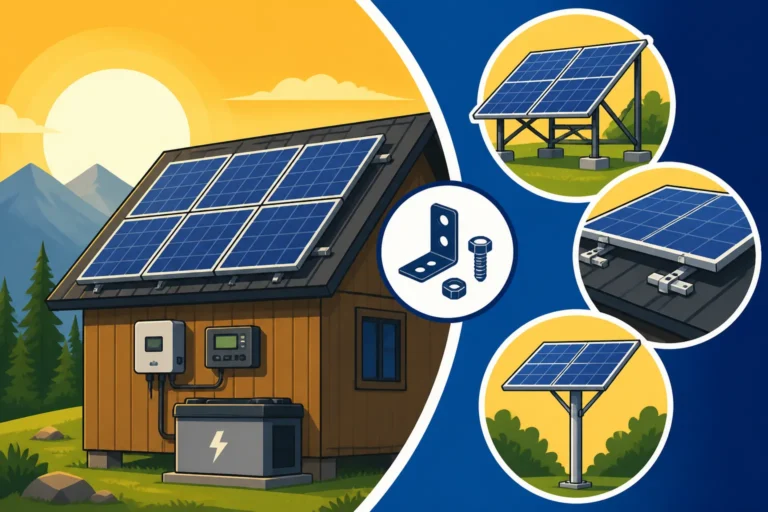
- Installation Environment: The physical location and setup of your panels are vital. Factors like your geographic location's peak sun hours, potential shading from trees or buildings, and the mounting method (roof, ground, pole) all influence how much power your panels will actually produce. Even the angle and orientation of your panels can dramatically affect their output, especially for year-round living. Remember, even the best panels can underperform if they're constantly shaded.
- Future Expansion Plans: Think ahead. Do you anticipate needing more power in the future? Designing an expandable system from the start can save you a lot of hassle and expense later. This might mean selecting components that can handle additional capacity, such as an inverter that can accommodate more panels or a battery system that allows for easy expansion. Knowing Cost of Expanding an Off-Grid System will help you budget for the long haul.
Actionable Steps to Evaluate Rich Solar for Your Project
So, you're considering Rich Solar panels. Here's a practical checklist to help you make a truly informed decision for your specific off-grid project:
- Calculate Your Energy Needs Precisely: This is non-negotiable. Grab your utility bills or use a watt-meter to measure the actual consumption of all the appliances you plan to run. Don't guess. Understand your daily Watt-hour requirements, then factor in a buffer for cloudy days or increased usage. This calculation will tell you the total wattage of panels you realistically need.
- Match Panel Specs to Your System: Look closely at Rich Solar's individual panel specifications. Pay attention to the open-circuit voltage (Voc) and short-circuit current (Isc) to ensure compatibility with your chosen charge controller. Also, note the dimensions – will they physically fit on your roof, ground mount, or RV?
- Read Recent Reviews and Forum Discussions: While general reviews are helpful, try to find feedback from other off-grid users who have installed Rich Solar panels in similar climates or applications to yours. Look for discussions on longevity, customer support experiences, and real-world performance. You can often find valuable insights in specific off-grid forums or YouTube channels from fellow DIYers.
- Compare Prices Across Retailers: Don't just settle for the first price you see. Check Rich Solar's own website, Amazon, and other online solar equipment suppliers. Sometimes, you can find bundles or sales that offer better value. Always factor in shipping costs, as these can be significant for heavy items like solar panels.
- Consider a Mixed System: It's okay to mix and match. You might use Rich Solar panels for the bulk of your array due to their cost-effectiveness, but perhaps choose a premium brand for a small, critical section if you have limited space and need maximum output there. Just ensure all panels are electrically compatible with your charge controller and system voltage.
- Budget for the Whole System: Remember that the cost of panels is only a fraction of your total off-grid investment. Include costs for batteries, an inverter, a charge controller, wiring, mounting hardware, safety disconnects, and potentially a backup generator. Getting a clear picture of the Off-Grid Solar Cost: Complete Breakdown will prevent nasty surprises.
By carefully working through these steps, you'll be well-equipped to determine if Rich Solar panels are indeed a good fit for your off-grid vision, helping you achieve reliable, independent power without overspending or underserving your needs.
Disclaimer
The information provided in this guide is for general informational purposes only and does not constitute professional advice. Off-grid solar system design and installation can be complex and involve electrical hazards. Always consult with a qualified solar professional or electrician and adhere to local codes and regulations before installing any solar power system.