How to Choose an Off-Grid Transfer Switch
Navigating the world of off-grid living brings incredible freedom, but it also means taking full responsibility for your power supply. One common headache is figuring out how to seamlessly switch between your solar power system, a backup generator, or even a shore power connection in an RV or cabin without risking damage or, worse, safety hazards. This guide is all about demystifying off-grid transfer switches, helping you choose the right one to ensure a smooth, safe, and reliable energy flow in your independent setup.
Understanding the Role of an Off-Grid Transfer Switch
When you're running an off-grid system, you're often juggling multiple power sources. Maybe your solar array is humming along perfectly, charging your batteries and powering your home, but then a stretch of cloudy, short winter days leaves your battery bank depleted. What do you do? You fire up that trusty backup generator. But you can't just plug the generator directly into your house wiring while it's still connected to your solar system. That's where a transfer switch becomes not just convenient, but absolutely essential for safety and functionality.
What is a Transfer Switch and Why Do You Need One
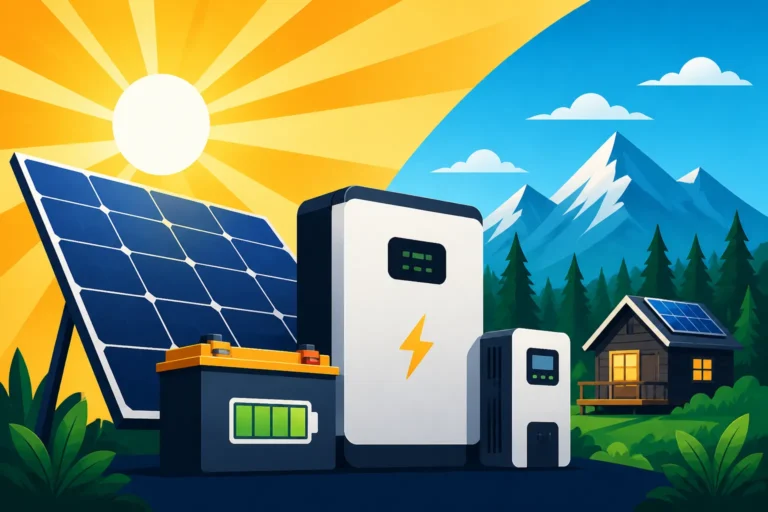
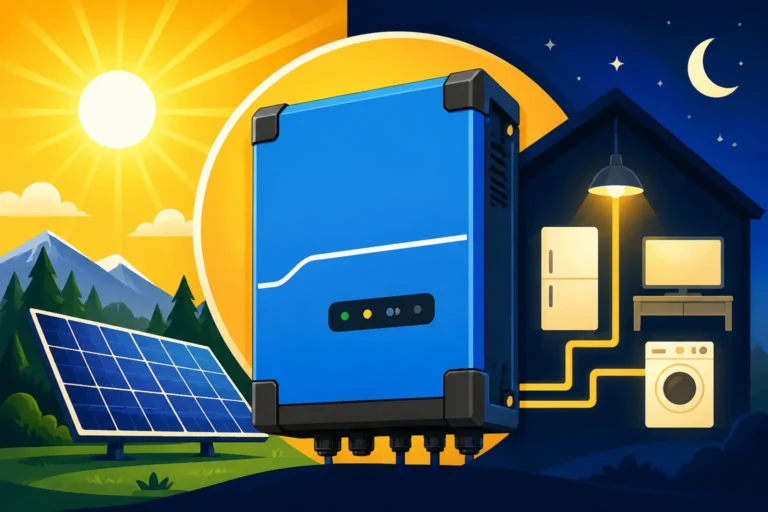
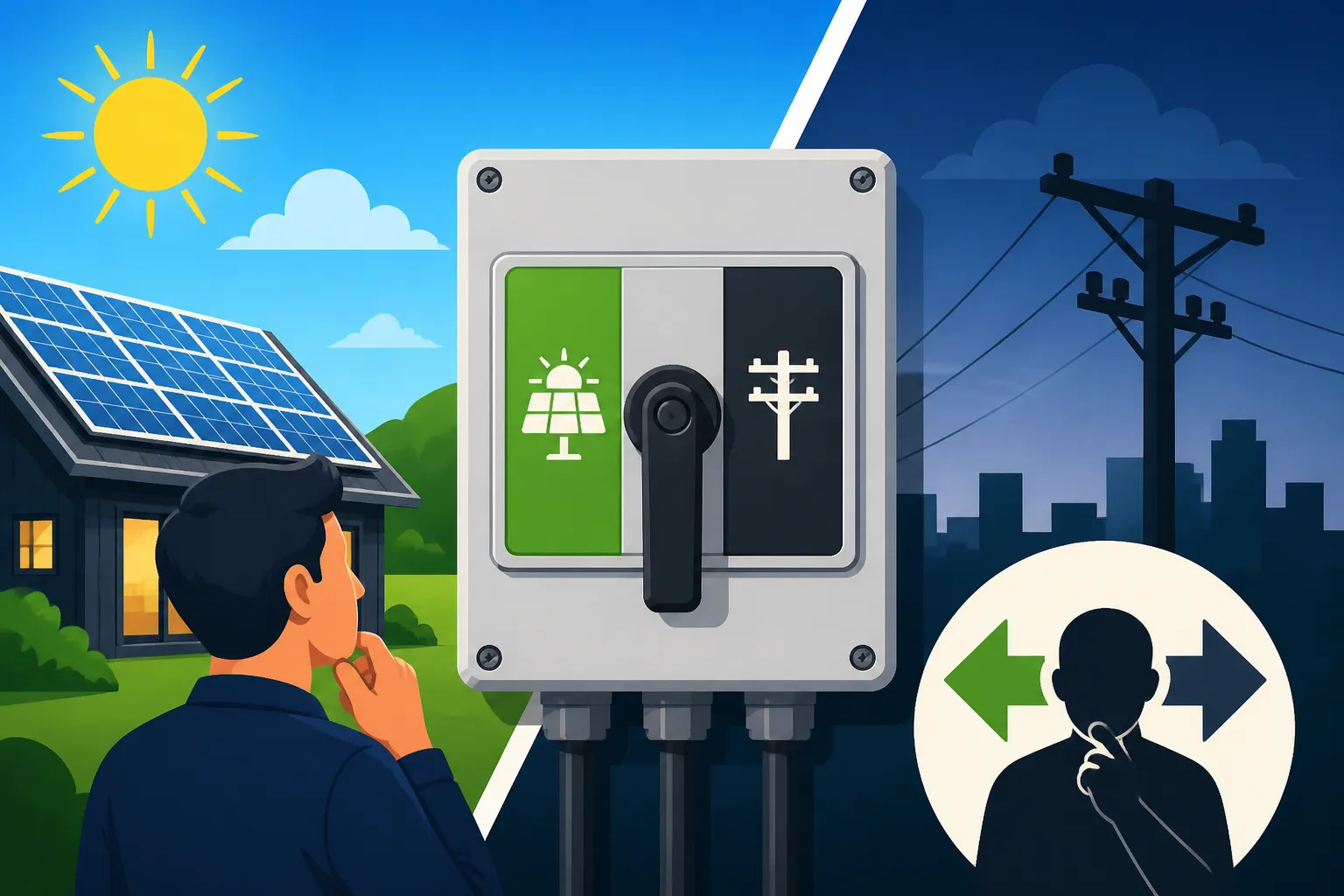
At its heart, a transfer switch is simply an electrical switch that allows you to safely move your power load (your appliances, lights, electronics, etc.) from one power source to another. Think of it like a traffic controller for your electricity. In an off-grid scenario, your primary power source is typically your solar inverter, which converts the DC power from your batteries into usable AC power for your home or vehicle. Your secondary source might be a generator, which also produces AC power.
The critical role of a transfer switch is to ensure that these two AC power sources are never connected to your loads simultaneously. This is called preventing "backfeeding." If your generator were to backfeed into your inverter, it could cause catastrophic damage to your solar equipment. More dangerously, if your home were ever connected to the utility grid (even temporarily, like a hybrid system), backfeeding could send power down lines that utility workers assume are de-energized, creating a severe electrocution risk. While most truly off-grid systems aren't connected to the grid, the principle of isolating power sources remains paramount. A transfer switch provides that vital separation, allowing you to manually or automatically select which power source is currently feeding your loads, protecting your equipment and anyone interacting with your electrical system.
Common Off-Grid Power Scenarios Requiring a Transfer Switch
You'd be surprised how many off-grid setups benefit immensely from a properly chosen transfer switch. It’s not just for sprawling homesteads, but for smaller, more mobile applications too.
For a remote cabin or a tiny home where you rely heavily on solar but also keep a generator on standby for those low-sun periods, a transfer switch is a game-changer. Imagine it: your solar array isn't quite keeping up during a week of rain, and your battery levels are dropping. Instead of fumbling with extension cords or complex rewiring, you simply flip a switch (or an automatic system does it for you) to bring your generator online, charging your batteries and powering your lights. When the sun returns, you switch back. This kind of setup can significantly improve the reliability of your system. You can learn more about how to account for cloudy days when designing your system to minimize generator reliance.
RV and van life setups are another prime example. Many RVs come equipped with a shore power inlet for when you're hooked up at a campground, a built-in generator, and often, an aftermarket off-grid solar system. A transfer switch, or often an inverter-charger with integrated transfer capabilities, manages these sources. It ensures you can switch from campground power to generator power, or to your solar inverter, with ease and safety. This prevents you from trying to pull power from two sources at once, which could trip breakers, damage sensitive electronics, or even harm your inverter. For those looking at a mobile setup, considering the best solar generator for off-grid use often goes hand-in-hand with thinking about how it will integrate with your existing system via a transfer switch.
Types of Off-Grid Transfer Switches
When you're deciding on a transfer switch for your off-grid sanctuary, you'll generally encounter two main types: manual and automatic. Each has its place, its pros, and its cons, depending on your budget, comfort level with hands-on operation, and how seamlessly you want your power transitions to be. Knowing the distinctions is crucial for making an informed choice.
Manual Transfer Switches for Simplicity
A manual transfer switch is exactly what it sounds like: a device that requires human intervention to switch between power sources. It's often a simple, robust mechanical switch, sometimes resembling a large circuit breaker, that you physically operate to disconnect from one power source and connect to another. These are generally the most affordable and straightforward option.
For many off-gridders, especially those on a tighter budget or with a more hands-on approach to their systems, a manual transfer switch is a perfect fit. If you're running a hunting cabin that's only used seasonally, or a small workshop where you only occasionally need generator backup, a manual switch might be all you need. You'd monitor your battery bank, and when it gets low, you'd head out to start the generator, then walk over to the transfer switch and flip it to the generator input. When the batteries are charged or the sun comes back, you'd switch back to the inverter. It requires a bit more active management, but it offers a lot of control and reduces potential points of failure that come with more complex automatic systems. Brands like Reliance Controls offer popular manual transfer switch options designed for generator integration, which can be adapted for off-grid solar backup scenarios. For a thorough understanding of all your system components, it helps to understand off-grid solar equipment explained in detail.
Automatic Transfer Switches for Seamless Power
Automatic transfer switches (ATS) take the manual labor out of power transitions. These sophisticated devices constantly monitor your primary power source (your inverter's output, in this case). When the primary source fails or falls below a set threshold (e.g., your batteries get too low, and your inverter shuts off due to low voltage), the ATS automatically detects this and signals your secondary source (like a generator) to start. Once the secondary source is stable, the ATS then switches your loads over. When the primary source returns (your batteries recharge from solar), the ATS switches the loads back and signals the generator to shut down.
This level of automation is fantastic for full-time off-grid living, especially if you have critical loads like refrigerators, medical equipment (such as a CPAP machine), or simply value uninterrupted power. Imagine not having to trudge out in the middle of a stormy night to start a generator and flip a switch – the ATS handles it all. It provides a level of comfort and convenience that makes off-grid life feel a lot more like grid-tied living. However, this convenience comes with a higher price tag and more complex installation requirements. An ATS also needs to be compatible with your specific inverter and generator, as some generators require a "two-wire start" signal from the ATS to automatically turn on. For larger, more complex systems, the seamlessness of an ATS is often worth the investment, particularly if you're aiming for a robust and reliable system for year-round off-grid power.
Integrated Inverter-Charger Solutions
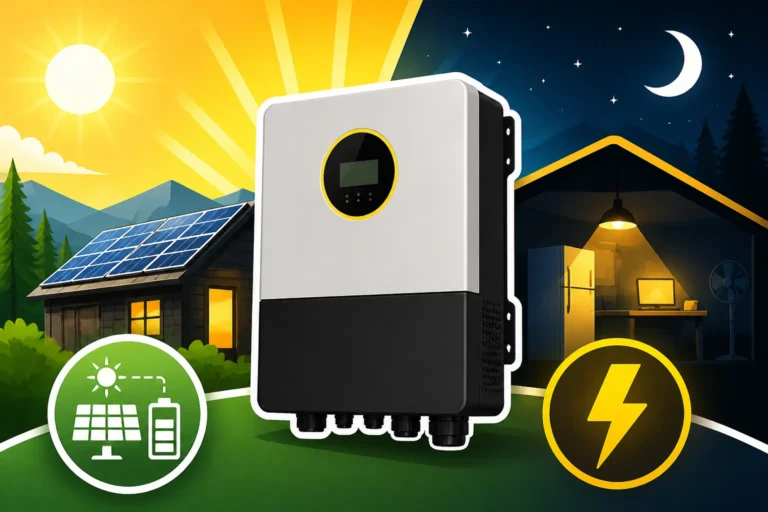
Beyond dedicated transfer switches, many modern off-grid inverter-chargers come with integrated transfer switch functionality. These all-in-one units are incredibly popular because they simplify your system design and wiring. A common configuration involves connecting your solar array to a charge controller, which feeds your battery bank. The battery bank then connects to the inverter-charger. Your generator (or shore power for RVs) connects directly to an input on the inverter-charger.
When your battery voltage drops to a preset level, the inverter-charger, acting as its own smart transfer switch, can automatically start your generator, transfer the loads to the generator's power, and use the generator to recharge your batteries. Once the batteries are full, it shuts the generator off and switches back to inverter power. This integration is a huge benefit, reducing the number of individual components you need and simplifying the wiring. Brands like Victron Energy with their MultiPlus series, or Growatt and Sol-Ark, are well-known for offering robust inverter-chargers with excellent integrated transfer switch capabilities. Many people prefer these solutions for their compact design and streamlined operation. When considering a system like this, it's wise to look into how to choose an off-grid inverter charger to ensure it meets all your power management needs.
Key Factors in Choosing the Right Transfer Switch
Selecting the perfect transfer switch isn't a one-size-fits-all situation. It depends heavily on the specifics of your off-grid system, your power needs, and even the local regulations in your area. Overlooking any of these critical factors could lead to an undersized, incompatible, or even unsafe setup.
System Voltage and Amperage Matching
One of the most fundamental considerations is ensuring your transfer switch is rated for the correct voltage and amperage of your system. Most residential or cabin off-grid systems in North America operate at 120/240 volts AC, similar to grid-tied homes. Your transfer switch must be capable of handling this voltage. For smaller RV or van systems, you might only be dealing with 120V AC circuits. Always double-check your inverter's output voltage and your generator's output voltage to ensure they match what the transfer switch is designed for.
Equally important is the amperage rating. This refers to the maximum current the switch can safely carry. If your main breaker panel is rated for 50 amps (common in RVs) or 100-200 amps (for homes), your transfer switch needs to be rated for at least that amount, if not higher, to accommodate all your potential loads. Undersizing the amperage can lead to overheating, tripped breakers, and serious fire hazards. It's always a good idea to slightly oversize your components, including your transfer switch, to give yourself a buffer and allow for future expansion. This is a crucial step when you're looking into how to size an off-grid inverter or any other major component.
Load Requirements and Surge Capacity
Before you can choose a transfer switch, you need a clear picture of your total electrical load. This means doing a thorough load analysis to determine how many watts and amps your appliances will draw when running simultaneously, and critically, what their surge (starting) loads are. Appliances with motors, like refrigerators, well pumps, air conditioners, and power tools, draw a significantly higher amount of power for a brief moment when they first start up. This "surge" can be 3-7 times their running wattage.
Your transfer switch, particularly if it's integrated into an inverter-charger, needs to be able to handle these momentary power spikes. An undersized switch might trip, or worse, fail entirely when a large motor kicks on. When calculating your total load for the transfer switch, you'll want to add up the continuous running wattage of all the appliances you anticipate using at any one time, and then identify the single largest surge load among them. This will give you a good benchmark for the maximum instantaneous power the switch might need to handle. For a more detailed look, check out our guide on how to do an off-grid load analysis.
Safety Features and Certifications
Safety should always be your top priority when dealing with electricity, especially in off-grid systems where you're often integrating components from various manufacturers. A reliable transfer switch will come with important safety features and certifications.
Look for switches that are UL listed (Underwriters Laboratories) or have other recognized electrical safety certifications (like CSA in Canada or CE in Europe). These certifications indicate that the product has been tested to meet specific safety standards. Key safety features include robust construction, clear labeling, and adequate insulation. For manual transfer switches, ensure there's a visible "break-before-make" mechanism, meaning one source is fully disconnected before the other is connected, preventing dangerous bridging. Integrated inverter-chargers will have their own safety protocols, including overcurrent protection, over-temperature protection, and often fault indicators. Always choose quality components from reputable brands. While you might find cheaper options on platforms like Amazon, make sure they still meet rigorous safety standards. For DIY installations, following off-grid solar safety and grounding guidelines is non-negotiable.
Sizing Your Off-Grid Transfer Switch
Getting the sizing right for your off-grid transfer switch is critical. It's not just about matching components; it's about ensuring your system operates efficiently, safely, and can grow with your needs. Too small, and you risk overloads and failures; too large, and you've overspent.
Calculating Your Total Load
The first step in sizing your transfer switch is to accurately calculate your total power consumption. This isn't just a rough guess; it requires a detailed inventory of every electrical appliance and device you plan to power. For each item, you need to know its running wattage and, if applicable, its surge or starting wattage.
Start by listing every light, refrigerator, microwave, well pump, fan, phone charger, laptop, and tool. For each, find the wattage on its label. If it only lists amps and voltage, multiply them (Watts = Amps x Volts). For example, a 10 amp device on a 120V circuit draws 1200 watts. Once you have the running wattages, identify the largest single surge load in your home. This is often an appliance with a motor, like a well pump or an air conditioner. When sizing your transfer switch's continuous current rating, sum up the running wattage of all items you expect to use simultaneously. This gives you your continuous AC load. Then, factor in that largest surge load. Your transfer switch (or the inverter-charger it's connected to) needs to be able to handle this peak demand, even if it's only for a split second. Ignoring surge loads is one of the most common and costly mistakes in off-grid system design. For more on this, check out how to estimate appliance power draw.
Considering Future Expansion and Peak Demands
It's easy to size for your current needs, but what about tomorrow's? Off-grid systems, especially for homes or cabins, tend to expand over time. You might start with basic lighting and a refrigerator, but later decide to add a washing machine, a mini-split AC unit, or more powerful workshop tools. Your transfer switch should ideally have a little headroom built-in for such additions.
Thinking about peak demands also means considering seasonal variations. A cabin that only sees light use in the summer might suddenly host holiday gatherings in the winter, demanding more heating, cooking, and lighting. If your generator is your primary backup for these times, your transfer switch needs to handle the increased load when it's engaged. A good rule of thumb is to calculate your maximum anticipated concurrent load, add your largest surge, and then consider adding an extra 20-30% capacity. This small buffer can save you a significant headache (and expense) down the road if you decide to add a few more comforts. It’s a bit like making sure your vehicle has enough towing capacity, even if you’re not always pulling a heavy trailer. Designing an expandable system from the outset is always a smart move.
| Feature | Manual Transfer Switch | Automatic Transfer Switch (ATS) | Integrated Inverter-Charger w/ ATS |
|---|---|---|---|
| Operation | Manual (physical flip of a switch) | Automatic (detects power loss, switches) | Automatic (detects low battery, switches) |
| Cost | Lowest | Medium to High | Medium to High (component price) |
| Complexity | Low | Medium | Medium (but simpler overall system) |
| Convenience | Low (requires user action) | High (seamless transitions) | High (seamless transitions, smart control) |
| Setup | Simple wiring between sources & load | Requires control wiring to generator | Part of inverter's internal logic |
| Applications | Occasional backup, budget-conscious | Critical loads, full-time off-grid living | Most common for modern off-grid systems |
| Generator Auto-Start | No (requires manual start) | Yes (with compatible generator) | Yes (with compatible generator) |
| Typical Brands | Reliance Controls, Square D | Generac, Kohler, Eaton | Victron Energy, Sol-Ark, Growatt |
Installation Considerations and Wiring Best Practices
Once you’ve chosen the right transfer switch for your off-grid system, the next crucial step is proper installation. A great transfer switch can become a liability if it's not installed correctly, safely, and in compliance with any relevant electrical standards. Whether you're a seasoned DIYer or planning to hire a professional, understanding these considerations is key to a robust and reliable setup.
Placement and Environment
Where you install your transfer switch matters more than you might think. It needs to be in an easily accessible location, both for operation (if it's manual) and for maintenance or troubleshooting. Avoid cramped spaces or areas that are difficult to reach. If it's outside, it absolutely must be in a NEMA-rated enclosure that protects it from dust, moisture, and extreme temperatures. Even if it’s inside a shed or utility room, consider the ambient conditions. Excessive heat or humidity can shorten the lifespan of electrical components.
Ensure the location allows for proper cable routing and adequate ventilation, especially for larger units or integrated inverter-chargers that can generate heat. Keep it away from flammable materials and ensure there's enough clear space around it for any required servicing. For an RV or van, placement might be constrained, but prioritizing accessibility and environmental protection remains critical. If your system is in a cold climate, you might even need to consider protecting your components from the cold.
Wiring Diagrams and Code Compliance
Wiring an off-grid transfer switch is not something to guess at. It involves high voltage and amperage, and mistakes can be dangerous or even deadly. Always refer to the manufacturer's specific wiring diagram for your chosen transfer switch. These diagrams provide detailed instructions on how to connect your primary source (inverter output), secondary source (generator), and the loads (your main electrical panel).
Generally, the wiring involves running the AC output from your inverter to one input of the transfer switch, and the AC output from your generator to another input. The output of the transfer switch then goes to your main electrical distribution panel, or a subpanel dedicated to your off-grid loads. Proper grounding is paramount – your entire off-grid system, including the transfer switch, must be adequately grounded to protect against electrical surges and faults.
While many off-grid systems aren't directly inspected by municipal authorities, it's always best practice to adhere to National Electrical Code (NEC) standards, or local equivalent codes. Even if not legally mandated for your specific off-grid property, following these guidelines ensures maximum safety and reliability. If you’re not confident in your electrical wiring skills, this is definitely an area where hiring a qualified electrician is a wise investment. They can ensure your system is wired correctly, safely, and adheres to best practices. Learning about how to wire an off-grid solar system properly can prevent costly errors and safety hazards.
Popular Off-Grid Transfer Switch Brands and Options
When it comes to outfitting your off-grid power system, choosing the right brand for your transfer switch can make a big difference in reliability, ease of installation, and long-term performance. While there are many options out there, some brands have carved out a solid reputation within the off-grid and backup power communities.
Dedicated Transfer Switch Manufacturers
For those seeking a standalone transfer switch, often for integration with an existing inverter and a separate generator, several manufacturers specialize in these devices.
Reliance Controls is a very popular name, especially for manual transfer switches and transfer switch panels designed for generator backup. They offer a range of products from simple, single-circuit switches to multi-circuit panels that allow you to select which specific circuits in your home get power from the generator. While primarily marketed for grid-tied homes using generators for emergency backup, their principles apply directly to off-grid scenarios where a generator backs up a solar inverter. Many off-gridders find their manual switches robust and easy to understand.
Eaton and Square D (Schneider Electric) are industrial giants in electrical distribution. They produce high-quality circuit breakers, electrical panels, and also manual and automatic transfer switches. Their products are typically robust, designed for demanding applications, and carry all necessary safety certifications. While their offerings might be more expensive than some specialized off-grid brands, their reputation for quality and reliability is top-notch. These options are often found through electrical supply houses rather than typical solar retailers.
When considering these dedicated options, remember that they usually require careful integration with your inverter and charge controller setup. They act purely as a switch, not as a charger for your batteries from the generator, which would be handled by a separate battery charger or an inverter-charger unit. For a deeper dive into component choices, checking out guides like the best off-grid solar inverters can help you select compatible equipment.
All-in-One Inverter-Charger Systems with Transfer Capabilities
For many off-grid enthusiasts, the most appealing solution isn't a separate transfer switch, but an integrated inverter-charger that performs the transfer function internally. These units combine the functions of an inverter (DC to AC), a battery charger (from AC sources like a generator or shore power), and a transfer switch into a single, cohesive device. This significantly simplifies system design and wiring.
Victron Energy is a premium brand renowned for its high-quality, reliable, and feature-rich inverter-chargers, such as the MultiPlus and Quattro series. These units are designed with advanced power management capabilities, including seamless automatic transfer switching and generator auto-start/stop functions. A Victron MultiPlus, for instance, can prioritize solar charging, automatically start a generator when batteries are low, use the generator to power loads and recharge batteries, and then shut it down when solar is sufficient again. This level of sophistication makes them a favorite for full-time off-grid homes and high-end RV setups. You can explore the Victron MultiPlus review for more details.
Sol-Ark offers hybrid inverter-chargers that are incredibly popular in both off-grid and grid-tied scenarios. Their systems, like the Sol-Ark 12K or 15K, excel at managing multiple power inputs (solar, battery, generator, grid connection if it's a hybrid system) and automatically transferring loads as needed. They are known for their user-friendly interfaces, powerful charging capabilities, and robust construction. For those seeking comprehensive energy management, a Sol-Ark system often eliminates the need for any separate transfer switch.
Growatt also provides a range of cost-effective inverter-chargers, often found in all-in-one solar kits, that include integrated transfer switch capabilities. While perhaps not as feature-rich as Victron or Sol-Ark for every niche, they offer excellent value for many off-grid applications, allowing for automatic generator backup without additional external hardware.
When opting for an integrated inverter-charger, you're investing in a more complete power management solution. It's often the cleanest and most efficient way to manage diverse power sources in an off-grid environment. Many of these units are readily available through specialized solar retailers and online marketplaces. When comparing these integrated solutions, it’s worth considering the various factors discussed in our guide on the best off-grid solar brands.
Disclaimer
Please remember that working with electricity can be dangerous. This guide provides general information and recommendations. Always consult with a qualified electrician or solar professional for specific advice tailored to your system and local regulations. Improper installation or component selection can lead to serious injury, property damage, or fire. Always follow manufacturer instructions for all equipment.