Are HQST Panels Good for Off-Grid
Trying to figure out which solar panels are truly worth your hard-earned money for an off-grid setup can feel like navigating a maze, especially when you're balancing performance with your budget. It's a common frustration to see panels with drastically different price tags and wonder if the cheaper option will actually stand up to the demands of independent power. This guide is here to shed some light specifically on HQST solar panels, diving deep into whether they’re a solid, reliable choice for off-grid living or just a tempting price point that might leave you in the dark.
Understanding HQST Solar Panels for Off-Grid Living
When you’re looking into off-grid solar, the sheer number of brands and options can be overwhelming. Many folks are looking for dependable power without breaking the bank, and that's often where brands like HQST pop up on the radar. It's crucial to understand what you're getting into.
Who is HQST and What Do They Offer
HQST, which stands for High Quality Solar Technology, has carved out a niche for itself in the solar market, primarily catering to DIY enthusiasts, RV owners, and those setting up smaller off-grid systems for cabins or sheds. They're often seen as a more accessible, budget-friendly alternative to some of the higher-end solar panel manufacturers. You'll find their products widely available online, often through retailers like Amazon, making them incredibly easy to get your hands on, which is a huge plus for many who don't have local specialized solar stores.
They offer a range of products, from individual solar panels in various wattages (think 100W, 200W, even up to 400W panels) to complete solar kits that include charge controllers and sometimes even inverters. The typical HQST panel is a rigid, framed monocrystalline panel, known for its decent efficiency and robust construction. They usually come with pre-drilled holes for easy mounting and standard MC4 connectors, which simplifies the wiring process for those looking to How to Install an Off-Grid Solar System themselves. Their focus seems to be on providing straightforward, functional components that can be easily integrated into a basic off-grid setup, appealing greatly to those who are just starting their off-grid journey or have more modest power requirements.
Common Features of HQST Solar Panels
HQST panels generally boast a few key features that make them attractive for off-grid applications. Most of their panels are monocrystalline, which means they use a single crystal structure for their silicon cells, offering higher efficiency compared to older polycrystalline panels. This is important because, for off-grid living, you want to capture as much sunlight as possible from your limited panel space. They typically feature durable tempered glass surfaces to withstand hail and other environmental impacts, along with sturdy aluminum frames designed to resist corrosion and provide structural integrity.
Another common feature is their relatively high voltage compatibility, often suitable for 12V, 24V, or even 48V systems, depending on how you wire them. This flexibility is great for customizing your system, whether you're powering a small camper with a 12V setup or a larger cabin requiring a 48V battery bank. They often come with bypass diodes integrated into the junction box, which helps mitigate power loss due to partial shading – a common issue when a leaf, tree branch, or even a dirty spot covers part of a panel. While they might not push the envelope in terms of cutting-edge technology, their adherence to industry-standard designs and components means they are generally reliable workhorses for everyday off-grid power generation.
The Appeal of HQST for Budget-Conscious Off-Gridders
Let's be real, the cost of an off-grid solar system can add up quickly. From panels to batteries to inverters, every component has a price tag that can make your eyes water. This is where HQST really shines for the budget-conscious off-gridder. Their pricing is often significantly lower than premium brands, making the dream of solar independence feel much more attainable. For someone just starting out or working with limited funds, this lower entry barrier is a huge advantage.
Imagine you're outfitting a small hunting cabin. You don't need to run a full-sized refrigerator or an air conditioner, just some lights, a charging station for your devices, and maybe a small water pump. For this kind of setup, you might only need a few hundred watts of solar. When you compare the Off-Grid Solar Cost by System Size or How Much Does an Off-Grid Solar System Cost, HQST panels can make a real difference in the initial outlay. This affordability allows more people to dip their toes into off-grid living or to expand an existing smaller system without a massive financial commitment. It also frees up budget for other critical components, like a more robust battery bank or a higher-quality inverter. For many, HQST panels represent a practical compromise: good enough performance at a price that won't require taking out a second mortgage.
Performance and Durability in Real-World Scenarios
It's one thing for solar panels to look good on paper, but it's another entirely for them to perform consistently and reliably when they're exposed to the harsh realities of the outdoors. Off-grid systems depend entirely on their ability to capture sunshine day in and day out, through all kinds of weather.
Power Output and Efficiency Expectations
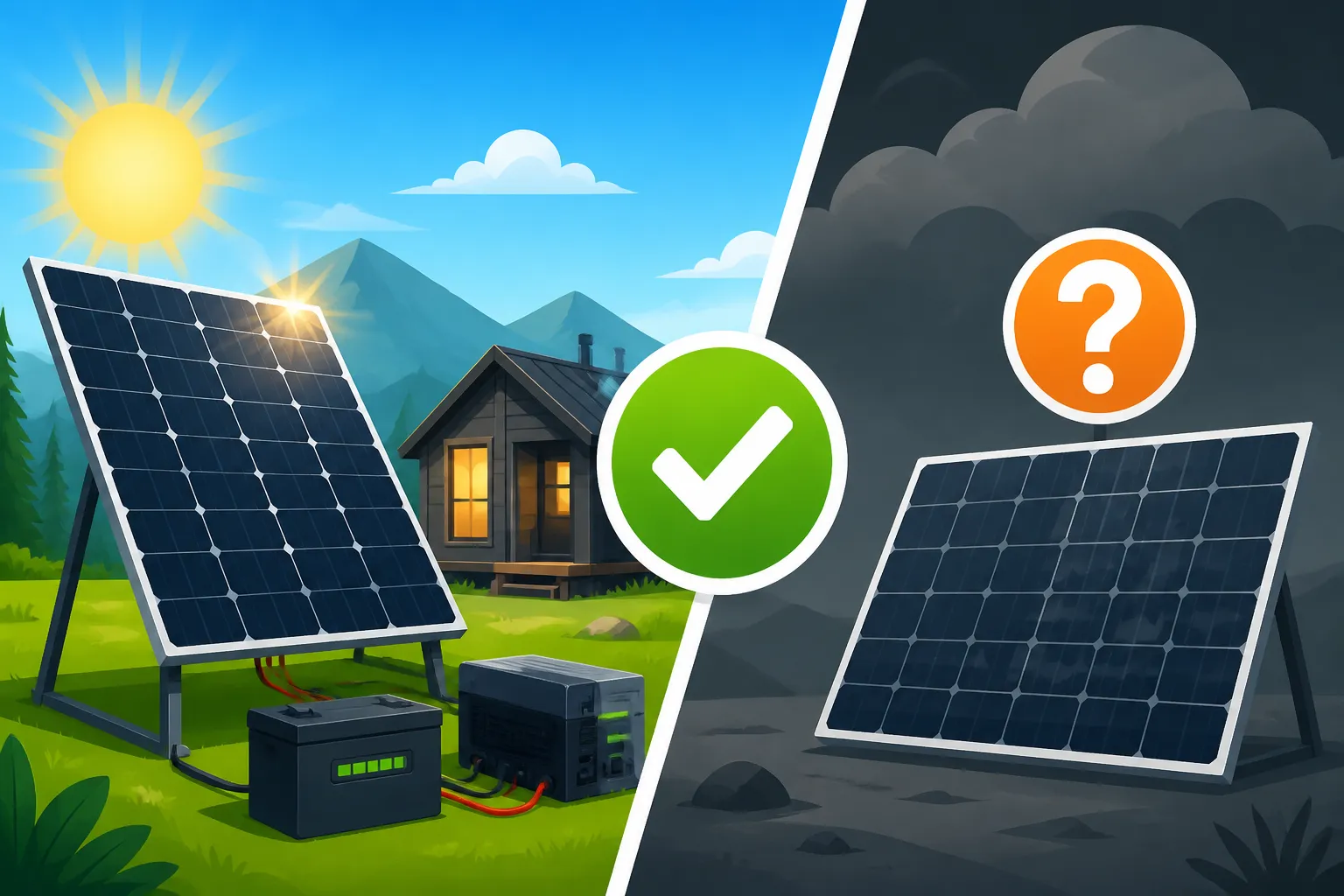
When you buy an HQST panel, you're generally getting what's advertised in terms of wattage. A 100W panel will produce roughly 100 watts of power under ideal Standard Test Conditions (STC), which means perfect sunshine, a specific temperature, and a particular air mass. However, real-world conditions are rarely ideal. Factors like panel temperature, actual solar irradiance, and even shading will affect the actual output. HQST panels, like most monocrystalline panels, typically have an efficiency rating somewhere in the 17-20% range. While not the absolute highest on the market (some premium panels hit 22% or more), this is still a very respectable number, especially for their price point.
What does this mean for your off-grid life? If you're building a system, say, for a small RV where space is at a premium, you might need to How Many Solar Panels for Off-Grid Living carefully. A 200W HQST panel might produce closer to 150-180W on a typical sunny day in the middle of summer in, say, Arizona, once you factor in heat losses and other inefficiencies. During winter, or on cloudy days, that output will naturally drop further. It's crucial to account for these real-world losses when you How to Calculate Off-Grid Solar Needs. Many users find that oversizing their HQST array slightly, compared to what a calculator might suggest for peak performance, provides a much more comfortable margin for those less-than-ideal conditions, ensuring your Cost of an Off-Grid Solar Battery Bank gets consistently charged.
How HQST Panels Hold Up to the Elements
Durability is a major concern for any off-grid solar system. These panels are going to be out in the elements 24/7, year-round. HQST panels are built with common industry-standard materials: an anodized aluminum frame, tempered glass, and a sealed junction box. This construction typically provides good resistance against various weather conditions. They're designed to withstand significant snow loads and strong winds, which is essential if you're installing them on a cabin in the mountains or an RV traveling across different climates.
Many off-gridders report that their HQST panels have held up well over several years of exposure to sun, rain, and even some hailstorms. While they might not have the exotic coatings or ultra-rugged designs of panels engineered for extreme industrial use, for residential off-grid setups, they generally perform admirably. Keep in mind, proper How to Install Off-Grid Solar Panels techniques, including secure mounting and avoiding excessive stress on the frame, will significantly contribute to their longevity. Just like any solar panel, keeping them reasonably clean from dirt, dust, and debris will help maintain their performance over time.
Longevity and Warranty Considerations
When investing in solar panels, you're looking for a long-term solution. Most HQST panels come with a standard 25-year linear power output warranty, which is pretty much the industry standard, and usually a 5-year material and workmanship warranty. What this means is that HQST guarantees their panels will still produce a certain percentage of their original rated power (often 80% or 83%) after 25 years. This is excellent news for off-gridders, as it suggests a commitment to long-term performance.
However, it's worth noting that while the warranty itself is standard, the process of claiming a warranty with a budget brand like HQST might be different from a premium brand with a dedicated, extensive support network. Most users on platforms like Amazon find that HQST generally stands by its product within the initial warranty period for manufacturing defects. The true test of a 25-year warranty often comes much later, but for the initial years, these panels are expected to perform well. When you're considering the Lifetime Cost of an Off-Grid Solar System, the longevity promised by the warranty is a significant factor, as it means fewer replacements and more consistent power over time.
Practical Considerations and Compatibility
Choosing solar panels isn't just about how much power they produce or how tough they are; it's also about how well they integrate into your overall off-grid system and how they stack up against other available options.
Integrating HQST Panels into an Off-Grid System
One of the big advantages of HQST panels is their use of standard components, making them relatively easy to integrate into almost any existing or new off-grid solar setup. They typically use MC4 connectors, which are the industry standard for solar wiring, meaning you can easily connect them to combiner boxes, extension cables, and your charge controller without needing special adapters. Their dimensions are also fairly standard for their wattage, which simplifies How to Mount Off-Grid Solar Panels, whether you're putting them on a roof, a ground mount, or an RV rack.
When you're designing your system, you'll need to consider your How to Size an Off-Grid Solar System to ensure the voltage and amperage from your HQST array are compatible with your charge controller. For instance, if you're setting up a 12V system for a small van, a few 100W HQST panels wired in parallel would work perfectly. For a larger cabin requiring a 24V or 48V system, you'd wire more panels in series to achieve the necessary voltage. Because they are widely available, expanding your system down the line by adding more HQST panels is often straightforward, making them a good choice for those who might want to How to Design an Expandable System from the start.
Comparing HQST to Other Entry-Level Brands
When you're looking at budget-friendly solar panels, HQST often finds itself in the same conversation as brands like Renogy. Both cater to the DIY and smaller off-grid market, offering accessible price points and a wide range of products.
Here's a quick comparison:
| Feature/Brand | HQST | Renogy |
|---|---|---|
| Typical Price | Very Budget-Friendly | Budget-Friendly to Mid-Range |
| Efficiency | 17-20% (Monocrystalline) | 17-22% (Monocrystalline) |
| Construction | Standard aluminum frame, tempered glass | Similar; often perceived as slightly more robust |
| Product Range | Panels, basic kits, charge controllers | Wider range of panels, kits, inverters, batteries |
| Availability | High (e.g., Amazon) | High (e.g., Amazon, direct, specialty) |
| Customer Support | Generally online, sometimes slower | Online, forums, more established |
| Warranty | Standard 25-year power, 5-year materials | Standard 25-year power, 5-10 year materials |
While HQST panels often come in a little cheaper, Renogy typically offers a slightly broader product ecosystem and a reputation for slightly better build quality and customer support, especially for complex issues. For many, the choice comes down to the absolute lowest price (HQST) versus a slightly higher investment for potentially better long-term support or slightly more refined products (Renogy). Both are viable options for the Best Off-Grid Solar Kits for Beginners or individual component purchases, but it’s worth weighing their differences based on your specific needs and comfort level.
Where to Purchase and What to Look For
As mentioned, HQST panels are most readily available through large online retailers like Amazon. This ease of access is a significant benefit, allowing you to read numerous customer reviews, compare prices easily, and have them shipped directly to your door, often with free shipping options for Amazon Prime members. This convenience makes them particularly attractive for remote homesteaders or RVers who might not have access to specialty solar stores.
When you're purchasing, always double-check the panel's specifications: wattage, voltage (Voc and Vmp), and current (Isc and Imp). Make sure these numbers align with your system design and charge controller capabilities. Look at recent customer reviews, especially those that mention long-term performance or how the panels handled specific weather conditions. While HQST is a well-known name in the budget segment, always verify that you are buying from a reputable seller, even on platforms like Amazon, to ensure you receive genuine products and have recourse if there are any issues. Remember, finding ways to How to Save Money on an Off-Grid Solar Build can include strategic purchasing, but never at the expense of product authenticity or basic reliability.
User Experiences and Common Feedback
Hearing from folks who are actually using HQST panels in their daily off-grid lives can be incredibly insightful. It's one thing to read specs, but another to understand how they perform in the real world.
What Off-Gridders Are Saying
Overall, the sentiment among off-gridders regarding HQST panels is largely positive, especially when considering their price point. Many users report that these panels are excellent "bang for your buck." They appreciate the solid construction, the ease of installation due to standard connectors and mounting holes, and their consistent power output for basic and intermediate needs. RV owners, tiny home dwellers, and those powering remote cabins frequently praise HQST for making solar power accessible and affordable. For instance, a small family living off-grid in a remote part of Oregon might opt for a few 200W HQST panels to keep their lights on, charge their laptops, and run a small chest freezer, finding them perfectly adequate.
People often highlight that for an entry-level panel, HQST delivers reliable performance without a lot of fuss. They’re seen as durable workhorses that perform predictably, which is exactly what you want when you’re relying on them for your power needs. While they might not boast the absolute highest efficiency or the most cutting-edge features, they certainly get the job done for a wide range of typical off-grid applications. Many consider them a strong contender for Best Off-Grid Solar Panels in the value category.
Potential Downsides and Workarounds
Of course, no product is without its drawbacks, especially when you're looking at a budget-friendly option. Some users have occasionally noted that the quality control can be a little inconsistent, leading to rare instances of panels not performing exactly to spec or having minor cosmetic flaws. While this isn't widespread, it's something to be aware of. Another point that sometimes comes up is that the customer support experience, while generally responsive, might not be as swift or as comprehensive as what you'd expect from a larger, more premium brand like Victron Energy or MidNite Solar.
For those rare instances of issues, the workaround often involves reaching out to the seller on Amazon or directly to HQST's support. It's always a good idea to thoroughly test your panels upon arrival to ensure they're performing as expected. If you're undertaking a DIY Off-Grid Solar Installation Step by Step, being prepared for minor troubleshooting is part of the process, and HQST panels are generally simple enough that any issues are usually identifiable. Keeping a multimeter handy and understanding basic solar panel testing can save a lot of headaches.
Making an Informed Decision for Your Setup
So, are HQST panels good for off-grid? Based on widespread user experience and their general specifications, the answer is a resounding "yes" for many off-grid applications, especially when budget is a significant factor. They provide a cost-effective, reliable foundation for your solar power system. However, like all components, they need to fit into your overall plan.
If you’re building a massive, high-power system for a large family home with heavy energy demands, you might lean towards higher efficiency panels or larger wattage options that might not be HQST's primary focus. But for a modest cabin, an RV, a van, or even as a supplemental array for an existing system, HQST offers a compelling value proposition. They are a practical choice for those who are willing to invest a little time in their system design and setup, and who appreciate getting dependable power without breaking the bank. Always remember to consider all your Off-Grid Solar System Components Explained and how each piece fits into your energy puzzle before making your final purchase.
Disclaimer
Please note that the information provided in this guide is for general informational purposes only and does not constitute professional advice. Off-grid solar system design and installation can be complex and involve electrical hazards. Always consult with a qualified solar professional or electrician for specific advice tailored to your situation and ensure compliance with all local codes and regulations.