Renogy Solar Panels Review for Off-Grid
Embarking on the journey of off-grid living or simply seeking to power a remote cabin or RV often means grappling with countless choices for essential equipment. One of the most critical decisions revolves around solar panels, and many folks wonder if Renogy panels are truly up to the task for reliable, independent power. This comprehensive guide dives deep into Renogy solar panels, evaluating their suitability, performance, and value specifically for off-grid applications.
Understanding Renogy Solar Panels for Off-Grid Use
When you're trying to figure out your off-grid power solution, the sheer volume of information and options can be overwhelming. Many aspiring homesteaders, van lifers, and cabin owners turn to brands like Renogy because they've built a reputation for accessibility and a wide product range. But what exactly makes Renogy a go-to for many, and how do their panels stack up when you're truly depending on them far from the grid?
Who is Renogy?
Renogy carved out its niche in the renewable energy market by focusing heavily on the DIY and recreational vehicle (RV) crowd, quickly expanding to serve small to medium off-grid home setups, sheds, and cabins. Founded in 2010 by a group of passionate students from Louisiana State University, their mission was to make solar energy more affordable and accessible. They've grown significantly since then, offering not just solar panels but also a full ecosystem of components including charge controllers, inverters, and batteries. This integrated approach means you can often find a complete solution from a single brand, which can simplify the process for beginners or those who prefer a less fragmented approach to their system build. Their presence on platforms like Amazon has also made their products incredibly easy to acquire, contributing to their widespread popularity.
Types of Renogy Solar Panels for Off-Grid Systems
Renogy offers a diverse lineup of solar panels, each designed with different off-grid scenarios in mind. Understanding these types is crucial when you're trying to figure out How to Choose an Off-Grid Solar Panels that best suits your unique needs.
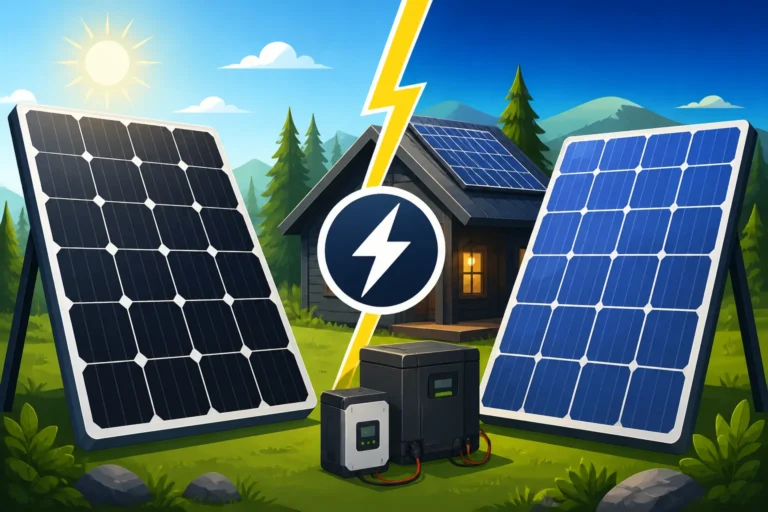
- Rigid Monocrystalline Panels: These are the workhorses of the Renogy lineup, and frankly, of most off-grid setups. They're built with high-purity silicon cells, typically giving them a sleek, black appearance and higher efficiency rates compared to their polycrystalline counterparts. Renogy offers these in a range of wattages, from smaller 100W panels perfect for a simple Off-Grid Solar Cost for a Shed to larger 320W or 400W panels suitable for more substantial systems. They're encased in robust aluminum frames and tempered glass, making them highly durable and resistant to various weather conditions. If you have the space and need maximum power output per square foot, these are generally your best bet.
- Flexible Monocrystalline Panels: For those with curved surfaces or limited mounting options, like RV roofs, boat decks, or certain van builds, Renogy's flexible panels are a game-changer. These panels forgo the rigid glass and aluminum for a lightweight, thin, and bendable polymer material. They're significantly lighter and can conform to surfaces, reducing wind resistance and making installation on unconventional structures much easier. While they typically have a slightly lower efficiency and a higher cost per watt than rigid panels, their versatility is unmatched for certain mobile or marine applications. Keep in mind that direct contact with hot surfaces can reduce their performance and lifespan, so proper airflow underneath is essential.
- Portable Solar Suitcases: If your off-grid adventures are more about temporary setups or you frequently move your power source, Renogy's portable solar suitcases are an excellent choice. These are typically two or more panels hinged together, often coming with a built-in charge controller and necessary cables. They're designed for quick deployment and easy storage, ideal for camping, tailgating, or charging a small battery bank for basic electronics. They offer convenience and plug-and-play functionality, though they won't provide the continuous, high-power generation of a fixed array.
Key Features and Technology
Renogy has invested in technology and features that make their panels appealing to the off-grid community. It's not just about slapping some solar cells together; there's real thought put into their products.
One notable feature is their use of PERC (Passivated Emitter Rear Cell) technology in many of their monocrystalline panels. This isn't just a fancy acronym; it actually helps the panels capture more sunlight by allowing unabsorbed light to reflect back to the cell for a second absorption attempt. This translates to higher efficiency, especially in low-light conditions, which is a huge benefit for off-grid users who depend on every ray of sunshine. Imagine those cloudy days or early mornings when you still need to generate power; PERC technology helps squeeze out a bit more.
Another important aspect is their robust construction. Renogy rigid panels feature corrosion-resistant aluminum frames and high-transparency, low-iron tempered glass. This protects the cells from environmental damage like hail, snow, and strong winds. For flexible panels, they use a durable, UV-resistant ETFE (Ethylene Tetrafluoroethylene) coating, which is known for its self-cleaning properties and resilience against environmental degradation. This kind of material science ensures that your investment can withstand the rigors of an off-grid environment, whether it's baking under the Arizona sun or enduring the dampness of the Pacific Northwest. Plus, the pre-drilled mounting holes on rigid panels simplify the installation process significantly, often saving DIYers time and frustration, tying into why many opt for a DIY vs Professional Off-Grid Solar Cost approach.
Performance and Reliability in Real-World Scenarios
When you're out there, relying on your solar setup to keep the lights on, the fridge cold, and your devices charged, "good enough" isn't really good enough. You need consistent performance and unwavering reliability. This is where Renogy panels truly get tested, and understanding their real-world capabilities is essential for anyone considering them for an off-grid system.
Efficiency and Power Output
Renogy's monocrystalline panels typically boast efficiency ratings ranging from 17% to 22%, which is quite respectable in the consumer-grade solar panel market. What does this mean in practical terms for an off-grid user? It means that for a given amount of sunlight hitting the panel, a higher percentage of that solar energy is converted into usable electricity. This is particularly important if you have limited space for your solar array, like on an RV roof or a small cabin. Every bit of efficiency helps maximize your power generation, especially when you need to meet a demanding load analysis for your system.
For example, a 100-watt Renogy monocrystalline panel might produce around 80-90 watts under real-world, less-than-ideal conditions (slight cloud cover, not perfectly angled, some temperature variations). While no panel ever consistently hits its peak rated wattage in everyday use due to factors like temperature, shading, and the angle of the sun, Renogy panels generally perform predictably. Many users report that their panels consistently meet or exceed their expectations when properly sized and installed. However, it's always a good idea to slightly Oversize Your Solar Array to account for these real-world variances and ensure you have enough juice during less-than-perfect solar days.
Durability and Weather Resistance
Off-grid living means your equipment often faces the elements head-on, from scorching summer heat to freezing winter winds, and even the occasional hailstorm. Renogy designs their rigid panels with this in mind. The tempered glass surface is highly resistant to impact, offering protection against accidental bumps or minor debris. The aluminum frames are built to withstand considerable wind loads, and their sealed junction boxes prevent moisture and dust intrusion, which are common causes of failure in less robust panels.
For flexible panels, their ETFE coating is known for its impressive durability and resistance to harsh UV radiation, which can quickly degrade cheaper plastics. We've seen these panels hold up admirably on the roofs of vans and RVs, enduring thousands of miles of travel and exposure to sun, rain, and road grime. Of course, proper installation is key—securing them firmly to prevent flapping in high winds and ensuring adequate ventilation can significantly extend their lifespan. Generally, Renogy panels come with a performance warranty, typically 25 years for rigid panels, promising that they will still produce a certain percentage of their rated power after decades of use, reinforcing their long-term reliability for off-grid applications.
Real-World User Experiences and Feedback
A quick search on forums, social media groups, and product review sections reveals a consistent theme among Renogy users: they appreciate the brand's affordability, accessibility, and generally solid performance for the price. Many DIY enthusiasts, especially those just starting out, often gravitate towards Renogy because of the comprehensive kits they offer, which often include panels, charge controllers, inverters, and wiring, making it easier to conceptualize and assemble a full system.
For example, a full-time RV family in Arizona shared that their Renogy 400W Best Off-Grid Solar Kit for an RV has been providing consistent power for their refrigerator, lights, and laptops for over three years, enduring intense desert heat and occasional dust storms with no noticeable degradation. Another user with a remote hunting cabin in Montana praises their Renogy system for keeping their battery bank topped off even during colder months, although they noted the expected drop in performance during heavy snow cover, highlighting the need to properly account for How Winter Affects Off-Grid Sizing. While there are occasional reports of individual panel failures, which can happen with any manufacturer, Renogy's customer support and warranty process are generally regarded as responsive and helpful in resolving issues, reinforcing trust in the brand.
Cost-Effectiveness and Value for Off-Grid Setups
Let's be honest, for most of us, going off-grid isn't just a dream; it's a practical decision that involves a significant financial investment. Therefore, understanding the cost-effectiveness and overall value of components like solar panels is absolutely crucial. Renogy has positioned itself as a strong contender in this area, offering a balance of performance and affordability.
Price Point Compared to Competitors
Renogy panels typically sit in a sweet spot between the absolute cheapest, often no-name brands you might find, and the high-end, premium panels from manufacturers like LG or SunPower. For a standard 100W rigid monocrystalline panel, you might expect to pay anywhere from $80 to $120, depending on sales and specific models. Larger panels, like their 320W or 400W options, offer a better cost per watt, usually falling into the $0.80 to $1.20 per watt range.
When you compare this to some competitors, you'll find brands that might offer slightly higher efficiency but at a significantly steeper price. For many off-grid homeowners or RV dwellers, that marginal increase in efficiency doesn't justify the substantial jump in cost, especially when they have ample roof space to add an extra panel or two from Renogy to meet their power needs for a similar overall cost. This value proposition is a major reason why Renogy is so popular for those trying to figure out How to Budget for an Off-Grid Solar System without breaking the bank.
Long-Term Value and Warranty
Investing in solar panels is a long-term commitment, and Renogy understands this. Their rigid monocrystalline panels typically come with a 25-year power output warranty, guaranteeing that the panel will still produce at least 80% of its rated power after two and a half decades. This is pretty standard for the industry and gives a significant peace of mind. While the material and workmanship warranty is usually shorter (around 5-10 years), it covers defects that might appear early in the panel's life.
What this means for your off-grid setup is that you can expect your Renogy panels to continue contributing significantly to your power generation for a very long time. This translates into excellent long-term value, as the initial investment is spread out over many years of free electricity generation. Coupled with proper maintenance—like occasional cleaning and ensuring connections remain secure—your Renogy panels can be a cornerstone of a reliable, low-maintenance off-grid system for decades. Think about the savings on fuel for a generator or the peace of mind knowing you're generating your own power.
Where to Buy Renogy Panels
One of the greatest advantages of Renogy is their widespread availability, which makes sourcing components for your off-grid project much easier. You can find their full product line directly on their official website, where they often have sales and promotions. However, for many, the go-to place is Amazon. Renogy has a strong presence on Amazon, offering a vast selection of panels, kits, and accessories with competitive pricing and the convenience of fast shipping. This makes it incredibly easy to compare products, read customer reviews, and have everything delivered right to your doorstep, whether you're in a city or a more remote location.
Beyond their direct channels and Amazon, Renogy products are also available through various specialized solar retailers and even some larger hardware stores. This accessibility ensures that you can usually find the specific panels or components you need, often with various shipping and pickup options, which is a huge plus when you're planning an entire Off-Grid Solar System Design Basics.
Potential Considerations and Drawbacks
While Renogy offers compelling options for off-grid solar, it’s only fair to talk about the whole picture. No product is perfect for every single scenario, and understanding the nuances and potential limitations will help you make a truly informed decision for your specific setup.
Installation Nuances
For the most part, installing Renogy rigid panels is pretty straightforward, especially with their pre-drilled holes and standard sizing. If you're building a Cost of a DIY Off-Grid Solar Build, these panels are often chosen for their ease of integration. However, there are a few things to keep in mind. Flexible panels, while versatile, require a clean, flat, and often non-porous surface for optimal adhesion. While some come with adhesive backing, many DIYers opt for additional sealants like Sikaflex or specific VHB tape to ensure a secure, weatherproof bond, especially on curved RV roofs or boat decks. Failing to properly adhere flexible panels can lead to them lifting in high winds or creating air gaps that hinder cooling, reducing performance.
Also, for larger systems, cable management and proper grounding are critical. While Renogy panels themselves are well-built, the quality of your wiring, connectors, and mounting hardware can significantly impact the overall safety and efficiency of your system. Remember, a solar panel is just one part of the puzzle; how you connect it within your entire How to Wire an Off-Grid Solar System determines its success.
Sizing for Specific Off-Grid Needs
Renogy offers a wide array of panel sizes, from tiny 5W trickle chargers to substantial 400W powerhouses. However, choosing the right size and quantity for your off-grid needs can still be a challenge. It’s easy to underestimate your power consumption or overestimate the available sunlight, leading to an undersized system. For instance, while a single 100W Renogy panel might be enough to keep a small battery topped off for lights and phone charging in a camper, it definitely won't be sufficient to run a refrigerator continuously, let alone something like an air conditioner.
This is where a detailed Off-Grid Solar Load Calculation Explained becomes indispensable. You need to meticulously list every appliance you plan to run, determine its wattage, and estimate how many hours per day it will operate. Then, you factor in your geographic location's peak sun hours and add a buffer for cloudy days. Many people, especially beginners, might just buy a "kit" that sounds good but isn't truly tailored to their unique power demands and usage patterns. While Renogy offers great components, the responsibility of accurate sizing falls on the system designer – whether that's you or a professional.
Compatibility with Other Brands
While Renogy provides a comprehensive ecosystem of solar components, it's natural for off-grid enthusiasts to mix and match equipment from different brands to create their ideal system. For instance, you might love Renogy panels but prefer a Victron Energy charge controller or an EG4 battery bank. Generally, Renogy panels are designed with industry-standard MC4 connectors and voltage outputs, making them broadly compatible with most other reputable solar charge controllers and inverters. You won't typically run into proprietary connection issues when using their panels.
However, when you start mixing brands, it’s crucial to ensure that the electrical specifications—like maximum input voltage (Voc), maximum power point voltage (Vmpp), and short-circuit current (Isc)—of your Renogy panels are within the acceptable operating ranges of your chosen charge controller and inverter. Overlooking these details can lead to inefficiencies, damage to components, or even safety hazards. Always double-check the datasheets for all your components to ensure seamless integration and optimal performance, especially if you're building a system with high-performance components like a Victron MultiPlus Review.
Final Thoughts on Renogy Solar Panels for Off-Grid Living
At the end of the day, Renogy solar panels have earned their solid reputation in the off-grid community for a reason. They offer a fantastic blend of affordability, accessibility, and dependable performance, making them an excellent choice for a wide range of off-grid applications, from weekend RV trips to full-time cabin living. Their diverse product line, including rigid, flexible, and portable options, means there’s likely a Renogy panel to fit almost any specific need or installation challenge.
While they might not boast the absolute bleeding-edge efficiency of some ultra-premium brands, their value proposition, coupled with robust construction and a decent warranty, makes them a smart investment for those looking to build a reliable and cost-effective off-grid power system. Whether you're a seasoned DIYer or just starting your journey toward energy independence, Renogy panels provide a reliable foundation that you can trust to harness the sun's power for years to come. Just remember to do your homework on sizing and installation, and you'll be well on your way to enjoying the benefits of off-grid solar.
Disclaimer
Please remember that the information provided in this guide is for educational purposes only. Always consult with a qualified professional or licensed electrician for specific advice tailored to your off-grid solar system design, installation, and local code requirements. Working with electricity can be dangerous, and improper installation can lead to serious injury or damage.