Best Value Batteries for Off-Grid
One of the biggest hurdles when you're dreaming of going off-grid, or even just adding some robust backup power, is undoubtedly the cost of batteries. It feels like a punch to the gut when you see those price tags, and you might find yourself wondering if it's even possible to get reliable power without emptying your entire savings account. This comprehensive guide is here to cut through the confusion and help you identify the best value batteries for your off-grid solar system, ensuring you make a smart investment that truly pays off in the long run.
Understanding "Value" in Off-Grid Batteries
When we talk about "value" in the world of off-grid solar batteries, it’s easy to get caught up in the initial purchase price. However, that’s just one piece of a much larger puzzle. True value encompasses far more than the sticker price; it's about the entire lifecycle of the battery and what it ultimately costs you to store a certain amount of energy over its usable life. Thinking only of the cheapest option upfront can often lead to more expense and frustration down the road.
Initial Cost versus Lifetime Cost
Imagine you're at the hardware store, staring at two drills. One costs $50, the other $200. The $50 drill seems like a steal, right? But what if it breaks after three uses and needs replacing, while the $200 drill lasts for a decade? Suddenly, that $50 drill wasn't such a great deal. Batteries are very similar. The initial cost is what you pay right out of the gate, but the lifetime cost, or Total Cost of Ownership (TCO), factors in everything from replacement frequency and maintenance to efficiency losses over its operational years. This is especially critical for off-grid living, where your power source is your lifeline. A battery that lasts twice as long, even if it costs 50% more initially, is ultimately better value. It reduces the hassle of replacement, the cost of labor if you're not doing it yourself, and ensures more consistent power.
When you compare something like a flooded lead-acid battery to a lithium iron phosphate (LiFePO4) battery, the upfront cost of lead-acid is significantly lower. You might be tempted to go with it to keep your budget in check. However, consider that a typical lead-acid battery might give you 500-1000 cycles at a 50% depth of discharge (DoD), while a quality LiFePO4 battery can offer 3,000-8,000 cycles or more, even at an 80-100% DoD. When you do the math, factoring in the usable capacity and cycle life, the LiFePO4 battery often comes out as the clear winner in terms of cost per usable kilowatt-hour over its lifetime. It’s a crucial distinction many beginners overlook when calculating their initial off-grid solar cost.
Balancing Performance and Budget
Finding the "best value" also means striking a delicate balance between a battery's performance capabilities and what your budget can realistically afford. Sometimes, stretching your budget a little further initially can save you a significant amount of money and headache down the line. A higher-performing battery generally offers better efficiency, deeper discharge capabilities, and a longer lifespan, all of which contribute to its overall value. For instance, a battery with higher round-trip efficiency means less of the solar energy you capture is wasted during storage and retrieval, translating into more usable power for your home or RV. This efficiency becomes paramount when you have limited solar input, like during cloudy periods or in winter months.
It's about identifying your actual needs and matching them to the battery technology that provides the most reliable and cost-effective solution for those needs. Are you powering a tiny cabin for weekend trips, or a full-time off-grid homestead with major appliances? The answer to that question will drastically change what "value" looks like for your specific situation. For smaller, less demanding systems or temporary setups, a more budget-friendly option with a shorter lifespan might make sense for its low initial outlay. However, for a robust, long-term system, investing in higher performance upfront is almost always the smarter financial decision. Don't forget to account for future needs; an expandable system designed for growth offers greater long-term value than one that needs a full overhaul to increase capacity.
Top Battery Chemistries for Off-Grid Value
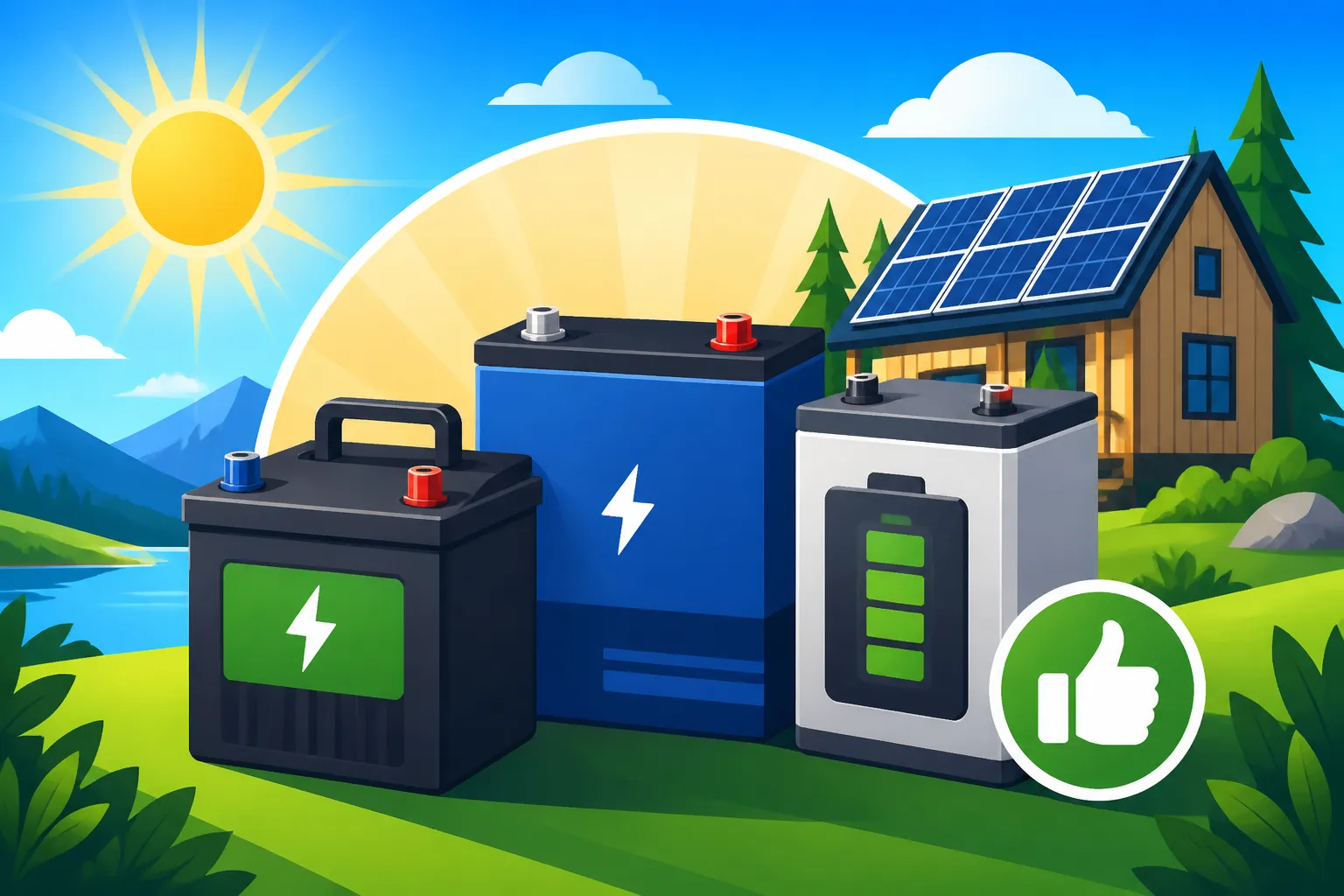
When you're looking into off-grid batteries, you'll primarily encounter three main chemistries, each with its own sweet spot for value. Understanding the characteristics of each is key to making an informed decision that aligns with your specific needs and budget. It's not a one-size-fits-all situation, and what's "best value" for one person might be entirely wrong for another.
Lithium Iron Phosphate LiFePO4 Batteries
Lithium Iron Phosphate (LiFePO4) batteries have truly revolutionized the off-grid solar world, quickly becoming the gold standard for many homesteaders and RV dwellers. While their upfront cost is undeniably higher than lead-acid options, their unparalleled performance and longevity make them an incredible value over time. These batteries boast an impressive cycle life, often ranging from 3,000 to 8,000 cycles or even more, which means they can be fully discharged and recharged thousands of times before their capacity significantly degrades. This makes them ideal if you're looking for an off-grid system for year-round living.
Beyond cycle life, LiFePO4 batteries offer a deep depth of discharge (DoD), typically allowing you to use 80-100% of their rated capacity without damaging the battery. This means you need less overall battery capacity to achieve the same usable power as a lead-acid bank. They also have excellent round-trip efficiency (around 90-99%), meaning very little energy is lost during charging and discharging. Furthermore, they require virtually no maintenance, come in lighter packages, and can handle a wider temperature range (with proper battery management systems, or BMS). Many reputable brands like Renogy offer excellent LiFePO4 batteries that, despite the initial investment, provide superior long-term value due to their durability and efficiency. When considering how batteries drive off-grid solar cost, LiFePO4 batteries often reduce lifetime expenses.
Absorbed Glass Mat AGM Batteries
Absorbed Glass Mat (AGM) batteries are a type of sealed lead-acid battery that offers a middle-ground solution between traditional flooded lead-acid and cutting-edge LiFePO4. They are a popular choice for many off-grid applications, especially those where a lower initial cost is paramount, but some of the conveniences of a sealed battery are desired. AGM batteries are maintenance-free, meaning you don't have to worry about adding distilled water or dealing with corrosive gases, which is a big plus for RVs, vans, or cabins where regular maintenance might be inconvenient.
Their cycle life is generally better than flooded lead-acid batteries, typically offering 800-1500 cycles at a 50% depth of discharge. While this is significantly less than LiFePO4, it's a solid improvement over their flooded counterparts. AGM batteries also have a relatively low self-discharge rate, holding their charge well when not in use. They can handle higher discharge currents than flooded batteries, which is beneficial for systems with occasional high-power draws. However, pushing them beyond 50% DoD regularly will drastically shorten their lifespan, impacting their long-term value. For those wondering about the cost of an off-grid solar battery bank, AGMs present a more affordable entry point than lithium but still demand a thoughtful comparison against their lifespan.
Flooded Lead-Acid FLA Batteries
Flooded Lead-Acid (FLA) batteries are the old workhorses of the off-grid world. They are often the cheapest option upfront, making them an attractive choice for those on a very tight budget or for smaller, less critical applications. These are the same type of batteries you might find in golf carts or forklifts, and they've been used reliably for decades. Their main draw is their low initial cost per usable kilowatt-hour.
However, FLA batteries come with a few significant caveats. They typically have the shortest cycle life (around 500-1000 cycles at 50% DoD) and the lowest depth of discharge recommendation, often only 30-50% DoD, meaning you need a much larger battery bank to get the same usable energy as a LiFePO4 system. They also require regular maintenance, including checking water levels and adding distilled water, and they produce corrosive hydrogen gas, necessitating a well-ventilated battery enclosure. Their efficiency is also lower (around 80-85%) compared to other chemistries. Despite these drawbacks, for a remote hunting cabin used only a few weeks a year, or an experimental off-grid setup where initial cost is the absolute limiting factor, FLA batteries can still provide reasonable value. It’s all about matching the battery to the application’s demands and your commitment to maintenance.
Here's a quick comparison of these battery types to help illustrate their value propositions:
| Feature | Flooded Lead-Acid (FLA) | Absorbed Glass Mat (AGM) | Lithium Iron Phosphate (LiFePO4) |
|---|---|---|---|
| Initial Cost | Lowest | Medium | Highest |
| Lifetime Cost (TCO) | Medium to High (due to replacements) | Medium | Lowest (due to longevity) |
| Usable Capacity (DoD) | 30-50% | 50% | 80-100% |
| Cycle Life | 500-1000 cycles | 800-1500 cycles | 3000-8000+ cycles |
| Efficiency (Round-trip) | 80-85% | 85-95% | 90-99% |
| Maintenance | High (water, ventilation) | None | None |
| Self-Discharge Rate | Medium | Low | Very Low |
| Weight | Heaviest | Heavy | Lightest |
| Temperature Tolerance | Moderate | Good | Excellent (with BMS) |
| Best For | Low budget, infrequent use, DIYers | Mid-range budget, occasional use, sealed systems | High demand, long-term, high performance |
Key Factors for Identifying Value Batteries
Beyond just the chemistry, several critical factors play a huge role in determining the true value of an off-grid battery. Overlooking these details can lead to buyer's remorse and unexpected costs down the road. It’s not just about capacity; it's about how that capacity performs and endures under real-world conditions.
Cycle Life and Depth of Discharge
These two terms are perhaps the most important indicators of a battery's long-term value. Cycle life refers to the number of times a battery can be discharged and recharged before its capacity significantly degrades, typically to 80% of its original rating. A higher cycle life means the battery will last longer, reducing the frequency and cost of replacements. Think about it: a battery that costs twice as much but lasts five times longer is a far better investment over the years.
Depth of Discharge (DoD) is the percentage of the battery's capacity that has been discharged. For example, if you have a 100 Ah battery and you use 50 Ah, you've hit a 50% DoD. The critical thing to understand is that for many battery types, especially lead-acid, consistently discharging them too deeply will drastically reduce their cycle life. LiFePO4 batteries, as we discussed, are exceptional in this regard, offering high cycle counts even at 80-100% DoD. This means you get more usable energy from a smaller LiFePO4 bank than from a lead-acid bank of the same rated capacity. When calculating how many batteries for an off-grid system, knowing the usable DoD is paramount to accurately sizing your battery bank. If you can only use half of a battery's capacity to maintain its lifespan, you effectively need twice the nominal capacity compared to a battery you can safely discharge fully.
Efficiency and Self-Discharge Rates
Efficiency refers to how much energy is lost during the charging and discharging process. It's often expressed as "round-trip efficiency." If your battery has a 90% round-trip efficiency, it means that for every 100 watts of power you put in, you only get 90 watts back out. The remaining 10 watts are lost, usually as heat. In an off-grid solar system, where every watt counts, higher efficiency means you get more out of your solar panels and reduce the need for oversizing your array. This directly impacts your budget, as more efficient batteries mean you might need fewer solar panels to charge them adequately.
Self-discharge rate is how quickly a battery loses its charge when not in use. All batteries self-discharge to some extent. For off-grid systems, especially those with seasonal use or backup applications, a low self-discharge rate is highly desirable. Imagine setting up a system for a remote cabin you visit only a few times a year. If your batteries are constantly draining themselves, you'll arrive to find them depleted, potentially shortening their lifespan or leaving you without power. LiFePO4 batteries typically have a very low self-discharge rate, meaning they can sit for months and still retain most of their charge, providing excellent value for intermittent use.
Warranty and Manufacturer Reputation
A battery bank is one of the most significant investments in your off-grid system, so a robust warranty and a reputable manufacturer are non-negotiable aspects of value. A good warranty provides peace of mind and protection against manufacturing defects or premature failure. While cheaper, no-name brands might seem tempting, a short or non-existent warranty can leave you stranded if things go wrong. Look for companies that stand behind their products, offering warranties that reflect the expected lifespan of their batteries.
Beyond the warranty, consider the manufacturer's reputation. Are they known for quality, customer support, and reliability? Do they have readily available technical support if you run into issues? Brands like Renogy, for example, have built a strong reputation in the off-grid community for offering reliable solar components, including batteries, and often provide good customer service. Checking reviews on platforms like Amazon and specialized solar forums can give you real-world insights into a brand's performance and support. A battery from a reputable brand, even if slightly more expensive, often delivers superior value through reliability and support. Choosing the best off-grid solar brands ensures you’re getting quality components for your system.
Ease of Maintenance and Installation
The "value" of a battery isn't just about its technical specs; it also includes the time, effort, and potential cost associated with its upkeep and initial setup. Batteries that require less maintenance free up your time and reduce ongoing operational costs.
Flooded lead-acid batteries, as mentioned, require regular checks of electrolyte levels and periodic equalization charges. This means dedicating time, having access to distilled water, and ensuring proper ventilation to manage the gases produced. While manageable for some, this can be a significant chore for busy homesteaders or those with batteries in hard-to-reach locations.
AGM and LiFePO4 batteries are largely maintenance-free. Once installed and properly charged, they generally just do their job. This convenience factor adds immense value, especially for RVers, van lifers, or anyone who prefers a set-it-and-forget-it approach.
Installation considerations also factor into value. LiFePO4 batteries are often lighter and more compact for their usable energy capacity, making them easier to handle and install, especially in confined spaces. Many LiFePO4 batteries also come with integrated Battery Management Systems (BMS), simplifying wiring and protecting the cells. For those looking at a DIY off-grid solar installation, simpler wiring and lighter components can make a huge difference in the overall experience and safety. These practical aspects contribute to the overall value proposition, reducing potential installation costs or DIY headaches.
Recommended Value-Oriented Off-Grid Battery Options
Navigating the sea of battery options can be overwhelming, but focusing on value means looking at specific examples that offer a good balance of cost, performance, and longevity. While the absolute "cheapest" might not be the best value, there are many brands and types that strike a fantastic balance.
Specific Examples and Considerations
For those aiming for the absolute best long-term value and can manage a higher initial investment, LiFePO4 batteries are consistently the top recommendation. Brands like Battle Born, EG4, and Victron Energy are often cited as premium choices, known for their exceptional quality and robust performance. However, there are also excellent value-oriented LiFePO4 options emerging. Companies like Renogy, for instance, offer a range of LiFePO4 batteries that hit a sweet spot between affordability and reliable performance, making them accessible to a wider audience. Their 100Ah and 200Ah LiFePO4 batteries are popular for various applications, from RVs to small cabins, providing a fantastic cycle life and deep discharge capabilities without breaking the bank compared to some higher-end competitors. Another brand gaining traction for good value LiFePO4 is SOK Battery, often praised for their built-in heating elements (great for cold climates) and repairability. When searching for the best lithium batteries for off-grid, look at the discharge rates, warranty, and integrated BMS features.
For those whose budget simply can’t stretch to LiFePO4 but still want a sealed, low-maintenance option, AGM batteries from reputable manufacturers offer decent value. Brands like VMAXTANKS, Trojan, and Crown Battery produce reliable AGM batteries that, when properly cared for (meaning not discharged below 50% DoD consistently), can provide years of service. While they won't last as long as LiFePO4, their lower initial cost makes them a viable choice for systems that don't demand daily deep cycling. They are particularly good for seasonal use, like a weekend cabin, or as a more robust upgrade from flooded lead-acid for smaller setups. Remember to factor in the need for a larger nominal capacity to achieve the same usable power as a LiFePO4 bank when comparing costs. This is an important consideration for how battery choice affects off-grid cost.
Shopping Smart for Deals
Finding the best value also means being a smart shopper. The price of batteries can fluctuate, and knowing where and when to look can save you a significant amount of money. Online marketplaces like Amazon are fantastic places to start, offering a wide array of battery brands and often competitive pricing. You can frequently find deals on LiFePO4 batteries from brands like Renogy, Ampere Time, or LiTime, especially during sales events. Just be sure to check seller reviews and the official brand storefronts to ensure authenticity and proper warranty support. Don't forget that Amazon also carries a vast selection of AGM batteries, often with free or discounted shipping, which can be a huge saving on such heavy items.
Beyond Amazon, specialized solar retailers such as Northern Arizona Wind & Sun, Battle Born Batteries' own site, or Signature Solar often run promotions. These retailers specialize in off-grid equipment and can offer more in-depth technical support and curated selections. It’s also worth looking into local solar installers or battery distributors. Sometimes, buying in bulk or finding discontinued models can lead to unexpected savings. Always compare prices, check shipping costs, and verify warranty terms before making a purchase. Sometimes, investing a little more in a comprehensive off-grid solar kit price range that includes matched components can provide better overall value than piecing everything together from various sources.
Maximizing Battery Life to Enhance Value
Once you've made your investment in off-grid batteries, the journey isn't over. To truly maximize their value and ensure they last as long as possible, proper care and management are absolutely crucial. Think of your batteries like a pet: neglect them, and you'll face problems sooner than you'd like. Treat them well, and they'll be a loyal companion for years. This is where the long-term savings really kick in, extending the period before you need to consider the cost to replace off-grid solar batteries.
Proper Charging and Discharge Habits
The way you charge and discharge your batteries has the biggest impact on their lifespan. For lead-acid batteries (both FLA and AGM), consistently avoiding deep discharges is paramount. Aim to keep their depth of discharge around 50% for optimal cycle life. This means if you use 50% of your battery's capacity, you should recharge it as soon as possible. Allowing them to sit in a discharged state for extended periods, especially below 50%, can lead to sulfation, a common killer of lead-acid batteries. Regular, complete recharges (known as equalization charges for FLAs) are also important to prevent cell stratification and keep them healthy.
LiFePO4 batteries, while more robust, also benefit from smart charging practices. While they can handle deep discharges (80-100% DoD) without significant harm, charging them to 100% and then immediately discharging them repeatedly can put a bit more stress on them than, say, cycling between 20% and 80%. Most modern LiFePO4 batteries come with an advanced Battery Management System (BMS) that handles overcharge, over-discharge, and temperature protection, simplifying their care. However, ensuring your charge controller and inverter settings are correctly calibrated for your LiFePO4 chemistry is vital to allow the BMS to do its job effectively. Always consult the manufacturer's guidelines for optimal charging voltages and currents. Understanding how to maintain an off-grid battery bank is crucial for long-term performance.
Environmental Protection and Monitoring
Batteries are sensitive to their environment, and protecting them from extreme conditions is key to extending their life and, by extension, their value. Both lead-acid and lithium batteries perform best within a specific temperature range.
Cold weather can significantly reduce the performance and lifespan of batteries. Lead-acid batteries lose capacity in the cold and can freeze if discharged too deeply. LiFePO4 batteries generally cannot be charged when their internal temperature is below freezing (typically 32°F or 0°C) without risking permanent damage. If you live in a cold climate, investing in heated battery enclosures, battery blankets, or choosing LiFePO4 batteries with integrated heating elements (like some from SOK Battery or Battle Born) is essential.
Excessive heat is also detrimental, accelerating internal chemical reactions and shortening overall lifespan for all battery types. Ensure your battery bank is stored in a cool, dry, well-ventilated space, out of direct sunlight. Good airflow is particularly important for flooded lead-acid batteries due to the gases they emit.
Finally, monitoring your battery bank is one of the best ways to ensure maximum value. A good battery monitor, which typically includes a shunt, will accurately tell you your battery's state of charge, voltage, current in/out, and even historical data. This information empowers you to manage your power consumption, avoid deep discharges, and identify any issues early on. Many off-grid solar systems feature sophisticated monitoring from brands like Victron Energy or Renogy, allowing you to track your energy usage and battery health from your phone. This kind of proactive management can literally add years to your battery bank's life, significantly enhancing its overall value.
Disclaimer
The information provided in this guide is for general informational purposes only and does not constitute professional advice. Off-grid solar system design and installation can be complex and involve electrical hazards. Always consult with qualified professionals and adhere to local codes and regulations. Battery technologies and prices are subject to change.