How to Design an AC Off-Grid System
The dream of living off-grid, whether it's in a remote cabin, an RV exploring the open road, or a tiny home nestled away, often comes with one big question: "How do I power all my regular appliances?" You’re used to plugging in your coffee maker, charging your laptop, or running a mini-fridge without a second thought. Replicating that convenience in an off-grid setting, especially with AC (alternating current) power, can feel daunting, but it's absolutely achievable. This guide will walk you through the practical steps and considerations for designing a robust AC off-grid solar system so you can enjoy modern comforts wherever you choose to set up your independent life.
Understanding AC Versus DC in Off-Grid Systems
Before we dive into the nitty-gritty of designing your system, let's clarify the fundamental difference between AC and DC power, as this dictates much of your system's design. This isn't just technical jargon; it's the core of how you'll interact with your power system daily.
Direct Current DC Power
DC, or Direct Current, is the natural output of solar panels and the power stored in your batteries. Think of it as a one-way street for electricity. Many smaller, modern appliances, especially in RVs, boats, or tiny homes, are designed to run directly on DC power. This includes things like LED lights, phone chargers (USB), certain refrigerators, and pumps specifically made for 12V or 24V systems. The beauty of running DC appliances is efficiency – there's no conversion loss since you're using the power exactly as it's generated and stored. It's often the simplest and most cost-effective way to power basic loads.
However, the reality is that most common household appliances you use daily, from your microwave to your hair dryer, are designed for AC power, typically 120V in North America. Trying to find a DC version of every appliance can be a frustrating and often expensive endeavor, if it's even possible. Plus, DC systems generally require heavier gauge wiring for the same amount of power over longer distances due to voltage drop, which isn't ideal for whole-home setups.
Alternating Current AC Power
AC, or Alternating Current, is the standard power found in homes and businesses connected to the utility grid. It's what allows electricity to travel efficiently over long distances from power plants to your outlets. In an off-grid solar system, you introduce a crucial component called an inverter, which takes the DC power from your batteries and "inverts" it into AC power. This means you can plug in virtually any standard appliance, just like you would in a grid-tied home.
The trade-off for this convenience is a slight loss of efficiency during the conversion process. An inverter, no matter how good, will consume a small amount of power to operate, and there's always some energy lost as heat. However, for most off-grid setups, especially those aiming to replicate a full home experience, the convenience and wide availability of AC appliances far outweigh this minor efficiency hit. Designing an AC system means you're building a truly versatile power solution.
Key Components of an AC Off-Grid System
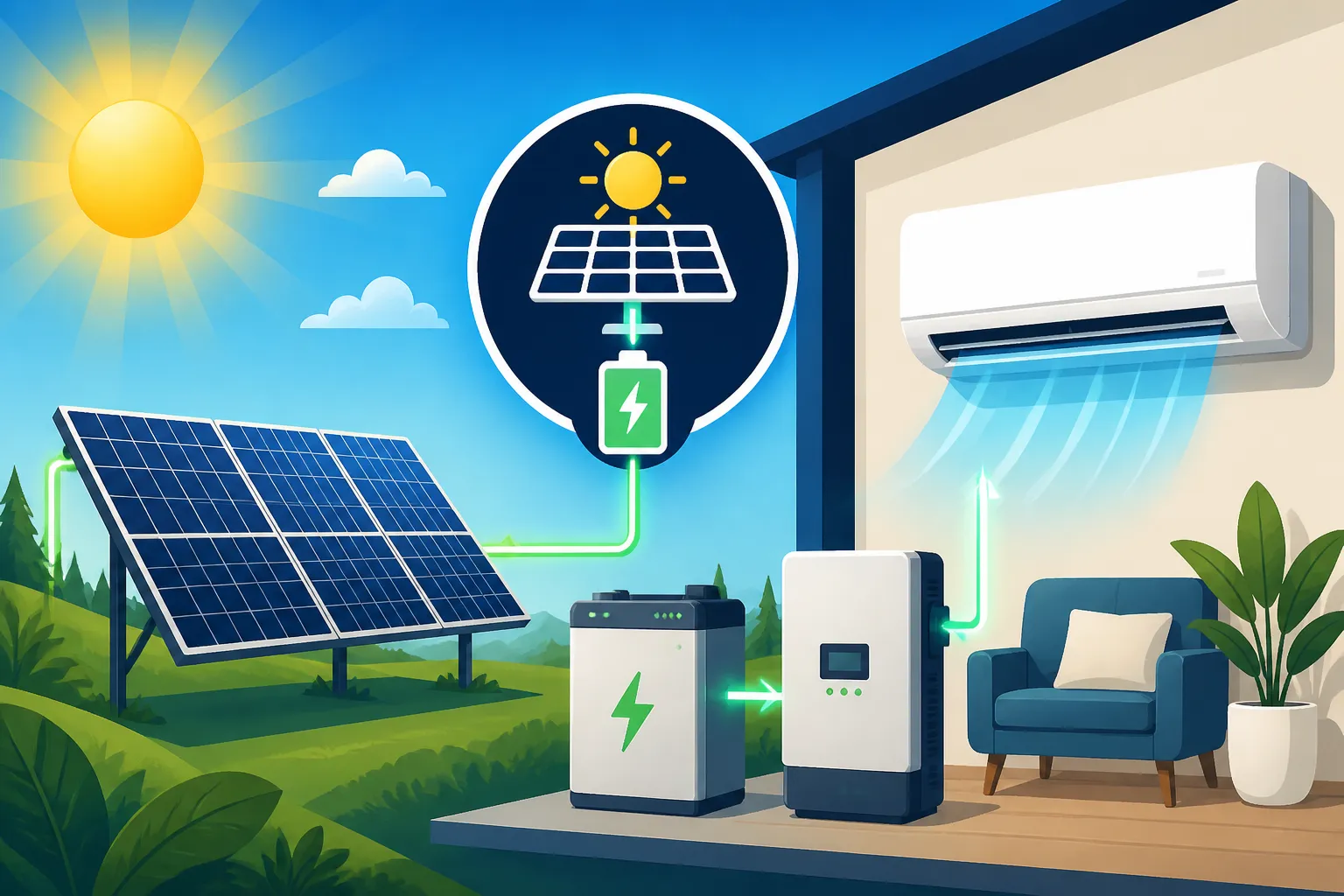
Building an AC off-grid solar system means you'll need a few primary pieces of equipment working in harmony. Each plays a critical role in converting sunlight into usable AC power for your home or mobile setup.
Solar Panels
These are the workhorses of your system, converting sunlight directly into DC electricity. When you're designing an AC system, you're looking at solar panels that produce DC voltage (typically 12V, 24V, or higher for larger panels) which will then feed into your charge controller. The choice of panels depends on your space, budget, and desired power output. For example, large residential-grade panels are great for ground mounts or large roofs, while flexible or smaller rigid panels might be better suited for an RV. Panels from brands like Renogy are popular choices for their balance of performance and accessibility, often found readily available on platforms like Amazon.
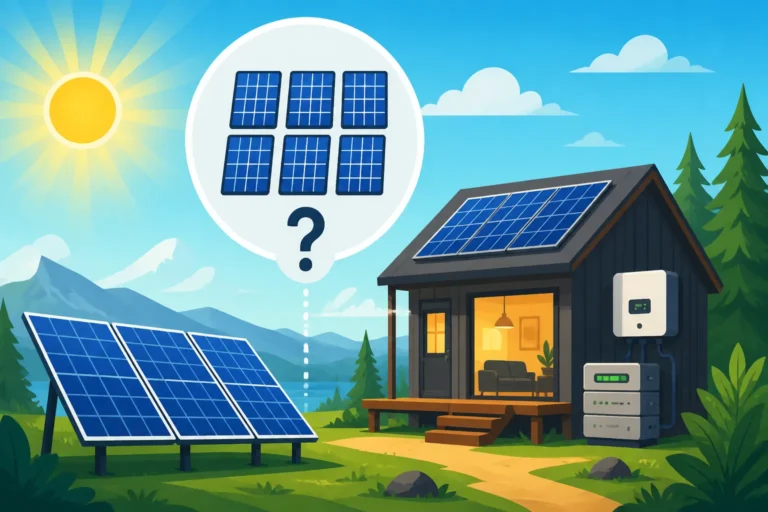
You'll need to figure out how many panels you need based on your energy consumption and the "peak sun hours" available in your location. This is a critical step covered in more detail when you're learning How Many Solar Panels for Off-Grid Living. The output of these panels needs to be managed carefully, which leads us to the next component.
Charge Controller
Sitting between your solar panels and your battery bank, the charge controller is like a sophisticated traffic cop. Its primary job is to regulate the voltage and current coming from your solar panels, ensuring that your batteries are charged safely and efficiently without being overcharged or damaged.
There are two main types:
- PWM (Pulse Width Modulation) Controllers: These are simpler and generally more affordable. They essentially connect the solar panel array directly to the battery, but pulse the power to match the battery's state of charge. They are less efficient, especially in cooler temperatures or when there's a significant voltage difference between the panels and batteries, as they don't optimize for maximum power point tracking.
- MPPT (Maximum Power Point Tracking) Controllers: These are more advanced and significantly more efficient, especially in larger systems. An MPPT controller constantly tracks the maximum power point of the solar array, optimizing the voltage and current to deliver the most power possible to the batteries, regardless of panel temperature or battery voltage. While they come with a higher upfront cost, their efficiency gains often mean you can use fewer panels to achieve the same charging results, making them a wise investment for most AC off-grid systems. For larger or more complex systems, you'll definitely want to invest in a quality MPPT controller.
Battery Bank
Your battery bank is the heart of your off-grid system, storing the energy generated by your solar panels for use when the sun isn't shining. Without it, you'd only have power during daylight hours. The size and type of your battery bank are crucial factors influencing your system's reliability and cost.
Common battery chemistries include:
- Lead-Acid (Flooded, AGM, Gel): These are traditionally more affordable upfront but require more maintenance (flooded) and have a shorter lifespan and lower usable depth of discharge compared to lithium. AGM (Absorbent Glass Mat) and Gel batteries are sealed, maintenance-free versions, but still have limitations compared to lithium.
- Lithium Iron Phosphate (LiFePO4): These batteries are the rising stars of off-grid power. While more expensive initially, they offer a significantly longer lifespan (thousands of cycles), a higher usable depth of discharge (often 80-100% without damage), lighter weight, and consistent voltage output. They are also virtually maintenance-free. For a serious AC off-grid setup, especially one you plan to live with long-term, investing in LiFePO4 batteries like those from Battle Born or EG4 is often the most cost-effective solution in the long run, despite the higher initial Cost of an Off-Grid Solar Battery Bank.
When thinking about How Many Batteries for an Off-Grid System, you'll consider your daily energy consumption and how many "days of autonomy" you want – meaning, how long your system can run without any solar input (e.g., during cloudy weather).
Inverter
This is the magic box that makes your off-grid system feel like a regular home. The inverter converts the DC power stored in your batteries into the AC power that your standard appliances use. For an AC off-grid system, you absolutely need a pure sine wave inverter.
- Pure Sine Wave Inverters: These produce a clean, smooth AC waveform, identical to or even better than the power you get from the utility grid. This is essential for sensitive electronics (laptops, TVs), appliances with motors (refrigerators, microwaves, power tools), and anything with a clock or digital display. Using anything less than a pure sine wave inverter can damage these appliances or cause them to operate inefficiently or make buzzing noises.
- Modified Sine Wave Inverters: These produce a "choppier" waveform and are generally only suitable for basic resistive loads like incandescent lights or simple heating elements. They are cheaper but should be avoided for modern AC off-grid systems due to potential appliance damage and inefficiency.
When selecting an inverter, you'll need to consider its continuous wattage rating (the maximum power it can supply constantly) and its surge rating (the brief spike in power it can handle when motors start up). If you’re running an air conditioner or a well pump, those surge ratings become incredibly important. How to Size an Off-Grid Inverter properly is key to avoiding frustration and ensuring all your appliances can start and run. Brands like Victron Energy and Sol-Ark offer excellent inverter solutions known for their reliability and advanced features.
Wiring, Fuses, and Breakers
These are the unsung heroes that connect everything safely. Proper wiring size is crucial to prevent voltage drop and overheating, especially for DC circuits between batteries and the inverter. Fuses and breakers protect your system components and, more importantly, you and your property from overcurrents and short circuits. Always use appropriately sized components for each segment of your system, following electrical codes and best practices. Safety should always be your top priority when designing and installing any electrical system.
Designing Your AC Load Profile
Before you can even begin to think about how many panels or batteries you need, you absolutely must understand your power consumption. This is where many off-gridders get stuck or end up with an undersized (or oversized) system. It’s like trying to build a house without knowing how many rooms you need!
Calculating Daily Energy Usage
The first, and arguably most important, step in designing your AC off-grid system is to perform a detailed Off-Grid Solar Load Calculation Explained. This means listing every single AC appliance you plan to use, along with its wattage and how many hours you expect to use it per day. Don’t guess – go through your daily routine and make a list.
Let's break it down:
- List all appliances: Think about everything you want to power. Refrigerator, lights, laptop, phone charger, microwave, TV, water pump, hairdryer, coffee maker, air conditioner, washing machine, power tools – everything.
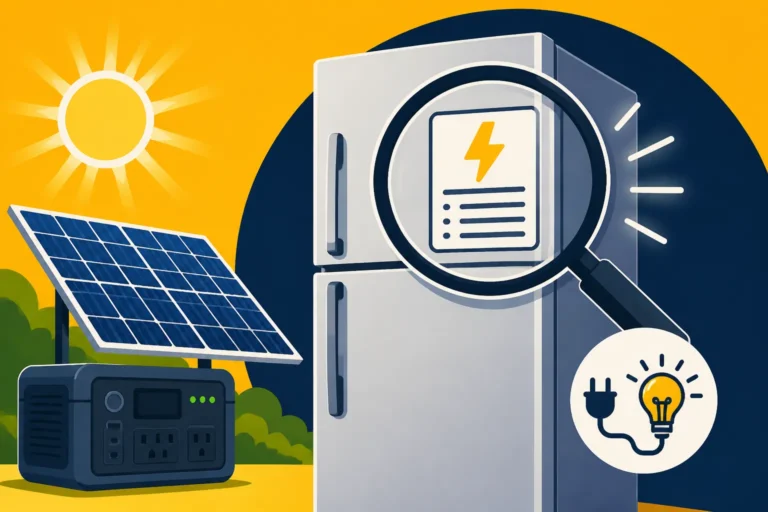
- Find the wattage: Most appliances have a label indicating their wattage (W) or current (A) and voltage (V). If you see amps and volts, multiply them (A x V = W) to get the wattage. For appliances with motors, like refrigerators or well pumps, note both the running wattage and the surge or starting wattage, which can be several times higher. You can use a Kill-A-Watt meter, easily found on Amazon, to measure actual consumption for a truly accurate picture.
- Estimate daily usage hours: Be realistic. How long is your refrigerator actually running (it cycles on and off)? How many hours a day do you watch TV or use your laptop? How long do you run the microwave? Don't overestimate; be practical about your daily habits.
- Calculate Watt-hours (Wh) per appliance: Multiply the wattage by the hours of daily use for each item (W x H = Wh).
- Sum it all up: Add up the Wh for all your appliances to get your total daily AC Watt-hour consumption.
Example Appliance Load Table:
| Appliance | Wattage (W) | Est. Hours/Day | Daily Wh (AC) | Surge/Starting W (if applicable) |
|---|---|---|---|---|
| LED Lights (x5) | 50 | 4 | 200 | N/A |
| Refrigerator | 150 | 8 (cycles) | 1200 | 800 – 1500 |
| Laptop Charger | 60 | 3 | 180 | N/A |
| TV (40") | 80 | 2 | 160 | N/A |
| Microwave (brief) | 1500 | 0.1 (6 min) | 150 | N/A |
| Coffee Maker | 1000 | 0.2 (12 min) | 200 | N/A |
| Total Daily AC Usage | 2090 Wh | Peak Surge: ~1500W |
This table gives you a clear picture of your actual needs. If you're designing for a cabin, this process might reveal that your daily energy usage is around 3-5 kWh (3000-5000 Wh), while a smaller RV setup might only be 1-2 kWh. Remember that AC systems have conversion losses, so your battery needs will be slightly higher than this raw AC total. Factor in about 10-15% for inverter inefficiency.
Peak Power Demand
Beyond daily energy consumption, you also need to consider your peak power demand. This is the maximum wattage you might draw at any single moment if several high-wattage appliances are running simultaneously. For example, if you turn on the microwave (1500W) while the refrigerator compressor starts (say, 1000W surge) and a laptop is charging (60W), your peak demand could briefly hit around 2560W. Your inverter must be able to handle this peak demand, including any surge loads, otherwise it will simply shut down to protect itself. This is critical for Sizing Solar for a Refrigerator or Sizing Solar for Air Conditioning.
Carefully considering both your daily Watt-hours and your peak wattage will prevent you from designing a system that constantly struggles or forces you to compromise on your power usage. This detailed load analysis is the cornerstone of a successful off-grid solar design.
Sizing Your AC Off-Grid System Components
With your detailed load profile in hand, you're ready to size the individual components of your AC off-grid system. This is where the numbers game really begins, but don't worry, we'll break it down.
Sizing the Inverter
Your inverter is directly sized by your peak AC power demand. Look at your load analysis and identify the highest potential simultaneous draw, including those motor start-up surges. If your peak continuous draw is 2000W and your biggest surge (like a well pump or fridge compressor kicking on) is 1500W, you need an inverter that can handle at least 3500W for a brief surge, and reliably output 2000W continuously. It's often smart to give yourself a little buffer, perhaps choosing a 3000W or 4000W continuous inverter for a 2000W peak load, ensuring it has enough headroom for unexpected demands.
For most modest off-grid homes or larger RVs with AC appliances, a 3000W or 5000W pure sine wave inverter is a common choice. A quality inverter will usually provide both its continuous and surge ratings. Remember, if you plan to run large appliances like an electric water heater or a central air conditioner, your inverter size (and consequently, your entire system) will need to be significantly larger. Brands like Victron MultiPlus or Sol-Ark offer integrated inverter-chargers, which combine the inverter, charge controller, and often a transfer switch into one unit, simplifying wiring and management.
Sizing the Battery Bank
The battery bank is sized based on your total daily Watt-hour consumption, adjusted for inverter efficiency and desired days of autonomy.
Let's assume your calculated daily AC usage is 2090 Wh.
- Adjust for Inverter Efficiency: If your inverter is 85% efficient, your batteries actually need to supply
2090 Wh / 0.85 = ~2459 Whof DC power. - Consider Days of Autonomy: How many days do you want to run purely on battery power without any solar input (e.g., during prolonged cloudy weather)? Let's say you want 2 days. So,
2459 Wh/day * 2 days = 4918 Wh. - Account for Battery Depth of Discharge (DOD): Batteries shouldn't be fully discharged. LiFePO4 batteries can typically be discharged to 80-100%, but let's use 80% for longevity. Lead-acid batteries should only be discharged to 50%. So, if you're using LiFePO4:
4918 Wh / 0.80 = ~6147.5 Whusable capacity needed. - Convert to Amp-hours (Ah) for your chosen system voltage: Most significant off-grid systems operate at 24V or 48V to reduce current and allow for thinner wiring. Let's assume a 48V system.
6147.5 Wh / 48V = ~128 Ah.
So, you would need a 48V battery bank with at least 128 Amp-hours of usable capacity. If you were using 100Ah 48V LiFePO4 batteries, you'd need two of them in parallel to reach 200Ah.
This calculation helps you determine How Many Watt-Hours You Use Per Day and then translates that into the battery capacity you'll need. Choosing the right system voltage, whether it's 12V vs 24V vs 48V Which to Choose, significantly impacts battery bank sizing and wiring.
Sizing the Solar Array
Your solar array (the panels) needs to generate enough power to recharge your battery bank daily and ideally cover any ongoing loads during daylight hours.
- Daily DC Energy Needed: You know from the battery sizing that you need to put back around 2459 Wh into your batteries each day (this is the energy leaving the batteries, so you need to generate at least this much, plus a little extra for system losses).
- Peak Sun Hours: This is critical. Peak sun hours refer to the equivalent number of hours per day when the sun's intensity averages 1,000 watts per square meter (the standard for panel ratings). This varies significantly by location and season. You can find average peak sun hour data for your specific location online (e.g., from NASA or local weather resources). Let's say your location gets 4 peak sun hours in winter, which is often the worst-case scenario.
- Calculate Panel Wattage:
(Daily Wh needed) / (Peak Sun Hours) = Minimum Panel Watts.2459 Wh / 4 hours = ~615 Watts.
So, you'd need a minimum of 615 watts of solar panels. If you're using 200W panels, you'd need615W / 200W = 3.07, so you'd round up to 4 panels. - Add a Buffer: It's always a good idea to oversize your solar array by 20-30% to account for less-than-ideal conditions (panel degradation, dust, cloudy patches, angle issues) and provide quicker battery charging. So,
615W * 1.25 = ~769 Watts. This would mean 4x 200W panels (800W total) would be a good starting point.
This calculation is the core of How Many Watts of Solar You Need for your AC off-grid system. Remember that How Winter Affects Off-Grid Sizing is a huge consideration, as sun hours decrease dramatically in many regions.
Sizing the Charge Controller
Your charge controller needs to handle the maximum current (amps) that your solar array can produce.
- Calculate Max Amps: Divide your total panel wattage by your system voltage (not panel voltage). If you have 800W of panels and a 48V system, this is
800W / 48V = ~16.67 Amps. - Add a Safety Factor: Always add a 25% safety factor for solar equipment as per electrical codes to account for cold weather effects (which can briefly increase panel voltage and current). So,
16.67 Amps * 1.25 = ~20.8 Amps.
You would need a charge controller rated for at least 21-25 Amps. Many charge controllers from brands like Renogy or Victron are available in various amperages (e.g., 40A, 60A, 80A), so you'd pick one that safely exceeds your calculated maximum.
This step ensures your charge controller can safely manage all the power coming from your panels to your battery bank. Getting this right is crucial for battery health and system longevity.
Putting It All Together: Installation and Considerations
Once you've meticulously sized your components, the next phase is bringing it all to life. This involves physical installation, ensuring safety, and optimizing your system for long-term performance.
Wiring Your AC Off-Grid System
Wiring an off-grid system is where the rubber meets the road. It involves connecting your panels to the charge controller, the charge controller to your battery bank, and your battery bank to the inverter, and then the inverter to your AC load center (breaker box). Every connection needs to be secure, properly crimped, and protected.
- DC Wiring: This includes the wires from your solar panels to your charge controller, and from your charge controller to your battery bank. These connections carry higher currents at lower voltages, meaning you'll need thicker wires (lower gauge) to minimize voltage drop and prevent overheating. For instance, connecting a 48V battery bank will use smaller gauge wires than a 12V system for the same power, which is one reason Why 48V Is Better for Large Systems. Remember to properly fuse or break all DC circuits close to the power source, especially at the battery bank, as this protects against short circuits.
- AC Wiring: From your inverter, you'll run standard AC wiring to a small breaker panel (often called a subpanel or load center). This panel then distributes AC power to your outlets and hard-wired appliances, just like in a grid-tied home. Ensure all AC wiring follows standard electrical codes (like the National Electrical Code in the US) regarding wire sizing, conduit, and grounding.
Proper grounding of your entire system is non-negotiable for safety. This means connecting all metallic enclosures, panel frames, and the system ground to an earth ground rod. Skipping this step can create a serious electrocution hazard. If you're unsure about any aspect of wiring or grounding, consult with a qualified electrician. There are many comprehensive resources available, such as How to Wire an Off-Grid Solar System and Off-Grid Solar Wiring Diagram Explained, that can provide detailed visual guides.
Mounting Your Solar Panels
How and where you mount your solar panels will impact their efficiency and longevity.
- Roof Mounts: Common for cabins, homes, or RVs. They save ground space and can be angled for optimal sun exposure. Consider the structural integrity of your roof and proper sealing for any penetrations.
- Ground Mounts: Offer greater flexibility in aiming panels directly at the sun, and you can easily adjust their tilt angle seasonally to maximize winter production. They are also easier to install and maintain. However, they take up ground space and may require more extensive trenching for wiring.
- Pole Mounts: A type of ground mount that elevates panels, useful for avoiding shading from trees or buildings, and can often be rotated to track the sun throughout the day.
Regardless of the mount type, ensure your panels are securely fastened to withstand local wind and snow loads. Orienting them to the true south (in the Northern Hemisphere) or north (in the Southern Hemisphere) is generally best for year-round production, but a slightly southeast or southwest tilt might be preferred depending on your peak usage times. Remember to consider Best Tilt Angle for Off-Grid Panels for optimal energy harvest.
Monitoring and Maintenance
A well-designed AC off-grid system isn't just about initial installation; it's about ongoing management.
- Battery Monitoring: Investing in a good battery monitor (shunt-based is best) is crucial. This device gives you real-time information on your battery's state of charge, current draw, and power input, allowing you to understand your system's performance and prevent over-discharging.
- Regular Checks: Periodically inspect all connections for corrosion or looseness, check panel surfaces for dirt or debris, and ensure ventilation for your battery bank (especially lead-acid).
- Inverter Settings: Many modern inverters allow you to customize settings for battery charging profiles, low-voltage disconnects, and even generator auto-start if you have one. Understanding and properly configuring these settings will optimize your system's performance and protect your batteries. For instance, systems with a backup generator can use an inverter charger to automatically start the generator when battery levels drop, adding another layer of reliability.
Regular maintenance and diligent monitoring will extend the life of your components and prevent unexpected power outages. This truly makes your off-grid experience smoother and more reliable, ensuring your AC appliances run without a hitch.
Final Considerations for Your AC Off-Grid System
Designing an AC off-grid system is a significant undertaking, and there are always a few extra details to keep in mind to ensure long-term success and satisfaction.
Planning for Expansion
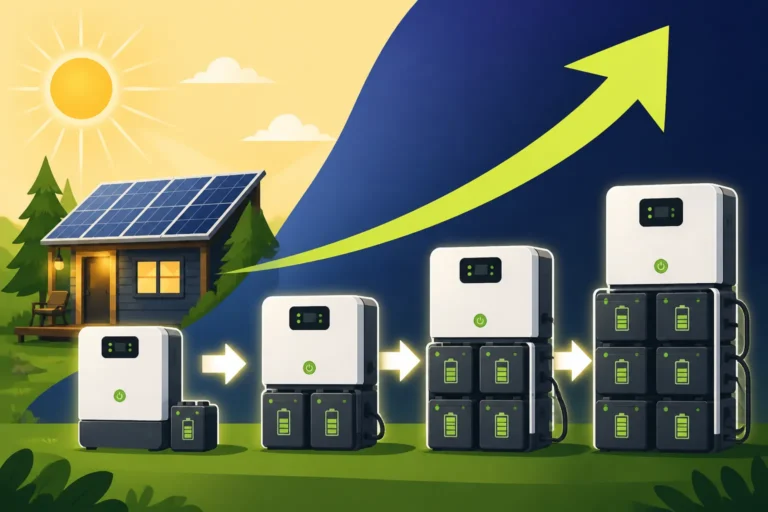
It’s easy to underestimate your power needs when you first go off-grid, or your needs might simply grow over time. Maybe you start with basic lighting and a fridge, but later decide you want to add a workshop with power tools, or perhaps even a mini-split air conditioner. It's much easier and often more cost-effective to plan for expansion from the outset, rather than having to completely redesign your system later.
When sizing your components, consider buying an inverter that has a little extra capacity, or a charge controller that can handle more panels than you initially install. If you're building out a battery bank with LiFePO4 vs Lead-Acid Battery Cost, consider purchasing batteries that can be easily expanded in parallel. For example, if you think you might want to double your solar array in a few years, ensure your charge controller can handle the increased input, and your wiring is appropriately sized for the future capacity. This foresight will save you headaches and money down the line, allowing your system to grow with your lifestyle.
Permitting and Regulations
While off-grid systems often escape the stringent regulations of grid-tied installations, it’s not a given. Depending on your location, you might still need permits, especially if your structure is a permanent dwelling or if your electrical system is connected to a traditional breaker panel. Local jurisdictions can have varying rules, often related to fire safety and electrical codes.
It's crucial to check with your local county or municipality's building and zoning department before you start your project. They can inform you about any required permits, inspections, or specific codes (like the National Electrical Code, which often applies even to off-grid systems). Ignoring these requirements could lead to fines, forced system modifications, or even safety hazards. For instance, in some rural areas, a basic cabin solar setup might be overlooked, but a full-sized home will almost certainly require inspections to ensure safety and compliance. This aspect of the build is covered more deeply in resources like Off-Grid Solar Permits and Codes.
Backup Power Solutions
Even the most meticulously designed solar system can face challenges – prolonged cloudy weather, unexpected component failures, or unusually high power demands. Having a backup power source is a smart, almost essential, part of an AC off-grid strategy.
- Generators: A fossil fuel generator (gasoline, propane, or diesel) is the most common backup. When integrated with an inverter charger, a generator can automatically kick on to recharge your batteries when their charge drops too low. This provides peace of mind during extended periods of low sun or peak usage.
- Portable Solar Generators: Smaller, all-in-one units like those from EcoFlow or Bluetti can serve as a secondary backup for critical loads, especially useful for keeping essentials running during short outages or while troubleshooting your main system. These are generally not meant to power an entire home but are excellent for portable power needs.
- Redundancy: For truly critical systems, some off-gridders opt for redundant components, such as a second, smaller inverter or a few extra solar panels, just in case.
Thinking through these final considerations will help you build not just an AC off-grid system, but a reliable, adaptable, and compliant power solution that truly meets your needs for independent living.
Disclaimer
The information provided in this article is for general informational purposes only and does not constitute professional advice. Off-grid solar system design and installation can be complex and involve electrical hazards. Always consult with a qualified electrician or solar professional for specific design, installation, and safety recommendations for your unique situation. Local codes and regulations vary and must be adhered to.