Why 48V Is Better for Large Systems
Building out a larger off-grid solar system can feel like navigating a maze, especially when you're trying to figure out the best voltage for your growing power needs. Many of us start with smaller 12V setups for an RV or a tiny shed, and when it's time to expand to a full cabin or a homestead, the temptation is to just keep adding more 12V components. However, this often leads to efficiency headaches, costly thick wiring, and struggling inverters. This guide is here to walk you through why a 48V system is often the superior and more efficient choice for any significant off-grid power requirement, helping you avoid those common pitfalls and build a robust, reliable energy hub.
Understanding System Voltage in Off-Grid Solar
Before we dive into why 48V reigns supreme for larger applications, let's quickly touch on what system voltage actually means in the world of off-grid solar. Essentially, it's the electrical "pressure" at which your main components – your batteries, inverter, and often your charge controller – operate. Most folks encounter 12V or 24V systems, which are perfect for smaller, more modest energy demands. Think of a 12V system like a small garden hose, and a 48V system like a fire hose; they both carry water, but at vastly different pressures and volumes.
The Basics of DC Voltage
Direct Current (DC) voltage is the backbone of your solar system. Your solar panels produce DC power, and your batteries store it as DC power. Even after your inverter converts it to AC power for most household appliances, the core components of your system are dealing with DC. When we talk about a 12V, 24V, or 48V system, we're primarily referring to the nominal voltage of your battery bank.
Imagine you want to power a 1,000-watt load. If you're running that on a 12V system, the current (amps) flowing through your wires would be quite high (roughly 83 amps, ignoring inverter inefficiencies). If you switch that to a 48V system, for the same 1,000 watts, your current drops significantly to about 20 amps. This difference in current is the single most critical factor in why voltage matters so much in system design. High current means thicker wires, more heat, and potential voltage drop, which translates to wasted energy and higher costs.
Why Different Voltages Exist
The reason we have different system voltages is largely due to the varying scales of off-grid living. A 12V system is fantastic for a small van build, a weekend camping setup, or powering a few lights in a shed. It's often easier to find 12V appliances, and the components are typically less expensive upfront for small capacities.
As your power needs grow, say for an RV with multiple appliances, a 24V system becomes a more sensible upgrade. It cuts the current in half compared to 12V, allowing for thinner wires and better efficiency. But when you start looking at powering an entire home, a cabin with a well pump, or a serious workshop, 24V still might not be enough to comfortably and efficiently handle all your loads without significant downsides. This is precisely where 48V systems step in as the robust solution for serious off-grid applications.
The Core Advantages of 48V Systems
When you're scaling up your off-grid dreams, the shift to a 48V system isn't just a number change; it's a fundamental improvement that impacts every aspect of your solar setup. From the moment the sun hits your panels to the second your refrigerator hums, 48V systems offer a host of benefits that make them undeniably better for larger power requirements.
Reduced Current and Enhanced Efficiency
The most significant advantage of a 48V system is the substantial reduction in electrical current (amperage) flowing through your wiring and components for a given power output. Think back to our 1,000-watt load example: 83 amps at 12V versus 20 amps at 48V. This isn't just a theoretical difference; it has very real, practical implications.
Lower current means less heat generated in your wires. Electrical resistance in wires causes energy to be lost as heat – a phenomenon known as the Joule effect. The higher the current, the greater these losses. By using a 48V system, you're dramatically minimizing these energy losses, especially over longer wire runs. This translates to more of the power generated by your solar panels actually reaching your batteries and appliances, making your entire system more efficient. This increased efficiency can be a game-changer, especially during those cloudy days when every watt counts.
Smaller Wire Sizes and Lower Costs
Because 48V systems operate at significantly lower currents, you don't need those ridiculously thick, expensive cables that a comparable 12V or even 24V system would demand. Ever priced out 4/0 gauge battery cables? They're not cheap! With a 48V setup, you can often use much thinner gauge wiring for the same power delivery, which means big savings on your overall installation costs.
Consider running power from your solar array on the roof or a ground mount to your power shed. With lower voltage and high current, you'd need extremely thick wires to minimize voltage drop and power loss. But with 48V, you can opt for thinner wires, which are not only cheaper but also easier to work with, route, and manage. This is a huge practical benefit when you're wrestling with heavy gauge cables during installation. You can learn more about How to Size Wire and Cables for your off-grid setup to see these differences in action.
Improved Inverter Performance and Selection
Inverters are the heart of most off-grid systems, converting your battery's DC power into the AC power your home appliances use. For larger power demands, such as running a well pump, an air conditioner, or even multiple high-draw kitchen appliances, you'll need a robust inverter. High-wattage inverters, especially those rated for 3,000 watts and above, are typically far more efficient and readily available in 48V configurations.
Attempting to run a huge 5,000-watt inverter off a 12V battery bank is an engineering challenge due to the immense current draw. It requires massive battery cables and can put a lot of strain on your battery connections and even the inverter itself. A 48V inverter, like a quality unit from Victron Energy or Sol-Ark, can handle these larger loads with much less current, leading to a more stable, cooler, and longer-lasting system. Many powerful inverter chargers, which combine the inverter and charge controller functions, are primarily designed for 48V battery banks, offering a more streamlined and robust solution for significant power needs. Getting to know the Best Off-Grid Solar Inverters can help you see this trend.
Easier Series Wiring of Solar Panels
When you're dealing with a large solar array, wiring your panels in series is often the most practical and efficient approach, especially for MPPT (Maximum Power Point Tracking) charge controllers. Series wiring increases the voltage from your solar array, which helps minimize current and power loss over the wires running from your panels to your charge controller.
Since 48V systems require a higher input voltage to charge effectively, connecting your panels in series becomes even more advantageous. You can string more panels together in a single series, simplifying your wiring and reducing the number of parallel connections needed at the combiner box. This setup often results in better performance, particularly in cooler temperatures where panels produce higher voltage, and for MPPT controllers which thrive on higher input voltages relative to the battery bank. Understanding How to Wire Solar Panels in Series is a foundational skill that benefits greatly from a 48V system design.
Scalability and Future Expansion
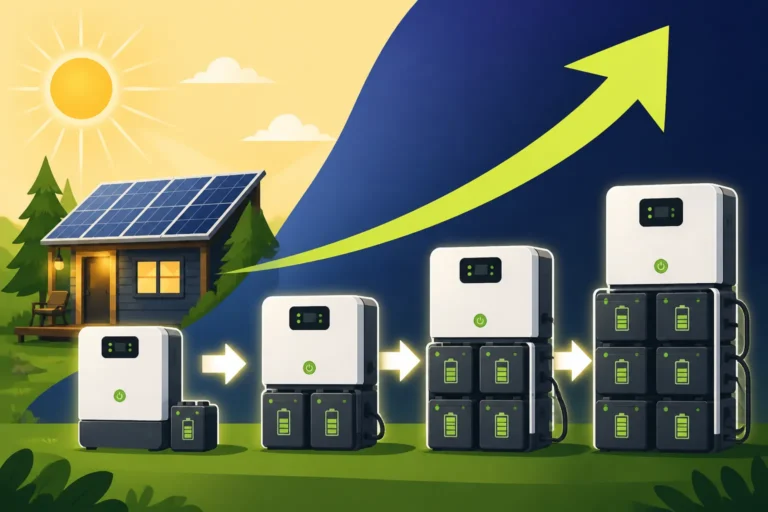
If you're planning for growth in your off-grid lifestyle, starting with a 48V system provides a fantastic foundation. It's much easier to expand a 48V system later on by adding more panels or batteries without completely redesigning your core components. Trying to add substantial power to an already maxed-out 12V system can mean replacing cables, potentially the inverter, and re-configuring your entire battery bank.
With 48V, your foundational wiring and major components are already sized to handle larger loads more efficiently. This flexibility means your system can grow with your energy demands, whether you decide to add a new workshop, expand your living space, or simply want more power autonomy. This foresight in planning saves you headaches and money down the road, making the initial decision for 48V a smart long-term investment.
Practical Considerations for 48V Systems
While 48V systems offer compelling advantages for larger off-grid setups, they also come with their own set of considerations that you'll need to factor into your planning and budget. It's not just about flipping a switch; it's about making informed choices for a robust and reliable system.
Component Compatibility and Availability
One area where 12V and 24V systems sometimes have an edge is the sheer variety of readily available DC appliances. Things like LED lights, phone chargers, and even some small refrigerators are often designed to run directly on 12V or 24V. When you step into the 48V world, direct DC appliances are less common. This isn't a deal-breaker, but it does mean that most of your loads will likely run off the AC output of your inverter.
However, the core components of an off-grid system – the batteries, inverters, and charge controllers – are widely available in 48V configurations from reputable brands. Companies like Renogy, for instance, offer a range of 48V compatible inverters and batteries that are popular among DIYers and professional installers alike. Many high-capacity charge controllers, particularly MPPT models, are designed to work seamlessly with 48V battery banks, often auto-detecting the system voltage or allowing for manual configuration. You can often find a good selection of these on platforms like Amazon, ensuring you have options for your build. Looking at the Best Off-Grid Solar Batteries or Best Off-Grid Solar Inverters will quickly show you the prevalence of 48V options for larger capacities.
Safety Protocols and High Voltage
Working with any electrical system requires caution, but higher voltages naturally demand an even greater degree of respect and adherence to safety protocols. While the lower current in a 48V system is a benefit, 48 volts DC can still deliver a serious shock if not handled properly.
It's crucial to understand proper wiring techniques, use appropriate safety gear (like insulated tools and gloves), and always disconnect power sources before working on your system. Properly grounding your off-grid solar system is also paramount for safety. If you're not comfortable with electrical work, it's always wise to consult with or hire a qualified electrician, especially for the AC side of your system or complex wiring scenarios. Education on Off-Grid Solar Safety and Grounding is essential for any DIY enthusiast.
Initial Cost Considerations for 48V
While we discussed how 48V can save money on wiring, the initial investment for some 48V components, particularly high-quality inverters and batteries, can sometimes feel higher upfront compared to their lower-voltage counterparts. However, this is often offset by the long-term benefits of efficiency, reliability, and reduced material costs for cabling.
It's also important to remember that you're investing in a system built for significant power demands. A 48V system designed to power a whole house isn't directly comparable to a small 12V system for a camper. When you factor in the capabilities and longevity, the slightly higher initial cost for a robust 48V system often translates to better value over its lifespan. A detailed breakdown of How Much Does an Off-Grid Solar System Cost can help you budget effectively, recognizing that component quality and voltage choice play a big role.
When 48V Is the Right Choice for Your Off-Grid Lifestyle
Deciding on the right system voltage is a pivotal step in designing your off-grid setup. While smaller systems can happily hum along at 12V or 24V, certain applications absolutely thrive, and indeed often require, the robust performance that a 48V system delivers.
Powering a Full-Time Residence or Large Cabin
If you're dreaming of a truly independent home, a full-time off-grid residence, or a substantial cabin where you'll be spending significant time, then a 48V system is almost always the way to go. These environments typically have multiple energy-intensive appliances, such as full-size refrigerators, freezers, washing machines, microwaves, water heaters, and possibly even air conditioning or well pumps.
Trying to run a household full of modern conveniences on a 12V or even 24V system would be a constant battle against efficiency losses, undersized wiring, and stressed components. A 48V system provides the stable, efficient power backbone necessary to reliably support these kinds of substantial loads, ensuring your off-grid home feels just as comfortable and functional as a grid-tied one. This is especially true when you consider the power requirements for items like a Cost to Run A Well Pump on Off-Grid Solar or a Cost to Run An Air Conditioner on Off-Grid Solar.
Operating High-Draw Appliances or Workshops
For those with specific high-draw appliances or dedicated workshops, 48V systems are practically a necessity. Imagine trying to power a table saw, air compressor, or large welding machine from a 12V battery bank. The surge currents alone would be astronomical, demanding incredibly oversized inverters and cabling that would be impractical and extremely costly.
With a 48V system, these high-surge loads are managed much more effectively due to the lower current draw. This means you can confidently run power tools, industrial equipment, or even appliances with significant startup surges, without constantly tripping breakers or worrying about component longevity. For anyone needing serious power for their projects, the choice for 48V becomes crystal clear.
Seeking Maximum System Efficiency and Longevity
Ultimately, if you're looking to build an off-grid solar system that is not only powerful but also maximizes efficiency and has a long, reliable lifespan, 48V is the optimal choice. The reduced current minimizes heat generation, which is a major factor in component wear and tear. Less stress on your wiring, batteries, and inverter means they'll likely last longer and perform more consistently over time.
This focus on efficiency also means you're getting the most out of every ray of sunshine hitting your panels, reducing overall energy waste. For those who prioritize a robust, "set it and forget it" system that requires less troubleshooting and delivers consistent power, investing in a 48V foundation upfront pays dividends in peace of mind and performance for years to come. This directly impacts the Off-Grid Solar Return on Investment over the lifetime of your system.
Comparing System Voltages for Large Loads
Let's put some numbers to it. This table illustrates the dramatic difference in current draw for a consistent power output across different system voltages, highlighting why 48V is so advantageous for large systems.
| System Voltage | Power Output (Watts) | Approximate Current (Amps) | Illustrative Wire Gauge (approx. for 10 ft run, low voltage drop) | Key Benefit |
|---|---|---|---|---|
| 12V | 3000 | 250 | 4/0 AWG | Common for small RVs/vans, many 12V DC loads |
| 24V | 3000 | 125 | 2/0 AWG | Good for mid-size RVs/cabins, fewer 24V DC loads |
| 48V | 3000 | 62.5 | 2 AWG | Ideal for large homes/cabins, workshops, major appliances |
Note: Wire gauge is illustrative and depends on cable length, insulation, and specific code requirements. Always consult detailed wire sizing charts and local electrical codes.
As you can see, to push 3,000 watts through a 12V system, you'd need incredibly thick and expensive 4/0 AWG wire. Jump to 48V, and you can achieve the same power delivery with much more manageable 2 AWG wire, leading to significant material cost savings and easier installation. This comparison clearly demonstrates the immense practical advantages of higher voltage for substantial power needs. It is why How to Choose System Voltage is such an important initial design decision.
Final Thoughts on Your Off-Grid Voltage Choice
Making the leap to off-grid living or expanding your current setup is an exciting journey, and choosing the right system voltage is a foundational decision that impacts everything else. While 12V and 24V systems certainly have their place for smaller, more portable, or less demanding applications, when your power needs grow to support a full home, a busy workshop, or multiple high-draw appliances, 48V systems consistently emerge as the smarter, more efficient, and ultimately more cost-effective choice in the long run.
By minimizing current, you're not just saving money on wiring; you're also building a more robust, cooler-running, and more reliable system that can handle the demands of modern living. This ensures less wasted energy, extends the lifespan of your components, and provides a stable foundation for future expansion. So, as you plan your energy independence, give serious thought to making 48V the backbone of your larger off-grid solar system – it's a decision you'll appreciate every time you flip a switch. For more detailed insights into planning your setup, check out our comprehensive guide on Off-Grid Solar System Sizing Guide.
Disclaimer
The information provided in this guide is for general informational purposes only and does not constitute professional electrical advice. Off-grid solar system design and installation can be complex and involve significant electrical hazards. Always consult with a qualified electrician or solar professional and adhere to all local electrical codes and regulations. Proper safety precautions must be taken when working with electricity.