How Many Batteries to Run A Washing Machine
Oh, the dream of laundry day, right? For many of us living off-grid, the thought of throwing a load into a proper washing machine feels like pure luxury. We’ve all been there, hand-washing socks in a bucket or making those dreaded trips to the laundromat, wishing we could just do it at home. But then you start thinking about the power, and suddenly, that dream feels daunting. How on earth do you power something so seemingly energy-hungry with sunshine? Specifically, how many batteries do you actually need to run a washing machine without constantly worrying about draining your system? This guide is here to break down exactly what it takes, so you can ditch the laundromat and enjoy the simple pleasure of clean clothes from your own homestead.
Understanding Your Washing Machine's True Power Appetite
Before we can even begin to talk about batteries, we need to get intimately familiar with your washing machine's electricity habits. It's not as simple as just looking at a sticker; there are a few nuances that can dramatically affect your off-grid system design. Many folks new to off-grid solar make the mistake of just glancing at a nominal wattage and calling it a day, only to find their inverter tripping when the washer kicks into high gear.
Decoding the Numbers: Watts, Amps, and Cycles
Every appliance, including your washing machine, comes with a label that tells you its electrical characteristics. You'll typically see wattage (W) or amperage (A) and voltage (V). For an AC appliance like a washing machine, it's usually 120V in North America.
- Running Watts: This is the power your washing machine uses during its normal operation, like when it's agitating or spinning. A modern, high-efficiency (HE) washing machine might average around 200-500 watts during its wash cycle. Older, traditional agitator models can easily pull 500-1000 watts.
- Watt-Hours (Wh) per Cycle: This is the total energy consumed over the entire duration of a wash cycle. This is the crucial number for battery sizing. If your HE washer runs for an hour and averages 300 watts, it uses 300 Wh for that cycle. However, washing machine cycles vary wildly in length and intensity. A typical wash cycle can last anywhere from 30 minutes to over an hour and a half, consuming anywhere from 0.3 kWh (300 Wh) for an efficient cold wash to 2 kWh (2000 Wh) or more if you're using hot water heated by the machine itself. Most off-gridders try to avoid electric water heating in the washer, opting for cold washes or external hot water sources to save battery power.
- Amps: Sometimes appliances list amps instead of watts. Remember the formula: Watts = Volts x Amps. So, a 5-amp washing machine on a 120V system draws 600 watts (5A * 120V = 600W).
Understanding these numbers is the first step in a thorough How to Do an Off-Grid Load Analysis. Don't just guess; consult your appliance's manual or use a Kill-A-Watt meter to get real-world measurements if you already own the machine. This step is critical because underestimating can lead to an undersized system and a lot of headaches, while overestimating can lead to unnecessary expense.
Surge vs. Continuous Power: Why Your Inverter Matters
This is where many off-grid washing machine dreams hit a snag. While your washing machine might run at 300-500 watts, motors, especially when they first start up or change direction (like an agitator reversing, or the spin cycle kicking in), demand a much higher burst of power for a very short duration. This is called the surge power or starting watts.
- Surge Power: For a washing machine, this surge can be 2-3 times its running wattage, sometimes even more. A washer that runs at 500 watts might demand 1500-2000 watts for a few seconds. If your off-grid inverter can't handle this momentary surge, it will likely trip and shut down, halting your laundry mid-cycle. This is why a simple "running watts" calculation for your batteries isn't enough; your inverter needs to be able to deliver that peak power instantly.
This dynamic illustrates why choosing the right How to Size an Off-Grid Inverter is just as important as battery capacity. You need a pure sine wave inverter, ideally one with a robust surge capacity, to handle motor loads effectively. Modified sine wave inverters are a definite no-go for motors and sensitive electronics; they can damage your washing machine and significantly reduce its lifespan.
The Battery Math: How to Calculate What You Really Need
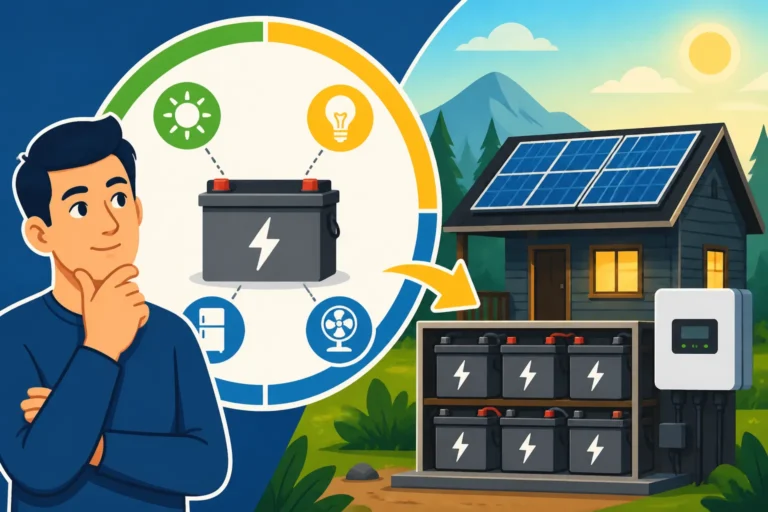
Now that we understand what your washing machine demands, let's dive into the core of the matter: your battery bank. This is often the most expensive component of an off-grid system, so getting this right is crucial for both functionality and budget. This isn't just about how many batteries, but how much usable capacity.
Step-by-Step Load Analysis for Your Washing Machine
Let's assume a typical modern HE washing machine for our example, as these are generally more energy-efficient and thus easier on an off-grid system.
-
Determine Watt-Hours per Cycle:
- Average Running Watts: Let's say your washer averages 350 watts.
- Average Cycle Duration: Let's say a typical cold wash cycle is 45 minutes (0.75 hours).
- Energy per Cycle: 350 W * 0.75 h = 262.5 Wh.
- Inverter Efficiency: Inverters aren't 100% efficient. Assume 85-90% efficiency. Let's use 85%. So, 262.5 Wh / 0.85 = 309 Wh needed from the batteries.
- Daily Usage: If you plan to do two loads of laundry per week, that's roughly 618 Wh per week for washing machines alone. If you do 3 loads a day, that's 927 Wh per day. For our calculation, let's assume one load every other day on average, so roughly 1.5 loads per day if you smooth it out over a week, or more simply, 309 Wh every time you do a load. Let's average it to 1 load per day for simplicity in daily sizing example, so ~309 Wh/day.
-
Convert to Amp-Hours (Ah) at Your System Voltage:
- Off-grid systems typically run at 12V, 24V, or 48V. Higher voltages are more efficient for larger systems. Let's assume a 48V system, which is common for homes and larger cabins, as it reduces wire thickness and voltage drop. For more on this, check out our guide on How to Choose System Voltage.
- Amp-Hours needed from batteries per cycle: 309 Wh / 48V = 6.44 Ah.
- If you plan for one load per day, you need roughly 6.44 Ah per day from your batteries for the washing machine alone.
This is just the washing machine. You'll need to do this for all your appliances to get your total daily How to Calculate Daily Energy Usage.
Factoring in Days of Autonomy and Depth of Discharge
Here's where the "how many batteries" question gets more complex. Batteries don't just supply power for one cycle; they provide storage for multiple days, especially if the sun isn't shining.
- Days of Autonomy (DoA): This refers to how many days your battery bank can power your essential loads without any input from solar panels. For critical loads like a refrigerator, you might aim for 3-5 days. For something like a washing machine, which might not be strictly "essential" every day, you might still want to factor in at least 2-3 days of autonomy to ensure you can do laundry even during cloudy stretches. A good starting point for a full-time off-grid setup is usually 3-5 days.
- Depth of Discharge (DoD): This is arguably the most critical factor for battery longevity.
- Lead-Acid Batteries (Flooded, AGM, Gel): To maximize the lifespan of lead-acid batteries, you generally shouldn't discharge them below 50% DoD. This means if you have a 100 Ah lead-acid battery, you can only use 50 Ah of that capacity before you need to recharge it.
- Lithium Iron Phosphate (LiFePO4) Batteries: These are game-changers for off-grid. They can typically be discharged to 80-100% DoD without significant harm to their lifespan. A 100 Ah LiFePO4 battery offers almost its full 100 Ah of usable capacity.
Let's combine these concepts:
Example Calculation (48V System, 1 load/day):
- Washing Machine Daily Ah (from batteries): 6.44 Ah.
- Total Daily Ah (all loads): Let's assume after calculating all other loads (lights, fridge, water pump, electronics), your total daily consumption is 50 Ah at 48V. (So 6.44 Ah is about 13% of this fictional daily total). This total daily usage is what your How Many Batteries for an Off-Grid System guide will help you determine.
- Desired Days of Autonomy: Let's aim for 3 days.
- Battery Chemistry Choice:
- If using LiFePO4 (80% usable DoD):
- Total Ah needed = (Total Daily Ah * Days of Autonomy) / Usable DoD
- Total Ah needed = (50 Ah/day * 3 days) / 0.80 = 150 Ah / 0.80 = 187.5 Ah at 48V.
- If using Lead-Acid (50% usable DoD):
- Total Ah needed = (50 Ah/day * 3 days) / 0.50 = 150 Ah / 0.50 = 300 Ah at 48V.
- If using LiFePO4 (80% usable DoD):
As you can see, the battery chemistry makes a huge difference in the nominal capacity you need to purchase. You need significantly more lead-acid capacity to get the same usable energy as LiFePO4.
Here's a quick comparison of approximate energy usage for different washing machine types, assuming no internal water heating:
| Washing Machine Type | Average Running Watts | Cycle Time (min) | Wh per Cycle (approx) | Daily Loads | Daily Wh (approx) |
|---|---|---|---|---|---|
| High-Efficiency (Front-Load) | 200-400W | 45-60 | 150-400 | 1 | 150-400 |
| High-Efficiency (Top-Load) | 250-500W | 50-70 | 200-580 | 1 | 200-580 |
| Standard (Agitator) | 500-1000W | 30-50 | 250-830 | 1 | 250-830 |
| Mini/Portable (Small loads) | 50-150W | 15-30 | 12-75 | 1 | 12-75 |
Note: These are estimates. Always check your specific appliance's ratings and consider external water heating if applicable.
Choosing the Right Battery Chemistry (LiFePO4 vs. Lead-Acid)
The choice between battery types really boils down to initial cost versus long-term value and performance.
-
Lead-Acid Batteries:
- Pros: Lower upfront cost, widely available.
- Cons: Shorter lifespan (3-7 years with proper care), sensitive to DoD (only 50% usable capacity), heavy, requires ventilation, needs regular maintenance (watering for flooded types), less efficient at higher discharge rates, performance drops in cold weather.
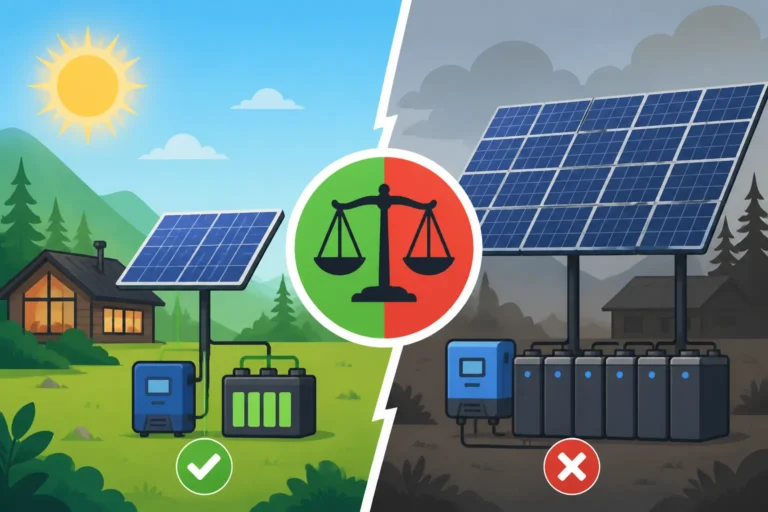
- Realism: While cheaper initially, you'll need almost double the nominal capacity compared to LiFePO4 to get the same usable energy. This means more physical batteries, more space, and more wiring. When you factor in replacement costs over time, the LiFePO4 vs Lead-Acid Battery Cost often evens out, or even favors lithium.
-
LiFePO4 (Lithium Iron Phosphate) Batteries:
- Pros: Much longer lifespan (10-15+ years, 3000-8000+ cycles), high usable DoD (80-100%), lighter, compact, maintenance-free, excellent performance at various discharge rates, better cold-weather performance (though charging in sub-freezing temps requires specific care).
- Cons: Higher upfront cost.
- Realism: For an appliance like a washing machine that can draw significant power and is used periodically, LiFePO4 batteries are often the superior choice for their ability to deliver consistent power without significant voltage drop and their remarkable longevity. Many off-grid specific brands like Renogy offer reliable LiFePO4 options that are very popular among homesteaders and RVers. You can often find great deals on these batteries through online retailers like Amazon. If you're building a system that you want to last and perform reliably, seriously consider lithium. Take a look at Best Off-Grid Solar Batteries for more in-depth information.
When considering How to Choose an Off-Grid Battery Bank, think about your daily energy needs, how often you'll do laundry, your budget, and how long you want your system to last without major replacements.
Beyond Batteries: The Full Off-Grid System Picture
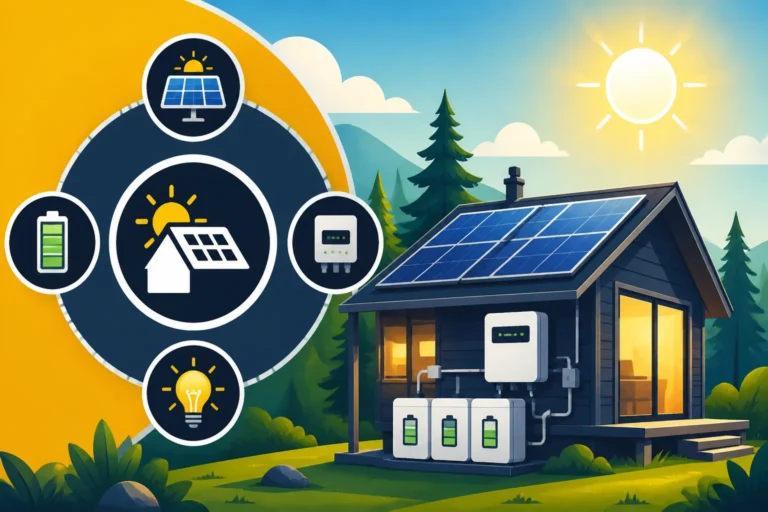
Batteries are just one part of the equation. To effectively run a washing machine off-grid, you need a cohesive system where every component is properly sized and matched. Thinking about just the batteries in isolation is one of the Common Off-Grid Sizing Mistakes people make.
The Inverter: Powering Your Appliance Smoothly
We touched on this earlier, but it bears repeating: your inverter is the gatekeeper of your AC power.
- Pure Sine Wave Only: This is non-negotiable for a washing machine. Motors and sensitive electronics need clean, consistent AC power, which only a pure sine wave inverter can provide. Modified sine wave inverters are cheaper but can overheat and damage your washing machine's motor and electronics, often voiding warranties.
- Sizing for Surge: As discussed, your inverter needs to be able to handle the starting surge of your washing machine. If your washer surges to 2000 watts, you'll need an inverter rated for at least that much surge, preferably with some headroom. A common size for modest off-grid homes aiming for laundry is a 3000W or 4000W inverter, sometimes even larger if you plan on running other heavy loads concurrently.
- System Voltage Match: Your inverter must match your battery bank's voltage (e.g., a 48V inverter for a 48V battery bank).
Choosing the right inverter is critical. Reputable brands like Victron Energy, Outback Power, and Renogy offer excellent pure sine wave inverters and inverter-chargers suitable for off-grid use. When you're looking for How to Choose an Off-Grid Inverter, make sure you understand both its continuous and surge ratings.
Generating Enough Power: Solar Panels and Charge Controllers
What good are batteries if they can't get recharged? Your solar array and charge controller are responsible for replenishing the energy you use, including that consumed by your washing machine.
- Solar Panel Sizing: Your solar panel array needs to be large enough to generate enough energy to cover your total daily consumption (including your washing machine's share) and fully recharge your batteries, accounting for weather variations and seasonal changes. This is where How to Size an Off-Grid Solar System comes into play. If you're doing laundry frequently, you'll need a larger solar array than someone who only runs basic lights and a fan. For example, if your washing machine contributes an extra 300 Wh per day to your total consumption, your solar array needs to produce that additional power, plus account for charging inefficiencies.
- Charge Controller: This device manages the power flow from your solar panels to your batteries, ensuring they charge safely and efficiently. An MPPT (Maximum Power Point Tracking) charge controller is almost always preferred for off-grid systems over a PWM (Pulse Width Modulation) controller because it's significantly more efficient, especially in varying light conditions. It essentially optimizes the voltage and current from your panels to maximize charging power. You'll need to size your charge controller based on your solar array's total wattage and voltage.
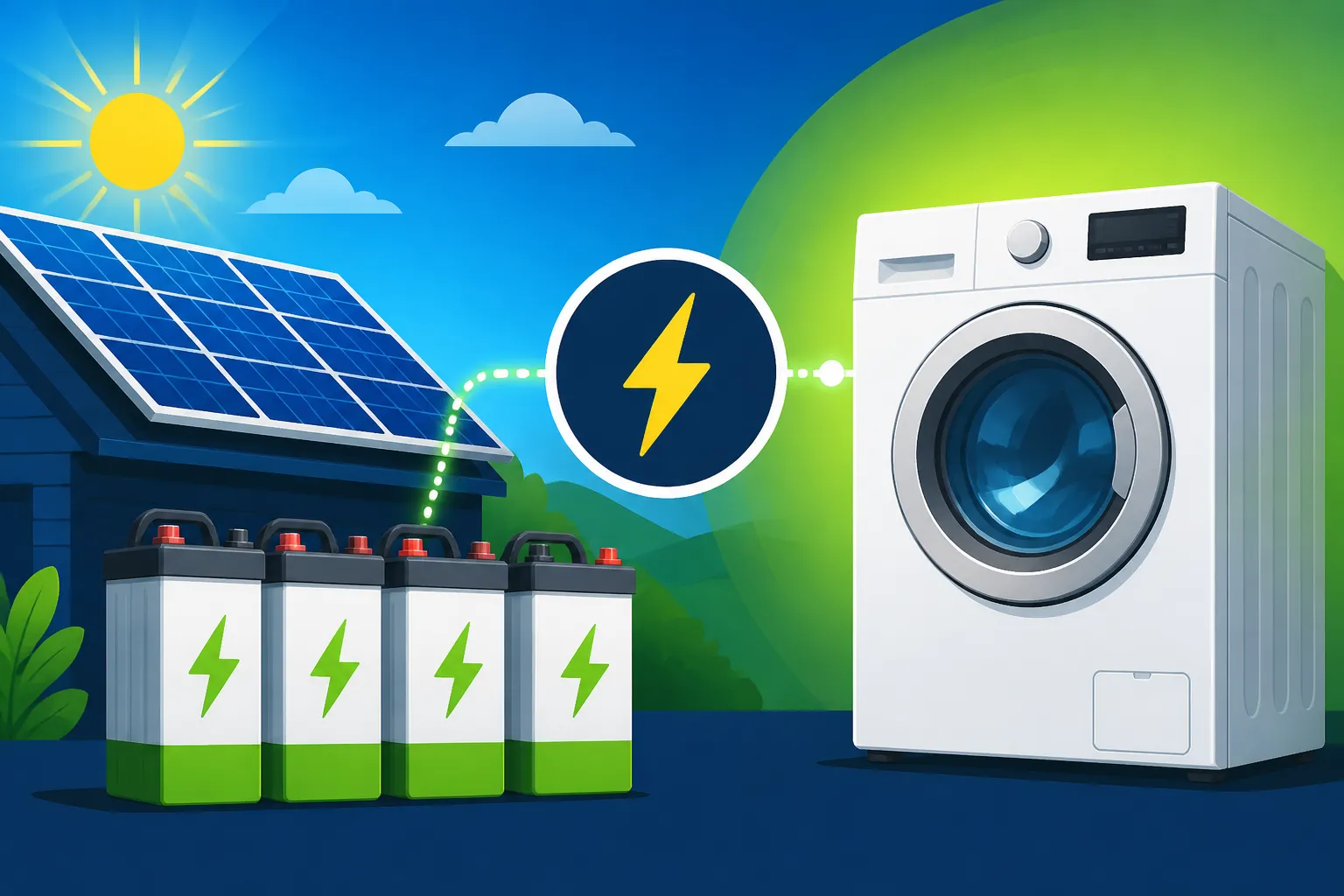
Think of it this way: your batteries hold the water, your washing machine uses it, and your solar panels and charge controller are the pump and filter, constantly refilling your reservoir. If the pump isn't big enough, you'll run dry.
Smart Strategies for Efficient Off-Grid Laundry
Even with a well-sized system, off-grid living is all about efficiency and mindful consumption. Running a washing machine is a significant draw, so smart habits can make a big difference in how smoothly your laundry days go.
Appliance Selection and Laundry Day Habits
- High-Efficiency (HE) Matters: If you're buying a new washing machine for off-grid use, prioritize an HE front-load or top-load model. They use significantly less water and, crucially, less electricity. Front-load washers are generally the most water and energy-efficient. Look for Energy Star ratings.
- Cold Water Washes: The biggest energy hog in a washing machine is often the water heater. If your machine has an internal heater, avoid using hot wash cycles unless absolutely necessary. Most modern detergents are designed to work effectively with cold water. If you need hot water, consider heating it separately with a propane water heater or solar thermal system and adding it manually (if your machine allows it) to bypass the electric heating element. Our article on the Cost to Run A Washing Machine on Off-Grid Solar delves deeper into the energy impact.
- Full Loads: Always run full loads. Partial loads use almost the same amount of electricity and water as a full load, which is incredibly inefficient when you're generating your own power.
- Spin Cycle Efficiency: The spin cycle uses power, but a good, fast spin cycle extracts more water from your clothes, which means less drying time. If you're line-drying, a more efficient spin can save you time and ensure clothes dry faster, preventing mildew, especially in humid climates.
- Air Dry When Possible: Resist the urge for an electric dryer. Clothes dryers are massive energy consumers – often 3,000-5,000 watts! They are rarely practical for off-grid solar systems unless you have a truly massive array and battery bank. Invest in a good clothesline or drying rack.
Monitoring and Managing Your System's Performance
- Battery Monitor: A reliable battery monitor is your best friend. It tells you exactly how much energy is left in your battery bank (State of Charge, SoC), how much power you're currently drawing, and how much power is coming in from your solar panels. Brands like Victron Energy make excellent battery monitors that give you critical insights. Without one, you're flying blind, risking over-discharging your batteries.
- Staggering Loads: Don't run your washing machine, well pump, and microwave all at the same time. Stagger your heavy loads to avoid excessive surge demands on your inverter. Plan your laundry days for when you have plenty of sunshine, allowing your solar panels to directly contribute to the washing machine's power needs, rather than solely relying on your battery bank.
- Understand Your System's Limits: Pay attention to your battery monitor and inverter. If your battery voltage drops significantly or your inverter is constantly struggling to meet surge demands, it's a sign that you might be pushing your system too hard or that it's undersized. It's better to run one load less than to damage your expensive components.
By combining careful planning, smart component selection, and conscious energy habits, you can absolutely enjoy the convenience of an off-grid washing machine. It requires a bit more thought than simply plugging into the grid, but the satisfaction of doing laundry powered by the sun is truly unmatched.
Disclaimer
Please remember that this guide provides general information for educational purposes. Off-grid solar system design and installation can be complex and involve electrical hazards. Always consult with qualified professionals and adhere to all local electrical codes and regulations. Incorrect installation can lead to serious injury or damage to equipment.