How to Calculate Days of Autonomy
One of the biggest anxieties when you're dreaming of going off-grid, or even just powering a remote cabin, is the fear of running out of juice. Nobody wants to be left in the dark when the sun decides to take a vacation or the generator sputters. This guide will walk you through the essential process of calculating your off-grid system's "days of autonomy," ensuring you have reliable power, come what may.
Understanding Days of Autonomy for Off-Grid Living
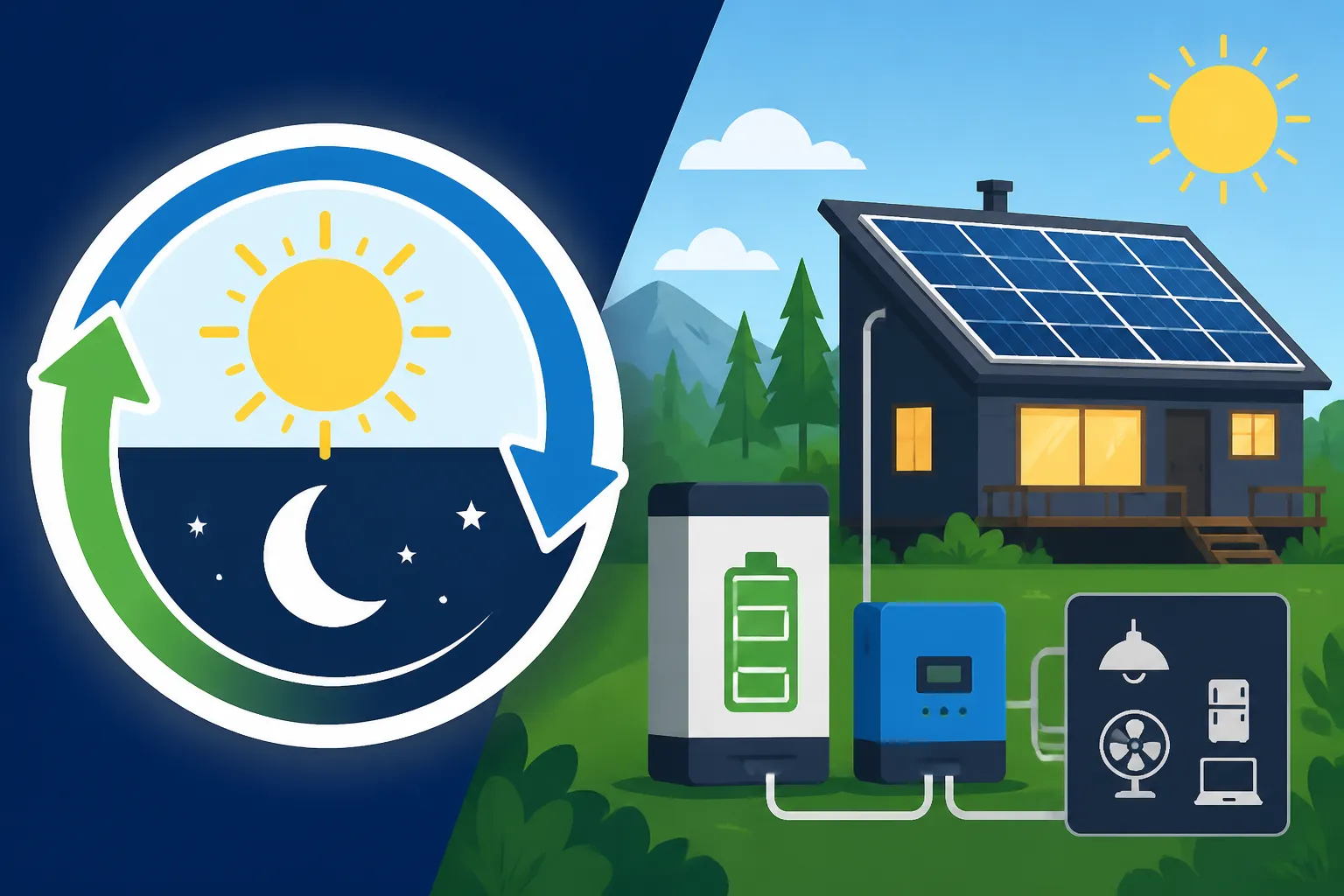
Stepping into the world of off-grid solar means embracing a different way of thinking about your power. You're not just buying electricity; you're building a resilient, self-sufficient system. And at the heart of that resilience lies a critical concept: days of autonomy. It's the measure of how long your battery bank can sustain your entire energy demand without any input from your solar panels or other charging sources.
What Exactly is "Days of Autonomy"?
Imagine a long stretch of cloudy, dreary weather, or perhaps a sudden equipment failure that takes your solar panels offline for a few days. How long could your off-grid home, RV, or cabin continue to function normally, drawing only from its stored battery power? That's your days of autonomy in a nutshell. It's the number of consecutive days your fully charged battery bank can supply your average daily power needs without any further charging. This isn't just a theoretical number; it's a vital safety net, a buffer against the unpredictability of weather and the occasional hiccup in your system. For instance, if you have a "three-day autonomy" system, it means you could theoretically get through three full days and nights with zero solar input before your batteries are fully depleted to their safe minimum charge level.
Why Autonomy Matters for Your Off-Grid Power
Autonomy is fundamentally about reliability and peace of mind. Without adequate days of autonomy, you're essentially gambling with your power supply. Think about the implications: a sudden snowstorm could blanket your panels for days, or an unexpected mechanical issue could keep you from charging. If your battery bank isn't sized to carry you through these periods, you'll be left without power, potentially spoiling food in your refrigerator, losing heat, or going without essential medical devices. It also dictates how much stress you put on your backup generator, if you have one. A system with more days of autonomy means less reliance on a noisy, fuel-guzzling generator, leading to lower operating costs and a quieter lifestyle. It’s a key factor in designing an off-grid solar system that truly meets your needs, rather than leaving you constantly worried about the next cloudy day.
The Risks of Underestimating Your Autonomy
Underestimating your days of autonomy is one of the most common and frustrating mistakes off-gridders make. It leads directly to "range anxiety," where you're constantly monitoring your battery levels, rationing power, and dreading every cloud in the sky. If you undersize your battery bank, or don't properly calculate your true energy needs, you'll find yourself frequently running your generator, cycling your batteries too deeply (which drastically shortens their lifespan), or simply going without power.
For example, a family living off-grid in a region prone to multi-day rainstorms might decide to budget for just one day of autonomy to save on initial costs. When a four-day storm rolls in, they’ll quickly learn the hard way that their system isn't up to the task, forcing them to burn through expensive generator fuel or suffer through outages. This not only causes immense stress but can also lead to premature battery failure due to excessive deep cycling, negating any initial cost savings. Understanding How to Size an Off-Grid Solar System correctly includes getting this autonomy calculation right from the start.
Step-by-Step: Calculating Your Daily Energy Consumption
Before you can even begin to think about battery sizing, you absolutely must know how much power you actually use. This isn't a guesswork scenario; it requires a detailed understanding of every electrical device you plan to run. It's the foundational step in figuring out How to Calculate Off-Grid Solar Needs.
Conducting a Thorough Load Analysis
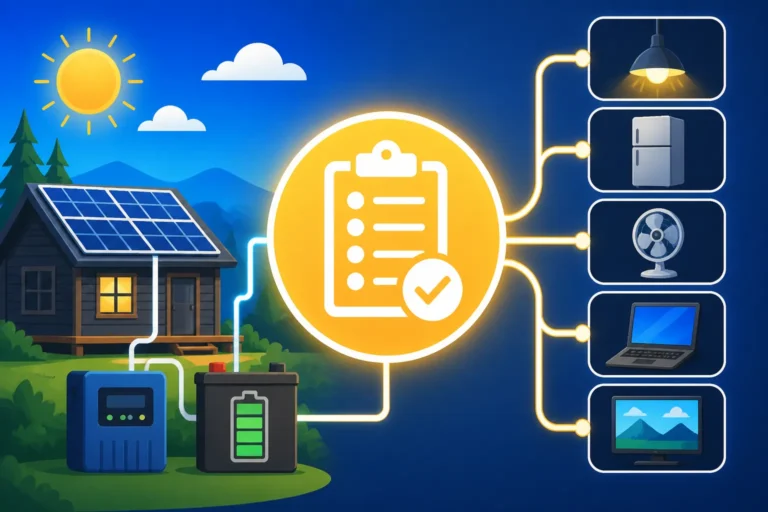
The first, and arguably most crucial, step in determining your days of autonomy is to perform a comprehensive load analysis. This means listing every single electrical appliance you intend to power, along with its wattage and how many hours per day you expect to use it. Don't skip anything, no matter how small it seems! That phone charger, the LED light in the pantry, the water pump that runs for five minutes a day—it all adds up. For larger appliances like refrigerators, well pumps, or air conditioners, you'll need to consider both their running wattage and their surge (or starting) wattage, as these momentary spikes can be significant. Many appliances have a label indicating wattage, but if not, you can use a kill-a-watt meter (easily found on Amazon) to measure actual consumption.
Start by literally walking through your space – whether it's your cabin, RV, or tiny home – and making a list. Be brutally honest about your usage habits. Do you watch TV for two hours or six? How often does the coffee maker run? This detailed inventory is the core of How to Calculate Daily Energy Usage.
Factoring in Appliance Run Times and Wattage
Once you have your list, you need to assign both a wattage and a daily run-time (in hours) to each item. Multiply the wattage by the run-time to get the Watt-hours (Wh) for each appliance. Then, sum all these Watt-hours together to get your total daily Watt-hour consumption.
Let's look at an example:
| Appliance | Wattage (W) | Daily Run Time (Hours) | Daily Watt-hours (Wh) |
|---|---|---|---|
| LED Lights (5 bulbs) | 50 | 4 | 200 |
| Refrigerator | 100 | 12 (compressor cycle) | 1200 |
| Laptop | 60 | 3 | 180 |
| Phone Charger | 10 | 2 | 20 |
| Water Pump | 300 | 0.5 (30 mins) | 150 |
| Daily Total | 1750 Wh |
This table helps you visualize exactly where your energy is going. Remember, the refrigerator's 100W is its running wattage, but it might only run for 12 hours total in a 24-hour period, cycling on and off. Some appliances, like a microwave, might have a high wattage (e.g., 1000W) but only run for a few minutes a day, so their total daily Watt-hour contribution might be smaller than a consistently running, lower-wattage device. This systematic approach forms the basis of How to Do an Off-Grid Load Analysis.
Adjusting for Seasonal Usage and Future Needs
Your energy consumption isn't static; it fluctuates throughout the year. Winter days are shorter, meaning more reliance on artificial lighting and potentially higher heating loads (if using electric heaters or blowers). Summer might bring increased air conditioning use or more fans. When calculating autonomy, it's wise to plan for your peak usage period, or at least an average that leans towards the higher side, especially if you're aiming for year-round comfort.
Furthermore, don't forget to account for potential future additions. Are you planning to add a chest freezer next year? A workshop with power tools? Trying to squeeze in extra capacity later can be more costly and complex. A little foresight now can save a lot of headaches down the line. It's often recommended to add a buffer of 10-20% to your calculated daily usage to account for unforeseen demands, inefficiencies, and future growth. This ensures your system isn't immediately undersized once life inevitably changes.
Sizing Your Battery Bank for Desired Autonomy
Once you have a solid grasp of your daily energy consumption, the next step is to translate that into battery capacity. This is where your desired days of autonomy truly come into play, directly influencing How Many Batteries for an Off-Grid System you'll need.
Determining Usable Battery Capacity
Batteries don't just hold energy; they also have limitations on how much of that energy you can safely use. This is known as "Depth of Discharge" (DoD). For traditional lead-acid batteries (like flooded or AGM), it's generally recommended not to discharge them beyond 50% to maximize their lifespan. This means if you have a 100 Ah (Amp-hour) lead-acid battery, you only have about 50 Ah of usable capacity.
Lithium iron phosphate (LiFePO4) batteries, on the other hand, are a game-changer for off-grid living. They can safely be discharged to 80-100% of their capacity without significant impact on lifespan, offering far more usable energy for their stated capacity. For example, a 100 Ah LiFePO4 battery gives you almost 100 Ah of usable power. This difference is critical when you're comparing LiFePO4 vs Lead-Acid Batteries for Off-Grid and impacts the overall Cost of an Off-Grid Solar Battery Bank.
Here’s the basic formula for battery bank capacity:
Total Battery Bank Capacity (Wh) = Daily Energy Consumption (Wh) x Desired Days of Autonomy / Max Depth of Discharge (%)
Let's say your daily consumption is 1750 Wh, and you want 3 days of autonomy:
- For Lead-Acid (50% DoD): 1750 Wh * 3 days / 0.50 = 10,500 Wh
- For LiFePO4 (80% DoD): 1750 Wh * 3 days / 0.80 = 6,562.5 Wh
As you can see, the battery chemistry makes a huge difference in the required physical capacity.
Accounting for System Voltage and Inverter Efficiency
Your calculated Watt-hours are great, but batteries are typically rated in Amp-hours (Ah) and operate at a specific voltage (12V, 24V, 48V). To convert Watt-hours to Amp-hours at a given voltage, you use:
Battery Bank Capacity (Ah) = Total Battery Bank Capacity (Wh) / System Voltage (V)
So, for our LiFePO4 example with 6562.5 Wh usable capacity:
- 12V System: 6562.5 Wh / 12V = 546.875 Ah
- 24V System: 6562.5 Wh / 24V = 273.4375 Ah
- 48V System: 6562.5 Wh / 48V = 136.71875 Ah
This is the usable Amp-hour capacity you need. If using lead-acid, remember to then double this number to get the nominal Amp-hour rating needed to achieve the usable capacity at 50% DoD.
Additionally, don't forget inverter efficiency. Your inverter isn't 100% efficient; it loses a small percentage of power when converting DC battery power to AC household power. A typical high-quality inverter, like those from Victron Energy or the robust models available from Renogy, might be 90-95% efficient. To account for this, you need to increase your battery capacity slightly:
Adjusted Battery Bank Capacity (Wh) = Total Battery Bank Capacity (Wh) / Inverter Efficiency (%)
If your daily consumption is 1750 Wh and your inverter is 90% efficient, your battery bank needs to supply 1750 / 0.90 = 1944.44 Wh from the battery before inverter losses. This slightly higher figure should be used in your autonomy calculations for a truly accurate result.
The Impact of Battery Chemistry on Autonomy
The type of battery you choose dramatically impacts not only your system's cost but also its actual autonomy and lifespan. As mentioned, LiFePO4 batteries allow for much deeper discharge cycles (often 80-100% DoD) without harming their longevity. This means a physically smaller and lighter LiFePO4 bank can provide the same usable energy as a much larger and heavier lead-acid bank. They also have a significantly longer cycle life (thousands of cycles compared to hundreds for lead-acid) and maintain a more consistent voltage throughout their discharge, which is beneficial for sensitive electronics.
Lead-acid batteries (AGM, Gel, Flooded), while cheaper upfront, require more careful management. Their recommended 50% DoD means you need double the nominal capacity to achieve the same usable energy as a LiFePO4. They are also sensitive to temperature, require more ventilation (especially flooded), and have a shorter overall lifespan. While Best Off-Grid Solar Batteries for many are now LiFePO4, lead-acid still has a place for budget-conscious or less demanding systems. When you're making decisions on How to Choose an Off-Grid Battery Bank, consider both the upfront cost and the long-term total cost of ownership, including replacement cycles.
Real-World Scenarios and Practical Considerations
Calculating numbers on paper is one thing, but living off-grid involves real-world variables that can throw a wrench into even the best-laid plans. It's crucial to consider these practical elements when solidifying your autonomy strategy.
Planning for Extended Cloudy Weather and Emergencies
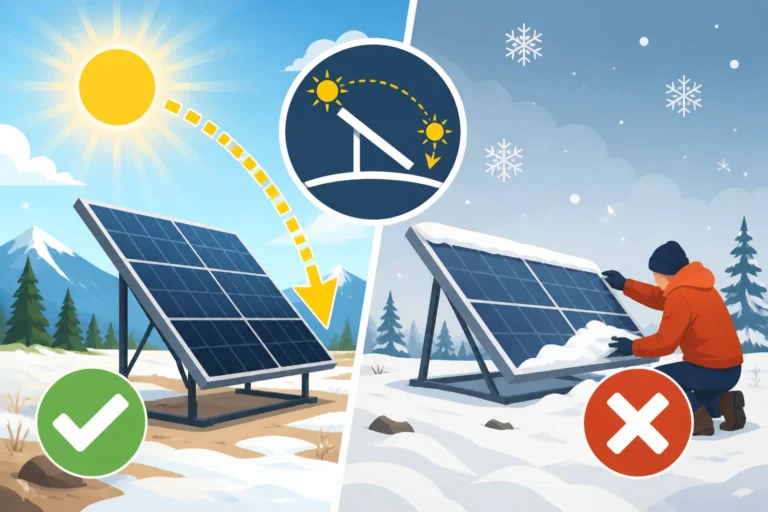
This is where days of autonomy truly earn their keep. Think about the weather patterns in your specific location. Do you live in an area known for long stretches of cloudy, rainy, or snowy days in certain seasons? In places like the Pacific Northwest, you might experience week-long overcast periods in winter. In such cases, a 2-day autonomy might be woefully inadequate, leading to constant generator use. You might need to size your system for 5, 7, or even 10 days of autonomy to truly be comfortable.
Emergency preparedness also plays a role. What if there’s a natural disaster that cuts off resupply routes for generator fuel? Or what if a critical component of your solar array fails, and you can't get a replacement for a few days? Having extra battery storage provides a buffer. This is why many experienced off-gridders advocate for at least 3-5 days of autonomy, especially for primary residences. For example, if you're in a northern climate, How to Account for Cloudy Days significantly affects your solar panel sizing, but ample battery autonomy is your backup during those low-sun periods.
Balancing Cost with Reliability: Finding Your Sweet Spot
Let's be real: more days of autonomy means a larger battery bank, and a larger battery bank means a higher upfront cost. This is often the biggest sticking point for people designing their systems. You might want 7 days of autonomy, but the budget only stretches to 3. It's about finding that sweet spot where you feel secure without breaking the bank.
One approach is to prioritize your essential loads. Could you temporarily reduce non-critical loads during extended low-sun periods? Maybe you'd forgo the washing machine or run the well pump less frequently. Some folks build a base system with 2-3 days autonomy for essentials and rely on a backup generator for those occasional deep discharges or to power high-demand appliances during extended bad weather. Reputable brands like Renogy offer a range of scalable solutions, allowing you to start smaller and expand your battery bank later if your needs or budget evolve.
Another strategy is to consider the long-term savings. While a larger battery bank costs more initially, it reduces generator run time and extends battery lifespan by preventing deep cycling, which can save you money on fuel and battery replacements over the years. It's part of the broader financial picture of Is Off-Grid Solar Worth the Cost.
Integrating Other Power Sources (Generators, Wind)
Your battery bank isn't necessarily your only source of power during low-sun periods. Many off-grid systems incorporate a backup generator for precisely these scenarios. A generator can quickly top off your batteries when solar input is insufficient, effectively extending your "virtual" autonomy. If you have a generator, you might be comfortable with slightly fewer days of battery autonomy because you know you have a reliable backup.
Similarly, some off-gridders integrate wind turbines or micro-hydro systems, especially in areas with consistent wind or flowing water. These diverse energy inputs can greatly reduce your reliance on a large battery bank for autonomy, as they can often provide charging even when the sun isn't shining. The key is to design a holistic system where all components work together to ensure uninterrupted power, tailoring your battery autonomy to complement these other sources.
Common Mistakes to Avoid When Calculating Autonomy
Even with careful planning, it's easy to overlook subtle factors that can derail your autonomy calculations. Being aware of these common pitfalls can save you from unexpected power shortages and costly battery damage.
Overlooking Phantom Loads and Inverter Standby Drain
This is a silent killer of autonomy. Phantom loads, also known as standby power, are the small amounts of electricity drawn by appliances even when they appear to be "off" but are still plugged in. Think about your TV, microwave, coffee maker with a clock, or even some power adapters. While each individual device might draw only a few watts, when added up over 24 hours across multiple devices, these "vampire draws" can significantly deplete your battery bank. A small off-grid cabin could easily have 30-50 watts of continuous phantom loads, totaling 720-1200 Wh per day – a substantial chunk of your daily budget!
The inverter itself also consumes power, even when no AC loads are active. This is called inverter standby drain. While modern, high-quality inverters are quite efficient, they still pull some current. A 3000W inverter, for example, might draw 10-20W just to be "on" and ready to convert power. Over 24 hours, that's another 240-480 Wh that needs to be factored into your total daily consumption. Always check your inverter's specifications for its quiescent (no-load) current draw. This continuous drain directly reduces your effective days of autonomy, often more than people realize.
Ignoring Battery Degradation and Depth of Discharge
Batteries don't last forever, and their capacity diminishes over time. A battery rated for 100 Ah when new might only hold 80 Ah after several years of use. If your autonomy calculations are based on new battery capacity, you might find yourself with less power than anticipated down the road. It's prudent to factor in a small buffer for future degradation, perhaps planning for 80-90% of the nominal capacity in your long-term calculations.
More importantly, consistently discharging your batteries too deeply—especially lead-acid batteries—will drastically shorten their lifespan. If you constantly push a lead-acid battery below its recommended 50% DoD, you’ll be buying replacements much sooner than expected, increasing your overall Off-Grid Solar Maintenance Costs. While LiFePO4 batteries are much more forgiving, even they have limits. Proper battery management, including setting appropriate low voltage disconnects and maintaining a healthy charge cycle, is critical. Always refer to the manufacturer's recommendations for maximum depth of discharge for your specific battery chemistry and model.
Failing to Update Your Load Analysis Over Time
Your power needs aren't fixed. Over months and years, your lifestyle might change. You might add new appliances, have guests for extended periods, or discover new hobbies that require more power (like a new workshop tool). If you don't periodically revisit and update your initial load analysis, your autonomy calculations will become outdated.
Make it a habit to review your energy consumption at least once a year, or whenever you add a significant new appliance. Many modern off-grid inverters and charge controllers, like those from Victron or some Renogy models, come with monitoring apps that can give you real-time data on your consumption and battery state of charge. Use these tools to understand your actual usage patterns and adjust your expectations or even expand your system if necessary. This proactive approach ensures your system continues to meet your evolving needs and maintains your desired days of autonomy.
Tools and Resources for Accurate Autonomy Calculations
While the basic math for calculating autonomy is straightforward, there are tools and resources available that can make the process easier and more accurate, helping you design a reliable system.
Using Online Calculators and Spreadsheets
You don't have to be an excel wizard to perform these calculations. Many off-grid solar suppliers and educational websites offer free online calculators specifically designed for sizing solar systems and determining battery bank capacity and autonomy. These tools often ask for your daily Watt-hour consumption, desired days of autonomy, and system voltage, then output the required Amp-hours for your battery bank. Some even allow you to input individual appliance wattages and run times, automating the load analysis step.
For those who prefer a hands-on approach, creating a simple spreadsheet in programs like Google Sheets or Microsoft Excel can be incredibly effective. You can list all your appliances, their wattage, run times, and then use formulas to automatically calculate daily Watt-hours, convert to Amp-hours, and factor in depth of discharge. This allows for easy adjustments if you change an appliance or want to see the impact of adding another day of autonomy. Many off-grid forums and blogs also provide downloadable spreadsheet templates that you can customize.
Consulting with Off-Grid Solar Professionals
While DIY is a rewarding path for many, there's no shame in seeking expert advice, especially when it comes to critical system design elements like autonomy. An experienced off-grid solar professional can review your load analysis, recommend appropriate battery chemistries and sizes, and help you fine-tune your autonomy calculations based on local climate data and real-world experience. They can also identify potential issues you might have overlooked, such as surge loads from motors or specific wiring requirements.
These professionals have a deep understanding of component compatibility, code requirements, and optimization strategies that might be beyond the scope of a beginner. They can often provide insights into Off-Grid Solar System Design Basics that ensure your system is not only functional but also safe and efficient. Don't hesitate to reach out to reputable solar companies or independent consultants who specialize in off-grid solutions. Their expertise can be invaluable in creating a system that truly delivers consistent, reliable power.
Monitoring Your System in Real-Time
Once your off-grid solar system is up and running, real-time monitoring becomes your best friend. Modern charge controllers and inverters from brands like Victron Energy or the advanced all-in-one systems offered by EcoFlow often come with sophisticated monitoring capabilities, accessible via a display screen or a smartphone app. These tools allow you to see exactly how much power your solar panels are generating, how much power your home is consuming, and the current state of charge (SoC) of your battery bank.
By consistently monitoring your system, you can verify if your calculated autonomy aligns with actual performance. Are your batteries consistently dipping lower than expected during cloudy spells? Is your daily consumption higher than your initial load analysis suggested? Real-time data provides immediate feedback, allowing you to adjust your habits, investigate inefficiencies, or consider expanding your system before you experience a complete power outage. This continuous feedback loop is essential for optimizing your off-grid living experience and ensuring your system is always performing at its best.
Disclaimer
Please remember that the information provided in this guide is for educational and informational purposes only. While we strive to offer accurate and up-to-date advice, off-grid solar system design and installation can be complex and may involve electrical risks. Always consult with qualified professionals and adhere to all local codes and regulations when designing, installing, or maintaining your off-grid solar system. Improper installation or sizing can lead to property damage, injury, or fire.