Should You Buy the EcoFlow Delta Pro for Off-Grid
Trying to figure out if a powerful portable power station like the EcoFlow Delta Pro is truly the answer for your off-grid dreams can be a real head-scratcher. You see all the flashy ads, the impressive specs, and the promise of easy power, but you're left wondering if it's genuinely robust enough for the demands of living disconnected from the grid, day in and day out. This guide is here to cut through the marketing hype and give you a realistic, no-nonsense look at whether the EcoFlow Delta Pro is a smart investment for your off-grid adventures or a full-time independent lifestyle.
Understanding the EcoFlow Delta Pro's Capabilities for Off-Grid Living
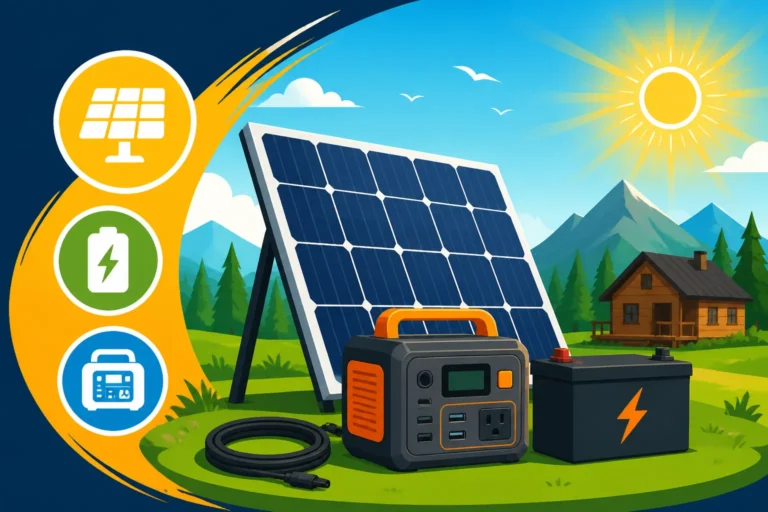
The EcoFlow Delta Pro has certainly made a splash in the portable power world, and for good reason. It’s designed to be a high-capacity, versatile power solution that bridges the gap between small portable power banks and full-blown custom solar systems. But does its design translate effectively to the unique challenges of off-grid living? Let's break down its core capabilities.
Power Output and AC Capacity
When you're off-grid, the capacity of your inverter is paramount. It determines what appliances you can run and how many simultaneously. The EcoFlow Delta Pro boasts a substantial 3600W AC output, with a surge capability of up to 7200W thanks to its X-Boost technology. This is impressive for a portable unit, allowing it to handle most household appliances like refrigerators, microwaves, power tools, and even smaller air conditioners. For many casual off-gridders or those in cabins or RVs, this kind of power output can be a game-changer. It means you don't have to constantly juggle what's plugged in or compromise on basic comforts.
However, it's crucial to understand that while it can run these high-draw items, it might not be able to sustain them for extended periods without rapidly draining the battery, especially if you're hitting close to that 3600W continuously. For instance, running a well pump, which might surge to 3000W-4000W but only run for a few minutes, is one thing. Trying to run a larger electric water heater or a central air conditioning unit all day is another. You'll definitely want to understand How to size an off-grid inverter to truly appreciate what these numbers mean for your specific needs. The pure sine wave inverter ensures that even sensitive electronics, like your laptop or medical equipment, will run safely and without issues.
Battery Capacity and Expandability
At the heart of any off-grid system is the battery bank, and the Delta Pro comes equipped with a substantial 3.6kWh LiFePO4 battery. LiFePO4 (Lithium Iron Phosphate) batteries are a fantastic choice for off-grid applications because of their long cycle life (often 3,500+ cycles to 80% capacity), stability, and ability to handle deep discharges without significant degradation. This chemistry offers a much longer lifespan and better performance in varied temperatures compared to traditional lead-acid batteries.
What truly sets the Delta Pro apart for off-grid users is its expandability. You can connect up to two Smart Extra Batteries, bringing the total capacity up to an impressive 10.8kWh. For many, this 10.8kWh capacity starts to enter the realm of serious off-grid power, potentially providing several days of autonomy depending on your consumption. For those considering How many batteries for an off-grid system, having a modular system that can grow with your needs without requiring complex wiring or technical expertise is a huge plus. This scalability makes it a viable option for a weekend cabin that might eventually become a full-time dwelling, offering flexibility that many single-unit power stations, like smaller Jackery models, simply can't match.
Charging Versatility
An off-grid power solution is only as good as its ability to recharge. The EcoFlow Delta Pro excels here with a multitude of charging options. Its AC fast charging capability is truly remarkable, allowing it to go from 0% to 80% in about 1.5 hours from a standard wall outlet. While you might not always have grid power off-grid, this is incredibly useful for topping up before you leave or for quick recharges if you visit town.
More critically for off-grid living, the Delta Pro has excellent solar input capabilities. It can handle up to 1600W of solar input with the right setup, meaning you can rapidly recharge its large battery bank on a sunny day. This high input is crucial for maintaining power, especially in regions with shorter daylight hours or during cloudy periods. You'll still need to learn How to choose an off-grid charge controller if you're building a more traditional system, but the Delta Pro integrates this seamlessly. Beyond solar and AC, it can also charge from a 12V/24V car port, which is handy for RVers or van lifers on the move, and it can be integrated with an EcoFlow Smart Generator for emergency backup power. This wide array of charging options provides serious peace of mind when you're disconnected.
Pros and Cons of Using an EcoFlow Delta Pro Off-Grid
Every power solution has its strengths and weaknesses, especially when pitted against the specific demands of off-grid living. The EcoFlow Delta Pro is no exception. Understanding these nuances is key to deciding if it aligns with your vision of sustainable independence.
The Advantages of a Self-Contained System
One of the biggest draws of a unit like the EcoFlow Delta Pro is its inherent simplicity and convenience. You're getting an inverter, charge controller, and battery bank all rolled into one sleek, portable package. This means significantly less complex wiring compared to a DIY setup, which can be daunting for newcomers. There's no need to meticulously size individual components, match voltages, or worry about intricate connections – it's largely plug-and-play. This ease of setup makes it incredibly appealing for those who want to get up and running quickly, whether it's for a tiny home, a hunting cabin, or even just for emergency preparedness. The integrated system also often comes with smart features, like app monitoring, which allows you to keep an eye on your power consumption and battery levels right from your phone. This level of digital control and visibility is often much harder to achieve with basic, disparate components.
Furthermore, the portability is a huge advantage. If your off-grid location isn't permanent, or if you need power in different areas of your property, you can easily move the Delta Pro where it's needed most. This is something a fixed, traditional solar installation simply can't offer. Imagine needing power at a remote worksite on your land one day, and then back at the cabin the next – the Delta Pro can go with you. Its robust build and integrated design also mean it's generally more durable and less prone to user error during setup than a collection of individual components. For instance, you don't have to worry about correctly wiring How to wire a battery bank from scratch, or ensuring your fuses and breakers are perfectly sized, as much of that is handled internally.
The Limitations for True Off-Grid Living
While the Delta Pro offers impressive power, it’s not without its limitations, especially for those envisioning a truly robust, full-time off-grid homestead. Scalability, beyond the two extra batteries, becomes an issue. If your energy needs grow significantly over time, you'll find yourself needing to purchase additional Delta Pro units rather than simply adding more panels or batteries to an existing modular system. This can become less cost-effective in the long run. A traditional off-grid system, while more complex initially, offers greater flexibility for expansion and component upgrades. For example, if you want to know how to expand an off-grid system, a component-based approach generally provides more options.
Another significant consideration is the cost-per-watt-hour. While convenient, all-in-one units often come at a premium compared to sourcing individual, high-quality components. If you're building a system for the long haul and have the technical know-how, a DIY approach might offer a better Off-Grid Solar Cost: Complete Breakdown over the lifetime of the system. Environmental durability, particularly for units that are regularly moved or exposed to the elements, can also be a concern. While portable power stations are built tough, they might not be designed for the same level of continuous outdoor exposure or extreme temperature fluctuations that dedicated, fixed off-grid components are. Lastly, while powerful, the Delta Pro’s inverter is still capped. If you're looking to run a full-sized electric oven, central AC, or multiple large appliances simultaneously, you might quickly find its 3600W continuous output insufficient, necessitating a larger, higher-capacity inverter common in custom off-grid setups.
Comparing the Delta Pro to Traditional Off-Grid Setups and Other Portable Power Stations
When you're trying to choose the right power solution for your off-grid lifestyle, it's really helpful to see how the EcoFlow Delta Pro stacks up against other options. It exists in a unique space, bridging the gap between small portable generators and full-blown custom solar systems. Let's dig into that comparison.
Delta Pro vs. Component-Based Systems
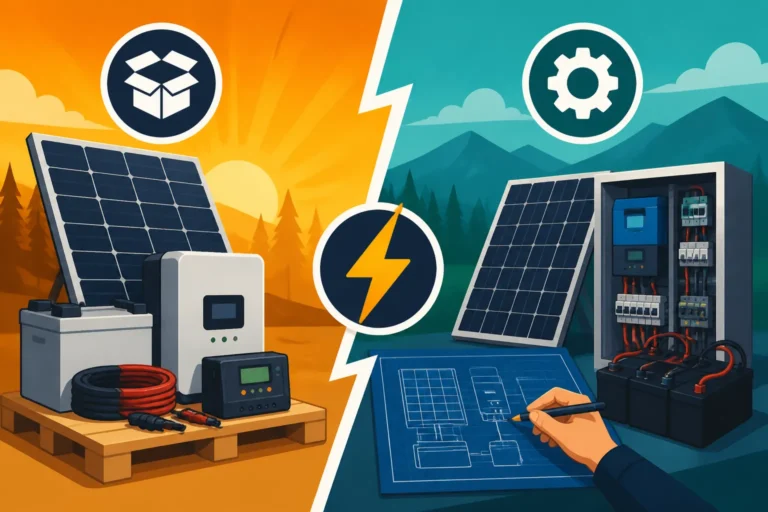
A traditional, component-based off-grid solar system consists of individual components: solar panels, a charge controller, a battery bank, and an inverter. These systems are typically custom-designed to meet specific energy needs, climate conditions, and budget constraints. The biggest advantage of a component-based system is its flexibility and long-term scalability. You can choose exactly the right size and type of each component, allowing you to build a system that is perfectly tailored to your consumption and can be expanded or upgraded over time. If you decide you need How many solar panels for off-grid living or more battery capacity in five years, you can usually just add to your existing setup. This modularity often leads to a lower Off-Grid Solar Cost Per Watt in the long run, especially for larger systems.
However, component-based systems demand more technical expertise. You need to understand Off-Grid Solar System Design Basics, wiring diagrams, voltage matching, and safety protocols. The initial installation can be complex and time-consuming, and many people opt to hire a professional, adding to the overall cost. The upfront cost for individual high-quality components can also be higher than an all-in-one unit, though the lifetime cost might be lower due to easier maintenance and upgrades. The Delta Pro, in contrast, offers simplicity. It's an all-in-one box, largely plug-and-play. You sacrifice some customization and ultimate scalability beyond its add-on batteries, but you gain immense ease of use and portability. For someone looking for a robust, quick-to-deploy solution without wanting to become a solar engineer, the Delta Pro is a very attractive proposition.
How It Stacks Up Against Competitors
The portable power station market is booming, with many brands offering compelling products. When looking at competitors like Jackery, Goal Zero, or Bluetti, the EcoFlow Delta Pro often stands out for its sheer power output and charging speed, particularly its AC fast charge.
Let's consider a popular alternative like a high-capacity Jackery Explorer model. While excellent for smaller applications, many Jackery units typically offer lower continuous AC output and smaller battery capacities compared to the Delta Pro. For example, the Jackery Explorer 1500 Pro, while portable and efficient, has a 1800W AC output and 1.5kWh capacity, which is significantly less than the Delta Pro's 3600W and 3.6kWh base capacity. This means the Delta Pro can handle heavier loads and for longer durations. Charging speed is another area where EcoFlow often leads; its X-Stream AC charging technology is generally faster than what many competitors offer. When considering Best solar generators for off-grid, the Delta Pro's ability to integrate with smart extra batteries and an intelligent generator also provides a level of ecosystem integration that some competitors are still developing.
However, some competitors might offer different form factors or niche features. For instance, some Bluetti models might have a slightly different port selection or different integration options for home backup. Price points also vary widely. Generally, the Delta Pro sits at the higher end of the portable power station spectrum due to its advanced technology and robust capabilities. This means you need to weigh if the extra power, faster charging, and expandability are worth the investment for your specific off-grid scenario. For lighter users or those on a tighter budget, a smaller, less expensive unit from Jackery or another brand might suffice for simple needs like charging phones and running a few lights.
| Feature | EcoFlow Delta Pro | Traditional Off-Grid System | Competitor (e.g., Jackery Explorer 2000 Pro) |
|---|---|---|---|
| Components | All-in-one (Inverter, Battery, Charge Controller) | Separate units (Panels, Controller, Battery, Inverter) | All-in-one (Inverter, Battery, Charge Controller) |
| Base Battery | 3.6 kWh LiFePO4 | Custom, often larger (e.g., 10-50 kWh) | ~2 kWh LiFePO4 |
| Max Expandability | Up to 10.8 kWh with extra batteries | Highly expandable with more components | Limited, typically 1-2 extra batteries |
| AC Output | 3600W (7200W surge with X-Boost) | Highly customizable (e.g., 3000W to 15000W+) | ~2200W (4400W surge) |
| Solar Input | Up to 1600W | Highly customizable (e.g., 1000W to 10000W+) | Up to 1500W |
| AC Charging | Very Fast (0-80% in ~1.5 hrs) | Not applicable (charges from solar/generator) | Slower (e.g., 0-80% in ~2.5 hrs) |
| Portability | High (wheeled design) | Low (fixed installation) | High (carry handle) |
| Setup Complexity | Low (plug-and-play) | High (requires electrical knowledge) | Low (plug-and-play) |
| Cost | Mid-to-High end for portable power | Varies widely, can be higher for custom, large systems | Mid-range for portable power |
| Best For | RVs, vans, cabins, backup, temporary power | Full-time homes, heavy usage, long-term | Camping, lighter RV use, small backup |
Ideal Scenarios and Practical Applications for the EcoFlow Delta Pro Off-Grid
Understanding the EcoFlow Delta Pro's capabilities and limitations helps us pinpoint where it truly shines and where a different solution might be more appropriate. It's not a one-size-fits-all product, and recognizing your specific needs is crucial for a wise investment.
Best Use Cases
The EcoFlow Delta Pro is an outstanding choice for several types of off-grid users, particularly those who value flexibility, ease of use, and a good balance of power and portability.
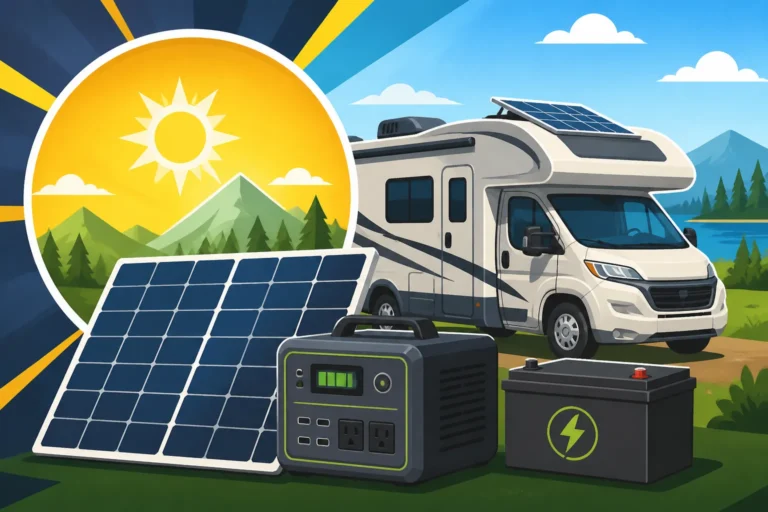
- RVs and Van Life: This is arguably one of the strongest use cases. For anyone living the nomadic lifestyle, the Delta Pro offers robust power for appliances like refrigerators, induction cooktops, Starlink systems, and even air conditioners, without the complexity of a custom RV solar setup. Its portability means you can easily move it outside for charging or inside for quiet operation. Many van lifers appreciate that they don't have to tackle intricate How to wire an off-grid solar system designs. Its wheeled design makes it easy to move in and out of tight spaces or for charging in optimal sunlight.
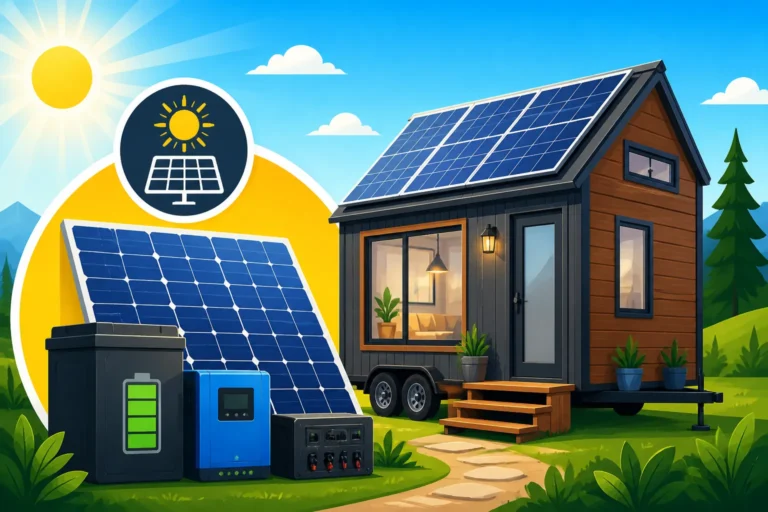
- Weekend Cabins and Tiny Homes: For a small cabin or tiny home that isn't intended for year-round, heavy power consumption, the Delta Pro can be a perfect fit. It provides enough power for lights, a small fridge, charging electronics, and even running a few power tools for maintenance. If you use your cabin seasonally, being able to bring the power station home for winter or store it securely is a huge advantage. It's an excellent way to dip your toes into off-grid living without the massive upfront commitment of a permanent installation. Thinking about Cost to power a cabin with solar? The Delta Pro offers a streamlined approach.
- Emergency Backup Power: Even if you're primarily grid-tied, the Delta Pro is a phenomenal emergency backup solution. Its fast AC charging means it can always be ready, and its substantial capacity can keep critical appliances running during power outages. It’s far quieter and safer than a gas generator for indoor use, and with solar panels, it provides continuous, renewable backup. This aspect alone makes it a compelling purchase for many homeowners looking for resilience.
- Remote Workstations or Workshops: Need to power tools or equipment in a remote shed or workshop where grid power isn't available? The Delta Pro can easily handle circular saws, drills, lights, and charging stations. Its high surge capability is particularly useful for starting motors on power tools. This also extends to mobile businesses like food trucks that need reliable, clean power on the go.
- Phased Off-Grid Transition: If you're planning a larger off-grid system down the road but want to start small, the Delta Pro can serve as your initial power source. It allows you to learn your actual energy consumption patterns before committing to a larger, more permanent setup. This can save you money by preventing oversizing your future system. You can gain valuable insights into How to calculate daily energy usage with real-world data from the EcoFlow app.
When to Consider a More Robust Solution
While the EcoFlow Delta Pro is incredibly capable, there are scenarios where a more robust, traditionally designed off-grid solar system will be the better choice.
- Full-Time, High-Consumption Homesteads: If you're planning to live entirely off-grid in a larger home with a family, running numerous appliances like electric ranges, large well pumps, multiple refrigerators, electric water heaters, and central air conditioning year-round, the Delta Pro, even with its extra batteries, will likely fall short. These kinds of loads require a much larger solar array, a significantly bigger battery bank (often 20 kWh or more), and an inverter with higher continuous output. A fixed, customizable system allows for much greater power generation and storage, often designed for How to design for year-round off-grid power.
- Extreme Climates or Continuous Heavy Use: In regions with prolonged periods of low sunlight (e.g., Pacific Northwest winters) or areas with extreme temperatures that demand constant heating or cooling, a system designed with ample redundancy and robust, permanently installed components will be more reliable. While the Delta Pro can operate in a range of temperatures, continuous exposure to harsh elements is not its primary design intent. A dedicated, fixed solar array and battery bank can be better protected and sized to handle these challenging conditions.
- Cost-Effectiveness for Large Systems: For truly large-scale off-grid power needs (e.g., whole-house power for a family), building a component-based system often proves more cost-effective per kilowatt-hour over its lifespan. While the upfront investment might seem higher, the ability to select the most efficient and durable individual components, often with longer warranties, can lead to better value. This is where researching topics like Is Off-Grid Solar Worth the Cost for a full home becomes critical. You might find that a high-capacity system from brands like Victron or Sol-Ark, while more complex to set up, offers superior performance and longevity for substantial loads.
- Desire for Deep Customization and Integration: If you have specific plans for integrating advanced home automation, complex generator auto-start functionalities, or very precise energy management systems, a fully customizable off-grid setup provides the most flexibility. The Delta Pro's ecosystem, while growing, still has limitations compared to what can be achieved with a bespoke system.
Ultimately, the decision boils down to your energy needs, budget, technical comfort level, and the specific application. The EcoFlow Delta Pro is a fantastic solution for many, but it's important to be realistic about its role in truly extensive, long-term off-grid living.
Making Your Decision: Is the EcoFlow Delta Pro Right for You?
So, after diving deep into what the EcoFlow Delta Pro can do, its strengths, and its limitations, it all comes down to your unique situation. There's no single "right" answer for everyone embarking on an off-grid journey, so let's walk through how to assess if this particular power station is your perfect match.
Assessing Your Specific Off-Grid Needs
Before you pull the trigger on any significant investment like the Delta Pro, you absolutely need to conduct a thorough self-assessment of your energy requirements and lifestyle. This isn't just about what you want to power, but what you need to power, how often, and for how long.
First, perform a detailed Off-Grid Solar Load Calculation Explained. This means listing every appliance and electronic device you plan to use, determining its wattage, and estimating how many hours per day or week you'll use it. Don't forget about surge wattage for things like refrigerators, microwaves, and power tools – these brief power spikes can be crucial in sizing your inverter correctly. For example, a small cabin might only need to run LED lights, charge a few phones, and power a mini-fridge. For these lighter loads, the Delta Pro’s base 3.6kWh might be more than enough, especially if you have good solar input. However, if you're envisioning a tiny home with a washing machine, a well pump, and perhaps even a mini-split AC unit, you'll quickly move into the territory where even the expanded 10.8kWh system might be stretched thin, requiring careful management of your energy budget.
Consider your usage patterns: Is this for full-time living or seasonal use? A weekend cabin that sees use only a few months a year has vastly different demands than a year-round homestead. Also, think about your climate. If you're in an area with abundant sunshine year-round, you might get away with less battery storage and rely more on daily solar recharging. But if you're in a cloudy region or planning to use it in winter months with shorter daylight hours, you'll need a larger battery bank or more robust solar input to compensate for reduced generation, a concept discussed in How to account for cloudy days. Your personal comfort level with DIY projects is another factor; if you prefer a 'set it and forget it' solution over complex wiring, the Delta Pro shines.
Key Considerations Before Investing
Beyond your direct power needs, there are other crucial elements to weigh before making a final decision on the EcoFlow Delta Pro.
- Budget and Long-Term Value: While the Delta Pro offers excellent performance for a portable power station, it's an investment. Compare its total cost (including any extra batteries and solar panels you might purchase) against what a comparable DIY component-based system would cost. For smaller needs, the Delta Pro might be more economical and certainly simpler. For larger, permanent off-grid setups, separate components might offer better long-term value, durability, and a lower Off-Grid Solar Return on Investment. Also, factor in the lifespan of the LiFePO4 batteries – while excellent, they will eventually need replacing, which is a consideration for Off-Grid Solar Battery Replacement Cost Over Time.
- Warranty and Customer Support: Research EcoFlow’s warranty policies and reputation for customer service. A strong warranty (typically 5 years for the Delta Pro) provides peace of mind, but knowing that support is responsive and helpful if issues arise is invaluable when you're relying on the unit for your power. Many off-grid bloggers and YouTubers share their experiences with different brands, so doing a quick search for "EcoFlow Delta Pro review" can provide real-world insights into long-term reliability and support.
- Real-World Performance Expectations: Understand that advertised wattage and capacity are often under ideal conditions. Real-world performance will vary based on temperature, age of the battery, and how you're using it. Don't expect to continuously pull 3600W for hours on end, especially if you're solely relying on solar for recharging in less-than-perfect conditions. Be realistic about what it can sustain for your lifestyle. If you're coming from a very basic setup, even the base Delta Pro will feel like a massive upgrade, allowing you to run things you never thought possible.
- Future-Proofing and Expandability: The Delta Pro's ability to add two extra batteries is a fantastic feature. But consider if you foresee your power needs growing beyond that 10.8kWh. If you plan to add major appliances or significantly expand your homestead in the next 5-10 years, a system designed with greater modularity from the ground up might be a better long-term play. If you choose the Delta Pro, explore its integration with the EcoFlow Smart Home Panel if you ever anticipate tying it into a more fixed home electrical system.
- Portability vs. Permanent: Reiterate if portability is a major factor for you. If your setup is constantly on the move, in an RV, van, or you need power in different locations around a property, the Delta Pro's portability is a huge selling point that a fixed system cannot match. However, if it's going to sit in one spot for years, the portability aspect becomes less of a priority, and a more permanent, potentially DIY system might make more sense.
In conclusion, the EcoFlow Delta Pro is a powerhouse portable station that brings serious capability to the off-grid table. For many, especially those in RVs, vans, cabins, or needing robust emergency backup, it offers an incredible balance of power, ease of use, and expandability. However, for large, permanent, high-consumption off-grid homes, a more traditional, component-based system often provides superior scalability and cost-effectiveness over the long haul. Weigh your needs carefully, do your homework, and you'll find the right path to your off-grid energy independence.
Disclaimer
Please note that the information provided in this guide is for general informational purposes only and does not constitute professional advice. Off-grid solar system design and installation can be complex and involve electrical hazards. Always consult with qualified professionals and ensure compliance with all local codes and regulations before installing or modifying any electrical or solar power system. The performance and cost estimates are subject to change based on market conditions, technological advancements, and individual usage patterns.