Best 5000W Off-Grid Solar System
Feeling the pull of off-grid living is exciting, but let's be real: figuring out which 5000W solar system is truly "the best" can feel like trying to solve a Rubik's Cube blindfolded. With so many components, confusing specs, and a sea of brands, it's easy to get overwhelmed and wonder if you're making the right investment for your dream of energy independence. This guide is here to cut through the noise, helping you understand what makes a 5000W off-grid solar system reliable, efficient, and ultimately, the perfect fit for your power needs.
Understanding What a 5000W Off-Grid Solar System Entails
When we talk about a "5000W off-grid solar system," it's crucial to clarify what that wattage typically refers to. Most often, it signifies the continuous output capacity of your inverter. This is the maximum amount of power your system can supply to your appliances at any given moment. It doesn't necessarily mean you have 5000 watts of solar panels, or even 5000 watt-hours of battery capacity, though those components will be sized to support that inverter. A 5000W inverter is a robust piece of equipment, capable of running a wide range of household appliances simultaneously, from refrigerators and microwaves to well pumps and even smaller air conditioning units. This kind of power puts you squarely in the realm of comfortable, full-time off-grid living for a small to medium-sized home, cabin, or a very power-hungry RV setup.
Setting up a system of this size means you're moving beyond basic lights and charging phones. You're looking at powering a lifestyle that closely mimics grid-tied living, just without the utility bill. This level of power opens up possibilities for using standard appliances, running power tools in a workshop, or maintaining comfort in varying climates. It’s a significant investment, but one that offers substantial freedom and reliability, provided it's designed and equipped correctly.
The Core Components of a 5000W System
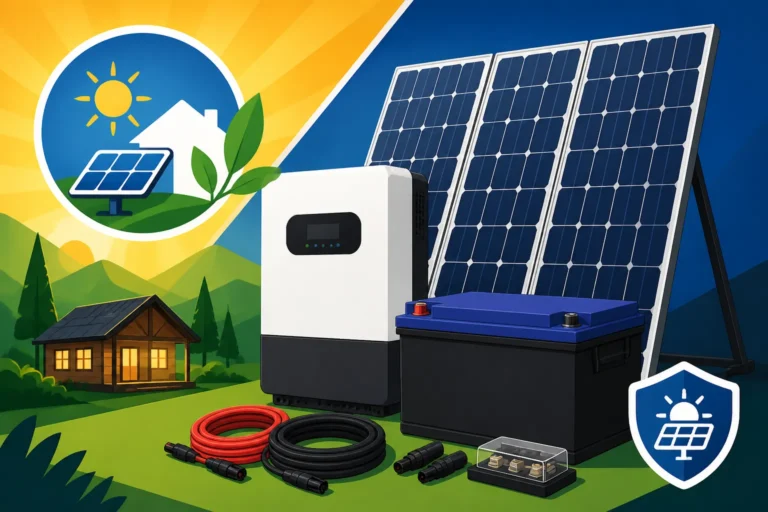
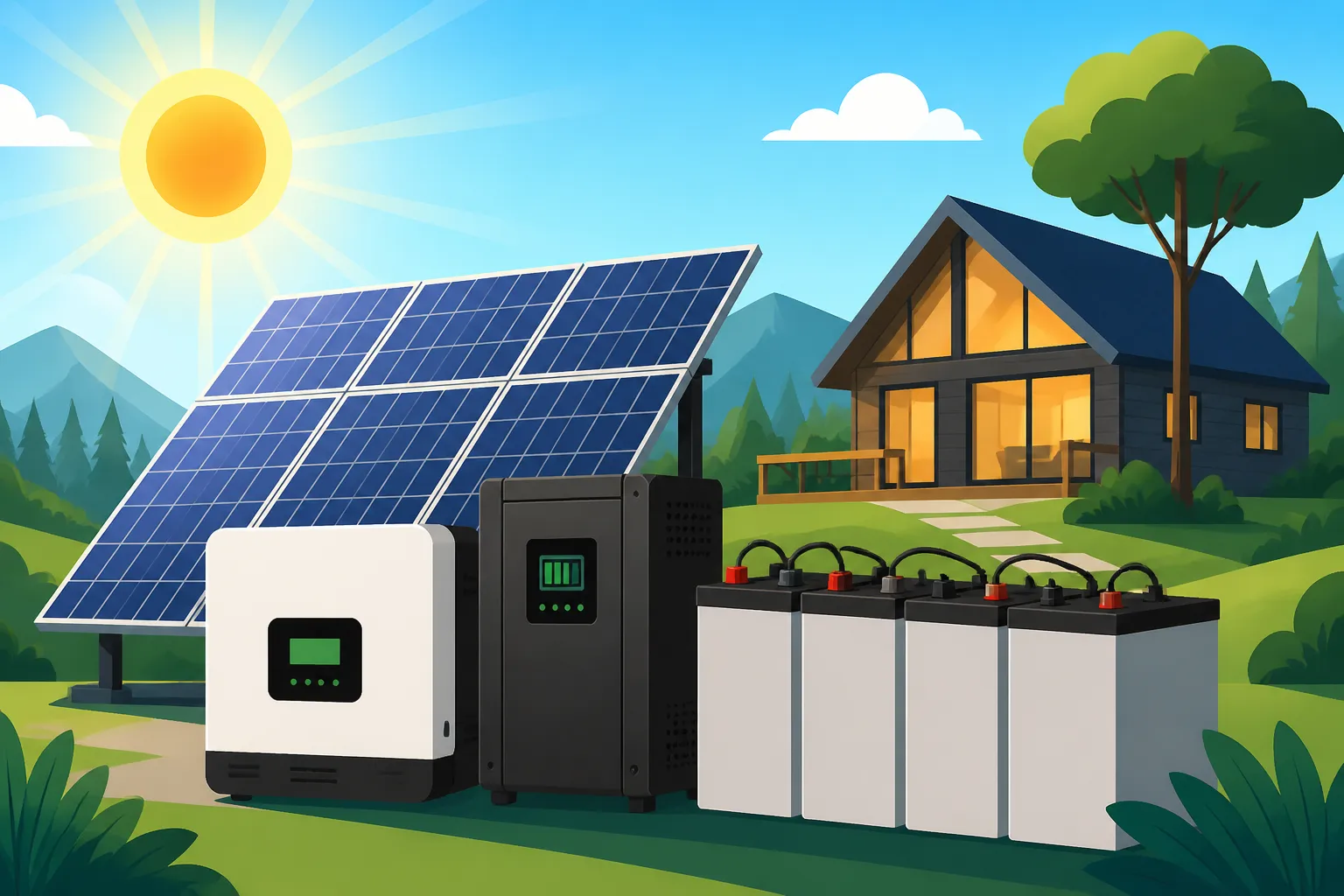
To achieve that 5000W continuous output, your off-grid solar system will rely on a handful of interconnected core components, each playing a vital role. Think of it like a well-oiled machine where every part has to be precisely matched to work in harmony. Skimping on one component can bottleneck the entire system's performance, leaving you frustrated when you can't run your coffee maker and your well pump at the same time.
First, you have the solar panels themselves. These are the workhorses that capture sunlight and convert it into DC electricity. For a 5000W system (meaning, an inverter that can output 5000W), you'll need a substantial array of panels. The exact number depends on your location's peak sun hours and your daily energy consumption, but it's typically going to be several kilowatts (kW) worth of panels – often ranging from 2,000W to 8,000W or more in total capacity to ensure your batteries are adequately recharged, especially during less sunny periods. For more on sizing your array, check out our guide on How Many Solar Panels for Off-Grid Living.
Next are the batteries, which are the heart of any off-grid setup. They store the electricity generated by your panels so you have power when the sun isn't shining. For a 5000W system, you'll need a significant battery bank to store enough energy to last you through the night and any cloudy days. This is where the biggest portion of your budget often goes. Common choices today include Lithium Iron Phosphate (LiFePO4) batteries due to their efficiency, longevity, and deeper discharge capabilities, though AGM lead-acid batteries are still an option for those on a tighter initial budget. Understanding How Many Batteries for an Off-Grid System is crucial for reliable power.
The charge controller acts as the brain between your solar panels and your batteries. It regulates the voltage and current from your panels, ensuring your batteries are charged safely and efficiently without overcharging. For a system this size, you'll almost certainly be looking at an MPPT (Maximum Power Point Tracking) charge controller, which is much more efficient than its PWM counterpart at converting solar energy, especially during fluctuating light conditions.
Finally, the star of this particular show, the inverter. This crucial component takes the DC power stored in your batteries and converts it into AC power, which is what most standard household appliances use. A 5000W inverter, specifically, can deliver a continuous output of 5000 watts, allowing you to run multiple high-draw appliances. Many modern inverters also act as inverter-chargers, meaning they can manage power from a generator or grid connection (if available for backup) to charge your batteries. When selecting one, consider its surge capacity, which is important for starting motors in appliances like refrigerators or well pumps, as these can temporarily draw much more than their running wattage. Our article on How to Size an Off-Grid Inverter delves deeper into these considerations.
Key Considerations for Choosing Your 5000W Off-Grid System
Selecting the "best" 5000W off-grid solar system isn't about finding a one-size-fits-all solution; it's about finding the right solution for your specific needs, location, and budget. There are several critical factors that will heavily influence your choices and determine the overall effectiveness and longevity of your system. Ignoring these can lead to underperformance, premature component failure, or simply not having enough power when you need it most.
It's common for people to jump straight to looking at panels, but a holistic view is essential. Your daily energy consumption, climate, how long you need to run things without sun (days of autonomy), and your long-term goals for expansion all play a role. Think about your habits: do you work from home and need continuous power for computers and monitors, or are you just powering a remote cabin for weekend getaways? These details profoundly impact your system design.
System Voltage and Efficiency
One of the first big decisions for a 5000W system is choosing your system voltage: typically 12V, 24V, or 48V. For a system of this capacity, 12V is generally not recommended. While possible, it would require extremely thick and expensive wiring to handle the high current associated with 5000W, leading to significant power losses and potential safety issues due to heat.
Most 5000W systems will operate on a 24V or, more commonly, a 48V DC battery bank. A 48V system is often considered the gold standard for larger off-grid installations for several reasons. It allows for thinner wiring compared to 12V or 24V systems, which saves on copper costs and reduces voltage drop over longer distances. It also generally results in a more efficient system overall, as components (inverters, charge controllers) tend to be more efficient at higher voltages. Many high-quality, larger inverters are specifically designed for 48V systems. While the initial setup might feel a bit more complex than a smaller 12V system, the long-term benefits in efficiency, component availability, and scalability are significant. Our guide on 12V vs 24V vs 48V: Which to Choose provides a detailed comparison to help you make an informed decision.
Battery Chemistry and Capacity
The battery bank is arguably the most critical component for a 5000W off-grid system, as it determines how long you can run your appliances without solar input. The choice of battery chemistry heavily impacts cost, performance, and lifespan.
Lithium Iron Phosphate (LiFePO4) batteries are the leading choice for high-performance off-grid systems. They offer superior cycle life (thousands of cycles compared to hundreds for lead-acid), deeper discharge capabilities (up to 80-100% depth of discharge without damage), faster charging times, and are significantly lighter and more compact. While their upfront cost is higher, their longevity and efficiency often make them more cost-effective over the system's lifetime. Brands like Battle Born and EG4 are very popular in this space, offering robust and reliable LiFePO4 solutions that integrate well with 5000W inverters.
Lead-acid batteries (like sealed AGM or flooded deep cycle) are a more budget-friendly option for the initial purchase. However, they have a shorter lifespan, can only be discharged to about 50% without damaging them, and are much heavier. They also require more maintenance (especially flooded types) and can struggle in extreme temperatures. For a 5000W system, the sheer number of lead-acid batteries required to achieve adequate capacity can become unwieldy and take up significant space. If you're on a very tight budget and space isn't an issue, they might be considered, but most serious 5000W setups gravitate towards lithium. Delve deeper into the comparison with our article, LiFePO4 vs Lead-Acid Battery Cost.
For a 5000W continuous output, you'll need a battery bank measured in kilowatt-hours (kWh) that can comfortably support your average daily usage, plus several days of autonomy for cloudy weather. For example, a modest off-grid home might use 10-20 kWh per day. To achieve 3 days of autonomy, you'd need a battery bank of 30-60 kWh. This represents a substantial investment, often making up 40-60% of the total system cost.
Scalability and Future Needs
One of the biggest frustrations for off-grid homeowners is designing a system only to find it inadequate a few years down the line when their power needs grow. When investing in a 5000W system, it's wise to consider its scalability. Can you easily add more solar panels later? Is your inverter capable of handling additional load or integrating with another inverter for even more power? Are your charge controllers large enough to accommodate an expanded solar array?
Many modern inverters, especially those from reputable brands like Victron Energy or Sol-Ark, are designed to be stackable, meaning you can add a second inverter to double your output capacity. Similarly, choosing charge controllers with enough headroom, or selecting a system that allows for additional controllers, ensures you won't need to completely overhaul your setup if you decide to add more panels. Planning for future expansion from the outset, even if you don't implement it immediately, can save you significant money and headaches down the road. Our guide on How to Design an Expandable System offers more insights into this crucial planning stage.
Top Components for a Robust 5000W Off-Grid Setup
When piecing together a truly robust 5000W off-grid solar system, the quality and compatibility of your components are paramount. This isn't the place to cut corners, as reliability and longevity directly translate into peace of mind and fewer headaches in the long run. Let's look at some of the best options for each part of your system.
High-Performance Inverters
For a 5000W continuous output, you need an inverter that's not only powerful but also incredibly reliable, efficient, and ideally, feature-rich. Pure sine wave inverters are non-negotiable for sensitive electronics and appliances.
- Victron MultiPlus or Quattro Series: Victron Energy is a powerhouse in the off-grid world. Their MultiPlus and Quattro inverter/chargers are legendary for their robust build quality, advanced features, and exceptional reliability. A Victron MultiPlus-II 48V/5000VA unit (which is roughly 4000W continuous due to VA to W conversion factor, but they also have larger options or stackable units) is a fantastic foundation. They offer seamless integration with other Victron components, advanced monitoring, and excellent surge capability for starting demanding loads. They are also highly programmable, allowing you to fine-tune charging parameters for various battery types and integrate with generator auto-start functions. For a true 5000W continuous, you might look at their 8kVA or 10kVA units, or stack multiple 5kVA units.
- Sol-Ark All-in-One Inverters: Sol-Ark offers highly integrated, all-in-one solutions that combine an inverter, charge controller, and transfer switch into a single unit. Their 8K or 12K models (meaning 8,000W or 12,000W) are more than capable of handling your 5000W continuous needs and offer significant surge power. These are particularly popular for their ease of installation and comprehensive monitoring capabilities. The Sol-Ark 8K, for instance, can easily deliver 5000W continuous, making it an excellent candidate for a powerful off-grid setup.
- EG4 6500EX/6500XP-240: EG4 has quickly gained popularity for offering high-value, feature-packed inverters. Their 6500EX (for 24V or 48V battery banks) and 6500XP-240 (a split-phase 240V option) provide a strong 6500W continuous output, making them well over the 5000W threshold. They integrate powerful MPPT charge controllers and offer robust performance for demanding applications at a more accessible price point than some premium brands.
When selecting an inverter, always consider the maximum surge power it can provide, as this is crucial for appliances with motors, like refrigerators, freezers, and especially well pumps. A good rule of thumb is to have a surge capacity at least 2-3 times your continuous load for brief periods.
Reliable Battery Banks
The best battery bank for a 5000W system needs to offer high capacity, deep cycling, and a long lifespan.
- LiFePO4 Deep Cycle Batteries: As discussed, lithium is the way to go. Brands like Battle Born Batteries, SOK Battery, and EG4 are highly regarded. For a 5000W inverter, you'd typically want a 48V battery bank. You might be looking at several 100Ah or 200Ah 48V batteries wired in parallel, or a series of 12V or 24V batteries to build up to 48V. For example, four 100Ah 48V LiFePO4 batteries would give you approximately 20 kWh of usable energy, which could support a moderate off-grid home for a day or two. Remember to factor in your desired days of autonomy when calculating the total capacity. Check out our detailed guide on How Much Battery Capacity You Need.
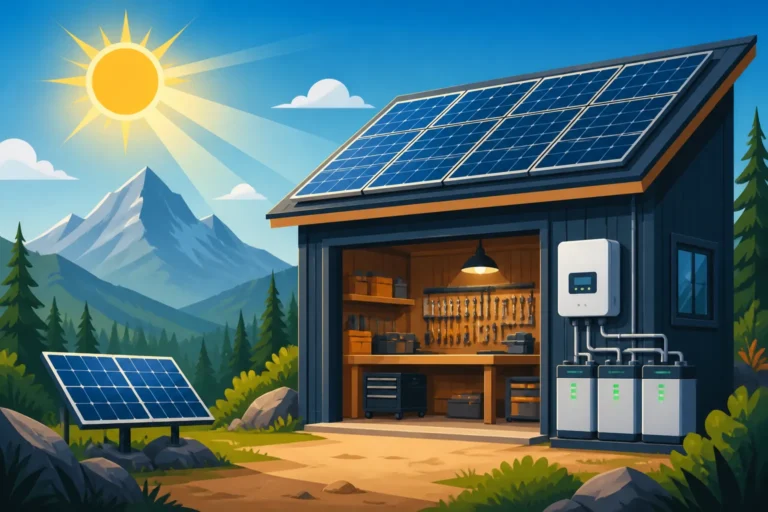
- Rack-Mount LiFePO4 Batteries: For larger systems, rack-mount LiFePO4 batteries from brands like EG4 or Growatt offer a clean, organized, and often more cost-effective way to achieve high capacity. These units are designed to be easily stacked and wired in parallel, creating a powerful 48V battery bank. They often come with integrated Battery Management Systems (BMS) for safety and cell balancing.
When comparing batteries, look at the discharge rate (C-rating), cycle life, and warranty. A higher C-rating means the battery can deliver more power quickly without excessive strain.
Efficient Charge Controllers
While many modern inverters, especially all-in-one units, include built-in charge controllers, if you're building a modular system or expanding, you might need standalone units.
- Victron SmartSolar MPPT Charge Controllers: Victron's MPPT controllers are top-tier, offering incredible efficiency (up to 99%), robust build quality, and excellent programmability. They integrate seamlessly into a Victron system, and their Bluetooth connectivity allows for easy monitoring and adjustments via a smartphone app. You'd typically select a controller based on your solar array's voltage and current, such as a SmartSolar MPPT 250V 100A for a larger 48V system.
- OutBack FLEXmax MPPT Charge Controllers: Outback Power has been a long-standing name in off-grid solar. Their FLEXmax series (like the FM80) are highly efficient and durable, designed for serious off-grid applications. They can handle high PV array voltages and are known for their ability to deliver maximum power even in challenging conditions.
For a 5000W inverter, ensure your charge controller(s) can handle the input from your solar array and efficiently deliver current to recharge your substantial battery bank within a reasonable timeframe. It's often better to have multiple smaller charge controllers than one massive one, as this can offer redundancy and more flexible array configurations.
Solar Panels and Mounting
The solar panels convert sunlight into electricity, and for a 5000W system, you'll need a significant array.
- High-Efficiency Monocrystalline Panels: Look for panels with higher efficiency ratings (typically 18-22%) to maximize power generation, especially if space is a concern. Brands like Renogy, Rich Solar, and Grape Solar offer reliable options in various wattages (e.g., 300W-450W per panel). For a 5000W inverter, you might need anywhere from 2000W to 8000W of actual panel capacity, depending on your geographic location's sun hours and your desired battery recharge rate.
- Ground Mount vs. Roof Mount: For a larger array required for a 5000W system, a ground mount might offer more flexibility in terms of optimal tilt and orientation, and easier maintenance. However, roof mounts save ground space. Consider our guide on Ground Mount vs Roof Mount for Off-Grid when planning your installation.
You'll also need robust mounting hardware, proper wiring (using appropriately sized cables to minimize voltage drop), and safety components like circuit breakers and fuses. For a detailed breakdown of costs, consider our article Off-Grid Solar Cost: Complete Breakdown.
Considering Integrated Power Stations (Solar Generators)
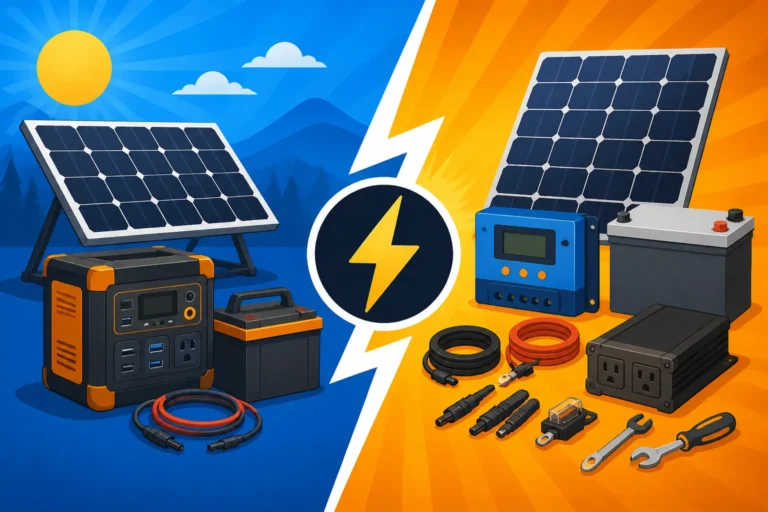
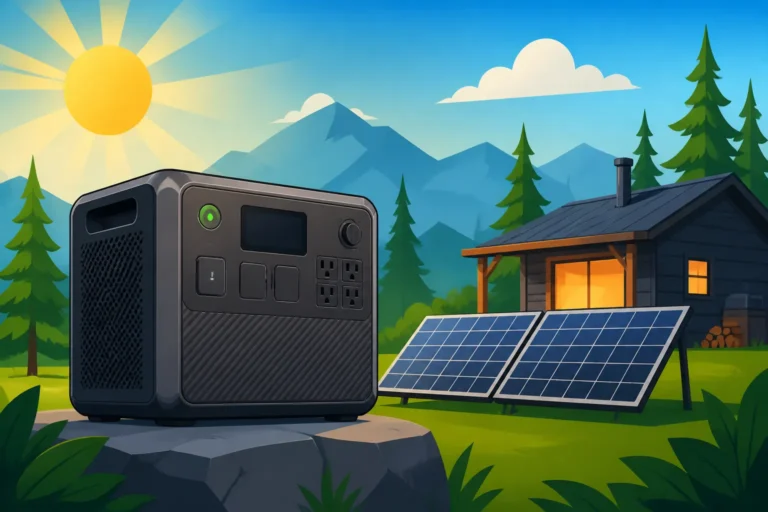
While a traditional 5000W off-grid system usually involves separate components, some advanced "solar generators" or portable power stations are pushing the boundaries of what integrated units can do. Brands like Jackery offer powerful portable solutions that, while not typically a full 5000W system for a whole home, can certainly provide substantial backup power or power smaller, self-contained setups. For instance, Jackery offers robust portable power stations like the Explorer 3000 Pro or even modular systems that can expand capacity, which are excellent for temporary power, RVs, vans, or as a reliable backup for critical loads in a larger off-grid home. They combine an inverter, battery, and charge controller into a single, often portable, unit. While convenient, ensure their continuous output matches your actual needs for a full 5000W lifestyle, and recognize that their solar input capacity may limit rapid recharging of very large battery banks compared to a dedicated component system.
Designing Your Ideal 5000W Off-Grid System
Designing a 5000W off-grid solar system isn't just about buying big components; it's about carefully planning to meet your specific energy demands efficiently and reliably. A well-designed system will save you money, prevent frustrating power outages, and ensure your off-grid experience is as smooth as possible. It starts with understanding your energy consumption and then building out the system around those needs.
Many folks get excited about the "5000W" number, but that's just the tip of the iceberg. What truly matters is how much energy you consume daily (in Watt-hours or kilowatt-hours) and how long you need that power to last without sunshine. This is where the rubber meets the road, and where a bit of upfront homework pays off immensely.
Performing a Detailed Load Analysis
Before you even think about buying components, you absolutely must perform a thorough load analysis. This means listing every single electrical appliance you plan to use, how many watts each one draws, and for how many hours per day you'll use it. Don't guess; look at appliance labels, use a Kill-A-Watt meter, or consult specification sheets.
Example Load Analysis for a Small Off-Grid Home:
| Appliance | Wattage (W) | Hours/Day | Daily Watt-hours (Wh) | Surge Wattage (W) |
|---|---|---|---|---|
| LED Lights (5 total) | 50 | 6 | 300 | 0 |
| Refrigerator (Energy Star) | 150 | 10 (run time) | 1500 | 750 |
| Laptop (charging) | 60 | 4 | 240 | 0 |
| Microwave | 1000 | 0.25 | 250 | 1500 |
| Well Pump (1/2 HP) | 750 | 1 (run time) | 750 | 2000 |
| Water Heater (on demand LPG with ignitor) | 50 | 2 (run time) | 100 | 0 |
| TV | 100 | 3 | 300 | 0 |
| Phone chargers (2) | 20 | 2 | 40 | 0 |
| Total Daily Usage | 3580 Wh (3.58 kWh) | Max simultaneous surge: ~2000W (well pump + fridge starting) |
Once you have your total daily Watt-hours, add a buffer (15-20%) for unforeseen usage or future additions. Let's say our example needs about 4.3 kWh per day. This is the energy your solar panels need to generate and your batteries need to store. The "Max simultaneous surge" figure helps you size your inverter's surge capacity. Our guide on How to Calculate Daily Energy Usage provides a step-by-step approach to this crucial task.
Sizing for Autonomy and Peak Sun Hours
"Days of autonomy" refers to how many days your battery bank can power your home without any additional input from solar panels or a generator. For off-grid living, especially in areas with frequent cloudy weather or during winter, aiming for 2-5 days of autonomy is common.
Using our example of 4.3 kWh/day:
- For 3 days of autonomy, you'd need a battery bank capable of storing 4.3 kWh/day * 3 days = 12.9 kWh of usable energy.
- If using LiFePO4 batteries (90-100% usable capacity), you'd need roughly 13-14 kWh of nominal battery capacity.
- If using lead-acid (50% usable capacity), you'd need 12.9 kWh / 0.5 = 25.8 kWh of nominal battery capacity, which is significantly more.
Next, consider your peak sun hours. This is the equivalent number of hours per day when the sun's intensity is 1000 watts per square meter. It varies significantly by location and season. You can find this data from resources like the National Renewable Energy Laboratory (NREL). Let's say your location gets 4 peak sun hours in winter.
To calculate your required solar array size:
Daily Energy Need (Wh) / Peak Sun Hours / System Efficiency (e.g., 0.75 for losses) = Required Panel Watts
4300 Wh / 4 hours / 0.75 = ~1433 W (or 1.43 kW) of solar panels.
However, this is for average conditions. It's often recommended to oversize your solar array by 20-30% or more, especially if you have significant winter usage or want faster charging. So, for our example, a 2-3 kW solar array would be a more realistic starting point. This also provides ample power for charging your batteries even with a 5000W inverter draw throughout the day. For a detailed breakdown, check out Peak Sun Hours Explained.
Installation Considerations and Safety
Once your system is designed, the installation phase requires careful attention to detail and adherence to safety protocols. Whether you're doing a DIY Off-Grid Solar Installation Step by Step or hiring professionals, understanding the process is key.
- Wiring: Proper wire sizing is crucial to prevent voltage drop and overheating. Larger wires are needed for higher currents or longer distances. Our guide on How to Size Wire and Cables is a must-read. All connections must be secure and protected.
- Grounding: Proper grounding is essential for safety, protecting both your equipment and yourself from electrical faults. Consult the National Electrical Code (NEC) guidelines, even for off-grid systems. For more details, refer to Off-Grid Solar Safety and Grounding.
- Location: Your components, especially batteries and inverters, need to be housed in a clean, dry, well-ventilated area, protected from extreme temperatures. Batteries, particularly lead-acid, can off-gas, so ventilation is critical.
- Permits: While often overlooked for off-grid systems, many jurisdictions still require permits and inspections for solar installations, especially if they are connected to a structure. Always check local regulations to avoid issues. Find out more at Off-Grid Solar Permit Requirements.
- Maintenance: Even the best system needs regular checks. Cleaning panels, monitoring battery health, and inspecting connections will extend the life and efficiency of your 5000W system.
By diligently planning each of these stages, you can ensure your 5000W off-grid solar system provides reliable, consistent power, truly offering you the freedom and independence you're seeking.
Disclaimer
Please remember that the information provided in this guide is for general informational purposes only and is not a substitute for professional advice. Off-grid solar system design and installation can be complex and involve electrical hazards. Always consult with qualified solar professionals and licensed electricians to ensure your system is safely and correctly designed, installed, and compliant with all local codes and regulations.