How to Choose Off-Grid Solar for a Garage
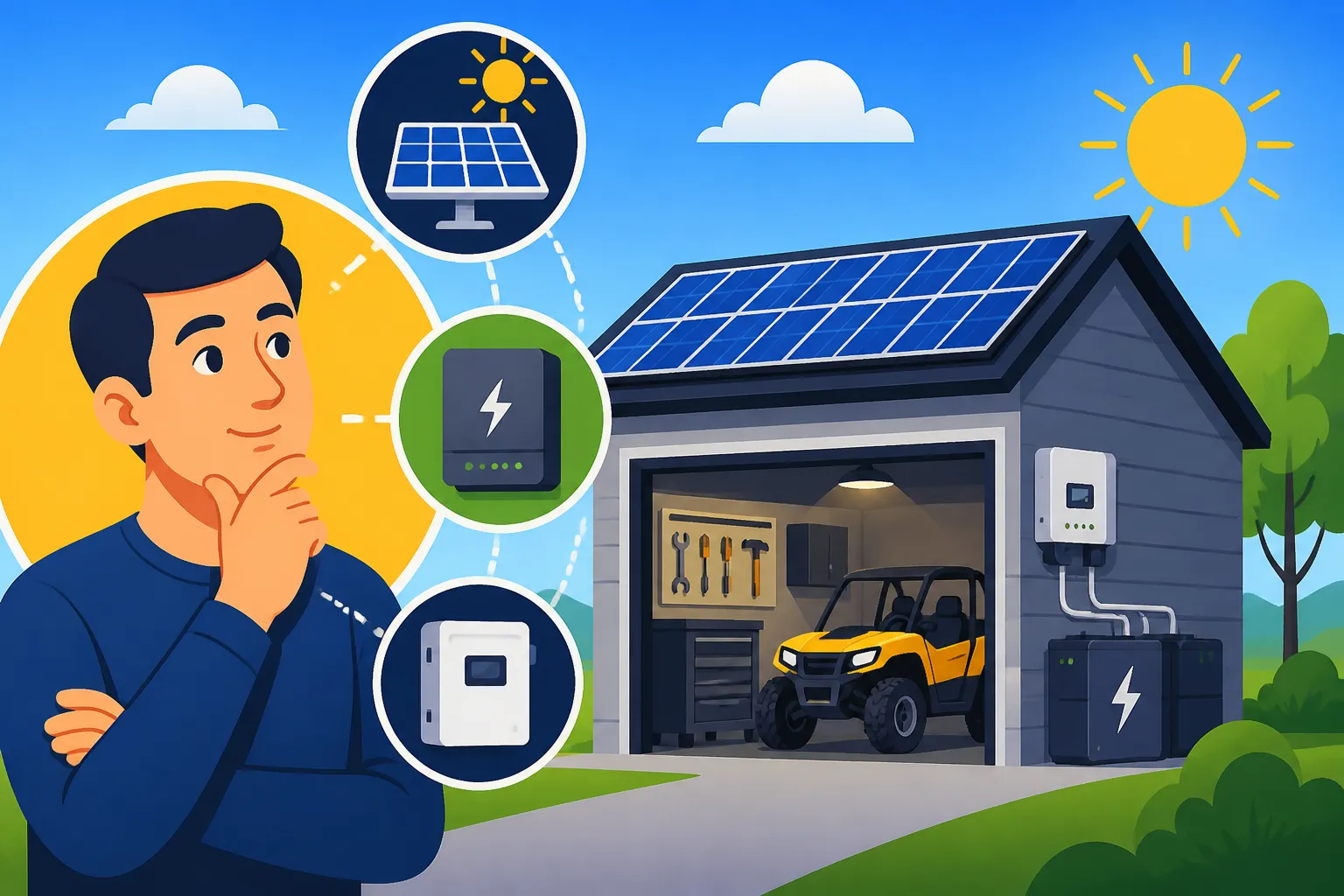
It's incredibly common to have a detached garage, workshop, or even a fancy shed that's just begging for reliable power, but the thought of trenching electrical lines from the main house feels like a monumental, expensive headache. You want to run tools, lights, or even a mini-fridge out there without being tied to extension cords or noisy generators. This guide is specifically crafted to help you navigate the often-confusing world of off-grid solar, empowering you to choose the perfect system to bring independent, clean energy to your garage.
Why Go Off-Grid for Your Garage
The desire for off-grid power in a garage isn't just about being eco-friendly; it often stems from very practical, real-world frustrations. Many property owners face significant hurdles when trying to get conventional grid power to an outbuilding. Let's dig into why cutting the cord might be your best bet.
The Frustration of Remote Power Access
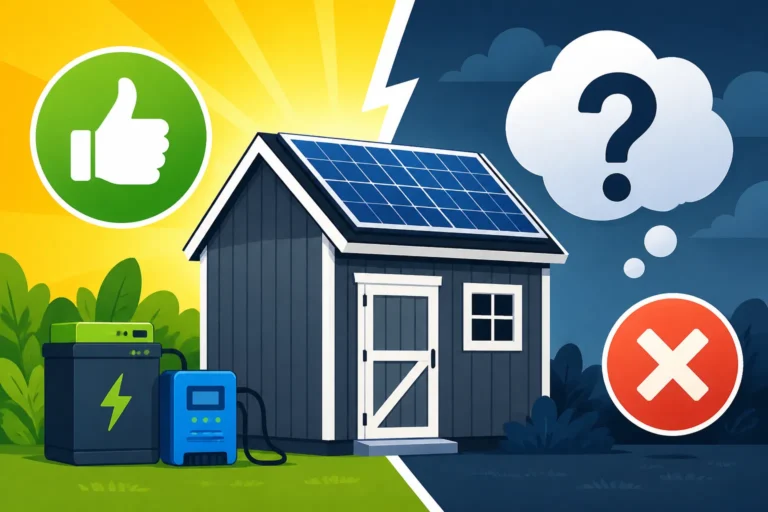
Imagine you've got this fantastic workshop or storage space a little ways off from your main home. You dream of working on projects late into the evening, having bright, consistent lighting, or keeping a chest freezer humming along. But then reality hits: connecting to the main electrical grid means digging trenches, laying conduit, dealing with permits, and hiring electricians for what can be a very costly and disruptive process. If your garage is really far from the main service panel, the sheer expense and labor involved in extending utilities can easily run into thousands, even tens of thousands of dollars. It's enough to make anyone throw up their hands and just stick to battery-powered tools and lanterns. This is where off-grid solar steps in as a liberating alternative, offering power exactly where you need it without the underground drama.
Cost Savings and Energy Independence
While there's an upfront investment in an off-grid solar system for your garage, it’s crucial to look at the long-term benefits. Once installed, your solar setup essentially provides free electricity, drastically reducing or even eliminating the need for expensive trenching and monthly utility bills for that specific structure. Think about how much you might spend to extend power lines versus the Cost to Power a Garage with Solar. Over time, these savings can be substantial, especially as electricity rates continue to climb. Furthermore, having an independent power source for your garage means you're no longer at the mercy of grid outages. If the main power goes down in a storm, your garage lights, tools, and perhaps a critical freezer can keep running, offering a peace of mind that's truly invaluable.
Versatility and Preparedness
An off-grid solar system for your garage isn't just about powering your daily projects; it's also about building a resilient energy infrastructure. Many homeowners use their garage as a hub for emergency preparedness, storing supplies or tools that might be vital during an extended power outage. With solar, you can keep essential items charged, run a radio, or even use the space as a temporary command center, completely independent of external power sources. Beyond emergencies, the versatility is immense. You can power woodworking tools, charge electric vehicle batteries (if the system is sized correctly), run sophisticated grow lights in a greenhouse attached to the garage, or even create a fully climate-controlled space with a mini-split system. It opens up a world of possibilities that simply aren't feasible with limited or non-existent grid power.
Understanding Your Garage's Power Demands
Before you even think about buying solar panels or batteries, the most critical step in designing an effective off-grid solar system for your garage is to thoroughly understand your power needs. Skimping on this step is the fastest way to end up with a system that's either woefully inadequate or unnecessarily expensive.
Performing a Load Analysis
A load analysis is simply an inventory of every electrical device you plan to use in your garage, along with how much power each consumes and for how long. This isn't just a mental exercise; you need to write it down. Grab a pen and paper, or open a spreadsheet, and list every light, every power tool, every charger, every fan, every refrigerator, and anything else that will plug in. For each item, you'll need its wattage (how much power it uses when running) and an estimate of how many hours per day you'll operate it. Appliance labels often provide wattage, or you can use a watt meter (like a Kill-A-Watt device) for a more accurate reading.
For example, a typical LED shop light might use 40 watts, and you might run it for 4 hours a day. Your jigsaw might pull 700 watts for 30 minutes (0.5 hours) a day. A mini-fridge might use 80 watts but cycle on and off, so you'd estimate its actual runtime or use its daily kilowatt-hour (kWh) rating. Once you have this data, multiply the wattage by the hours of use to get "watt-hours per day" for each item. Add all these up, and you'll have your total daily energy consumption in watt-hours. This calculation is the foundation for determining How to Size an Off-Grid Solar System.
Identifying Peak Versus Continuous Loads
It's not enough to know your total daily consumption; you also need to understand your peak power demand. This is the maximum amount of power you'll need at any single moment. For instance, if you plan to run a table saw (1500W) and a shop vacuum (1000W) simultaneously, your peak load is 2500W. Many power tools also have a "surge" or "starting" wattage, which can be 2-3 times higher than their running wattage, but only for a fraction of a second. Your inverter must be able to handle both your continuous running loads and these short surges.
A small, portable power station like a Jackery Explorer 1000 might be perfect for charging batteries and running a few LED lights, but it won't handle a full-sized table saw starting up. Understanding this distinction is crucial for sizing your inverter properly. You don't want to buy an inverter that can only handle your average running wattage, only to have it trip every time you start your air compressor. Your largest combined instantaneous load (plus any surge capacity) will dictate the minimum size of your inverter.
Accounting for Future Needs and Growth
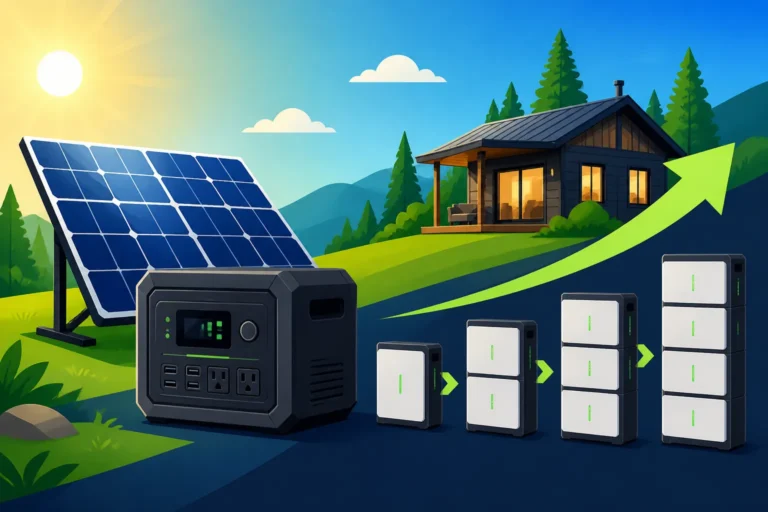
One of the biggest mistakes people make when choosing an off-grid solar system for their garage is failing to plan for the future. What if you decide to add a welder next year? Or want to install a small electric heater for winter projects? Or perhaps a new, more powerful tool? Trying to add components later can sometimes be more challenging and costly if your initial system wasn't designed with expansion in mind.
It's always a good idea to slightly oversize your initial system, particularly your battery bank and inverter, to allow for some growth. Think about what your garage could become in 3-5 years. Do you anticipate needing to run How Much Solar to Run A Well Pump if you add a water source, or perhaps How Much Solar to Run An Air Conditioner for comfort? Build in a little buffer – maybe 10-20% extra capacity – to avoid having to completely overhaul your system down the road. This foresight can save you a lot of headaches and money in the long run.
Here's a sample table to help with your load analysis for a typical garage:
| Appliance / Tool | Typical Running Wattage | Est. Hours/Day (Avg.) | Daily Watt-Hours (Wh) | Surge Wattage (Approx.) | Notes |
|---|---|---|---|---|---|
| LED Shop Light (4 ft) | 40 W | 4 hours | 160 Wh | 40 W | Multiple lights will increase this |
| Small Mini-Fridge | 80 W | 8 hours (compressor) | 640 Wh | 400 W | Compressor cycles, so estimate run time |
| Drill Charger | 50 W | 1 hour | 50 Wh | 50 W | Only when charging |
| Jigsaw | 700 W | 0.5 hours | 350 Wh | 1200 W | Intermittent use |
| Shop Vacuum (Wet/Dry) | 1000 W | 0.25 hours | 250 Wh | 2000 W | High surge, intermittent |
| Stereo/Radio | 20 W | 3 hours | 60 Wh | 20 W | Low continuous load |
| Laptop Charger | 60 W | 2 hours | 120 Wh | 60 W | For working on projects |
| Total Daily Watt-Hours | 1640 Wh | ||||
| Peak Simultaneous Load (Example: Shop Vac + Light) | 1040 W | If running together (excluding surges) | |||
| Worst-Case Surge Load (Example: Shop Vac Start) | 2000 W | Critical for inverter sizing |
Note: Wattage values are approximate and can vary significantly by model. Always check your specific appliance labels.
Essential Components of a Garage Solar Setup
Once you've nailed down your power requirements, it's time to understand the core components that will make up your off-grid solar system. Each piece plays a vital role, and selecting the right ones is key to a reliable and efficient setup.
Solar Panels: Your Energy Harvesters
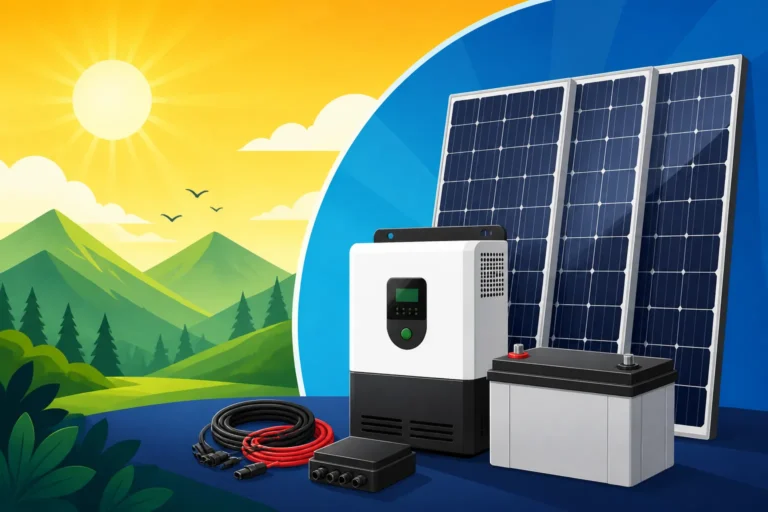
The solar panels are the frontline workers of your system, converting sunlight into usable electricity. For a garage, you'll primarily be looking at rigid monocrystalline panels, known for their efficiency and durability. The number and wattage of panels you need will directly correlate with your calculated daily energy usage and the amount of peak sun hours your location receives. For example, if you need 1.5 kWh (1500 Wh) per day and your area gets 5 peak sun hours, you'd need about 300 watts of panels to generate that power if everything were perfectly efficient. However, you'll want to add a buffer for cloudy days, seasonal changes, and system inefficiencies.
When choosing panels, consider their physical size, mounting options (roof, ground, pole), and how they'll withstand local weather conditions. Brands like Renogy and Rich Solar offer reliable and affordable options for various system sizes. You can learn more about Best Off-Grid Solar Panels to find what suits your garage's specific needs. Think about future expansion here too; can your chosen mounting location accommodate more panels if your needs grow?
Battery Bank: The Heart of Your System
The battery bank is arguably the most crucial component in any off-grid system, especially for a garage where you might need power after the sun goes down or on overcast days. Batteries store the energy generated by your solar panels, making it available on demand. For off-grid applications, Lithium Iron Phosphate (LiFePO4) batteries are increasingly popular due to their long lifespan, deep discharge capabilities, and lightweight design. Traditional lead-acid batteries (AGM or flooded) are a cheaper upfront option but require more maintenance and have a shorter cycle life.
Your battery bank needs to be sized not only for your daily watt-hour consumption but also for "days of autonomy" – how many days you want to be able to run your garage solely on battery power without any solar input (e.g., during extended cloudy weather). For a garage, aiming for 2-3 days of autonomy is a good starting point. You can dive deeper into How Many Batteries for an Off-Grid System to understand the calculations involved. Remember, batteries represent a significant portion of your overall Off-Grid Solar Cost: Complete Breakdown, so choose wisely based on your budget and long-term goals.
Charge Controller and Inverter: The Brains and Brawn
These two components act as the intelligence and power conversion units of your system:
- Charge Controller: This device sits between your solar panels and your batteries. Its primary job is to regulate the voltage and current coming from the panels, ensuring your batteries are charged efficiently and safely, preventing overcharging which can damage them. There are two main types: PWM (Pulse Width Modulation) and MPPT (Maximum Power Point Tracking). For larger, more efficient systems, an MPPT charge controller is highly recommended as it can harvest significantly more power from your panels, especially in varying light conditions. Brands like Victron Energy and Renogy offer excellent MPPT charge controllers.
- Inverter: Your solar panels and batteries typically operate on DC (direct current) power. Most garage appliances and tools, however, run on AC (alternating current). The inverter converts DC power from your battery bank into usable AC power for your outlets. For sensitive electronics and efficient operation of power tools, you'll want a pure sine wave inverter. Modified sine wave inverters are cheaper but can damage certain devices and run motors less efficiently. The size of your inverter (measured in watts) needs to match your peak simultaneous load, including those momentary surges when tools start up. For larger loads, you might consider something like a Sol-Ark inverter, which combines multiple functions into one unit. Understanding How to Choose an Off-Grid Inverter is critical to prevent system overload.
Wiring, Fuses, and Safety
Don't underestimate the importance of proper wiring, fusing, and grounding. These elements ensure the safety, efficiency, and longevity of your off-grid garage system.
- Wiring: All wires must be appropriately sized for the current they carry and the distance they travel to prevent voltage drop and overheating. Undersized wires can lead to efficiency losses, fire hazards, and poor system performance. You'll need different gauge wires for your solar panel array (often thicker for longer runs), battery bank connections (very thick, short runs), and AC output from the inverter.
- Fuses and Breakers: These are your system's critical safety devices, protecting components from overcurrents and short circuits. You'll need DC-rated fuses or breakers between your solar panels and charge controller, between your charge controller and batteries, and within your battery bank. An AC breaker panel will be needed after your inverter to distribute power safely to your garage outlets. Never skip these.
- Grounding: Proper grounding protects against electrical shock and lightning strikes. All metal components, including panel frames, mounting racks, and inverter chassis, must be adequately grounded according to electrical codes. If you're undertaking a DIY Off-Grid Solar Installation Step by Step, ensure you follow established electrical safety guidelines or consult with a qualified electrician.
Selecting the Right Off-Grid Solar System for Your Garage
Once you understand your needs and the components involved, it's time to put it all together. This final stage involves making decisions about system sizing, whether to go DIY or with a kit, and how to ensure your system can grow with you.
Determining System Size and Voltage
Based on your load analysis, you now have a clear picture of your daily watt-hour consumption and your peak power demand. This information directly dictates the size of your solar array (total panel wattage) and your battery bank capacity (amp-hours or kilowatt-hours). For example, if your garage needs 2000 Wh per day and you live in an area with 5 peak sun hours, you’d aim for at least 400 watts of solar panels (2000 Wh / 5 hours). Then, for a 2-day autonomy, you'd need a battery bank capable of storing 4000 Wh.
System voltage (12V, 24V, or 48V) is another crucial decision. For very small loads, like just a few lights and phone charging, a 12V system might suffice. However, for a typical garage with power tools and more substantial loads, a 24V or, ideally, a 48V system is much more efficient. Higher voltage systems experience less current for the same amount of power, which means you can use thinner, less expensive wiring, and your inverter will operate more efficiently. Most larger off-grid systems use 48V for this reason. You can learn more about How to Choose System Voltage to make the best decision for your specific application.
DIY Kits Versus Component Sourcing
You have two main paths to acquire your system:
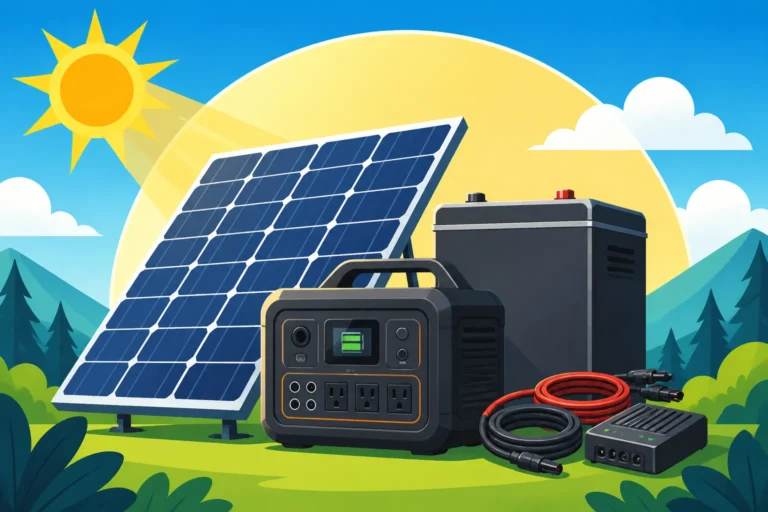
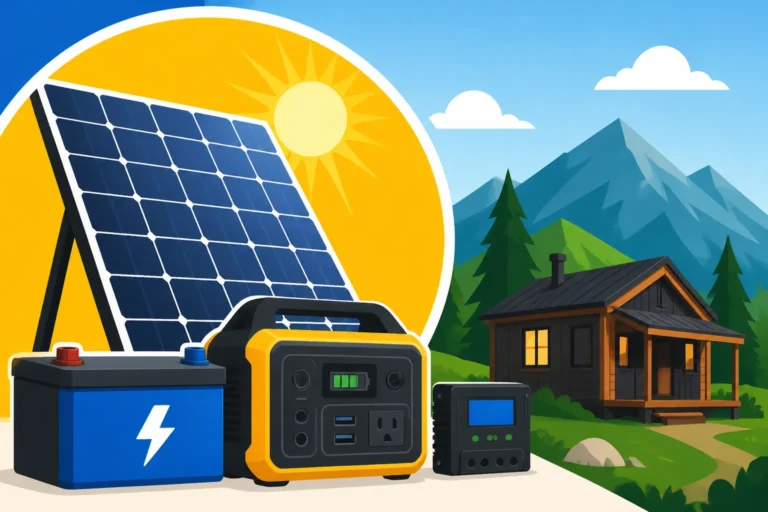
- DIY Kits: These pre-packaged systems come with most, if not all, the necessary components (panels, charge controller, inverter, batteries, some wiring) designed to work together. They are fantastic for beginners, offering convenience, compatibility, and often cost savings compared to buying individual parts. Many companies like Renogy, EcoFlow, or even those offering larger bundled systems provide comprehensive kits tailored for various needs. For instance, a small "power station" like a Jackery Explorer might serve as a temporary or very light-duty off-grid solution, easily moved around and charged by a portable panel. However, for a permanent garage setup, you'll likely want a more robust, permanently installed kit. Check out Best Off-Grid Solar Kits for Beginners if this sounds like your preferred route.
- Component Sourcing: This involves buying each part (panels, batteries, inverter, etc.) separately from different manufacturers. This approach offers maximum flexibility, allowing you to choose the absolute best components for each part of your system, potentially saving money if you're a savvy shopper, and tailoring it precisely to your unique needs. However, it requires a deeper understanding of electrical compatibility and system design. You'll need to ensure all components are properly matched (e.g., panel voltage within the charge controller's range, inverter size matching battery bank voltage). If you have the technical know-how or are working with an experienced professional, sourcing components can result in a highly optimized and powerful system.
Considering Expandability and Maintenance
When investing in an off-grid solar system for your garage, think about its potential for growth. Can you easily add more solar panels later if your power needs increase? Is your charge controller large enough to handle additional panel wattage? Is your inverter appropriately sized to accept more battery capacity or higher peak loads? Choosing components that allow for modular expansion can save you from having to replace entire parts of your system down the line. For example, if you start with a 24V system, ensure your inverter can be upgraded or paired with another to scale up.
Maintenance is another practical consideration. LiFePO4 batteries are largely maintenance-free compared to flooded lead-acid batteries, which require regular water checks. Solar panels generally need occasional cleaning to maintain efficiency. Having a clear Off-Grid Solar Maintenance Guide in mind, or even scheduling professional checks, can ensure your garage remains powered reliably for years to come. Thinking ahead about these practicalities will help you choose a system that not only meets your current demands but also serves you well into the future, making your off-grid garage a true asset to your property.
Disclaimer
The information provided in this guide is for general informational purposes only and does not constitute professional electrical or solar engineering advice. Off-grid solar system design and installation can be complex and potentially dangerous. Always consult with a qualified electrician or solar professional to ensure your system is safely and correctly designed, installed, and compliant with all local codes and regulations.