Cost of an Off-Grid Solar Inverter
Navigating the world of off-grid solar can feel a bit like learning a new language, especially when it comes to understanding the true cost of each component. Many folks get hung up on the initial sticker price of solar panels or batteries, only to realize later that a crucial piece of equipment – the inverter – also comes with a significant and often misunderstood price tag. This guide is here to demystify the cost of off-grid solar inverters, breaking down what influences their price and helping you budget effectively for this essential part of your independent power system.
Understanding What an Off-Grid Solar Inverter Does
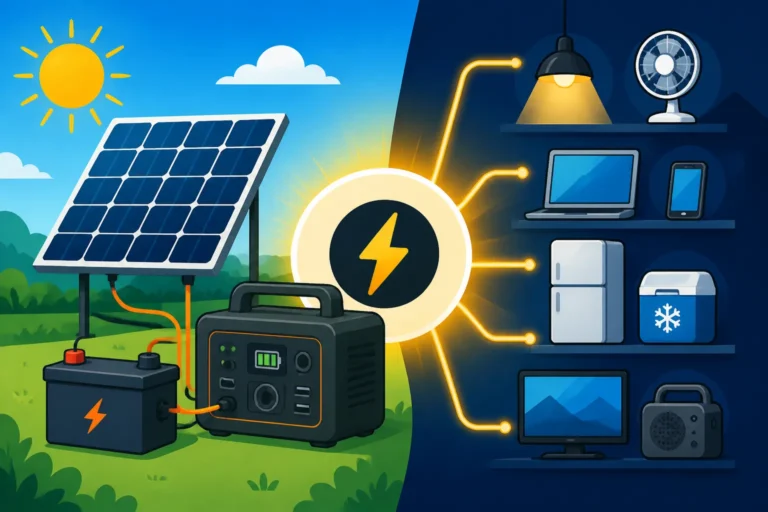
Think of your off-grid solar inverter as the interpreter in your power system. Without it, your carefully collected sunshine wouldn't be able to power much more than a few specialized DC appliances. It’s the unsung hero that takes the raw power from your batteries and transforms it into the usable electricity we all rely on for our everyday devices.
The Heart of Your Off-Grid System
At its core, an off-grid solar inverter performs a critical function: it converts the direct current (DC) electricity stored in your battery bank into alternating current (AC) electricity. Why is this important? Because almost every appliance and electronic device you use in your home, cabin, or RV – from your refrigerator and microwave to your laptop charger and lights – runs on AC power. Without an inverter, your off-grid dreams would be severely limited, forcing you to find specialized DC versions of everything, which are often harder to find and more expensive.
This conversion process isn't just about making power usable; it’s about making your off-grid lifestyle feel as close to grid-tied living as possible. Whether you’re powering a remote cabin in the mountains, a tiny home nestled in the woods, or a mobile RV exploring the open road, a reliable inverter is absolutely non-negotiable. It truly is the central nervous system, connecting your power storage to your power consumption, ensuring a smooth flow of electricity throughout your dwelling. Choosing the right one is paramount for both performance and peace of mind.
Key Types of Inverters and Their Basic Functions
When you start looking into inverters, you'll quickly encounter a few key distinctions that impact both performance and cost. Understanding these differences is crucial for selecting the right one for your specific needs. The primary categories involve the waveform quality, which dictates how cleanly your power is delivered, and the overall design, which can offer integrated functionalities.
First up, there's the pure sine wave inverter. This is the gold standard for off-grid living, producing AC power that's virtually identical to what you get from the utility grid. This clean, consistent waveform is essential for sensitive electronics like computers, medical equipment (such as CPAP machines), modern refrigerators, and most power tools. Using a pure sine wave inverter ensures these devices run efficiently, last longer, and avoid potential damage or buzzing noises. As you might expect, this superior power quality comes with a higher price tag, but for many off-gridders, it's an investment well worth making for the protection and smooth operation of their valuable electronics.
Then, you have the modified sine wave inverter. These are generally more affordable but produce a "choppier" waveform, a stepped approximation of a pure sine wave. While they can power simpler devices like resistive loads (think incandescent light bulbs or older toaster ovens), they are not suitable for sensitive electronics. Using a modified sine wave inverter with modern appliances can lead to inefficient operation, overheating, buzzing, and even premature failure of the device. For basic, low-cost applications where sensitive electronics aren't a concern, they might be an option, but for reliable off-grid living, most people opt for pure sine wave.
Beyond waveform, you'll also encounter inverter-chargers, which are all-in-one units that combine the inverter function with a battery charger and often a transfer switch. These devices are incredibly popular in off-grid setups because they streamline the system, reduce wiring complexity, and offer sophisticated power management features. For instance, they can intelligently switch between solar, battery, and generator power, or even charge your batteries from a generator when solar production is low. Brands like Victron Energy or Sol-Ark are well-known for their robust inverter-charger offerings. While the initial cost of an inverter-charger might be higher than a standalone inverter, the integrated functionality and ease of installation often make them a very cost-effective and convenient choice in the long run.
Factors Influencing Off-Grid Solar Inverter Costs
The price of an off-grid solar inverter isn't a simple flat rate; it's a dynamic figure influenced by several key characteristics. Understanding these factors will empower you to make an informed decision, ensuring you get the right inverter without overspending or under-specifying for your particular off-grid lifestyle. It's about finding that sweet spot between capability and budget.
Power Output and Surge Capacity
One of the most significant drivers of an inverter's cost is its power output, measured in watts (W) or kilowatts (kW). This refers to the amount of continuous AC power the inverter can supply at any given time. A small inverter designed for an RV or a basic cabin might offer 500W to 1,000W of continuous power, suitable for running a few lights, charging devices, and maybe a small fridge. As you scale up to a larger cabin or a full-sized off-grid home, you'll need an inverter with a much higher continuous output, potentially 3,000W, 5,000W, or even 8,000W or more, to handle multiple appliances running simultaneously. The higher the continuous wattage, the more complex and robust the internal components need to be, directly increasing the manufacturing cost and, consequently, the retail price.
Equally important, and often overlooked, is the inverter's surge capacity. Many appliances, especially those with motors like refrigerators, well pumps, or power tools, draw a significantly higher amount of power for a brief moment when they first start up. This initial spike is called a surge. A good off-grid inverter must be able to handle this surge without tripping or shutting down. For example, a refrigerator might run at 150W continuously but require 800W-1000W for a split second to kick on its compressor. An inverter's surge capacity is typically rated for a short duration (e.g., 2x its continuous rating for 10-20 seconds). If your inverter can't handle these surges, your appliances simply won't start. This is why careful load analysis, as discussed in guides like How to Size an Off-Grid Inverter and Off-Grid Solar System Sizing Guide, is critical. Inverters with higher and longer-duration surge capacities are naturally more expensive because they require more robust components capable of handling intense, momentary power demands.
Waveform and Efficiency
The quality of the AC power an inverter produces, known as its waveform, is another crucial cost factor. As we touched on earlier, pure sine wave inverters generate electricity that mirrors the smooth, consistent sine wave produced by the utility grid. This clean power is absolutely essential for modern, sensitive electronics. Think about your laptop, smart TV, microwave, or medical devices – they all expect a pure sine wave. If they receive a choppy, modified sine wave, they can run inefficiently, overheat, make buzzing noises, or even suffer permanent damage over time. Because pure sine wave inverters require more sophisticated circuitry to achieve this smooth output, they are inherently more expensive than their modified sine wave counterparts. However, for most people building a functional off-grid home or cabin, the added cost is a necessary investment to protect their electronics and ensure reliable operation.
Beyond the waveform, an inverter's efficiency plays a significant role in its overall value and, to some extent, its cost. Efficiency refers to how much of the DC power from your batteries is successfully converted into usable AC power, with the remainder lost as heat during the conversion process. For example, an inverter that is 90% efficient means 10% of your precious battery power is wasted. While a few percentage points might not seem like much, over days, weeks, and years, those wasted watts add up, leading to faster battery depletion and potentially requiring a larger battery bank or solar array to compensate. High-quality, high-efficiency inverters use more advanced components and design techniques to minimize these losses, which can translate to a slightly higher upfront cost. However, the long-term savings in battery life and reduced power generation needs often justify this initial investment. It’s an aspect of How Inverter Choice Affects Off-Grid Cost that many people overlook until they're actually living off-grid.
Feature Set and Advanced Capabilities
Just like cars, not all inverters are created equal when it comes to features. The more bells and whistles an inverter boasts, the higher its price tag typically climbs. Basic, entry-level inverters might offer simple DC-to-AC conversion and essential safety protections. But step up to mid-range or premium models, and you’ll discover a whole host of advanced capabilities that significantly enhance system performance, monitoring, and flexibility.
One of the most common advanced features is a built-in solar charge controller. Many modern off-grid inverters, especially inverter-chargers, integrate an MPPT (Maximum Power Point Tracking) charge controller directly into the unit. This not only simplifies wiring and reduces the number of separate components you need to buy and install, but it also optimizes the power harvest from your solar panels, leading to more efficient battery charging. Another incredibly useful feature is an integrated automatic transfer switch (ATS). This allows the inverter to seamlessly switch between different power sources – say, from your batteries to a backup generator – without you having to manually flip switches. For example, if your batteries get low, the ATS can automatically start your generator and pass through power, ensuring uninterrupted electricity to your home.
Other advanced features that can drive up costs include remote monitoring capabilities (often via Bluetooth or Wi-Fi, allowing you to check system status from your phone or computer), parallel stacking for expandability (the ability to connect multiple inverters together to increase overall power output), and programmability that allows for fine-tuning charging parameters, load shedding, and generator start/stop conditions. Brands like Victron, Sol-Ark, and Outback Power are renowned for their highly featured, robust inverters that offer these advanced capabilities. While a 1000W basic pure sine wave inverter might cost a few hundred dollars, a 5000W inverter-charger with an integrated MPPT controller, transfer switch, and remote monitoring from a top-tier brand could easily run into several thousand dollars. The added functionality and convenience can be invaluable for a complex off-grid setup, justifying the higher investment for many users.
Brand Reputation and Warranty
When it comes to the cost of an off-grid solar inverter, the brand name and the warranty it carries can significantly influence the price. You'll find a wide spectrum of manufacturers in the market, ranging from established, premium brands to newer, more budget-friendly options. There's a reason why some brands command higher prices, and it often comes down to their reputation for quality, reliability, and customer support.
Premium brands like Victron Energy, Sol-Ark, and Outback Power have built strong reputations over years, if not decades, for producing exceptionally robust, durable, and highly efficient inverters. Their products are often designed for continuous, heavy-duty use in demanding off-grid environments, and they typically feature advanced power electronics, superior surge capabilities, and comprehensive monitoring and control systems. When you invest in an inverter from one of these brands, you’re not just paying for the hardware; you're also paying for extensive research and development, rigorous testing, and a proven track record of performance. Their customer service and technical support are generally excellent, which can be invaluable when you're troubleshooting an issue far from the nearest electrical grid.
On the other end of the spectrum, you’ll find numerous budget-friendly brands, many of which can be found on online marketplaces like Amazon. While some of these can offer good value for simpler, less demanding applications (perhaps for a small shed or occasional RV use), they may not always match the longevity, efficiency, or advanced features of their premium counterparts. The build quality might be less robust, surge capacity ratings could be optimistic, and customer support can be hit-or-miss. For example, a small Jackery power station has a built-in inverter for portable use, but a dedicated whole-home inverter from a major brand is a different league entirely.
The warranty provided by the manufacturer is another critical component of the cost-value equation. High-end inverters often come with warranties ranging from 5 to 10 years, reflecting the manufacturer's confidence in their product's durability. A longer warranty provides significant peace of mind, knowing that if a major component fails prematurely, you're covered. Cheaper inverters might offer much shorter warranties, sometimes as little as one year. While a lower initial price might be tempting, the risk of having to replace a crucial component like an inverter every few years can quickly outweigh any upfront savings, turning a "bargain" into a long-term expense. This is a key consideration when assessing the Lifetime Cost of an Off-Grid Solar System.
Typical Price Ranges for Off-Grid Solar Inverters
Let's talk numbers, because that's often where the rubber meets the road when planning your off-grid system. The price of an off-grid solar inverter can vary dramatically, from a couple of hundred dollars to well over five figures, depending entirely on its size, features, and capabilities. It’s important to align your expectations with your actual power needs to avoid sticker shock or, worse, buying an inverter that's insufficient for your lifestyle.
Small Scale Inverters (RVs, Vans, Small Cabins)
For those dabbling in off-grid power for smaller applications like recreational vehicles, camper vans, or very modest hunting cabins, the inverter costs are generally at the lower end of the spectrum. These setups typically don't require immense power output, focusing instead on powering essential creature comforts and charging portable electronics.
You'll usually be looking at inverters with continuous power ratings ranging from 500 watts to about 2,000 watts. These smaller units are perfectly adequate for running a mini-fridge, charging laptops and phones, powering LED lights, and maybe a small microwave for short bursts. Many of these simpler pure sine wave inverters, often in the 1000W-1500W range, can be found for between $150 and $500. You might even pick up a decent 2000W pure sine wave inverter for around $600 to $800 from reputable brands often listed on marketplaces like Amazon, or through specialized RV and marine suppliers. For instance, brands like Renogy or Giandel offer reliable options in this power tier.
If you're outfitting a weekend warrior RV or a basic off-grid shed, a 1000W or 1500W unit might be just what you need. They're compact, relatively easy to install, and won't break the bank. However, remember to factor in potential surge demands; even a small blender can have a significant starting wattage. If you plan to run an air conditioner, even a small one, you'll definitely need to push towards the higher end of this range or even consider stepping up to a mid-range inverter. To get a better sense of how this fits into your overall budget, you might want to read our article on the Off-Grid Solar Cost for an RV or Off-Grid Solar Cost for a Cabin.
Mid-Range Inverters (Tiny Homes, Larger Cabins)
When you step up to powering a tiny home, a larger cabin, or perhaps a small remote workshop, your power demands typically increase significantly. This is where mid-range inverters, offering a more robust output and often integrated features, become the sweet spot. These systems are designed for more sustained use and the ability to run multiple standard household appliances.
In this category, you're generally looking at inverters with continuous power ratings between 2,000 watts and 5,000 watts. This capacity allows you to comfortably run a standard-sized refrigerator, a washing machine (though perhaps not simultaneously with other high-draw items), power tools, and all your typical electronics and lighting. This is also where you start seeing the real benefits of inverter-chargers, which combine the inverter, charge controller, and often an automatic transfer switch into a single, efficient unit. These integrated systems simplify installation and offer advanced power management.
The cost for mid-range inverters can range from $800 for a standalone 2000W-3000W pure sine wave inverter up to $2,500 or even $4,000 for a 4000W-5000W inverter-charger from a reputable brand. For example, a 3000W inverter-charger from a brand like Growatt or MPP Solar might fall into the lower end of this range, while a highly regarded 5000W unit from Victron MultiPlus or Schneider Electric could easily be at the higher end. These brands are known for their reliability and advanced features, which contribute to the higher price point. If you're building out a full-time tiny home or a substantial recreational property, investing in this tier of inverter ensures you have enough headroom for most common appliances and a more comfortable living experience. For specific considerations related to this size, check out our guide on Off-Grid Solar Cost for a Tiny Home.
Whole Home and Large System Inverters
For those aiming for full-scale off-grid living in a conventional-sized home or a large homestead, the inverter requirements become substantial. These systems are designed to mimic grid-tied electrical service, providing ample power for all standard household appliances, including potentially high-demand items like well pumps, air conditioning units, or electric water heaters.
Here, you're venturing into the realm of 5,000 watts and above, with many systems utilizing 8,000W, 10,000W, or even 15,000W inverter-chargers. These powerful units are capable of handling multiple large loads simultaneously and often feature robust surge capabilities, critical for appliances with high starting currents. They also typically come with the most advanced control and monitoring features, allowing for sophisticated system management and optimization.
The cost for these high-capacity, feature-rich inverters can be significant, ranging from $4,000 to $10,000 or even $15,000+. Brands like Sol-Ark, Victron Quattro, and Magnum Energy are among the leaders in this segment, offering highly durable and intelligent inverter-chargers built for continuous, heavy-duty operation. These units are often capable of parallel stacking, meaning you can add more units in the future to increase your overall power output, a critical consideration for those planning for future expansion as discussed in Cost of Expanding an Off-Grid System. The higher price reflects not only the sheer power output but also the advanced technology, superior build quality, extensive safety features, and often, remote monitoring and management capabilities that are standard in these high-end devices. When planning for a complete off-grid home, the inverter often represents one of the largest single component costs, but it’s an investment that underpins your entire electrical independence. You can dive deeper into these costs in our article on the Off-Grid Solar Cost for a Whole House.
Inverter-Chargers and Hybrid Systems: The All-in-One Advantage
As you explore off-grid power, you'll inevitably come across "inverter-chargers" or hear about "hybrid systems." These aren't just fancy terms; they represent a significant step up in convenience, efficiency, and system integration for many off-grid applications. They offer a compelling solution that often streamlines an otherwise complex setup.
Consolidating Components for Cost and Simplicity
One of the most appealing aspects of inverter-chargers is their ability to consolidate multiple essential components into a single, cohesive unit. Traditionally, an off-grid system would require a standalone inverter (to convert DC to AC), a separate solar charge controller (to manage charging your batteries from solar panels), and often an external transfer switch (to switch between different power sources like a generator or shore power). Wiring all these individual components correctly, ensuring they communicate, and finding space for them can be a daunting task, especially for DIY enthusiasts.
An inverter-charger, however, cleverly combines these functions. It acts as the inverter, the charge controller, and typically includes an automatic transfer switch. This consolidation immediately offers several tangible benefits. First, it significantly reduces wiring complexity. Instead of running separate cables between multiple devices, you have fewer connection points, decreasing potential failure points and making the installation process much cleaner and often safer. Second, it's a huge space saver. For those living in smaller spaces like RVs, vans, or tiny homes, every square inch counts. A single, integrated unit takes up less physical room than three separate boxes. Third, and perhaps most importantly, these units usually feature intelligent power management. They can prioritize power sources, deciding whether to draw from solar, battery, or a connected generator, and can even automatically start and stop a generator based on battery state of charge or load demand. This level of automation provides incredible peace of mind and often leads to more efficient energy use overall. When you consider the full spectrum of Off-Grid Solar Equipment Explained, the inverter-charger stands out for its comprehensive utility.
Price Premium and Long-Term Value
It's true that the initial purchase price of a high-quality inverter-charger often appears higher than buying a basic standalone inverter. For example, a 3000W pure sine wave inverter might cost $700-$1000, while a 3000W inverter-charger with an integrated MPPT controller and transfer switch from a brand like Victron MultiPlus or Outback Power could easily be in the $2,000-$4,000 range. This initial price premium might give some off-gridders pause, but it's crucial to look beyond the sticker price and consider the long-term value and overall system cost.
When you factor in the cost of buying a separate, high-quality MPPT charge controller (which can easily be $300-$800 on its own), a robust automatic transfer switch (another $100-$300), and all the extra wiring, fuses, and enclosures needed to connect them, the perceived price gap often shrinks considerably. Moreover, the ease of installation with a single unit can lead to significant savings on labor costs if you're hiring a professional, or save you countless hours of research and effort if you're tackling a DIY project. The integrated design also means components are designed to work seamlessly together, often resulting in higher overall system efficiency and fewer compatibility issues down the line.
Beyond the monetary savings, there's the invaluable benefit of enhanced reliability and system monitoring. Inverter-chargers from top-tier brands typically come with sophisticated software and communication ports, allowing for detailed data logging and remote monitoring of your entire power system. You can see your solar production, battery state of charge, load consumption, and even generator run-time, all from a single interface or app. This level of insight empowers you to optimize your energy usage and proactively address any potential issues. Ultimately, while the upfront cost might be higher, the streamlined installation, integrated functionality, superior performance, and long-term reliability offered by inverter-chargers often make them a more cost-effective and valuable investment for serious off-grid setups, easily justifying their premium.
Installation and Hidden Costs Associated with Inverters
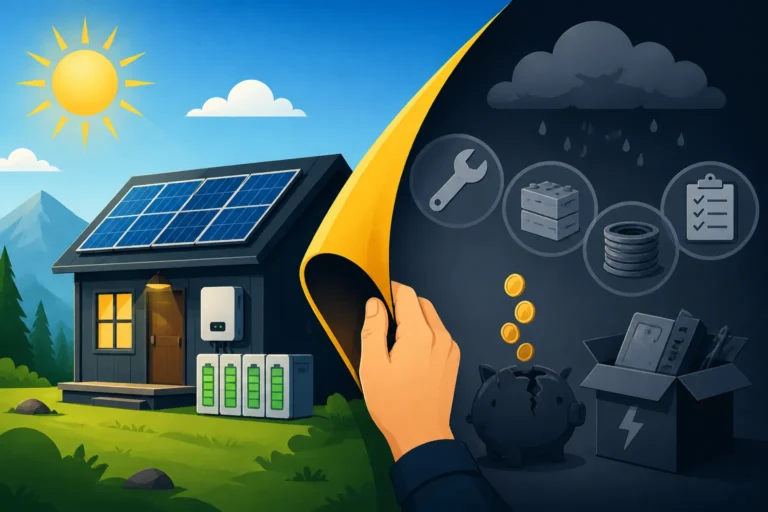
When you're budgeting for your off-grid solar system, it's easy to focus solely on the big-ticket items like panels, batteries, and the inverter itself. However, overlooking the associated costs, especially those related to installation and safety, can quickly derail your budget and even compromise the safety and longevity of your system. An inverter doesn't just plug in; it needs proper infrastructure.
Wiring, Fusing, and Protection
An off-grid solar inverter is a powerful electrical device, and connecting it safely and efficiently requires more than just twisting a few wires together. The costs associated with proper wiring, fusing, and protection are absolutely non-negotiable for the safety and reliability of your system, and these often add a few hundred to over a thousand dollars to your total budget.
First, you need the correct wire and cable. The large currents flowing between your battery bank and the inverter demand heavy-gauge, high-quality copper cables (often referred to as 2/0, 4/0, or even larger). These are not cheap, especially for longer runs. Using undersized wiring can lead to dangerous overheating, voltage drop (reducing inverter efficiency), and wasted power. The type of insulation and jacket on the wire also matters, particularly for outdoor or marine environments. Our guide on How to Size Wire and Cables delves into the critical calculations for these components.
Next, fusing and breakers are paramount for protecting your system from overcurrents and short circuits. This includes appropriate DC-rated fuses or circuit breakers on the battery side of the inverter, and AC circuit breakers on the output side, feeding your electrical panel. These protective devices need to be correctly sized for your inverter's output and your system's voltage, and cheaping out here is a huge safety risk. You'll also need disconnect switches, like a visible-break DC disconnect between your batteries and inverter, allowing you to safely shut down the system for maintenance or emergencies. These components, while small, add up. A high-quality DC breaker can cost anywhere from $50 to $200+, and you'll typically need several throughout the system.
Finally, proper grounding and bonding are essential for electrical safety, protecting both your equipment and anyone interacting with the system from electrical shock. This involves connecting the inverter's chassis, the solar panel frames, and other metallic components to a common ground point. While the materials themselves (grounding rods, bare copper wire) might not be extremely expensive, ensuring proper grounding practices often requires a solid understanding of electrical codes and safety standards, which can be found in our article on Off-Grid Solar Safety and Grounding. Ignoring these critical components is not only dangerous but can also invalidate warranties and prevent your system from passing any local electrical inspections, even for off-grid properties in some jurisdictions.
Professional Installation Versus DIY Savings
The decision to install your off-grid solar inverter yourself or hire a professional electrician has significant cost implications. Many off-gridders are enthusiastic about DIY, and for smaller, simpler systems, it can indeed lead to substantial savings. However, for larger, more complex installations, particularly those involving high-voltage components or integration with an existing home electrical system, professional help might be a necessary and ultimately more cost-effective investment.
If you choose the DIY route, you can save thousands of dollars in labor costs. Installing an inverter in a small RV or a basic cabin, especially if it's a pre-wired kit, can be a rewarding and manageable project for someone with a good understanding of basic electrical principles and a commitment to safety. Resources like online forums, manufacturer manuals, and in-depth guides like DIY Off-Grid Solar Installation Step by Step can provide invaluable assistance. However, the "savings" come with a significant investment of your time, effort, and the inherent risk of making costly mistakes. Incorrect wiring can damage expensive components, create fire hazards, or result in an inefficient system that doesn't meet your power needs. You'll also need to purchase or rent specialized tools, such as crimpers for large gauge cables, multi-meters, and torque wrenches, which can add to your initial expenses.
Hiring a professional electrician or a solar installer who specializes in off-grid systems will, without a doubt, increase your upfront installation costs. Professional labor can range from $75 to $150 per hour or more, and a complex inverter installation could take many hours. However, the advantages are considerable. Professionals bring expertise, ensure compliance with electrical codes (even if not strictly enforced off-grid, it's still best practice for safety), guarantee proper sizing and wiring, and can help troubleshoot any unexpected issues that arise. They also typically carry insurance, protecting you from potential liabilities if something goes wrong during installation. For larger systems, particularly those integrated into a home's main electrical panel or involving complex inverter-chargers with generator auto-start functions, a professional installation is highly recommended. The peace of mind, safety assurance, and long-term reliability often outweigh the added upfront cost, preventing potentially more expensive repairs or hazards down the line. You can delve into this more with our article on DIY vs Professional Off-Grid Solar Cost.
Future Expansion and Compatibility
When you're investing in an off-grid solar inverter, it's easy to focus on your current power needs. However, overlooking the potential for future expansion can lead to costly replacements and upgrades down the line. Your off-grid lifestyle might evolve; you might add more appliances, expand your living space, or simply realize you need more power than you initially anticipated. Choosing an inverter with an eye toward future growth is a smart financial and practical decision.
For example, if you start with a small cabin that only needs a 2000W inverter for basic lights and charging, but foresee adding a well pump, a larger refrigerator, or even an air conditioner in the next few years, buying a 2000W inverter that cannot be expanded would mean completely replacing it with a larger unit later on. This is a significant cost, as you'd effectively be selling or discarding a perfectly good, albeit undersized, inverter and buying a new one at a higher price point. This is why our article on the Cost of Expanding an Off-Grid System emphasizes planning ahead.
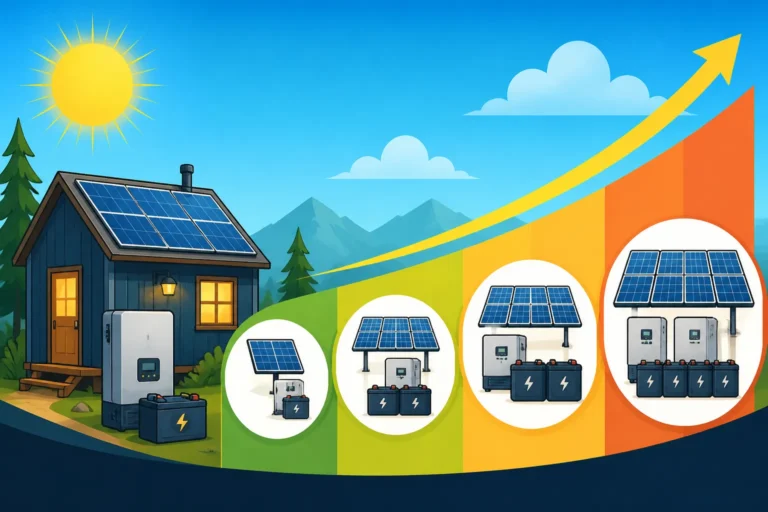
Many higher-quality inverters and inverter-chargers, especially from brands like Victron, Sol-Ark, and Outback, offer parallel stacking capabilities. This means you can purchase one inverter now and, if your power needs grow, simply add a second (or even a third or fourth) identical unit to double or triple your overall continuous power output. While these expandable inverters might have a slightly higher individual cost than a non-expandable model of the same wattage, the ability to scale your system as needed provides immense flexibility and cost savings in the long run. It avoids the complete write-off of your initial inverter investment.
Furthermore, consider system compatibility. As technology advances, you might want to integrate new components, such as a more advanced battery management system (BMS) or a smart home energy monitor. Choosing an inverter from a reputable brand that uses open communication protocols or offers a comprehensive ecosystem of compatible devices will make future integrations much smoother. A proprietary, closed system might limit your options down the road, forcing you into expensive upgrades or leaving you stuck with outdated technology. Thinking about these long-term implications helps you build a resilient and adaptable off-grid power system that truly serves your evolving needs.
Making an Informed Decision for Your Off-Grid Inverter Budget
Choosing the right off-grid solar inverter isn't just about finding the cheapest option; it's about making a strategic investment that aligns with your power needs, budget, and long-term goals for energy independence. With so many variables, it's easy to feel overwhelmed, but a structured approach can help you navigate the choices effectively.
Prioritizing Needs Over Wants
Before you even start looking at inverter prices, the single most critical step is to conduct a thorough load analysis. This means meticulously listing every appliance and device you plan to power, noting their continuous wattage and their surge (starting) wattage. It's not just about what you want to run, but what you need to run consistently and reliably. Many first-time off-gridders overestimate their power needs or underestimate the power draw of certain appliances, leading to either an oversized (and overpriced) system or an undersized system that constantly leaves them in the dark.
Start with the absolute essentials: lights, charging phones/laptops, a refrigerator, and perhaps a well pump or water heater if applicable to your dwelling. Prioritize these, calculate their combined wattage, and then consider any "wants" like a large TV, air conditioning, or a powerful microwave. Understanding your baseline consumption is fundamental, as it directly dictates the minimum continuous wattage and surge capacity your inverter requires. Our guide, How to Calculate Off-Grid Solar Needs, provides a detailed breakdown of this crucial process. Don't fall into the trap of buying an inverter that's "good enough" if you know you'll need more power soon. It’s almost always more cost-effective to buy slightly larger or an expandable unit upfront than to replace it entirely later. By clearly defining your power priorities, you ensure your inverter budget is spent on components that genuinely meet your lifestyle requirements, preventing unnecessary expenses on features or capacity you don't actually need, while also avoiding the frustration of an underpowered system.
Balancing Cost with Reliability and Efficiency
It's tempting to opt for the cheapest inverter you can find, especially when the overall cost of an off-grid system can be significant. However, when it comes to a component as critical as the inverter, going for the absolute lowest price can often be a false economy. The true cost of an inverter isn't just its purchase price; it's also about its reliability, efficiency, and longevity.
A cheap, poorly made inverter might save you a few hundred dollars upfront, but if it fails within a year or two, you're out that money and facing the expense of a new unit, plus the inconvenience of being without power. The adage "buy cheap, buy twice" often rings true in the off-grid world. Unreliable inverters can also damage your valuable appliances if they produce dirty power or fail catastrophically. Investing in a reputable brand with a proven track record, even if it costs a bit more initially, generally leads to greater peace of mind and fewer headaches in the long run. Our article on Best Off-Grid Solar Inverters offers insights into reliable brands and models.
Similarly, don't overlook efficiency. As discussed earlier, an inverter's efficiency rating determines how much precious DC power from your batteries is converted into usable AC power. A lower efficiency inverter means more energy waste, which translates to your batteries draining faster and potentially needing more solar panels or a larger battery bank to compensate. Over the lifespan of your system, these inefficiencies can cost you more in terms of fuel for a generator (if you have one), accelerated battery degradation, or the need for premature upgrades to your solar array or battery bank. Therefore, while a highly efficient inverter might have a slightly higher price, its ability to maximize your power output and extend the life of your other components often makes it a more cost-effective choice in the long term. Balancing that initial cost with the long-term benefits of reliability and efficiency is a cornerstone of smart off-grid budgeting.
Where to Find Good Deals and Quality Components
Finding the right off-grid solar inverter at a reasonable price requires a bit of savvy shopping. While it's important not to compromise on quality, there are definitely ways to stretch your budget and find good deals without resorting to unreliable, no-name brands.
For smaller, more basic inverters (think 500W-2000W pure sine wave units), online retailers like Amazon can be a great starting point. You'll find a wide selection from various brands, often with user reviews that can help you gauge performance and reliability. Brands like Giandel, Renogy, and even some smaller Jackery units (which are essentially power stations with integrated inverters) are commonly available here. However, be sure to read reviews carefully and verify the seller's reputation. For more serious off-grid setups, specialized solar equipment suppliers are your best bet. Companies like Northern Arizona Wind & Sun, Wholesale Solar, Renogy, or EcoFlow often carry a broader range of high-quality inverters, including the robust inverter-chargers from premium brands like Victron, Sol-Ark, and Outback. These suppliers typically have knowledgeable staff who can offer technical support and ensure you're getting compatible components.
Another strategy is to look for off-grid solar kits. Many manufacturers and retailers bundle inverters with solar panels, charge controllers, and sometimes even batteries, often at a slightly reduced price compared to buying components individually. These kits can be an excellent option for beginners, as all components are typically pre-matched for compatibility. Just ensure the inverter in the kit meets your specific power and surge requirements. Finally, don't shy away from seasonal sales or clearance events from reputable dealers. Subscribe to newsletters from solar suppliers, as they often announce discounts. You might also consider refurbished equipment from certified dealers, which can offer significant savings with the assurance of a warranty. However, always be cautious with used equipment from unknown sources, as the lifespan and performance might be compromised.
Inverter Cost Comparison Table
To help you visualize the cost ranges and features, here's a general comparison table for different types of off-grid solar inverters. Keep in mind that prices are estimates and can fluctuate based on brand, specific features, and market conditions.
| Inverter Type / Capacity | Typical Continuous Wattage Range | Estimated Price Range (USD) | Key Features / Pros | Cons | Best For |
|---|---|---|---|---|---|
| Small Pure Sine Wave | 500W – 1500W | $150 – $600 | Affordable, compact, essential for sensitive electronics, widely available. | Limited power output, minimal surge capacity, few advanced features. | RVs, vans, small cabins, emergency backup for basic electronics. |
| Mid-Range Pure Sine Wave | 2000W – 3000W | $600 – $1,500 | Good balance of power and cost, handles more appliances, some better surge capacity. | Still standalone, no integrated charge controller or transfer switch. | Larger RVs, medium cabins, small tiny homes, workshops with light tool use. |
| Mid-Range Inverter-Charger | 2000W – 4000W | $1,500 – $3,500 | Integrated MPPT charge controller, auto transfer switch, system intelligence, streamlined wiring. | Higher upfront cost, can be complex to set up for beginners. | Full-time RVs, medium to large cabins, tiny homes, small residential off-grid. |
| High-Capacity Inverter-Charger | 5000W – 8000W | $3,500 – $8,000 | Robust, powerful, excellent surge, advanced monitoring, parallel stacking, superior reliability. | Significant upfront investment, professional installation often recommended. | Off-grid homes, large homesteads, heavy appliance use, high demand. |
| Very High-Capacity & Modular | 10kW+ (single or stacked) | $8,000 – $15,000+ | Ultimate power and reliability, full home power, expandable, top-tier performance, extensive features. | Very high cost, most complex to design and install, specialized knowledge required. | Large custom off-grid homes, commercial applications, maximum independence. |
Disclaimer
The information provided in this guide is for general informational purposes only and does not constitute professional advice. Off-grid solar system design and installation can be complex and involve significant electrical risks. Always consult with a qualified solar professional or licensed electrician when planning, purchasing, or installing any off-grid electrical components, especially inverters and battery banks. Prices mentioned are estimates and subject to change based on market conditions, specific brands, and features.