What a 100W Off-Grid System Can Power and Cost
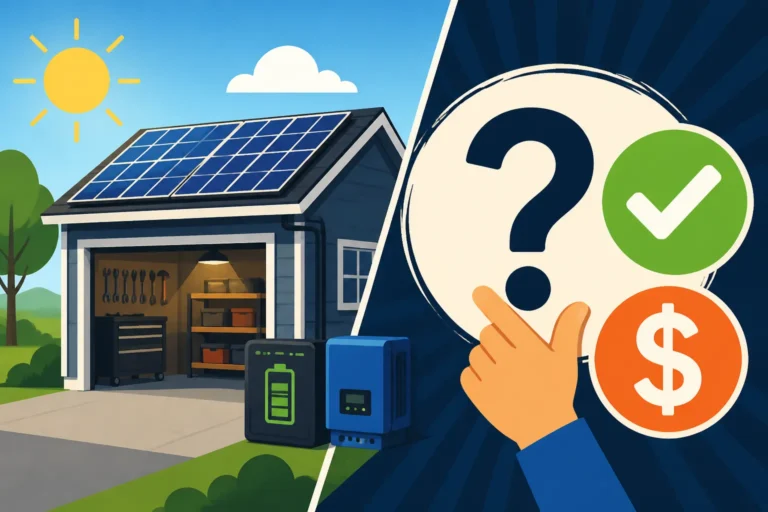
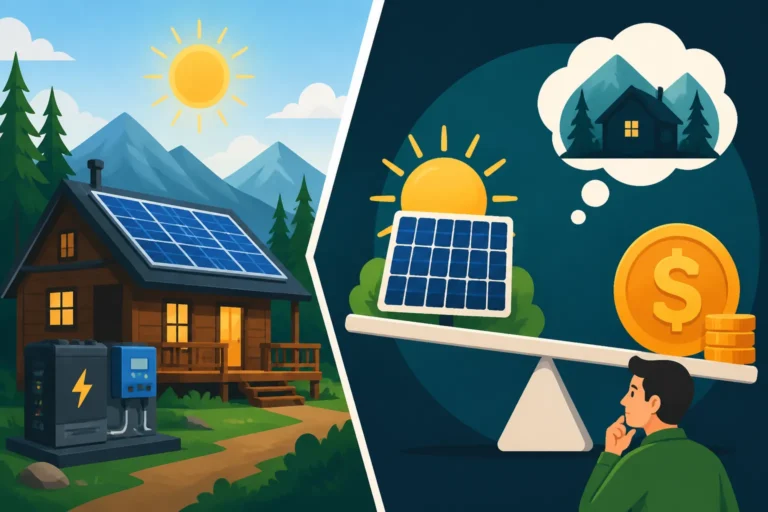
It can be incredibly tempting to dip your toes into the world of off-grid solar with a smaller, more manageable system, and a 100-watt setup often looks like a great starting point. However, many folks get overwhelmed trying to figure out if 100 watts is actually enough for their needs, or what it will even cost. This comprehensive guide is here to clear up the confusion, helping you understand exactly what a 100W off-grid solar system can realistically power and how much you can expect to invest in it.
Understanding the Capabilities of a 100W Off-Grid Solar System
When you first hear "100 watts of solar," it sounds like a decent chunk of power, right? But the reality of off-grid living is that numbers on paper don't always translate directly to what you can run in your daily life. It's crucial to understand the difference between instantaneous power (watts) and stored energy (watt-hours or amp-hours) to set realistic expectations for a system of this size.
What 100 Watts Really Means and Doesn't Mean
A 100-watt solar panel means that, under ideal conditions (perfect angle to the sun, no clouds, specific temperature, etc.), it can produce 100 watts of power at any given moment. Think of it like the horsepower of a car; it tells you how much oomph it has, not how far it can go on a tank of gas. What we're really interested in for off-grid living is the total energy produced over time, usually measured in watt-hours (Wh) per day.
For a 100W panel, realistically, you're looking at generating somewhere between 300 and 500 watt-hours on a good, sunny day with 3-5 "peak sun hours" – that's when the sun's intensity is equivalent to 1000 watts per square meter. In places like Arizona, you might get closer to that 500 Wh mark, but if you're in a cloudier region like the Pacific Northwest, especially in winter, that daily yield could drop significantly. This is why when you're looking at starting an off-grid setup, understanding your location's solar insolation is just as important as the panel's rating.
Practical Applications: What Can It Power?
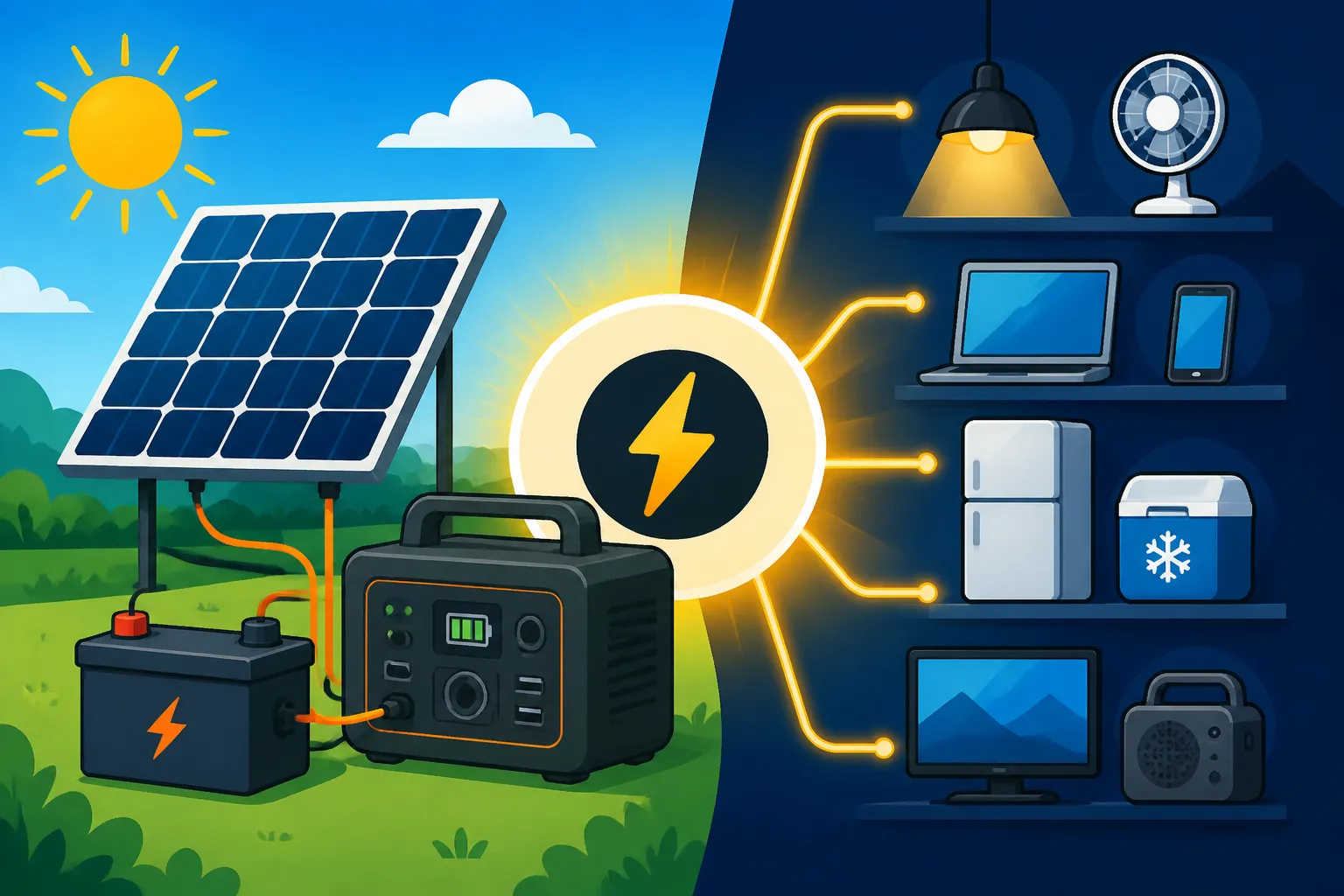
So, with 300-500 Wh per day, what kind of devices can a 100W system realistically handle? It's important to think small and efficient. This size of a system is fantastic for charging personal electronics and running very low-power DC appliances. It's often the go-to for remote charging stations or adding a touch of convenience to a basic setup.
Imagine you're out camping or have a small shed that needs a bit of light. A 100W system can easily keep your phone, tablet, and even a laptop charged. A typical smartphone might draw about 5-10W when charging, so you could charge it many times over. A laptop might draw 40-60W, so you could get a few hours of charging per day, depending on your system's battery capacity. Beyond personal electronics, you could run a few LED lights for several hours each evening (a 5W LED bulb would run for 60-100 hours from 300-500Wh!), or maybe a small DC fan for a bit.
Many people also use a 100W system for a trickle charge on a larger battery bank that might be used for occasional loads, or as a dedicated power source for a security camera or gate opener at a remote property. For those exploring their needs, our guide on "How Much Solar to Run Lights And Electronics" can provide further insights into specific device consumption.
Limitations and Realistic Expectations
Let's be very clear: a 100W off-grid solar system is not going to power your refrigerator, run an air conditioner, or even handle a microwave. These appliances have significant power draws (hundreds to thousands of watts) and require a much larger solar array and battery bank. Trying to run a coffee maker, for instance, which might pull 1000-1500W for a few minutes, would instantly drain a small battery or trip a small inverter connected to a 100W system.
Weather is another huge factor. On cloudy days, your 100W panel might only produce 10-20% of its rated power, severely limiting your energy harvest. In winter, with shorter daylight hours and lower sun angles, your daily output will naturally decrease. This means you need to be very mindful of your consumption, especially if you want to maintain a consistent power supply without a backup generator. It's truly a system for minimalists or specific, low-power applications.
Components of a Basic 100W Off-Grid Solar Setup
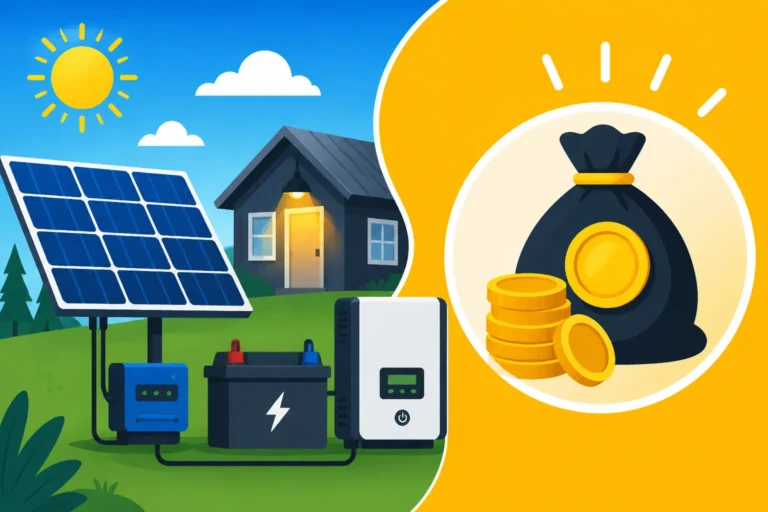
Even for a small 100W system, you'll need a few key pieces of equipment to make it function as a reliable off-grid power source. These aren't just accessories; they're vital for converting sunlight into usable electricity and safely storing it. Understanding each component helps you appreciate the full scope of your investment.
The Solar Panel Itself
The solar panel is, naturally, the star of the show. A 100W panel is usually quite compact, often measuring around 40-48 inches long by 20-22 inches wide. Most 100W panels today are monocrystalline, which are known for their higher efficiency compared to older polycrystalline panels. This means they convert more sunlight into electricity from a smaller surface area, which is great for small setups where space might be limited.
You'll find these panels readily available from various manufacturers. Brands like Renogy and Rich Solar offer reliable and affordable options for smaller setups, and you can often find them on platforms like Amazon. When considering a panel, think about its physical size and how you'll mount it. Will it be on a roof, a pole, or simply leaning against something for portable use? This impacts the necessary mounting hardware, which is an often-overlooked cost.
Charge Controller: Protecting Your Battery
The charge controller is the unsung hero of any off-grid solar system. Its job is crucial: it regulates the voltage and current coming from your solar panel to prevent overcharging your battery. Overcharging can severely damage or shorten the lifespan of your battery, making the charge controller an indispensable safety and longevity component.
For a 100W system, you'll typically find two types of charge controllers: PWM (Pulse Width Modulation) and MPPT (Maximum Power Point Tracking). PWM controllers are simpler and more affordable, perfectly adequate for smaller systems like a 100W setup. They essentially act like a switch, slowly tapering off the charge as the battery fills up. MPPT controllers are more efficient, especially in varied weather conditions, as they can track the optimal power voltage of the panel. While an MPPT might seem overkill for just 100W, if you're in a cold climate or plan to expand later, it could be a worthwhile investment. Learn more about their purpose in our article, "Cost of a Charge Controller."
The Battery Bank: Storing Your Sunshine
The battery bank is where all that hard-earned solar energy gets stored for when you need it – especially after the sun goes down or on cloudy days. Without a battery, your 100W system would only provide power when the sun is actively shining directly on the panels, making it far less useful for true off-grid living. For a 100W system, you're usually looking at a smaller battery capacity, typically ranging from 50 to 100 amp-hours (Ah) at 12 volts, which translates to 600-1200 watt-hours.
Lead-acid batteries (like AGM or Gel) have traditionally been popular for their lower upfront cost, but lithium iron phosphate (LiFePO4) batteries are rapidly gaining traction, even for smaller systems. LiFePO4 batteries are lighter, last much longer (thousands of cycles vs. hundreds), and can be discharged deeper without damage. For a comprehensive comparison, check out "LiFePO4 vs Lead-Acid Battery Cost." While a LiFePO4 battery might cost more initially, its superior lifespan often makes it more economical in the long run. Our guide on the "Cost of an Off-Grid Solar Battery Bank" goes into more detail.
Inverter: AC Power When You Need It
Most of our modern devices run on AC (Alternating Current) power – think wall outlets. Solar panels and batteries, however, produce and store DC (Direct Current) power. An inverter's job is to convert that DC power from your battery into usable AC power. For a small 100W system, you might not even need a large inverter if all your devices are 12V DC, but if you want to plug in a laptop charger or a small fan, an inverter becomes necessary.
For a 100W system powering small electronics, a pure sine wave inverter is generally recommended, even if it's a smaller one (150-300 watts). Pure sine wave inverters produce clean power that's safe for sensitive electronics like laptops and medical devices. Modified sine wave inverters are cheaper but can cause humming or damage to certain electronics. Given the small scale, the cost difference isn't usually prohibitive, making the pure sine wave option a smarter choice for protecting your gadgets. You can learn more about inverter costs in our article "Cost of an Off-Grid Solar Inverter."
The Real Cost of a 100W Off-Grid Solar System
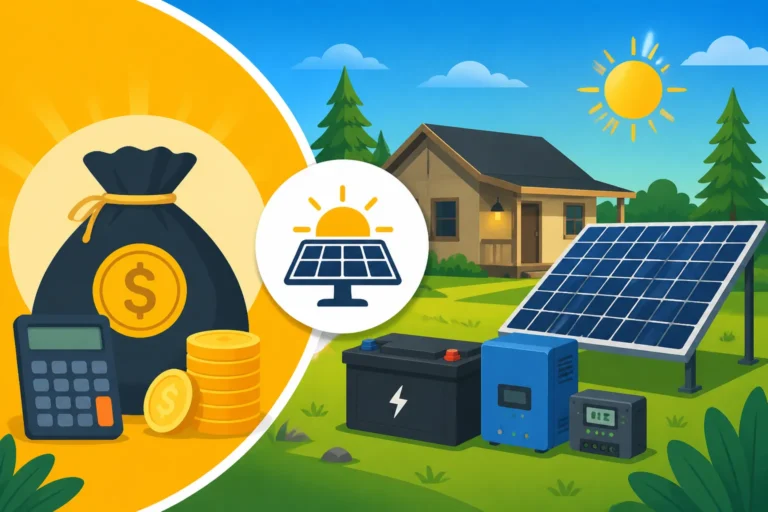
Now, let's talk numbers. The "cost" of a 100W system isn't just the panel; it's the sum of all those critical components we just discussed, plus some often-overlooked incidentals. Prices can fluctuate based on brands, sales, and the quality you choose, but we can give you a realistic range.
Breaking Down Component Costs
Here’s a general breakdown of what you might expect to pay for the individual parts of a basic 100W off-grid system. Remember, these are estimates, and shopping around can make a big difference. Many of these components can be found on Amazon or from specialized solar retailers.
- 100W Solar Panel: You can find these for as low as $80-$150. Brands like Renogy or HQST are popular for their affordability and availability.
- Charge Controller: A basic PWM charge controller suitable for a 100W panel might run you $20-$50. If you opt for a small MPPT controller for better efficiency or futureproofing, expect to pay $70-$150.
- Battery Bank: This is often the most expensive single component. A 50-100Ah deep cycle AGM battery could cost $100-$250. A comparable LiFePO4 battery will be significantly more, perhaps $250-$500, but offers better performance and lifespan. For a complete overview of what drives costs, our "Off-Grid Solar Cost: Complete Breakdown" is a must-read.
- Inverter: A small (150-300W) pure sine wave inverter will typically cost $50-$100. If you really only have DC loads, you might skip this entirely, saving a bit of cash.
- Wiring, Fuses, Connectors: Don't forget these essential bits! Quality wiring (like 10 AWG for panels and thicker for battery connections), MC4 connectors, fuses, and a fuse holder could add another $30-$70.
- Mounting Hardware: Depending on whether you're ground-mounting, roof-mounting, or just using a portable kickstand, this can range from $20 for simple brackets to $100+ for a small, adjustable mount.
Adding all that up, a bare-bones 100W off-grid solar system could start around $300-$500 for a DIY setup with a cheaper AGM battery and PWM controller. If you opt for a better LiFePO4 battery and an MPPT controller, you're looking at closer to $600-$900.
DIY vs. Pre-Built Kits
One of the biggest choices you'll face is whether to piece together your system yourself or buy a pre-built kit.
DIY (Do-It-Yourself): Going the DIY route generally offers the lowest upfront cost because you're sourcing components individually and doing the labor yourself. This allows you to customize each part to your exact needs and budget. However, it requires a good understanding of electrical principles, wiring, and safety. Mistakes can be costly or dangerous. If you enjoy tinkering and learning, this can be a very rewarding path. You can find detailed instructions and insights in our "How to Install an Off-Grid Solar System" guide.
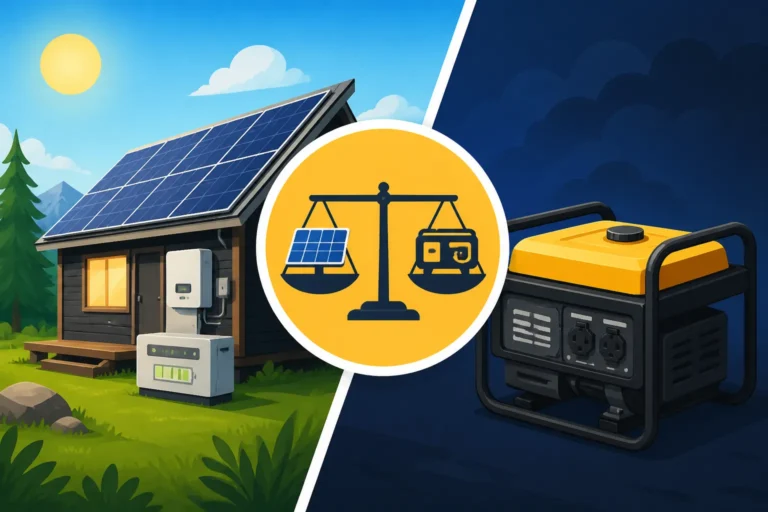
Pre-Built Kits/Solar Generators: For convenience, many companies offer small, pre-packaged kits or portable power stations (often called "solar generators") that include a battery, inverter, and charge controller all in one neat box, sometimes bundled with a panel. These are incredibly easy to set up – often just plug-and-play. Brands like Jackery, Bluetti, and Goal Zero are popular in this space. A Jackery Explorer 300, for example, is a portable power station with a 293Wh capacity and a 300W inverter, and can be charged by a 100W solar panel.
The upfront cost for a pre-built solar generator and a compatible 100W panel might be higher than a DIY component setup (e.g., a Jackery Explorer 300 with a 100W panel could be $500-$700), but you save on the complexity and time of assembly. For beginners, a pre-built kit offers a fantastic entry point into off-grid solar. Check out "Best Off-Grid Solar Kits for Beginners" for more options.
Hidden Costs and Long-Term Considerations
While the initial purchase is important, don't forget about the long game. There are a few hidden costs and long-term considerations that can affect your overall expenditure:
- Maintenance: Solar panels require occasional cleaning to maintain efficiency. Batteries, especially lead-acid types, may need regular checks and maintenance. LiFePO4 batteries are largely maintenance-free.
- Battery Replacement: Batteries are consumables. Even the best LiFePO4 battery will eventually need replacing, though it might be 10-15 years down the line. Lead-acid batteries might need replacement every 3-7 years. This is a significant future cost, so it's wise to budget for it. You can find more details in our "Cost to Replace Off-Grid Solar Batteries" article.
- Upgrades: As you get more comfortable with off-grid living, you might find yourself wanting more power. That 100W system could become the foundation, but adding more panels, batteries, or a larger inverter will incur additional costs. Planning for an expandable system from the start can save you headaches later.
Is a 100W System Right for You? Making the Decision
Choosing the right size off-grid solar system is all about aligning its capabilities with your actual energy needs. A 100W system is a fantastic entry point for many, but it's not a one-size-fits-all solution.
Best Use Cases for 100 Watts
A 100W off-grid solar system truly shines in scenarios where your power demands are minimal, occasional, or specific to small electronics and lighting. It’s perfect for:
- Camping and Outdoor Adventures: Keeping phones, headlamps, cameras, and portable speakers charged while enjoying nature. Many campers will attach a single 100W panel to their RV or tent setup for this exact purpose.
- Small Sheds or Outbuildings: Providing enough light for an evening chore, or powering a small fan to keep air circulating, or a low-power security camera. This could be for a garden shed, a tool shed, or even a chicken coop.
- Emergency Preparedness Kits: Having a reliable way to charge communication devices during a power outage or natural disaster. A small system ensures you can stay connected when the grid goes down.
- Trickle Charging: Maintaining a larger 12V battery bank that might be used for a boat, RV, or even a small off-grid cabin that already has a primary charging source. A 100W panel can significantly extend the life of such a battery by keeping it topped off.
- Remote Sensors or Gates: Powering low-draw devices far from grid access, like a remote weather station, an automatic gate opener, or specific agricultural monitoring equipment.
In these situations, a 100W system provides a cost-effective and reliable solution without overcomplicating things. It’s about meeting essential needs efficiently.
When You Need More Power
It's important to be honest with yourself about your daily power consumption. If your list of essential appliances includes anything beyond a few lights and device charging, a 100W system will quickly fall short. You'll definitely need more power if you plan to run:
- Any significant household appliances: Refrigerators, well pumps, washing machines, microwaves, or even large TVs. These items have high surge and continuous power demands that a 100W system simply cannot support.
- Power Tools: Even small corded power tools draw hundreds of watts, and typically require a much larger inverter and battery to handle their surge current.
- Multiple devices simultaneously: If you envision charging several laptops, running lights, and a fan all at once, 100W will feel restrictive.
- Year-round, full-time living: For any kind of permanent dwelling, even a tiny home or cabin, 100W is almost certainly insufficient for comfortable living, especially through periods of low sunlight.
If you find yourself needing more juice, don't worry! Scaling up is completely feasible. Our detailed guide on "How to Size an Off-Grid Solar System" will walk you through the process of calculating your energy needs and choosing components for a larger setup. It's better to plan for growth than to constantly feel frustrated by a system that's too small.
Maximizing Efficiency with a Small System
Even with a modest 100W system, there are smart ways to get the absolute most out of every watt-hour you generate. Off-grid living is all about efficiency, and with a small system, it becomes even more critical.
- Use DC Appliances Where Possible: Every time you convert DC battery power to AC power with an inverter, you lose some energy in the conversion process (typically 10-20%). If you can find devices that run directly on 12V DC, you'll be much more efficient. Many LED lights, fans, and phone chargers are available in 12V versions.
- Invest in Energy-Efficient Devices: Look for appliances specifically designed for low power consumption. This is especially true for anything that runs for extended periods. Even small things add up, so choosing an LED light bulb over an incandescent, or a low-wattage USB fan, makes a difference. To help with this, you might find our article "How to Calculate Daily Energy Usage" incredibly useful.
- Minimize Phantom Loads: Many electronics draw a small amount of power even when turned off or in standby mode (the dreaded "phantom load"). Unplug devices when not in use, or use power strips with on/off switches to cut power completely.
- Optimize Panel Placement and Angle: Make sure your 100W panel is positioned for maximum sun exposure throughout the day, without any shading from trees or buildings. Adjusting its tilt angle seasonally can also boost production. Even a small improvement in efficiency can make a noticeable difference with limited power.
| Device Type | Estimated Wattage | Run Time on 500Wh (approx.) | Typical Use Case with 100W System |
|---|---|---|---|
| Smartphone Charging | 5-10W | 50-100 hours | Daily charging for multiple devices |
| Laptop Charging | 40-60W | 8-12 hours | Occasional laptop use, emergency work |
| LED Light Bulb (5W) | 5W | 100 hours | Evening lighting for small areas |
| Small DC Fan | 10-25W | 20-50 hours | Personal cooling in hot weather |
| Tablet Charging | 10-18W | 27-50 hours | Regular use, media consumption |
| Portable Speaker | 5-15W | 33-100 hours | Entertainment while camping/outdoors |
| CPAP Machine | 30-60W | 8-16 hours | Medical necessity (ensure battery capacity) |
| Small 12V Cooler (not fridge) | 30-40W | 12-16 hours | Keeping drinks cool on a trip |
Note: Run times are approximations based on a fully charged 500Wh battery and do not account for daily solar replenishment. Actual performance will vary based on device efficiency, battery health, and solar input.
Disclaimer
Please note that the information provided in this guide is for general informational purposes only and does not constitute professional electrical or solar engineering advice. Off-grid solar systems involve high voltages and currents that can be dangerous. Always consult with a qualified solar professional or electrician before designing, installing, or modifying any solar power system. Local regulations and permitting requirements for off-grid systems vary and must be adhered to.