Off-Grid Solar Panels Installation Mistakes to Avoid
Stepping into the world of off-grid solar can feel incredibly empowering, a true leap toward energy independence. You've got the vision: clean power, no more utility bills, and the freedom to live where you choose. But let's be honest, the journey from concept to a fully functional system is fraught with potential missteps that can quickly turn excitement into exasperation. This guide is here to help you identify and skillfully sidestep the most common off-grid solar panel installation mistakes, saving you time, money, and a whole lot of headache.
Pre-Installation Planning Pitfalls
Before you even think about hoisting a panel onto a roof or digging a trench, the foundational work of planning is where many crucial errors are made. Skipping these initial steps or making assumptions can lead to an inefficient, frustrating, and potentially unsafe system. It's not just about buying the right components; it's about understanding how they'll interact with your specific environment and energy needs.
Ignoring a Thorough Site Assessment
One of the biggest mistakes folks make is assuming their chosen location is automatically prime real estate for solar panels. They might pick a spot that looks sunny to the naked eye, only to find out later it's plagued by shadows at critical times of the day or year. A proper site assessment is non-negotiable for maximizing your solar harvest.
You need to meticulously map out the sun's path throughout the day and across different seasons. What looks clear in summer might be heavily shaded by dormant trees or a neighboring building in winter when the sun's angle is lower. A tool like a solar pathfinder or even a simple compass combined with observational notes over a few days can reveal surprising shade patterns. Remember, even a small amount of persistent shading on one panel can significantly reduce the output of an entire string of panels. Beyond the sun, consider the structural integrity of your mounting surface. Is your roof strong enough to support the weight of the panels, racking, and potential snow load? If you're going with a ground mount, is the soil stable, and are there any underground utilities you need to be aware of? Overlooking these details can lead to costly repairs down the line, or worse, structural failure.
Underestimating Power Needs and Oversizing or Undersizing
It's tempting to just guesstimate how much power you'll need, but that's a surefire way to either run out of juice constantly or spend way too much on an unnecessarily large system. Many new off-gridders make the mistake of not performing a detailed load analysis, which is the cornerstone of effective system sizing.
A load analysis involves listing every single appliance and device you plan to power, noting its wattage, and estimating how many hours per day or week you'll use it. Don't forget those intermittent loads like a well pump or a microwave, which draw a lot of power for short bursts. Multiply wattage by hours of use to get daily watt-hours. Summing these up gives you your total daily energy consumption, which is critical for figuring out how much solar generation and battery storage you'll require. Neglecting this crucial step can lead to a system that either consistently falls short, leaving you in the dark, or is grossly oversized, meaning you've paid for capacity you rarely use. For a deeper dive into this, check out our guide on how to size an off-grid solar system. Incorrectly calculating "peak sun hours" for your specific location is another common misstep. Peak sun hours aren't just the total hours of daylight; they represent the equivalent hours of full sun intensity. This number varies significantly by geography and season, and using an average national figure for a specific, often cloudier, region can result in a severely undersized array that simply can't keep up.
Neglecting Permitting and Code Requirements
"Off-grid" often conjures images of total freedom from regulation, but that's a dangerous misconception. Many aspiring solar homesteaders are blindsided by local permitting and electrical codes, assuming their remote setup exempts them. This is a significant installation mistake to avoid.
Even if you're completely disconnected from the utility grid, most jurisdictions, be it county or municipal, still have building and electrical codes that apply to permanent structures. These codes are in place for safety, ensuring that wiring is correctly installed, fire hazards are minimized, and components are appropriately rated. Failing to obtain necessary permits or adhere to the National Electrical Code (NEC) can lead to fines, requirements to dismantle and re-install, or, most critically, dangerous conditions that put you and your property at risk. Imagine having your entire project halted because you didn't get the proper permits for your solar array or your battery bank! Always check with your local planning and building departments early in the process. Some HOAs or rural community associations might also have specific covenants regarding visible solar installations. For more detailed information on navigating these requirements, take a look at our article on off-grid solar permits and codes. It's always better to be proactive and informed rather than reactive and fined.
Common Mounting and Physical Installation Errors
Once the planning is done, the physical act of installing panels and their associated hardware comes with its own set of challenges. These mistakes can compromise not only the efficiency of your system but also its longevity and safety. A sturdy, well-positioned array is vital.
Improper Panel Orientation and Tilt
It sounds simple: face your panels towards the sun. But the optimal orientation and tilt angle are more nuanced than many first-timers realize, and getting it wrong is a common off-grid solar panel installation mistake. Simply guessing or aligning them with your roof pitch without considering the sun's true path can cost you a lot of generated power.
In the Northern Hemisphere, panels should generally face true south, and in the Southern Hemisphere, true north. This isn't necessarily the same as magnetic south or north, so using a compass and accounting for magnetic declination is important. Beyond cardinal direction, the tilt angle is critical. A fixed tilt angle that's optimized for summer sun will underperform significantly in winter when the sun is lower in the sky. Conversely, a winter-optimized tilt will result in less-than-ideal summer performance. For year-round living, many choose a compromise angle (often roughly equal to their latitude) or opt for adjustable mounts that allow seasonal adjustments. Failing to account for potential shading is also huge here. Even if your site assessment was great for the long term, during installation, a last-minute change in panel placement can introduce new shading from a chimney, vent pipe, or even another panel if spaced incorrectly. Always double-check your chosen spot against the sun's path throughout the day one last time before securing everything down. You can find more specific advice on How to Plan Panel Placement and Angle to help nail this down.
Weak Mounting and Structural Issues
The panels themselves are just one part of the equation; how they're secured to your structure or ground is equally important. A failure in the mounting system can lead to catastrophic damage to your panels, your property, and even pose a safety risk to those nearby.
Using inadequate racking that isn't rated for the expected wind loads, snow loads, or seismic activity in your region is a huge oversight. Cheaping out on mounting hardware can result in panels flying off in a strong storm, which is a disaster no one wants. Similarly, improper roof penetrations are a source of constant headaches. Drilling holes into your roof without properly sealing them around the mounting feet can lead to leaks, water damage, and costly repairs inside your home or cabin. Always use high-quality flashing and sealants designed for roof applications. Another often-overlooked detail is providing adequate airflow around and beneath the panels. Solar panels operate more efficiently when they are cooler. Mounting them too flush against a surface without enough space for air circulation can lead to overheating, reducing their power output and potentially shortening their lifespan. Companies like Renogy offer robust mounting kits for various applications, from rooftops to ground mount to ensure stability.
Cable Management and Weatherproofing Blunders
You’ve got your panels up, they're oriented perfectly, and they're secured like Fort Knox. Great! But if your wiring looks like a spaghetti monster and isn't protected from the elements, you're setting yourself up for failure. This is a common and often underestimated installation mistake.
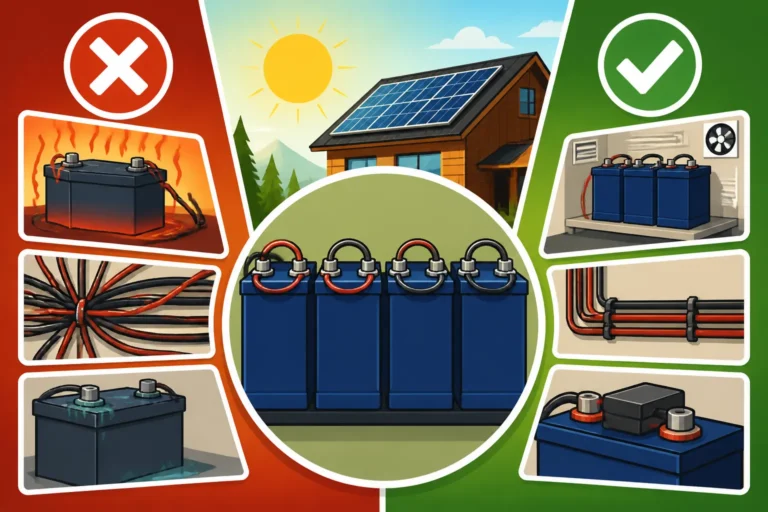
Leaving solar cables exposed to direct sunlight, harsh weather, or accessible to curious critters is a recipe for disaster. UV radiation degrades cable insulation over time, leading to cracking and potential shorts. Squirrels and rodents love to chew on exposed wires, which can disable your system or create dangerous electrical hazards. All outdoor cabling should be routed through appropriate conduit, especially in areas where it might be stepped on, brushed against, or exposed to physical impact. Furthermore, improper sealing of cable entry points into your building is just as bad as leaky roof penetrations. Whether it's through a wall, roof, or floor, every cable penetration needs to be sealed with weatherproof glands or sealants to prevent water ingress and drafts. Lastly, simply letting cables hang loosely can lead to chafing against sharp edges, tangles, and eventually, connection failures. Use cable ties or clips to neatly secure all wiring, maintaining proper spacing and preventing any unnecessary strain.
Electrical Wiring and Connection Mishaps
This is where things can get truly dangerous if not done correctly. Off-grid solar systems involve significant DC currents and voltages, which require meticulous attention to detail during wiring and connection. A small oversight here can lead to system malfunction, component damage, or even electrical fires.
Incorrect Series and Parallel Wiring
One of the most intimidating aspects for DIYers is figuring out how to wire multiple solar panels. Making errors in connecting panels in series or parallel is a super common, yet easily avoidable, mistake that can severely impact your system's performance or even damage components.
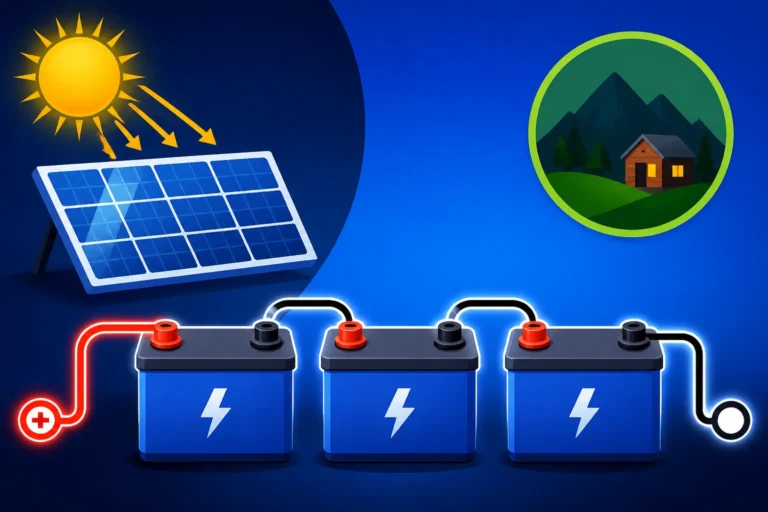
When you wire panels in series, you add their voltages while the current remains the same. When you wire them in parallel, you add their currents while the voltage remains the same. The choice depends on your system voltage (12V, 24V, 48V) and your charge controller's input limits. A common mistake is accidentally mixing up series and parallel connections within the same string, leading to mismatched voltages and currents that can cause some panels to underperform or even fry certain components. It’s also vital to ensure all panels in a series string are identical in wattage and voltage to avoid "bottlenecking" where a weaker panel drags down the performance of the others. Always consult your panel's specifications for Voc (open-circuit voltage) and Isc (short-circuit current) to ensure your array output falls within the safe operating parameters of your charge controller. Take a look at our detailed guide on How to Wire Panels in Series vs Parallel for a comprehensive explanation. Poor crimps and connections on MC4 connectors are also culprits. These connections, common for solar panels, must be made with a proper crimping tool to ensure a secure, weatherproof, and low-resistance connection. Loose connections can lead to power loss, arcing, and fire hazards.
Undersized Wiring and Inadequate Protection
Electricity flows through wires, and just like a hose needs to be the right diameter for water pressure, electrical wires need to be the right gauge for current. Using wires that are too thin for the current they carry or the distance they cover is a critical off-grid solar panel installation mistake.
Undersized wiring creates excessive resistance, leading to significant voltage drop and power loss, meaning less energy actually makes it to your batteries. More dangerously, undersized wires can overheat, melt their insulation, and become a serious fire hazard. Always calculate the appropriate wire gauge based on the maximum current (Impp or Isc) and the total length of the wire run. The longer the run, the thicker the wire needs to be to minimize voltage drop. Equally important, and often overlooked by beginners, is the installation of proper fusing and circuit breakers. These are your system's safety nets, protecting components from overcurrents and preventing fires in the event of a short circuit. Every major component—the solar array, battery bank, and inverter—needs appropriate overcurrent protection. This includes fuses on the positive wire coming from the solar array to the charge controller, between the charge controller and the battery, and between the battery and the inverter. Proper grounding of your entire system is another non-negotiable safety measure, designed to provide a safe path for fault currents, preventing electrical shocks. You can find essential details on How to Size Off-Grid Wiring for Safety to ensure your system is up to snuff.
Charge Controller and Inverter Incompatibilities
The charge controller and inverter are the brains and brawn of your off-grid system, respectively. Mismatches or incorrect sizing of these crucial components can lead to inefficient operation, premature component failure, or simply a system that won't work at all.
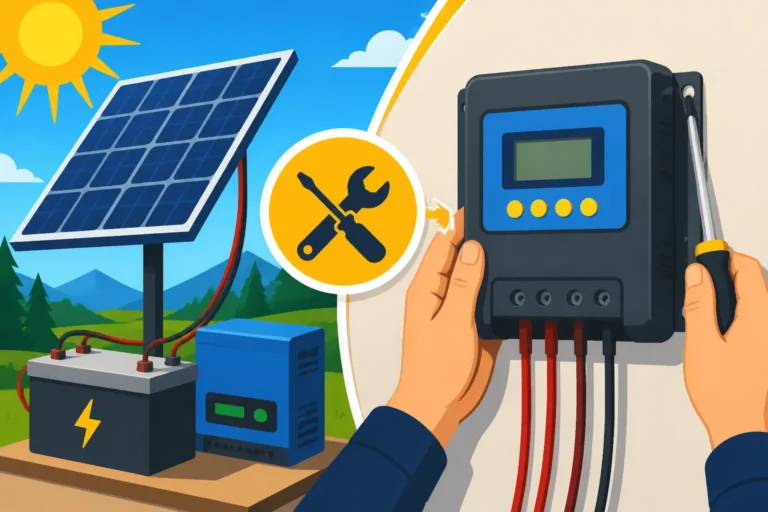
A common mistake is selecting a PWM (Pulse Width Modulation) charge controller when an MPPT (Maximum Power Point Tracking) controller is actually needed. While PWMs are cheaper, MPPTs are significantly more efficient, especially with higher voltage panel arrays and in cooler conditions, often yielding 20-30% more power. If your panel array voltage is significantly higher than your battery bank voltage, an MPPT controller is almost always the better choice. Check out our guide on MPPT vs PWM Charge Controllers for a detailed comparison. Similarly, your inverter must be correctly sized not just for your average running loads but also for the peak "surge" loads of certain appliances, like refrigerators, well pumps, or power tools. These appliances require a much higher wattage for a brief moment when they start up. An inverter that's undersized for these surge loads will simply shut down, frustrating you endlessly. Brands like Victron Energy and Sol-Ark offer robust inverter-chargers designed to handle these demands effectively. Lastly, ensuring your charge controller and inverter are compatible with your battery bank's voltage (12V, 24V, or 48V) is fundamental. Trying to connect a 12V charge controller to a 48V battery bank, for instance, won't work and could damage components.
Post-Installation and Maintenance Oversight
Even after all the planning, mounting, and wiring are seemingly complete, the journey isn't over. Many people celebrate too early and forget the critical final steps of commissioning and the ongoing commitment to maintenance. Neglecting these areas is a common source of long-term frustration and unexpected costs.
Skipping Commissioning and Testing
You've put in all the hard work, but simply flipping the "on" switch isn't enough. Skipping a thorough commissioning and testing phase is a major oversight that can mask underlying issues, leading to poor performance or even system failure down the road.
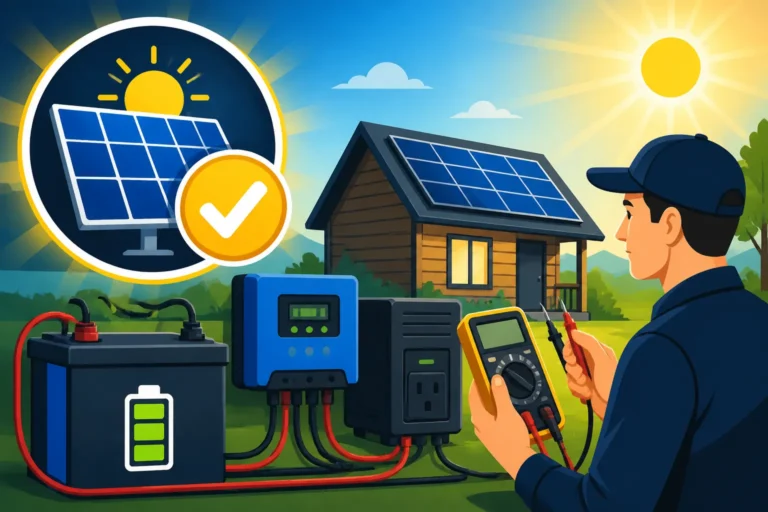
Before relying on your new off-grid system, you absolutely must verify that every component is working as intended. This means checking the voltage and current output from your solar array under various conditions (sunny, partly cloudy) to ensure it's meeting expectations. You need to confirm that your charge controller is properly regulating the power flow to your batteries and that its settings (like bulk, absorb, and float voltages) are correctly programmed for your specific battery chemistry (e.g., LiFePO4 vs. lead-acid). An improperly programmed charge controller can severely shorten the lifespan of your expensive battery bank. Moreover, test your inverter by gradually introducing loads, starting with small appliances and moving up to larger ones, to ensure it handles everything smoothly without tripping. For a comprehensive walkthrough, our article on How to Commission an Off-Grid System provides step-by-step instructions to ensure everything is operating safely and efficiently. Many issues that appear months later could have been identified and resolved during this critical initial testing phase.
Neglecting Ongoing Maintenance
An off-grid solar system isn't a "set it and forget it" solution. Like any complex piece of machinery, it requires regular attention to perform optimally and last for its expected lifespan. Failing to commit to ongoing maintenance is a prevalent mistake that can lead to reduced efficiency, accelerated wear and tear, and costly repairs.
One of the simplest yet most overlooked tasks is cleaning your solar panels. Dust, dirt, pollen, bird droppings, and leaves can accumulate on the panel surface, blocking sunlight and significantly reducing power output. While rain helps, it often isn't enough to remove stubborn grime. Regular cleaning, especially after dusty periods or heavy pollen seasons, can restore lost efficiency. For tips on how to keep your panels pristine, check out our guide on How to Clean Off-Grid Solar Panels. Beyond cleaning, routinely inspect all electrical connections for corrosion, looseness, or signs of wear. Critters can chew through wires, and temperature fluctuations can cause connections to loosen over time. A quick visual inspection, along with occasionally checking torques on terminal connections, can prevent arcing, power loss, and potential fire hazards. Pay particular attention to your battery bank. Batteries are often the most expensive component to replace. Regularly monitoring their state of charge, checking fluid levels (for flooded lead-acid), and ensuring proper ventilation can dramatically extend their life. Replacing batteries, especially larger banks, can be a substantial expense, as detailed in our information on Cost to Replace Off-Grid Solar Batteries. Proactive maintenance helps protect your investment.
Overlooking System Expandability
Many off-gridders start with a system sized for their immediate needs, which is a smart approach. However, a common mistake is not considering future expansion from the outset. Life changes, energy needs grow, and suddenly that perfectly sized system is no longer adequate.
Thinking ahead can save you significant time and money down the road. When designing your initial system, consider components that can accommodate growth. For example, choose an MPPT charge controller that has overhead capacity for more panels, or an inverter that can be paralleled with another unit to double its output. While purchasing materials, you might find good deals on larger wires or conduit from suppliers on Amazon that can handle more current than you currently need, allowing for future additions without having to re-run lines. Even with your initial ground mount installation, thinking about where you could add more panels in the future—perhaps a second ground mount array or more roof space—can make the upgrade process much smoother. This foresight prevents you from having to replace perfectly good components simply because they can't handle increased loads, essentially forcing you to start from scratch. Planning for expansion isn't about oversizing your initial investment unnecessarily, but about making smart component choices and infrastructure provisions that make adding capacity a relatively straightforward process instead of a complete overhaul.
Common Off-Grid Solar Panel Installation Mistakes and Solutions
| Mistake Category | Common Mistake | Consequence | Solution / Prevention |
|---|---|---|---|
| Planning | Ignoring Site Assessment | Reduced power generation, structural issues, shade-induced low output. | Perform detailed sun path analysis, check structural integrity of mounting surface. |
| Underestimating Power Needs | Frequent power outages, premature battery wear, inefficient system. | Conduct thorough load analysis for all appliances and usage times. | |
| Neglecting Permits/Codes | Fines, required dismantling, safety hazards. | Research local building/electrical codes and permit requirements early. | |
| Physical Mount | Improper Panel Orientation | Significantly reduced energy harvest. | Orient panels to true south/north, adjust tilt for seasonal sun angles. |
| Weak Mounting Hardware | Panels dislodged by wind/snow, roof damage, safety risk. | Use appropriately rated racking, secure all attachments, proper roof sealing. | |
| Poor Cable Management | UV degradation, animal damage, chafing, fire hazard. | Route cables in conduit, use weather-rated connectors (e.g., MC4), secure cables with clips. | |
| Electrical Wiring | Incorrect Series/Parallel | Inefficient power generation, component damage, array malfunction. | Understand voltage and current rules, use identical panels in series, verify with multimeter. |
| Undersized Wiring | Voltage drop, power loss, overheating, fire risk. | Calculate wire gauge based on current and distance, minimize cable runs. | |
| Inadequate Fusing/Breakers | No protection from overcurrents, risk of component damage or fire. | Install appropriately sized fuses and breakers for each circuit (panels, batteries, inverter). | |
| System Integration | Charge Controller/Inverter Mismatch | Inefficient charging, system shutdown, component damage. | Choose MPPT for higher voltage arrays, size inverter for surge loads, ensure voltage compatibility. |
| Skipping Commissioning | Undetected faults, poor performance, reduced component lifespan. | Test each component individually, verify programming settings, test loads gradually. | |
| Maintenance | Neglecting Cleaning | Power loss from dirt/debris accumulation. | Clean panels regularly (especially after dust/pollen), inspect for damage. |
| Ignoring Connections | Loose connections, corrosion, power loss, fire risk. | Periodically inspect all terminals and connections, tighten as needed. | |
| Overlooking Battery Health | Premature battery failure, high replacement costs. | Monitor battery voltage/SOC, maintain proper ventilation, check fluid levels (if applicable). |
Disclaimer
The information provided in this article is for general guidance and educational purposes only. While we strive to offer accurate and up-to-date content, off-grid solar installation involves electrical work and potential hazards. Always consult with qualified professionals and adhere to all local building codes and regulations before undertaking any solar project. Working with electricity can be dangerous, and improper installation can lead to injury, fire, or property damage.