Best 3000W Inverter for Off-Grid
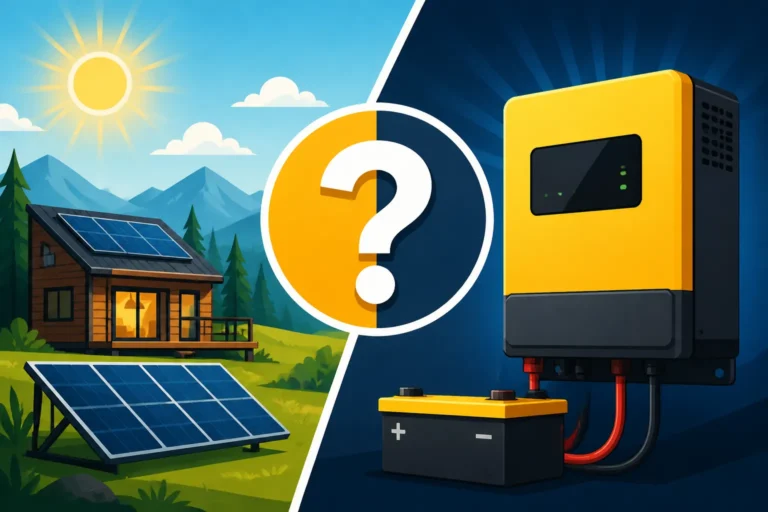
The journey to off-grid living is incredibly rewarding, but let's be honest, it often comes with a whole lot of head-scratching, especially when you're trying to figure out the right power components. Many off-grid dreamers find themselves scratching their heads when it comes to choosing the right power brain for their system, particularly when their needs are growing beyond basic lights and charging phones. A 3000W inverter sounds powerful, but navigating the myriad of options to ensure it reliably powers everything from your refrigerator to your power tools can feel truly overwhelming. This comprehensive guide will walk you through everything you need to know about selecting the best 3000W inverter for your off-grid setup, ensuring you get dependable, clean power for your homestead, cabin, or RV.
Understanding the Role of a 3000W Off-Grid Inverter
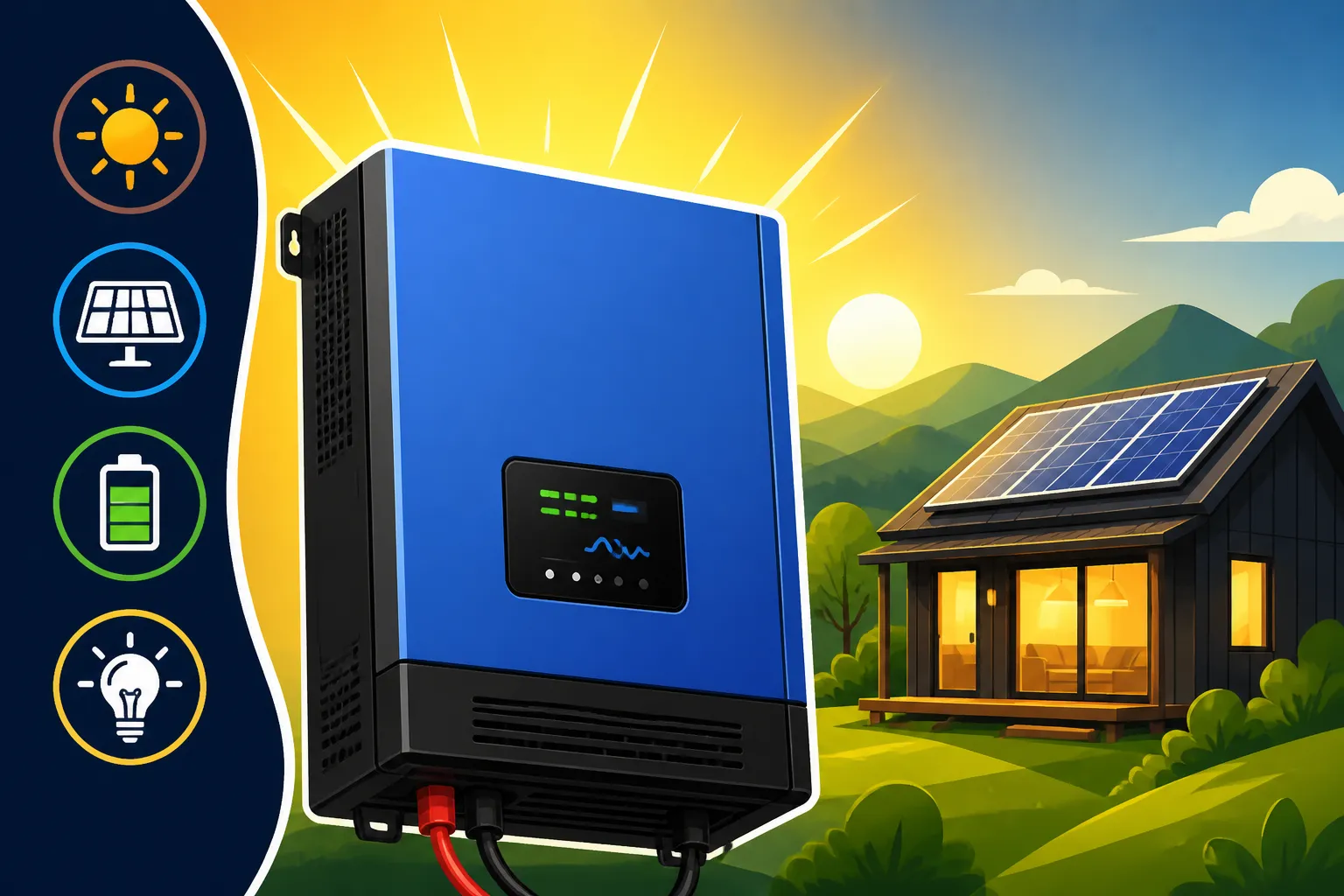
An inverter is the heart of any off-grid electrical system, converting the direct current (DC) power stored in your batteries into alternating current (AC) power that most of your household appliances and electronics use. A 3000W inverter, specifically, is a robust choice that can handle a significant load, bridging the gap between small, portable setups and full-scale home systems. It's often the sweet spot for cabins, RVs, tiny homes, or even modest full-time off-grid residences looking to run essential appliances and a few luxuries.
Why 3000 Watts is a Common Sweet Spot
When you start looking at your daily power needs, you quickly realize that anything less than 1500W can feel restrictive. Many modern homes, even off-grid ones, have a mix of resistive loads (like heaters, toasters, coffee makers) and inductive loads (like refrigerators, well pumps, power tools). While individual appliances might draw only a few hundred watts, having several running simultaneously, or facing a surge from a motor starting, can quickly push a smaller inverter past its limits.
A 3000W inverter provides a comfortable buffer. For example, you might be running your refrigerator (around 100-200W constant, with 600-1000W surge) while also brewing coffee (1000W-1500W) and perhaps a laptop charger (50W) and some LED lights (20W). A 3000W inverter can manage these combined loads without breaking a sweat, ensuring you don't trip breakers or cause your inverter to shut down. It offers the flexibility to run common household items like microwaves, hair dryers, or even smaller power tools without constant worry about overloading the system. This capacity is often ideal for a family of two to four, or for a remote cabin that sees regular use.
Pure Sine Wave vs. Modified Sine Wave for 3000W Systems
When we talk about off-grid inverters of this size, there's really only one type of waveform you should consider: pure sine wave. While older or very budget-conscious small inverters might offer a "modified sine wave" (which is more accurately described as a stepped square wave), these are simply not suitable for most 3000W applications.
Pure sine wave inverters produce a clean, smooth waveform that perfectly mimics the power you get from the utility grid. This is crucial for sensitive electronics like computers, medical equipment (like CPAP machines), modern televisions, and appliances with internal microprocessors. Running these devices on a modified sine wave inverter can lead to buzzing noises, overheating, reduced lifespan, and in some cases, outright damage. For inductive loads like refrigerators and well pumps, a pure sine wave is essential for efficient and smooth operation, preventing premature wear on motors. Given the investment in a 3000W system, skimping on a pure sine wave inverter is a false economy and will almost certainly lead to headaches down the road. It’s definitely worth understanding the differences in detail by checking out our guide on Pure Sine Wave vs Modified Sine Wave Inverters.
Key Features to Prioritize in a 3000W Off-Grid Inverter
Choosing the right 3000W inverter involves looking beyond just the wattage. Several features can significantly impact your system's efficiency, reliability, and ease of use. Thinking through these aspects before you buy will save you a lot of grief (and money) in the long run.
Input Voltage Compatibility and System Design
One of the most critical decisions when sizing your inverter is determining your system's DC voltage. For a 3000W inverter, you'll typically be looking at 24V or 48V DC input. While 12V systems are popular for smaller setups like RVs and vans, running 3000W continuously from a 12V system means drawing a massive amount of current (3000W / 12V = 250 amps, plus inverter inefficiencies!). This requires extremely thick, expensive cables to minimize voltage drop and overheating, and places immense strain on your batteries.
- 24V Systems: A 24V system for 3000W (3000W / 24V = 125 amps) is a common and practical choice. It offers a good balance between component availability, cable thickness, and overall efficiency. Many reputable inverter brands offer 24V models in this power range.
- 48V Systems: For larger 3000W systems, or if you plan to expand in the future, a 48V system (3000W / 48V = 62.5 amps) is often the most efficient and cost-effective choice. It significantly reduces the current flow, allowing for thinner wiring, less voltage drop, and often greater overall system efficiency. This is especially true if your solar array is also designed for 48V. You can dive deeper into this choice with our article on 12V vs 24V vs 48V: Which to Choose.
Always ensure your chosen inverter's input voltage matches your battery bank's voltage perfectly.
Surge Capacity and Continuous Power
While a 3000W inverter offers 3000 watts of continuous power, many appliances, especially those with motors, draw a much higher "surge" of power for a brief moment when they first start up. Think about your refrigerator compressor kicking on, or your well pump drawing a big gulp of electricity. This surge can be two to seven times the continuous running wattage.
A good 3000W inverter should have a surge capacity of at least 6000W for a few seconds, ideally more. This allows it to handle those brief spikes without shutting down. If you plan to run appliances like a microwave (which has a high momentary draw) or larger power tools, pay close attention to the inverter's surge rating. An inverter with a strong surge capability, like the offerings from Victron Energy or the larger Renogy Pure Sine Wave Inverters, will provide much more reliable performance and prevent frustrating shutdowns. Understanding how to factor these surges into your design is key, and our guide on How to Size an Off-Grid Inverter can help.
Efficiency Ratings and Cooling Systems
An inverter's efficiency tells you how much of the DC power from your batteries is actually converted into usable AC power, and how much is lost as heat during the conversion process. Look for inverters with high peak efficiency ratings, ideally 90% or higher. While a 3000W inverter might seem powerful, even a few percentage points of inefficiency can translate into a significant amount of wasted energy over a day, meaning you need more solar panels and battery capacity to compensate.
Cooling is also vital. Inverters generate heat, especially when running at high loads. Quality inverters will have robust cooling systems, often combining internal fans with large heat sinks. Pay attention to how the inverter dissipates heat. Some are designed for passive cooling at lower loads, with fans engaging only when needed, which can reduce noise. Proper ventilation around the inverter during installation is crucial for its longevity and performance.
Integrated Charge Controllers and Monitoring
Many modern 3000W inverters come as "inverter-chargers," meaning they combine the inverter function with a powerful battery charger and, sometimes, an MPPT solar charge controller. These all-in-one units can be incredibly convenient, simplifying wiring and system management.
- Inverter-Charger: An inverter-charger is particularly useful if you plan to integrate a backup generator into your off-grid system. It can automatically start the generator when battery levels are low, charge your batteries, and even pass through generator power directly to your loads, all while maintaining a smooth transition.
- Integrated Solar Charge Controller: Some advanced units, often called "hybrid inverters," even incorporate an MPPT solar charge controller, turning them into a single point of control for your entire power system. Brands like EG4 and Sol-Ark offer excellent hybrid solutions that simplify complex off-grid setups, though these might often be larger than 3000W, or they exist as complete kits.
Look for inverters with clear displays, easy-to-use interfaces, and preferably remote monitoring capabilities (often via Bluetooth or Wi-Fi). Being able to check your system's status, adjust settings, and diagnose issues from your phone or computer can be a huge advantage.
Top Contenders for 3000W Off-Grid Inverters
When it comes to 3000W off-grid inverters, several brands stand out for their reliability, features, and performance. This isn't an exhaustive list, but it highlights popular and well-regarded options that consistently deliver.
Victron Energy MultiPlus and Quattro Series
Victron Energy is often considered the gold standard in off-grid power, and their MultiPlus and Quattro inverter-chargers are top-tier choices. While a pure 3000W inverter might be an older model, they offer exceptional quality and integration. The MultiPlus 12/3000/120-16 120V (12V input, 3000VA output, 120A charger) or the 24/3000/70-50 120V (24V input, 3000VA output, 70A charger) are incredibly popular. Their "VA" (Volt-Ampere) rating is often very close to their Watt rating, making these strong contenders.
Victron products are known for:
- Robust Build Quality: Designed for continuous, heavy-duty use in harsh environments.
- Advanced Features: PowerAssist (supplements shore/generator power with battery power), parallel/three-phase operation for scalability, and comprehensive monitoring via their VE.Bus system and Cerbo GX controller.
- Excellent Surge Capability: Typically double their continuous rating, making them ideal for inductive loads.
- Reliability: While they come with a higher price tag, their longevity and consistent performance often justify the investment, providing peace of mind for full-time off-gridders.
Renogy Pure Sine Wave Inverters
Renogy is a very popular brand, especially for those venturing into DIY off-grid solar. They offer a range of pure sine wave inverters that are generally more budget-friendly than Victron, but still deliver solid performance. Their 3000W 12V and 24V Pure Sine Wave Inverters are widely available on platforms like Amazon and direct from their website.
Key aspects of Renogy inverters:
- Affordability: Renogy provides a great entry point into reliable off-grid power without breaking the bank.
- Good Performance: They offer true pure sine wave output, suitable for sensitive electronics. Their surge capacity is typically rated at 6000W for a short duration, which is respectable for most applications.
- User-Friendly: Often straightforward to install and operate, making them a favorite for DIY enthusiasts.
- Availability: Easily found and well-supported with a good community of users.
AIMS Power Pure Sine Inverters
AIMS Power offers a broad selection of pure sine wave inverters, including rugged models designed for off-grid and industrial applications. Their 3000W 12V, 24V, and 48V pure sine wave inverters are well-regarded for their durability and continuous power output.
What makes AIMS Power attractive:
- Heavy-Duty Construction: Built to withstand demanding conditions, often featuring robust casings.
- Variety of Voltages: They cater to all common off-grid system voltages, making it easier to match your battery bank.
- Solid Performance: Known for their consistent power delivery and good surge capabilities, essential for motor loads.
- Transformer-Based Designs: Many AIMS Power inverters use low-frequency transformer designs, which are often more robust for handling surge loads compared to high-frequency designs, though they can be heavier.
Hybrid Inverters (e.g., EG4, Growatt)
While often exceeding 3000W, many hybrid inverter brands like EG4 (e.g., their EG4 3000EHV-48) or Growatt (like the Growatt SPF 3000TL LVM-ES) offer integrated solutions. These units combine an inverter, a powerful MPPT solar charge controller, and usually a utility/generator charger, all in one compact box.
Benefits of hybrid inverters:
- All-in-One Convenience: Simplifies wiring and reduces the number of individual components you need to buy and install.
- Advanced Power Management: Intelligently manages power flow between solar, batteries, and a backup generator or even the grid (if you have a grid-interactive hybrid).
- Scalability: Many hybrid units are designed to be stackable, allowing you to easily expand your system's power output in the future.
- Comprehensive Monitoring: Typically come with sophisticated monitoring software and displays.
Here's a quick comparison of general features you might find in these top contenders:
| Feature | Victron Energy MultiPlus/Quattro | Renogy Pure Sine Wave Inverter | AIMS Power Pure Sine Inverter | Hybrid Inverters (EG4, Growatt) |
|---|---|---|---|---|
| Output Waveform | Pure Sine Wave | Pure Sine Wave | Pure Sine Wave | Pure Sine Wave |
| Continuous Power | ~3000VA / 2400W (model dependent) | 3000W | 3000W | 3000W to 6000W+ (model dep.) |
| Peak Surge Power | Excellent (2x continuous) | Good (2x continuous) | Very Good (2-3x continuous) | Excellent (2-3x continuous) |
| Input DC Voltage | 12V, 24V, 48V | 12V, 24V | 12V, 24V, 48V | 24V, 48V (often 48V for 3kW+) |
| Integrated Charger | Yes (AC charger) | No | Some models | Yes (AC & Solar MPPT) |
| Generator Auto Start | Yes | No | Some models | Yes |
| Remote Monitoring | Yes (advanced) | Basic (via display) | Basic (via display) | Yes (often Wi-Fi/Bluetooth) |
| Build Quality | Premium | Good | Very Good | Good to Excellent |
| Typical Price Point | High | Medium-Low | Medium | Medium-High |
| Best For | Advanced, Expandable Systems | Budget-conscious DIY, RV/Cabin | Robust general off-grid | All-in-one, expandable home systems |
This table provides a general overview, and specific models within each brand will have their own unique specifications. Always verify the exact continuous and surge ratings, input voltage, and features for the specific inverter you're considering. You can usually find a good selection of these on Amazon or specialized solar equipment retailers.
Installation and Maintenance Tips for Your Off-Grid Inverter
Getting the right 3000W inverter is only half the battle; proper installation and regular maintenance are crucial for ensuring it performs reliably for years to come. Many common problems with off-grid systems stem from overlooking these critical steps.
Proper Placement and Ventilation
Your inverter generates heat, especially under heavy loads. It's designed to dissipate this heat, but it needs help from its environment.
- Choose a Cool, Dry Location: Avoid direct sunlight, cramped spaces, or areas prone to moisture and dust. A shed, garage, or dedicated utility room is usually ideal.
- Ensure Adequate Airflow: Leave plenty of space around the inverter, as per the manufacturer's recommendations (usually 6-12 inches on all sides). Don't box it in tightly. If it has fans, make sure nothing obstructs the air intake or exhaust.
- Mount Securely: Inverters can be heavy. Mount it firmly to a wall stud or a robust surface, ensuring it won't vibrate or fall. Check out our Off-Grid Solar Installation Guide for more general advice.
Wiring Best Practices and Safety
Wiring an inverter, especially a 3000W unit, involves high currents and requires meticulous attention to detail and safety.
- Correct Cable Sizing: This is non-negotiable. Undersized cables can lead to voltage drop, overheating, and fire hazards. Refer to your inverter's manual and use appropriate wire gauge calculators. For a 3000W inverter at 12V, for instance, battery cables will need to be extremely thick – often 2/0 or 4/0 AWG depending on cable length. A 48V system will require much thinner, more manageable cables. It's a good idea to consult our guide on How to Size Wire and Cables for detailed calculations.
- Fusing and Circuit Protection: Always install appropriate DC-rated fuses or circuit breakers as close to your battery bank as possible to protect the inverter and wiring from overcurrents and short circuits. Also, include AC circuit breakers on the output side of your inverter for your AC loads.
- Proper Grounding: Grounding your inverter and the entire off-grid system is essential for safety, protecting both your equipment and yourself from electrical hazards. This usually involves connecting the inverter's chassis to a dedicated grounding rod or the main grounding electrode system. Learn more about this in our Off-Grid Solar Safety and Grounding guide.
- Tight Connections: Loose connections are a common cause of heat buildup, voltage drop, and system failure. Ensure all terminal connections are clean, tight, and corrosion-free.
Firmware Updates and Regular Checks
Like any piece of sophisticated electronics, your inverter may occasionally receive firmware updates from the manufacturer. These updates can improve performance, fix bugs, and add new features. Check your manufacturer's website periodically for any available updates and follow their instructions carefully.
Regular visual inspections are also important:
- Check for Dust and Debris: Dust can accumulate in cooling fins and around fans, reducing efficiency. Gently clean with compressed air or a soft brush.
- Inspect Wiring: Look for any signs of wear, fraying, discoloration (indicating overheating), or loose connections.
- Monitor Performance: Pay attention to any unusual noises, smells, or error codes displayed on your inverter. If your inverter has monitoring capabilities, check logs and performance data regularly to catch potential issues early. This proactive approach can significantly extend the lifespan of your inverter and your entire off-grid system.
Remember, a 3000W inverter is a significant investment in your off-grid independence. Treating it with care through proper installation and maintenance ensures it will serve you reliably for many years to come.
Disclaimer
The information provided in this guide is for general informational purposes only and does not constitute professional advice. Off-grid solar system design and installation can be complex and involve electrical hazards. Always consult with a qualified electrician or solar professional before installing or modifying any electrical system. Follow all manufacturer instructions and adhere to local electrical codes and regulations.