Is Go Power a Good Off-Grid Inverter Brand
Choosing the right inverter for your off-grid solar system can feel like navigating a maze, especially when you're trying to figure out if a particular brand truly delivers on its promises. Many folks wonder if brands like Go Power stand up to the rigorous demands of off-grid living, and it's a valid concern. This guide is dedicated to providing an objective, in-depth look at Go Power inverters, helping you understand their capabilities, typical applications, and whether they might be a good fit for your specific off-grid power needs.
Understanding Off-Grid Inverters
Before we dive into the specifics of Go Power, let's take a moment to understand what an inverter does and why it's such a crucial component in any off-grid solar setup. This piece of equipment is often the heart of your electrical system, transforming the raw power from your batteries into the usable electricity your appliances need.
The Critical Role of an Inverter in Your System
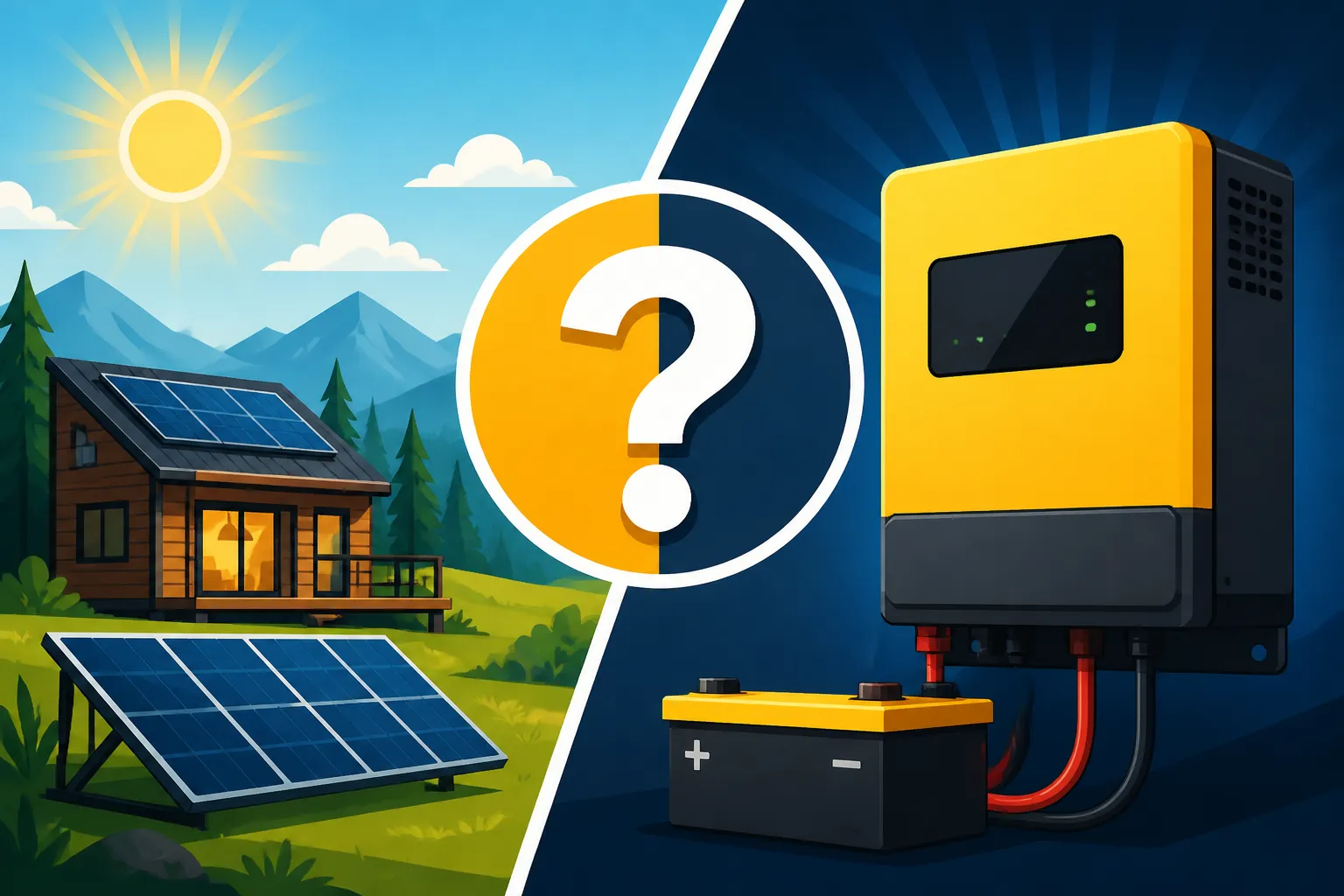
Imagine you've got a fantastic solar array soaking up the sun's rays all day, funneling that energy into a robust battery bank. That's great for storage, but most of your everyday devices, from your coffee maker to your laptop charger, don't run on the direct current (DC) stored in those batteries. They need alternating current (AC), just like the outlets in a standard home. That's where the inverter steps in. It's the magician that converts DC power into AC power. Without a reliable inverter, your powerful battery bank is essentially a very heavy, expensive paperweight when it comes to powering typical household electronics.
Think about living in a remote cabin in the foothills of the Rockies, far from utility lines. You've installed solar panels and a substantial battery bank to keep your lights on and your refrigerator humming. Every electron that leaves your battery bank for these AC appliances passes through your inverter. If your inverter isn't up to the task, you could experience anything from flickering lights and appliance damage to a complete system shutdown. It's not just about turning DC into AC; it's about doing it efficiently, reliably, and safely, ensuring your off-grid experience is one of independence, not frustration. This foundational piece of equipment dictates what you can power and how consistently.
Key Features to Look for in Off-Grid Inverters
When you're shopping for an off-grid inverter, it's not a "one size fits all" situation. There are several critical features that differentiate models and brands, and understanding these will help you gauge any inverter's suitability for your lifestyle. The first and arguably most important is the type of sine wave it produces: pure sine wave or modified sine wave. Pure sine wave inverters produce a clean, smooth waveform that perfectly mimics utility power, making them ideal for sensitive electronics like laptops, medical equipment, and anything with a motor. Modified sine wave inverters are less expensive and can power resistive loads (like incandescent lights or heating elements), but they can cause issues like buzzing, overheating, or even damage to more sensitive devices. For most modern off-grid setups, a pure sine wave inverter is highly recommended. You can learn more about this distinction in our guide on Pure Sine Wave vs Modified Sine Wave Inverters.
Beyond the sine wave, consider efficiency. A highly efficient inverter wastes less energy during the conversion process, which is crucial when you're relying on finite solar energy. Look for ratings typically above 90% for pure sine wave models. Surge capacity is another vital factor, referring to the inverter's ability to briefly provide more power than its continuous rating to handle the initial startup surge of motors (think refrigerators, well pumps, or power tools). A good off-grid inverter will have a surge rating two to three times its continuous output for a few seconds. Finally, system voltage (12V, 24V, 48V) and compatibility with your battery bank are non-negotiable. Safety features like over-temperature protection, overload protection, and short-circuit protection are also paramount to protect your valuable equipment and ensure peace of mind. Our article on How to Size an Off-Grid Inverter provides a deep dive into matching an inverter to your needs.
Go Power Inverters: An In-Depth Look
Now that we've set the stage, let's turn our attention to Go Power, a brand many off-grid enthusiasts encounter, especially in the RV and mobile living communities. We'll explore what they offer and how their reputation holds up in the real world.
Go Power's Product Range and Offerings
Go Power has established itself as a noticeable player, particularly within the mobile off-grid market, such as RVs, campers, and sometimes smaller cabins. Their product line primarily focuses on solutions for those on the move or with modest power requirements. You'll find a range of pure sine wave inverters, which, as discussed, are essential for running most modern electronics without issues. Their offerings often come in convenient packages, making them appealing to those new to off-grid solar or those seeking a more straightforward installation. For example, their Go Power! GP-IC series are popular inverter-chargers, combining the functions of an inverter, a battery charger, and an automatic transfer switch into one unit. This integration simplifies wiring and operation, especially for RV owners who might switch between shore power and battery power frequently.
Typical power ratings for Go Power inverters usually range from smaller units around 1000 watts, perfect for light loads in a small travel trailer, up to more substantial models like 3000 watts, which can comfortably power a medium-sized RV or a basic off-grid cabin with a refrigerator, microwave, and a few lights. They also offer smaller portable power solutions and solar kits that integrate their inverters, catering to a diverse set of users. These kits can be a great starting point for beginners, as outlined in our guide to Best Off-Grid Solar Kits for Beginners. While they might not compete with the heavy-duty industrial-grade inverters designed for large homesteads, their focus on reliable, mid-range solutions for specific applications fills a significant niche in the market.
Reputation and User Feedback
When evaluating any brand, real-world user feedback is invaluable, and Go Power is no exception. Generally, Go Power is perceived as a reliable, mid-tier brand, particularly in the RV and marine sectors. Many users appreciate their straightforward installation and integration, especially with their all-in-one inverter-charger units, which simplify the complexity of setting up an electrical system in a confined space. RV enthusiasts, for instance, often praise the ease with which a Go Power GP-IC3000 can be installed to manage power needs, switching seamlessly between battery and shore power.
However, like any brand, there are common points of discussion. Some users, particularly those with higher power demands or more sensitive loads, occasionally report that while adequate, Go Power inverters might not always have the same robust build quality or advanced features found in more premium, higher-priced brands like Victron Energy or Outback Power. For instance, while their pure sine wave output is generally clean, anecdotal evidence sometimes points to slight variations under heavy loads compared to top-tier units. Support and warranty experiences are typically positive, with the company striving to address issues. While they might not be the absolute cutting-edge, for their target market of RVs, small cabins, and mobile applications, Go Power often provides a good balance of performance, features, and cost. If you're pondering the overall investment, our article on the Cost of an Off-Grid Solar Inverter can help contextualize pricing across brands.
Performance and Reliability in Real-World Scenarios
Understanding how an inverter performs under pressure and in various real-world conditions is key to determining its value. Let's delve into how Go Power stacks up against its competitors and for whom it's best suited.
Comparing Go Power with Other Market Options
In the vast landscape of off-grid inverters, Go Power often finds itself positioned as a solid, mid-range option. When you look at the premium end, you have brands like Victron Energy or Sol-Ark, which offer highly sophisticated features, extensive programmability, remote monitoring capabilities, and often higher surge capacities and overall durability. These brands are often chosen for whole-house off-grid systems or complex setups where reliability and advanced control are paramount, even if it means a significantly higher upfront cost.
On the other hand, there are numerous budget-friendly brands, often found on platforms like Amazon, which might offer basic inverter functions at a much lower price point. These can be suitable for very light-duty applications or as temporary solutions, but they often lack in efficiency, surge capability, or long-term reliability. Renogy is another brand often compared to Go Power, offering a similar range of products for RVs and small off-grid setups. Renogy's offerings also provide integrated kits and solutions, making them direct competitors in ease of use and target market. Go Power generally sits comfortably between these extremes, providing reliable pure sine wave output, decent surge capability, and integrated features at a price point that is more accessible than high-end units but still offers significantly better performance and peace of mind than entry-level budget brands. The choice really boils down to your specific power needs and budget, which ties into the overall Off-Grid Solar System Sizing Guide you should consult.
Specific Use Cases and Ideal Applications
Go Power inverters truly shine in specific use cases where their balance of features, cost, and ease of installation makes them a preferred choice. Their strong suit is undoubtedly the recreational vehicle (RV) market, including travel trailers, fifth wheels, and motorhomes. For an RV owner looking to power a microwave, a flat-screen TV, charge laptops, and run small kitchen appliances while boondocking, a Go Power pure sine wave inverter like the GP-IC2000 or GP-IC3000 offers a fantastic solution. These integrated inverter-chargers simplify power management, allowing seamless transitions between battery power and shore power. Our article on Is Off-Grid Solar Cost-Effective for an RV further explores this application.
Beyond RVs, Go Power inverters are also well-suited for smaller, seasonal cabins, workshops, or sheds that require power for basic comforts and tools. Imagine a remote hunting cabin where you need to run some lights, a small refrigerator, and occasionally charge power tool batteries. A 1500-watt or 2000-watt Go Power inverter would likely meet these needs efficiently without the complexity or expense of a full-blown residential off-grid system. They are generally not the go-to for large, year-round off-grid homes with heavy loads like electric stoves, multiple air conditioners, or well pumps, as these applications typically demand more robust, higher-capacity, and often expandable systems from brands known for industrial-grade performance. However, for those seeking reliable power in mobile or modest fixed off-grid scenarios, Go Power often hits the sweet spot.
Making an Informed Decision for Your Off-Grid Setup
Deciding on an inverter is a big step for any off-grid journey. It's about more than just brand name; it's about matching the equipment to your unique lifestyle and energy demands.
Factors to Consider Before Buying
Before you commit to any inverter, including one from Go Power, it's essential to meticulously evaluate your needs against the unit's specifications. First and foremost, you absolutely must conduct a thorough load analysis to determine your daily energy usage and peak power requirements. This means listing every appliance you plan to run, noting its wattage, and estimating how many hours per day it will operate. Don't forget those momentary "surge" wattages for motor-driven appliances. Our guide on How to Calculate Daily Energy Usage can walk you through this process. If your calculated peak load, including surges, significantly exceeds the continuous and surge ratings of an inverter, you're setting yourself up for disappointment and potential equipment failure.
Next, consider your budget. Go Power typically offers a good value proposition, sitting comfortably in the mid-range. While tempting, be wary of cutting corners too drastically on your inverter, as it's a critical component. A cheap inverter could lead to frequent replacements or damage to your appliances, costing you more in the long run. Also, don't overlook warranty and customer support. A good warranty provides peace of mind, and accessible customer support can be a lifesaver if you encounter technical issues down the road. Research online reviews specifically mentioning warranty claims and technical assistance to get a realistic picture. Finally, think about future expansion: do you plan to add more panels or batteries later? Choose an inverter that can accommodate growth or is part of a modular system that can easily be upgraded.
Where to Purchase and What to Expect
When it comes to purchasing Go Power inverters, you have several avenues, each with its own benefits and considerations. For many RV and marine-focused products, specialized dealerships and accessory stores are excellent places to start. These retailers often have knowledgeable staff who can help you match a Go Power inverter to your specific vehicle or small cabin needs and might even offer installation services. Buying from these specialized dealers can also make warranty claims and returns smoother, as they are often more familiar with the brand's processes.
Online retailers, such as Amazon, are also a popular choice for Go Power products. The convenience, competitive pricing, and vast selection can be very appealing. When buying online, always ensure you're purchasing from a reputable seller, ideally the brand's official store or an authorized dealer, to guarantee you receive a genuine product with a valid manufacturer's warranty. Be sure to carefully read product descriptions and check customer reviews, particularly those detailing long-term performance and any issues. No matter where you purchase, thoroughly inspect the unit upon arrival for any shipping damage. Keep all your purchase documentation, including receipts and warranty information, in a safe place. Should you need to, familiarize yourself with the warranty process beforehand so you know exactly what to expect if a problem arises.
Disclaimer
Please remember that the information provided in this guide is for general informational purposes only and does not constitute professional advice. Off-grid solar system design and installation can be complex and involve electrical hazards. Always consult with a qualified solar professional or electrician before making any purchasing decisions or attempting installations to ensure safety and compliance with all applicable codes and regulations. Individual results may vary based on specific circumstances, system design, and product usage.