Best Inverter Charger for Off-Grid
Choosing to live off-grid or even just setting up a robust backup power system often means juggling multiple components: an inverter, a battery charger, and maybe even a transfer switch for a generator. It's easy to feel overwhelmed by the sheer number of devices you need to install and manage. This guide is designed to cut through that complexity, walking you through everything you need to know to find the best inverter charger for your off-grid lifestyle, streamlining your power setup into one intelligent unit.
What Exactly Is an Inverter Charger and Why Do You Need One Off-Grid?
Living off the grid comes with its own set of unique power challenges. You need to convert the DC power from your batteries into usable AC electricity for your appliances, but you also need a way to recharge those batteries when the sun isn’t shining or your solar panels aren’t producing enough. This is where the magic of an inverter charger comes into play, simplifying your entire energy management system.
The All-in-One Powerhouse Explained
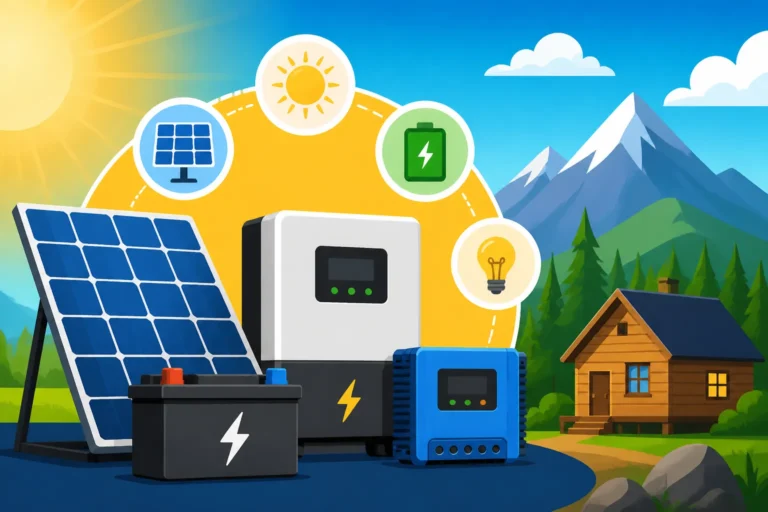
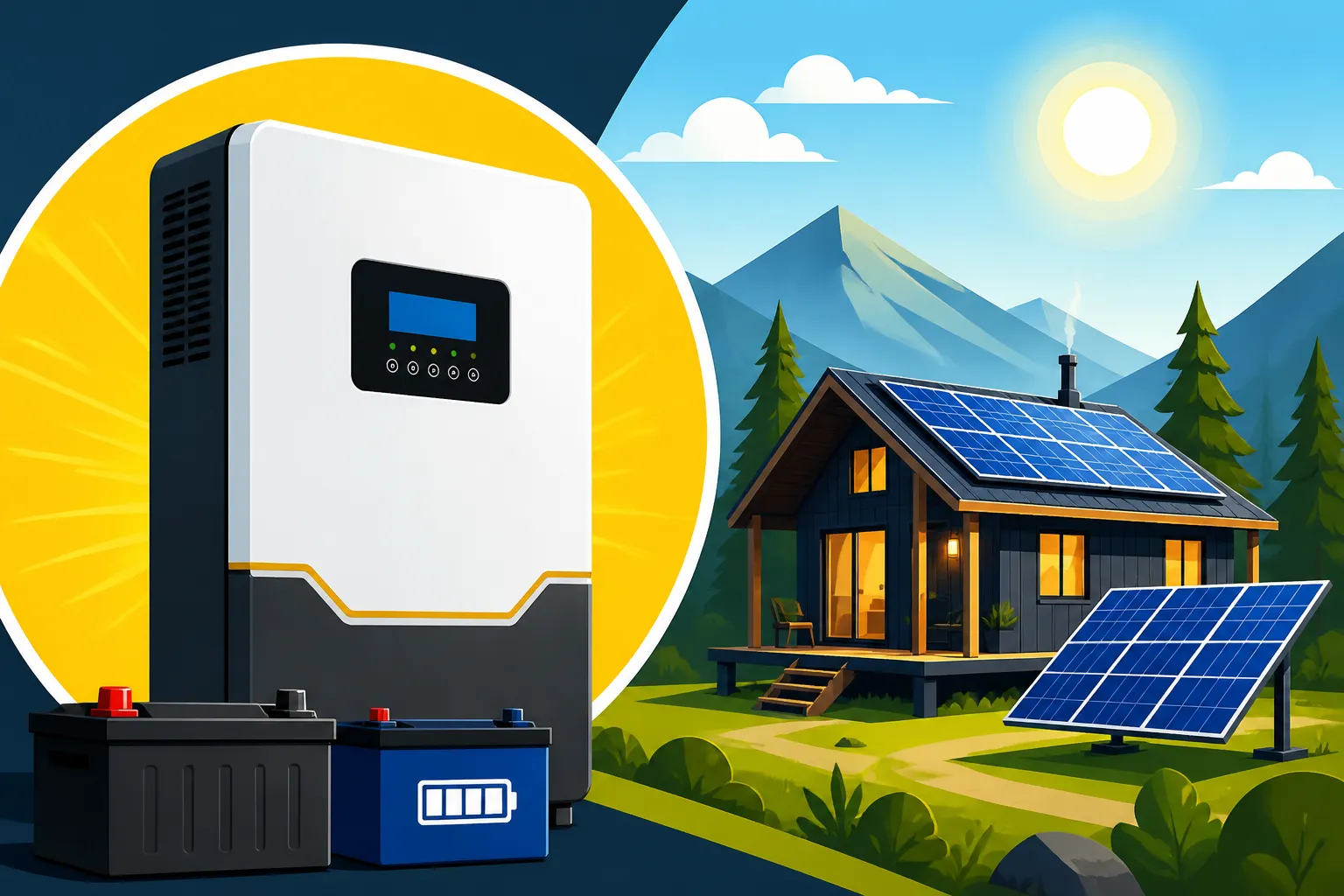
An inverter charger is essentially a superhero of your off-grid electrical system, combining three critical components into one sleek, efficient unit. First, it acts as a power inverter, converting the direct current (DC) stored in your battery bank (typically 12V, 24V, or 48V) into alternating current (AC) that your household appliances and electronics use. Think about running your refrigerator, lights, or even a sensitive laptop; they all need that smooth, consistent AC power. Second, it’s a sophisticated battery charger. When you have an external AC source available, like a generator or even a shore power connection if you’re in an RV or boat, the inverter charger intelligently converts that AC power back into DC to replenish your batteries. This isn’t just a simple trickle charge; modern units employ multi-stage charging algorithms to optimize battery health and lifespan.
Third, and often overlooked, many inverter chargers include an integrated automatic transfer switch. This is a game-changer for seamless power management. If your solar panels aren't keeping up, and your batteries are running low, the unit can automatically sense an external AC source (like your backup generator) and switch your loads to run directly from that source while simultaneously charging your batteries. Once the batteries are full or the generator is turned off, it seamlessly switches back to battery/inverter power. This integrated approach dramatically reduces wiring complexity, saves space, and significantly simplifies the operation of your entire off-grid system, making it far more user-friendly than managing separate inverter, charger, and transfer switch components.
Solving Common Off-Grid Power Challenges
One of the biggest headaches for off-gridders is ensuring consistent power, especially during extended periods of bad weather or high demand. An inverter charger directly addresses several of these pain points. For instance, imagine a week of cloudy, rainy days in the Pacific Northwest. Your solar panels might not generate enough power to fully charge your batteries. With an inverter charger, you can fire up your backup generator, and the unit will efficiently draw power from it, not only running your appliances but also rapidly recharging your battery bank. This seamless generator integration prevents power outages and keeps your system humming along.
Moreover, the intelligent charging capabilities protect your expensive batteries. Instead of a rudimentary charger that might overcharge or undercharge, a quality inverter charger offers precise control over charging parameters, ensuring your How Battery Choice Affects Off-Grid Cost is well-maintained. This is particularly crucial for advanced battery chemistries like LiFePO4, which require specific charging profiles. By integrating these functions, an inverter charger provides a robust, reliable, and almost "set-it-and-forget-it" solution for managing your off-grid energy flow. It takes the guesswork out of switching power sources and keeps your critical loads powered without constant manual intervention, offering true energy independence.
Key Features to Look for in an Off-Grid Inverter Charger
When you’re sifting through the options for an off-grid inverter charger, it’s easy to get lost in a sea of technical jargon. But understanding a few core features will empower you to choose a unit that truly meets your needs, preventing future frustrations and ensuring your system operates efficiently.
Power Output and Surge Capacity
This is arguably the most crucial specification to consider. The “continuous power output” tells you how many watts the inverter can supply constantly, day in and day out. If you plan to run a few lights, a laptop, and charge your phone, a smaller unit (say, 1000-2000 watts) might suffice. However, if you’re powering a tiny home with a refrigerator, a well pump, and perhaps a microwave, you’ll need something much more substantial, likely in the 3000-5000 watt range or even higher. It’s essential to perform a thorough How to Calculate Daily Energy Usage to match the inverter’s continuous output to your highest anticipated simultaneous load.
Beyond continuous power, "surge capacity" is vital, especially for appliances with motors like refrigerators, well pumps, or power tools. These devices draw a much higher amount of power for a brief moment when they first start up – sometimes 2 to 7 times their running wattage. A good inverter charger will have a surge rating that can handle these brief spikes without tripping or failing. For example, a refrigerator might run at 150 watts but could surge to 1000-1500 watts for a few seconds. If your inverter charger can't handle that surge, your fridge won't start. Carefully check the specifications for both the continuous and surge ratings, ensuring they align with the starting watts of your most demanding appliances. This is a critical step in How to Size an Off-Grid Inverter correctly.
Battery Compatibility and Charging Capabilities
The type of batteries you use (or plan to use) will heavily influence your inverter charger choice. Older lead-acid batteries (both flooded and AGM) have different charging requirements than modern lithium iron phosphate (LiFePO4) batteries. A top-notch inverter charger will offer highly configurable charging parameters, allowing you to fine-tune settings like bulk voltage, absorption voltage, float voltage, and equalization (for lead-acid) to match your specific battery chemistry and manufacturer recommendations. Many units also feature temperature compensation, which adjusts charging voltages based on battery temperature, further extending battery life.
Furthermore, consider the system voltage – 12V, 24V, or 48V. While smaller RV or cabin setups might use 12V, larger off-grid homes almost always opt for 24V or, more commonly, 48V. Higher voltages are more efficient for transmitting power over longer distances and reduce current, which means you can use smaller, less expensive wiring. The inverter charger must be designed for your chosen system voltage, so make sure to consider How to Choose System Voltage early in your planning. A versatile unit will allow you to adjust these settings, giving you flexibility for future upgrades or battery changes. Brands like Victron Energy are particularly known for their extensive battery compatibility and customizable charging profiles.
Advanced Functions and Monitoring
Modern inverter chargers go far beyond basic power conversion and charging. Look for units that offer a pure sine wave output, which is crucial for sensitive electronics like computers, medical equipment, and modern appliances. A Pure Sine Wave vs Modified Sine Wave Inverters will ensure your devices run smoothly without damage or buzzing noises. The integrated automatic transfer switch, as mentioned earlier, is a fantastic feature for seamless switching between battery power and a generator or shore power. Some advanced units even include generator auto-start capabilities, where the inverter charger will automatically fire up your generator when battery voltage drops below a certain threshold and shut it off once they’re recharged.
Monitoring and control features are also incredibly valuable for off-grid living. Many inverter chargers now come with built-in Bluetooth or Wi-Fi connectivity, allowing you to monitor your system's performance, battery status, and even adjust settings from your smartphone or computer. This remote access can save you countless trips to your equipment shed. Look for robust data logging, error codes, and clear displays that provide real-time insights into your power production and consumption. These advanced functions provide peace of mind and allow you to optimize your energy usage, making your off-grid experience smoother and more efficient.
Top Contenders in the Off-Grid Inverter Charger Market
Navigating the world of off-grid inverter chargers can feel like trying to find a needle in a haystack, with countless brands and models touting their superiority. However, a few names consistently rise to the top, offering proven reliability, performance, and features that off-gridders truly value.
Renowned Brands for Reliability and Performance
When it comes to the top-tier of off-grid inverter chargers, certain brands have earned their reputation through years of dependable service in some of the most demanding environments. **Victron Energy** stands out as a global leader. Their MultiPlus and Quattro series inverter chargers are legendary for their robust build quality, exceptional efficiency, and unparalleled configurability. A Victron MultiPlus Review will often highlight its pure sine wave output, powerful multi-stage adaptive battery charging, and the ability to accept two AC inputs (like a generator and shore power for the Quattro models). These units are often chosen for critical applications in RVs, boats, and full-time off-grid homes where reliability is paramount. While they come with a higher price tag, their longevity, comprehensive monitoring options via the VictronConnect app, and excellent customer support often justify the investment.
Another strong contender, particularly for whole-home off-grid systems, is Sol-Ark. Their inverter chargers, like the Sol-Ark 15K Review, are essentially all-in-one hybrid systems that combine a powerful inverter charger, an MPPT solar charge controller, and a system controller into a single unit. This integration simplifies installation and offers incredible flexibility for managing solar input, battery storage, and generator backup. Sol-Ark units are known for their high efficiency, excellent surge capability, and user-friendly interface, making them a favorite for those building robust, scalable off-grid or grid-hybrid systems. These brands are often stocked by specialized solar suppliers and can also be found on platforms like Amazon, providing accessibility for a wide range of buyers.
Budget-Friendly and DIY-Focused Options
Not everyone needs a top-of-the-line system, and for many off-gridders, especially those just starting out or working with smaller setups like a remote cabin or a simple RV, budget-friendly options are crucial. This segment of the market has seen significant growth, offering more accessible ways to achieve power independence.
Brands like Renogy have made a name for themselves by providing reliable, cost-effective solutions for various off-grid needs. Their inverter chargers, while perhaps not offering the same depth of configurability as a Victron, still deliver pure sine wave output and efficient battery charging. For example, a Renogy 3500W 12V Pure Sine Wave Inverter Charger offers a solid balance of features and affordability, making it a popular choice on platforms like Amazon for DIY enthusiasts. These units are often easier to install for beginners and can be a great entry point into off-grid living. While they might have fewer advanced monitoring features or a less robust transfer switch compared to premium brands, they typically perform well for common household appliances.
Other brands, such as Growatt and EG4, are also gaining traction for offering powerful inverter chargers at competitive price points. Growatt's all-in-one units combine an inverter, charger, and MPPT controller, similar to Sol-Ark, but often at a more attractive cost. EG4 is known for its value-driven performance, particularly with their robust 48V inverter chargers that pair well with their popular server-rack style LiFePO4 batteries. When considering these budget-friendly options, it's wise to read user reviews and check for adequate customer support, as these aspects can vary more than with the premium brands. However, for those on a tight budget or with a strong DIY ethic, these options provide a viable path to off-grid power without breaking the bank. Many components, including Best MPPT Charge Controllers or even Best Off-Grid Solar Panels can be acquired from these brands to build out a complete system.
Choosing the Right Inverter Charger for Your Specific Needs
Selecting the perfect inverter charger isn’t a one-size-fits-all situation. Your choice should be a thoughtful reflection of your power demands, living situation, and budget. Getting this right means a smooth, reliable off-grid experience, while getting it wrong can lead to frustration and costly upgrades.
Sizing for Your Off-Grid Lifestyle
The first, and most important, step is to accurately assess your power requirements. This isn’t just about how much total power you use in a day, but critically, what your *peak* power demand will be. Are you living in a tiny home with a few lights, a laptop, and a mini-fridge? Or are you aiming to power a full-sized homestead with a well pump, washing machine, and maybe even an air conditioner? You need to compile a comprehensive list of every appliance you plan to run, noting both their continuous running wattage and their surge (starting) wattage. This critical exercise, often called a How to Calculate Off-Grid Solar Needs, will directly inform the continuous and surge rating you need for your inverter charger.
For example, a family living in a full-time RV might have a relatively moderate continuous load, but the instant an air conditioner kicks on, the power demand skyrockets. If your inverter charger can't handle that momentary surge, the AC unit simply won't start. It’s also wise to consider future expansion. If you plan to add more appliances down the line, an inverter charger that offers some headroom or is part of a modular, expandable system (like some from Victron or Sol-Ark) could save you money and hassle in the long run compared to having to completely replace an undersized unit. Don't forget to factor in seasonal variations; you might use more heating or cooling at certain times of the year, impacting your peak load.
Installation Considerations and System Integration
Once you’ve sized your system, think about the practicalities of installation. Are you tackling a DIY vs Professional Off-Grid Solar Cost project, or are you hiring an experienced installer? Inverter chargers can be complex, involving high voltages and currents. While many models are designed with DIYers in mind, ensuring proper wiring, fusing, and grounding is paramount for safety and efficiency. This means understanding proper wire gauges, circuit breakers, and adhering to Off-Grid Solar Safety and Grounding protocols. An improperly installed system can be a fire hazard or simply fail to operate.
Consider how the inverter charger integrates with other components in your system. Does it have a dedicated port for a battery temperature sensor? Does it seamlessly communicate with your MPPT charge controller for coordinated battery management? Look for clear documentation and robust customer support, especially if you're going the DIY route. For larger, more complex systems, particularly those with multiple power sources (solar, generator, wind, etc.), the ability to program and monitor everything from a single interface, like what Victron's GX devices offer, can be a huge benefit. Think about the physical space required for installation – some units are compact, while others are quite large and heavy, needing adequate ventilation and dedicated mounting. Ensuring all these components work together harmoniously is key to a reliable and efficient off-grid power setup.
| Feature / Model | Entry-Level Renogy 3000W | Mid-Range Growatt 3500W SPF | Premium Victron MultiPlus-II 3000W | High-End Sol-Ark 12K-2P |
|---|---|---|---|---|
| Continuous Power | 3000W (12V/24V/48V) | 3500W (24V/48V) | 3000W (12V/24V/48V) | 12000W (24V/48V) |
| Surge Capacity | 6000W (20ms) | 7000W (10s) | 5500W (3s) | 20000W (1s) |
| Battery Compatibility | Flooded, AGM, Gel, LiFePO4 | Flooded, AGM, Gel, LiFePO4 | Flooded, AGM, Gel, LiFePO4 | Flooded, AGM, Gel, LiFePO4 |
| Integrated Charger | Yes, MPPT (60-80A) | Yes, MPPT (100A) | Yes, Adaptive (70-120A) | Yes, MPPT (200A) |
| Transfer Switch | Yes (10ms) | Yes (10ms) | Yes (18ms) | Yes (<4ms) |
| Waveform | Pure Sine Wave | Pure Sine Wave | Pure Sine Wave | Pure Sine Wave |
| Monitoring | LCD, Basic Remote | LCD, Wi-Fi (optional) | Bluetooth, VE.Bus, GX Devices | Touchscreen, Wi-Fi |
| Key Features | Cost-effective, simple | All-in-one, good value | Robust, highly configurable, parallel capability | Hybrid ready, high power, expandability |
| Typical Use Case | Small RVs, cabins, sheds | Mid-size cabins, RVs, workshops | Full-time RV/boat, mid-large homes | Large off-grid homes, businesses |
Installation and Maintenance Tips for Longevity
Once you’ve invested in a quality inverter charger, ensuring its proper installation and ongoing maintenance is crucial for maximizing its lifespan and the overall reliability of your off-grid power system. Skimping on these steps can lead to premature failure, inefficiencies, and even safety hazards.
Proper Setup for Peak Performance
The installation phase is where attention to detail really pays off. Start by choosing a cool, dry, and well-ventilated location for your inverter charger. These units generate heat, and proper airflow is essential to prevent overheating, which can significantly shorten their lifespan. Avoid confined spaces or areas exposed to direct sunlight or moisture. When it comes to wiring, always use appropriately sized cables. Undersized cables can lead to voltage drop, efficiency losses, and even overheating, posing a fire risk. Refer to the manufacturer’s guidelines and local electrical codes for recommendations on How to Size Wire and Cables for both your DC battery connections and AC output.
Ensure all connections are clean, tight, and secure. Loose connections are a common cause of system failures and can generate dangerous heat. Proper grounding of the inverter charger and the entire electrical system is not just a recommendation; it's a critical safety measure that protects against electrical shocks and equipment damage. Follow the manufacturer's wiring diagrams meticulously, double-checking every connection before powering up. Once installed, take the time to program your inverter charger correctly, especially its battery charging parameters. Matching these settings precisely to your battery manufacturer's specifications will ensure optimal charging, protect your batteries, and prolong their life. A thorough initial test of all functions, including generator auto-start if applicable, will catch any issues before they become major problems.
Keeping Your Inverter Charger Running Smoothly
Maintenance for an inverter charger is generally straightforward, but it’s vital for sustained performance. One of the simplest yet most effective tasks is regular cleaning. Dust and debris can accumulate on cooling fins and fan vents, impeding airflow and causing the unit to run hotter. Periodically use compressed air to clear these areas. For some models, checking internal connections might be necessary, but always ensure the unit is completely powered down and disconnected from all power sources before opening it up.
Beyond physical checks, many modern inverter chargers benefit from occasional software or firmware updates. Manufacturers often release updates to improve performance, add new features, or fix bugs. Checking the manufacturer's website (like Renogy's or Victron's support pages) or using their dedicated apps (like VictronConnect) to check for and apply updates can keep your unit running at its best. Keep an eye on the unit's display or monitoring app for any error codes or unusual readings. Addressing small issues promptly can prevent them from escalating into costly repairs. For example, if you notice your batteries aren't charging as expected, it could be a simple setting adjustment or an indicator of a larger issue. Regularly monitoring your system's performance will help you understand its normal operating parameters, making it easier to spot when something isn't quite right, and minimizing your Off-Grid Solar Maintenance Costs.
Disclaimer
Please remember that working with electricity can be dangerous. This guide provides general information and recommendations. Always consult with a qualified electrician or solar professional before installing or modifying an off-grid solar system. Follow all local codes, regulations, and manufacturer instructions for your specific equipment. The author and publisher are not responsible for any damage, injury, or loss resulting from the use or misuse of this information.