Best Portable Solar Panels
The freedom of the open road, the quiet solace of a remote campsite, or simply the peace of mind during a power outage – all these scenarios bring a common challenge: how do you keep your essential electronics humming when there's no outlet in sight? This is where the magic of portable solar panels comes in, offering a flexible and reliable way to harness the sun's energy, and this guide is here to walk you through everything you need to know to pick the best ones for your adventures.
Why Portable Solar Panels Are a Game Changer for Off-Grid Living
Let's be honest, the thought of being stranded without power is enough to give anyone a chill. Whether you're living the van life, retreating to a rustic cabin, or just prepping for emergencies, having a dependable power source that isn't tethered to the grid is absolutely invaluable. Portable solar panels have truly revolutionized how we think about energy independence, offering a practical and eco-friendly solution to a whole host of power dilemmas. They’re not just for the hardcore prepper anymore; they’re becoming a staple for anyone who values flexibility and reliability.
The Freedom of Untethered Power
Imagine this: you've found the perfect secluded spot by a lake, far from any campground hookups. With portable solar panels, you can still charge your phone, keep your cooler running, or even power your laptop for a remote work session. This kind of freedom transforms how you experience the outdoors, allowing you to venture further and stay longer without compromise. It means you don't have to cut your trip short because your battery bank is running low, or worry about finding a coffee shop with an outlet. For those building out a tiny home or a hunting cabin, portable panels can even supplement a larger system or act as the primary power source for lighter usage during initial stages, helping manage your overall Off-Grid Solar Kit Price Ranges.
Beyond recreation, consider the peace of mind during a local power outage, perhaps after a major storm rolls through your area. While your neighbors might be scrambling for generators and fuel, you could be calmly charging your devices, keeping your lights on, and maintaining communication thanks to your portable setup. This ability to generate power on the fly, wherever the sun shines, is truly empowering. It's about being prepared and self-sufficient, whether that's for a weekend getaway to the Oregon Coast or a more serious situation at home in rural Georgia.
Versatility for Diverse Lifestyles
One of the greatest appeals of portable solar panels is their incredible versatility. They cater to such a wide range of needs and lifestyles that it's hard to imagine off-grid living without them. For RVers and van lifers, these panels can be quickly deployed to top off their house batteries, ensuring their fridge stays cold and their interior lights are bright, even when parked in a shady spot that blocks roof-mounted panels. They're excellent for supplemental charging or when you want to avoid installing a full fixed system. If you're wondering How to Choose Off-Grid Solar for a Van, portable options often make the initial setup much simpler.
Beyond vehicles, they're perfect for campers who need to power essentials like portable lanterns, USB devices, or even a small fan on a hot night. They’re also a fantastic solution for remote workshops, sheds, or even small greenhouses where running electricity would be costly and complicated. Even if you have a larger off-grid system, a portable panel can serve as an excellent backup or an extra boost on cloudy days. They even have niche applications, like powering remote surveillance cameras or scientific equipment in distant field locations, proving their worth far beyond just charging phones.
Key Factors to Consider When Choosing Portable Solar Panels
Selecting the right portable solar panels isn't just about grabbing the first one you see. There are several crucial factors that will dictate how effective and suitable a panel is for your specific needs. Understanding these elements will help you make an informed decision and ensure you're investing in a piece of equipment that truly serves your off-grid aspirations. Think of it like buying a car; you wouldn't just pick one based on color, right? You'd consider its fuel efficiency, cargo space, and reliability for your daily commute.
Wattage and Power Output
The wattage of a portable solar panel directly relates to how much power it can generate. This is arguably the most critical factor, as it determines what devices you can power and how quickly. For example, a small 20-50W panel might be perfect for charging a smartphone or a small tablet, but it won't do much for a laptop or a portable fridge. To run larger appliances, like a Dometic cooler or a small CPAP machine, you'll typically need a panel in the 100-200W range, sometimes even more, especially if you're looking to run something like an air conditioner. This is a crucial step in understanding How to Size an Off-Grid Solar System for any application.
When evaluating wattage, also consider the panel's efficiency. A higher efficiency rating means the panel can convert more sunlight into usable electricity, often resulting in a smaller panel size for the same power output. Monocrystalline panels are generally more efficient than polycrystalline ones, making them a popular choice for portable applications where space is often limited. Don't forget that advertised wattage is under "ideal conditions," meaning bright, direct sunlight at a perfect angle. Real-world output can vary significantly due to cloud cover, time of day, and panel orientation.
Portability and Durability
Since we're talking about portable solar panels, their ease of transport is paramount. This encompasses factors like weight, folded dimensions, and the presence of carrying handles. If you're backpacking, a lightweight, compact panel is essential. For RVers, a slightly heavier but more robust folding panel might be acceptable. You also need to consider how durable the panels are. They're going to face the elements – dust, dirt, rain, and accidental bumps. A panel that can't withstand the rigors of travel or outdoor use won't be much good to you.
Look for features like strong, weather-resistant materials, reinforced corners, and robust connections. Some panels come with protective cases or integrated stands that double as covers when folded. Brands like Renogy often offer foldable panels with durable canvas housing and integrated kickstands, designed to withstand typical outdoor abuse. The framing and connection points are often where panels fail, so inspect these areas carefully. For those considering more permanent setups, knowing the differences between portable and fixed systems can impact the Off-Grid Solar Payback Period Explained.
Compatibility and Connectivity
A solar panel is just one part of the equation; it needs to be able to connect to and charge your devices or battery banks. Most portable solar panels come with standard connectors like MC4, Anderson Powerpole, or USB ports. Ensure that the panel's output is compatible with your existing equipment. For instance, if you have a portable power station (often called a solar generator), check its input voltage and connector types. Many modern portable power stations use a variety of input ports, making them quite versatile.
Furthermore, consider if the panel includes a charge controller or if you'll need a separate one. A charge controller is vital for regulating the voltage and current from the panels to prevent overcharging your batteries, which can drastically shorten their lifespan. Smaller panels designed for direct USB charging often have a basic controller built-in. Larger panels, especially those intended to charge a dedicated battery bank, will either integrate a more sophisticated MPPT (Maximum Power Point Tracking) or PWM (Pulse Width Modulation) controller, or require you to purchase one separately. Understanding How to Choose an Off-Grid Charge Controller is critical for a healthy battery bank.
Types of Portable Solar Panels for Your Adventures
The world of portable solar panels isn't a one-size-fits-all situation. There are distinct types, each with its own set of advantages and disadvantages, making them suitable for different scenarios. Understanding these variations will help you pinpoint which design best aligns with your specific off-grid needs, whether you're living full-time in an RV or just looking for a weekend camping companion.
Foldable Solar Panels
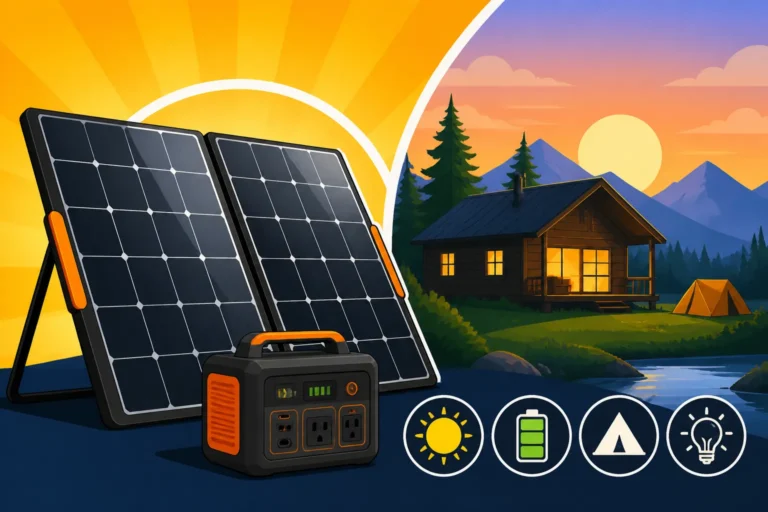
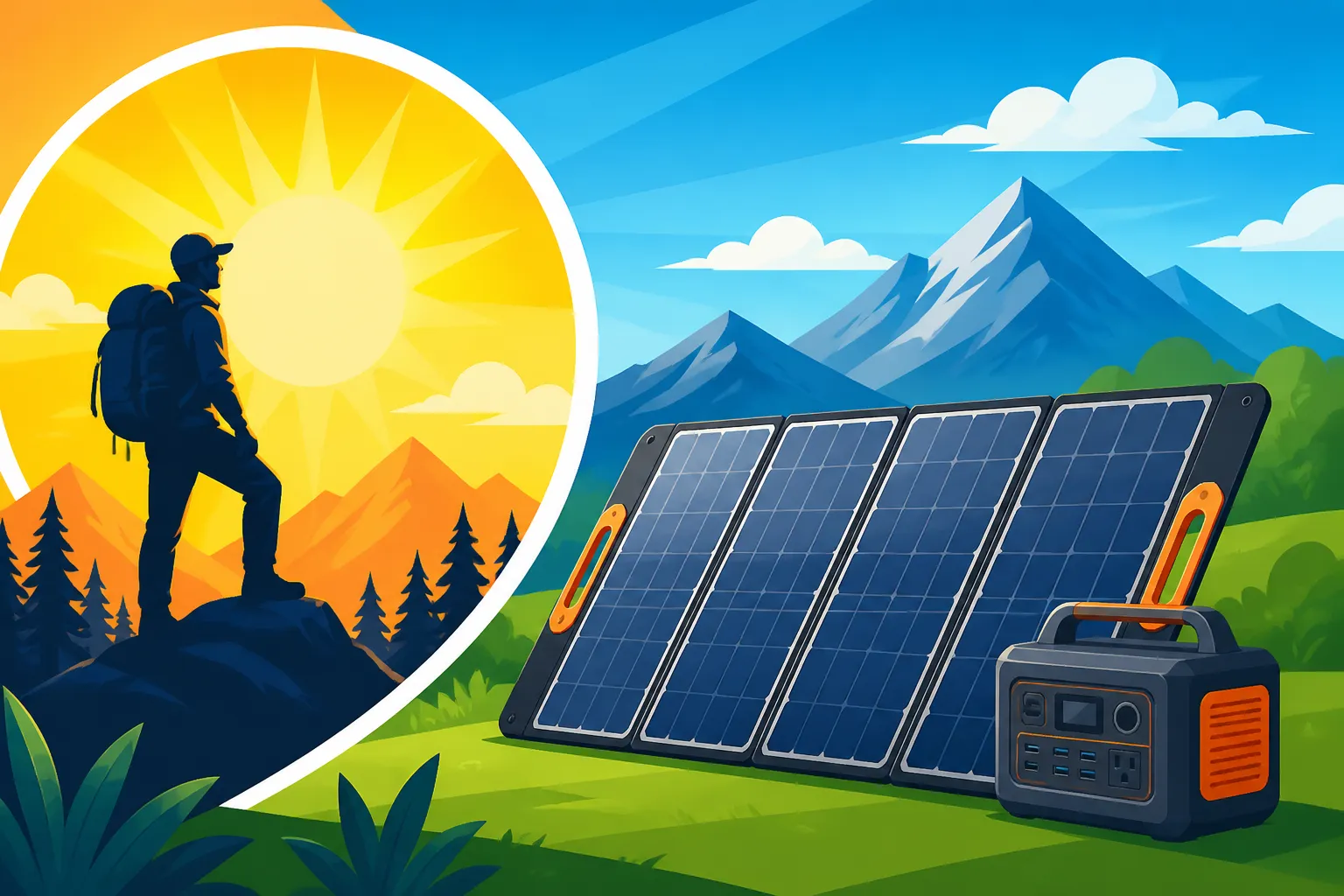
Foldable solar panels are probably what most people picture when they think "portable solar." These panels consist of multiple smaller panels hinged together, allowing them to fold down into a compact, briefcase-like size for easy transport. When deployed, they unfold to reveal a larger surface area for capturing sunlight. They often come with integrated kickstands, making setup a breeze – just unfold, angle towards the sun, and connect.
The primary benefit of foldable panels is their excellent balance of power output and portability. You can get significant wattage (100W, 200W, or even more) in a package that's still manageable to carry and store. They are incredibly versatile for campers, RVers, and van lifers who need to set up and pack down their system regularly. For example, if your RV is parked under some trees, you can easily move your foldable panels into a sunny spot. However, they can be more susceptible to damage than rigid panels due to the multiple connection points and flexible materials. While durable, they aren't meant to be walked on or subjected to constant harsh impacts.
Rigid Portable Solar Panels
Rigid portable solar panels are essentially smaller versions of the panels you'd see on a rooftop, but designed with portability in mind. They typically consist of a single, sturdy solar panel encased in an aluminum frame, often with a tempered glass cover. Many models include pre-drilled holes for mounting or an integrated handle for carrying. These panels don't fold, but their compact size still makes them easy to transport for certain applications.
Their main advantage lies in their durability and efficiency. The rigid construction offers superior protection against physical impact and harsh weather, making them a robust choice for permanent outdoor placement, like on a small cabin or shed, where they might still need to be moved occasionally. They generally offer excellent power per square foot and are less prone to degradation over time compared to flexible options. Some even come with built-in charge controllers, making them a simple plug-and-play solution. However, their larger, fixed form factor means they aren't as compact or easily stowed as foldable options, which might be a dealbreaker for backpackers or those with very limited storage space.
Flexible Solar Panels
Flexible solar panels are the new kid on the block, gaining popularity for specific applications where traditional rigid or foldable panels just won't work. These panels are made from thin, lightweight materials that can bend and conform to curved surfaces, and often lack a rigid frame or glass cover. They are exceptionally light and thin, making them ideal for situations where weight and footprint are absolute priorities.
Think about mounting solar on the curved roof of a van, a boat deck, or even a backpack. Flexible panels shine in these scenarios, adhering directly to the surface without bulky mounting hardware. They are incredibly lightweight, making them perfect for ultralight backpacking or applications where every ounce counts. However, this flexibility often comes with trade-offs. They are generally less efficient than rigid panels, and their lifespan can sometimes be shorter due to their construction. They can also be prone to overheating if not properly ventilated when mounted directly to a surface, which can further reduce efficiency. While they offer unparalleled versatility in mounting, their cost per watt can be higher, and their overall robustness is less than their rigid counterparts.
| Panel Type | Key Advantages | Key Disadvantages | Ideal Use Cases |
|---|---|---|---|
| Foldable | Good power-to-size ratio, easy to deploy/store, often includes kickstands | More vulnerable to damage than rigid, slightly heavier than flexible | RVs, camping, van life, emergency backup, portable work sites |
| Rigid | Highly durable, efficient, long lifespan, robust construction | Less compact for storage, heavier, not suitable for curved surfaces | Permanent cabin/shed mounting, semi-permanent vehicle setups, base camp |
| Flexible | Extremely lightweight, conform to curved surfaces, ultra-thin | Lower efficiency, shorter lifespan, prone to overheating if not vented | Boats, curved RV roofs, ultralight backpacking, subtle installations |
Essential Features to Look For in Portable Solar Panels
Once you've got a handle on the different types and what affects their performance, it's time to dig into the specific features that can truly elevate a portable solar panel from good to great. These aren't just bells and whistles; they're practical additions that can significantly impact usability, efficiency, and the overall value of your investment. Ignoring these details can lead to frustration down the line, so let's get into what really makes a difference.
Integrated Charge Controllers
We briefly touched on this, but an integrated charge controller is a feature that deserves a deeper dive. For many portable solar setups, especially those that include a battery, this component is non-negotiable. A charge controller regulates the voltage and current flowing from your solar panels to your battery bank, preventing overcharging and protecting your battery from damage. Without one, you risk severely shortening the life of your expensive batteries, whether they are lead-acid or Best Off-Grid Solar Batteries like LiFePO4.
Portable solar panels often come with either a PWM (Pulse Width Modulation) or MPPT (Maximum Power Point Tracking) controller built-in. While PWM controllers are more affordable and perfectly adequate for smaller, simpler systems, MPPT controllers are more efficient, especially in varying light conditions or when the panel voltage differs significantly from the battery voltage. An MPPT controller can extract up to 10-30% more power from your panels compared to a PWM, making it a worthwhile upgrade for larger systems or those where every watt counts. Having it integrated into the panel or its connection box simplifies wiring and reduces clutter, making your portable setup truly plug-and-play.
Built-in Stands and Angles
The angle at which your solar panels face the sun dramatically affects their power output. A panel lying flat on the ground will never perform as well as one optimally angled toward the sun. This is where built-in stands become a fantastic feature for portable panels. These adjustable kickstands allow you to quickly and easily position your panels for maximum sun exposure throughout the day. It’s a simple feature, but it yields significant gains in efficiency, sometimes boosting output by 20% or more.
Imagine trying to prop up a panel with rocks or sticks – it's cumbersome, unstable, and rarely achieves the ideal angle. Integrated stands eliminate this hassle, providing a stable, adjustable base. Some advanced models even feature multiple angle settings, allowing you to fine-tune your setup based on the sun's position and the time of year. For instance, in winter, when the sun is lower in the sky, you'd want a steeper angle than in summer. Panels designed for maximum portability, like many of the folding options, usually come standard with these handy stands.
Connectivity Options and Expandability
Beyond the basic connectors, look at the variety and quality of the output ports. Many portable panels now include multiple USB ports (USB-A, USB-C) for direct charging of small electronics, bypassing the need for a separate power station for these devices. Some even include a 12V DC car-style outlet, which can be incredibly useful for powering small DC appliances directly. The more versatile the connectivity, the fewer adapters you'll need to carry, and the more flexible your charging options will be.
Expandability is another often-overlooked feature. As your power needs grow, or if you simply want more charging capacity, can you easily link multiple portable panels together? Look for panels that offer parallel connection capabilities, allowing you to double or even triple your wattage output by simply plugging additional panels into your existing setup. This is particularly useful for building out a modular system, perhaps starting with one panel and adding more as your needs (or budget) expand. For instance, many kits you find on Amazon or from manufacturers like Renogy are designed to be expandable, allowing you to grow your system over time. This kind of flexibility can save you money and headaches in the long run.
Top Portable Solar Panel Brands and Options
When you're ready to invest in portable solar panels, navigating the sheer number of brands and options can feel overwhelming. However, a few names consistently rise to the top, known for their quality, performance, and reliability in the off-grid community. Focusing on these established brands can give you peace of mind, knowing you're getting a product that's been tried and tested by fellow adventurers.
Renogy: A Go-To for Reliable Off-Grid Gear
Renogy has carved out a significant niche in the off-grid solar market, and their portable solar panels are no exception. They are highly regarded for offering a wide range of robust and efficient solutions, catering to both beginners and seasoned solar enthusiasts. What makes Renogy stand out is their commitment to providing complete system components, meaning their portable panels often integrate seamlessly with their charge controllers, inverters, and battery banks. This makes building an expandable and cohesive system much easier.
Their foldable suitcase-style panels are particularly popular. For instance, their 100W or 200W suitcase panels often come with integrated kickstands and a protective case, making them incredibly convenient for RVing, camping, or even powering a remote cabin. Many of these kits include a PWM charge controller, though you can often upgrade to a more efficient MPPT controller separately for optimal performance. Renogy also offers rigid portable panels, sometimes in multi-panel kits, that are excellent for more semi-permanent setups where durability is key. Their customer support and extensive documentation are also frequently praised, providing a reassuring safety net for those diving into solar.
EcoFlow, Bluetti, and Jackery: The All-in-One Powerhouses
While Renogy specializes in the components, brands like EcoFlow, Bluetti, and Jackery have revolutionized the portable power landscape with their all-in-one "solar generators" and accompanying portable solar panels. These systems combine a high-capacity battery, an inverter, and a charge controller into a single, user-friendly unit, which then pairs with their proprietary (or sometimes universal) portable solar panels. This approach offers unparalleled simplicity and convenience, especially for casual users or those who prioritize a compact, integrated solution.
Their portable solar panels are specifically designed to work perfectly with their power stations, often featuring higher efficiencies and specialized connectors for rapid charging. EcoFlow's Delta series, for example, can be paired with their high-wattage foldable solar panels (up to 400W), allowing for incredibly fast recharging of the power station. Similarly, Bluetti and Jackery offer robust folding panels that can withstand harsh conditions while delivering substantial power. These brands are ideal for users who want to avoid the complexities of individual component selection and wiring, preferring a robust, ready-to-use system that's perfect for emergency backup, tailgating, or powering an entire campsite. Many people search for these types of integrated solutions when exploring Best Off-Grid Solar Kits for Beginners.
Other Notable Mentions and Amazon Finds
Beyond the major players, the market is rich with other quality portable solar panel manufacturers. Brands like BougeRV, Newpowa, and HQST offer solid, often more budget-friendly options that deliver reliable performance. These brands are particularly accessible on online marketplaces like Amazon, where you can browse a vast selection, compare features, and read real-world reviews from other off-grid enthusiasts. Shopping on Amazon also allows you to easily find accessories like longer MC4 cables, adapter kits, and durable carrying cases that can enhance your portable solar setup.
When buying from less well-known brands on Amazon, it's crucial to scrutinize customer reviews, looking for consistent positive feedback on performance and durability. While you might find some fantastic value, it's also important to be aware of potential quality variances. Always double-check specifications like open-circuit voltage (Voc) and short-circuit current (Isc) to ensure compatibility with your charge controller or power station. The sheer variety available means that with a bit of research, you can find a portable solar panel solution that perfectly fits your budget and specific power requirements.
Maximizing Your Portable Solar Setup's Performance
Having the best portable solar panels is only half the battle; knowing how to use them effectively and maintain them properly ensures you get the most out of your investment. Even the highest quality panel won't perform optimally if it's set up incorrectly or neglected. A little bit of knowledge and consistent attention can significantly boost your power output and extend the lifespan of your gear, making your off-grid experience smoother and more reliable.
Optimal Panel Placement and Angle Adjustment
The single biggest factor affecting your solar panel's performance is its exposure to sunlight. You want to place your panels in a location that receives direct, unobstructed sunlight for as many hours as possible. Even a small shadow from a tree branch or an awning can drastically reduce output, as solar panels are typically wired in series, and shading just one cell can impact the entire panel's performance. Always scan your surroundings for potential shadows that might creep across your panels as the sun moves.
Once you've found a sunny spot, angling your panels correctly is crucial. The sun's rays should hit the panel surface at a 90-degree angle for maximum efficiency. This means adjusting your panel's tilt throughout the day, or at least a few times a day, to follow the sun's arc. For most portable panels with kickstands, this is a simple process. In the northern hemisphere, panels generally perform best facing south, and the optimal tilt angle will vary with the seasons. A good rule of thumb is to set the tilt angle roughly equal to your latitude. For those in different hemispheres or extreme latitudes, understanding Best Tilt Angle for Off-Grid Panels can make a huge difference.
Proper Wiring and Component Integration
While portable panels often simplify wiring, understanding the basics of how your system components integrate is still vital for safety and performance. Ensure all connections are secure, clean, and appropriate for outdoor conditions. Loose connections can lead to power loss, arcing, and even fire hazards. Use appropriately sized cables to minimize voltage drop, especially over longer runs. A common mistake is using cables that are too thin, which can significantly reduce the power reaching your battery bank, especially with lower voltage systems. For a detailed look, check out guides on How to Wire an Off-Grid Solar System.
If your panel doesn't have an integrated charge controller, make sure the external one you're using is properly matched to both your panels and your battery bank. Connect your charge controller to your battery first, then to your solar panels. When disconnecting, always reverse this order: panels off first, then battery. This prevents damage to the charge controller. For more complex setups, consider adding a battery monitor to keep track of your power usage and battery state of charge. This will help you know exactly how much energy you're generating and consuming. For those powering larger appliances, knowing How Much Solar to Run A Refrigerator or other demanding loads requires careful system matching.
Maintenance and Longevity Tips
Portable solar panels are generally low-maintenance, but a little care goes a long way in ensuring their longevity and sustained performance. The most important task is keeping the panel surface clean. Dust, dirt, pollen, bird droppings, and even water spots can block sunlight and reduce efficiency. A simple wipe-down with a soft, damp cloth is usually all it takes to keep them sparkling. Avoid abrasive cleaners or brushes that could scratch the surface. You can find comprehensive tips on How to Maintain Off-Grid Solar Panels to keep them in top shape.
Periodically inspect your cables and connectors for any signs of wear, fraying, or corrosion. Make sure waterproof connections are still sealed correctly. If you're using flexible panels, ensure they aren't subjected to excessive bending or sharp objects that could puncture them. When storing foldable panels, make sure they are completely dry to prevent mold or mildew, and store them in a cool, dry place away from direct sunlight when not in use. Following these simple steps will ensure your portable solar panels continue to provide reliable power for countless adventures to come.
Disclaimer
The information provided in this guide is for general informational purposes only and does not constitute professional advice. While we strive to provide accurate and up-to-date information, off-grid solar system design and installation can be complex and should always be undertaken with proper safety precautions and adherence to local codes and regulations. Consult with qualified professionals for specific system design, installation, and safety recommendations.