How Many 100W Panels for a Cabin
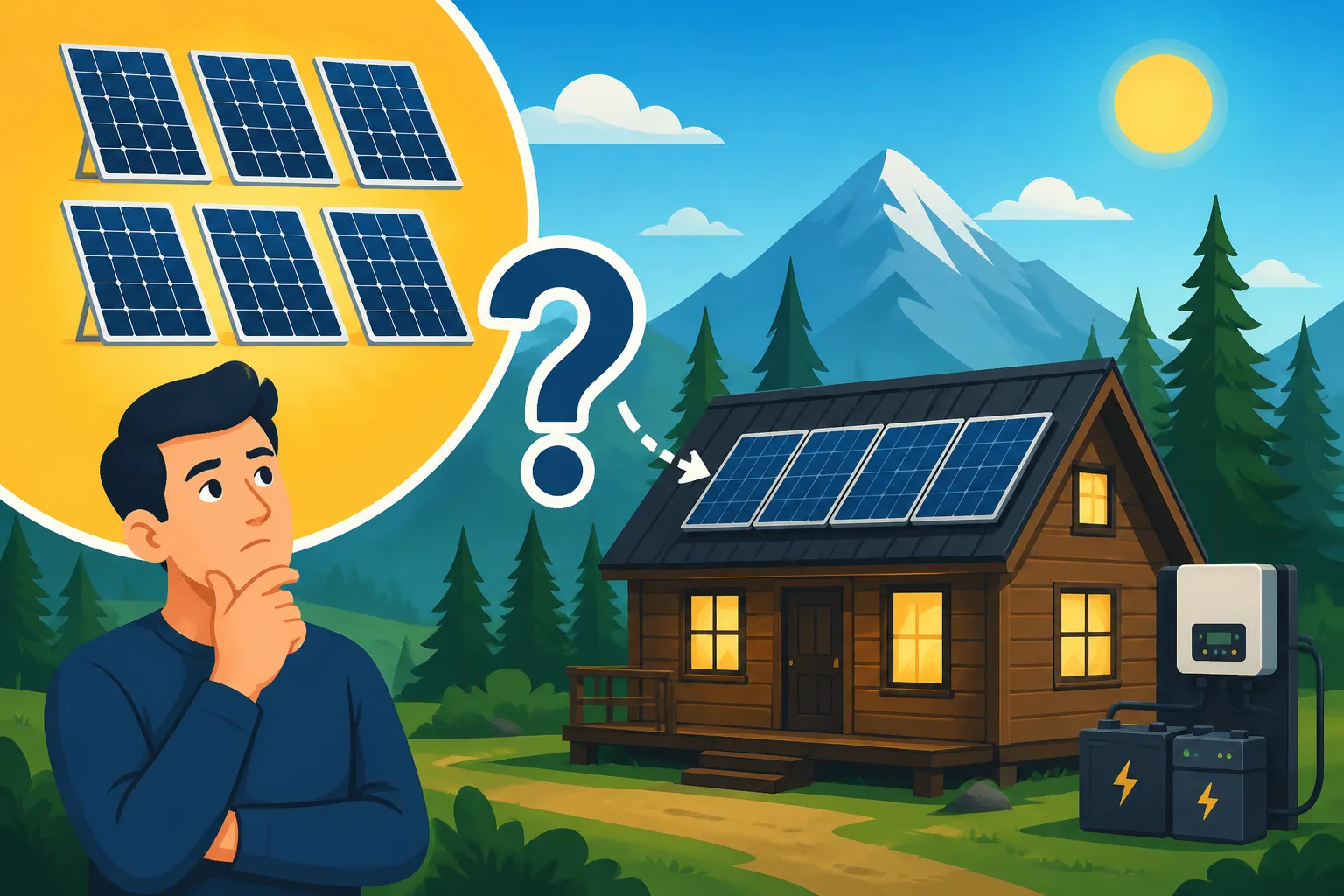
Dreaming of that cozy cabin retreat, tucked away from the hustle and bustle, but then the reality hits: how are you actually going to power it? The thought of running power lines for miles is daunting and expensive, which is why off-grid solar becomes such an appealing solution. But if you're looking at 100-watt solar panels as your starting point, it can feel like a puzzle trying to figure out just how many of them you'll need to keep the lights on and your devices charged. This guide will walk you through the practical steps to determine the right number of 100W panels for your cabin, ensuring you have reliable power without overspending.
Understanding Your Cabin's Energy Needs
Before you can even begin to think about how many solar panels you need, you absolutely must understand your cabin's energy consumption. This isn't just a suggestion; it's the bedrock of a successful off-grid system. Without this crucial step, you're essentially guessing, and that can lead to either an underpowered system that leaves you in the dark or an oversized one that drains your wallet unnecessarily. Take your time with this, because getting it right here saves a lot of headaches later.
The All-Important Load Analysis
A load analysis is simply a fancy term for figuring out every electrical item you plan to use in your cabin, how much power each item consumes, and for how long you'll use it each day. Think of it like creating a detailed grocery list for your electricity. You'll need to list everything from your lights and phone chargers to your mini-fridge, water pump, and any small appliances. For each item, you'll need its wattage (how much power it uses at any given moment) and its estimated daily usage in hours. You can usually find the wattage on the appliance label, in its manual, or with a quick online search. For a more precise measurement, a "Kill-A-Watt" meter is a fantastic, inexpensive tool that plugs into an outlet and tells you exactly how much power a device is drawing.
Once you have the wattage and daily usage for each item, multiply them together to get the daily watt-hours (Wh) for that particular appliance. For example, a 10-watt LED light used for 4 hours a day consumes 40 Wh (10W x 4h). Do this for every single item you intend to power. Don't forget those phantom loads, either, like device chargers even when nothing's connected, or standby power for TVs. These small draws can add up over time. Sum up all these daily watt-hour figures, and you'll have your total daily energy requirement – the magic number your solar system needs to generate. This detailed breakdown is essential for learning How to Calculate Daily Energy Usage.
Accounting for Seasonal Variations and Days of Autonomy
It's not enough to just know your daily energy needs; you also have to consider the environment your cabin is in. The amount of sunlight your solar panels receive varies dramatically throughout the year, especially if you live in a region with distinct seasons. Winter months, with their shorter days and lower sun angles, will yield significantly less solar production than the long, bright days of summer. If you plan to use your cabin year-round, you must size your system for the worst-case scenario, which is typically the shortest, cloudiest winter day.
Furthermore, you need to think about "days of autonomy." This refers to how many days your battery bank can power your cabin without any new energy coming in from the solar panels – essentially, how long you can last through cloudy weather. Most off-grid cabins aim for at least 2-3 days of autonomy, meaning your batteries can keep everything running for that period even if the sun doesn't shine. This decision directly impacts not only how many batteries you'll need but also how much solar panel capacity you require to recharge those batteries once the sun returns. Overlooking these factors is a common mistake that can lead to frustration and power shortages when you least expect them.
Calculating How Many 100W Panels You Actually Need
Now for the math! With your load analysis complete and a realistic understanding of your cabin's location and usage patterns, we can dive into the numbers. This is where those 100W panels start to take shape as a real solution. While it might seem daunting, breaking it down into steps makes it quite manageable.
Determining Your Daily Watt-Hour Requirement
Let's assume, for the sake of example, that your load analysis for a small cabin breaks down like this:
- LED Lights (5 x 5W, 4 hours/day): 5 * 5W * 4h = 100 Wh
- Phone Charging (2 x 10W, 2 hours/day): 2 * 10W * 2h = 40 Wh
- Small Laptop (1 x 40W, 3 hours/day): 1 * 40W * 3h = 120 Wh
- Mini-Fridge (50W, runs 8 hours/day): 1 * 50W * 8h = 400 Wh
- Water Pump (200W, runs 0.5 hours/day): 1 * 200W * 0.5h = 100 Wh
- Small Inverter Fan (20W, 6 hours/day): 1 * 20W * 6h = 120 Wh
Total Daily Watt-Hour Requirement: 100 + 40 + 120 + 400 + 100 + 120 = 880 Wh/day.
This 880 Wh is the amount of energy your solar panels need to produce, on average, each day to keep your cabin humming. Remember, this number can fluctuate depending on your actual usage, so building in a small buffer is always a good idea. For a more comprehensive approach, you might want to look into How to Size an Off-Grid Solar System.
Factoring in Sun Hours and System Losses
The next critical piece of the puzzle is "peak sun hours." This isn't the total number of hours the sun is visible in the sky, but rather the equivalent number of hours per day when solar irradiance averages 1,000 watts per square meter (W/m²). In simpler terms, it's the number of hours of effective full sun you get. This varies significantly by your geographic location and the time of year. For instance, a cabin in sunny Arizona might get 6-7 peak sun hours in winter, while one in the Pacific Northwest might only get 2-3. You can find average peak sun hour data for your specific location online (NREL's PVWatts Calculator is a great resource). For off-grid planning, it's always wise to use the lowest average peak sun hours for your least sunny month to ensure reliable power year-round. Let's conservatively use 4 peak sun hours for our example cabin, anticipating some winter conditions.
Then, we have to account for system losses. No solar system is 100% efficient. You'll lose some power due to temperature, wiring resistance, inverter inefficiency, dust/dirt on panels, and the general wear and tear of components. A typical estimate for overall system losses is between 15% and 30%. To be safe, we'll use a 20% loss factor (meaning 80% efficiency) for our calculation. This translates to multiplying your final panel wattage by 0.8.
The Panel Count Formula
Now, let's put it all together. Here's the formula to determine the minimum number of panels:
(Total Daily Watt-Hour Requirement / Peak Sun Hours / Individual Panel Wattage) / System Efficiency = Number of Panels
Using our example figures:
(880 Wh / 4 hours / 100W) / 0.80 = Number of Panels
(220 Wh / 100W) / 0.80 = Number of Panels
2.2 / 0.80 = 2.75 Panels
Since you can't have a quarter of a panel, you'll need to round up. So, for our example cabin, you would need 3 x 100W solar panels to meet your daily energy needs during the least sunny time of the year, assuming optimal battery charging conditions. This is a minimum; many seasoned off-gridders prefer to oversize their array by 20-30% to account for extended cloudy periods, panel degradation over time, and potential future energy needs.
Here's a quick table to show how the number of panels changes with different daily energy needs, using the same 4 peak sun hours and 80% system efficiency:
| Daily Watt-Hour Requirement | Calculation (Wh / 4h / 100W) / 0.80 | Minimum 100W Panels Needed (Rounded Up) |
|---|---|---|
| 500 Wh | (500 / 4 / 100) / 0.80 = 1.56 | 2 Panels |
| 880 Wh | (880 / 4 / 100) / 0.80 = 2.75 | 3 Panels |
| 1200 Wh | (1200 / 4 / 100) / 0.80 = 3.75 | 4 Panels |
| 1500 Wh | (1500 / 4 / 100) / 0.80 = 4.68 | 5 Panels |
| 2000 Wh | (2000 / 4 / 100) / 0.80 = 6.25 | 7 Panels |
This table illustrates that even for relatively modest cabin power needs, the number of 100W panels can add up quickly.
Practical Considerations and Real-World Scenarios
The calculations are a fantastic starting point, but theory doesn't always translate perfectly to reality. When planning your off-grid cabin solar, there are several practical elements you simply cannot ignore. These are the details that separate a functional, reliable system from one that leaves you frustrated and constantly running out of power.
Space, Mounting, and Orientation
Those compact 100W panels might seem small individually, but when you need three, five, or even seven of them, they start to take up space. You need to consider where they will go. Is your cabin roof large enough and structurally sound to support the array? Or will you need a ground mount? Ground mounts offer flexibility in terms of orientation and tilt, which can be a huge advantage, especially for optimizing winter sun exposure. However, they also require more land and often more robust racking.
No matter where you mount them, the orientation and tilt angle are paramount. For most Northern Hemisphere locations, panels should ideally face true south (not magnetic south). The tilt angle should be optimized for your primary usage season. For year-round cabin living, a compromise angle or an adjustable tilt mount that you can change seasonally is often the best choice. This ensures you're maximizing your energy harvest. Don't forget to consider potential shading from trees, hills, or even other structures throughout the day and across seasons. Even a small amount of shading on one panel can significantly reduce the output of an entire series string. For more on this, check out How to Install Off-Grid Solar Panels and Best Tilt Angle for Off-Grid Panels.
Battery Bank Sizing and the Interplay with Panels
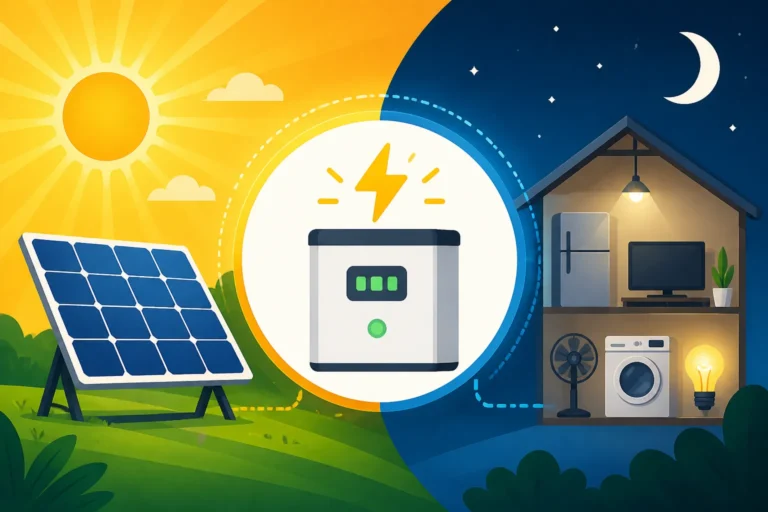
Your solar panels are the generators, but your battery bank is the reservoir. They work hand-in-hand, and one is useless without the other in an off-grid setup. It's no good having a massive solar array if your batteries are too small to store all that generated power, leading to wasted energy. Conversely, a huge battery bank will never get fully charged if your panel array is too small, especially during less sunny periods. This balance is crucial. For our 880 Wh/day cabin example, and assuming 2-3 days of autonomy, you'd be looking at a battery bank capable of storing at least 1,760 Wh (for 2 days) to 2,640 Wh (for 3 days) of usable energy.
The type of battery also matters immensely. Lithium iron phosphate (LiFePO4) batteries like those from brands such as Renogy or Battle Born, for example, offer a much higher usable depth of discharge (typically 80-100%) and a longer lifespan than traditional lead-acid batteries (which usually recommend only 50% discharge). This means you need less stated capacity in a LiFePO4 bank to get the same usable energy as a larger lead-acid bank. While LiFePO4 batteries have a higher upfront cost, their longevity and performance often make them more cost-effective in the long run. Understanding How Many Batteries for an Off-Grid System and How to Size an Off-Grid Battery Bank are essential next steps. You should also consider the LiFePO4 vs Lead-Acid Battery Cost to make an informed decision for your setup.
The Role of the Inverter and Charge Controller
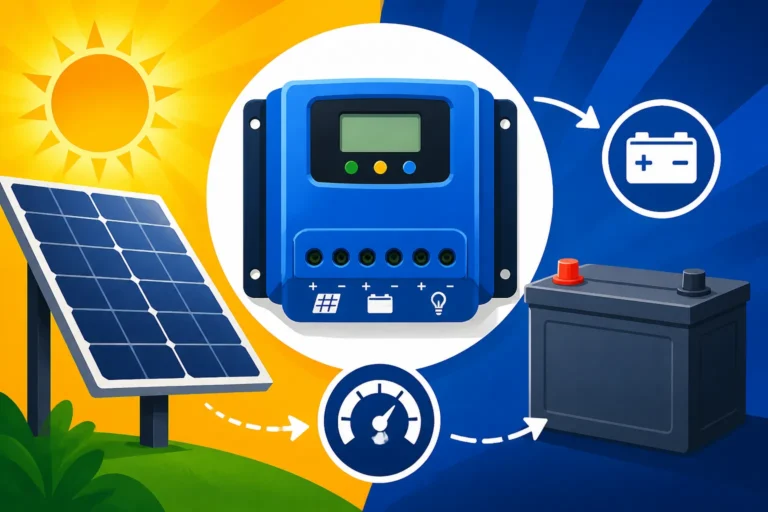
These two unsung heroes are the brains and brawn of your electrical system after the panels and batteries. The charge controller is placed between your solar panels and your battery bank. Its primary job is to regulate the voltage and current coming from your panels to safely charge your batteries, preventing overcharging and prolonging battery life. For serious off-grid use, an MPPT (Maximum Power Point Tracking) charge controller is almost always recommended over a PWM (Pulse Width Modulation) one, as it can extract significantly more power from your solar panels, especially in varying light conditions.
The inverter converts the DC (direct current) power stored in your batteries into AC (alternating current) power, which is what most standard household appliances use. Sizing your inverter correctly is vital. It needs to be able to handle the combined wattage of all the AC appliances you might run simultaneously, plus any surge loads (the brief, higher power draw many appliances, especially those with motors like pumps or refrigerators, have when they first start up). If your inverter is too small, it will trip or fail under load. A pure sine wave inverter is also recommended for sensitive electronics to prevent damage and ensure optimal performance. Learning How to Size an Off-Grid Inverter and How to Size a Charge Controller are critical steps in designing a robust and efficient system.
Expanding Your System and Future-Proofing
One of the beautiful things about building an off-grid solar system for a cabin is its inherent expandability. You don't have to get it perfect from day one, and in fact, it's often wise to start with a solid foundation and grow as your needs evolve.
Starting Small and Scaling Up
Many cabin owners begin their off-grid journey with a minimalist approach, powering just essential lights, phone charging, and maybe a small radio. 100W panels are fantastic for this initial phase because they are relatively inexpensive, easy to handle, and widely available. You can purchase a few panels, a small charge controller, and a couple of deep-cycle batteries to get a feel for your actual power usage before committing to a larger, more complex system. As you spend more time at the cabin, you might realize you want a mini-fridge, a well pump, or even a small heater. At this point, you can strategically add more 100W panels, expand your battery bank, or upgrade your inverter to meet those new demands.
This phased approach allows you to spread out your initial investment, making going off-grid more accessible. It also provides valuable real-world data on your actual power consumption patterns, which can be surprisingly different from initial estimates. You can easily find individual 100W panels and components from reputable brands like Renogy on platforms like Amazon, allowing for flexible expansion. Planning for this expandability from the outset, by choosing components that can integrate with future additions, is a smart move that prevents costly overhauls later. This strategy aligns well with advice on How to Budget for an Off-Grid Solar System and understanding the Cost of Expanding an Off-Grid System.
When 100W Panels Aren't Enough or Too Many
While 100W panels are versatile, there comes a point where their size becomes a limiting factor. If your cabin evolves into a full-time residence with significant power demands – think air conditioning, electric water heaters, washing machines, or large power tools – you'll find yourself needing a lot of 100W panels. A system requiring 2,000 watts or more of continuous power might mean 20 or more 100W panels, which can take up a huge amount of space and create complex wiring scenarios. At this scale, it often becomes more practical and cost-effective to opt for larger, higher-wattage panels (e.g., 300W-500W per panel). These larger panels can reduce the physical footprint of your array, simplify wiring, and potentially lower overall installation costs.
Conversely, for extremely minimal usage, such as powering just a single LED light and charging a phone for occasional visits, even a single 100W panel might be overkill. In such cases, smaller portable solar chargers or even compact solar generators might be more suitable. It's all about matching the tool to the job. Don't be afraid to pivot from 100W panels if your load analysis points to a much larger or much smaller system being more efficient and practical. Sometimes, what seems like a simple solution in theory becomes cumbersome in practice. For very large requirements, you might even be looking into How Many Panels to Run a House Off-Grid.
Disclaimer
The information provided in this article is for general informational purposes only and does not constitute professional advice. Off-grid solar system design and installation can be complex and involve electrical hazards. Always consult with a qualified solar professional or electrician before making any purchasing or installation decisions. Specific requirements and regulations may vary by location.