Peak Sun Hours Explained
When you first start looking into off-grid solar, you hear a lot of terms thrown around, and honestly, it can feel like you need a degree in electrical engineering just to understand the basics. One of the most common, and often misunderstood, concepts is "peak sun hours." Many folks, myself included when I was first starting out, make the mistake of assuming it's simply the number of hours the sun is visible in the sky. This misunderstanding can lead to a seriously undersized system, leaving you in the dark when you need power most. This guide is here to unravel the mystery of peak sun hours, explaining exactly what they are and why they are absolutely fundamental to designing a reliable off-grid solar system.
Understanding the Myth of "Hours of Sunlight" vs. Peak Sun Hours
It’s easy to look out your window on a bright summer day and think, "Wow, the sun's been shining for 12 hours straight! My solar panels must be making a ton of power all that time." And while it's true your panels are producing some electricity whenever the sun is out, they certainly aren't operating at their peak efficiency for every single minute of those 12 hours. This is where the common misconception lies, and it’s a big one that can trip up even seasoned DIY enthusiasts. We tend to conflate the duration of visible daylight with the intensity of the sun's energy, but these are two very different things when it comes to solar power generation.
Why Your Intuition About Sunlight Might Be Misleading
Think about it: the sun is low in the sky at sunrise and sunset, right? At these times, the sunlight has to travel through a much thicker layer of the Earth's atmosphere. This atmospheric journey scatters and absorbs a significant portion of the solar radiation before it even reaches your panels. It's like trying to drink water through a very long, leaky straw – not much gets to the end. So, even if the sun is "out" for 14 hours in the summer, your solar panels aren't getting the full punch of its energy for all that time. They might be trickling in a few watts during the early morning or late evening, but it's far from the maximum output you'd see at midday. This intuitive leap from "sun visible" to "maximum power production" is the first hurdle we need to overcome. It's not about how long you see the sun, but how intensely its rays are hitting your panels.
The Standardized Measurement: 1000 Watts Per Square Meter
To get around this problem of varying intensity, the solar industry uses a standardized measurement for solar irradiance: 1000 watts per square meter (W/m²). This value, often referred to as "Standard Test Conditions" (STC) or "Peak Solar Irradiance," represents the average power of the sun hitting a square meter of Earth's surface under ideal conditions. When you look at a solar panel's specifications, its wattage rating – say, a 300-watt panel – is typically determined under these STC conditions. This means that a 300-watt panel is designed to produce 300 watts of power when it's receiving 1000 W/m² of solar energy. Understanding this benchmark is crucial because it provides a consistent reference point, allowing us to compare different panels and calculate system output regardless of actual weather conditions or time of day.
What Exactly are Peak Sun Hours?
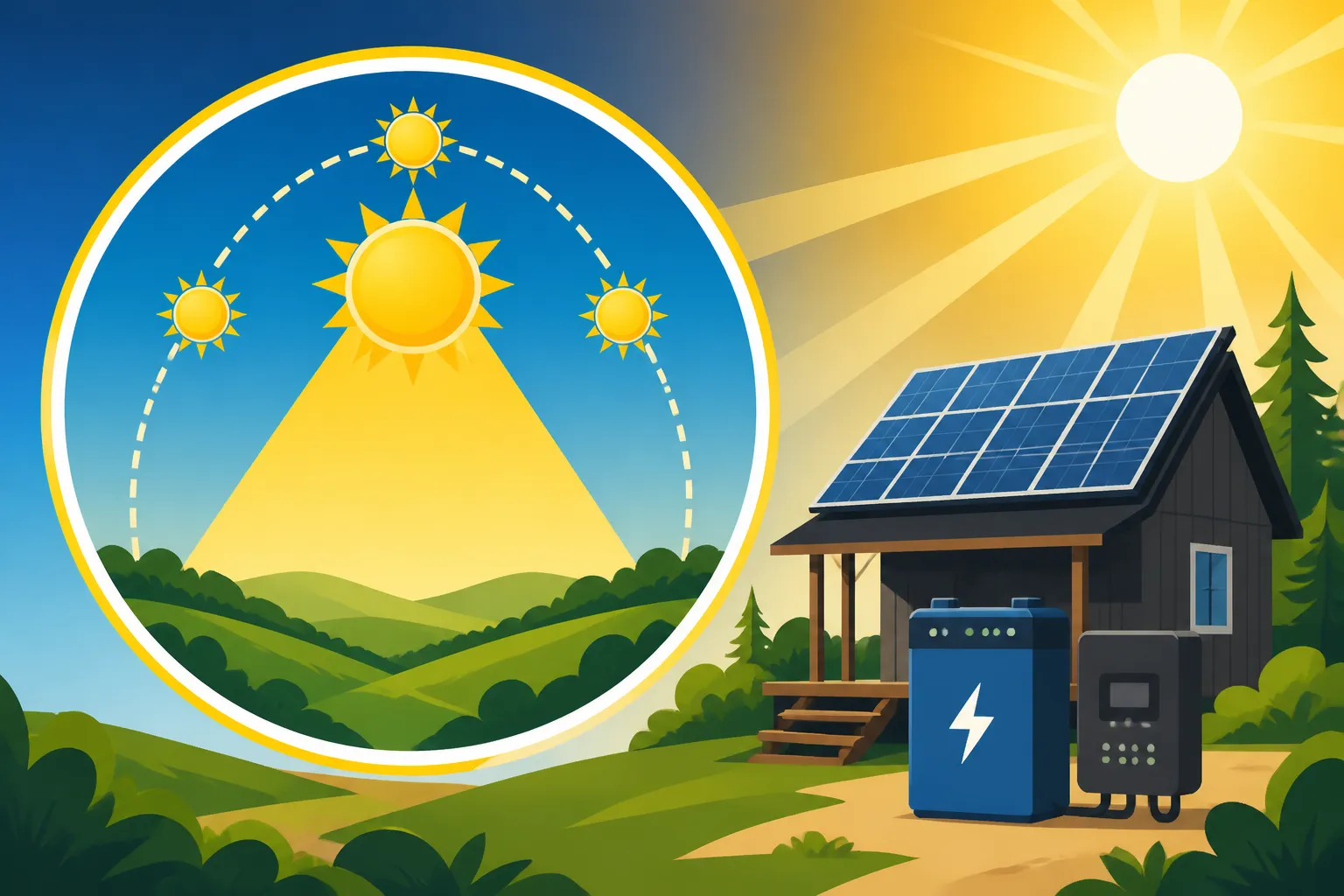
So, if "hours of sunlight" isn't the right way to think about it, then what exactly are peak sun hours? Simply put, peak sun hours represent the equivalent number of hours per day when the intensity of sunlight averages 1000 W/m². It's a way to condense all the varying solar intensity throughout the day into a single, usable number for calculations. Imagine taking all the sunshine your location receives in a day – from the weak morning rays to the powerful midday blaze and back to the fading evening light – and compressing it into blocks of full, intense sun. The total number of those full-sun blocks is your peak sun hours.
The Concept of Equivalent Full Sun
Let's illustrate with an example. Say your location gets 12 hours of actual daylight. For the first hour after sunrise, your panels might only get 200 W/m². By mid-morning, it could be 700 W/m². At noon, it peaks at 1000 W/m² or even more. In the afternoon, it might drop back down, and by sunset, it's just 100 W/m². If you add up all those varying intensities throughout the day and divide by 1000 W/m², you get your peak sun hours. So, those 12 hours of visible sunlight might only equate to, say, 5 or 6 "peak sun hours." This concept of "equivalent full sun" is fundamental because it normalizes the solar resource, allowing for straightforward calculations of how much energy your panels can actually produce. It’s the practical number you’ll use, not the theoretical maximum of simply watching the sun rise and set.
How Peak Sun Hours Differ from Actual Daylight Hours
The difference between peak sun hours and actual daylight hours is like the difference between how long a faucet is on and how much water actually fills a bucket. The faucet might be on for an hour, but if it's just dripping or only partially open, you won't get a full bucket. Similarly, your solar panels might be exposed to the sun for many hours, but only for a fraction of that time are they receiving the full, powerful blast of solar radiation needed to generate their rated power. Actual daylight hours vary significantly by season and latitude; in Alaska during summer, you might have 20 hours of daylight, but your peak sun hours might still only be 4-5 due to the low angle of the sun. Conversely, a desert location in Arizona might have fewer total daylight hours in winter but higher peak sun hours due to the sun's intense, direct path through a clearer atmosphere. This distinction is crucial for understanding how much energy your system can genuinely harvest. Ignoring this can lead to serious disappointments, especially when the clouds roll in or winter shortens the effective solar window.
Why Peak Sun Hours Are Critical for Off-Grid System Sizing
For anyone venturing into the world of off-grid living, understanding and accurately using peak sun hours isn't just a suggestion, it's an absolute necessity. It forms the bedrock of all your power calculations and directly impacts the reliability and functionality of your entire system. Without correctly assessing this metric, you're essentially guessing how much solar power your system can produce, which is a dangerous game when you depend on that power for daily needs. This crucial piece of data will guide you in determining the size of your solar array, the capacity of your battery bank, and even the type of charge controller you'll need.
Calculating Your Daily Energy Production Potential
This is where the rubber meets the road. Once you know your location's average daily peak sun hours, you can calculate how much energy your solar array can realistically generate each day. The formula is fairly straightforward:
- Total Watts of Panels x Peak Sun Hours = Watt-hours (Wh) per day
Let's say you have a 1000-watt solar array (e.g., four 250-watt panels) and your location experiences an average of 5 peak sun hours per day. Your daily energy production potential would be 1000 watts * 5 hours = 5000 Wh, or 5 kWh, per day. This number is vital because it tells you exactly how much energy you have to work with to power your home, cabin, or RV. If you underestimate your peak sun hours, you'll overestimate your production, leading to constant power shortages. Conversely, if you overestimate your peak sun hours, you might find yourself with an abundance of power on sunny days and not enough when the weather turns. This calculation is the first step in figuring out How Many Watts of Solar You Need for your specific setup.
Avoiding Undersizing and Oversizing Your System
Getting your peak sun hour calculation right directly translates to sizing your system appropriately. Undersizing an off-grid system is a common and frustrating mistake. Imagine you’ve moved into your remote cabin, dreaming of sustainable living, only to find your lights flicker out every evening, or your refrigerator can’t stay consistently cold. This often happens because the solar array wasn't large enough to generate sufficient energy given the actual peak sun hours, especially during less sunny periods. You might have bought a 2000W Off-Grid Solar System kit, assuming it would cover your needs, but if your peak sun hours are consistently low, that 2000W array might only deliver the equivalent of a smaller system in a sunnier location.
On the flip side, oversizing, while less catastrophic, can be an unnecessary financial drain. If you've got a massive solar array that consistently produces far more power than you can ever use or store, you've spent extra money on panels, racking, and possibly batteries that you don't truly need. While having a little wiggle room is good for cloudy days, excessive oversizing means a longer Off-Grid Solar Payback Period Explained and a larger initial investment than necessary. The goal is to find that sweet spot, and peak sun hours are your guide.
Accounting for Seasonal Variations and Weather
The biggest challenge for off-grid solar, and where peak sun hours become truly indispensable, is managing seasonal changes and unpredictable weather. Peak sun hours are not static; they fluctuate significantly throughout the year. In winter, days are shorter, the sun is lower in the sky, and often, cloud cover is more prevalent. This drastically reduces the effective peak sun hours compared to summer. For instance, a location that gets 6 peak sun hours in July might only get 2-3 in December.
When designing your system, it’s often best to base your calculations on the lowest average monthly peak sun hours for your site, or at least the lowest for the period you intend to be off-grid. This ensures that even during the darkest days of winter or a prolonged stretch of cloudy weather, you still have enough generating capacity to meet your essential loads. This is a critical step in How to Design for Year-Round Off-Grid Power. Many off-gridders choose to size their system for their winter needs and then have an abundance of power in the summer, which they might use for additional loads like air conditioning or running power tools. Understanding How Winter Affects Off-Grid Sizing requires a clear grasp of how peak sun hours diminish when the sun sits lower in the sky and days are shorter. If you simply used an annual average, you'd likely face power shortfalls in the leaner months.
| Month | Average Peak Sun Hours (Phoenix, AZ) | Average Peak Sun Hours (Seattle, WA) | Average Peak Sun Hours (Miami, FL) | Average Peak Sun Hours (Minneapolis, MN) |
|---|---|---|---|---|
| January | 5.8 | 1.7 | 4.6 | 2.5 |
| February | 6.6 | 2.8 | 5.1 | 3.4 |
| March | 7.3 | 3.8 | 5.7 | 4.6 |
| April | 7.9 | 4.9 | 6.0 | 5.7 |
| May | 8.4 | 5.9 | 5.9 | 6.8 |
| June | 8.7 | 6.6 | 5.8 | 7.2 |
| July | 8.1 | 6.3 | 5.6 | 6.9 |
| August | 7.5 | 5.5 | 5.4 | 6.0 |
| September | 7.0 | 4.5 | 5.2 | 4.8 |
| October | 6.3 | 3.2 | 4.8 | 3.7 |
| November | 5.9 | 2.0 | 4.6 | 2.6 |
| December | 5.6 | 1.6 | 4.4 | 2.0 |
Note: These are approximations for illustrative purposes and can vary based on specific year, microclimate, and data source. Always consult specific, detailed solar irradiance data for your exact location.
How to Find Your Location's Peak Sun Hours
One of the first questions I get asked when discussing off-grid solar is, "Okay, so how do I actually find these peak sun hours for my specific spot?" It's not a secret, thankfully, but it does require a bit of research beyond just looking out your window. Relying on anecdotal evidence or general regional averages can be risky, especially for a permanent off-grid setup. Precision here pays off in system reliability. There are several excellent resources available that provide detailed solar data for almost any location on Earth.
Using Solar Irradiance Maps and Online Tools
The most accurate way to determine your peak sun hours is to consult solar irradiance data specific to your latitude and longitude. Government agencies and solar industry organizations have compiled extensive databases of solar radiation. Tools like PVWatts Calculator (from the National Renewable Energy Laboratory in the US) or similar international platforms are invaluable. You simply plug in your address or coordinates, and these tools can provide monthly and annual average peak sun hours, often broken down by optimal panel tilt angles. They consider historical weather data, cloud cover, and atmospheric conditions to give you a realistic figure. For example, if you're looking at specific solar panels from a brand like Renogy, they often have calculators on their websites that integrate this data to help you size systems, but starting with a broader tool like PVWatts is a solid first step to get your foundational numbers. These tools are far more reliable than a quick Google search for "peak sun hours in my city" which might give you a very generalized or even misleading number.
Local Weather Data and Long-Term Averages
While online calculators are fantastic, it's also wise to consider any local knowledge you might have about your specific microclimate. Do you live in a valley that sees more fog than the nearby hills? Is your property consistently shaded by a mountain range in the late afternoon? These localized factors aren't always perfectly captured by broad models. Looking at long-term local weather patterns, especially average cloud cover percentages, can help you refine your estimates. For instance, if PVWatts says your area gets 5 peak sun hours in November, but you know historically that November is almost always overcast for weeks on end where you live, you might consider sizing your system for a slightly lower figure, perhaps 3-4 peak sun hours, to be safe. It's about combining scientific data with practical, on-the-ground observations. This blend of data helps you understand How to Account for Cloudy Days more effectively.
The Importance of the Winter Solstice
When you're determining your peak sun hours, especially for year-round off-grid living, you absolutely must pay special attention to the winter solstice. This is the shortest day of the year in terms of daylight hours, and the sun's path across the sky is at its lowest angle. Consequently, this is typically when your location will experience its lowest number of peak sun hours. If your off-grid system can reliably meet your power needs during the winter solstice, it's almost certainly going to perform wonderfully the rest of the year. This "worst-case scenario" planning is a cornerstone of robust off-grid design. Many people calculate their system requirements based on a yearly average and then get a rude awakening when winter hits and their power production plummets. Instead, focus on those leanest months. If you only plan to use your off-grid setup seasonally, say for a summer cabin, then you'd naturally focus on the peak sun hours for those specific months. But for true independence, plan for winter.
Applying Peak Sun Hours to Your Off-Grid Solar Design
Now that we understand what peak sun hours are and how to find them, it’s time to integrate this critical data into the actual design of your off-grid solar system. This is where the theoretical knowledge translates into practical component selection and system sizing, ensuring you have enough power when you need it most. It’s an iterative process, but peak sun hours will be the constant guiding principle.
Sizing Your Solar Panel Array
This is perhaps the most direct application of peak sun hours. Once you’ve calculated your total daily energy needs in watt-hours (Wh) – meaning you've figured out How to Calculate Daily Energy Usage for all your appliances and electronics – you can determine the total wattage of solar panels required.
Here's the basic process:
- Calculate daily load: Let’s say your off-grid cabin uses 4000 Wh (4 kWh) per day.
- Determine effective peak sun hours: Using the methods discussed, you find your winter average is 3.5 peak sun hours.
- Calculate required panel wattage: Divide your daily Wh need by your peak sun hours.
4000 Wh / 3.5 PSH = 1142.86 watts of solar panel capacity.
This means you'd need approximately 1150 watts of solar panels to meet your daily demand during the worst-case solar production months. From there, you'd choose actual panels, perhaps five 230-watt panels or four 290-watt panels, ensuring your chosen panels add up to or exceed this total. Remember to factor in system losses (typically 10-20% due to wiring, inverter inefficiency, dust, temperature, etc.) by increasing your required panel wattage by that percentage. So, if you need 1150 watts, you might aim for 1300-1400 watts of panels to be safe. This step is crucial for understanding How Many Solar Panels for Off-Grid Living you truly need.
Sizing Your Battery Bank for Autonomy
While peak sun hours directly influence how much power your panels generate, they also indirectly dictate the size of your battery bank. Your battery bank needs to store enough energy to carry you through periods of low solar production, such as cloudy days or overnight hours. This is often referred to as "days of autonomy." The less consistent your peak sun hours are (e.g., areas with frequent cloudy weather), the more days of autonomy you might need to design for, and thus, the larger your battery bank will be.
Here's how peak sun hours factor in:
- Daily Load (Wh): Still 4000 Wh/day.
- Days of Autonomy: Let's say you want 3 days of autonomy to handle cloudy weather.
- Total Battery Capacity Needed (Wh): 4000 Wh/day * 3 days = 12,000 Wh.
- Consider Depth of Discharge (DoD): If you're using lithium (LiFePO4) batteries like those from Battle Born or EG4, you can often discharge them to 80-100%. For lead-acid (AGM) batteries, you'd typically limit discharge to 50%. This impacts the usable capacity. If you have lead-acid, you'd need 12,000 Wh / 0.50 DoD = 24,000 Wh of total battery capacity.
Even though peak sun hours aren't in the direct battery calculation, they heavily influence the need for autonomy. If your peak sun hours are consistently low and unpredictable, you'll feel more confident with a larger battery bank to bridge those gaps. Knowing How Many Batteries for an Off-Grid System is about balancing generation with storage for sustained power.
The Role of Peak Sun Hours in Charge Controller Selection
The charge controller is the unsung hero of your off-grid system, regulating the power flow from your solar panels to your batteries. While peak sun hours don't directly determine the type of charge controller (MPPT vs. PWM), they do influence its sizing. The charge controller must be able to handle the maximum current that your solar array can produce.
To size your charge controller, you need to know:
- The total power (watts) of your solar array.
- The system voltage (e.g., 12V, 24V, 48V).
- The maximum output voltage and current of your solar panels (Voc and Isc).
Your peak sun hour calculation for array sizing gives you the total watts. The charge controller then converts this power efficiently into battery charging current. If your peak sun hours are high, meaning your panels are producing near their rated power for a significant portion of the day, your charge controller will be working hard. You need one capable of handling that sustained current. Brands like Victron and Renogy offer excellent MPPT charge controllers that are highly efficient, converting nearly all available solar power into usable charging current, even when irradiance is fluctuating. Choosing the right size ensures your controller doesn't get overloaded during peak production, protecting your entire system.
Factors That Can Influence Your Effective Peak Sun Hours
It's one thing to look up the average peak sun hours for your zip code, but it's another entirely to maximize the effective peak sun hours your specific off-grid system receives. Even with the best data, several real-world factors can significantly impact how much solar energy actually reaches your panels and gets converted into usable power. Ignoring these can lead to a gap between your calculated potential and your actual daily energy harvest, leaving you scratching your head when your batteries aren't fully charged.
Shading, Tilt, and Orientation of Panels
This is perhaps the most obvious, yet often underestimated, factor.
- Shading: Even a small amount of shading on just one cell of a solar panel can dramatically reduce the output of the entire panel, or even a whole string of panels, especially with older technology. A tree branch, a chimney, a nearby building, or even accumulated dirt can cast shadows that cut into your effective peak sun hours. Before installing, carefully observe your site throughout the day, in all seasons, to identify potential shading. This is why a detailed site assessment is paramount to effective Off-Grid Solar System Design Basics. For more on this, check out our guide on How to Design Around Shading.
- Tilt: The angle at which your solar panels are installed relative to the sun is critical. For year-round off-grid living, many people opt for a tilt angle roughly equal to their latitude to optimize annual production. However, if your primary goal is winter production, you might increase the tilt angle slightly to capture more of the low-angle winter sun. Conversely, a summer-only setup (like for an RV or seasonal cabin) might benefit from a shallower tilt. Adjusting your tilt angle with a seasonal mount can significantly boost your effective peak sun hours in different seasons.
- Orientation: In the Northern Hemisphere, solar panels should ideally face true south (not magnetic south) to maximize sun exposure throughout the day. Minor deviations might be acceptable, but a significant orientation eastward or westward will reduce your overall daily energy harvest. For those in the Southern Hemisphere, panels should face true north.
Temperature and Panel Performance
This might sound counterintuitive, but solar panels actually perform better in cooler temperatures, assuming the sun is still shining brightly. Their efficiency slightly decreases as the panel temperature rises. While they need sunlight to work, excessive heat can reduce their voltage output.
- High Temperatures: On a scorching 100°F (38°C) summer day, a solar panel sitting on a roof can easily reach 150-160°F (65-70°C). This heat reduces the panel's efficiency, meaning it might produce slightly less power than its rated capacity even under ideal irradiance.
- Ventilation: Proper mounting and ventilation are key. Mounting panels with an air gap between the panel and the roof (or ground) allows air to circulate, helping to keep the panels cooler and maintaining higher efficiency. A flush mount on a hot black roof will likely lead to greater temperature-related losses compared to a ground-mounted system with good airflow.
While you can't control the ambient temperature, you can control how you mount your panels to mitigate the negative effects of heat, ensuring more of those calculated peak sun hours translate into actual power generation.
Dust, Snow, and Panel Maintenance
Another practical reality of living off-grid is that your solar panels are exposed to the elements 24/7.
- Dust and Dirt: Over time, dust, pollen, bird droppings, and other debris can accumulate on the surface of your panels. This creates tiny bits of shading that, cumulatively, can significantly reduce their efficiency and, consequently, your effective peak sun hours. Regular cleaning, especially in dusty environments like the desert or during pollen season, is crucial. You can find specialized panel cleaning tools or even just use a soft brush and water, often available through retailers like Amazon.
- Snow: This is a major concern for off-gridders in snowy climates. Even a thin layer of snow can completely block sunlight from reaching your panels, effectively reducing your peak sun hours to zero until the snow melts or is cleared. Designing your system to include steeper tilt angles can help snow shed naturally, but in heavy snowfall areas, manual clearing might be necessary. Some people even invest in automatic panel cleaners or heated panels (though these consume power themselves). The impact of snow cannot be overstated; it can shut down production entirely, underscoring the need for careful battery sizing to ride out these periods. This is part of the challenge of Off-Grid Solar Cost in Cold Climates.
Considering these environmental factors during the design and maintenance phases will help bridge the gap between theoretical peak sun hours and the actual energy output you depend on daily.
Disclaimer
The information provided in this guide is for general informational purposes only and does not constitute professional advice. Off-grid solar system design and installation can be complex and involve electrical hazards. Always consult with qualified professionals and adhere to all local codes, regulations, and safety guidelines when planning or installing any solar power system.