Off-Grid Solar Savings for Remote Properties
For anyone who owns a remote property, whether it's a cozy cabin nestled deep in the woods or a sprawling ranch far from the nearest power pole, you know the frustration. The dream of quiet, self-sufficient living often clashes head-on with the daunting reality of getting reliable electricity out there. Extending grid power can feel like an endless money pit, leaving many to wonder if true energy independence is even affordable. This guide is here to shed light on exactly how off-grid solar can become your financial ally, delivering significant long-term savings for your remote sanctuary.
Understanding the True Cost of Grid Connection for Remote Properties
The allure of simply "connecting to the grid" might seem like the easiest path, but for properties that are truly remote, it's often anything but simple, and certainly not cheap. Many homeowners are shocked when they get the quotes, which can quickly spiral into tens of thousands, or even hundreds of thousands, of dollars. It’s not just the initial trenching and wiring; there’s a whole host of complexities and costs that stack up fast.
The Hidden Fees and Logistics of Utility Extensions
When you call your local utility company about bringing power to a remote parcel, you're often met with a complicated process and a bill that’s more than you ever imagined. First, there's the per-foot charge for extending power lines. If you're a mile or two off the main road, that alone can mean a substantial sum. This isn't just about the wires; it includes surveying, easement acquisition, the cost of poles, transformers, and the labor to install it all. Utility companies are not in the business of losing money, and they'll pass every single one of those infrastructure costs directly onto you.
Beyond the initial build-out, there are often connection fees, meter installation charges, and sometimes even significant fees for upgrading existing infrastructure if the local grid isn't robust enough to handle a new load so far out. Then there’s the time involved. Permitting can be a lengthy process, and utility companies operate on their own schedule, which often isn't yours. You might wait months, even a year or more, just to get power to your property, all while these costs continue to mount. This is a common frustration for folks trying to develop their remote dream.
Long-Term Grid Connection Costs Versus Upfront Solar Investment
Once you're connected to the grid, the costs don't magically disappear. You'll be subject to monthly utility bills that include charges for energy consumption, delivery fees, taxes, and often various surcharges. These rates aren't static; they tend to increase over time, sometimes quite dramatically, leaving you at the mercy of energy markets and utility company policies. In some regions, especially those prone to extreme weather, you might also face reliability issues, unexpected outages, and the need for a fossil-fuel generator backup, adding another layer of cost and maintenance.
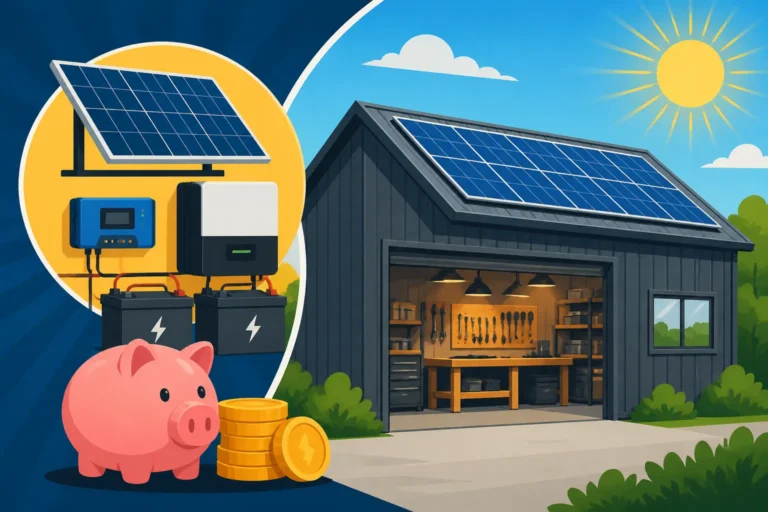
Comparing this to an off-grid solar system, the investment looks different. While the upfront cost of an off-grid setup can be significant, ranging from a few thousand dollars for a basic cabin system to tens of thousands for a full home, it's largely a one-time investment. After installation, your "fuel" – sunshine – is entirely free. You eliminate those recurring monthly utility bills, offering predictable energy costs over the lifespan of your system, which can be 20-30 years for panels and 10-15 years for quality batteries. When you consider the long-term perspective, and especially if you're looking at a property that's a considerable distance from existing power lines, the lifetime cost of an off-grid system can often be significantly less than the lifetime cost of grid connection and ongoing utility payments. For a deeper dive, check out our article on Off-Grid Solar vs Utility Extension Cost.
How Off-Grid Solar Generates Significant Savings Over Time
The decision to go off-grid with solar isn't just about self-sufficiency; it's a shrewd financial move for many remote property owners. The savings aren't always immediately obvious, but when you zoom out and look at the bigger picture, they become incredibly compelling. It’s about more than just avoiding a monthly bill; it’s about control, predictability, and long-term financial stability.
Eliminating Monthly Utility Bills and Fluctuating Rates
This is perhaps the most direct and satisfying saving you'll experience. Once your off-grid solar system is up and running, those dreaded monthly utility bills become a thing of the past. No more worrying about peak demand charges, fluctuating fuel costs, or unexpected rate hikes that seem to pop up every year. Imagine the peace of mind knowing that your energy costs are fixed, primarily consisting of the initial investment in your system, with minimal ongoing maintenance. This predictability is golden, especially for those on a fixed income or who simply want to budget with certainty.
Consider a scenario in a place like rural Montana, where extending grid power could cost $50,000 for just half a mile. Then, add an average monthly bill of $150. Over 20 years, that's $36,000 in utility payments on top of the initial extension cost. An off-grid solar system, while having its own upfront cost (which you can explore in our Off-Grid Solar Cost: Complete Breakdown), eliminates that recurring $150 burden entirely. This freedom from ongoing energy expenses means every dollar you save can be reinvested into your property, your lifestyle, or simply stay in your pocket.
Avoiding Blackouts and Power Surges
Remote properties are often at the end of the line, literally. This means they're frequently the first to lose power during storms, heavy snow, or even routine maintenance, and often the last to get it back. Prolonged outages can be more than just inconvenient; they can be costly. Imagine a deep freeze in upstate New York where your grid power goes out for days. Without power, your pipes could freeze and burst, leading to thousands in repairs. Or maybe your well pump stops, leaving you without water. A grid-tied home often needs a generator backup for such scenarios, which adds further costs in terms of purchase, fuel, and maintenance.
With a properly sized off-grid solar system, you create your own micro-grid. Your home is essentially an independent power station. When the grid goes down (if you even have the option to connect to one), your lights stay on, your refrigerator keeps humming, and your well pump continues to draw water. This inherent resilience provides not only peace of mind but also tangible financial savings by preventing costly damages from power outages and eliminating the need for a separate, frequently used generator. While some off-grid systems include a backup generator for extreme conditions, its use is typically minimal, saving significantly on fuel and wear compared to a grid-tied home's emergency generator.
Leveraging Incentives and Tax Credits
It's a common misconception that off-grid solar systems don't qualify for the same incentives as grid-tied installations. While some state or local programs might be specific to grid-tied systems, the federal Investment Tax Credit (ITC) – often called the solar tax credit – generally applies to off-grid solar systems as well, provided they meet certain criteria. As of late 2023, this credit can save you 30% on the cost of your eligible solar equipment and installation. This is a significant chunk of change that directly reduces your overall investment.
For example, if your off-grid system costs $30,000, that 30% tax credit could mean a $9,000 reduction in your tax liability. It's not a rebate check, but it's money you don't have to pay to the government, effectively making your system much cheaper. It’s always wise to consult with a tax professional, but understanding that this major incentive is often available can drastically alter the financial equation, making off-grid solar even more attractive. Our article Does the Federal Tax Credit Apply to Off-Grid Solar has more detailed information on this topic.
Strategies for Maximizing Your Off-Grid Solar Savings
Going off-grid is a journey, and like any big project, there are smart ways to navigate it to ensure you get the most bang for your buck. It's not just about buying panels; it's about making informed decisions from the initial planning stages right through to the ongoing use of your system.
Smart System Sizing and Component Choices
One of the biggest mistakes people make when planning an off-grid system is either undersizing or oversizing their components. Undersizing means you'll constantly be short on power, needing to run a generator, which eats into your savings. Oversizing, on the other hand, means you've spent too much money on capacity you don't actually need. The key is precise load analysis – understanding exactly how much power you use daily, and what your peak power demands are. This dictates the size of your solar array, battery bank, and inverter. You can learn more about this crucial first step in our guide on How to Size an Off-Grid Solar System.
When it comes to components, choosing the right quality and type makes a huge difference in long-term savings. For instance, while lead-acid batteries might have a lower upfront cost, high-quality LiFePO4 (lithium iron phosphate) batteries often offer a much longer lifespan and deeper discharge capabilities, leading to better long-term value and fewer replacement costs down the road. Brands like EG4 and Battle Born are popular choices for reliable lithium batteries, though their initial investment is higher. Similarly, investing in an efficient inverter, like those offered by Victron Energy, can reduce energy waste and extend the life of your appliances. Don't cheap out on the core components if you're looking for true long-term savings and reliability.
| Component Category | Cost Impact | Savings Strategy |
|---|---|---|
| Solar Panels | Initial cost, efficiency affects long-term output. | Choose monocrystalline for best efficiency; consider bifacial in some setups. |
| Batteries | Major cost, impacts system autonomy & lifespan. | Invest in LiFePO4 for longevity; proper sizing prevents over-discharge. |
| Inverter | Initial cost, efficiency affects energy usage. | Opt for pure sine wave; right size for surge loads to avoid damage. |
| Charge Controller | Relatively low cost, crucial for battery health. | MPPT controllers are more efficient, especially in varied weather. |
| Wiring/Mounting | Installation cost, safety, and longevity. | Proper gauge wiring prevents voltage drop; durable mounts protect panels. |
DIY Installation vs. Professional Services
This is a crossroads many off-grid hopefuls face, and it directly impacts your initial outlay. Doing it yourself (DIY) can save you a significant amount on labor costs, potentially cutting your total system cost by 10-20% or even more, depending on the complexity of the installation and your own skill set. For smaller systems, like powering a shed or a basic RV setup, many individuals find they can handle the installation with readily available kits and online resources. Companies like Renogy offer comprehensive DIY kits that make the process more accessible.
However, a full-home off-grid system involves complex electrical wiring, safety considerations, and often permits that require professional sign-off. If you lack experience with electrical systems, attempting a large DIY installation could lead to costly mistakes, inefficiencies, or even safety hazards. In such cases, hiring a qualified electrician or a solar installer specializing in off-grid systems is a worthwhile investment. They ensure the system is installed correctly, safely, and up to code, potentially preventing future problems that could erase any initial DIY savings. Weigh your skills and the system's complexity carefully. You can find more insights on this in our guide on DIY vs Professional Off-Grid Solar Cost.
The Role of Energy Efficiency and Conservation
The cheapest kilowatt-hour is the one you never use. This principle is paramount in off-grid living and is a huge driver of long-term savings. By reducing your overall energy demand, you can build a smaller, less expensive solar system. This means fewer solar panels, a smaller battery bank, and potentially a less powerful inverter – all translating to significant upfront savings.
Start by auditing your existing appliances. Are they energy hogs? Swapping out old incandescent bulbs for LED lighting is a no-brainer, saving substantial power. Investing in Energy Star-rated appliances, especially refrigerators and freezers, which run constantly, can dramatically reduce your baseline energy consumption. For example, a modern, efficient mini-split air conditioner will use far less power than an older window unit. Even simple habits, like unplugging electronics when not in use ("phantom load"), can add up. For smaller loads or emergencies, having something like a Jackery portable power station can be a lifesaver, ensuring critical devices stay powered without drawing from your main battery bank. Think of it this way: every watt you save means your solar panels and batteries don't have to work as hard, extending their lifespan and delaying the need for costly upgrades or replacements. This also improves your Off-Grid Solar Payback Period Explained.
Real-World Examples of Off-Grid Savings
It's one thing to talk about theoretical savings, but seeing how it plays out in real life can truly drive the point home. Let's look at a couple of common remote property scenarios and how off-grid solar can be a game-changer for the wallet.
Powering a Remote Cabin or Hunting Lodge
Imagine you own a rustic hunting cabin in the sprawling forests of northern Michigan, about two miles from the nearest grid connection. Your primary use is seasonal – weekends, hunting season, and some summer getaways. The utility company quotes you $75,000 to run power lines to your property, plus a minimum monthly service fee of $30, even if you're not there. Over 20 years, that’s $75,000 upfront + ($30/month * 240 months) = $75,000 + $7,200 = $82,200, assuming no rate increases.
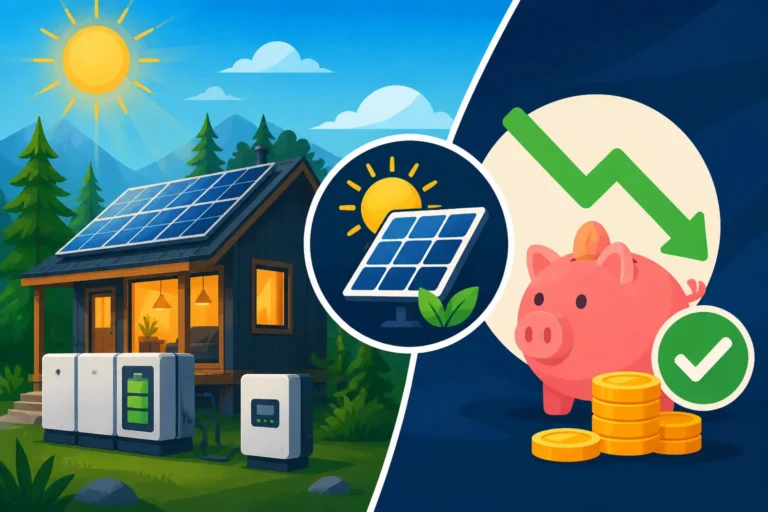
Now consider an off-grid solar system. For a modest cabin powering lights, a small refrigerator, a microwave for quick meals, and charging electronics, a 2,000-watt solar system with a 5kWh lithium battery bank might cost around $10,000-$15,000 for components, and if you DIY some of it, maybe $1,000-$2,000 in miscellaneous installation costs (wires, mounts from places like Amazon). Let's say a total of $17,000. With the 30% federal tax credit, that brings the net cost down to about $11,900. After this, your energy is virtually free. You've saved over $70,000 compared to the grid extension, and you now have reliable power that isn't subject to monthly bills or outages. This scenario makes a compelling case for the Cost to Power a Cabin with Solar.
Living Full-Time on a Remote Homestead
Let's switch gears to a full-time homestead in rural Oregon, where you're several miles from existing infrastructure. You want to power a modern home with all the conveniences: refrigerator, freezer, well pump, washing machine, lights, entertainment, and maybe even a mini-split AC. The utility company provides a quote of $150,000 to extend power lines due to the distance and rugged terrain. Your projected monthly bill, with all these appliances, could easily be $250. Over 20 years, that's $150,000 upfront + ($250/month * 240 months) = $150,000 + $60,000 = $210,000.
An off-grid solar system for this level of consumption would be substantial, perhaps a 10,000-watt (10kW) array with a 30kWh+ battery bank. This might cost anywhere from $40,000 to $70,000 for components and installation, depending on your choices and how much you DIY. Let's take the middle ground at $55,000. Applying the 30% tax credit reduces the net cost to around $38,500. Comparing this to the $210,000 grid connection cost over 20 years, you're looking at a massive saving of over $170,000! And that doesn't even account for potential future utility rate increases. Plus, you have the peace of mind of total energy independence and protection from grid failures. When you're budgeting for such a significant undertaking, understanding How to Budget for an Off-Grid Solar System becomes incredibly important.
Long-Term Financial Impact and Return on Investment
Beyond the immediate savings, the long-term financial implications of choosing off-grid solar for remote properties are often profoundly positive. It’s not just about avoiding costs; it’s about creating an appreciating asset and gaining true financial control over your energy future.
Appreciating Asset and Property Value Increase
Unlike paying monthly utility bills, which offer no return on investment, an off-grid solar system is an asset. It adds tangible value to your property, especially in remote areas where grid access is either impossible or prohibitively expensive. A property that comes with its own robust, reliable power system is significantly more attractive to buyers and can command a higher price. It essentially provides a critical infrastructure component that would otherwise be a major hurdle or expense for future owners.
Think of it like putting in a well and septic system versus relying on municipal services. The well and septic system, while an upfront cost, add independent functionality and value to the land. Similarly, a well-designed and maintained off-grid solar system makes your remote property turnkey for power, a highly desirable feature. This increased value, combined with the lack of ongoing utility bills, transforms your energy investment into a powerful financial tool.
Environmental Benefits and Personal Independence
While not directly financial, the environmental benefits and personal independence that come with off-grid solar contribute to a richer, more resilient lifestyle, which many consider an invaluable return. Reducing your carbon footprint by relying on clean, renewable energy is a powerful motivator for many. It aligns with a desire for sustainable living and provides a sense of contribution to a healthier planet.
More fundamentally, the independence gained is immense. You are no longer beholden to large utility companies, their policies, their outages, or their ever-increasing rates. You become the master of your own energy supply. This peace of mind and self-reliance can lead to less stress and a greater sense of security, especially in unpredictable times. For many off-gridders, this non-monetary return on investment is just as, if not more, valuable than the direct financial savings. It truly embodies the spirit of self-sufficiency. You are no longer asking "how much to run an air conditioner on off-grid solar," but rather "how much peace of mind does my system bring?"
Maximizing System Longevity and Reducing Maintenance Costs
Even the best off-grid solar system will incur some maintenance costs over its lifespan. However, adopting smart practices and making informed choices from the start can significantly extend the life of your components and minimize recurring expenses, further boosting your long-term savings.
Routine Maintenance and Proactive Care
Just like a car, your off-grid solar system benefits greatly from regular check-ups. The good news is that most of this maintenance is straightforward and can be handled by the homeowner. Keeping your solar panels clean from dirt, dust, snow, and debris ensures they operate at peak efficiency, maximizing power production and extending their life. In dusty climates like the high desert of Arizona or areas prone to heavy pollen, a quick rinse with water a few times a year can make a noticeable difference in output.
Regularly inspecting wiring for any signs of wear, critter damage, or loose connections is crucial for safety and efficiency. Checking battery terminals for corrosion and ensuring proper ventilation for lead-acid batteries (if you chose that option) are also important. For LiFePO4 batteries, which require less active maintenance, monitoring their state of charge and overall health via a battery monitor can help identify potential issues early. Neglecting these simple tasks can lead to reduced performance, premature component failure, and ultimately, higher replacement costs down the line. Our article on Off-Grid Solar Maintenance Costs covers this in more detail.
Upgrading and Expanding Your System Smartly
Life changes, and so might your energy needs. You might add a new appliance, a workshop, or even expand your cabin. Designing your initial system with future expansion in mind can save you money and headaches later. This could mean leaving space for more panels on your roof or ground mount, installing an inverter that can handle a larger load, or choosing a battery bank architecture that allows for easy additions.
When it comes to upgrades, timing and component compatibility are key. For instance, rather than replacing your entire battery bank if only one cell goes bad (in a DIY setup), understanding your system allows you to replace individual components. When it is time for a full battery replacement, opting for modern, efficient batteries like LiFePO4, which have a longer cycle life, might have a higher upfront cost but will dramatically reduce the frequency of future replacements, saving you money over decades. If you're wondering about expanding, our guide on the Cost of Expanding an Off-Grid System provides excellent insights into making these decisions cost-effectively. Making informed choices at each step ensures your off-grid journey remains financially viable and rewarding.
Disclaimer
Please note that the information provided in this article is for general guidance and informational purposes only. The cost estimates and savings projections are illustrative and can vary significantly based on location, specific energy needs, equipment choices, installation complexity, and market conditions. Always consult with qualified professionals, including solar installers, electricians, and tax advisors, before making any decisions regarding your off-grid solar system.