When Off-Grid Solar Pays for Itself
The thought of embracing off-grid solar living often comes with a big question mark: "Is this really going to pay for itself, or am I just dumping a fortune into a fancy, complicated system?" It's a completely valid concern, especially with the upfront investment involved. Many folks dream of energy independence but worry about the financial viability. This guide is here to shed light on exactly when and how off-grid solar can become a truly cost-effective and even financially rewarding venture, helping you understand the long-term savings and return on investment.
Understanding the Payback Period for Off-Grid Solar
When we talk about off-grid solar "paying for itself," what we're really discussing is the payback period. This isn't some abstract financial jargon; it's a very practical measure of how long it takes for the savings you gain from generating your own power to equal the initial cost you shelled out for the system. Think of it like this: every dollar you don't spend on electricity bills, or fuel for a generator, is a dollar that's chipping away at your initial investment. Once those accumulated savings match your original outlay, your system has, in essence, paid for itself. From that point forward, all the power you generate is essentially "free," directly contributing to your savings or even becoming a source of profit if you consider the avoided costs.
Initial Investment: What You're Paying For Upfront
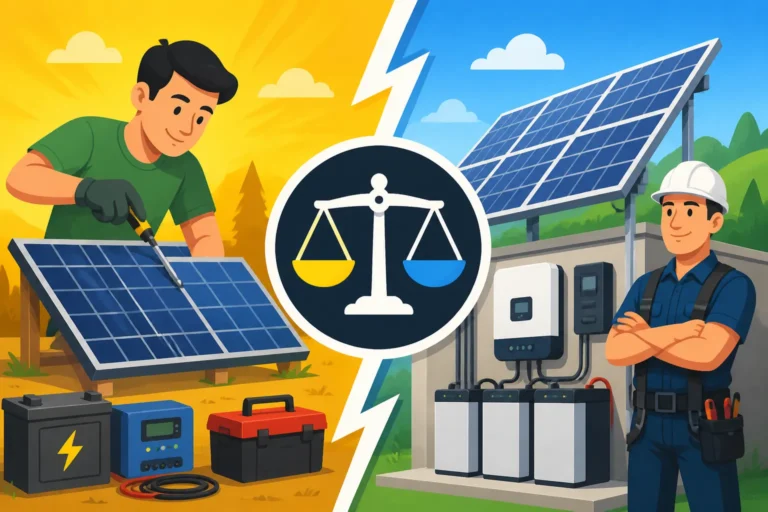
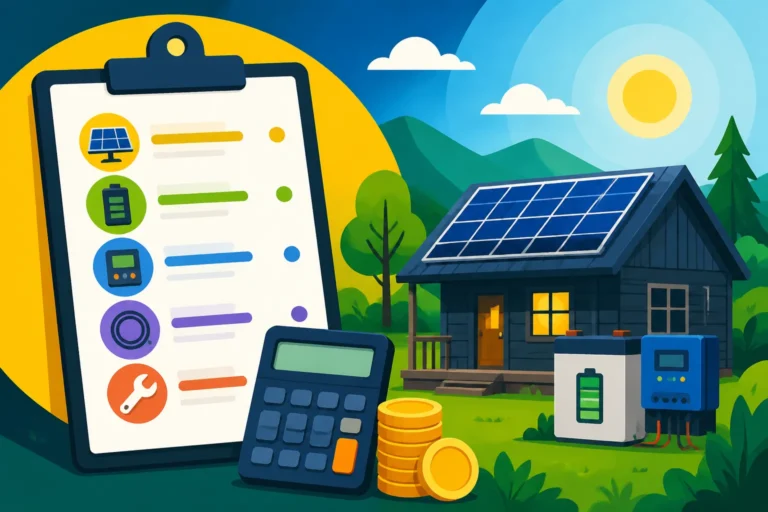
The initial investment for an off-grid solar system isn't just one big number; it's a sum of several crucial components. You're looking at the cost of the solar panels themselves, which capture the sunlight. Then there's the battery bank, often the most expensive single component, especially if you opt for high-performance lithium iron phosphate (LiFePO4) batteries, which are becoming increasingly popular for their longevity and deep-cycling capabilities. You'll also need an inverter to convert the DC power from your batteries into usable AC electricity for your appliances, a charge controller to manage the flow of power into your batteries, and various wiring, mounting hardware, and safety disconnects. Don't forget potential installation costs if you're not doing it all yourself. These costs can vary wildly depending on your energy needs, location, and whether you're going for a basic setup or a robust, expandable system. Knowing how much an off-grid solar system costs is the first step in understanding your payback.
Ongoing Costs Versus Savings: The Long Game
Once your off-grid system is up and running, your primary "bill" essentially disappears. You're no longer paying a monthly utility bill, which for many, is the most significant saving. However, it's not entirely "set it and forget it." There are some ongoing costs, primarily maintenance. This could include cleaning your solar panels, checking battery terminals, and occasionally replacing components, especially if you're using lead-acid batteries that have a shorter lifespan than lithium options. Some systems might require periodic generator fuel if you have a backup generator for those long stretches of cloudy weather.
The savings, on the other hand, are immediate and continuous. Every kilowatt-hour you generate and consume is a kilowatt-hour you didn't buy from the utility company or produce with a noisy, fuel-guzzling generator. Over time, these daily savings add up significantly. For properties in remote areas, the savings from avoiding costly utility line extensions alone can make off-grid solar pay for itself almost immediately. For a deeper dive into these economics, explore our guide on how off-grid solar saves money long-term.
Key Factors That Influence Off-Grid Solar Payback
The question of "when" off-grid solar pays for itself doesn't have a single, universal answer. It's highly dependent on a variety of factors unique to your situation. Understanding these variables is crucial for making an informed decision and accurately estimating your own payback period.
Your Energy Consumption Habits
This is perhaps the biggest factor. The more electricity you use, and the more expensive that electricity would otherwise be (either from a utility or a generator), the faster your off-grid solar system will pay itself back. Someone running a minimalist cabin with just lights and a small refrigerator will have a much smaller initial system cost and a faster payback than someone trying to power a full-sized home with an electric stove, water heater, and central air conditioning. Reducing your energy footprint, perhaps by switching to energy-efficient appliances or adopting mindful consumption habits, directly accelerates your payback. This is why a thorough off-grid solar load calculation is critical during the planning phase.
The Cost of Alternative Power Sources
This is where off-grid solar truly differentiates itself. If you're currently connected to the grid, your alternative cost is your monthly electricity bill. If you're in a remote location where extending power lines would cost tens of thousands of dollars, your alternative cost for that initial connection is astronomically high. Similarly, if your only other option is to run a gasoline or diesel generator for all your power needs, the continuous fuel and maintenance expenses quickly become very significant. In scenarios like these, the payback period for off-grid solar can be remarkably short, sometimes even instant when compared to the utility extension cost. Imagine saving $20,000 or $30,000 on trenching and poles!
System Size and Component Quality
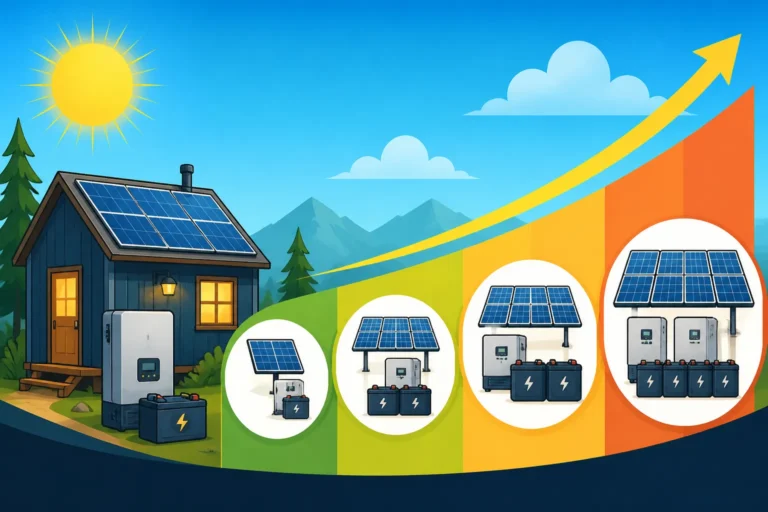
Logically, a larger, more robust system designed to power a whole house will cost more upfront than a smaller system for an RV or a shed. However, "bigger" doesn't always mean a longer payback. If a larger system is properly sized for a high energy demand, its greater output can lead to higher avoided costs and therefore a quicker payback relative to its initial investment. The quality of components also plays a role. Investing in high-quality, efficient solar panels, reliable inverters like those from brands such as Victron or Outback, and durable batteries like Battle Born or EG4 can increase upfront costs but often lead to longer system lifespans, fewer maintenance issues, and better performance, ultimately contributing to a better long-term return. For more insights, check out our guide on off-grid solar cost by system size.
Government Incentives and Rebates
While off-grid solar systems don't always qualify for the same incentives as grid-tied systems (like net metering), there are often still significant financial benefits available. The Federal Solar Tax Credit (officially called the Investment Tax Credit or ITC) can apply to off-grid systems if they are installed on a residence, offering a substantial percentage of the system cost back as a tax credit. This can drastically reduce your out-of-pocket expenses and shorten your payback period. State and local incentives, grants, or rebates might also be available, especially for those living in underserved or rural areas. It’s always worth investigating what financial aid is available in your region. You can find more information about the 2026 Solar Tax Credit and Off-Grid Systems.
Real-World Scenarios Where Off-Grid Solar Shines and Pays Off
Off-grid solar isn't a one-size-fits-all solution, but there are specific scenarios where its financial benefits become incredibly clear, often making it pay for itself much faster than you might expect.
Remote Properties with High Grid Extension Costs
This is the classic, most compelling case for off-grid solar. Imagine you've found your dream property nestled deep in the mountains, far from any existing utility lines. The local power company quotes you an exorbitant sum—say, $40,000 to $70,000—just to run power poles and lines to your doorstep. Suddenly, a $25,000 to $45,000 off-grid solar system, which includes everything from panels to batteries, looks incredibly appealing. In this scenario, the off-grid solar system can pay for itself almost immediately by simply allowing you to avoid that massive grid extension fee. The comparison between off-grid solar vs utility extension cost often tips heavily in favor of solar for truly remote locations. Beyond the initial savings, you gain complete independence, never having to worry about future rate hikes from the utility company.
For example, a family building a hunting cabin deep in the Appalachian Mountains faced a $55,000 quote to extend power lines just a quarter-mile. They opted for a robust 5kW off-grid solar system with a large LiFePO4 battery bank, costing them around $38,000 (after incentives). From day one, they effectively saved $17,000 over the utility connection fee. That's a powerful payback!
Mobile Living: RVs, Vans, and Boats
For those embracing the nomadic lifestyle, whether it's full-time RVers, van lifers, or sailors, off-grid solar isn't just a luxury; it's often a necessity that pays for itself in freedom and avoided costs. Constantly relying on noisy, fuel-guzzling generators, or paying for expensive shore power at marinas and campgrounds, adds up quickly. A well-designed solar setup, even a smaller one from brands like Renogy or a portable Jackery unit, allows you to boondock or anchor wherever you please, powering your lights, fridge, and electronics without additional fuel costs or hookup fees.
Consider a couple living in their RV for six months out of the year. If they were to pay for campground hookups averaging $30-$50 a night, that's potentially $5,400 to $9,000 annually. A 1000W off-grid solar system for an RV, including panels, batteries, and an inverter, might cost between $2,000 and $6,000 for a solid setup. They could recoup that investment in just a year or two through avoided campground fees and generator fuel, not to mention the peace and quiet.
Backup Power and Emergency Preparedness
While not strictly "off-grid" in the traditional sense, using solar for robust backup power for grid-tied homes can also have a significant, albeit indirect, payback. When the grid goes down due to storms, natural disasters, or infrastructure failures, having solar and battery storage means your critical loads (refrigerator, well pump, lights, internet) stay operational. The "cost" of extended power outages—spoiled food, lack of communication, uncomfortable temperatures, and the potential need for expensive temporary lodging or generator fuel—can be substantial.
The payback here is less about direct monetary savings and more about resilience, security, and avoiding significant losses. For a home in an area prone to hurricanes or ice storms, a solar system providing backup can save thousands in spoiled food alone, not to mention the invaluable peace of mind. Many homeowners see the value in systems that can seamlessly switch between grid and off-grid modes, knowing their investment provides both daily savings and crucial emergency preparedness. You can also explore options like solar generators from companies like EcoFlow for smaller, portable backup needs, often found on Amazon.
Calculating Your Potential Off-Grid Solar Payback
Figuring out exactly when your off-grid solar system will pay for itself requires a bit of homework, but it's totally doable. This isn't just about crunching numbers; it's about making a realistic assessment of your unique situation and priorities.
Step-by-Step Calculation Guide
Let's break down how you can estimate your payback period.
-
Determine Your Total System Cost:
- Add up the cost of all components: solar panels, batteries, inverter, charge controller, wiring, mounting hardware, safety devices.
- Include any professional installation fees if you're not going the DIY route.
- Example: For a remote cabin, let's say your components cost $15,000 and installation is $5,000, totaling $20,000.
-
Estimate Your Daily Energy Consumption:
- Perform a thorough load analysis of all appliances you plan to power. Note their wattage and how many hours per day they run.
- Convert this to Watt-hours (Wh) or Kilowatt-hours (kWh) per day.
- Example: Your cabin uses an average of 5 kWh (5000 Wh) per day. For more on this, see our guide on how to calculate daily energy usage.
-
Calculate Your Monthly (or Annual) Avoided Costs:
- If you're avoiding a grid connection: The immediate saving is the cost of extending utility lines. This could be a one-time saving of tens of thousands, making the payback almost instant from that perspective.
- If you're avoiding generator fuel/maintenance: Estimate how much fuel (gasoline, diesel, propane) you would burn in a month to meet your 5 kWh/day demand, plus oil changes, repairs, etc. A typical generator uses about 0.5-1 gallon of fuel per hour per kW output. If you needed to run a 3kW generator for, say, 3 hours a day to meet a 5 kWh demand (assuming some inefficiencies and charging time), that's roughly 90-180 gallons per month. At $4/gallon, that's $360-$720 per month.
- If you're avoiding utility bills (for existing grid users considering switching): Look at your past utility bills.
- Example (Generator Avoidance): Let's conservatively say you avoid $400/month in generator fuel and maintenance.
-
Factor in Incentives:
- Subtract any federal tax credits or state/local rebates from your total system cost.
- Example: If you qualify for a 30% federal tax credit on your $20,000 system, that's $6,000. Your net cost is now $14,000.
-
Calculate the Payback Period:
- Divide your net system cost by your annual avoided costs.
- Formula: Net System Cost / (Monthly Avoided Costs * 12)
- Example: $14,000 / ($400/month * 12 months) = $14,000 / $4,800 = 2.9 years.
This simple calculation shows that in less than three years, your off-grid cabin solar system could pay for itself by eliminating your generator expenses. Of course, this doesn't even account for potential increases in fuel prices or the rising cost of utility electricity, which would only shorten your payback period further. For a more detailed look at budgeting, check out how to budget for an off-grid solar system.
Factors Beyond Just Monetary Savings
While the financial payback period is a crucial metric, it's really important to acknowledge that the value of off-grid solar extends far beyond pure dollars and cents. These intangible benefits often contribute to the feeling that your system has "paid for itself" long before the numbers officially align.
- Energy Independence and Security: The ability to generate your own power, free from utility outages, blackouts, or grid vulnerabilities, offers immense peace of mind. Knowing you can keep your lights on, your food cold, and your communication devices charged during a regional power failure is a powerful form of security that's hard to put a price tag on. This kind of resilience has tangible value, especially for those in areas prone to severe weather or an unreliable grid.
- Environmental Impact: For many, the desire to reduce their carbon footprint and live more sustainably is a primary driver for going off-grid. The satisfaction of knowing your electricity comes from a clean, renewable source, rather than fossil fuels, is a significant "return" on investment. This aligns with personal values and contributes to a healthier planet.
- Quiet and Comfort: If your alternative was a noisy, smelly generator, the silence of a solar system is a luxury in itself. Imagine enjoying the sounds of nature at your cabin or RV instead of the drone of an engine. This enhanced quality of life, the ability to breathe clean air, and the simple comfort of uninterrupted power without a constant background hum adds significant non-monetary value.
- Increased Property Value: While often harder to quantify, a well-designed and properly installed off-grid solar system can increase the value and desirability of your property, particularly in remote areas where grid access is limited. Many buyers are willing to pay a premium for a home or cabin with established, reliable off-grid power.
Understanding these broader benefits provides a more holistic view of when off-grid solar truly "pays for itself," often making the investment feel worthwhile much sooner than the financial spreadsheet might suggest.
| Factor | Shortens Payback Period | Lengthens Payback Period |
|---|---|---|
| Grid Extension Costs | Very high upfront grid connection fees | Already connected to an affordable grid |
| Energy Consumption | Moderate to high, consistent usage | Very low, intermittent usage |
| Alternative Fuel Costs | High generator fuel/propane costs | Little to no reliance on generators |
| System Efficiency | High-quality, efficient components | Budget, lower-efficiency components |
| Incentives & Rebates | Qualification for significant tax credits/rebates | No eligibility for incentives |
| Installation Method | DIY installation | Professional installation (higher labor costs) |
| Maintenance Needs | Low maintenance, durable components (e.g., LiFePO4) | High maintenance, frequent component replacement |
| Cost of Living/Utilities | High local electricity rates | Low local electricity rates |
Disclaimer
The information provided in this guide is for general informational purposes only and does not constitute professional financial, electrical, or engineering advice. Off-grid solar system costs, savings, and payback periods can vary significantly based on individual circumstances, location, energy usage, system design, component choices, and available incentives. Always consult with qualified professionals for specific advice tailored to your situation.