How Much to Budget for Off-Grid Batteries
Figuring out how much to budget for the batteries in your off-grid solar system can feel like trying to hit a moving target. It's one of the biggest initial investments, and it's easy to get overwhelmed by all the options, from varying chemistries to capacities and voltages. This guide is here to demystify the process, helping you understand the real costs involved and how to create a solid, realistic budget for your off-grid power storage.
Understanding the True Cost of Off-Grid Batteries
When you're embarking on the journey to energy independence, the battery bank often represents a significant chunk of your overall investment. It’s not just about the price tag you see initially; there are many underlying factors that influence the long-term cost and value of your chosen batteries. Skipping over these details can lead to expensive surprises down the road, so let's dig into what truly drives your battery budget.
Beyond the Sticker Price: Initial Purchase Considerations
The first number you see on a battery isn't the whole story. You'll encounter a bewildering array of choices, primarily centered around battery chemistry. The two main contenders for off-grid use are lead-acid (which includes flooded, AGM, and gel types) and the increasingly popular lithium iron phosphate (LiFePO4). Each has its own upfront cost, performance characteristics, and lifespan expectations that directly impact your budget. For instance, while a lead-acid battery might seem like a bargain initially, its shorter lifespan and lower usable capacity often mean you'll be replacing it sooner and potentially needing more of them to meet your daily needs, effectively driving up the long-term cost.
Beyond chemistry, you'll also need to consider the battery's capacity, typically measured in Amp-hours (Ah) or Kilowatt-hours (kWh), and its voltage (12V, 24V, or 48V). A 100Ah 12V battery will cost significantly less than a 200Ah 48V battery, but it also stores far less energy. It's crucial to match these specifications to your actual power consumption needs, which we'll discuss in more detail later. Furthermore, brand reputation plays a surprisingly large role. Reputable brands often come with better warranties and more reliable performance, which, while sometimes pricier upfront, can prevent costly failures and replacements. Investing in quality from the start often means less headache and more savings over the decades you'll be living off-grid.
Factors Driving Battery Budget Differences
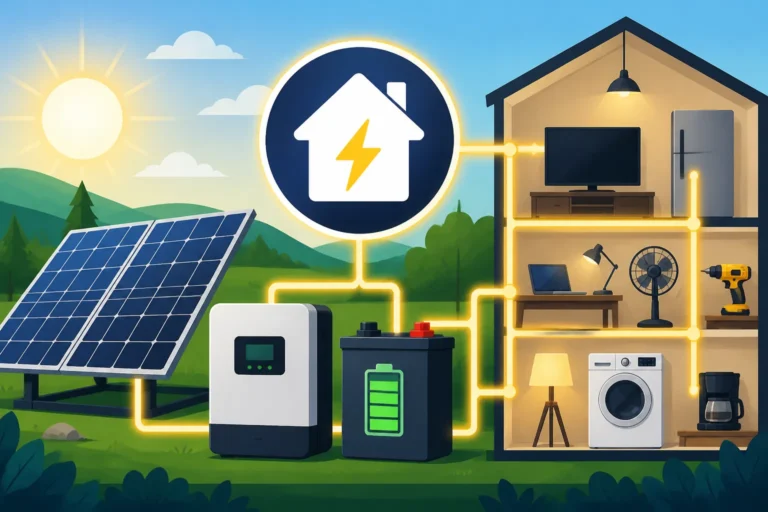
Your specific off-grid scenario is the biggest determinant of your battery budget. Are you powering a tiny cabin for weekend getaways, a full-time RV, or a complete family home? Each of these scenarios has vastly different energy requirements, which naturally translates to different battery bank sizes and, consequently, different costs. A small setup for a few lights and charging devices might only need a couple of hundred amp-hours at 12V, whereas a house running major appliances like a refrigerator, washing machine, and a well pump could easily require dozens of kilowatt-hours at a higher voltage like 48V. Understanding How Many Batteries for an Off-Grid System begins with a clear picture of what you actually need to power.
The environment your system operates in also matters. Extreme temperatures, both hot and cold, can significantly impact battery performance and lifespan, especially for lead-acid types. You might need to budget for temperature-controlled enclosures or choose batteries better suited for harsh climates. Lastly, your desired lifespan and how much maintenance you're willing to commit will steer your choices. If you're looking for a "set it and forget it" system with a 10-15 year lifespan, you'll lean towards LiFePO4, which demands a higher initial investment but offers minimal fuss. If you're on a very tight budget and don't mind the regular maintenance (and shorter lifespan) of flooded lead-acid, that's a different financial calculation. It's a balance between initial outlay, convenience, and longevity, and knowing your priorities is key to a realistic budget.
Breaking Down Battery Cost by Type and Capacity
The heart of any off-grid system is its battery bank, and the type of battery you choose will have the most profound impact on your budget. Each chemistry comes with its own set of advantages, disadvantages, and, most importantly, cost implications both upfront and over the long haul.
Lithium Iron Phosphate (LiFePO4) Batteries
Ah, the darlings of the off-grid world: LiFePO4 batteries. They've truly revolutionized power storage for many, and for good reason. Their main advantages are a significantly longer cycle life (often 3,000 to 7,000 cycles compared to 300-1,000 for lead-acid), a much higher depth of discharge (you can safely use 80-100% of their capacity without damaging them, versus 50% for lead-acid), and they're lighter and more compact. Plus, they require virtually no maintenance, which is a huge bonus for anyone living remotely. Many off-gridders swear by brands like Battle Born or EG4 for their reliability and integrated Battery Management Systems (BMS), which handle charging, discharging, and cell balancing for optimal performance and safety. While their upfront cost is higher, their longevity and efficiency often make them more economical in the long run. To compare the specifics, you might find our guide on LiFePO4 vs Lead-Acid Battery Cost particularly helpful.
When it comes to cost, LiFePO4 batteries typically range from $700 to $1,500 per 100Ah for a 12V unit, or roughly $400 to $800 per kilowatt-hour (kWh) of usable capacity. So, a 400Ah 12V LiFePO4 bank (approximately 4.8 kWh of usable energy) might cost anywhere from $2,800 to $6,000. These prices can fluctuate based on the manufacturer, warranty, and features like low-temperature cut-offs. For a full-time off-grid home, a common setup might be a 48V system with 10-20 kWh of usable capacity, which could mean a budget of $4,000 to $16,000 just for the batteries. While that's a significant investment, remember that these batteries can last 10-15 years or even longer, making their cost-per-cycle incredibly competitive. You can often find decent options and components on sites like Amazon, but always do your research on seller reputation and product reviews. For smaller, portable power needs, even a compact power station from a brand like Jackery might include LiFePO4 cells, offering a glimpse into this technology's benefits.
Lead-Acid Batteries (AGM, Gel, Flooded)
Before LiFePO4 became widely accessible, lead-acid batteries were the workhorses of the off-grid world. They remain a viable, often budget-friendly, option for those with lower power needs or a willingness to engage in more maintenance. There are three main types:
- Flooded Lead-Acid (FLA): These are the cheapest upfront, often ranging from $150 to $300 per 100Ah 12V equivalent. They require regular watering (checking electrolyte levels) and good ventilation due to off-gassing. Their cycle life is typically 500-1000 cycles, but only if you stick to a 50% depth of discharge. Pushing them deeper drastically shortens their life.
- Absorbent Glass Mat (AGM): A step up from FLA, AGMs are sealed, maintenance-free, and don't off-gas under normal charging. They're more robust and can handle deeper discharges (though 50% is still recommended for longevity) and vibration better than FLAs. They generally cost $200-$400 per 100Ah 12V, offering a cycle life of 400-800 cycles.
- Gel Batteries: Similar to AGM, gel batteries use a gelled electrolyte, making them even more resistant to spills and vibrations, and better suited for very deep, slow discharges. However, they are sensitive to overcharging and can have a slightly lower peak current output. Their cost is comparable to AGM or slightly higher, at $250-$450 per 100Ah 12V, with a similar cycle life.
While the upfront cost of lead-acid batteries is appealing (you might build a small 2.4 kWh usable system for $1,000-$2,000), it's critical to factor in their shorter lifespan and the need for replacements. For a long-term off-grid setup, you might find yourself replacing lead-acid batteries every 3-7 years, significantly adding to your Cost to Replace Off-Grid Solar Batteries over time. If you're building a modest system for a remote cabin or shed that isn't used year-round, lead-acid can be a sensible choice, but understand the trade-offs.
Cost Differences by System Voltage (12V, 24V, 48V)
The operating voltage of your off-grid system — typically 12V, 24V, or 48V — significantly influences the configuration and cost of your battery bank. It's not necessarily that a 48V battery costs more per kWh than a 12V battery of the same chemistry, but rather how you combine them and the efficiencies gained. For smaller systems, like those in an RV or a tiny shed, 12V is common due to the availability of 12V appliances and simplicity. However, as your power needs grow, moving to 24V or 48V becomes increasingly beneficial.
Higher voltage systems allow for thinner wiring because they carry less current to deliver the same amount of power, reducing voltage drop and the cost of heavy-gauge cables. For example, to achieve 5,000 watts of inverter power, a 12V system would draw over 400 amps, requiring extremely thick, expensive battery cables. A 48V system, however, would only draw about 100 amps, allowing for much thinner, more affordable wiring. This efficiency extends to other components as well, as some charge controllers and inverters are more efficient at higher voltages. Therefore, while individual 12V batteries might be cheaper per unit, the overall system cost for larger power needs can be lower and more efficient with 48V, making it the preferred choice for most full-home off-grid setups. This is a crucial aspect of How Battery Choice Affects Off-Grid Cost.
Here's a quick comparison of battery types and their general cost parameters:
| Battery Type | Upfront Cost (per kWh usable) | Lifespan (Cycles @ 50-80% DoD) | Maintenance Needed | Best Use Case |
|---|---|---|---|---|
| Flooded Lead-Acid (FLA) | $200 – $400 | 300 – 1000 | High | Low budget, frequent use, accessible for maintenance |
| AGM Lead-Acid | $300 – $500 | 400 – 800 | Low | Moderate budget, no maintenance, occasional use |
| Gel Lead-Acid | $350 – $600 | 500 – 900 | Low | Moderate budget, very deep cycle, sensitive charging |
| LiFePO4 (Lithium) | $400 – $800+ | 3000 – 7000+ | Very Low | Long-term, high power, deep cycling, minimal fuss |
Note: Prices are estimates and can vary greatly by brand, quality, and market conditions.
Creating a Realistic Battery Budget for Your Off-Grid Needs
Building a realistic budget for your off-grid batteries isn't just about looking up prices online. It's a systematic process of understanding your actual energy consumption, planning for contingencies, and considering all the ancillary costs that come with installing a battery bank. Don't worry, it's totally manageable once you break it down!
Calculating Your Energy Requirements
The absolute first step in budgeting for off-grid batteries is knowing how much power you actually need. This means performing a detailed load analysis, which sounds complicated but is essentially a fancy way of listing all your electrical appliances, how many hours a day you use them, and their wattage. For instance, a small LED light might use 5 watts for 4 hours (20 Watt-hours), while a refrigerator might use 100 watts for 8 hours (800 Watt-hours). Adding all these up gives you your total daily Watt-hour consumption. This is a critical step in How Many Watt-Hours You Use Per Day.
Once you have your total daily Watt-hours, you need to factor in your "days of autonomy." This is a fancy term for how many days your system can run purely on battery power without any sun (think cloudy weather or emergencies). For a full-time residence in a less sunny climate, you might aim for 3-5 days of autonomy, meaning you need a battery bank large enough to store 3-5 times your daily energy usage. For a weekend cabin, 1-2 days might suffice. This crucial number directly dictates the size of your battery bank. For more details on this calculation, check out our guide on How to Size an Off-Grid Battery Bank. Remember, underestimating your needs will leave you perpetually running out of power, which is no fun at all.
Estimating Battery Bank Size and Total Budget
With your energy requirements and desired days of autonomy in hand, you can start to estimate the size of your battery bank. For example, if you determine you need 5,000 Watt-hours (or 5 kWh) per day and want 3 days of autonomy, you'll need a battery bank with at least 15 kWh of usable capacity. This is where the battery chemistry and voltage choices really start to shape your budget.
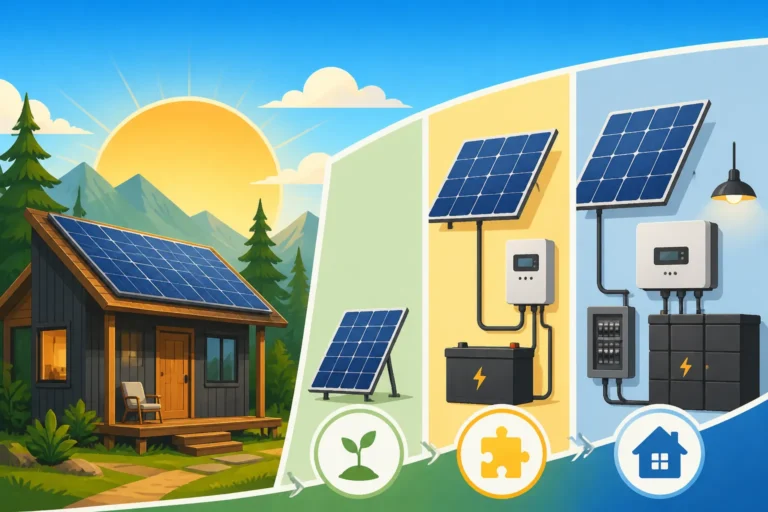
Let's look at some practical examples. For a small RV or a basic hunting cabin with minimal power needs (say, 1-2 kWh per day, 2 days autonomy), a 12V system with 200-400Ah of LiFePO4 batteries might suffice, costing roughly $1,400 to $3,000. If you opted for AGM lead-acid, you might pay $800 to $1,600 initially, but remember the replacement costs over time. For a larger setup, like powering a small off-grid home with 10 kWh daily usage and 3 days autonomy (30 kWh usable capacity), you're firmly in 48V LiFePO4 territory. This could mean a budget of $12,000 to $24,000 for the batteries alone. Brands like Battle Born or EG4 often sell 48V server rack batteries that are perfect for these larger systems, offering modularity. Many off-grid enthusiasts often phase their build, starting with a smaller system and expanding their battery bank later. This "grow-as-you-go" approach can help manage the initial financial outlay, especially if you're looking to How to Budget for an Off-Grid Solar System without breaking the bank upfront.
Beyond the Batteries: Related Budgetary Items
It's easy to focus solely on the battery price tag, but a comprehensive budget must include several related items essential for the safe and efficient operation of your battery bank. These "hidden" costs can add hundreds or even thousands of dollars to your overall Cost of an Off-Grid Solar Battery Bank.
Firstly, for LiFePO4 batteries, a Battery Management System (BMS) is absolutely critical. While many modern LiFePO4 batteries come with an integrated BMS, if you're building a DIY pack or buying bare cells, you'll need to purchase a separate, high-quality BMS, which can run anywhere from $100 to $500 or more depending on its current rating and features. This system protects your batteries from overcharging, over-discharging, over-current, and temperature extremes, ensuring longevity and safety. Another consideration is proper housing and ventilation. Whether you're building a robust battery box for outdoor protection or ensuring adequate airflow in an indoor enclosure, these costs for materials can range from $50 to several hundred dollars. For lead-acid batteries, good ventilation is non-negotiable due to hydrogen gas emissions during charging.
You'll also need to budget for all the necessary wiring, fuses, and disconnects. High-quality, properly sized battery cables are crucial for minimizing voltage drop and ensuring safety. Depending on the size of your system, these cables can easily cost $100-$500. Fuses and breakers protect your system from short circuits and overloads, and a main battery disconnect switch is a vital safety component, adding another $50-$200. Finally, don't forget monitoring equipment. A good battery monitor (like a Victron SmartShunt) provides essential information on your state of charge, current draw, and historical data, helping you understand and manage your power consumption. These typically range from $150-$300 but are invaluable for maximizing battery life. All these components contribute to the total cost and overall reliability, making them non-negotiable investments. If you're tackling a DIY installation, remember to also factor in tools and your time, or the potential cost of hiring an electrician if you're not comfortable with certain aspects, as detailed in our guide on DIY vs Professional Off-Grid Solar Cost.
Disclaimer
The information provided in this guide is for general informational purposes only and does not constitute professional advice. Off-grid solar system design and installation can be complex and involve significant electrical risks. Always consult with qualified professionals and adhere to all local codes and regulations before making purchasing decisions or attempting any installation.