Off-Grid Solar Cost Per Watt
It’s easy to feel overwhelmed when you start looking into off-grid solar, especially when trying to pin down the actual costs involved. You hear numbers thrown around, but it's hard to compare apples to apples. This guide is here to demystify one of the most useful metrics: the "cost per watt." We'll break down exactly what that means for off-grid systems and how understanding it can empower you to make smarter financial decisions for your independent power setup.
Understanding Off-Grid Solar Cost Per Watt
Navigating the world of off-grid solar can feel like learning a new language, especially when trying to understand the financial side of things. One term that often comes up, and can be incredibly helpful, is "cost per watt" (CPW). But for off-grid applications, it's not as simple as just dividing the price of a solar panel by its wattage. We need to look at the bigger picture to truly grasp its significance.
What “Cost Per Watt” Truly Means for Off-Grid
At its most basic, cost per watt is a simple calculation: the total cost of something divided by its power rating in watts. For instance, a 100-watt solar panel costing $100 would have a CPW of $1.00 per watt. Simple enough, right? However, when we talk about an off-grid solar system, the "watts" we're considering need to be understood in a much broader context. It's not just the solar panels themselves; it's the entire ecosystem that delivers usable power to your appliances.
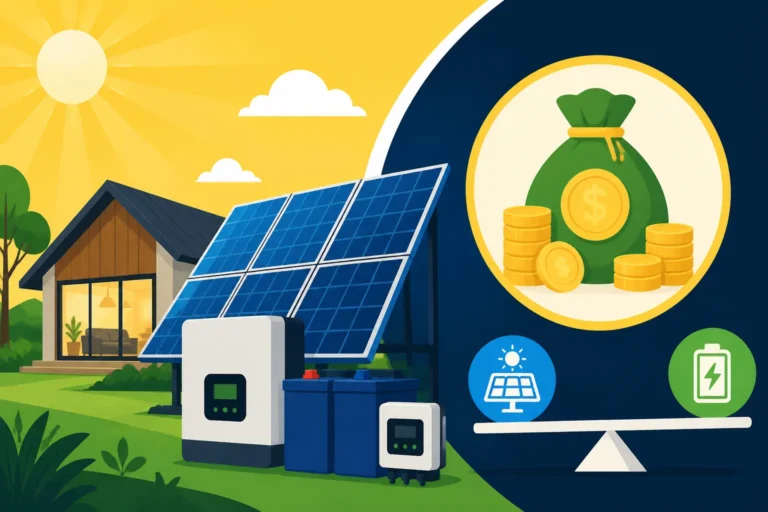
This includes the panels, yes, but also the batteries that store the energy, the inverter that converts it, the charge controller that manages the flow, and all the wiring, mounting, and safety equipment. All these components contribute to the total cost, and therefore, to the overall system's cost per watt. For off-grid, it’s often more helpful to think about the "cost per installed and usable watt" or even "cost per daily watt-hour of capacity," because a system is only as good as its weakest link, and raw panel wattage alone won't keep your lights on after dark. The true CPW gives you a holistic view of the investment required to generate and store your own electricity reliably.
Why CPW is a Crucial Metric for Budgeting
For anyone dreaming of or actively building an off-grid setup, budgeting is paramount. This is where understanding your system's cost per watt becomes an invaluable tool. It moves beyond just the sticker price of individual components and allows you to evaluate the efficiency of your investment across different potential system configurations or even vendors. Imagine you're comparing two solar kits: one costs $3,000 and is advertised as a "1500W system," while another costs $4,000 but is a "2500W system." Without considering CPW, you might just see the $1,000 difference.
However, if you calculate the rough CPW ($2.00/watt for the first, $1.60/watt for the second), you realize the more expensive system is actually more cost-effective per unit of power output. This kind of analysis helps you pinpoint where your money is going and ensures you're getting the most bang for your buck. It also aids in scalability. If you know your current system is, say, $2.50/watt, and you want to double your capacity, you have a solid baseline to estimate the additional investment. This makes long-term planning, and understanding how much an off-grid solar system costs overall, significantly clearer.
Breaking Down the Components of Off-Grid CPW
When you look at the total cost per watt for an off-grid system, it’s not a single, static number. It’s an aggregate of many different parts, each with its own price tag and wattage contribution. Understanding how each major component factors into the overall CPW is key to making informed decisions and building a system that truly meets your needs without breaking the bank.
Solar Panels: The Obvious Factor
Of course, solar panels are the most visible and often the first component people consider when thinking about "watts" in a solar system. Their rated power output directly influences the "watt" part of your cost per watt calculation. Panels come in various types, primarily monocrystalline and polycrystalline, with monocrystalline panels generally being more efficient and thus potentially offering a better watt-per-square-foot ratio, though sometimes at a slightly higher upfront cost per watt of the panel itself.
The price of solar panels has come down significantly over the years, making them more accessible than ever. When you're browsing online retailers like Amazon, you'll find a vast array of options. The efficiency of a panel impacts how many you'll need to reach a certain wattage target, which in turn affects your total system cost and the balance of system components. For instance, if you have limited roof space, investing in higher-efficiency panels might mean a slightly higher panel CPW but a lower overall system CPW because you don't need as much racking or wiring. It's not just about the face value of a panel; it's about its integration into the whole. Diving deeper into the Cost of Off-Grid Solar Panels can provide more granular insights into this particular component.
Batteries: The Unsung Hero of Off-Grid CPW
While panels generate the power, batteries are what make an off-grid system truly functional, especially after the sun goes down. This is where the simple "cost per watt" metric can get a little tricky, as batteries store energy in watt-hours (Wh) or amp-hours (Ah) rather than instantaneous watts. However, their cost is absolutely critical to your overall system's CPW because they are often the most expensive component. The choice of battery chemistry, such as LiFePO4 (lithium iron phosphate) or traditional lead-acid, drastically impacts both upfront cost and long-term value.
LiFePO4 batteries, while having a higher initial LiFePO4 vs Lead-Acid Battery Cost and therefore a higher "cost per watt-hour" initially, offer superior cycle life (how many times they can be charged and discharged), deeper depth of discharge, and often a smaller footprint. This means over the lifetime of your system, their true cost per usable watt-hour can be significantly lower than lead-acid, which needs more frequent replacement and careful management. When evaluating the Cost of an Off-Grid Solar Battery Bank, remember that the longevity and usable capacity are just as important as the initial price tag in determining the true cost efficiency of your off-grid power storage.
Inverters and Charge Controllers: The Brains of the Operation
These two components are the unsung heroes, translating the raw solar power into usable electricity for your home or cabin. The charge controller regulates the voltage and current from your solar panels to your batteries, preventing overcharging and optimizing efficiency. MPPT (Maximum Power Point Tracking) charge controllers are more efficient than PWM (Pulse Width Modulation) types, especially in colder weather or when panel voltage varies significantly from battery voltage, which generally leads to a slightly higher component CPW but better overall system performance.
The inverter then takes the DC power from your batteries and converts it into AC power, which is what most household appliances use. Inverters vary in size (wattage rating), capability (pure sine wave vs. modified sine wave), and features (e.g., integrated transfer switches, generator auto-start). A high-quality pure sine wave inverter, crucial for sensitive electronics, will naturally have a higher Cost of an Off-Grid Solar Inverter and contribute more to your system's CPW than a basic modified sine wave model. Similarly, a robust Cost of a Charge Controller designed for high current or advanced monitoring will add to the overall system cost. These components might not directly add to your "wattage" capacity in the same way panels do, but their quality and sizing are critical for reliable and efficient power delivery, making them indispensable elements in the overall cost per watt calculation.
Balance of System BOS Components and Installation
Beyond the big-ticket items like panels, batteries, inverters, and charge controllers, there's a myriad of smaller but essential pieces that make up the "Balance of System" (BOS). These include all the wiring and cables, fuses, circuit breakers, disconnect switches, surge protectors, mounting hardware for panels, and monitoring equipment. While individually these items might seem inexpensive, their cumulative cost can significantly impact your total off-grid solar cost per watt. For example, selecting appropriately sized wires to prevent voltage drop is crucial for system efficiency and safety but can add considerable cost, especially for long runs.
Then there's the labor. Deciding between a DIY off-grid solar installation and hiring a professional will dramatically shift your overall CPW. While doing it yourself can save a substantial amount on labor, thereby lowering your upfront cash outlay, it requires time, specialized tools, and a good understanding of electrical systems. Hiring professionals for Off-Grid Solar Installation Cost can add anywhere from $0.50 to $1.50 per watt (or more) to the total cost, but it ensures proper, safe installation and often comes with warranties. If you opt for a DIY vs Professional Off-Grid Solar Cost comparison, remember to factor in not just the monetary cost but also the value of your time and the potential for errors that could lead to costly repairs down the line. All these smaller parts and services contribute to the comprehensive cost per watt of your entire off-grid dream.
Factors That Significantly Influence Your Off-Grid CPW
The cost per watt isn't just about the sum of its parts; it's also shaped by external factors and strategic choices you make during the planning phase. These influences can either drive up or drive down that crucial CPW number, sometimes in unexpected ways.
System Size and Scalability
One of the biggest drivers of off-grid solar cost per watt is the sheer scale of the system you're building. Generally, the larger the system, the lower the overall cost per watt tends to be. This phenomenon is known as the "economy of scale." Think about it: a lot of the initial setup costs, such as permitting fees, shipping for some components, or even the labor for the basic wiring infrastructure, don't double when you double your panel array or battery bank. You're still installing one inverter (albeit a larger one), one charge controller, and a single main battery bank.
For instance, a tiny 100W off-grid system for a small camper might have a CPW of $5-$10 per watt because you're paying a premium for compact components and the fixed costs are spread over very few watts. On the other hand, a substantial Cost of a 10kW Off-Grid Solar System designed to power an entire home might see a CPW closer to $2-$3 per watt. This is because the cost of solar panels themselves has a relatively linear increase, but the other system components and installation overheads don't scale at the same rate. Planning for future expansion, even if you start small, can help optimize your long-term CPW by allowing for easier integration of additional capacity later on.
Component Quality and Brand Choice
Just like with anything else, the brand and quality of your off-grid solar components play a huge role in the cost per watt. You can find everything from no-name budget brands on online marketplaces to premium, industry-leading manufacturers known for their reliability and advanced features. Brands like Victron Energy or Outback Power are renowned for their robust, long-lasting inverters and charge controllers, but they come with a higher price tag. This higher upfront investment can mean a higher initial CPW.
However, choosing high-quality components often translates to better efficiency, longer lifespan, more advanced monitoring capabilities, and superior customer support. This can mean fewer replacements, less downtime, and ultimately, a lower lifetime cost per watt, even if the initial investment seems steeper. For smaller, more portable solutions, brands like Jackery offer integrated power stations that simplify setup, but their all-in-one nature often results in a higher CPW compared to a custom-built component system of similar output. When looking at the Best Off-Grid Solar Brands, it's important to weigh the immediate cost against the long-term benefits of reliability and performance. Sometimes, paying a bit more upfront for quality components prevents headaches and additional costs down the road.
Location, Climate, and Energy Needs
Where you live, what the weather is typically like, and how much power you actually use are fundamental factors that will shape your off-grid system's CPW. Someone setting up a system in sunny Arizona, with abundant peak sun hours, will likely need fewer solar panels to achieve their daily energy target compared to someone in cloudy, northern Washington State. Fewer panels mean less overall cost for the array, thus potentially lowering the CPW for the panel portion of your system.
Similarly, extreme climates, whether very hot or very cold, can necessitate specialized or more robust equipment. For example, batteries in freezing temperatures might require heating elements, adding to the system cost. Regions prone to heavy snowfall might need stronger mounting hardware or ground mounts with adjustable tilt, increasing the balance of system CPW. Furthermore, your actual daily energy consumption is the ultimate driver. If you're powering a full-size home with air conditioning, well pumps, and electric appliances, your energy needs will be vastly different from a small cabin with minimal loads. The more energy you need, the larger your system must be, impacting everything from the number of panels to the size of your battery bank and inverter. Planning for variables like How Winter Affects Off-Grid Sizing is essential to avoid under-sizing your system and incurring even higher costs later to expand.
Calculating Your Off-Grid Solar Cost Per Watt
Now that we’ve explored the various components and factors influencing your off-grid solar cost per watt, let’s get down to brass tacks: how do you actually calculate it? This isn’t just an academic exercise; it’s a practical step to ensure you’re making the most financially sound decisions for your off-grid dream.
Step-by-Step Calculation Guide
Calculating your off-grid solar cost per watt involves a few key steps to ensure you're getting a realistic figure for your entire system, not just the panels.
-
Determine Total System Cost: First, add up every single expense associated with your off-grid system. This includes:
- Cost of solar panels
- Cost of batteries
- Cost of the inverter
- Cost of the charge controller
- Cost of all Balance of System (BOS) components (wires, fuses, breakers, mounting hardware, combiner boxes, etc.)
- Any shipping costs
- Any installation labor costs (if hiring professionals)
- Any permitting fees or inspection costs.
This gives you yourTotal Investment.
-
Identify Total Rated Panel Wattage: Next, sum up the maximum rated wattage of all your solar panels. For example, if you have six 400-watt panels, your
Total Rated Panel Wattageis 2400 watts. -
Calculate System Cost Per Watt (CPW): Now, divide your
Total Investmentby yourTotal Rated Panel Wattage.CPW = Total Investment / Total Rated Panel Wattage
It's important to note that this CPW primarily reflects the cost per input watt from your solar array. While batteries and inverters are included in the Total Investment, the "watt" denominator typically refers to the solar panel capacity, as that's the primary generation metric. For a deeper dive into sizing and what you truly need, understanding how many batteries for an off-grid system is crucial, but for this specific CPW calculation, we stick to the panels. This provides a consistent benchmark for comparison across different system proposals or setups.
Example Scenarios and What They Reveal
Let's walk through a couple of hypothetical scenarios to see how CPW can vary and what insights it offers.
Scenario 1: Small Cabin System (DIY)
Imagine a weekend cabin needing a modest off-grid setup.
- Components:
- Four 200W solar panels = 800W total ($400)
- Two 100Ah LiFePO4 batteries (24V system, roughly 2560Wh usable) ($1,200)
- One 2000W pure sine wave inverter ($350)
- One 60A MPPT charge controller ($200)
- Wiring, fuses, mounting, misc. BOS ($300)
- Total Investment: $400 + $1,200 + $350 + $200 + $300 = $2,450
- Total Rated Panel Wattage: 800W
- CPW: $2,450 / 800W = $3.06 per watt
Scenario 2: Full-Time Home System (Professional Install)
Consider a larger home for year-round living.
- Components:
- Sixteen 400W solar panels = 6400W total ($3,200)
- Eight 200Ah LiFePO4 batteries (48V system, roughly 40,960Wh usable) ($10,000)
- One 8000W inverter-charger ($2,500)
- One 150A MPPT charge controller ($800)
- Wiring, safety, mounting, combiner box, professional conduit, etc. ($1,500)
- Professional Installation Labor ($4,000)
- Permitting/Inspection ($500)
- Total Investment: $3,200 + $10,000 + $2,500 + $800 + $1,500 + $4,000 + $500 = $22,500
- Total Rated Panel Wattage: 6400W
- CPW: $22,500 / 6400W = $3.52 per watt
| System Type | Total Rated Panel Wattage | Total Investment | Cost Per Watt | Key Factors Affecting CPW |
|---|---|---|---|---|
| Small Cabin (DIY) | 800W | $2,450 | $3.06 | Smaller scale, DIY labor savings. |
| Full-Time Home (Pro) | 6400W | $22,500 | $3.52 | Economy of scale offset by higher quality components, pro install, more extensive BOS, and permitting. |
| RV/Van Life (Mid-Size) | 1200W | $4,500 | $3.75 | Specialized mounting, compact components, premium portable solutions like Jackery. |
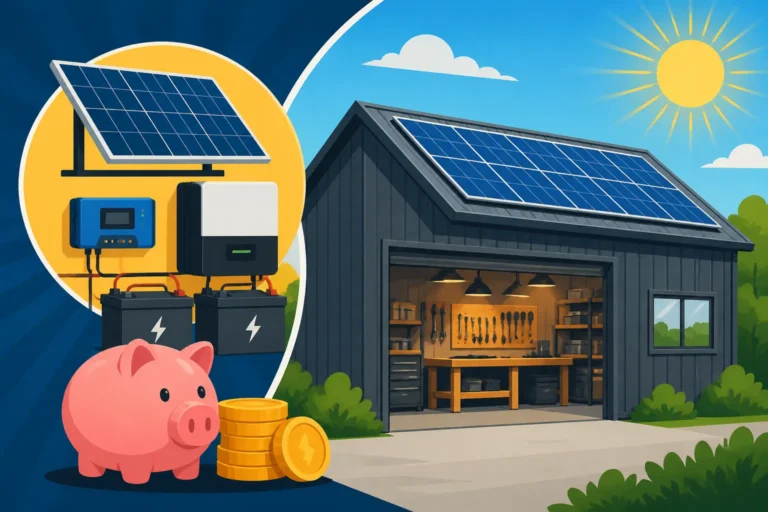
| Remote Workshop (Budget) | 2000W | $5,500 | $2.75 | Larger scale than cabin, focus on lower-cost components, DIY install. |
What these scenarios reveal is that while larger systems often benefit from economies of scale on core components, the added complexity of full home systems (more extensive wiring, higher-rated components, professional installation, and permitting) can sometimes push the CPW up compared to a very simple, small DIY setup. The CPW is not just about raw power; it's about the entire infrastructure supporting that power, and the level of effort and quality you pour into it. It also highlights how crucial it is to compare apples to apples when looking at different system types; a "cost per watt" for a portable solar generator like those from Jackery might be significantly higher than a custom-built home system, but it offers unparalleled portability and ease of setup.
Optimizing Your Off-Grid CPW Without Sacrificing Reliability
The goal for many off-gridders is to get reliable power without spending a fortune. It's a delicate balance, but there are smart strategies you can employ to bring down your overall cost per watt without cutting corners on essential functionality or safety.
Smart Component Sourcing and DIY Strategies
One of the most effective ways to lower your off-grid CPW is through careful component sourcing. The market for solar equipment is vast, ranging from premium brands to more budget-friendly options. Shopping around, comparing prices from different vendors, and looking for sales can yield significant savings. Sometimes, buying an all-in-one off-grid solar kit can offer a lower bundled price per watt than purchasing individual components separately, especially for beginners. Retailers like Amazon often have competitive pricing on individual panels, charge controllers, and smaller inverters, making it easier to compare options.
Another powerful strategy is to embrace the do-it-yourself (DIY) approach for as much of the installation as you're comfortable with. Labor costs are a substantial part of any professional solar installation. By doing the mounting, wiring, and component integration yourself, you can drastically reduce your overall investment and, consequently, your CPW. Of course, this requires thorough research, safety precautions, and a willingness to learn. Many resources exist to guide you through a DIY Off-Grid Solar Installation Step by Step. However, it's wise to consider professional help for critical electrical connections if you're uncertain. Remember, the How to Save Money on an Off-Grid Solar Build really begins with informed choices and a willingness to get your hands dirty, sometimes making the Cheapest Way to Set Up Off-Grid Solar also the most rewarding.
Phased Upgrades and Energy Efficiency
You don't have to build your dream off-grid system all at once. For many, a more budget-friendly and CPW-optimizing approach is to start small and implement phased upgrades. Begin with a system that covers your most essential loads, perhaps just lighting, charging electronics, and a small refrigerator. As your budget allows and your needs grow, you can then add more panels, expand your battery bank, or upgrade your inverter. This approach allows you to spread out the Cost of Expanding an Off-Grid System over time, making the initial CPW more manageable.
Furthermore, a truly effective way to reduce your overall cost per watt is to minimize your energy needs in the first place. Every watt-hour you save means you need a smaller, less expensive solar array and battery bank. This translates directly to a lower CPW for the entire system. Investing in energy-efficient appliances—like LED lighting, high-efficiency refrigerators, and DC-powered fans—can have a profound impact. For instance, swapping an old, energy-hogging refrigerator for an Energy Star-rated DC-powered model could reduce its daily power consumption by 50-75%, meaning you'd need fewer panels and batteries to keep it running. Prioritizing energy conservation is often the most cost-effective "upgrade" you can make to your off-grid system.
The Long-Term Perspective on Off-Grid Solar CPW
While the initial cost per watt is a great way to compare systems and budget for your build, the true financial picture of off-grid living extends far beyond the upfront investment. Looking at the long-term value and comparing it to alternatives is where the real savings and benefits often become apparent.
Beyond Initial Costs: Lifetime Value and Maintenance
When we talk about off-grid solar cost per watt, it's crucial to extend our thinking beyond just the purchase and installation. The lifetime value of your system, and specifically the lifetime cost per watt-hour produced and consumed, is a much more comprehensive metric. Batteries, for instance, have a finite lifespan. While a high-quality LiFePO4 battery might last 10-15 years, lead-acid batteries often need replacement every 3-7 years. The Cost to Replace Off-Grid Solar Batteries needs to be factored into the overall financial outlook, as these replacements can significantly impact your average annual cost and thus your long-term CPW.
Panels, inverters, and charge controllers also require occasional maintenance or replacement, though typically less frequently than batteries. Regular cleaning of panels, checking connections, and ensuring proper ventilation for inverters are small tasks that contribute to system longevity. Over a typical 20-30 year lifespan of a solar array, these maintenance costs, even if minor, accrue. Understanding the Off-Grid Solar Payback Period Explained gives you a clear timeline for when your system's savings will begin to outweigh its total costs, marking the point at which your "free" power truly begins. The goal isn't just a low initial CPW, but a sustainable, low Lifetime Cost of an Off-Grid Solar System.
Comparing CPW to Grid Extension or Generator Costs
For many who choose off-grid solar, the alternative isn't simply paying a monthly utility bill; it's the daunting prospect of extending power lines to a remote property or relying solely on a fossil fuel generator. In these scenarios, the cost per watt of an off-grid solar system often shines. Extending grid power to a property that's even a mile or two from the nearest utility pole can cost tens of thousands of dollars, sometimes upwards of $50,000 to $100,000, depending on the terrain and infrastructure required. When you amortize that over the decades, the "cost per watt" of grid extension can be astronomical, making off-grid solar surprisingly competitive. You can compare this to Off-Grid Solar vs Utility Extension Cost to see a clearer picture.
Similarly, relying solely on a generator means a continuous expense for fuel, maintenance, and eventual replacement. The price of gasoline or propane fluctuates, but it's a constant drain on your wallet. When you consider the Off-Grid Solar vs Generator Fuel Cost, you realize that while the upfront CPW for solar might seem high, it largely eliminates ongoing fuel expenses. Over the lifespan of an off-grid solar system, the cumulative cost of generator fuel and maintenance can easily exceed the entire solar investment. For those seeking true energy independence and predictable costs, even a higher initial off-grid solar CPW can be a remarkably sound long-term financial decision compared to these traditional alternatives.
Disclaimer
Please remember that the information provided in this guide is for general informational purposes only and should not be considered professional financial, electrical, or engineering advice. Off-grid solar system design and installation can be complex and involve significant risks if not handled properly. Always consult with qualified professionals, such as licensed electricians or solar installers, and adhere to all local codes and regulations before undertaking any solar project. Prices and product availability are subject to change.