When to Buy a Kit vs Individual Components
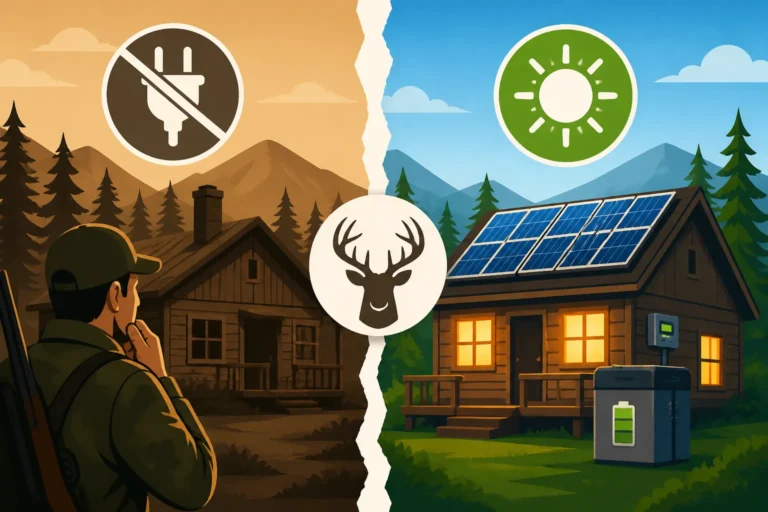
Deciding how to get started with off-grid solar can feel like standing at a crossroads, especially when you're looking at all the gear. On one side, you have the appealing simplicity of a pre-packaged kit; on the other, the daunting yet exciting prospect of assembling individual components. Many of us grapple with this exact dilemma, wondering if we're making the right investment for our unique power needs. This comprehensive guide is designed to help you navigate that critical decision, breaking down the pros and cons of both approaches so you can move forward with confidence.
The Allure of Off-Grid Solar Kits
For many aspiring off-gridders, the idea of a pre-designed solar kit is incredibly attractive, and for good reason. It promises a smoother entry into the world of independent power, cutting down on much of the guesswork and potential headaches that can come with piecing together a system from scratch. Kits often represent a streamlined path to achieving a functional off-grid setup, especially for those who are new to solar technology or have simpler power requirements.
Convenience and Simplicity
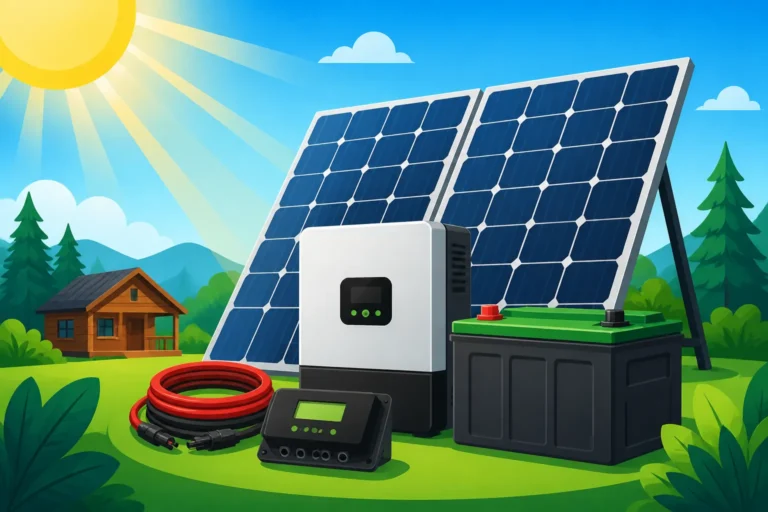
Let's be honest, diving into off-grid solar can be intimidating. You're learning about watts, amp-hours, voltage, charge controllers, inverters, and so much more. It's a whole new language! That's where kits really shine. They take a lot of the initial complexity out of the equation. You typically get a package that includes solar panels, a charge controller, an inverter, and often batteries and all the necessary wiring, all designed to work together seamlessly. This means less time spent researching each individual component and more time enjoying the benefits of your new power source.
Imagine you're outfitting a small shed for some basic lighting and charging tools. A kit often comes with a detailed manual, sometimes even pre-wired connections, making the installation process relatively straightforward, even for someone who isn't an experienced electrician. This plug-and-play aspect is a huge relief for many, saving them countless hours of research and troubleshooting. For those just dipping their toes into off-grid living, a ready-made kit can be the perfect starting point to build confidence before potentially tackling more complex setups down the line. It's truly about minimizing the learning curve and maximizing your ability to get up and running quickly.
Guaranteed Compatibility and Support
One of the biggest anxieties when building a custom solar system is component compatibility. Will my inverter be too small for my battery bank? Is my charge controller correctly sized for my solar array? These are valid concerns that can lead to system inefficiencies, damage, or even safety hazards if not addressed correctly. With a reputable off-grid solar kit, that worry is largely eliminated. The manufacturer has already done the heavy lifting, ensuring that all the components within the kit are matched and optimized to work together.
Beyond the technical compatibility, purchasing a kit often means you have a single point of contact for customer support. If something isn't working right or you have a question, you're not juggling multiple warranties or trying to figure out which component manufacturer is responsible. This centralized support can be invaluable, especially when you're troubleshooting a new system. Many kit providers, like Renogy or Grape Solar, offer comprehensive support packages, installation guides, and even online communities where you can find assistance. This peace of mind, knowing that you have a dedicated team to help you navigate any issues, is a significant advantage for many kit buyers.
Cost-Effectiveness for Smaller Systems
While it might seem counterintuitive, off-grid solar kits can often be more cost-effective than buying individual components, especially for smaller-scale projects. Manufacturers buy components in bulk, which allows them to offer kits at a lower overall price than if you were to purchase each part separately at retail. This is particularly true for basic setups, such as those intended for an RV, a camper, or a small cabin where your energy needs are modest.
For example, if you only need to power some lights, charge phones, and run a small fan, a 200-watt or 400-watt kit might come in at a very attractive price point. Trying to source individual panels, a small charge controller, a low-wattage inverter, and a suitable battery could easily add up to more, not to mention the shipping costs from multiple vendors. These kits bundle everything you need without excess capacity or features you don't require, helping you manage your budget effectively. However, it's worth noting that this cost-effectiveness tends to diminish as your system size increases, as custom builds can often leverage economies of scale or specialized components more efficiently for larger power demands.
The Freedom and Power of Individual Components
While kits offer simplicity, going the individual component route opens up a world of possibilities for those who have specific needs, a desire for maximum control, or simply enjoy the process of building something robust and tailored to their exact specifications. It's the path less traveled by beginners, perhaps, but one that leads to unparalleled flexibility and often, higher performance.
Unmatched Customization and Scalability
When you choose to build your off-grid solar system from individual components, you become the architect of your own power solution. This level of customization means you're not limited by the pre-set configurations of a kit. You can select specific solar panels that excel in low light conditions if you live in a cloudy area, or choose high-efficiency panels if roof space is a premium. You can opt for a specific battery chemistry, like long-lasting LiFePO4 batteries, and size your battery bank exactly to your estimated needs and desired days of autonomy.
This approach is invaluable when you have unique appliances or specific peak load requirements. Want to run a powerful well pump? You can choose an inverter with a high surge rating like a Sol-Ark or Victron. Thinking about expanding your system in the future? Designing with individual components allows you to plan for seamless upgrades. For example, you might start with a certain number of solar panels and a charge controller, knowing you can easily add more panels or expand your battery bank later without having to replace an entire integrated unit. This foresight in design can save significant money and hassle down the road when you realize your initial power needs have grown. To learn more about how to design an expandable system, check out our guide on How to Design an Expandable System While kits are great for getting started, they can quickly become limiting if your power demands evolve beyond their intended scope.
Optimizing Performance and Efficiency
Building with individual components allows you to cherry-pick the best-in-class parts for each segment of your system, leading to a truly optimized setup. Instead of being stuck with generic components that might be "good enough" in a kit, you can research and invest in high-performance solar panels, a top-tier MPPT charge controller that maximizes energy harvest, or a robust pure sine wave inverter known for its reliability and efficiency. This is crucial for larger or more demanding off-grid systems, such as those powering an entire home or a workshop with heavy-duty tools.
For example, choosing premium solar panels from brands like REC or Canadian Solar can provide better output per square foot, which is a game-changer if you have limited installation space. Pairing these with an advanced charge controller, like those from Victron Energy, ensures that every drop of sunlight is converted into usable energy for your batteries. When it comes to storage, opting for high-quality lithium iron phosphate (LiFePO4) batteries, perhaps from brands like Battle Born or EG4, offers a longer lifespan, deeper discharge cycles, and higher efficiency compared to many lead-acid options often found in more basic kits. This careful selection allows you to tailor your system not just for your current needs but for maximum longevity and energy independence. This level of detail in component selection directly impacts how efficiently your system performs day in and day out, ultimately providing more reliable power and a better return on your investment over time.
Learning and Understanding Your System
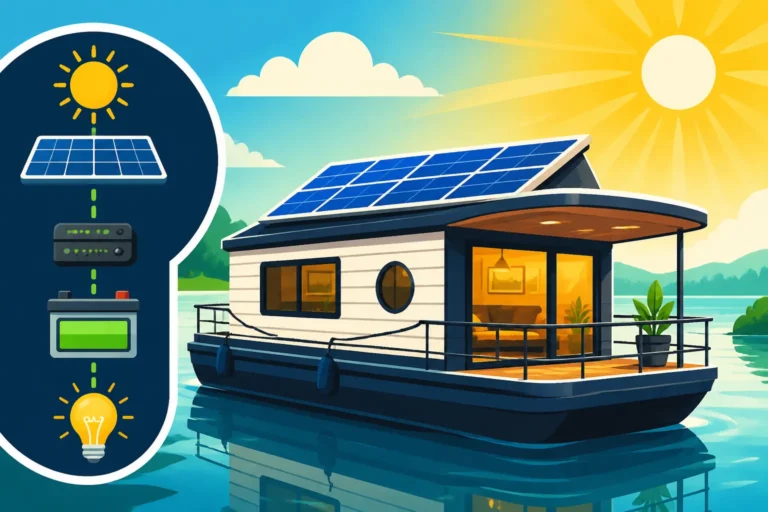
There's an undeniable satisfaction that comes from building something with your own hands, and an off-grid solar system is no exception. When you assemble individual components, you gain an intimate understanding of how each part functions, how they interact, and why specific choices were made. This hands-on learning experience is invaluable for maintenance, troubleshooting, and future upgrades. You'll truly understand how to size an off-grid solar system because you've calculated each part.
Let's say your system suddenly stops producing power. If you installed a kit, you might have to call support and wait for guidance. But if you built it yourself, you'll likely know exactly where to start looking – is it a panel issue, a charge controller fault, or a battery problem? You'll be familiar with your wiring diagram and the location of fuses and breakers. This deep understanding empowers you to diagnose and fix issues independently, minimizing downtime and potentially saving money on professional service calls. For anyone committed to long-term off-grid living, this self-sufficiency is a huge asset. Plus, the knowledge you gain can be applied to future projects or even help you assist others in your community. It transforms you from a consumer into a confident, knowledgeable solar owner.
Key Factors Influencing Your Decision
The choice between a kit and individual components isn't a one-size-fits-all answer. It largely depends on several personal and practical factors. Thinking through these aspects will help you determine which path makes the most sense for your specific situation and goals.
Your Technical Skill Level and Time Commitment
This is arguably the most crucial factor in your decision. If you're someone who loves to tinker, has a solid understanding of basic electrical principles, and enjoys problem-solving, then building a system from individual components might be incredibly rewarding for you. You'll likely have the patience to research different products, understand wiring diagrams, and handle the installation process yourself. This DIY approach can be incredibly empowering and educational. However, it's also a significant time commitment, requiring careful planning, execution, and troubleshooting. Our guide on DIY vs Professional Off-Grid Solar Cost offers more insights into this trade-off.
On the other hand, if the thought of wiring an inverter or calculating voltage drop makes your head spin, or if your time is simply too precious to dedicate to a complex build, then a kit is probably your best bet. Kits are designed to simplify the process, often requiring minimal electrical knowledge for setup. You might still learn a thing or two, but the heavy lifting of system design and component matching is already done for you. Be realistic about your comfort level with electrical work and the amount of time you're willing to invest in the project. There's no shame in admitting that a ready-made solution is better for your sanity and schedule.
System Size and Future Expansion Plans
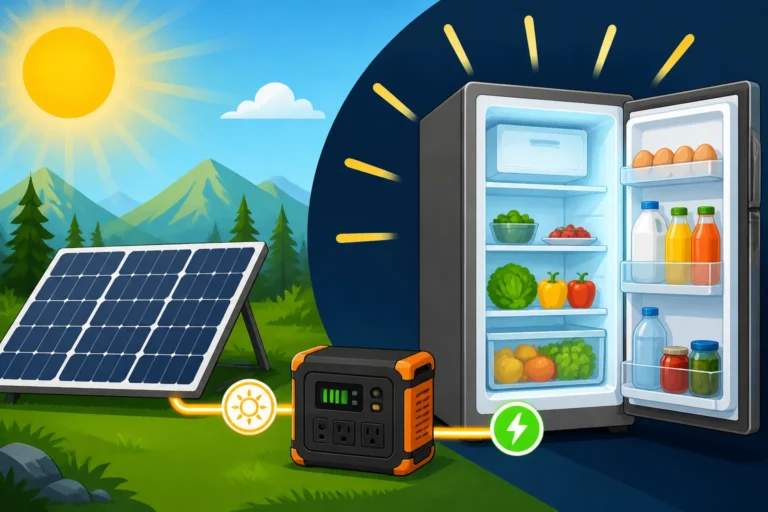
The scale of your off-grid aspirations plays a huge role. For small, temporary, or very basic power needs, a kit is often ideal. Think about powering a camping setup, a small garden shed, or an emergency backup system. A portable power station like those offered by Jackery or Bluetti, which are essentially very compact kits, can be perfect for these uses. These are designed for convenience and portability, offering a quick way to get power where you need it without extensive installation. You might only need to run lights and electronics, or perhaps a small refrigerator. You can find more details on Off-Grid Solar Cost by System Size for various setups.
However, if you're planning for a full-time off-grid home, a large RV with multiple appliances, or a remote cabin that needs to support year-round living, you'll quickly find that kits become restrictive. These larger systems demand precise sizing of solar panels, inverters, and especially batteries to ensure reliable power for demanding loads like air conditioning, well pumps, or washing machines. Custom-built systems using individual components allow for the flexibility to design for significant daily energy usage, account for seasonal variations, and easily integrate advanced features like generator auto-start or remote monitoring. If you anticipate your power needs growing, building from components with scalability in mind from day one is generally the smarter, more economical long-term strategy. You can explore how many batteries for an off-grid system by checking out our dedicated content on How Many Batteries for an Off-Grid System.
Budget and Long-Term Value
When it comes to budget, the initial outlay for a kit can often appear lower, especially for entry-level systems. As we discussed, manufacturers' bulk purchasing power can translate into savings on smaller, integrated packages. This makes kits very appealing if you have a tight initial budget and basic power requirements. However, it's important to consider the long-term value. A kit might save you money upfront, but if you quickly outgrow it or if a single component fails and you have to replace the entire integrated unit, those initial savings can evaporate.
Conversely, buying individual components, particularly high-quality ones, often entails a larger upfront investment. You're paying for specialized equipment, potentially from multiple vendors, and possibly even professional installation if you're not doing it yourself. But this investment usually pays off in terms of durability, efficiency, and the ability to upgrade or repair specific parts as needed. For example, investing in a robust Victron inverter or premium LiFePO4 batteries means you're buying components with longer warranties and lifespans, offering a lower total cost of ownership over many years. When budgeting for your off-grid system, it's crucial to look beyond the immediate price tag and consider the projected lifespan, maintenance, and potential for future expansion. Sometimes, spending more upfront on quality individual components means spending less overall in the long run. To understand more about the full financial picture, consider researching the Off-Grid Solar Return on Investment.
Specific Application Requirements
Your specific application is another major driver in this decision. Are you powering a tiny home in the mountains, a weekend RV, or just a small backup setup for emergencies? Each scenario presents unique challenges and demands.
- Portable or Emergency Use: For quick, on-the-go power or emergency backup, an all-in-one solar generator (which is essentially a portable kit) is hard to beat. Brands like Jackery and EcoFlow offer fantastic portable power stations that combine an inverter, battery, and charge controller into a single, easy-to-use unit. They're perfect for camping, tailgating, or keeping essential devices running during a power outage. Our guide on Best Solar Generators for Off-Grid Use has more information.
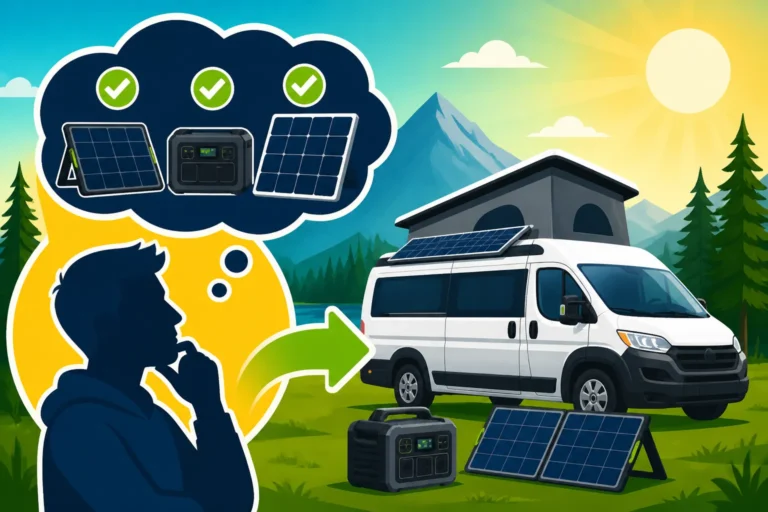
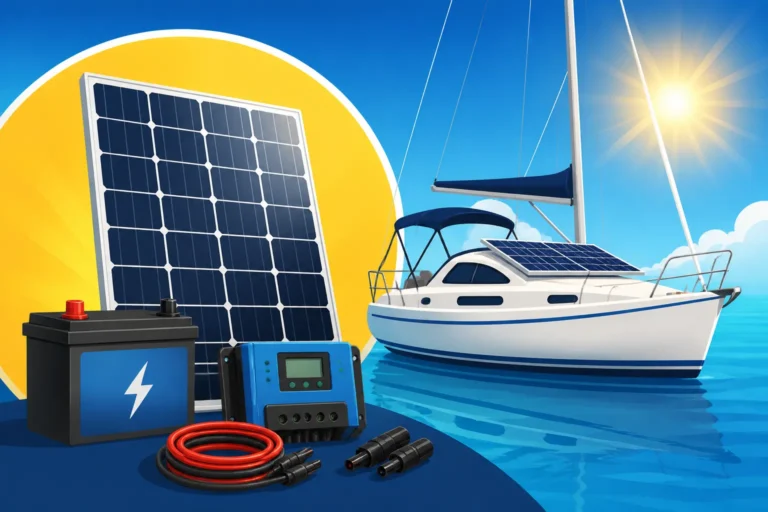
- RV or Van Life: Many RVers and van dwellers start with kits due to their compact nature and relative ease of installation in confined spaces. However, those living full-time in their rigs often migrate towards custom builds to accommodate more demanding appliances like microwaves or powerful air conditioners, which require more sophisticated inverters and larger battery banks.
- Cabins or Small Homesteads: For a remote cabin that sees seasonal use, a moderately sized kit might suffice. But for a homestead with a well pump, multiple outbuildings, and a family's worth of appliances, a custom-designed system built with individual, heavy-duty components is almost always the better choice. You'll want the reliability and power of dedicated components to handle varying loads and ensure consistent power.
- Full-Time Off-Grid Homes: For a permanent residence, individual components are overwhelmingly the preferred route. This allows for proper sizing for all household loads, integration with backup generators, advanced monitoring systems, and the flexibility to adapt to changing energy consumption patterns over the decades.
Understanding what your system needs to do, day in and day out, is paramount. This objective assessment of your energy consumption will guide you towards the most appropriate and effective solution, whether it's a pre-assembled kit or a carefully curated collection of individual components.
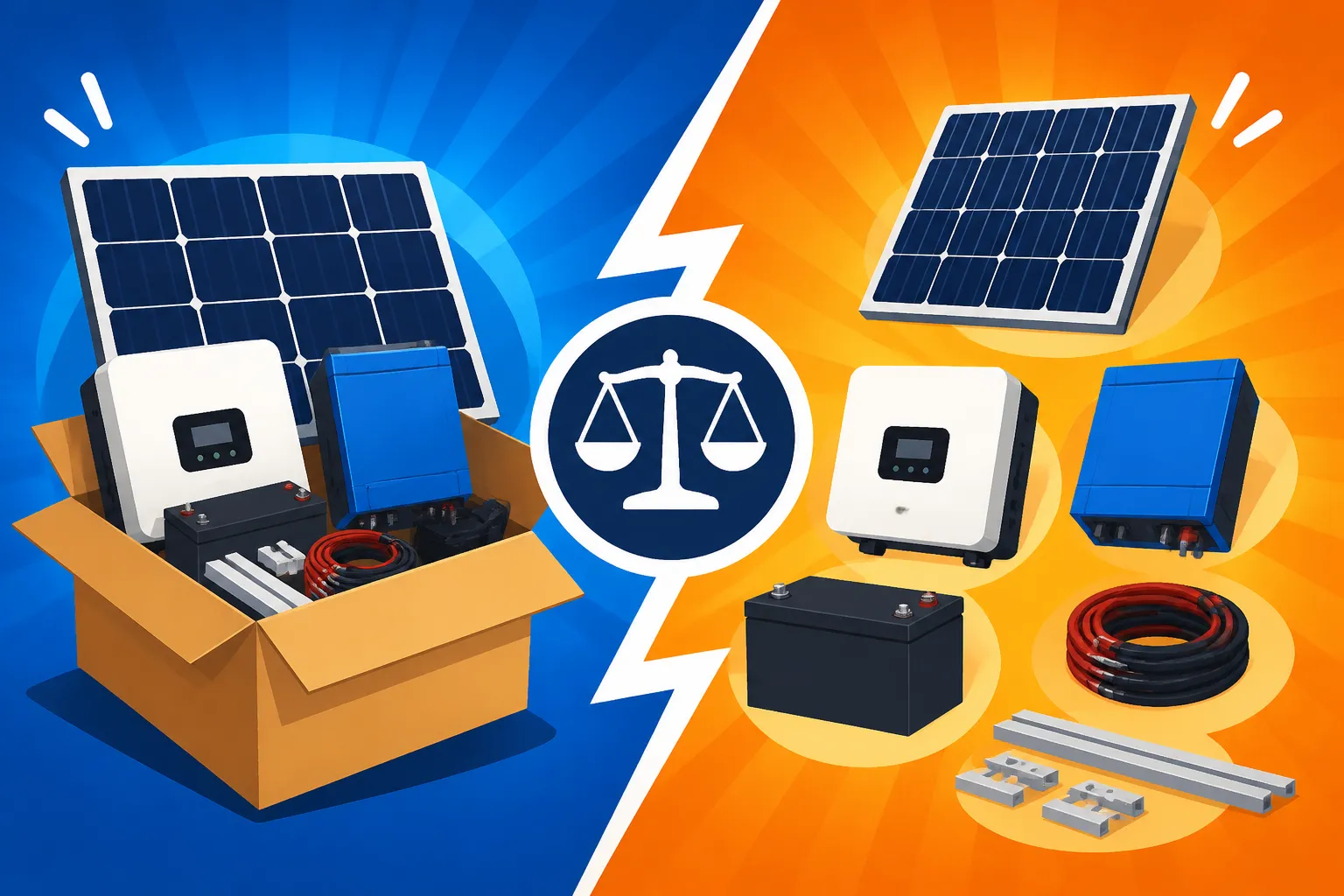
Here's a quick comparison to help solidify your thoughts:
| Feature/Consideration | Off-Grid Solar Kit | Individual Components |
|---|---|---|
| Complexity for Beginner | Low (Plug-and-play, matched parts) | High (Requires research, design, and wiring) |
| Customization | Limited (Pre-set configurations) | Unlimited (Choose exact parts for specific needs) |
| Scalability | Often difficult or expensive to expand significantly | Excellent (Design for future additions easily) |
| Initial Cost | Potentially lower for small systems | Generally higher upfront for robust systems |
| Long-Term Value | Good for basic needs, can be limiting | Excellent (Durable, repairable, adaptable) |
| Performance | Adequate for intended use | Optimized for specific efficiency and power demands |
| Troubleshooting | Easier with single vendor support | Requires more technical knowledge to diagnose |
| Ideal For | RVs, vans, small cabins, emergency backup | Full-time homes, large cabins, workshops, custom builds |
| Learning Curve | Minimal (Focus on installation) | Significant (Deep understanding of all parts) |
Final Thoughts and Recommendations
Ultimately, the decision of when to buy a kit versus individual components boils down to a realistic assessment of your needs, your technical comfort, and your vision for your off-grid future. There's no right or wrong answer, only the best fit for you.
If you're just starting, have a modest budget, and need a straightforward solution for basic power, a well-chosen kit can be a fantastic way to dip your toes into off-grid living. It provides a solid foundation, eases the initial learning curve, and gets you powered up relatively quickly. Think of it as your entry ticket to energy independence. For those camping trips or even keeping essentials running in a small shed, a complete kit simplifies everything.
However, if you're planning a more robust system for a full-time residence, need specific performance characteristics, or simply enjoy the challenge of building a customized solution, then sourcing individual components is undoubtedly the superior path. It offers unmatched flexibility, optimization, and the long-term value of a system truly built to your specifications. This approach empowers you with deep knowledge and ensures your system can evolve with your needs. Many experienced off-gridders find immense satisfaction in designing and building their own systems, gaining not just power, but a profound connection to their energy source. Consider starting with smaller systems, like a portable Jackery, to get a feel for solar, and then build a larger, custom solution as your confidence and needs grow. Our article on Off-Grid Solar System Components Explained can help you get familiar with what each piece does.
Whichever route you choose, thorough research and careful planning are your best allies. Understand your energy consumption, visualize your system, and then pick the path that aligns best with your skills, goals, and resources.
Disclaimer
The information provided in this guide is for general informational purposes only and does not constitute professional advice. Off-grid solar system design and installation can be complex and involve electrical hazards. Always consult with qualified professionals, adhere to local codes, and prioritize safety when working with electrical systems.