Best Off-Grid Solar Kit for a Cabin
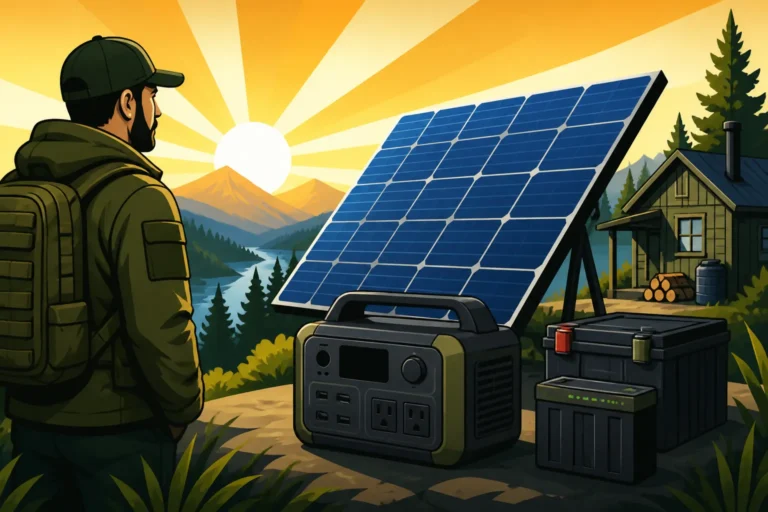
So, you've got a cozy cabin, maybe tucked away in the mountains, nestled by a quiet lake, or just a peaceful retreat away from the hustle and bustle. The dream is often shattered when you consider extending power lines, or you find yourself constantly battling unreliable generators, lugging fuel, and enduring the noise. It's a real headache, and many folks yearn for true energy independence and quiet solitude without sacrificing modern conveniences. This comprehensive guide is here to help you navigate the often-confusing world of off-grid solar kits, specifically tailored to the unique needs of cabin owners, ensuring you find the best solution to power your slice of paradise.
Why Go Off-Grid with Solar for Your Cabin?
The allure of a cabin is often its remoteness and the escape it offers from daily life. However, that very remoteness can be its biggest challenge when it comes to power. Solar energy provides a compelling solution, transforming a potential hurdle into an opportunity for true self-sufficiency and peace.
Escaping High Utility Extension Costs
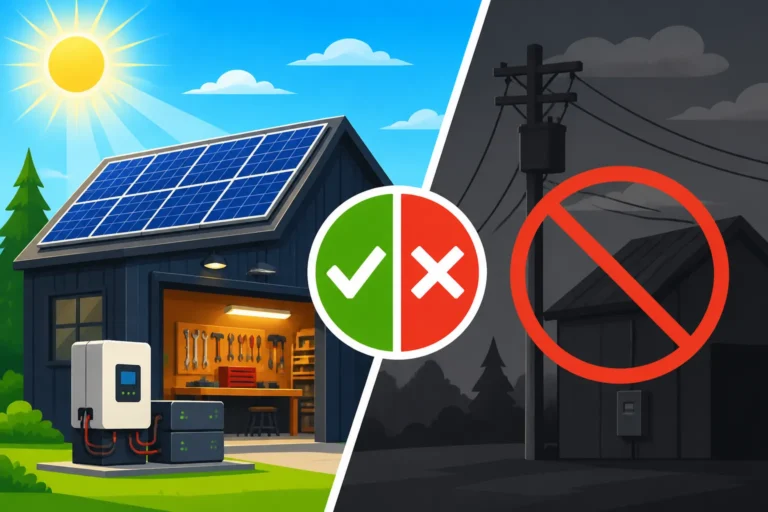
Let's be honest: one of the biggest deterrents to powering a remote cabin is the astronomical cost of extending utility lines. Imagine the scenario: you've found the perfect plot of land, but the nearest power pole is miles away. Utility companies will quote you an eye-watering sum, often tens of thousands, sometimes even hundreds of thousands of dollars, just to run those lines to your property. That cost alone can make the dream seem impossible. Beyond the initial installation, there are ongoing monthly service fees, even if your cabin is only used seasonally. These charges can add up significantly over time, making you feel like you're constantly paying for a service you barely use. With off-grid solar, you completely bypass this financial burden and the bureaucratic red tape that often comes with utility projects. You invest once in your own power plant, and from then on, your energy costs are drastically reduced, often to just maintenance. Many people find the initial outlay for a robust off-grid system to be a fraction of what they'd pay for utility extension, not to mention the freedom from monthly bills. If you're curious about the specific numbers, it's worth diving into the details of Off-Grid Solar vs Utility Extension Cost to see the real savings potential.
Reliability and Independence from the Grid
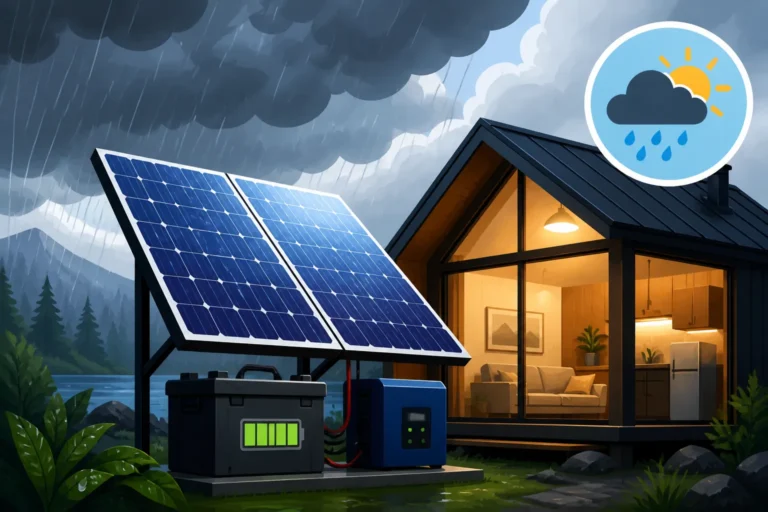
The grid, while convenient for many, is far from infallible. Storms, aging infrastructure, and unforeseen outages can leave grid-tied homes in the dark. For a cabin owner, this can be even more critical, especially if your cabin serves as a primary residence or a critical retreat. An off-grid solar system provides a level of energy security that simply can't be matched by a grid connection. When the power goes out for everyone else, your lights stay on, your fridge keeps humming, and your well pump continues to draw water. This independence isn't just about convenience; it's about resilience. You're not beholden to fluctuating energy prices, power company policies, or regional blackouts. You become your own power provider, with direct control over your energy source. This peace of mind, knowing your cabin will always have power regardless of external factors, is a huge driving force for many seeking off-grid solutions.
Environmental Benefits and Quiet Operation
Beyond the practical and financial advantages, off-grid solar systems offer significant environmental benefits. By harnessing the sun's clean, renewable energy, you drastically reduce your carbon footprint. You're not relying on fossil fuels for electricity, contributing to a healthier planet. This aligns perfectly with the ethos of many cabin owners who appreciate nature and strive to live harmoniously with their surroundings. Perhaps just as appealing for a cabin in a serene setting is the quiet operation of solar. Generators, while useful for backup, are notoriously noisy, emitting fumes and disturbing the tranquility you sought in the first place. A properly designed off-grid solar system, on the other hand, operates silently. The only sounds you'll hear are the gentle hum of an inverter, perhaps, or the whisper of the wind – the natural sounds of your cabin environment, undisturbed by the constant thrum of an engine. This quiet, clean power enhances the overall cabin experience, allowing you to fully immerse yourself in the peace and quiet.
Understanding Your Cabin's Energy Needs (The First Step)
Before you even begin to look at solar kits, you absolutely must understand your cabin's energy consumption. This isn't a step to rush through; it's the foundation of a successful off-grid system. Without an accurate assessment, you risk either overspending on an oversized system or, worse, undersizing it and constantly running out of power, leading to frustration and potential damage to your battery bank.
Performing a Detailed Load Analysis
A load analysis is essentially an inventory of every electrical appliance and device you plan to use in your cabin, along with how much power they consume and for how long. It's not enough to just list them; you need to quantify their usage. Grab a notebook and go room by room. Think about your refrigerator, lights, water pump, microwave, TV, phone chargers, power tools, and even small things like electric toothbrushes. For each item, you need to find its wattage (usually on a label) and estimate how many hours per day it will be used. Remember to differentiate between continuous loads (like a refrigerator) and intermittent loads (like a microwave or hair dryer). Don't forget those "phantom" loads that draw power even when turned off but still plugged in. This is where you calculate your total daily watt-hour (Wh) consumption. It might seem tedious, but it's crucial. You can learn more about this vital process in our guide on How to Calculate Daily Energy Usage. An accurate load analysis dictates the size of your solar array and, more importantly, your battery bank. Missing an appliance or underestimating its usage can severely impact your system's performance, leaving you scrambling for power when you least expect it.
Accounting for Seasonal Usage and Autonomy
Cabins aren't always used uniformly throughout the year. Are you a weekend warrior, a seasonal resident, or do you plan to live there full-time? Your usage patterns will dramatically affect your system design. A cabin used only in summer might require a smaller battery bank and solar array compared to one used year-round, especially in winter when sunlight hours are shorter and heating demands are higher. Furthermore, you need to consider "days of autonomy." This refers to how many days your battery bank can power your cabin without any sunlight input – essentially, how long it can last during cloudy or stormy weather. For a remote cabin, aiming for at least 3-5 days of autonomy is a smart move, giving you a buffer against extended periods of poor weather. If you're in an area prone to long winter storms, you might even consider more. This is a critical safety net that prevents you from going completely dark. For a deeper dive, check out How many batteries for an off-grid system to ensure your battery bank can handle your cabin's demands, even when the sun isn't shining.
Deciding on System Voltage 12V, 24V, 48V
The voltage of your off-grid system (typically 12V, 24V, or 48V DC) is a fundamental decision that impacts efficiency, cost, and expandability. For very small cabins with minimal power needs, perhaps just a few lights and device charging, a 12V system might suffice. These are common in RVs and small sheds. However, as your power demands increase, a higher voltage system becomes far more efficient. A 24V system is often a good middle ground for cabins with moderate needs, allowing for smaller wire gauges and less voltage drop over longer distances compared to 12V. For anything resembling a modern home with multiple appliances, a well pump, or air conditioning, a 48V system is almost always the preferred choice. Higher voltages mean lower current for the same amount of power, which translates to thinner, less expensive wiring, less power loss, and often more readily available, powerful inverters. While 48V might have a slightly higher upfront cost for certain components, the long-term efficiency and capability gains are substantial. Your choice here will heavily influence how your entire system is designed and how efficiently it operates.
Key Components of an Off-Grid Solar Kit for a Cabin
An off-grid solar system isn't just a collection of solar panels; it's an integrated powerhouse of several crucial components working in harmony. Understanding each part is essential for choosing the right kit and ensuring your cabin stays powered.
Solar Panels: Types and Considerations
The solar panels are your energy gatherers, converting sunlight into electricity. For cabin applications, you'll primarily be looking at rigid monocrystalline panels. These offer the highest efficiency per square foot, which is often a critical factor when roof space might be limited or you want to minimize the footprint of a ground mount. While flexible panels exist, they're generally less efficient, less durable, and more expensive per watt, making them less ideal for permanent cabin installations unless specific aesthetic or mounting constraints dictate their use. When choosing panels, consider their wattage, physical size, and temperature coefficient (how much efficiency they lose in high heat).
For a cabin, you'll want panels that can withstand harsh weather conditions, including heavy snow loads and strong winds. Look for robust frames and tempered glass. The number of panels and their total wattage will be directly determined by your load analysis and the available peak sun hours in your location. Remember, panels aren't 100% efficient, and factors like shading, dirt, and panel degradation over time will reduce their actual output. It's often wise to slightly oversize your array to account for these real-world losses, especially if your cabin experiences long, dark winters.
Battery Bank: The Heart of Your System
The battery bank is arguably the most critical and often the most expensive component of an off-grid solar system. It stores the energy generated by your panels so you can use it when the sun isn't shining – at night, on cloudy days, or during long winter stretches. Without a robust battery bank, your system is essentially useless after dark. You'll primarily encounter two main types of batteries for off-grid use:
-
Lead-Acid Batteries: These are the traditional choice, including flooded lead-acid (FLA) and sealed absorbed glass mat (AGM) types. FLAs are generally the most affordable upfront but require regular maintenance (watering) and proper ventilation due to off-gassing. AGMs are maintenance-free, sealed, and can be installed in more varied orientations, but they are more expensive and still have limitations in terms of depth of discharge and cycle life compared to lithium. Both have a relatively lower usable capacity (you shouldn't discharge them below 50% for FLAs or 20-50% for AGMs to prolong their life).
-
Lithium-Iron Phosphate (LiFePO4) Batteries: These are quickly becoming the gold standard for off-grid systems, despite a higher upfront cost. LiFePO4 batteries offer significantly longer cycle life (how many times they can be charged and discharged), can be discharged much deeper (often 80-100% without damage), are much lighter, more compact, and are virtually maintenance-free. They also perform better in varying temperatures and have a much higher charge/discharge efficiency. While the initial investment is greater, their longevity and superior performance often result in a lower lifetime cost. For many cabin owners seeking reliability and minimal fuss, LiFePO4 batteries from brands like Battle Born or EG4 are a compelling choice. You can explore the detailed comparison in LiFePO4 vs Lead-Acid Battery Cost. The size of your battery bank, measured in amp-hours (Ah) or kilowatt-hours (kWh), must align with your daily energy consumption and desired days of autonomy.
Inverters and Charge Controllers: The Brains of the Operation
These two components act as the intelligence and muscle of your off-grid power system:
-
Charge Controller: This device sits between your solar panels and your battery bank. Its primary job is to regulate the voltage and current coming from the solar panels to prevent overcharging your batteries, which can severely damage them. There are two main types:
- PWM (Pulse Width Modulation): These are simpler, less expensive, and less efficient. They effectively chop the voltage from the panels to match the battery voltage, losing some potential power, especially if your panel voltage is significantly higher than your battery bank. Best suited for smaller, simpler systems where cost is the absolute priority.
- MPPT (Maximum Power Point Tracking): These are more advanced, more efficient, and more expensive. MPPT controllers actively track the optimal voltage and current point of your solar panels to extract the maximum available power, converting it efficiently to charge your batteries. This means you get more usable power from your panels, particularly in varying light conditions or when panel voltage is higher than battery voltage. For almost any cabin system, an MPPT charge controller is the recommended choice for its superior performance and efficiency, ultimately meaning you might need fewer panels. You can delve into more detail about the role of the charge controller in How to Choose an Off-Grid Charge Controller.
-
Inverter: Your solar panels and battery bank produce Direct Current (DC) electricity. Most standard household appliances, however, run on Alternating Current (AC). The inverter is the device that converts the DC power from your batteries into usable AC power for your cabin. For a cabin, you absolutely want a pure sine wave inverter. Modified sine wave inverters are cheaper but can damage sensitive electronics, reduce the efficiency of motors, and cause buzzing in audio equipment. Pure sine wave inverters produce clean power, identical to or better than grid power, ensuring your appliances run smoothly and safely. When choosing an inverter, you need to consider its continuous wattage rating (the power it can supply consistently) and its surge wattage rating (the peak power it can provide for a short period, necessary for starting motors in appliances like refrigerators or well pumps). It's always wise to slightly oversize your inverter to handle potential surge loads comfortably.
Balance of System Components Mounting, Wiring, Safety
These often-overlooked components are crucial for a safe, efficient, and reliable off-grid solar system:
- Mounting Equipment: This includes racks and hardware to secure your solar panels to your cabin roof or to a ground mount structure. It must be robust enough to withstand local weather conditions (wind, snow). Tilt mounts allow you to adjust the angle of your panels for optimal sun exposure throughout the seasons, maximizing energy harvest.
- Wiring and Cabling: You'll need appropriate gauges of wire for different sections of your system (panels to charge controller, charge controller to batteries, batteries to inverter). Proper wire sizing is crucial to minimize voltage drop and prevent overheating, which can be a fire hazard. Using UV-resistant, outdoor-rated solar cables (like MC4 connectors for panels) is also essential.
- Fuses and Breakers: These are critical safety devices that protect your system components and prevent fires in the event of a short circuit or overcurrent. You'll need DC-rated fuses/breakers for the solar array and battery bank circuits, and AC-rated breakers for the inverter output. Proper grounding and surge protection are also paramount to protect against lightning strikes and power surges.
- Monitoring System: A good battery monitor, usually with a shunt, provides vital information about your battery's state of charge, current draw, and historical data. This helps you understand your system's performance and avoid deep discharges that can shorten battery life. Many modern charge controllers and inverters from brands like Victron Energy also integrate robust monitoring capabilities accessible via apps.
Different Types of Off-Grid Solar Kits for Cabins
The beauty of off-grid solar for cabins is its versatility. There's no one-size-fits-all solution, which means you can find a kit perfectly matched to your specific needs, from a simple setup for occasional use to a robust system for full-time living.
Basic Kits for Light Use
If your cabin is truly a rustic retreat – think weekends, no major appliances, just some LED lights, charging phones, and perhaps a small radio or a laptop – a basic off-grid solar kit might be all you need. These kits typically range from 100 watts to 400 watts of solar panels, paired with a small 12V battery bank (often 50-100Ah) and a simple charge controller, usually a PWM type, along with a small pure sine wave inverter (300-600W). They are designed for minimal power draw and are great for keeping essentials running.
For example, a 200W kit with a 100Ah LiFePO4 battery might comfortably power a few LED lights for several hours, charge multiple devices, and run a small fan or a low-wattage DC cooler. Installation is generally straightforward, making these kits popular for DIY enthusiasts. Brands like Renogy and Rich Solar offer excellent entry-level kits that are easy to understand and set up. They’re perfect for those who want a taste of solar without a massive upfront investment, or for cabins where the primary goal is just to have reliable light and communication charging. These setups are usually very cost-effective, often falling into the lower end of the Off-Grid Solar Kit Price Ranges.
Medium-Sized Kits for Seasonal Living
For cabins used seasonally (spring through fall) or for longer stays, you'll need a more substantial system. These kits are designed to handle moderate appliance usage, including a refrigerator, water pump, a TV, and perhaps a microwave or small power tools for short durations. Typically, you'd be looking at a solar array ranging from 800 watts to 2000 watts, a 24V or 48V battery bank with 200-400Ah (or more for LiFePO4), and a more efficient MPPT charge controller. The inverter would likely be in the 1500W to 3000W range to handle common household appliances, including surge loads.
These systems provide a comfortable level of power, allowing you to enjoy many modern conveniences without constant worry. For instance, a 1500W solar array with a 400Ah 48V LiFePO4 battery bank could easily run a standard energy-efficient refrigerator 24/7, power a well pump for daily water needs, provide ample lighting, and allow for entertainment like TV or streaming for several hours each evening. These kits are a popular choice for families spending extended vacations at their cabin. They represent a significant step up in capability and often offer better long-term reliability due to the higher voltage and more robust components.
Robust Kits for Full-Time Off-Grid Living
If your cabin is your full-time residence or you plan to use it as such, you need a serious, high-capacity off-grid solar system. These systems are designed to provide power comparable to a grid-tied home, handling all your essential appliances and creature comforts, including potential air conditioning, electric heating elements (like a well pump heater), washing machines, and a full-sized refrigerator. Expect solar arrays from 3000 watts up to 10,000 watts (or more for very large homes), a substantial 48V battery bank (typically 600Ah to 1000Ah+ of LiFePO4 capacity), and a large, high-quality pure sine wave inverter in the 4000W to 8000W+ range, often an inverter-charger hybrid unit that can also manage a backup generator.
These systems are complex and often require professional design and installation to ensure safety, efficiency, and compliance with local codes. They offer the ultimate in energy independence and comfort, but they come with a significant investment. Brands like Sol-Ark, Victron Energy, and Outback Power are popular for their highly reliable and feature-rich components for these types of large-scale systems. A well-designed full-time system will seamlessly power your cabin day in and day out, requiring minimal intervention and providing the true grid-free lifestyle many aspire to.
All-in-One Solar Generators
For cabin owners who need extreme portability, or perhaps a temporary solution, or even just a robust backup for a smaller off-grid system, all-in-one solar generators (also known as portable power stations) are an interesting option. These units integrate a battery, inverter, and charge controller into a single, compact, plug-and-play device. You simply connect solar panels, and you have power.
Brands like Jackery, EcoFlow, and Bluetti offer a wide range of these devices, from small units perfect for charging phones and running a laptop, to massive ones that can power a refrigerator or even a mini-split AC unit for short periods. For a basic cabin setup, a Jackery Explorer 1000 or 2000 Pro, coupled with their portable solar panels, can provide convenient power for lighting, small electronics, and even some kitchen appliances temporarily. They are incredibly easy to set up and move, making them ideal for cabins that might not be suitable for a permanent installation, or for providing supplemental power during peak usage times. While they don't offer the same long-term capacity or customizability as a dedicated component system, their ease of use and portability make them a valuable tool for many cabin owners, especially those just dipping their toes into off-grid living or needing a flexible backup solution. You can find many options in the category of Best Solar Generators for Off-Grid Use.
Factors to Consider When Choosing the Best Kit
Selecting the right off-grid solar kit for your cabin is more than just picking the biggest or cheapest option. It involves a thoughtful consideration of several practical factors that will impact your system's performance, longevity, and your overall satisfaction.
Climate and Sunlight Availability
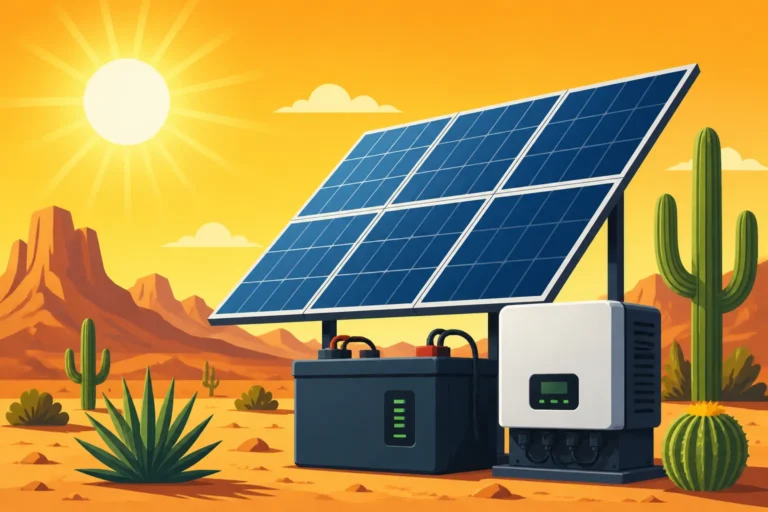
Your cabin's geographic location and the local climate play a monumental role in determining the size and specifications of your solar system. A cabin in sunny Arizona will have vastly different solar energy harvest potential compared to one in the Pacific Northwest, especially during winter months. You need to research the average "peak sun hours" for your specific location throughout the year. Peak sun hours refer to the equivalent number of hours per day when solar irradiance averages 1,000 watts per square meter. This metric is crucial for accurately sizing your solar array.
Beyond just the amount of sun, consider temperature extremes. Extreme heat can actually reduce the efficiency of solar panels, while extremely cold temperatures can affect battery performance, particularly with lead-acid types. If your cabin is in a snowy region, you'll need to account for snow accumulation on your panels and ensure your mounting system allows for easy cleaning or shedding. Investing in tilt mounts can be beneficial to optimize panel angle for maximum winter sun, or to allow snow to slide off more easily. Failing to consider your climate can lead to a severely undersized system in winter or an over-engineered one for summer, both costly mistakes.
Expandability and Future Needs
Thinking ahead is key when investing in an off-grid solar system. What if your family grows, you decide to spend more time at the cabin, or you simply want to add new appliances in the future? Designing a system with expandability in mind from the outset can save you significant money and headaches down the road. It's much easier and more cost-effective to add panels or batteries to a system that was built with future growth in mind, rather than having to replace major components.
Consider choosing an inverter and charge controller that can handle more wattage than your current needs. For instance, if your current load requires a 2000W inverter, opting for a 3000W or 4000W model from the start provides a buffer and allows for future expansion. Similarly, an MPPT charge controller that can handle a higher voltage and current input will allow you to add more solar panels later without having to replace the controller. With batteries, a modular LiFePO4 system allows you to add more battery modules in parallel as your needs increase. This forward-thinking approach ensures your initial investment remains valuable and adaptable as your off-grid lifestyle evolves.
Ease of Installation DIY vs Professional
The decision to install your off-grid solar kit yourself or hire a professional is a significant one, impacting both cost and complexity.
-
DIY Installation: Many smaller to medium-sized off-grid kits are designed for DIY installation, especially with comprehensive manuals and online resources available. This route can save you thousands of dollars in labor costs and provides a deep understanding of your system. However, it requires a certain level of technical aptitude, comfort with electrical wiring, and strict adherence to safety protocols. Incorrect wiring can be dangerous and damage components. If you're considering a DIY approach, ensure you have the right tools, understand wiring diagrams (like those in Off-Grid Solar Wiring Diagram Explained), and are confident in your abilities. Starting with a smaller, pre-assembled kit or a solar generator like a Jackery can be a great way to gain experience before tackling a larger system.
-
Professional Installation: For larger, more complex systems designed for full-time living, or if you're uncomfortable with electrical work, hiring a qualified solar installer or electrician is highly recommended. Professionals bring expertise in system design, component integration, safety, and compliance with local electrical codes. While the upfront cost is higher due to labor, it often ensures a safe, efficient, and reliable system, and can often be a requirement for permitting or insurance purposes. They can also provide ongoing support and warranty services. It's worth comparing the benefits and drawbacks of DIY vs Professional Off-Grid Solar Cost thoroughly.
Warranty and Customer Support
An off-grid solar system is a significant investment, and like any complex machinery, components can occasionally fail or require troubleshooting. That's why robust warranties and reliable customer support are non-negotiable considerations when choosing a kit or individual components. Reputable brands stand behind their products, offering warranties that cover panels (often 25 years for performance), inverters (5-10 years), and batteries (5-10+ years, especially for LiFePO4).
Before purchasing, carefully review the warranty terms for each major component. Understand what's covered, what voids the warranty, and the process for making a claim. Equally important is the availability and quality of customer support. Can you easily reach technical support via phone or email? Are there comprehensive troubleshooting guides or forums available? Brands like Victron Energy, Renogy, and Sol-Ark are known for their strong customer support and extensive documentation, which can be invaluable when you're off-grid and need assistance. A great warranty and accessible support network provide peace of mind and protect your investment over the long haul.
Top Picks and Recommendations for Cabin Solar Kits
Finding the "best" off-grid solar kit for a cabin is deeply personal and depends entirely on your specific power needs, budget, and comfort with DIY. However, we can highlight categories and offer examples of what works well for different cabin scenarios.
Entry-Level Options for Smaller Cabins
For those with modest power needs – think a hunting cabin, a tiny shed, or a minimalist retreat used primarily for sleeping and relaxing, with limited electronics – several excellent entry-level options exist. These kits prioritize simplicity, ease of installation, and affordability, often operating on a 12V system.
- Renogy 400W 12V Off-Grid Solar Kit: This is a popular choice for beginners and small cabins. It typically includes four 100W monocrystalline panels, a 30A MPPT charge controller, and necessary wiring. You would then add your own 12V battery bank (perhaps 100-200Ah of LiFePO4) and a small pure sine wave inverter (600-1000W). This setup can easily power LED lighting, charge phones and laptops, and run a small DC refrigerator or fan. Its modular nature also allows for easy expansion by adding more panels and batteries later. Renogy kits are well-regarded for their comprehensive instructions and decent components, making them very DIY-friendly.
- Rich Solar 200W/400W Kits: Similar to Renogy, Rich Solar offers reliable and cost-effective kits for basic needs. Their packages often come with good quality monocrystalline panels and MPPT controllers, providing a solid foundation for light-use cabins. These kits are excellent for basic power and can be scaled up.
These entry-level kits, while not designed for heavy loads, provide a fantastic introduction to off-grid living without breaking the bank. They're often priced very competitively within the Cost of an Off-Grid Solar System spectrum.
Mid-Range Systems for Comfortable Living
If your cabin is a seasonal home, a frequent getaway, or you desire more creature comforts like a full-size refrigerator, television, and perhaps a small well pump or microwave, you'll need a more robust, mid-range system. These kits usually feature higher voltage (24V or 48V) for better efficiency and more powerful components.
- Mid-Range Kits with Hybrid Inverter-Chargers: Many advanced kits in this category will feature a central inverter-charger unit that combines the functions of an inverter, battery charger (for generator backup), and often a charge controller into one integrated device. Brands like Growatt, EG4, and some higher-end Renogy systems offer these. A typical mid-range kit might feature 1500W to 3000W of solar panels, a 48V 200-400Ah LiFePO4 battery bank (or a larger lead-acid equivalent), and a 3000W-5000W hybrid inverter-charger.
- Example Setup: Imagine a cabin using a Growatt 3000W hybrid inverter, 1600W of solar panels, and a 200Ah 48V EG4 LifePower4 battery. This system could comfortably run a full-sized energy-efficient refrigerator, LED lighting throughout, a small washing machine, a water pump, and entertainment systems. The hybrid inverter also makes it simple to integrate a generator for backup power during extended cloudy periods, a critical feature for any cabin. These systems strike an excellent balance between cost, performance, and expandability, making them ideal for the majority of cabin owners seeking reliable, comfortable off-grid power.
High-Capacity Solutions for Energy-Intensive Cabins
For full-time living or cabins with high energy demands (air conditioning, multiple large appliances, workshops, etc.), you'll need a high-capacity, professional-grade system. These are typically 48V systems with large solar arrays and substantial battery banks.
- Victron Energy or Sol-Ark Systems: These brands are at the forefront of high-performance off-grid solutions. A high-capacity cabin system might include 4000W to 8000W+ of solar panels, a 48V LiFePO4 battery bank ranging from 600Ah to 1000Ah (or several 10kWh server rack batteries), and a powerful 5000W to 8000W+ inverter-charger (e.g., Victron MultiPlus-II or Sol-Ark 12K).
- Example Setup: A Sol-Ark 12K inverter, paired with 6000W of solar panels and a 20kWh (400Ah at 48V) battery bank, could reliably power a modern, energy-efficient cabin with all the amenities. This includes a well pump, refrigerator, freezer, washing machine, dishwasher, and even a small mini-split air conditioner. These systems often come with advanced monitoring capabilities, allowing you to track energy production and consumption in real-time via a smartphone app or computer. While the initial investment is substantial (often well over $15,000 to $30,000+ depending on size), these systems offer unparalleled reliability, efficiency, and the ability to live a truly comfortable off-grid life. They require careful design and often professional installation to ensure optimal performance and safety.
The Role of Portable Power Stations
While not a complete system replacement for most cabins, portable power stations, or "solar generators," play a valuable role for cabin owners. They offer incredible flexibility and can serve multiple purposes:
- Supplemental Power: For smaller, basic cabins, a high-capacity unit like a Jackery Explorer 2000 Plus can be the primary power source for lights, charging, and small appliances. Its ease of use makes it a compelling choice.
- Backup Power: Even with a robust fixed system, having a portable power station like a Bluetti AC200L or an EcoFlow Delta Pro on hand provides an extra layer of security. If your main system goes down for maintenance or faces an unexpected issue, these units can keep critical devices running.
- Remote Power: Need to power tools at a construction site away from the cabin? Or run a pump for a distant garden? Portable power stations from Jackery are perfect for these situations, as they can be easily moved wherever power is needed, charged by their own portable solar panels or from your main cabin system.
- Testing & Phased Installation: For those embarking on a DIY journey, a smaller solar generator can be an excellent way to test your actual energy consumption patterns before committing to a larger, permanent system. It's a great stepping stone to understanding your cabin's power needs.
While they don't offer the same continuous power output or long-term battery capacity as a dedicated, permanently installed off-grid battery bank, their convenience, safety, and instant power make them indispensable tools for many cabin owners.
| Kit Type | Solar Panels (Watts) | Battery Bank (Usable Wh) | Inverter (Continuous Watts) | Typical Appliances | Best For | Estimated Cost Range (DIY, excluding installation) |
|---|---|---|---|---|---|---|
| Basic Light Use | 100-400 | 500-1500 | 300-1000 | LED lights, phone charging, laptop, small fan, DC cooler | Weekend trips, minimalist living, emergency backup | $800 – $2,500 |
| Seasonal Living | 800-2000 | 2000-8000 | 1500-3000 | Refrigerator, well pump, TV, microwave (intermittent), power tools, washing machine | Extended stays, comfortable seasonal use | $3,000 – $10,000 |
| Full-Time Living | 3000-10000+ | 10000-30000+ | 4000-8000+ | All standard household appliances, AC, electric water heater (limited), workshop tools | Primary residence, year-round comfort | $12,000 – $40,000+ |
| Portable Power | 100-800 (external) | 500-5000 (integrated) | 500-3600 (integrated) | Specific devices for short periods, emergency backup, remote work | Flexible use, backup, light cabin power | $500 – $5,000 (depending on capacity) |
Note: Costs are estimates for DIY kits and do not include professional installation, additional wiring, safety components, or potential permitting fees. Battery capacity refers to usable watt-hours, typically for LiFePO4 batteries.
Installation Considerations and Best Practices
Once you've chosen your ideal off-grid solar kit, the next crucial phase is installation. Proper installation ensures safety, maximizes efficiency, and guarantees the longevity of your system. This is where the rubber meets the road, and attention to detail is paramount.
Site Selection and Panel Mounting
The location and orientation of your solar panels are critical to maximizing energy production. First and foremost, you need a spot that receives full, unobstructed sunlight for the longest possible duration each day, particularly during the peak sun hours. Avoid any areas that might be shaded by trees, other buildings, or even your cabin's chimney at any time of day, especially in winter when the sun is lower in the sky. Even a small amount of shading on one panel can significantly reduce the output of an entire array.
Most cabin owners opt for either roof mounting or ground mounting:
- Roof Mounting: This is popular because it keeps panels out of the way and can blend with the cabin's aesthetics. However, it requires careful consideration of your roof's structural integrity, pitch, and orientation. For optimal year-round performance in the Northern Hemisphere, panels should ideally face true south (not magnetic south). The tilt angle should generally match your latitude, but for cabins with heavy winter use, a steeper angle (latitude + 15 degrees) can improve winter performance and help shed snow. Secure mounting is paramount to withstand wind and snow loads. Properly sealing any roof penetrations to prevent leaks is also absolutely critical.
- Ground Mounting: This option offers greater flexibility in terms of orientation and tilt angle, allowing you to perfectly angle the panels for seasonal optimization. It also makes cleaning and maintenance much easier. Ground mounts are ideal if your roof isn't suitable, or if you have ample unshaded land. However, they require a dedicated space and may involve more extensive trenching for wiring back to the cabin. Regardless of your choice, ensuring the mount is robust, properly anchored, and free from future shading is essential. For a thorough understanding of panel mounting, consult resources like How to Mount Off-Grid Solar Panels.
Wiring Your System Safely and Efficiently
Wiring is where many DIYers can make critical mistakes, leading to inefficiencies, system failures, or, worst-case, safety hazards. Correct wiring involves several key aspects:
- Wire Sizing: This is perhaps the most important. Undersized wires create resistance, leading to voltage drop (power loss) and overheating, which is a fire risk. You need to calculate the appropriate wire gauge based on the current (amps) flowing through the circuit and the length of the wire run. The longer the run, the thicker the wire needs to be. This applies to all connections: from panels to charge controller, charge controller to batteries, and batteries to inverter.
- Connections: All connections must be tight, secure, and properly crimped. Loose connections can lead to resistance, arcing, and heat buildup. Use appropriate connectors, such as MC4 connectors for solar panels, and heavy-duty lugs for battery and inverter terminals.
- Fusing and Breakers: As mentioned earlier, fuses and circuit breakers are non-negotiable safety devices. You need DC-rated breakers or fuses for your solar array, between the charge controller and batteries, and within your battery bank if it's modular. Your inverter's AC output will also require AC circuit breakers to protect your cabin's internal wiring. These devices protect against short circuits and overcurrents.
- Grounding and Bonding: Proper grounding of your solar panels, racking, and all major components (charge controller, inverter, battery enclosures) is absolutely vital for electrical safety, protecting against lightning strikes and fault currents. This usually involves running a copper wire from the metal frames of your panels and equipment to a grounding rod driven deep into the earth. It's a complex topic, and if you're uncertain, consulting an electrician is highly recommended. You can find more details in Off-Grid Solar Safety and Grounding.
Permitting and Local Regulations If Applicable
While the appeal of off-grid living often stems from a desire for independence, it doesn't always mean complete freedom from rules and regulations. Even if you're off the grid, local jurisdictions may still have building codes, electrical codes (like the National Electrical Code, or NEC), and permitting requirements for solar installations, especially for permanent structures.
Always check with your local county or municipality's building department before you start any significant installation. They can inform you about required permits, inspections, and specific wiring standards. Some areas are more relaxed for remote cabins, while others apply the same stringent requirements as grid-tied homes. Ignoring these regulations can lead to fines, forced system removal, or problems with insurance. Even if a permit isn't strictly required, adhering to best practices and safety standards outlined in electrical codes is always a good idea for your own protection and the longevity of your investment. It's better to be safe and informed than to face unexpected legal or safety issues down the line.
Maximizing Your Cabin's Off-Grid Solar Performance
Installing an off-grid solar system is a fantastic first step, but truly mastering off-grid living involves smart energy management and diligent system care. You can have the best kit in the world, but without proper practices, you might still find yourself short on power.
Energy Efficiency and Appliance Choices
The most cost-effective kilowatt-hour is the one you don't use. Embracing energy efficiency is paramount for any off-grid cabin. This isn't just about reducing your solar system size; it's about making your entire setup more resilient and enjoyable.
- Efficient Appliances: When purchasing appliances for your cabin, always prioritize energy-efficient models. Look for ENERGY STAR ratings, especially for refrigerators, freezers, and washing machines. Newer DC-powered refrigerators, for example, are vastly more efficient than older AC models. An energy-efficient mini-split AC unit can be run on solar far more effectively than a standard window unit.
- Lighting: Switch to LED lighting exclusively. LEDs consume a fraction of the power of incandescent or even CFL bulbs and last significantly longer.
- Hot Water: Electric resistance water heaters are huge power hogs. Consider alternative methods like on-demand propane water heaters, solar thermal water heaters, or even simply heating water on a wood stove or propane burner for bathing and dishes.
- Insulation: Improve your cabin's insulation, seal drafts, and consider energy-efficient windows. A well-insulated cabin requires less energy for heating and cooling, which directly reduces the demand on your solar system.
- Smart Usage Habits: Develop habits that conserve power. Turn off lights when leaving a room, unplug chargers when not in use, and run high-draw appliances (like a washing machine or power tools) during peak sun hours when your panels are producing the most power. These small changes add up to significant savings.
System Monitoring and Maintenance
Just like a car, your off-grid solar system needs regular monitoring and maintenance to perform at its best and ensure a long lifespan. Neglecting these aspects can lead to reduced performance, premature component failure, and costly repairs.
- Monitoring: Modern charge controllers and inverters often come with display screens or smartphone apps that allow you to monitor your system's performance in real-time. Pay attention to your battery's state of charge, the incoming solar wattage, and your current power consumption. A good battery monitor, like those offered by Victron Energy, provides crucial insights into battery health and usage patterns. Understanding your system's data helps you identify issues early and adjust your energy consumption to avoid deep battery discharges.
- Panel Cleaning: Over time, dirt, dust, pollen, bird droppings, and leaves can accumulate on your solar panels, significantly reducing their efficiency. Regularly cleaning your panels, especially after dusty periods or heavy storms, will ensure they are harvesting maximum sunlight. For most cabins, a good rinse with a hose and a soft brush (or even just rain) is often sufficient, but stubborn grime might require specific solar panel cleaning solutions.
- Battery Maintenance:
- Lead-Acid: If you have flooded lead-acid batteries, regularly check the electrolyte levels and top them off with distilled water as needed. Keep the terminals clean and corrosion-free. Ensure adequate ventilation.
- LiFePO4: These are largely maintenance-free, but it's still good practice to periodically check terminal connections for tightness and cleanliness. Ensure they are protected from extreme temperatures.
- Wiring Inspections: Annually, or even more frequently, inspect all wiring for signs of wear, fraying, rodent damage, or loose connections. Check fuses and breakers for proper function. Ensuring all connections are secure and corrosion-free is vital for both safety and efficiency.
- Seasonal Adjustments: If you have adjustable tilt mounts for your panels, remember to adjust their angle seasonally to optimize sun capture. A steeper angle in winter and a shallower angle in summer can significantly boost your energy harvest throughout the year. For a full breakdown, our Off-Grid Solar Maintenance Costs guide can help you budget and prepare.
Integrating Backup Power Sources
While an off-grid solar system provides remarkable independence, it's wise to consider a backup power source, especially for cabins in areas prone to extended cloudy periods or heavy snow that might cover panels for days.
- Generator: A propane or gasoline generator is the most common backup. When integrated with a modern inverter-charger, it can automatically start when your battery bank gets low, charge the batteries, and then shut off when they're full. This ensures continuous power even during prolonged periods of low solar production. Choose an inverter-charger that is designed for this automatic generator start feature. Brands like Sol-Ark and Victron are excellent at integrating generators seamlessly.
- Wind Turbine: In locations with consistent, strong winds, a small wind turbine can complement your solar array, providing power during nighttime or cloudy, windy days. However, they can be noisy and require specific site conditions to be effective.
- Micro-Hydro: If your cabin is near a consistent flowing water source with sufficient head (drop in elevation), a micro-hydro system can be an incredibly reliable and often 24/7 power source, but these are highly site-specific and complex to install.
Having a reliable backup ensures that even under the most challenging conditions, your cabin will remain powered, offering true peace of mind and unwavering energy independence.
Disclaimer
The information provided in this guide is intended for educational and informational purposes only and should not be considered professional advice. Off-grid solar system design and installation can be complex and involve electrical hazards. Always consult with qualified professionals, adhere to local building and electrical codes, and prioritize safety when planning or implementing any solar project. Prices and product availability are subject to change.