How to Install an Off-Grid Solar Generator
For anyone who's ever dealt with the frustration of flickering lights during a power outage, the constant hum of a noisy gas generator, or the sheer desire to finally cut ties with unreliable utility grids, embracing off-grid living with solar power can feel like a monumental, yet incredibly rewarding, step. One of the most accessible entry points into this world of energy independence is the off-grid solar generator. This comprehensive guide will walk you through everything you need to know about installing and optimizing one for your needs, transforming that dream of self-sufficiency into a tangible reality.
Understanding Your Off-Grid Solar Generator System
Diving into off-grid living can feel a bit overwhelming, especially when you're faced with an array of components like panels, inverters, and batteries. That's why solar generators have become such a popular choice, particularly for those just starting out or needing a more portable solution. They simplify much of the complexity by housing the core elements in one user-friendly package.
What Exactly is a Solar Generator?
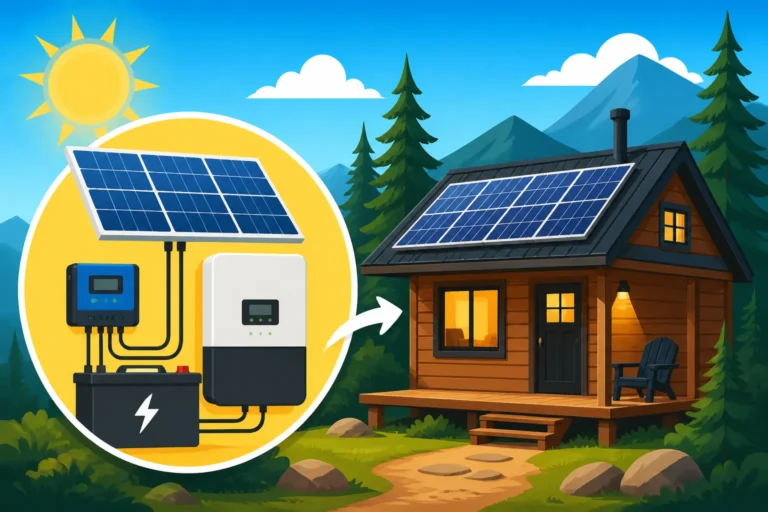
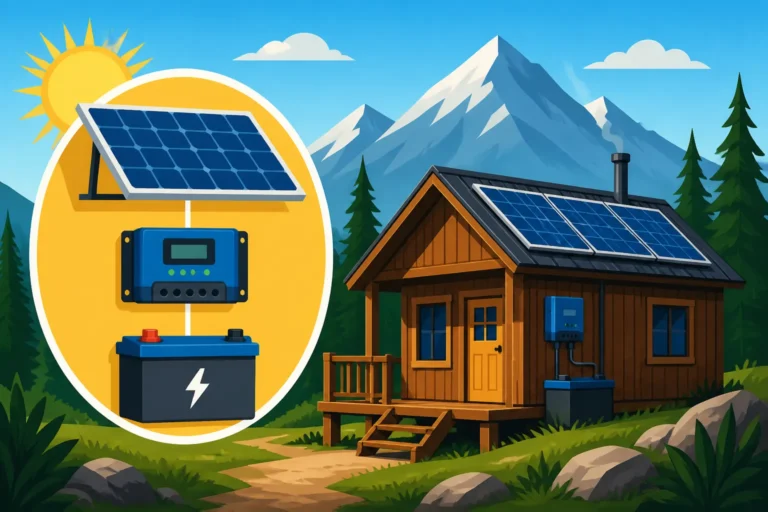
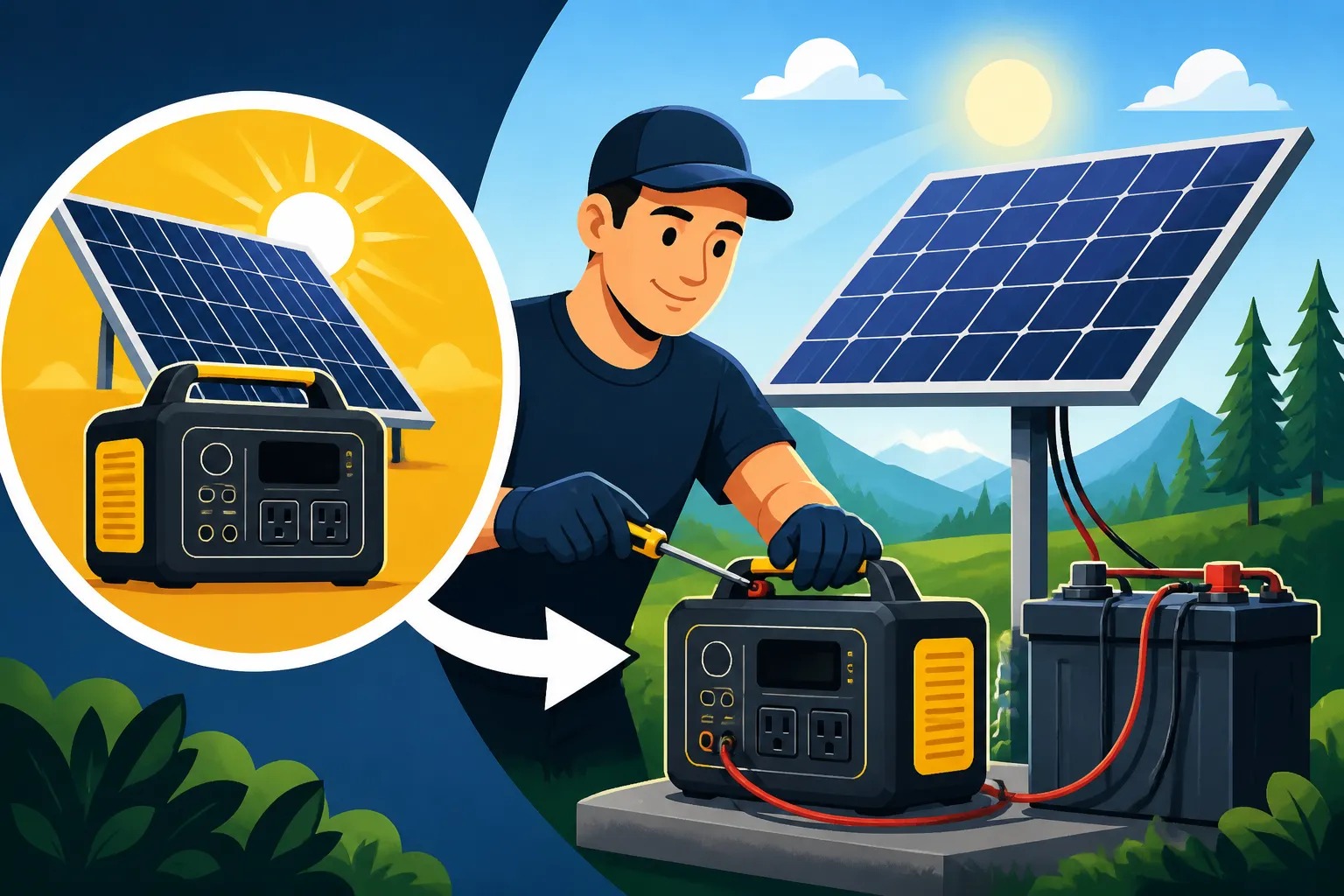
At its heart, a solar generator isn't really a "generator" in the traditional sense, like those noisy gasoline-powered machines you might be used to. Instead, it's a self-contained portable power station that integrates a battery, an inverter, and a charge controller into a single unit. It captures energy from solar panels (or a wall outlet), stores it in its internal battery, and then converts that stored DC power into usable AC power through its inverter, ready for your appliances. Think of it as a giant, smart power bank for your home or outdoor adventures.
Unlike a gas generator that relies on fossil fuels and emits fumes, a solar generator operates silently and produces zero emissions, making it an environmentally friendly and much more pleasant option for both indoor and outdoor use. When you plug in your solar panels, the integrated charge controller manages the flow of electricity to efficiently charge the internal battery, protecting it from overcharging or deep discharging. Then, the inverter takes that stored DC power and transforms it into the standard AC electricity that most of your household appliances run on. This all-in-one design is really its biggest appeal; it eliminates the need to buy and wire separate components, offering a true plug-and-play experience.
Why Choose a Solar Generator for Off-Grid?
The appeal of a solar generator for off-grid scenarios is multi-faceted, addressing many of the common pain points and desires of those seeking energy independence. First and foremost, their simplicity and portability are game-changers. Imagine needing power for your remote hunting cabin, your RV out in the wilderness, or even just as a reliable backup during unexpected outages at home. Hauling fuel for a traditional generator is a chore, and the noise can shatter the tranquility of a peaceful retreat. A solar generator, however, offers quiet, clean power wherever the sun shines.
For those venturing into van life or simply looking to power smaller structures like sheds or tiny homes, the integrated nature of these units drastically reduces installation complexity. You don't need extensive electrical knowledge to get started. Brands like Renogy offer compact and efficient solar generators that are designed with ease of use in mind, making them perfect for beginners. They're also an excellent stepping stone for anyone who's curious about solar but not ready to commit to a full-blown, complex system. They allow you to test the waters, understand your power needs, and experience the freedom of generating your own electricity without the heavy upfront investment and intricate wiring of a larger setup.
Sizing Your Solar Generator to Your Needs
This is perhaps the most critical step in successfully going off-grid with a solar generator, and honestly, it's where most people stumble. You wouldn't buy a tiny engine for a huge truck, right? The same logic applies here. You need to carefully calculate how much power you actually use to ensure your solar generator can keep up. Underestimate, and you'll be constantly running out of juice. Overestimate, and you'll spend more money than necessary.
Start by making a detailed list of all the appliances you plan to run, noting both their running wattage (how much power they consume constantly) and their surge wattage (the brief spike in power they draw when first starting up, especially motors). Don't forget how long you plan to run each appliance daily. For example, a refrigerator might run 8 hours a day, while a phone charger might only be used for 2 hours. This process is often called a Off-Grid Solar Load Calculation Explained and it's indispensable.
Once you have your total daily Watt-hour (Wh) consumption, you can compare it to the battery capacity of the solar generator (typically measured in Wh or kWh). You also need to consider the inverter's continuous output wattage and surge capacity to ensure it can handle your simultaneous loads. If you plan to run a high-draw appliance like a microwave or a small well pump, you'll need an inverter with a higher surge rating. Remember to also account for "days of autonomy" – how many days you want your system to run without any sun, which means increasing your battery capacity. This crucial step is explained in more detail in guides like How to Size an Off-Grid Solar System.
Here's a simple table to help you estimate your power needs for common appliances:
| Appliance | Average Running Watts | Surge Watts (Estimate) | Typical Daily Use (Hours) | Daily Watt-Hours Consumed |
|---|---|---|---|---|
| LED Light Bulb (9W) | 9 | 0 | 4 | 36 |
| Laptop (60W) | 60 | 0 | 4 | 240 |
| Mini-Fridge (70W) | 70 | 200 | 8 | 560 |
| Phone Charger (10W) | 10 | 0 | 2 | 20 |
| Small Fan (50W) | 50 | 0 | 6 | 300 |
| Microwave (1000W) | 1000 | 1500 | 0.2 (12 min) | 200 |
| Coffee Maker (800W) | 800 | 0 | 0.1 (6 min) | 80 |
| Water Pump (300-600W) | 400 | 1000-1500 | 0.5 (30 min) | 200 |
Note: These are estimates. Always check your specific appliance labels for accurate wattage.
After tallying your daily Watt-hours, add a buffer for cloudy days or unexpected higher usage, perhaps 20-30%. This will give you a solid target for your solar generator's battery capacity. For charging, you'll then need enough solar panels to replenish that energy each day, taking into account your Peak Sun Hours Explained.
Step-by-Step Installation of Your Off-Grid Solar Generator
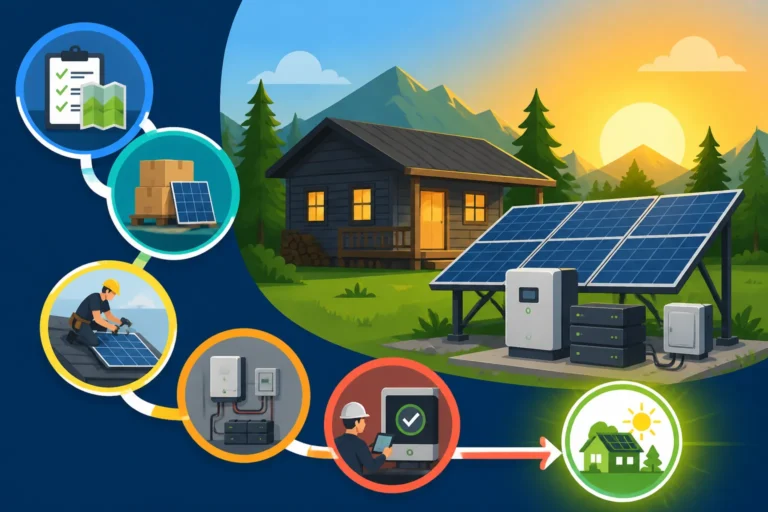
One of the beautiful things about solar generators is that the "installation" is far less daunting than a traditional, component-based off-grid system. Most of the hard work – wiring the inverter, charge controller, and battery – is already done for you inside the unit. Your main tasks will revolve around setting up the solar panels and safely connecting your loads.
Unboxing and Initial Setup
When your shiny new solar generator arrives, the first thing to do is carefully unbox it. Take your time, inspect everything for any shipping damage, and make sure all the accessories mentioned in the manual are present. You'll usually find charging cables (AC wall charger, car charger, and often solar charging cables with MC4 connectors), and sometimes even a basic user guide. Resist the urge to just plug everything in right away!
The absolute next step is to grab that user manual. I know, I know, manuals can be dry, but with a piece of equipment that handles electricity, it's non-negotiable. It will provide crucial information specific to your model, including charging instructions, port types, safety warnings, and initial setup procedures. Most manufacturers recommend fully charging the unit via a wall outlet before its first solar charge or heavy use. This helps calibrate the battery management system (BMS) and ensures optimal performance from the get-go. While it's charging, familiarize yourself with the display panel, output ports (AC outlets, USB ports, DC ports), and input ports for charging.
Connecting Your Solar Panels
Now for the fun part: harnessing the sun! Connecting your solar panels to your solar generator is usually a straightforward process, thanks to standardized connectors. Most portable solar generators use universal MC4 connectors for their solar input. If your panels also have MC4 connectors, it’s often a simple plug-and-play operation. You'll typically connect the positive MC4 from the panel to the positive input on the generator's solar cable, and the negative to the negative.
The key considerations here are the voltage and wattage limits of your solar generator's input. Check your generator's specifications – it will tell you the maximum voltage (V) and current (A) it can accept from solar panels. Exceeding these limits can damage the internal charge controller. If you're connecting multiple panels, you might need to wire them in series, parallel, or a combination. Wiring panels in series increases the voltage, while wiring them in parallel increases the current. For most solar generators, a single panel or a few small panels in series might be sufficient and simpler. You can find a wide range of compatible solar panels on sites like Amazon, often with MC4 connectors already attached. For more details on panel connections, refer to guides like How to Wire Solar Panels in Series or How to Wire Solar Panels in Parallel.
When placing your panels, think about optimal sun exposure. A south-facing direction (in the Northern Hemisphere) with an angle roughly equal to your latitude is a good starting point for year-round production. However, for seasonal use, you might adjust the tilt angle – steeper in winter to catch lower sun, flatter in summer. Minimize shading from trees or buildings, as even partial shade on one part of a panel can significantly reduce the output of the entire array.
Integrating with Your Home or Cabin
While a solar generator is fantastic as a standalone power source, you might want to integrate it more seamlessly into a cabin, shed, or even as a temporary backup for specific circuits in your home. It's crucial to understand that directly wiring a solar generator into your home's electrical panel is generally not recommended or safe without professional electrical work and a proper transfer switch. Most solar generators are designed for "plug-and-play" use with individual appliances.
For off-grid cabins or remote workshops, you can run heavy-duty extension cords from the solar generator's AC outlets directly to your desired appliances. Ensure these extension cords are appropriately rated for the power draw and outdoor use if necessary. For multiple devices or permanent installations, you could set up a dedicated subpanel for your off-grid loads. In this scenario, you would plug the solar generator into a specific inlet on the subpanel (using a proper interlock or transfer switch mechanism to ensure it's isolated from the grid) to power only the circuits connected to that subpanel. This kind of setup requires a solid understanding of Off-Grid Solar Safety and Grounding and often the help of a licensed electrician to avoid dangerous backfeed issues or code violations. For simpler applications like an RV, it might be as easy as plugging into the RV's shore power inlet, but again, ensure your RV's internal transfer switch is handling the power source correctly.
Optimizing Performance and Troubleshooting Common Issues
Getting your solar generator up and running is one thing, but keeping it performing at its best and knowing what to do when things go awry is another level of preparedness. Just like any piece of vital equipment, a little understanding goes a long way in ensuring longevity and reliability.
Maximizing Solar Harvest
Your solar generator is only as good as the energy it can capture from the sun. To truly maximize its performance, you need to be strategic about your solar panels. First, always aim for direct sunlight. Even a thin layer of cloud cover can reduce output, and dense shade from a tree branch or building corner can cripple a panel's efficiency. Think about the path of the sun throughout the day and how it changes with the seasons. Portable panels, like those often bundled with Renogy solar kits, give you the flexibility to chase the sun, repositioning them every few hours if you're stationary.
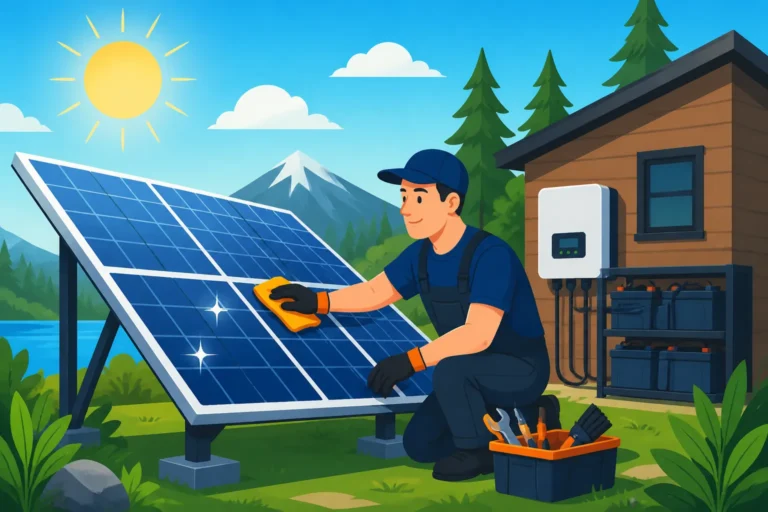
Regular cleaning is also surprisingly important. Dust, pollen, leaves, and even bird droppings can accumulate on your panels, blocking sunlight and reducing their power output. A quick wipe-down with a soft cloth and water (when the panels are cool) can make a noticeable difference. Consider also the tilt angle and orientation. As mentioned earlier, while a fixed angle is often a compromise, for dedicated off-grid setups, adjusting the tilt for winter (steeper) and summer (flatter) can significantly increase your daily energy yield. Learning Best Tilt Angle for Off-Grid Panels can help fine-tune your setup.
Battery Management and Longevity
The battery is the heart of your solar generator, and its lifespan is directly tied to how well you treat it. Most modern solar generators use Lithium Iron Phosphate (LiFePO4) batteries, which are known for their long cycle life and robust performance. However, even these advanced batteries benefit from good practices. Avoid consistently deep discharging the battery (running it down to 0% often). While LiFePO4 batteries tolerate deep cycles better than lead-acid, keeping them primarily between 20-80% charge can extend their overall lifespan.
Temperature management is another key factor. Batteries perform best within a specific temperature range. Extreme cold can reduce their capacity and charging efficiency, while extreme heat can accelerate degradation. If you're using your solar generator in a very cold climate, bringing it indoors or ensuring it's in an insulated area during charging and discharging can make a big difference. Some high-end units have internal heating elements for cold-weather charging. Understanding How Batteries Drive Off-Grid Solar Cost can illuminate why battery care is so crucial. Also, if your unit has a "storage mode" or recommendations for long-term storage, follow them. Typically, storing a battery at around 50-70% charge in a cool, dry place is ideal.
Basic Troubleshooting and Maintenance
Even the most reliable systems can hit a snag. Knowing how to perform some basic troubleshooting can save you a lot of headache (and a call to customer service).
- No Power Output? Check the battery charge level. Is the AC or DC output button/switch activated? Is the appliance you're trying to run exceeding the inverter's continuous or surge wattage? Try a smaller load.
- Not Charging from Solar? First, check your panel connections. Are they secure? Is there anything shading the panels? Is the sun actually out? Verify the input voltage from your panels using a multimeter if you're comfortable and know how. Ensure the total wattage and voltage of your panels are within the generator's specified input limits.
- Display Errors? Consult your manual. Many units have error codes that point to specific issues like over-voltage, over-temperature, or overload.
- General Maintenance: Beyond cleaning panels, periodically check all cable connections for corrosion or looseness. Keep the generator's ventilation ports clear of dust and debris to prevent overheating. Software updates, if available for your model, can also improve performance and add features. For more in-depth troubleshooting, a guide like How to Troubleshoot Off-Grid Solar can offer broader insights.
Real-World Scenarios and Considerations
Solar generators aren't just for emergencies anymore; they're increasingly becoming a core component of various off-grid lifestyles and preparedness strategies. Their versatility makes them incredibly appealing for a diverse range of users.
Solar Generators for RV and Van Life
For those embracing the nomadic lifestyle of RVing or van life, solar generators are almost indispensable. The convenience of having a self-contained power unit that can be charged from portable solar panels, the vehicle's alternator, or shore power is unmatched. Imagine parking your van in a serene national forest, completely off the grid, yet still being able to power your laptop, charge your camera gear, run a small fridge, and even operate a fan on a hot night.
The compact size and ease of installation make them ideal for the often-cramped spaces of an RV or van. Unlike a permanent, custom-built system, a solar generator can be easily moved, upgraded, or even brought inside when parked. Many RV enthusiasts use larger solar generators like the EcoFlow Delta Pro or Bluetti AC200L to power their entire RV, especially when paired with a robust portable solar array. For more specific advice on mobile power, explore resources like Off-Grid Solar Cost for a Full-Time RV and How to Install Off-Grid Solar on an RV. They offer the freedom to explore remote locations without sacrificing modern comforts, making them a cornerstone of independent travel.
Backup Power for Emergencies
Perhaps one of the most common applications for solar generators is emergency preparedness. When severe weather hits and the grid goes down, a solar generator can be a lifesaver. Instead of dealing with the noise, fumes, and fuel storage issues of a gasoline generator, you have a quiet, clean source of power ready to go.
In an emergency, a solar generator can power essential items: keeping your refrigerator running to save food, charging phones and communication devices, running medical equipment like CPAP machines, and providing light. A good strategy is to keep the solar generator charged via a wall outlet when the grid is up, and then deploy solar panels to recharge it once the power goes out, ensuring continuous operation. This makes it a crucial component of any robust emergency plan, offering peace of mind when you need it most. Many families start their off-grid journey with a solar generator specifically for this very purpose, recognizing the immediate, tangible benefit it provides during unforeseen outages.
Expanding or Supplementing Your Setup
A solar generator is often a fantastic starting point for those interested in off-grid power, but it doesn't have to be the end of your journey. Many users find that as their power needs grow, or as they gain more confidence in solar technology, they want to expand their capabilities. The modular nature of many solar generators allows for this.
You can often add more external solar panels to increase your charging speed and capacity. For instance, if you started with a 100W panel, you might upgrade to a 400W foldable array to capture more energy daily. Some advanced solar generators even allow you to link multiple units together for increased battery capacity or power output. If you eventually decide to transition to a more permanent, full-scale off-grid system for a whole house or a large cabin, the experience and understanding gained from using a solar generator will be invaluable. You'll already have a good grasp of your energy consumption, the dynamics of solar charging, and the importance of battery management. It can serve as a highly functional bridge to a larger, more complex DIY Off-Grid Solar Installation Step by Step, allowing you to gradually phase into complete energy independence without a huge initial leap.
Disclaimer
The information provided in this article is for general informational and educational purposes only and is not intended as professional advice. Off-grid solar systems, especially those involving electrical wiring and high voltages, can be dangerous if not installed and maintained correctly. Always consult with qualified professionals, adhere to local building codes, and prioritize safety when working with electricity.