How to Wire AC and DC Loads
One of the biggest head-scratchers for folks venturing into off-grid living is figuring out how to manage all the different types of power. You've got your solar panels generating one kind of electricity, your batteries storing another, and then your various appliances needing yet another. It can feel like trying to speak three different languages at once! This guide is here to untangle the complexities of wiring both AC (Alternating Current) and DC (Direct Current) loads into your off-grid solar system, ensuring your setup is both functional and, most importantly, safe.
Understanding the Basics of AC and DC Power in Off-Grid Systems
Before we dive into the nitty-gritty of connections, it's really helpful to understand the fundamental differences between AC and DC power in an off-grid context. Many people get these two confused, or they don't quite grasp why you can't just plug everything into one type of outlet. Getting this foundational knowledge down will make all the subsequent wiring decisions much clearer and less intimidating.
What is DC Power and Where Does It Come From?
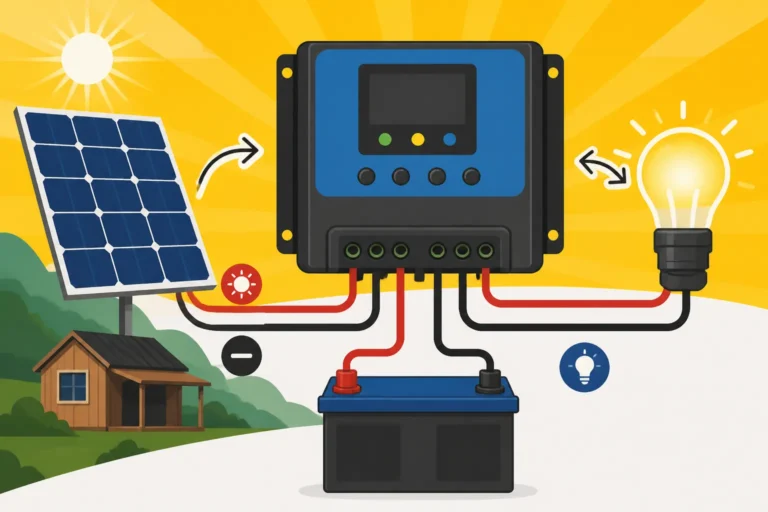
Direct Current, or DC, is the most basic form of electricity in your off-grid system. Think of it as a one-way street for electrons—they flow in a single direction, consistently. This is the native language of solar panels and batteries. Your solar panels, whether they're from a reputable brand like Renogy or any other manufacturer, produce DC power directly from sunlight. This DC power then travels to your charge controller and subsequently to your battery bank, where it's stored.
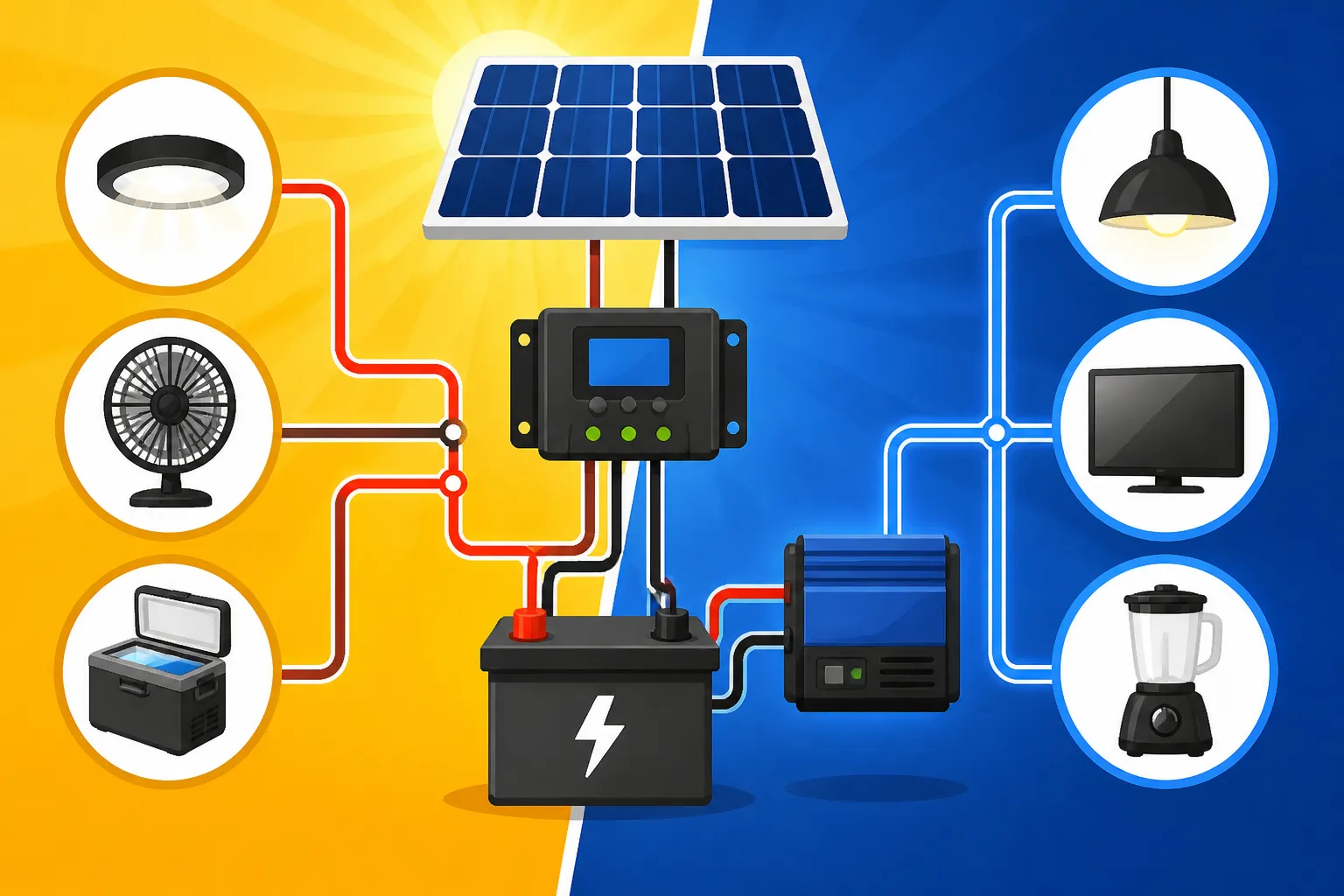
Many smaller, modern appliances are designed to run directly on DC power. This includes things like LED lights, USB charging ports for your phones and tablets, small fans, and many RV or marine-specific appliances. Running these directly off your DC system is often more efficient because you avoid the energy loss that comes with converting DC to AC and then back to DC for your device's power brick. It's like cutting out the middleman, saving you a little bit of precious stored energy.
What is AC Power and How is It Created Off-Grid?
Alternating Current, or AC, is what you're used to getting from the grid in a conventional home. It's a two-way street for electrons, constantly reversing direction many times per second (typically 60 Hz in North America). Most household appliances, from refrigerators and microwaves to televisions and power tools, are designed to run on AC power. In an off-grid system, your battery bank stores DC power, so to get AC power, you need a special piece of equipment: an inverter.
The inverter is the hero that transforms the DC power from your batteries into usable AC power for your household items. Choosing the right inverter is crucial, as it dictates how much AC power you can draw and for how long. You'll want to ensure you pick one that matches your voltage system (12V, 24V, or 48V) and can handle the total wattage of your AC loads, including any surge requirements for things like motors. Learning about the Best Off-Grid Solar Inverters can help guide your selection.
Why Can't I Just Mix Them?
The simplest answer is safety and compatibility. Imagine trying to plug a 12V DC phone charger directly into a 120V AC wall outlet – it would fry the device, potentially cause a fire, and definitely not work. DC and AC are fundamentally different, both in how the current flows and the voltages they typically operate at. Mixing them without proper conversion and protection creates hazardous situations.
Your wiring itself needs to be different. AC systems often use different wire gauges, insulation, and connection types than DC systems, especially at higher amperages. Furthermore, the safety devices—like fuses and circuit breakers—are designed to protect against specific types of overcurrent and faults unique to either AC or DC. Trying to use an AC breaker on a DC circuit, or vice-versa, can lead to inadequate protection and dangerous failures. This is why having distinct, properly wired circuits for each type of current is non-negotiable for a reliable and safe off-grid setup.
Wiring DC Loads in Your Off-Grid Setup
When you're designing an off-grid system, managing your DC loads effectively is often the most straightforward part, but it's still crucial to get it right. These are the devices that will typically draw power directly from your battery bank, either continuously or as needed, without needing that DC-to-AC conversion step. Proper wiring here ensures efficiency and protects your precious equipment from electrical faults.
Direct Current Connections from Your Battery Bank
The heart of your DC system is your battery bank. All DC loads will ultimately draw power from here. For small, simple systems, you might connect very low-power DC devices directly to your battery terminals using appropriate connectors and fuses. However, for anything beyond a couple of minor loads, this quickly becomes messy and unsafe. Imagine a tangle of wires coming off your battery terminals – not ideal for troubleshooting or adding new components!
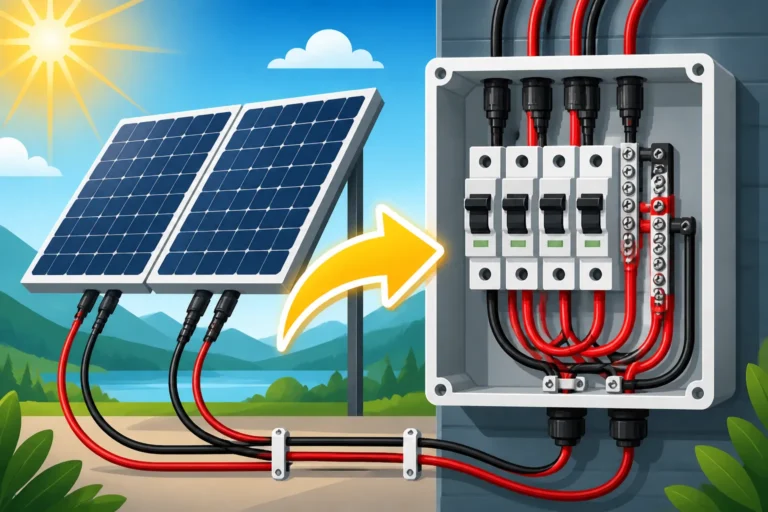
Instead, a much more organized and safer approach is to use a DC fuse block or a DC breaker panel. These act as central distribution points for your DC power, providing individual, fused circuits for each of your DC loads. This means you run one main positive and one main negative cable from your battery bank to the fuse block. Then, each DC appliance gets its own dedicated wire, protected by its own fuse, connecting to the block. This simplifies maintenance and makes it easy to identify and isolate problems if a fuse blows. For more details on this central component, you might find guidance in an article about How to Wire a Battery Bank.
The Role of DC Fuse Blocks and Circuit Breakers
Safety is paramount in any electrical system, and DC circuits are no exception. DC fuses and circuit breakers are essential for protecting your wiring, appliances, and batteries from overcurrents, short circuits, and potential fires. A fuse is a sacrificial component designed to melt and break the circuit if too much current flows through it. A circuit breaker, on the other hand, is a reusable switch that trips open when an overcurrent condition occurs, and can be reset once the fault is cleared.
When installing a DC fuse block, each branch circuit should have a fuse appropriately sized for the wire gauge and the maximum current draw of the connected appliance. For example, if you have an LED light string that draws 2 amps and is wired with 18 AWG wire (which can typically handle about 10 amps), a 3-amp or 5-amp fuse would be suitable. If the lights short circuit, the fuse will blow before the wire overheats or the battery is damaged. Brands like Blue Sea Systems offer excellent marine-grade DC fuse blocks that are very popular in RV and off-grid cabin setups due to their robust construction and clear labeling. These can often be found readily available on platforms like Amazon for quick delivery.
Common DC Appliances and Their Wiring Considerations
Many everyday items in an off-grid scenario thrive on DC power. Think about the humble 12V LED light strip, perfect for illuminating a small cabin or an RV interior. These typically connect to a DC fuse block via two wires: positive and negative. It's vital to ensure correct polarity (positive to positive, negative to negative) as DC devices are sensitive to it. USB chargers, often built into wall outlets or standalone ports, also fall into this category, directly converting your system's DC voltage (e.g., 12V) down to the 5V required for charging devices.
Beyond basic lighting and charging, other common DC appliances include water pumps for well systems or RV fresh water tanks, small ventilation fans, and certain low-power communication equipment. When wiring these, always refer to the appliance's specifications for its power draw (amps or watts) to correctly size your fuse and wire. Undersized wire can lead to voltage drop and overheating, while oversized wire is simply a waste of material and money. For detailed information on determining the correct wire size, refer to our guide on How to Size Wire and Cables. Always make sure connections are secure and properly insulated to prevent accidental shorts.
Wiring AC Loads Through Your Inverter
The inverter is the crucial bridge that allows your standard household appliances to function in an off-grid environment. Without it, you'd be limited to only DC-compatible devices, which isn't practical for most modern living. Understanding how to properly wire your AC loads through the inverter is essential for both functionality and safety, transforming your raw DC battery power into the familiar AC current needed for daily life.
The Inverter as Your AC Powerhouse
Your inverter is effectively the "grid" for your off-grid home, taking the stored DC energy from your battery bank and converting it into the 120V (or 240V, depending on your system) AC power that most of your larger appliances require. This conversion process is where the magic happens, but it's also where efficiency can be lost, so choosing a good quality pure sine wave inverter is key. A pure sine wave inverter mimics utility-grade power, making it safe for all electronics, including sensitive ones like computers and medical equipment.
The inverter itself needs robust DC cabling connecting it directly to your battery bank. These cables will carry very high currents, so they must be properly sized and fused. An undersized cable here will create a bottleneck, leading to significant power loss, heat, and potentially a fire hazard. After the DC is converted, the inverter then outputs AC power, which typically goes to an AC breaker panel, similar to what you'd find in a grid-tied home. This allows you to distribute AC power to various circuits throughout your property, protecting each one individually.
Connecting the Inverter to Your AC Distribution Panel
Once your inverter has done its job of converting DC to AC, that AC power needs a safe and organized path to reach your appliances. This is where an AC distribution panel, often just called a breaker panel or load center, comes into play. Think of it as the central nervous system for your AC electricity. The main AC output from your inverter connects to the main breaker terminals within this panel. From there, individual circuits protected by their own circuit breakers branch out to different areas of your home or cabin.
Each circuit in your AC panel should be dedicated to a specific set of outlets, lights, or appliances. For example, you might have one breaker for your kitchen outlets, another for bedroom lights, and a dedicated breaker for a large appliance like a well pump or refrigerator. The beauty of this setup is that if there's an issue on one circuit – say, an overloaded outlet – only that specific breaker will trip, cutting power to that area while the rest of your system remains operational. This compartmentalization greatly enhances safety and troubleshooting, allowing you to easily manage your AC power distribution.
Safeguarding Your AC Circuits with Breakers and GFCI Outlets
Just like with DC circuits, safety devices are absolutely critical for AC. Circuit breakers within your AC distribution panel protect against overcurrents and short circuits. Each breaker should be appropriately sized for the gauge of the wire it protects and the anticipated load on that circuit. For instance, a standard 15-amp circuit breaker will protect 14-gauge wiring, while a 20-amp breaker protects 12-gauge wiring. It's a fundamental rule of electrical safety that the breaker must always be sized to protect the wire, not just the appliance.
Beyond standard circuit breakers, you also need to incorporate Ground Fault Circuit Interrupter (GFCI) outlets or GFCI breakers in areas where water might be present, such as kitchens, bathrooms, and outdoor areas. GFCIs are designed to detect very small leakages of current (ground faults) that could indicate a person is being shocked, and they trip much faster than a standard breaker, potentially saving lives. The National Electrical Code (NEC) mandates their use in specific locations, and even in off-grid scenarios, it's wise to adhere to these safety standards. Proper grounding of your entire AC system is also non-negotiable, ensuring that stray currents have a safe path to dissipate. Our article on Off-Grid Solar Safety and Grounding delves deeper into these crucial protective measures.
Integrating Both AC and DC Systems Safely
Now that we've covered AC and DC independently, the real challenge and often the source of confusion for many off-grid enthusiasts is how to bring them all together into one cohesive, safe, and reliable system. It's about creating a harmonious electrical ecosystem where both types of power coexist and serve your needs without conflict or danger.
Designing a Unified Electrical Panel
In a comprehensive off-grid setup, it's common to have both an AC distribution panel and a DC fuse block or breaker panel. While they handle different types of current, they often reside physically close to each other, sometimes even within the same enclosure or on the same power wall, creating a unified electrical "hub." The key is to keep their wiring pathways distinct and clearly labeled to avoid any dangerous mix-ups during installation or future maintenance.
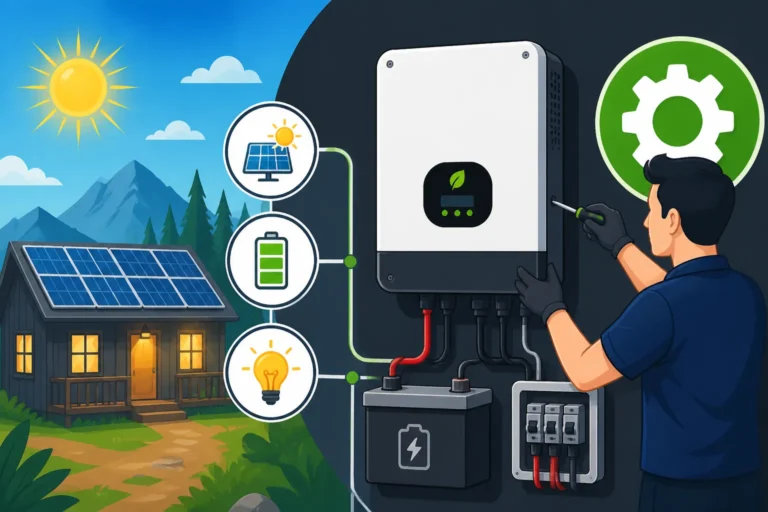
Imagine a power control center in your cabin. You'd have the main battery bank, then a large fuse or breaker protecting the main DC run to your inverter. Separately, another smaller main fuse or breaker would protect the DC run to your DC fuse block. From the inverter, the AC power would feed into an AC breaker panel. All these components are interconnected at the battery level but diverge to handle their respective current types. This organized approach makes it much easier to manage your power, expand your system later, or troubleshoot any issues that might arise. For those starting from scratch, checking out a guide on DIY Off-Grid Solar Installation Step by Step can be incredibly helpful for planning this layout.
Essential Safety Components and Best Practices
When integrating AC and DC, safety isn't just about individual components; it's about the entire system's design and execution. Proper wire sizing is critical for both AC and DC circuits. DC circuits, especially those running at lower voltages like 12V, require significantly thicker wire for the same amount of power compared to AC circuits, due to higher amperage. Always consult wire gauge charts and factor in the length of your wire runs to minimize voltage drop.
Beyond wire, every single conductor needs overcurrent protection. This means fuses or circuit breakers on all positive (and sometimes negative) DC lines, and on all hot AC lines. Disconnect switches are also crucial. You should have an easily accessible DC disconnect switch between your solar panels and charge controller, another between your battery bank and inverter, and a main AC disconnect for your entire AC system. These allow you to safely isolate sections of your system for maintenance or in an emergency. Finally, never underestimate the power of clear labeling! Every wire, every fuse, every breaker should be clearly marked with its purpose and rating.
Practical Examples for Hybrid Off-Grid Setups
Let's consider a practical scenario. Picture a remote cabin powered by solar. You'll likely have your primary lights and USB charging ports running directly off a 12V DC system, fed from a Renogy charge controller and a dedicated DC fuse panel. This is highly efficient for everyday low-power needs. For heavier loads, like running a refrigerator, a microwave, or charging power tools, the battery bank feeds a robust inverter, which then supplies a 120V AC breaker panel. From this AC panel, circuits would run to dedicated AC outlets for the fridge and kitchen appliances.
Another example might be a full-time RV setup. Here, you'd find many factory-installed 12V DC lights, water pumps, and fans already wired into a DC fuse panel. Adding an inverter for AC appliances like a small coffee maker or a laptop charger means tapping into the main battery bank with heavy-gauge cables to feed the inverter. The inverter then might power a couple of dedicated AC outlets, or even a small sub-panel for more extensive AC distribution. The key is that the AC circuits and DC circuits remain entirely separate after their initial power source (the battery bank), with their own protective devices. Understanding these distinctions is fundamental to preventing costly mistakes. If you're looking for more guidance on specific wiring setups, an article like Off-Grid Solar Wiring Diagram Explained could be invaluable.
| Component Type | Power Type Handled | Typical Function | Wiring Considerations | Safety Devices |
|---|---|---|---|---|
| Solar Panels | DC | Power generation | Series/Parallel wiring | Fuses/Breakers (PV combiner box) |
| Charge Controller | DC | Regulates battery charging | Connects PV to Battery Bank | Fuses/Breakers |
| Battery Bank | DC | Energy storage | Heavy gauge cables, correct polarity | Fuses/Breakers (main battery disconnect) |
| DC Fuse Block/Panel | DC | Distributes DC power to loads | Individual fused circuits for DC appliances | Fuses (appropriately sized per circuit) |
| Inverter | Converts DC to AC | Provides AC power to loads | Heavy DC cables from battery, AC output to AC panel | DC Fuses/Breakers, AC Output Breaker |
| AC Breaker Panel | AC | Distributes AC power to loads | Individual circuit breakers for AC appliances | Circuit Breakers, GFCI protection |
| DC Loads (e.g., LED lights, USB chargers, 12V fans) | DC | Direct consumption from battery | Connects to DC fuse block | Fuses on DC circuits |
| AC Loads (e.g., Refrigerator, Microwave, TV) | AC | Standard household appliance consumption | Connects to AC outlets/dedicated AC circuits | Circuit Breakers, GFCI outlets |
Staying Connected and Prepared in Your Off-Grid System
Wiring AC and DC loads in an off-grid solar system doesn't have to be a bewildering experience. By understanding the distinct nature of each current type, embracing the critical role of components like inverters and fuse blocks, and prioritizing safety at every step, you can build a reliable and efficient power system. Remember, a well-planned and properly executed wiring scheme is the backbone of your off-grid independence, ensuring you have the power you need, exactly where you need it, for years to come.
Disclaimer
The information provided in this guide is for general informational purposes only and does not constitute professional electrical advice. Working with electricity can be dangerous. Always consult with a qualified electrician or solar professional before installing or modifying any electrical system. Adhere to all local electrical codes and safety regulations. The author and publisher are not responsible for any damage, injury, or loss resulting from the use or misuse of this information.