How to Design a DC-Only Off-Grid System
A DC-only off-grid solar system eliminates the inverter, using solar panels and batteries to directly run DC appliances.
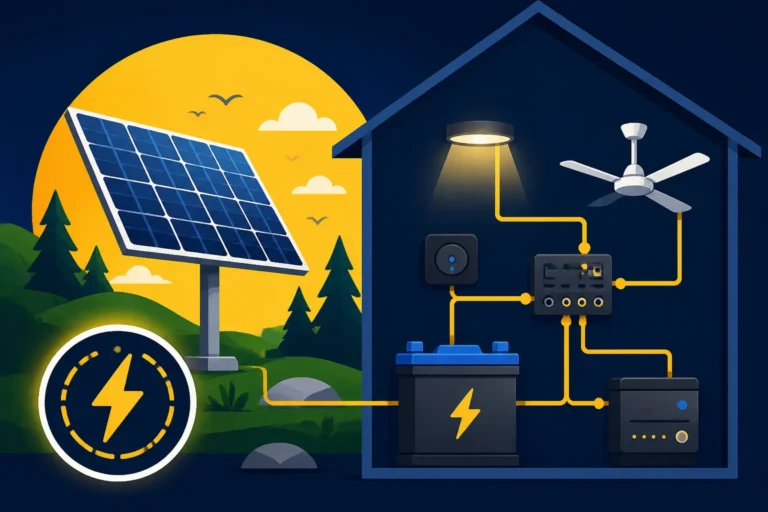
A DC-only off-grid solar system eliminates the inverter, using solar panels and batteries to directly run DC appliances.
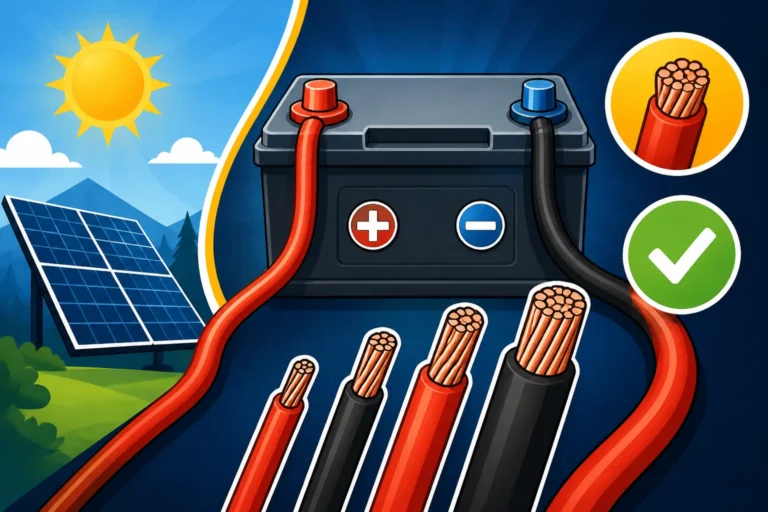
Proper battery cable sizing prevents overheating and voltage drop in off-grid solar systems, ensuring maximum power delivery.
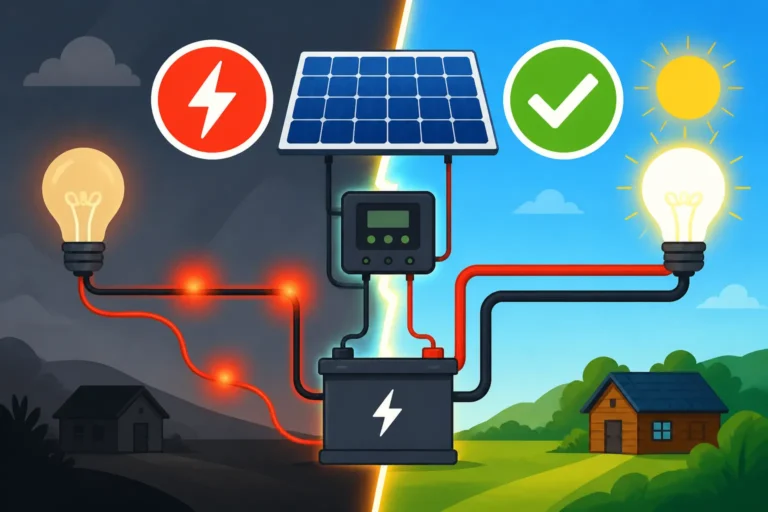
Voltage drop in off-grid wiring reduces system efficiency. This explanation shows how wire gauge and length cause power loss.
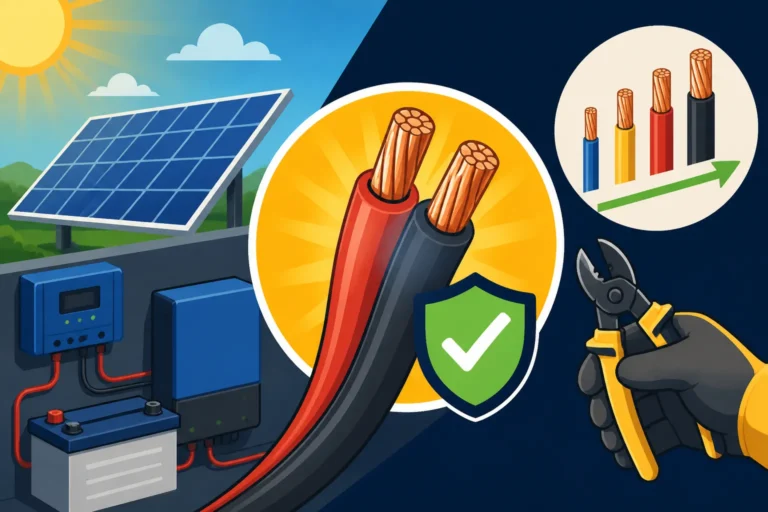
Off-grid electrical wiring sizing prevents fires, reduces voltage drop, and ensures solar systems run safely and efficiently.
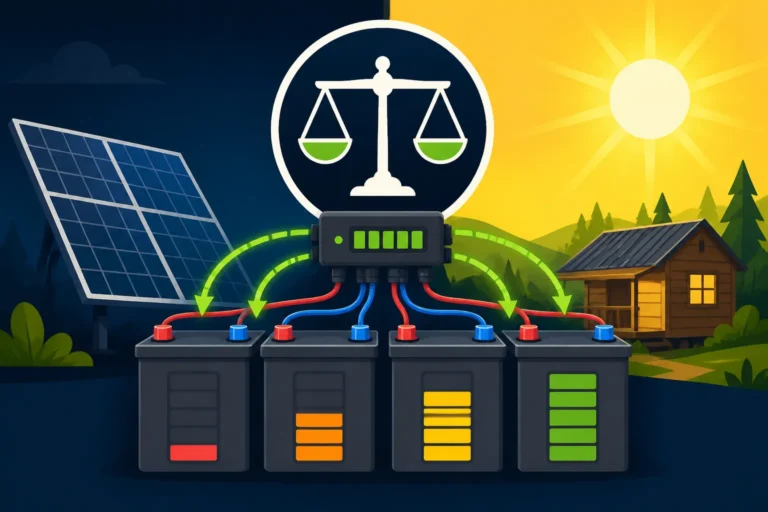
Battery balancing processes for off-grid solar systems explain how cell resistance, capacity variations, and aging affect lifespan.
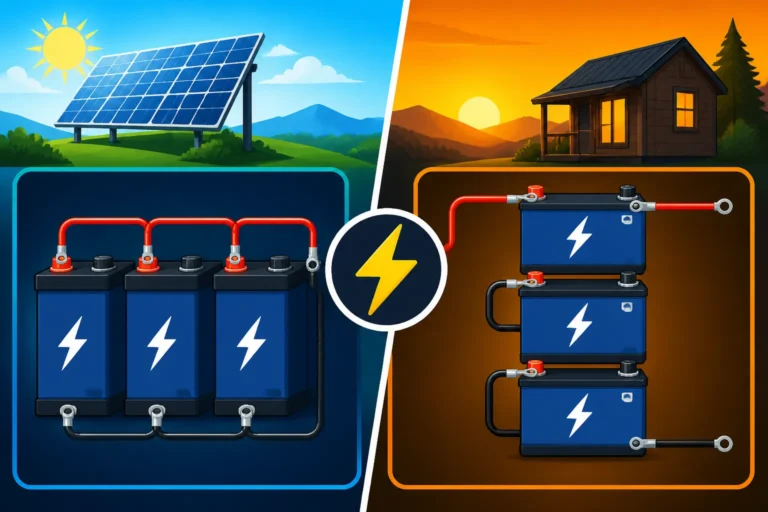
Battery wiring in series and parallel increases off grid solar voltage and amp hour capacity safely for 12V, 24V, or 48V systems.
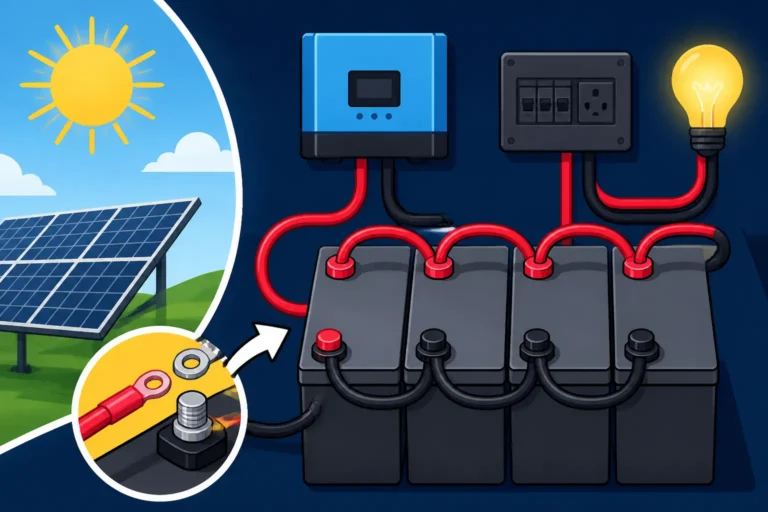
Wiring a 48V battery bank requires series and parallel connections using multiple 12V or 6V batteries for off-grid systems.
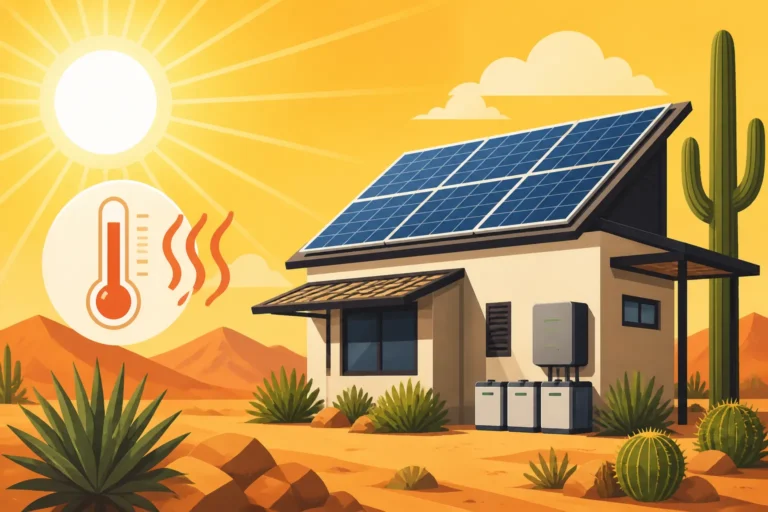
Desert heat, UV radiation, and dust impact off-grid solar performance, reducing power output, battery capacity, and equipment lifespan.
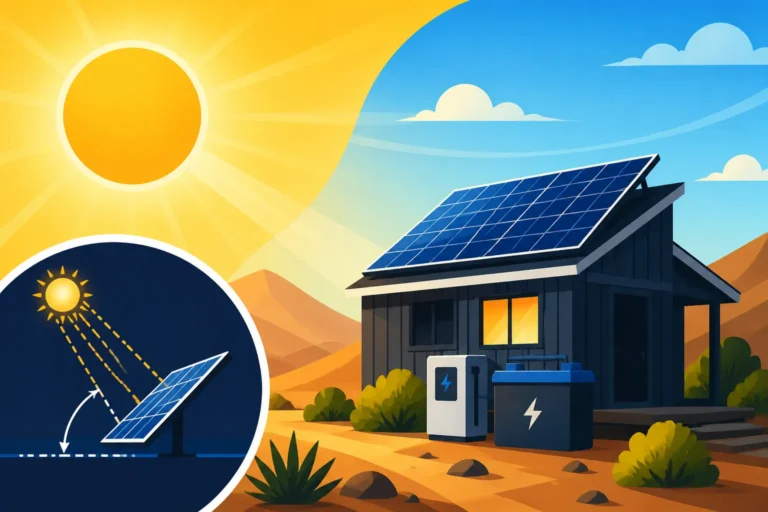
Designing solar systems for low sun regions requires larger panel arrays and bigger battery banks to prevent power shortages.
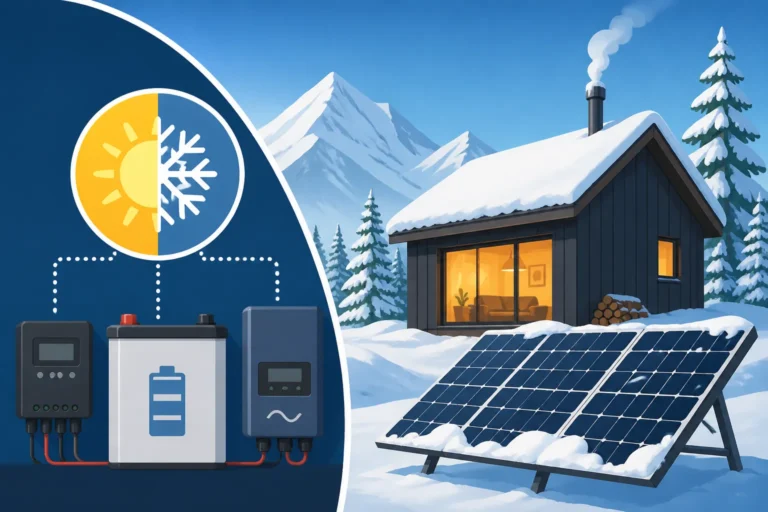
Winter solar system design helps off-grid homesteaders calculate power needs, battery capacity, and panel angles for reliable electricity.