How to Balance a Battery Bank
One of the most frustrating things about building or maintaining an off-grid solar system is when your carefully chosen batteries start acting up, dying prematurely, or simply not holding a charge like they used to. Often, the hidden culprit isn't a faulty battery, but an imbalance within your battery bank. This comprehensive guide will walk you through exactly what battery balancing is, why it's absolutely essential for the health and longevity of your off-grid power, and how to effectively implement it.
Understanding Why Battery Balancing is Crucial
The idea of battery balancing might sound like a highly technical, intimidating concept, but at its core, it’s about ensuring all the individual cells within your battery bank work together harmoniously. When you’re dealing with multiple batteries connected in series or parallel to create a larger bank, it’s easy to assume they’ll all perform identically. Unfortunately, that’s rarely the case in the real world, and these subtle differences can lead to big problems down the line.
The Problem of Imbalance in Series and Parallel
Imagine you have a team of horses pulling a wagon. If one horse is a little stronger, or another is a bit lazier, the effort isn’t evenly distributed, right? Batteries are much the same. Even brand-new batteries, fresh off the shelf from a reputable manufacturer, have tiny variations in their internal resistance, capacity, and self-discharge rates. These slight differences might seem insignificant on their own, but when combined and subjected to repeated charging and discharging cycles in your off-grid setup, they can quickly snowball into significant imbalances.
In a series connection, where batteries are linked end-to-end to increase voltage, if one battery has a slightly lower capacity, it will reach its charge limit faster during charging or deplete faster during discharging. This causes it to become overcharged or over-discharged while other batteries in the string are still within safe limits. Similarly, in a parallel connection, where batteries are wired side-by-side to increase amperage and capacity, a battery with higher internal resistance might resist charging more, or discharge less efficiently, leading to current flowing unevenly between the batteries. These initial minor discrepancies are exacerbated by temperature differences across the bank, varying cable lengths, and even the simple aging process.
Impact on Battery Lifespan and System Performance
The consequences of an unbalanced battery bank are far more severe than just a minor inconvenience. Think about that team of horses again: the weaker horse will wear out much faster if constantly overstressed, and the overall wagon won’t go as far or as fast. In your off-grid solar system, an unbalanced bank directly impacts your power reliability and, more critically, the lifespan of your expensive battery investment.
When one cell in a series string consistently gets overcharged, it heats up, accelerates electrolyte degradation (especially in lead-acid), and can even vent gases, leading to irreversible damage and a significant reduction in its useful life. Conversely, if a cell is constantly undercharged or over-discharged, its capacity diminishes rapidly, and it might even experience cell reversal, which is catastrophic for lithium batteries. This means that even if 90% of your battery bank is healthy, the weakest link dictates the performance and lifespan of the entire system. You might find your whole bank hitting its low-voltage cut-off prematurely, even though most of your batteries still have plenty of juice. This translates to less usable energy, more frequent generator run-times (if you have one), and ultimately, needing to replace your batteries much sooner than anticipated, which can be a huge, unexpected expense. For more on this, you might find our guide on Off-Grid Solar Battery Replacement Cost Over Time a useful read.
Types of Battery Imbalance
When we talk about battery imbalance, it’s not always just one single thing going wrong. There are a few different ways your batteries can fall out of sync, and understanding these distinctions can help you better diagnose and address the issue in your off-grid system. It’s like a doctor knowing the difference between a fever and a broken bone – both are problems, but they require very different solutions.
Voltage Imbalance
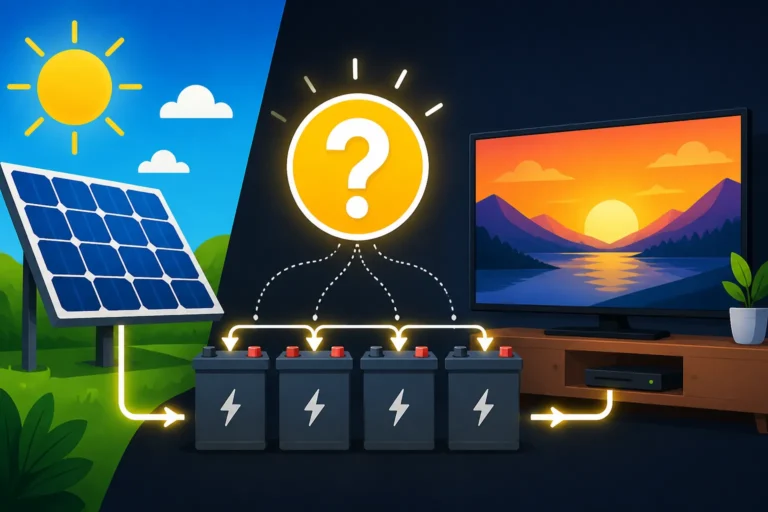
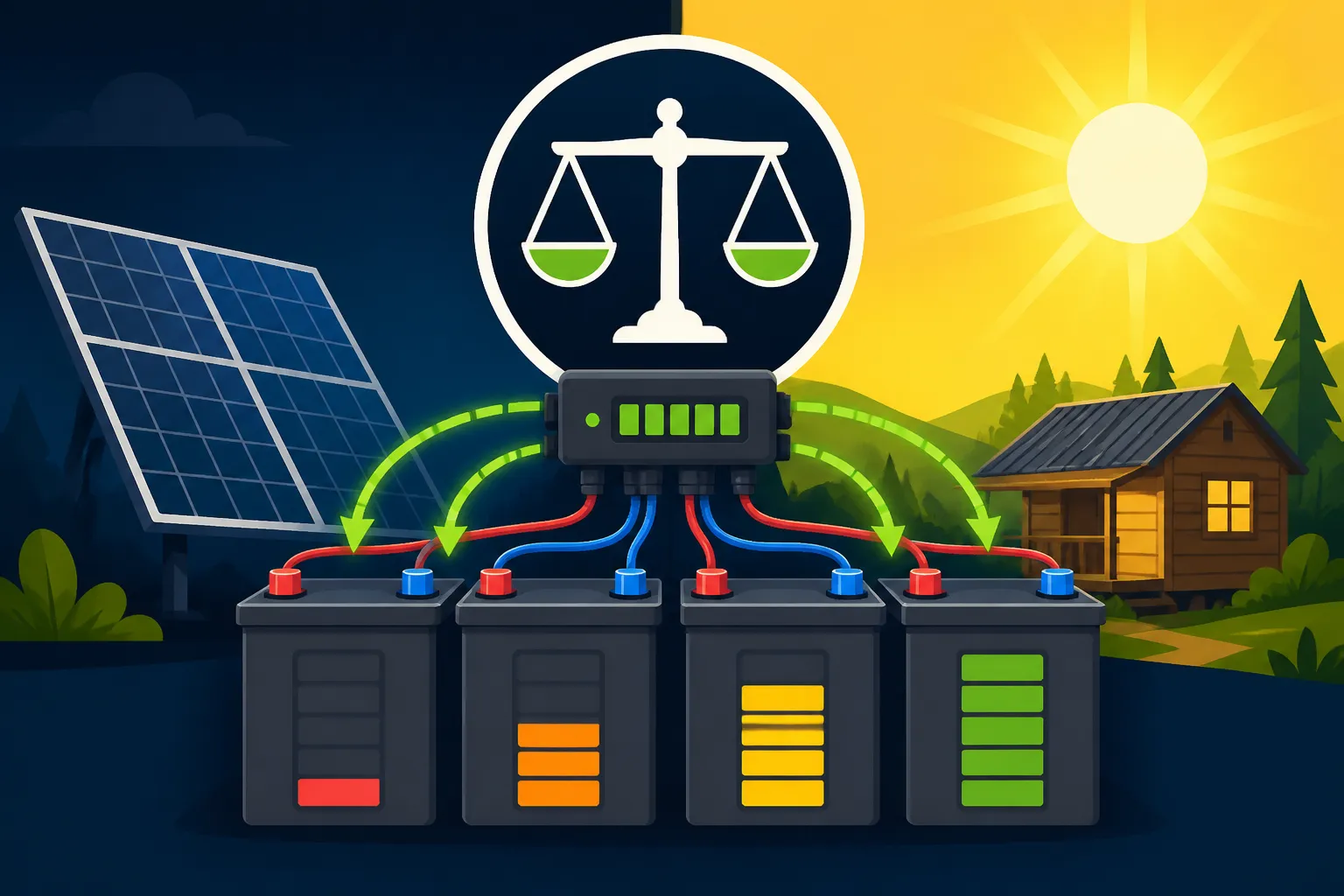
Voltage imbalance is probably the most commonly recognized type, especially when you’re monitoring your individual battery voltages. This occurs when the voltage across each cell or battery in a series or parallel string isn’t equal. For example, if you have a 48V LiFePO4 battery bank made up of four 12V batteries in series, ideally, each 12V battery should maintain a similar voltage during charging and discharging. If one battery consistently reads 13.5V while the others are at 14V during charging, or drops to 11.5V while others are at 12V during discharge, you have a voltage imbalance.
What does this mean for your system? During charging, the higher voltage batteries will reach their full charge point faster and might start to be overcharged, while the lower voltage batteries never quite get topped off. During discharge, the lower voltage batteries will hit their minimum safe voltage prematurely, potentially triggering the inverter's low-voltage disconnect and shutting down your power before the rest of the bank is truly depleted. This doesn't just reduce your usable capacity; it stresses the individual cells that are out of whack, accelerating their degradation and shortening the lifespan of the entire battery bank.
State of Charge SOC Imbalance
While voltage imbalance is easy to spot with a multimeter, State of Charge (SOC) imbalance is a bit more subtle but just as detrimental. SOC refers to how much energy is currently stored in a battery, expressed as a percentage of its total capacity (e.g., 50% SOC means half charged). A SOC imbalance means that even if your individual battery voltages appear somewhat similar at rest, their actual charge levels are different. This often happens because some cells might have slightly less actual capacity or higher internal resistance than others.
Imagine you have two batteries in parallel, both reading 12.8V. On the surface, they look fine. But what if one battery has an actual 80% SOC, and the other is at 60% SOC? When you start drawing power, the higher SOC battery will likely carry more of the load initially, discharging faster. When you charge them, the lower SOC battery will take longer to fill up. Over time, these differences accumulate, and you'll find that one battery might still be relatively full while the other is practically empty, even if the overall system voltage remains within an acceptable range. This dramatically reduces the effective capacity of your entire bank because you can only discharge until the weakest cell hits its limit, regardless of how much energy the stronger cells still hold. This is a key factor when you're looking at How Much Battery Capacity You Need and trying to get the most out of your setup.
Capacity Imbalance
Capacity imbalance is a long-term issue that often results from and exacerbates both voltage and SOC imbalances. It’s essentially the permanent difference in the maximum energy storage capability among the cells in your battery bank. Batteries, especially lead-acid types, naturally degrade and lose capacity over their lifespan. However, in an unbalanced system, some batteries will degrade much faster than others due to consistent overcharging, over-discharging, or prolonged periods at low SOC.
For instance, a battery that's constantly being overstressed due to voltage or SOC imbalance will experience accelerated wear and tear. Its internal chemistry might change, leading to a permanent reduction in its ability to hold a charge. This means that a 100Ah battery might, over time, effectively become an 80Ah battery, while its neighbors are still performing closer to 95Ah. This capacity mismatch means the entire bank's usable capacity is limited by the smallest battery. It’s like having a chain where one link is rusting much faster than the others; eventually, the entire chain will fail at that weak point, forcing you to consider Cost to Replace Off-Grid Solar Batteries long before you planned.
Methods for Balancing Your Off-Grid Battery Bank
Now that we understand *why* balancing is so important and the different ways batteries can get out of whack, let’s talk about the practical solutions. There are two main approaches to battery balancing: passive and active, each with its own benefits and drawbacks. Choosing the right method depends on your battery type, system size, budget, and how critical efficiency is to your off-grid lifestyle.
Passive Balancing
Passive balancing is the simpler, often more cost-effective method. It works by “bleeding off” excess energy from the higher voltage cells in a battery bank until they match the voltage of the lower cells. Think of it like a series of small overflow valves on buckets of water. When one bucket gets too full, the valve opens, letting a little water out until it’s level with the others.
Typically, passive balancers use resistors that dissipate the excess energy as heat. When a cell's voltage rises above a certain threshold (or above the average voltage of the bank), the balancer engages a resistor across that cell, slowly discharging it until its voltage drops to match the others.
Pros of Passive Balancing:
- Simplicity and Lower Cost: Passive balancers are generally less complex and thus cheaper to manufacture and purchase. You can find basic passive balancers on platforms like Amazon that are relatively inexpensive.
- Easy to Implement: They are often straightforward to install, sometimes just connecting wires to each battery terminal.
- Less Electrical Noise: Because they don't involve complex switching, they tend to generate less electrical noise, which can be a consideration for sensitive electronics.
Cons of Passive Balancing:
- Inefficiency: The biggest drawback is that energy is wasted as heat. This means less of your precious solar-generated energy actually makes it into storage, reducing the overall efficiency of your system. In an off-grid setup where every watt-hour counts, this can be a significant concern.
- Slower Process: Due to the relatively low current used for dissipation, passive balancing can be a slow process, especially if there's a significant imbalance.
- Limited Balancing Current: They typically have a low balancing current, meaning they might struggle to keep up with large imbalances or very high charge/discharge rates in larger battery banks.
Passive balancing is often suitable for smaller battery banks, less demanding applications, or as a very basic, low-cost solution. While it helps mitigate overcharging, it's not the most efficient way to maximize your battery's usable capacity or lifespan.
Active Balancing
Active balancing is a more sophisticated and efficient method. Instead of dissipating excess energy as heat, active balancers *transfer* energy from higher voltage cells to lower voltage cells. Using capacitors or inductors, these devices store a small amount of energy from a high-voltage cell and then release it into a low-voltage cell, effectively equalizing the charge without wasting energy. It’s like having a tiny pump that moves water from an overflowing bucket to a half-empty one.
Pros of Active Balancing:
- High Efficiency: This is their standout feature. By transferring energy rather than dissipating it, active balancers maximize the amount of energy stored in your battery bank, which is incredibly important for off-grid systems.
- Faster Balancing: They can typically balance at higher currents than passive balancers, making the process much quicker and more effective at correcting significant imbalances.
- Better for Larger Systems: Their efficiency and speed make them ideal for larger, more complex battery banks where even small inefficiencies can lead to substantial energy losses.
- Can Balance During Discharge: Some advanced active balancers can also work during discharge cycles, ensuring cells remain balanced even when power is being drawn, which is a critical feature for consistent power delivery.
Cons of Active Balancing:
- More Complex and Higher Cost: The technology involved is more intricate, leading to higher manufacturing costs and thus a higher purchase price.
- Potential for Electrical Noise: The switching components used in active balancers can sometimes generate more electrical noise, which might be an issue for highly sensitive equipment, though quality balancers mitigate this.
- Requires More Power for Operation: While efficient at transferring, the balancers themselves require a small amount of power to operate, though this is usually minimal.
Active balancing is generally recommended for serious off-grid setups, especially those using expensive LiFePO4 batteries, where maximizing lifespan and efficiency are paramount. Brands like Victron Energy offer robust active balancing solutions, often integrated into their battery management systems. For those interested in optimizing their setup, learning How to Set Up Victron Components is a great next step.
Top Balancing vs. Bottom Balancing
When we talk about the *strategy* of balancing, especially with lithium batteries, two terms often come up: top balancing and bottom balancing.
Top Balancing: This is the most common and generally preferred method for lithium battery banks. With top balancing, you charge all the cells in your battery bank to their maximum voltage (e.g., 3.65V per cell for LiFePO4). Once all cells are near 100% State of Charge (SOC), the balancer kicks in. Any cell that reaches its maximum voltage faster than others will have its excess energy bled off (passive) or transferred (active) until all cells are at the same peak voltage. The idea is to ensure that no single cell gets overcharged, which is extremely damaging to lithium cells. This ensures that the weak cell doesn't get pushed too far, protecting the integrity of the entire bank.
Bottom Balancing: This method involves discharging all cells to their minimum safe voltage (e.g., 2.5V per cell for LiFePO4). The balancer then works to ensure all cells reach this minimum voltage simultaneously. The theory here is that by balancing at the bottom, you maximize the usable capacity of the battery bank because all cells will hit their empty point together. However, bottom balancing is less common and often more risky for DIYers because over-discharging a lithium cell can be catastrophic. If one cell dips below its minimum safe voltage even briefly, it can be permanently damaged or even become a fire risk.
For most off-grid solar applications, top balancing is the safer and more practical approach, especially with integrated Battery Management Systems (BMS). It focuses on protecting the cells from the damage of overcharging and ensures a consistent, albeit slightly less than theoretical maximum, usable capacity.
Implementing Battery Balancing in Your System
Putting battery balancing into practice can seem daunting, but thankfully, modern battery technology and dedicated components make it much more manageable. The key is understanding how different components work together to keep your power flowing smoothly.
Integrated Battery Management Systems BMS
For anyone using modern lithium-ion batteries, especially LiFePO4 (Lithium Iron Phosphate) which is hugely popular in off-grid setups, an integrated Battery Management System (BMS) is your best friend. In fact, it’s often a non-negotiable component. A good BMS is like the brain of your battery, constantly monitoring individual cell voltages, temperatures, and currents.
Many quality LiFePO4 batteries, such as those offered by Renogy or Battle Born, come with an advanced BMS built right in. This system automatically handles critical functions, including:
- Overcharge Protection: Prevents cells from being charged beyond their safe voltage limits.
- Over-discharge Protection: Cuts off power draw before cells drop below their safe minimum voltage, preventing damage.
- Over-current Protection: Protects against excessive current draws that could damage the cells.
- Temperature Protection: Monitors battery temperature and reduces charge/discharge current or shuts down if temperatures get too high or too low.
- Cell Balancing: And here's the magic part for our topic! The BMS actively or passively balances the cells within the battery pack. It detects when one cell's voltage deviates from the others and initiates a balancing current to bring them back into sync.
Choosing batteries with a robust, integrated BMS is paramount. It takes a huge amount of guesswork and manual effort out of balancing. When you're researching Battle Born or Renogy for example, always check the specifications for their BMS capabilities and ensure it includes active or passive balancing. This simplifies your system design significantly and provides essential protection.
External Balancers for Existing Banks
What if you have an older battery bank, perhaps a series of lead-acid batteries, or even some lithium batteries without an integrated BMS (though this is rare and generally not recommended for lithium)? In these cases, you can install external balancers. These are separate devices that you wire directly to each battery or cell in your bank.
Choosing an External Balancer:
- Battery Chemistry: Ensure the balancer is compatible with your battery chemistry (lead-acid, LiFePO4, etc.).
- Voltage and Cell Count: Select a balancer designed for your system voltage and the number of cells/batteries in your series string. For example, a 48V system with four 12V batteries in series would need a balancer that works across four 12V units.
- Balancing Type (Active/Passive): As discussed earlier, active balancers offer better efficiency and speed but come at a higher cost. Passive balancers are simpler and cheaper but waste energy. For a high-performance off-grid setup, an active balancer is generally a better investment in the long run.
- Balancing Current: Look for a balancer with a decent balancing current (e.g., 5A or more for active balancers in larger banks) to effectively correct imbalances.
Installation Considerations:
- Wiring: External balancers require careful wiring to each battery terminal. Follow the manufacturer's instructions precisely. Incorrect wiring can cause damage to the balancer or batteries.
- Placement: Mount the balancer in a cool, dry, and well-ventilated area, away from direct sunlight or sources of heat.
- Monitoring: Even with an external balancer, it's wise to periodically monitor individual battery voltages to ensure the balancer is doing its job effectively.
External balancers can breathe new life into an existing system struggling with imbalance, but they add another layer of complexity to your wiring. If you're building a new system, prioritizing batteries with integrated BMS is generally the cleaner, safer, and more reliable approach.
Best Practices for Maintaining Balance
Even with sophisticated balancers or integrated BMS, good habits and proper system design go a long way in preventing severe imbalances and prolonging battery life.
- Proper Sizing: Start by ensuring your off-grid system is correctly sized for your energy needs. Overworking or consistently undercharging your batteries is a recipe for imbalance. Our guides on Off-Grid Solar System Sizing Guide and How to Size an Off-Grid Battery Bank can help you get this right from the start.
- Consistent Charging: Avoid leaving your batteries at a low state of charge for extended periods, especially lead-acid batteries. Regular, full charging cycles help the balancer do its job.
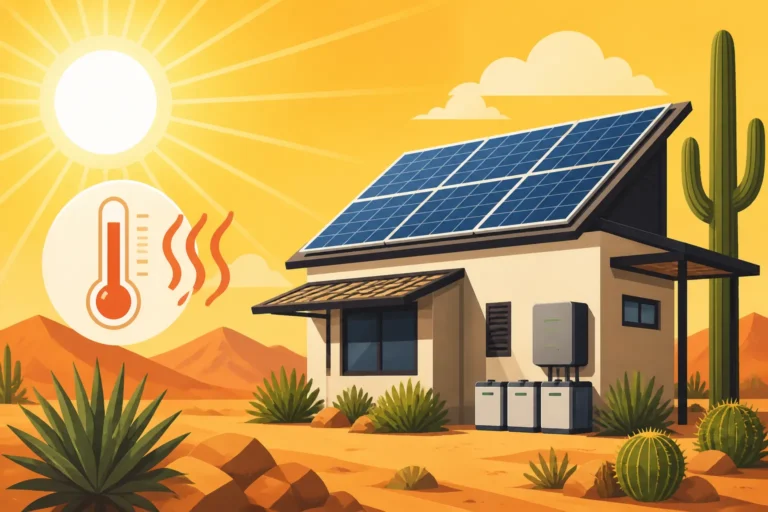
- Temperature Management: Extreme temperatures (hot or cold) can accelerate battery degradation and imbalance. Keep your battery bank in a climate-controlled environment if possible, or ensure it's adequately protected from the elements.
- Equalization (for Lead-Acid): If you're running a lead-acid battery bank, periodic equalization charges (a controlled overcharge) can help rebalance cells and prevent sulfation. Always refer to your battery manufacturer's guidelines for equalization. Lithium batteries generally do not require equalization.
- Regular Inspections: Periodically check all cable connections for tightness and corrosion. Loose or corroded connections can create resistance, leading to localized heating and voltage drops that contribute to imbalance.
- Individual Voltage Monitoring: Even with a BMS, it's a good idea to occasionally check the individual battery voltages in your bank using a multimeter. This gives you a direct snapshot of their state and can alert you to a problem before your BMS needs to intervene drastically.
By combining well-chosen, high-quality batteries with an integrated BMS (or a reliable external balancer) and following these best practices, you'll ensure your off-grid battery bank remains healthy, balanced, and ready to power your adventures for years to come.
Real-World Scenarios and Troubleshooting
Even with the best planning and equipment, sometimes things go awry. Understanding the signs of an unbalanced battery bank and knowing how to troubleshoot can save you a lot of headache and potentially extend the life of your expensive batteries. It’s like having a check-engine light for your off-grid power – you need to know what it means and what to do when it comes on.
Signs of an Unbalanced Battery Bank
Detecting an imbalance early can prevent serious damage. Here are some common real-world signs that your battery bank might be out of sync:
- Reduced Runtime/Usable Capacity: This is often the first noticeable symptom. Your battery bank just doesn't seem to last as long as it used to, even if your power consumption hasn't changed. For example, if your cabin usually gets 3 days of autonomy on a full charge, but now it's only lasting 2, imbalance could be a factor. The weakest cell is hitting its low-voltage cutoff, bringing the whole system down prematurely.
- Erratic Voltage Readings: While a consistent overall system voltage is good, if you're manually checking individual battery voltages (which you absolutely should do periodically!), and you see one or two batteries consistently much higher or lower than the others, that's a red flag. For instance, in a 24V system with two 12V batteries, if one reads 13V and the other 11.8V under load, you have a problem.
- Early Low-Voltage Cutoffs: Your inverter or charge controller might be shutting down your system earlier than expected, even when your overall battery monitor (if you have one) still shows a decent State of Charge. This usually means one individual battery or cell has dropped below its safe minimum voltage, triggering the system's protection mechanisms. This can be especially frustrating when you're trying to run essential appliances like your main lights.
- Excessive Heat from Individual Batteries (Lead-Acid): If one lead-acid battery in your bank feels significantly warmer to the touch than its counterparts, it might be experiencing overcharging due to imbalance. This is less common with lithium batteries, as their BMS typically prevents dangerous overcharge situations, but it's still worth noting.
- Swelling or Distorted Battery Cases (Lead-Acid): This is a serious symptom, particularly with lead-acid batteries, indicating severe overcharging and gas buildup within the battery. If you see this, immediately disconnect the battery and have it professionally inspected or replaced. Lithium batteries generally don't swell.
What to Do When Imbalance Occurs
If you suspect or confirm an imbalance, here’s a step-by-step approach to troubleshooting and hopefully correcting the issue:
-
Safety First: Before doing anything, ensure your solar array is disconnected from the charge controller, and your inverter is turned off. Wear appropriate safety gear (gloves, eye protection).
-
Identify the Weak Link:
- Measure Individual Voltages: With no load or charge, use a multimeter to measure the voltage of each individual battery in your bank. Note down any significant discrepancies.
- Check Connections: Visually inspect all battery terminals and connecting cables. Look for loose connections, corrosion, or damaged insulation. A poor connection can cause higher resistance and mimic an imbalanced battery. Tighten any loose connections and clean corrosion.
-
For Batteries with Integrated BMS (LiFePO4):
- Cycle the Battery: Sometimes, simply performing a full charge and then a full discharge (down to the BMS low-voltage cutoff, if safe) can allow the internal BMS to re-balance the cells. Many BMS units primarily balance at the top end of the charge cycle.
- Consult Manufacturer: If the imbalance persists, contact the battery manufacturer (e.g., Renogy, Battle Born) support. There might be specific troubleshooting steps or firmware updates for their BMS. In rare cases, a faulty BMS might need replacement.
-
For Batteries with External Balancers (or no balancing):
- Verify Balancer Operation: If you have an external balancer, check its indicator lights or display (if it has one) to ensure it's functioning correctly. Check all wiring to the balancer.
- Manual Equalization (Lead-Acid Only): For lead-acid batteries, a controlled equalization charge can often bring cells back into balance. This involves charging at a higher voltage for a specific period to "boil" the electrolyte and mix it, equalizing the specific gravity. CRITICAL: Only perform equalization if your battery manufacturer explicitly recommends it for your specific battery type and provides exact parameters. Never equalize lithium batteries.
- Top Balance Manually (Lithium, with caution): If you have lithium cells without a BMS, and you're experienced, you could manually top balance them by individually charging the lower-voltage cells to match the highest one using a small, controlled charger. This is a very advanced and risky procedure and should only be attempted by those with deep electrical knowledge. It's far better to invest in a proper BMS or batteries with integrated BMS.
-
Consider Replacement: If a single battery is consistently far out of balance, showing signs of damage (swelling, extreme heat), or won't hold a charge even after attempts to balance, it might be permanently damaged. In a series string, replacing just the bad battery can sometimes solve the problem, but it's often recommended to replace all batteries in a series string at the same time if they are of similar age and usage, as a new battery with an old one can quickly lead to new imbalances. For cost concerns, checking out Cost to Replace Off-Grid Solar Batteries can give you an idea of what to expect.
-
Review System Design: If you're frequently encountering imbalance issues, it might be a sign that your initial system design has flaws. Revisit your calculations for How Much Battery Capacity You Need to ensure your battery bank is adequately sized for your loads and charging sources.
By being vigilant and understanding these troubleshooting steps, you can keep your off-grid battery bank in prime condition, ensuring reliable power and getting the most out of your investment.
Passive vs. Active Battery Balancing Comparison
To make it easier to compare the two primary methods of battery balancing, here's a quick table summarizing their key characteristics:
| Feature | Passive Balancing | Active Balancing |
|---|---|---|
| Mechanism | Dissipates excess energy as heat (resistors) | Transfers energy from higher to lower cells (capacitors/inductors) |
| Efficiency | Lower (energy is wasted) | Higher (energy is conserved) |
| Speed | Slower | Faster |
| Cost | Lower | Higher |
| Complexity | Simpler circuitry | More complex circuitry |
| Heat Generation | Significant | Minimal |
| Application | Smaller banks, less critical applications | Larger banks, high-performance, critical systems |
| Integrated BMS | Often used in basic BMS or external balancers for cost-sensitive applications | Often preferred in advanced, high-quality integrated BMS |
| Example Use | Entry-level solar kits, some lead-acid systems | High-end LiFePO4 batteries, whole-house off-grid systems |
Disclaimer
The information provided in this guide is for general educational and informational purposes only and does not constitute professional advice. Off-grid solar systems involve high voltages and currents, which can be dangerous. Always consult with a qualified electrician or solar professional before installing or modifying any electrical system. Follow all manufacturer instructions and local electrical codes. We are not responsible for any damage or injury resulting from the misuse or misinterpretation of this information.