How Many Batteries to Run A Tv
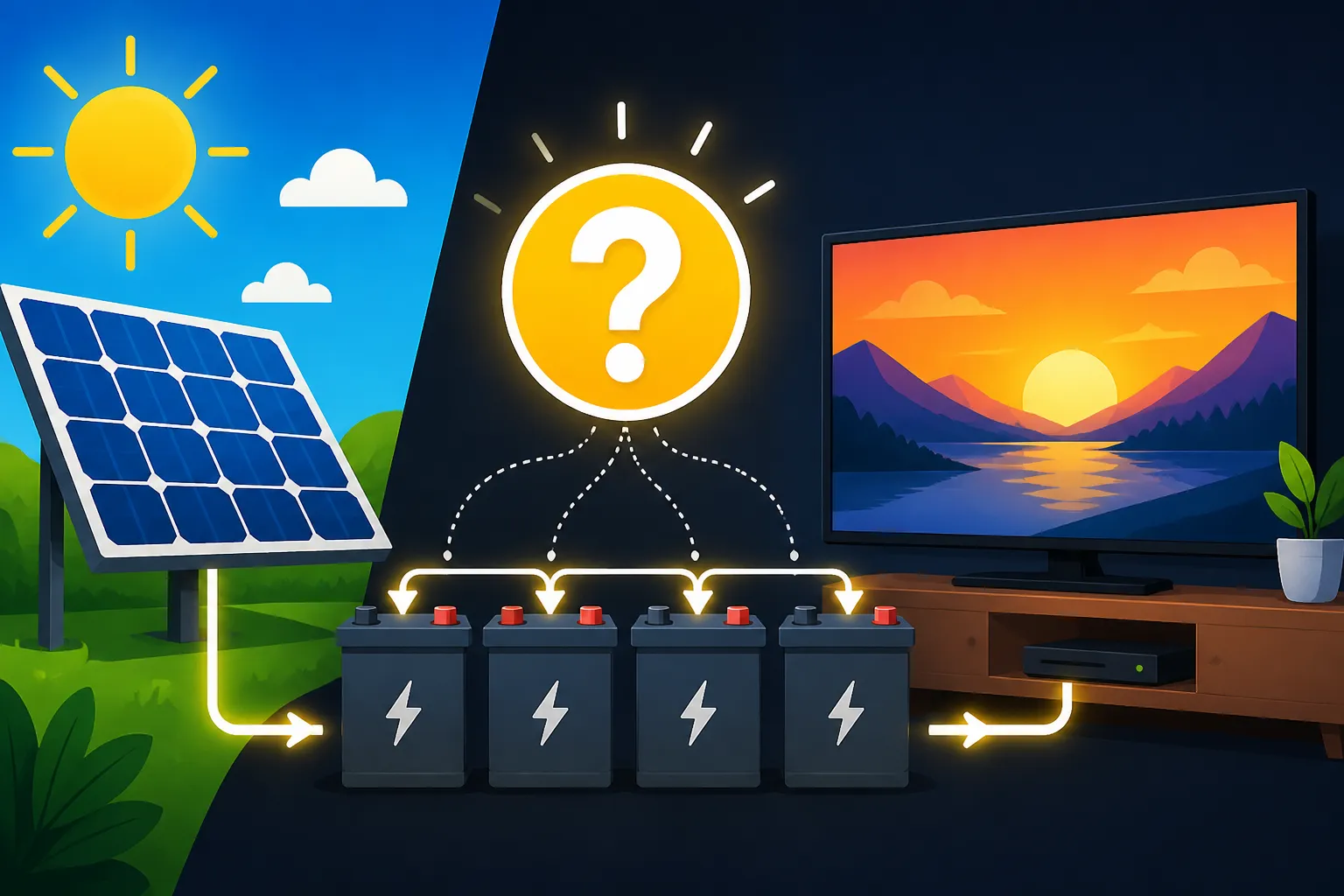
Figuring out how to power your home entertainment off-grid can feel like a puzzle, especially when you just want to kick back and watch your favorite show without worrying about draining your precious battery bank. It's a common frustration: you've made the leap to off-grid living or RV life, only to realize that what seems like a simple appliance can actually be a significant power draw. This guide will walk you through exactly how to calculate the battery capacity you'll need to keep your TV running, ensuring you can enjoy your screen time without any sudden blackouts.
Understanding Your Television's Power Consumption
Before you can even begin to think about battery sizes, you absolutely have to know how much power your television actually uses. This isn't just a guess-and-check game; it's a fundamental step that will save you headaches (and potentially dead batteries) down the line. Many folks underestimate this, leading to systems that can't keep up with demand.
Checking the Wattage and Amp-Hours
The first order of business is to locate your TV's power rating. This critical information is usually found on a sticker on the back of the TV itself, in the owner's manual, or sometimes even on the manufacturer's website. You're looking for "watts" (W) or "watt-hours" (Wh) per hour of operation. For example, a modern 40-inch LED TV might consume anywhere from 50 to 80 watts. Older TVs, especially plasma models, could consume significantly more, sometimes upwards of 200-300 watts. Make sure you're looking at the running wattage, which is what the TV uses when it's actively on, not the peak or surge wattage (though it's good to keep surge in mind for your inverter sizing).
Let's say your TV is rated at 75 watts. This means that for every hour it's on, it's pulling 75 watts from your system. If you plan to watch it for four hours, that's 75 watts * 4 hours = 300 watt-hours. This "watt-hours per day" is the golden number you'll need to size your battery bank. If you can't find the exact wattage, a power meter (often available on Amazon) can give you a precise reading by plugging your TV into it and seeing its real-time consumption. Remember, devices like soundbars, streaming sticks (like Roku or Apple TV), and game consoles also add to this load, so factor them in. Each device needs its own wattage assessment.
Daily Usage Estimation
Once you know your TV's wattage, the next step is to honestly assess how many hours per day you actually plan to use it. Are we talking about a couple of hours in the evening to catch up on news, or are you envisioning movie marathons and binge-watching sessions? Be realistic, because overestimating will lead to an unnecessarily expensive battery bank, while underestimating will leave you with a dead battery halfway through your favorite show.
Consider your typical day or week. If you're living in an RV, maybe you watch a few hours every night. If it's a remote cabin, perhaps it's only on weekends, but for longer stretches. For year-round off-grid living, you'll want to average your daily use across all seasons, accounting for longer dark evenings in winter. Let's assume for our examples that you're an average viewer, planning for around 3-4 hours of TV watching per day. This usage, combined with your TV's wattage, forms the foundation of your battery sizing calculation. You can learn more about how to calculate daily energy usage to get a full picture of all your appliances.
AC Versus DC Televisions
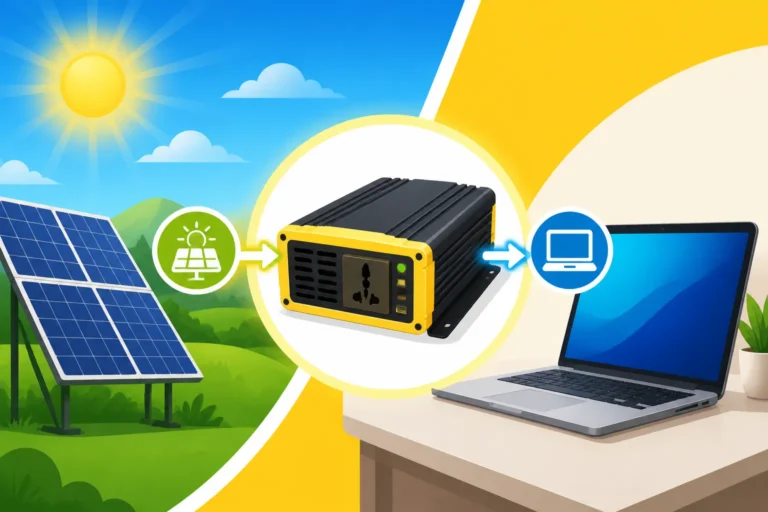
Here's a crucial point many new off-gridders overlook: most common household TVs are designed to run on alternating current (AC) power, just like in a grid-tied home. This means your off-grid system will need an inverter to convert your batteries' direct current (DC) power into AC power that your TV can use. However, this conversion isn't 100% efficient; some power is always lost in the process, typically around 5-15%, depending on the quality of your inverter.
There's an alternative: DC televisions. These are less common for larger screens but are popular in RVs, boats, and smaller off-grid setups. A DC TV can plug directly into your 12V or 24V DC system, bypassing the inverter altogether and thus avoiding those conversion losses. While they might be harder to find or have fewer features than their AC counterparts, a DC TV can significantly reduce your overall power consumption for television viewing, meaning you might need fewer batteries or smaller solar panels. It's definitely something to consider if efficiency is a top priority, especially when trying to maintain a lean system.
Sizing Your Battery Bank for a Television
Now that you've got a handle on your TV's power appetite, it's time to translate that into actual battery capacity. This is where the rubber meets the road, and getting these calculations right is paramount for a reliable off-grid system.
Calculating Watt-Hours Needed
Let's put our earlier numbers into action. If your TV consumes 75 watts and you plan to watch it for 4 hours a day, your daily TV consumption is 300 watt-hours (Wh). Your battery bank needs to be able to supply this amount of power. However, it's not as simple as just matching the battery's stated capacity to this number. You need to factor in a few more things to ensure longevity and reliability.
Batteries, especially lead-acid types, shouldn't be discharged completely. The deeper you discharge them, the shorter their lifespan. For lead-acid batteries (like AGM or flooded), a general rule of thumb is to only discharge them to 50% of their capacity. Lithium Iron Phosphate (LiFePO4) batteries are much more forgiving, safely allowing discharges of 80% or even 100% in some cases, which is why they're often preferred for off-grid applications despite a higher upfront cost. So, if you need 300 Wh for your TV and you're using lead-acid batteries, your usable capacity needs to be at least 300 Wh, meaning your total battery capacity should be at least 600 Wh. For LiFePO4, you could get by with closer to 300-375 Wh of total capacity, as you can use more of it. Understanding watts vs. watt-hours vs. amp-hours explained is crucial here.
Choosing Battery Chemistry and Voltage
The type of battery you choose dramatically impacts your system's performance, cost, and longevity. The two main players in the off-grid world are lead-acid and lithium (specifically LiFePO4).
- Lead-Acid Batteries (AGM, Gel, Flooded): These are the traditional workhorses and are generally cheaper upfront. However, they are heavy, require more maintenance (especially flooded types), and have a shorter cycle life (number of charge/discharge cycles) compared to lithium. Critically, as mentioned, you should only discharge them to about 50% of their capacity to maximize their lifespan. If you constantly drain them deeper, they'll fail much faster. For instance, a 100 Ah (Amp-hour) 12V lead-acid battery offers about 600 Wh of usable energy (100Ah * 12V * 0.50).
- Lithium Iron Phosphate (LiFePO4) Batteries: These are the newer, premium option. They are lighter, have a much longer cycle life (often 10 times that of lead-acid), require no maintenance, and can be discharged much deeper (80-100%) without significant harm. This means a 100 Ah 12V LiFePO4 battery can provide nearly 1200 Wh of usable energy (100Ah * 12V * 0.90 or more). While the initial cost is higher, their superior performance and lifespan often make them more cost-effective in the long run. Many reputable brands like Renogy offer excellent LiFePO4 options. To truly compare, delving into the nuances of LiFePO4 vs Lead-Acid Batteries for Off-Grid is highly recommended.
Beyond chemistry, you'll also decide on your system's voltage: 12V, 24V, or 48V.
- 12V systems are common for small setups like RVs or basic cabins, easy to wire, and compatible with many DC appliances. However, they require thicker wires for higher power loads, which can be costly and difficult to route.
- 24V systems are a good middle ground for moderate power needs, offering better efficiency and less voltage drop over distance than 12V.
- 48V systems are the most efficient for larger homes or extensive power needs, allowing for much thinner wiring and less power loss. For a TV, any voltage works, but the overall system size will often dictate your choice. Learning how to choose system voltage will help you determine the best fit for your entire setup.
Days of Autonomy for Reliability
This is where true off-grid planning shines. "Days of autonomy" refers to how many days your battery bank can power your essential loads (including your TV) without any input from your solar panels, typically during cloudy weather or short winter days. For a comfortable off-grid experience, aiming for 2-3 days of autonomy is a good starting point. This means your battery bank needs to store enough energy to cover your daily TV usage (and all other loads) for that many days.
If your daily TV consumption is 300 Wh and you want 3 days of autonomy, you'll need 900 Wh of usable battery capacity.
- For lead-acid batteries (50% DoD): you'd need a total capacity of 1800 Wh (900 Wh / 0.50).
- For LiFePO4 batteries (90% DoD): you'd need a total capacity of approximately 1000 Wh (900 Wh / 0.90).
This extra buffer is crucial for peace of mind. Imagine planning a cozy movie night, only for a week of rain to roll in, leaving your solar panels less effective. Without sufficient days of autonomy, your entertainment could be cut short. When you're thinking about how many batteries for an off-grid system, always factor in this critical buffer.
Practical Examples: How Many Batteries Do You Really Need?
Let's dive into some real-world scenarios to help you visualize what these calculations actually mean for your battery bank. Remember, these are examples, and your specific TV and usage will dictate your exact needs.
Scenario 1: Small TV, Occasional Use (e.g., Small Cabin or Weekend RV)
Imagine you have a small, energy-efficient 32-inch LED TV that draws about 40 watts. You only use it for a couple of hours on weekend evenings, maybe 3 hours a day, Friday through Sunday.
- Daily TV Watt-hours: 40W * 3 hours = 120 Wh
- Desired Autonomy: Let's go with 2 days for this lighter usage. So, 120 Wh/day * 2 days = 240 Wh usable capacity needed.
Battery Sizing:
- Using 12V LiFePO4 Batteries (90% DoD): You'd need a battery with a total capacity of approximately 267 Wh (240 Wh / 0.90). Since 100 Ah 12V LiFePO4 batteries are common and offer 1200 Wh, even one of these would be massive overkill for just the TV. A smaller 50 Ah 12V LiFePO4 battery, offering 600 Wh of total capacity (or 540 Wh usable), would easily handle this and likely other small loads.
- Using 12V Lead-Acid Batteries (50% DoD): You'd need a total capacity of 480 Wh (240 Wh / 0.50). A 12V, 50 Ah lead-acid battery provides 600 Wh total (300 Wh usable), which would be sufficient for the TV and a bit more.
In this scenario, a single 50 Ah 12V battery, whether LiFePO4 or lead-acid, would likely be more than enough to power your TV for occasional use, assuming you also have solar panels to recharge it. This setup is quite common for those who only occasionally use their cabin or RV.
Scenario 2: Medium TV, Regular Use (e.g., Full-Time RV or Small Off-Grid Home)
Now, let's consider a more typical 43-inch smart LED TV, consuming about 60 watts. You use it for 4 hours every evening, plus an additional 2 hours on the weekends for a total of 6 hours on Saturday and Sunday.
- Average Daily TV Watt-hours:
- Weekdays: 60W * 4 hours = 240 Wh
- Weekends: 60W * 6 hours = 360 Wh
- Weekly total: (240 Wh * 5 days) + (360 Wh * 2 days) = 1200 Wh + 720 Wh = 1920 Wh
- Average daily: 1920 Wh / 7 days = ~274 Wh/day
- Desired Autonomy: Let's aim for 3 days to be safe. So, 274 Wh/day * 3 days = 822 Wh usable capacity needed.
Battery Sizing:
- Using 12V LiFePO4 Batteries (90% DoD): You'd need a total capacity of approximately 913 Wh (822 Wh / 0.90). A single 12V, 100 Ah LiFePO4 battery provides 1200 Wh total (1080 Wh usable), making it a perfect fit. If you're looking at brands like Battle Born or EG4, their 100Ah 12V batteries are very popular for such applications.
- Using 12V Lead-Acid Batteries (50% DoD): You'd need a total capacity of 1644 Wh (822 Wh / 0.50). This would translate to two 12V, 100 Ah lead-acid batteries (2400 Wh total, 1200 Wh usable). You'd likely need two of these in parallel to get the necessary usable capacity.
This example highlights how a single high-quality LiFePO4 battery can often replace multiple lead-acid batteries for similar usable capacity, saving space and weight.
Scenario 3: Large TV, Daily Entertainment (e.g., Larger Off-Grid Homestead)
Finally, imagine a larger 55-inch 4K LED TV that consumes around 90 watts, plus a soundbar that uses 20 watts, and a streaming box that uses another 10 watts. That's a total of 120 watts. You're serious about your entertainment, watching 5 hours every single day.
- Daily TV + Entertainment Watt-hours: 120W * 5 hours = 600 Wh
- Desired Autonomy: We'll stick with 3 days for robust reliability. So, 600 Wh/day * 3 days = 1800 Wh usable capacity needed.
Battery Sizing:
- Using 12V LiFePO4 Batteries (90% DoD): You'd need a total capacity of approximately 2000 Wh (1800 Wh / 0.90). Two 12V, 100 Ah LiFePO4 batteries would give you 2400 Wh total (2160 Wh usable), which fits perfectly. Alternatively, a single 200 Ah 12V LiFePO4 battery would also work, assuming it's from a reputable brand like Renogy or similar that provides good quality and longevity.
- Using 24V LiFePO4 Batteries (90% DoD): If your system is 24V (which is often more efficient for larger loads), a single 24V, 100 Ah LiFePO4 battery would provide 2400 Wh total (2160 Wh usable), which is also an excellent solution. Choosing between 12V, 24V, or 48V is an important design choice for your entire off-grid system, and the right voltage can make a big difference in wiring and efficiency.
- Using 12V Lead-Acid Batteries (50% DoD): You'd need a total capacity of 3600 Wh (1800 Wh / 0.50). This would require three 12V, 100 Ah lead-acid batteries (3600 Wh total, 1800 Wh usable), wired in parallel.
This table provides a quick reference for common battery sizes and usable capacities.
| Battery Type (12V) | Total Capacity (Wh) | Usable Capacity (Wh) @ 50% DoD (Lead-Acid) | Usable Capacity (Wh) @ 90% DoD (LiFePO4) |
|---|---|---|---|
| 50 Ah Lead-Acid | 600 | 300 | N/A |
| 100 Ah Lead-Acid | 1200 | 600 | N/A |
| 200 Ah Lead-Acid | 2400 | 1200 | N/A |
| 50 Ah LiFePO4 | 600 | N/A | 540 |
| 100 Ah LiFePO4 | 1200 | N/A | 1080 |
| 200 Ah LiFePO4 | 2400 | N/A | 2160 |
Note: Usable capacity calculations are approximations. Actual performance may vary.
Beyond the Batteries: Other Essential System Components
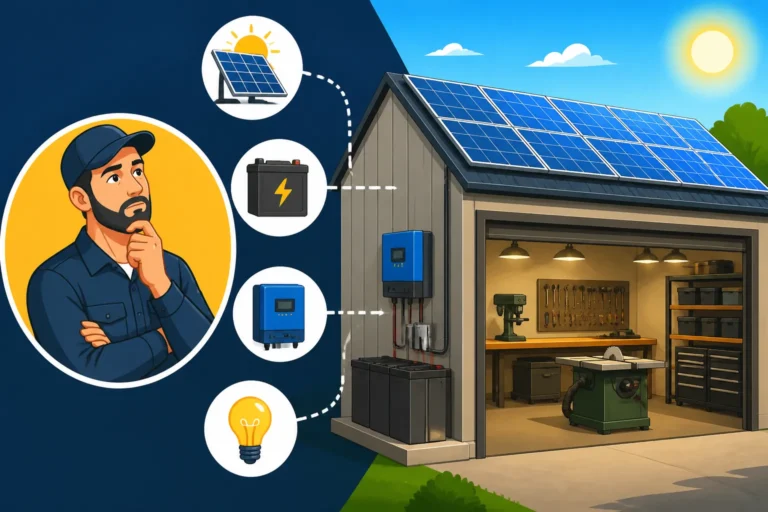
While the batteries are the heart of your off-grid system, they can't do it all alone. A complete system relies on several key components working in harmony. You'll need to consider these other parts as you plan, especially if your goal is truly reliable entertainment. For a more comprehensive overview, check out our Off-Grid Solar System Design Basics.
Inverter Considerations
Unless you're running a purely DC television, you'll need an inverter to convert the DC power from your batteries into the AC power your TV expects. It’s not just about turning DC into AC; it’s about doing it cleanly and efficiently. For sensitive electronics like televisions, a pure sine wave inverter is an absolute must. Modified sine wave inverters, while cheaper, can cause humming noises, reduced lifespan, or even damage to sensitive electronics over time.
When sizing your inverter, you need to consider the continuous running wattage of your TV (and any associated devices like soundbars or streaming boxes), plus any potential surge watts if other high-draw AC appliances will occasionally be used on the same circuit. For a TV and a few accessories, a 1000-watt to 2000-watt pure sine wave inverter is often sufficient for a dedicated entertainment circuit. However, if you plan to power an air conditioner or well pump simultaneously, you’ll need a much larger inverter. Knowing what size inverter to run a TV is key for system efficiency and appliance health.
Solar Panels and Charge Controller
Your batteries store the power, but your solar panels generate it. Without enough solar input, your batteries will eventually run dry, no matter how large they are. You need enough solar panels to recharge your battery bank daily, especially after running your TV and other loads. This involves calculating your total daily energy consumption and then determining how many solar panels you need based on your location's peak sun hours. A good rule of thumb is to aim to replenish 100-120% of your daily energy usage with solar, accounting for inefficiencies and cloudy days.
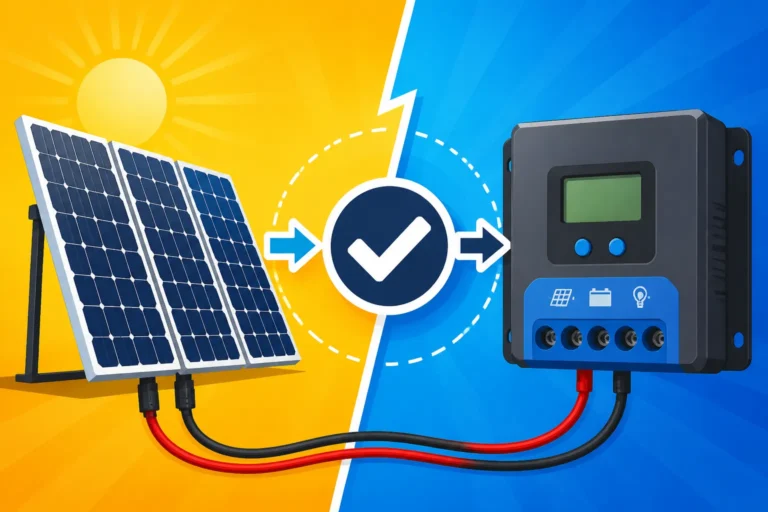
The charge controller acts as the brain between your solar panels and batteries. It regulates the voltage and current from your solar panels to prevent overcharging your batteries, which can severely damage them. For most modern off-grid systems, an MPPT (Maximum Power Point Tracking) charge controller is recommended. MPPT controllers are more efficient than older PWM (Pulse Width Modulation) controllers, especially in varying light conditions, meaning you'll harvest more power from your panels and get it into your batteries.
Monitoring and Management
Once your system is up and running, you'll want to keep an eye on it. A good battery monitor is like the dashboard of your off-grid vehicle, giving you critical information about your battery's state of charge, current draw, and how much power is coming in from your solar panels. This helps you understand your system's performance, identify potential issues, and adjust your usage habits to avoid running out of power unexpectedly.
Many modern inverters and charge controllers, especially from brands like Victron Energy or Outback Power, come with integrated monitoring capabilities or can connect to external shunts and displays. These systems often offer smartphone apps that provide real-time data, allowing you to monitor your off-grid power from the comfort of your couch while enjoying your perfectly powered TV.
Final Thoughts on Battery Sizing for Your Television
Powering a TV off-grid isn't overly complicated, but it does require careful planning and a realistic assessment of your power needs and usage habits. The exact number of batteries you'll need boils down to your TV's wattage, how many hours a day you plan to watch it, your chosen battery chemistry, and how many days of cloudy weather you want to be prepared for. Always err on the side of a little extra capacity if your budget allows, as it provides a crucial buffer and extends the life of your battery bank.
Remember that batteries are just one piece of the puzzle. They need a robust solar array to recharge them, a reliable charge controller to manage the flow, and a good inverter if you're using an AC television. By taking the time to plan thoughtfully, you can enjoy all the comforts of home entertainment, completely off the grid, without a second thought about where your power is coming from. If you're looking for the best off-grid solar batteries, explore options that match your system voltage and capacity needs.
Disclaimer
The information provided in this guide is for general informational purposes only and does not constitute professional advice. Off-grid solar system design and installation can be complex and involve electrical hazards. Always consult with qualified professionals and adhere to local electrical codes and safety standards when designing, installing, or maintaining an off-grid solar system.