How to Design Off-Grid Solar for Winter
The thought of winter can bring a shiver to any off-grid homesteader or RV dweller. The days shorten, the clouds roll in, and suddenly that robust solar system that hummed along perfectly all summer feels like it’s barely limping by. It’s a frustrating reality when you depend on the sun for every bit of electricity, and the cold, dark months threaten your independence. This guide is here to walk you through the nitty-gritty of designing an off-grid solar system that won't just survive winter, but thrive, giving you the reliable power you need when the elements are at their harshest.
Understanding Winter's Impact on Off-Grid Solar Performance
Let's be real, winter is tough on solar. It's not just about the cold; there's a whole host of factors working against your system that you absolutely need to plan for. Ignoring these realities is a surefire way to find yourself bundled up in the dark, wishing you'd thought ahead.
Reduced Sunlight Hours
One of the most obvious challenges is the drastic reduction in available sunlight. If you live in a place like Portland, Oregon, or anywhere north of the Mason-Dixon line, you know those winter days feel like they're over before they even properly begin. The sun rises later, sets earlier, and even when it's out, it tracks much lower in the sky. This lower sun angle means the solar radiation reaching your panels is less intense.
Think of it this way: in summer, the sun might be directly overhead, hitting your panels squarely for many hours. In winter, it's like a flashlight beam hitting a wall at an angle – the light spreads out over a larger area, making it less concentrated and therefore less powerful. This significantly reduces your daily solar energy production. You might go from generating 20 kWh on a long summer day to struggling for 5 kWh on a short winter day, even with clear skies. This drop-off is a critical component when you're figuring out how to size an off-grid solar system for year-round reliability.
Cloud Cover and Inclement Weather
Beyond the shorter, lower sun, winter brings its own parade of unpleasant weather. Snow, ice, and persistent overcast skies are the banes of a solar system's existence. A fresh blanket of snow, while beautiful, is a complete shutdown for your solar panels until it's cleared. Even a thin layer of frost or ice can dramatically reduce efficiency. And then there are those weeks where the sun feels like a distant memory, hidden behind a relentless veil of grey clouds.
These conditions aren't just an annoyance; they drastically cut down the effective peak sun hours your system receives. A cloudy day can reduce panel output by 70-90% compared to a sunny day, sometimes even more. This means your panels, even if perfectly sized for summer, will simply not be able to replenish your battery bank quickly enough during extended periods of bad weather. You need to factor in multiple "days of autonomy" for your battery bank, understanding that you might get little to no charging for several days in a row.
Temperature Effects on Batteries and Panels
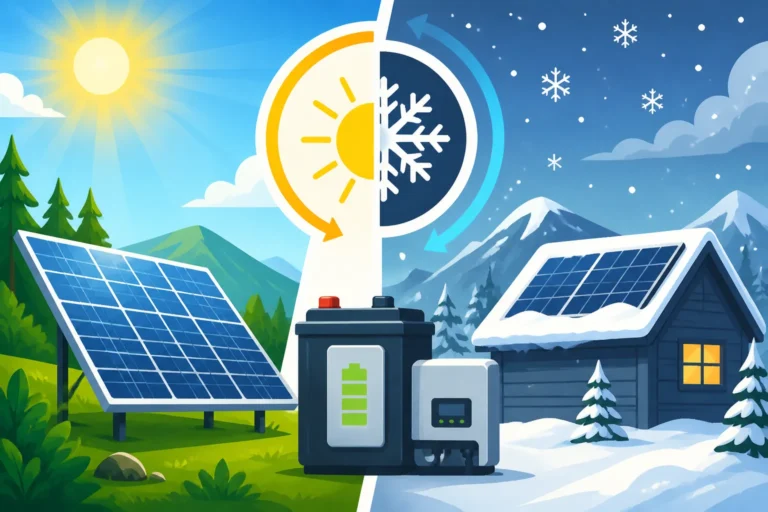
It's a common misconception that cold weather is universally bad for solar panels. In fact, solar panels actually perform more efficiently in colder temperatures, provided they are clear of snow and ice. This is because semiconductors work better at lower temperatures. A panel rated for 100W at 77°F (25°C) might produce slightly more power at 20°F (-6°C). The real problem for panels in winter is snow cover, not the cold itself.
Batteries, however, are a different story. Lead-acid batteries, like AGM or flooded lead-acid, hate the cold. Their capacity can drop significantly in freezing temperatures. For example, a lead-acid battery at 32°F (0°C) might only offer 80% of its rated capacity, and at 0°F (-18°C), that can plummet to 50% or even less. Cold also increases internal resistance, making them harder to charge and discharge, and significantly shortens their lifespan if they are repeatedly deeply discharged in freezing conditions. Lithium iron phosphate (LiFePO4) batteries, while generally more robust, also suffer in extreme cold. Most LiFePO4 batteries cannot be safely charged when their internal temperature is below 32°F (0°C) without internal heating elements, which many newer models now include. Discharging is usually okay down to around -4°F (-20°C), but charging them when frozen can cause permanent damage, leading to reduced capacity and an increased risk of thermal runaway. This is a critical factor when considering your battery choice; you'll want to review the pros and cons of LiFePO4 vs Lead-Acid Battery Cost and performance in various climates.
Essential Sizing Considerations for Winter Off-Grid Solar
Designing for winter isn't just about throwing more panels at the problem; it requires a thoughtful, analytical approach to sizing every component to handle the unique demands of the colder months. You need a buffer, not just a bare minimum.
Accurately Calculating Winter Load
One of the biggest mistakes people make when going off-grid is calculating their energy needs based on average daily usage. This simply won't cut it for winter. In the colder months, your energy consumption patterns often shift dramatically. You might be running more lights for longer hours, relying on electric blankets, using a microwave more often, or even a small space heater to take the chill off a room – even if it's just occasionally. These "surge" loads and increased daily usage can quickly drain a battery bank that was perfectly adequate in July.
To get an accurate winter load, sit down and list every appliance and electronic device you plan to use, including those seasonal items. Estimate how many hours per day you'll use them during the darkest, coldest part of winter. Be realistic, and err on the side of overestimation. You might be surprised at how much more energy your remote cabin consumes in December compared to August. Knowing your true winter load is the foundational step in determining How Many Watts of Solar You Need and how large your battery bank should be.
Determining Solar Array Size for Low Sun
Since winter days offer fewer and less intense sun hours, your solar array needs to be significantly oversized compared to what you'd need for summer. This is often referred to as designing for your "worst-case scenario." You'll need to figure out the average daily peak sun hours for your specific location during the shortest, cloudiest month – typically December or January. Online resources and solar calculators can help with this. For example, a region that gets 5 peak sun hours in summer might only get 2 or 3 in winter.
If you usually get 5 peak sun hours in summer and generate 10 kWh with a certain array, you might only generate 4-6 kWh from that same array in winter, even on a clear day. To compensate, you might need two or even three times the number of solar panels to achieve the same daily energy production during those lean months. This is crucial for avoiding power shortages, and it directly addresses How Winter Affects Off-Grid Sizing. When shopping, look for reliable brands; many off-gridders swear by Renogy for their robust panel options, often available on platforms like Amazon.
Sizing the Battery Bank for Winter Autonomy
Your battery bank is your energy reservoir, and in winter, you need a much bigger one. Imagine a string of cloudy, snowy days – maybe three, four, or even five days – where your solar panels are barely producing. Your battery bank needs to be large enough to power your critical loads through these extended periods without any significant solar input. This concept is called "days of autonomy."
For year-round off-grid living, especially in colder, cloudier regions, aiming for 3-5 days of autonomy is often recommended. This means your battery bank should hold enough usable energy to meet your daily winter load for that many days. Remember that not all battery chemistries deliver 100% of their rated capacity, especially lead-acid batteries in the cold. So, factor in their reduced capacity at low temperatures and ensure your chosen batteries, like those from Battle Born or EG4, have a robust Battery Management System (BMS) that can manage cold weather charging if you opt for LiFePO4. Knowing How Many Batteries for an Off-Grid System will require careful calculations based on your load analysis and desired days of autonomy.
| Battery Type | Winter Performance Considerations | Cold Charging Limit | Best Use Case |
|---|---|---|---|
| LiFePO4 (Lithium) | Excellent cycling, high depth of discharge. Capacity reduction in cold is minimal. Requires internal heating for charging below 32°F (0°C). | 32°F (0°C) for charging | Year-round reliability, high cycle life, deep discharges. |
| AGM Lead-Acid | Better cold performance than flooded lead-acid, but capacity drops significantly below freezing. Slower charging in cold. | No hard limit, but very slow below 32°F (0°C) | Moderate cold, backup systems, budget-conscious. |
| Flooded Lead-Acid | Very sensitive to cold; capacity drops significantly. Requires careful temperature compensation for charging. Freezing risks if discharged too low. | No hard limit, but very slow below 32°F (0°C) | Mild climates, systems with constant monitoring. |
Key Design Strategies for Robust Winter Off-Grid Systems
Beyond sizing, the physical design and backup provisions of your system are crucial for winter resilience. It’s about being smart with placement and having a contingency plan.
Optimizing Panel Placement and Tilt
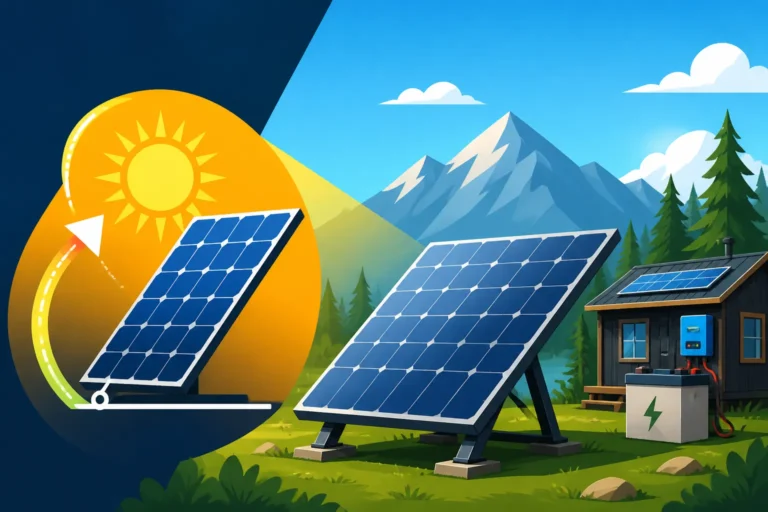
Where and how you mount your solar panels can make a huge difference in winter performance. For static installations, like a cabin or tiny home, adjusting the tilt angle of your panels for winter can significantly boost their output. During winter, the sun's path is much lower in the sky, so tilting your panels at a steeper angle – closer to vertical – allows them to face the sun more directly.
Many off-grid experts recommend a winter tilt angle roughly equal to your latitude plus 15 degrees. For example, if you're at 40 degrees latitude, a summer tilt might be 40 degrees, but a winter tilt could be 55 degrees. This steeper angle also helps with natural snow shedding. Smooth-surfaced monocrystalline panels, often found from reputable brands like Renogy, are generally better at shedding snow than polycrystalline panels. Ground mounts allow for easier seasonal adjustments to the tilt angle compared to roof mounts. When you're considering How to Mount Off-Grid Solar Panels, think about accessibility for snow removal and tilt adjustments. Remember, even a small patch of snow can block an entire string of panels.
Incorporating a Reliable Backup Power Source
Let's face it: no matter how well you size your solar and battery bank, there will be those exceptional stretches of dark, cloudy, snowy weather when your system just can't keep up. This is where a robust backup power source becomes not just a luxury, but a necessity for true off-grid living, especially in winter.
A good old-fashioned fossil fuel generator, running on propane or diesel, is the most common and reliable backup. These can quickly charge your battery bank when solar input is negligible, or even power high-demand appliances directly. Brands like Generac or Champion offer reliable options. You'll want to size your generator to meet your peak winter load and ensure it can adequately charge your battery bank. Integrating it with an automatic transfer switch or an inverter/charger can make the process seamless, allowing the generator to kick in automatically when battery levels drop. For smaller systems or occasional outages, a quality solar generator from companies like EcoFlow or Bluetti can also serve as a useful emergency backup for critical electronics. Planning for How to Add a Generator to Your Design is a non-negotiable step for winterizing your off-grid power.
Protecting Components from Extreme Cold and Snow
The physical protection of your off-grid system components from winter's harshness is just as important as the sizing.
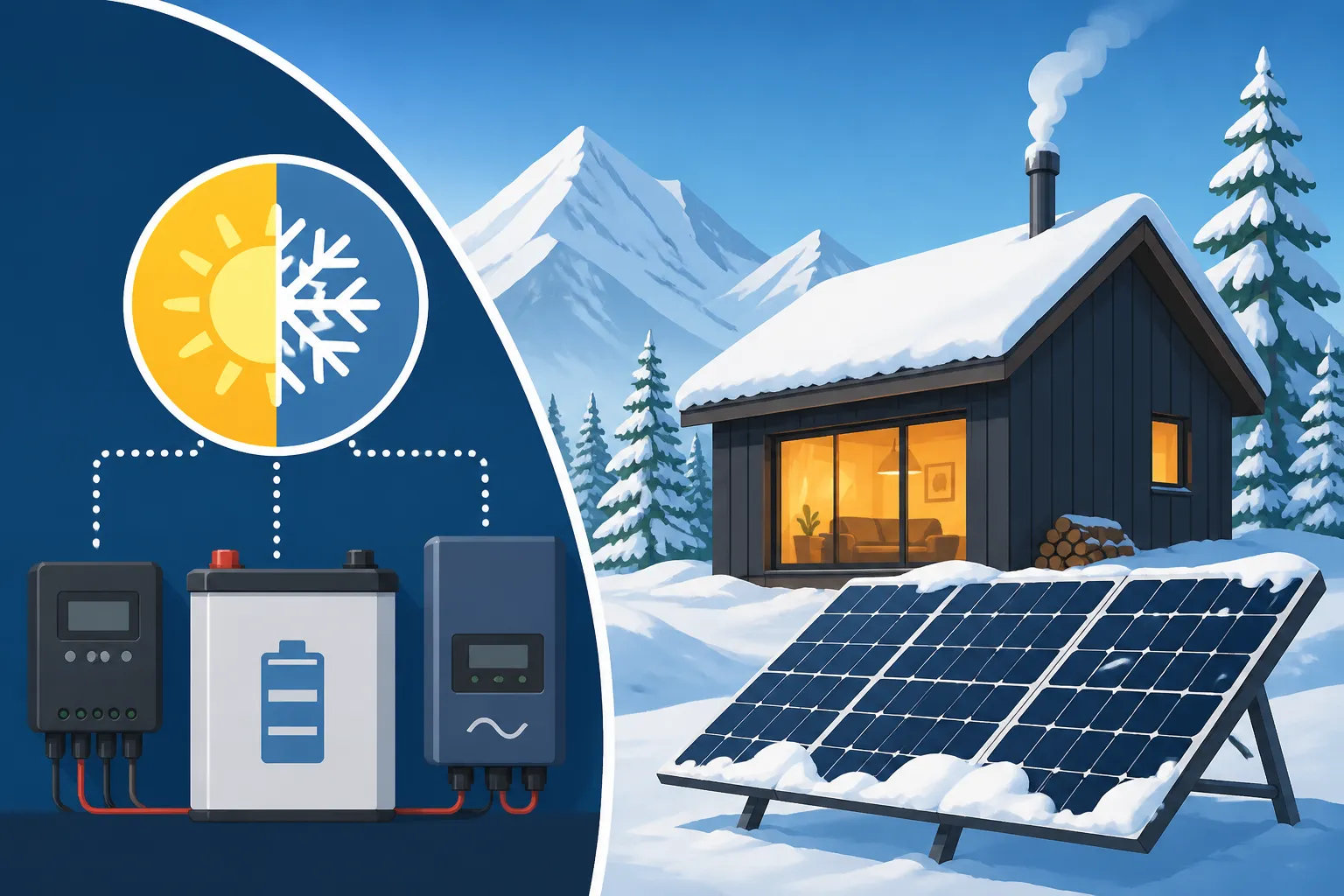
- Batteries: As discussed, batteries are sensitive to cold. For lead-acid batteries, a well-insulated, vented battery box or enclosure is essential to keep temperatures above freezing. For LiFePO4 batteries without internal heaters, an insulated box is also critical, and in extremely cold climates, supplementary heating (like a small warming mat) might be needed to ensure they stay above 32°F (0°C) for safe charging. Placing batteries indoors, in a basement, or a heated utility room is ideal. Learn more about How to Protect Batteries from Cold.
- Panels: While the panels themselves tolerate cold well, snow and ice accumulation are major issues. Consider mounting panels with enough clearance from the ground (for ground mounts) to prevent snow from piling up past the bottom edge. A steeper tilt helps with shedding, but manual snow removal might still be necessary. A long soft-bristled brush or a roof rake can be invaluable tools.
- Wiring and Connections: Extreme cold can make wires brittle, and ice can cause damage. Ensure all wiring is properly secured, routed in conduit where exposed, and that connections are weatherproofed using appropriate enclosures and dielectric grease. High-quality MC4 connectors and robust cabling, often available through retailers like Amazon, are essential.
Practical Tips and Maintenance for Winter Solar Resilience
Once your system is designed and installed, the work isn't over. Proactive monitoring and maintenance are key to ensuring it keeps performing well through the toughest months.
Monitoring and System Management
In winter, being vigilant about your system's performance is paramount. A good battery monitor, like those from Victron Energy, is your best friend. It gives you real-time data on your battery's state of charge, voltage, current in, and current out. This information is invaluable for managing your energy consumption. If you see your battery levels consistently dropping below your comfort zone, it's a clear signal to either conserve power or run your backup generator.
Many modern inverter/chargers and charge controllers come with companion apps or displays that allow you to monitor panel output, battery status, and load. Regularly checking these readouts, especially during cloudy stretches, helps you understand your system's limitations and prevent deep discharges that can damage batteries. It also allows you to make informed decisions, like whether to skip running the washing machine today and save power for critical loads like your refrigerator or well pump.
Proactive Winter Preparations
Before the first snow flies, take the time for a thorough system check-up. This proactive approach can prevent many common winter headaches.
- Clean Panels: Ensure your panels are spotless. Dirt, dust, and grime, even a thin layer, can reduce efficiency, and this reduction is amplified when sunlight is already scarce.
- Check Connections: Inspect all electrical connections for corrosion, looseness, or damage. Tighten anything that seems off. Pay particular attention to battery terminals, which can accumulate sulfation on lead-acid batteries.
- Battery Health: If you have flooded lead-acid batteries, check and top off electrolyte levels with distilled water. Ensure your temperature compensation settings on your charge controller and inverter are correct for your battery type and winter temperatures.
- Generator Maintenance: Perform routine maintenance on your backup generator. Change the oil, check the spark plug, fuel filter, and air filter. Start it up and let it run for a bit to ensure it's in good working order. Stock up on fuel – a winter storm is not the time to realize you're out of propane or diesel.
- Snow Removal Tools: Have your snow removal tools ready – a soft brush, a roof rake, or a telescoping pole with a squeegee. Make sure they are easily accessible.
- Panel Tilt Adjustment: If your panels have adjustable mounts, change them to the optimal winter tilt angle before winter officially sets in.
By following these proactive steps and maintaining your system diligently, you can significantly increase the reliability and performance of your off-grid solar setup throughout the challenging winter months. Remember, preparedness is key to enjoying true off-grid independence, even when the snow is falling.
Off-Grid Solar Disclaimer
Please remember that this information is for educational purposes only. Off-grid solar system design and installation can be complex and involve electrical hazards. Always consult with qualified professionals and adhere to all local codes and regulations when planning or installing your system. Working with electricity can be dangerous if you are not properly trained.