Off-Grid Solar Permits and Codes
Figuring out if you need permits and what codes apply when you're dreaming of an off-grid solar setup can feel like trying to solve a puzzle with half the pieces missing. It's often one of the most confusing and intimidating aspects for folks eager to disconnect from the utility company. This comprehensive guide will walk you through the often murky waters of off-grid solar permits, local building codes, and electrical standards, helping you understand exactly what you need to do to build a safe, compliant, and worry-free system.
Understanding Why Permits and Codes Matter
When you're embarking on the journey of setting up an off-grid solar system, it's easy to get caught up in the excitement of panels and batteries, overlooking the less glamorous but equally critical aspects like permits and codes. Many folks assume that since they're off-grid, they're outside the purview of regulations. Unfortunately, that's rarely the case. These regulations exist for very good reasons, primarily centered around safety and ensuring the longevity and integrity of your investment. Ignoring them can lead to costly problems down the road, from fines and forced system removal to dangerous electrical hazards.
The Importance of Safety and Compliance
First and foremost, permits and codes are about safety. We're talking about electricity, high voltages, and powerful batteries – components that, if not installed correctly, can pose significant risks. Imagine an improperly wired inverter overheating and causing a fire, or a poorly grounded system leading to a severe electrical shock. These aren't just theoretical dangers; they're very real concerns that local authorities and national standards aim to prevent. The National Electrical Code (NEC), for example, provides detailed guidelines for everything from wire sizing and overcurrent protection to grounding and disconnect switches, all designed to ensure that your electrical system is safe for you, your family, and any future occupants.
Compliance means adhering to these established best practices, which are often the result of decades of experience and incident analysis. When you submit plans for a permit, a qualified inspector reviews them to ensure they meet these safety standards. During the physical inspection, they're checking that the actual installation matches the approved plans and adheres to current codes. This isn't about bureaucracy for its own sake; it's about making sure your home or property is genuinely safe. Trying to cut corners here can have devastating consequences, not just financially, but in terms of personal well-being.
Moreover, a properly permitted and inspected system means peace of mind. You know that a professional has vetted your design and installation, giving you confidence in its operation. This is especially crucial if you plan to How to Install an Off-Grid Solar System yourself, as it provides an essential layer of verification that your hard work meets necessary safety thresholds.
Protecting Your Investment and Ensuring Resale Value
Beyond immediate safety, adhering to permits and codes also serves to protect your significant investment in an off-grid solar system. These systems aren't cheap, and you want to ensure they're built to last and won't cause headaches down the line. A system installed without proper permits can become a massive liability. Should an electrical fire occur, for instance, your insurance company might deny coverage if they discover the system was installed without the required permits and inspections. This could leave you on the hook for repairs, damages, and even potential legal fees.
Furthermore, compliance directly impacts the value and marketability of your property. If you ever decide to sell your home or land, prospective buyers and their lenders will want to see that all major installations, including your solar power system, are legitimate and up to code. An unpermitted system can flag numerous red issues during a home inspection, potentially delaying or even derailing a sale. Buyers might demand that you acquire permits retroactively (which can be more complicated and expensive), or they might ask for a significant price reduction. In some cases, they might even walk away, fearing the legal and safety risks.
Think of it this way: a properly documented and approved off-grid solar setup adds tangible value to your property, showcasing it as a well-maintained and future-proofed asset. It signals to buyers and insurers alike that the system is reliable, safe, and legally installed. This is particularly relevant for those investing in a full Off-Grid Solar System Design Basics for a permanent residence or a dedicated cabin, where the solar array becomes an integral part of the property's infrastructure. It's not just about turning on the lights; it's about securing your long-term asset.
Navigating the Permit Landscape: Who, What, and Where
The world of permits can feel like a labyrinth, with different rules depending on where you live and what kind of structure you're powering. It's not a one-size-fits-all situation, and understanding the layers of authority involved is key to a smooth process. You might think being off the grid means being off the radar, but that's rarely the complete picture. Even if your property is remote, your local jurisdiction still likely has regulations you need to consider.
Federal, State, and Local Jurisdictions
The regulatory environment for off-grid solar systems is typically a layered cake, starting with federal guidelines, trickling down to state regulations, and finally, getting hyper-specific at the local county or municipal level. Federally, the National Electrical Code (NEC), published by the National Fire Protection Association (NFPA), serves as the bedrock for electrical safety standards across the United States. While the NEC itself isn't law, most states and local jurisdictions adopt it, sometimes with their own amendments, making its principles legally binding. This is the overarching framework that dictates much of your electrical design and installation.
At the state level, things can vary wildly. Some states have specific renewable energy policies or permitting requirements, while others leave almost everything to local control. For example, states like California or Massachusetts have comprehensive building and electrical codes that often incorporate the NEC with specific state-level modifications for solar installations. Other states, particularly those with vast rural areas, might have less stringent state-wide oversight, pushing the bulk of responsibility down to individual counties. It's crucial to check your state's building and energy department websites for any specific state-mandated requirements for off-grid systems.
However, the most significant hurdles and specific requirements usually come from your local authority having jurisdiction (AHJ) – typically your county building department, city planning office, or even a local fire marshal. These local offices interpret and enforce state and national codes, often adding their own zoning, setbacks, and administrative rules. For instance, a property in rural Arizona might have different requirements than one in a suburban area of Oregon, even if both states generally adopt the NEC. The key takeaway here is that you absolutely must contact your local building department first. They are the ultimate arbiters of what you can and cannot do on your property.
Common Permit Requirements for Off-Grid Systems
When you finally connect with your local building department, don't be surprised if they request a few different types of permits for your off-grid solar installation. The most common ones you'll encounter are electrical permits, building permits, and sometimes zoning or planning permits.
An electrical permit is almost universally required for any significant electrical work, and your off-grid solar system, with its panels, wiring, batteries, and inverter, definitely falls into this category. This permit ensures that your system's electrical design adheres to the NEC and local electrical codes, covering aspects like wire gauges, conduit requirements, overcurrent protection, and proper grounding. The inspector will be looking for things like secure connections, correctly sized breakers, and appropriate disconnects. A proper Off-Grid Solar Wiring Diagram Explained will be essential for this permit.
A building permit becomes necessary when your solar installation involves structural changes or additions to a building, or new structures like ground-mounted arrays. If you're mounting panels on a roof, the building department will want to ensure the roof can handle the added weight and wind load. For ground-mounted systems, they'll be looking at the foundation, racking system's structural integrity, and how it's anchored. This permit also covers things like fire setbacks and access for emergency services, ensuring the structure itself is safe and doesn't impede critical services. Even if you're just putting up a shed to house your batteries and inverter, you might need a building permit for that accessory structure.
Zoning and planning permits are less common for simple off-grid solar setups but can come into play if your system is particularly large, highly visible, or located in a sensitive area. These permits deal with land use, property lines, height restrictions, and aesthetic considerations. For example, if you're planning a massive ground-mounted array in an area with strict scenic easements, or if your panels will exceed a certain height limit, you might need to go through a zoning review. It’s always best to ask your local planning department upfront about any such restrictions.
Special Considerations for Remote and Rural Properties
Many people choose to go off-grid precisely because they own remote or rural land, often outside typical city limits, hoping to avoid much of the red tape. While it's true that regulations can be less stringent in unincorporated county areas compared to dense urban environments, it's a mistake to assume you're entirely exempt. The rules, even if they're simpler, still exist.
In many rural counties, especially in states like Montana, Wyoming, or parts of Texas, the local building department might have a more relaxed approach, or even minimal staff dedicated to inspecting solar installations. Some very remote areas might even have no official permitting process for certain types of installations, especially if they are completely detached from any habitable structure or are small, portable systems. However, this is becoming increasingly rare as solar becomes more common. Even if a permit isn't explicitly required, adhering to the NEC for electrical safety is always a wise, responsible choice. Nobody wants a preventable electrical fire in their remote cabin.
The challenge in rural settings is often finding the correct authority. Sometimes, your county government is the sole point of contact. Other times, specific utility districts or fire departments might have their own requirements, even if you're not connecting to the grid. It’s vital to be persistent in your inquiries. Don't just assume "no one cares" if you can't find clear information online. Make phone calls, send emails, and visit the county office in person if necessary. Document every conversation, including who you spoke with and on what date. This due diligence can save you a world of trouble later.
For small, self-contained systems, like those for an RV or a tiny shed used solely for tools, you might find that permits are not required, especially if the structure itself isn't permanently fixed or considered a habitable dwelling. However, as soon as you connect your off-grid system to a permanent structure like a home, cabin, or even a workshop with significant electrical loads, expect to deal with permits. When considering How to Install an Off-Grid System for a Cabin or a full off-grid solar system for a whole house, these regulations become paramount.
| Permit Type | Primary Concern | Typical Authority | When Needed (Common Scenarios) |
|---|---|---|---|
| Electrical | Electrical safety (wiring, grounding, components) | Local Building Department / Electrical Inspector | Any permanent electrical work, connecting to a structure |
| Building | Structural integrity (roof, foundation), fire safety | Local Building Department | Roof mounts, ground mounts, new structures (battery sheds) |
| Zoning/Planning | Land use, setbacks, aesthetics, height restrictions | Local Planning / Zoning Office | Large arrays, visible installations, specific land use zones |
| Fire | Emergency access, fire suppression, specific setbacks | Local Fire Department / Fire Marshal | Often integrated into building codes, but can have standalone rules |
Demystifying the National Electrical Code NEC for Off-Grid Solar
The National Electrical Code, or NEC, is the backbone of electrical safety in the United States. It's a comprehensive document, updated every three years, that outlines the minimum requirements for safe electrical installations. For anyone building an off-grid solar system, understanding the relevant sections of the NEC isn't just a good idea—it's often a legal necessity, as most local jurisdictions adopt some version of it. Don't worry, you don't need to memorize the entire code book, but knowing where to look and what the key principles are will save you a lot of grief.
Key Sections of the NEC Relevant to Off-Grid
While the NEC covers every conceivable electrical installation, certain articles are particularly pertinent to off-grid solar power systems. The absolute star of the show for solar is Article 690, Solar Photovoltaic (PV) Systems. This article is specifically dedicated to the installation of PV systems, covering everything from circuit sizing and overcurrent protection to grounding, disconnects, and labeling. If you're ever looking at a specific issue regarding solar PV, Article 690 is where you'll start. It details the requirements for PV modules, inverters, charge controllers, and all the associated wiring, ensuring they can withstand environmental conditions and operate safely.
Beyond Article 690, other sections of the NEC play crucial roles. Article 110, Requirements for Electrical Installations, provides general guidelines applicable to all electrical work, including proper wiring methods, spacing, and access. Article 250, Grounding and Bonding, is incredibly important for any electrical system, including off-grid solar. Proper grounding is essential to protect against electrical shock, lightning strikes, and equipment damage. Without it, stray currents can pose significant hazards. For those integrating battery banks, Article 480, Storage Batteries, will offer guidance on battery room ventilation, overcurrent protection for battery circuits, and safety around these energy storage devices.
If you're using an inverter, Article 705, Interconnected Electric Power Production Sources, might also be relevant, even for off-grid systems. While its primary focus is often grid-tied systems, it contains general principles about power production sources that can inform safe inverter installation and disconnection in off-grid contexts. Understanding these articles, even at a high level, helps you anticipate what an inspector will be looking for and ensures your system design is robust. Many reputable off-grid solar kits, like those from Renogy, often come with diagrams that inherently follow many of these NEC guidelines, simplifying the process for DIYers.
Grounding, Overcurrent Protection, and Disconnects
These three elements—grounding, overcurrent protection, and disconnects—are non-negotiable safety features in any electrical system, and they receive significant attention in the NEC.
Grounding is arguably the most critical safety aspect. It provides a safe path for fault currents to return to the earth, preventing dangerous voltage buildups. For your off-grid solar system, this means grounding your solar panel frames, racking, inverter chassis, and the main electrical service panel. The NEC outlines specific methods for grounding electrodes, conductor sizing, and bonding techniques to ensure all metallic parts are at the same electrical potential. An improperly grounded system is an accident waiting to happen, especially during a lightning storm or if an internal fault occurs. Detailed information on How to Ground an Off-Grid Solar System is paramount for safety.
Overcurrent protection comes in the form of fuses and circuit breakers, designed to trip or blow when current exceeds a safe limit, protecting wires and equipment from overheating and fire. Every major circuit in your off-grid system, from the solar array and charge controller to the battery bank and inverter output, needs appropriate overcurrent protection. The NEC provides tables and calculations for sizing these devices based on wire size, anticipated current, and equipment ratings. You can't just guess; undersized protection won't work, and oversized protection won't protect.
Disconnects are switches that allow you to completely de-energize specific parts of your system for maintenance, troubleshooting, or in an emergency. The NEC requires readily accessible disconnects for the solar array (often at the array itself and near the inverter), the battery bank, and the inverter's AC output. These disconnects must be clearly labeled and robust enough to handle the system's current. Imagine needing to work on your inverter or batteries; a quick, safe way to shut off all power is essential. For example, a main DC disconnect between your charge controller and battery bank, and another for your inverter's AC output, are common requirements. These features are critical to maintaining safety and enabling proper off-grid solar maintenance procedures.
Labeling and Signage Requirements
While not as complex as grounding or overcurrent protection, proper labeling and signage are vital for safety and are a common focus during inspections. The NEC requires clear, durable labels on various components of your off-grid solar system to inform homeowners, maintenance personnel, and emergency responders about the system's presence, operation, and hazards.
For instance, your main service panel will need a label indicating the presence of a PV system and where its primary disconnect is located. Disconnect switches themselves must be clearly labeled as "PV Disconnect," "Battery Disconnect," or "Inverter AC Disconnect," often with information on voltage and amperage. Conduit runs carrying PV array circuits need to be marked. Even battery enclosures often require warning labels about potential hazards like arc flash or hydrogen gas.
These labels aren't just for aesthetics; they provide critical information in an emergency. Imagine firefighters arriving at your property; they need to quickly identify and disconnect all power sources to safely enter a burning building. Clear labels tell them exactly where the power comes from and how to shut it down. They also help technicians troubleshoot issues and perform maintenance safely, knowing exactly what each switch or circuit controls. Neglecting these seemingly small details can lead to inspection failures and pose serious risks in critical situations.
Building Codes and Structural Considerations for Your Off-Grid Array
While the NEC focuses on the electrical safety of your off-grid system, building codes ensure the structural integrity and overall safety of your property, particularly concerning how your solar panels are mounted and any associated structures. This involves considerations for weight, wind, fire, and access. Ignoring these can lead to catastrophic failures, property damage, or hinder emergency services.
Roof Mount vs. Ground Mount Structural Integrity
The choice between a roof-mounted or ground-mounted solar array has significant implications for building code compliance.
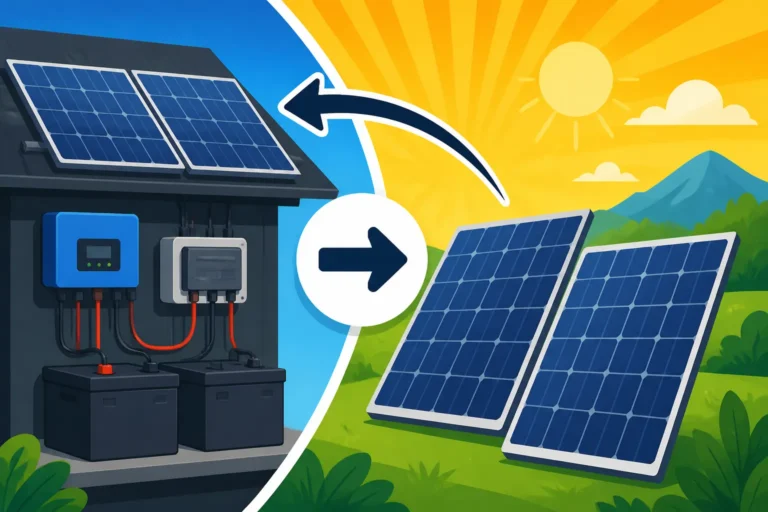
For roof-mounted systems, the primary concern is whether your roof can safely bear the additional weight of the solar panels and racking, especially when factoring in snow loads in colder climates or strong wind uplift forces. A typical solar panel weighs around 40-50 pounds, and a large array can add thousands of pounds to your roof structure. Building departments will often require an engineer's stamp or a structural analysis to verify that your existing roof can handle this. This is especially true for older homes or those with less robust framing. Even a simple How to Install Off-Grid Solar Panels might require an assessment of the roof's condition. The tilt and orientation of your panels also influence wind loading; steeper angles can catch more wind, demanding more robust mounting hardware and attachments. Inspectors will look closely at how the racking is attached to the rafters or trusses, ensuring proper flashing to prevent leaks, and confirming that the mounting system meets manufacturer specifications and local wind/snow load requirements.
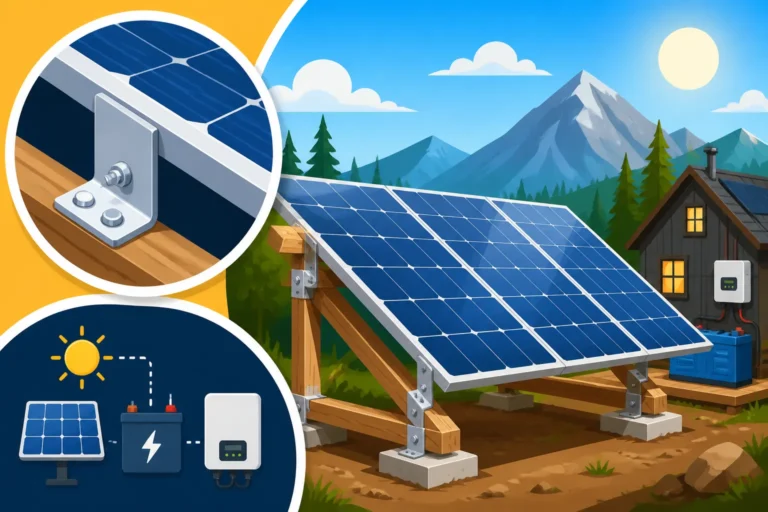
Ground-mounted systems, while freeing up roof space and often allowing for optimal tilt angles, come with their own set of structural requirements. Here, the focus shifts to the foundation and the racking structure itself. The foundation needs to be adequately designed to resist uplift from high winds and prevent settling. This could involve concrete piers, helical piles, or robust earth anchors, depending on soil conditions and local frost lines. For example, in a region prone to strong gusts, like the plains of Kansas, the foundation and racking must be engineered to withstand extreme wind loads. The racking system must also be robust enough to support the panels' weight, snow loads, and seismic forces if you're in an earthquake-prone area. Building departments will often require detailed structural drawings for ground mounts, including foundation plans and racking specifications, to ensure long-term stability and safety. These factors significantly influence the Cost of Off-Grid Solar Panels and overall installation.
Fire Setbacks and Access Paths
Fire safety is a major consideration for any structure, and solar panels introduce unique challenges that building codes address through specific setback requirements and access pathways. Firefighters need clear, unobstructed paths on roofs to ventilate buildings, create fire breaks, and safely operate. Solar panels can hinder these operations if not installed with proper clearances.
The specifics of fire setbacks vary by jurisdiction, but they generally require clear pathways around the perimeter of the roof, and sometimes between rows of panels. For example, many codes mandate a minimum of a 3-foot clear pathway around the edges of a roof, and often a 1-foot clear space between the array and the ridge. These clearances allow firefighters to walk safely, deploy ladders, and chop through the roof if necessary without damaging or being hindered by solar equipment. The goal is to ensure emergency responders can access and mitigate fire hazards effectively without facing additional risks from your solar installation.
Beyond roof access, codes might also dictate general accessibility to the solar equipment itself. This means ensuring that disconnect switches are readily accessible and clearly labeled for emergency personnel. If you've got a large battery bank or inverter setup, there might be requirements for clear pathways to those components within a building or enclosure, ensuring that maintenance or emergency crews can reach them quickly and safely. This is another reason why comprehensive labeling is so important, providing critical information when seconds count.
Foundation and Mounting System Requirements
The integrity of your off-grid solar system ultimately rests on its mounting. Whether on a roof or the ground, the foundation and mounting system must be robust and compliant with local building codes.
For roof mounts, the specific attachment method is critical. This typically involves flashing and lag bolts or other approved fasteners that penetrate the roof to connect directly to the structural framing (rafters or trusses). Codes specify the type and quantity of fasteners, the pull-out strength, and the waterproofing methods (e.g., specific flashing types, sealants) to prevent leaks. In areas with high wind, specific uplift ratings for racking components and attachments will be enforced. It's not enough to simply screw panels onto your roof; the entire assembly must be able to withstand local environmental forces for decades.
For ground mounts, the foundation type is the first critical consideration. Shallow concrete footings, deep concrete piers, or specialized ground screws are common. The choice depends on soil type, frost depth, and the load capacity required. In regions with expansive clay soils, for example, a deeper pier foundation might be necessary to prevent frost heave and differential settling. The structural components of the racking—such as the posts, crossbeams, and panel rails—must be appropriately sized and made from corrosion-resistant materials (like galvanized steel or aluminum) to withstand weather and maintain stability. Weld quality, bolt types, and connection methods are often specified to ensure the array won't collapse under snow or wind. When you're planning your installation, especially for large arrays, be prepared to provide detailed engineering drawings for your foundation and mounting system to your local building department. For those learning How to Mount Off-Grid Solar Panels on a property, understanding these requirements upfront can save significant rework.
The Permit Application Process: A Step-by-Step Walkthrough
Navigating the permit application process can feel like a bureaucratic maze, but breaking it down into manageable steps can make it far less daunting. It's often about patience, preparation, and knowing what to expect. While local procedures might vary, the general flow tends to be similar across most jurisdictions.
Gathering Documentation and System Diagrams
The first and most critical step is thorough preparation. Before you even think about submitting an application, you need to gather all the necessary documentation. This typically includes:
- Site Plan/Property Survey: A diagram showing your property boundaries, existing structures, and the proposed location of your solar array and associated equipment (e.g., battery shed, inverter location). This helps the planning department ensure your system complies with zoning setbacks and property lines.
- Detailed System Design: This is where you lay out your entire off-grid solar system. It needs to include:
- Solar Array Layout: How many panels, their wattage, and how they'll be arranged and mounted. This informs structural review.
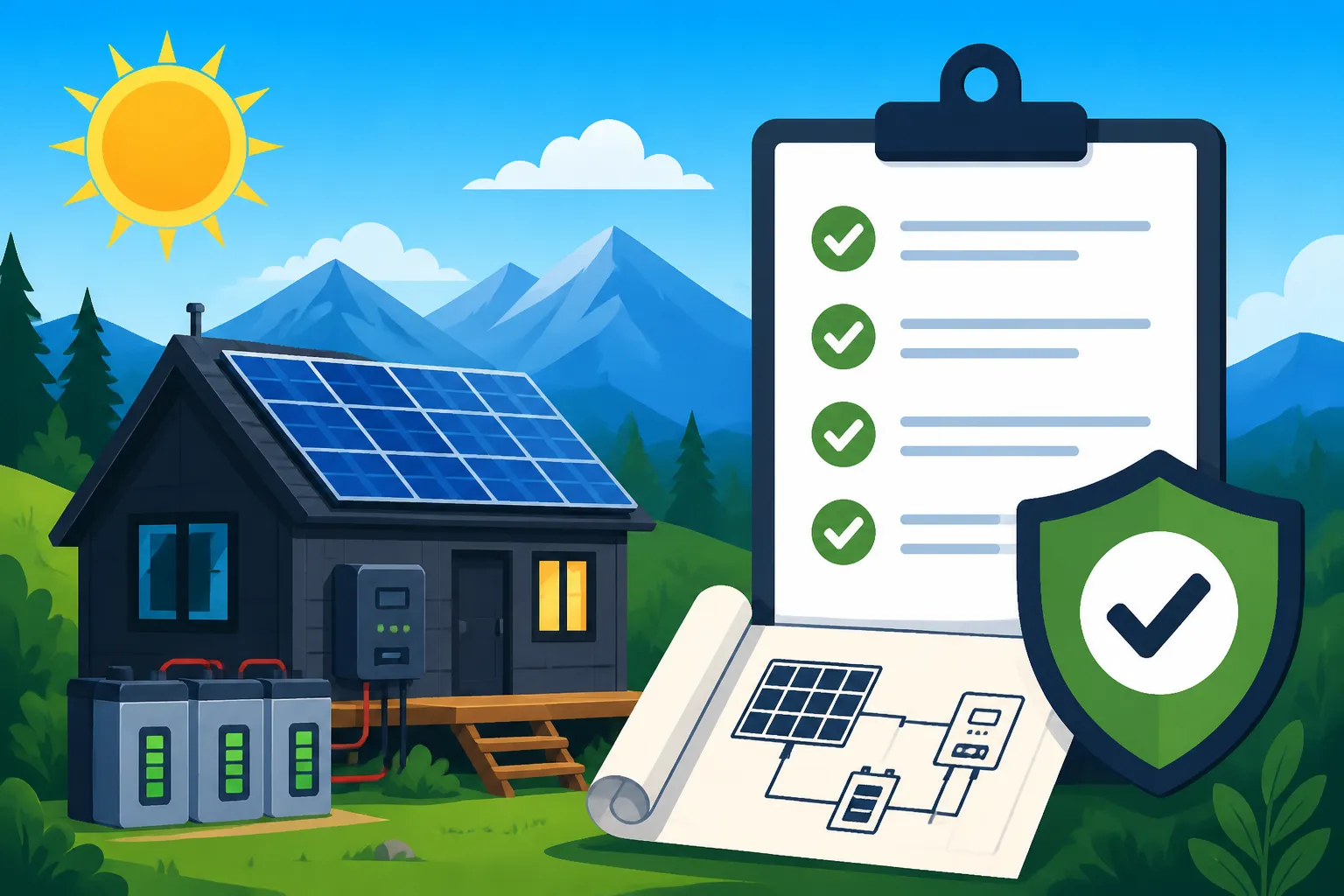
- Electrical One-Line Diagram: This is a simplified drawing showing the electrical connections from your panels, through your charge controller, to your battery bank, inverter, and finally to your loads or electrical panel. It details wire sizes, fuse/breaker ratings, disconnects, and grounding points. This is absolutely critical for the electrical permit.
- Equipment Specifications (Spec Sheets): Data sheets for all major components – solar panels, charge controller, batteries, inverter, and any significant safety devices. These sheets provide critical information like voltage, current ratings, certifications (e.g., UL listings), and dimensions that inspectors need to verify compliance.
- Structural Drawings (if applicable): For ground mounts or complex roof mounts, you might need engineered drawings detailing the foundation, racking, and attachment methods, especially in areas with specific wind, snow, or seismic requirements.
- Load Calculation: A detailed breakdown of all the appliances and devices your off-grid system will power, including their wattage and estimated daily run time. This demonstrates that your system is appropriately sized for your needs and helps justify your component choices. Our guide on How to Calculate Off-Grid Solar Needs can help here.
Many local building departments have checklists or specific requirements available on their websites. Download these, print them out, and use them as your guide. The more complete and accurate your initial submission, the less likely you are to face delays or requests for revisions. If you're using an off-grid solar kit, ensure you have all the manufacturer's diagrams and specifications ready.
Submitting Your Application and Dealing with Revisions
Once all your documentation is meticulously prepared, it's time to submit your application. This often involves filling out specific permit application forms provided by your local building department, paying applicable fees, and handing over your plans. In many modern jurisdictions, this can now be done online, but some rural counties might still require physical submissions.
After submission, your plans will undergo a review process. This typically involves different departments – electrical, building, planning, and sometimes fire – each checking for compliance with their specific codes. This review period can take anywhere from a few days to several weeks, depending on the complexity of your project and the backlog of the department. This is often where the real back-and-forth begins.
It's common to receive a list of "comments" or "revisions required" from the reviewers. Don't get discouraged! This is a normal part of the process. The comments might highlight areas where your plans are unclear, where you've missed a specific code requirement, or where more information is needed. For example, they might ask you to clarify wire sizing, add an emergency shut-off diagram, or provide a detail on how your conduit penetrates the roof. Take these comments seriously, address each one directly, and resubmit your revised plans. It helps to be polite, cooperative, and responsive. If you don't understand a comment, don't hesitate to call the reviewer for clarification. A little diplomacy can go a long way in expediting the process.
The Inspection Process
Once your plans are approved and your permit is issued, you can begin your installation. However, the permit isn't a "get out of jail free" card; it's a license to build, subject to inspection. Typically, you'll need at least two inspections:
- Rough-in Inspection: This usually occurs after the racking is installed, conduit runs are in place, and major wiring is pulled, but before anything is covered up (like walls or finished ceilings). The inspector wants to see the structural integrity of your mounts, the correct type and size of conduit, and the proper routing and sizing of your wires before they become inaccessible. They'll also check for proper grounding conductor installation. If you're building a battery enclosure or shed, they might inspect the framing and ventilation at this stage.
- Final Inspection: This is the big one, conducted after your entire off-grid solar system is fully installed and ready for operation. The inspector will verify that the system matches the approved plans, that all components are correctly installed, wired, and labeled, and that all safety devices (like disconnects, fuses, and breakers) are in place and operational. They'll check the functionality of emergency shutdowns and often perform continuity and voltage checks. They'll be looking for things like secure connections, appropriate cable management, and proper How to Wire an Off-Grid Solar System practices.
It’s your responsibility to schedule these inspections at the appropriate times. Make sure the site is accessible, all necessary equipment is installed, and your approved plans are on-site for the inspector to review. Passing the final inspection is usually the last hurdle before you can officially power up your off-grid home with confidence, knowing your system is safe and compliant.
DIY vs. Professional Installation and Code Compliance
The dream of building your own off-grid solar system is incredibly appealing, offering a deep sense of accomplishment and often significant cost savings. However, when it comes to permits and code compliance, the DIY route introduces additional layers of responsibility and potential complexity compared to hiring a professional. Understanding these differences can help you make an informed decision and ensure your system is both functional and legitimate. Our article on DIY vs Professional Off-Grid Solar Cost dives deeper into the financial aspects.
When to Hire an Electrician for Off-Grid Solar
While many aspects of an off-grid solar installation are within the capabilities of a dedicated DIYer, there are certain critical points where bringing in a licensed professional, particularly an electrician with solar experience, is not just recommended but often essential for compliance and safety.
First, if your local jurisdiction requires that all electrical work be performed or overseen by a licensed electrician, then the choice is made for you. This is common in many areas, regardless of whether you're grid-tied or off-grid. Even if not legally mandated, consider professional help for the main wiring connections to your home's existing electrical panel (if you have one) or the initial setup of your critical AC distribution. An electrician ensures that your inverter output is safely integrated into your home's wiring, that breaker sizing is correct, and that all circuits are properly protected. Mistakes here can lead to fires, electrocution, or equipment damage.
Second, if your system design is particularly complex – perhaps involving multiple inverters, a large battery bank, or integration with a backup generator – an electrician can provide invaluable expertise. They understand advanced wiring techniques, load balancing, and the nuances of grounding and bonding systems, which can be tricky for a novice. For example, knowing How to Size Wire and Cables correctly for different circuits and lengths is vital to prevent voltage drop and overheating, and an electrician has the training and tools to do this accurately. They can also ensure that your system meets the specific requirements of How to Size an Off-Grid Inverter to handle your surge loads. Even if you're doing most of the work, having an electrician review your plans and perform the final critical connections can provide peace of mind and significantly increase your chances of passing inspection.
Leveraging Off-Grid Solar Kits and Prefabricated Solutions
For DIYers, off-grid solar kits and prefabricated power solutions can be a game-changer when it comes to simplifying both installation and code compliance. Companies like Renogy, EcoFlow, and Bluetti offer comprehensive kits that include panels, charge controllers, inverters, and often batteries, all designed to work together seamlessly. Many of these kits come with detailed instructions and pre-engineered diagrams that already adhere to common electrical standards.
The primary benefit of using a well-designed kit is that the individual components are typically UL-listed and compatible, and the system architecture is often based on common NEC best practices. This means less guesswork for you when it comes to component sizing and wiring configurations. For example, a quality Renogy kit might come with a clear Off-Grid Solar Wiring Diagram Explained that you can directly submit with your permit application, saving you the headache of drafting one from scratch.
However, a kit isn't a magic bullet for permits. While the components and internal wiring of the kit might be pre-approved, you still need to ensure that how you install and integrate that kit into your property meets local building and electrical codes. This includes the physical mounting of panels, the running of conduit, the grounding of the system, and how the kit's output connects to your loads. You'll still need to provide a site plan, show how you're mounting the panels, and describe your grounding strategy. But starting with a coordinated, well-documented kit from a reputable brand can significantly streamline the planning and approval stages, making the compliance journey much smoother for the confident DIY enthusiast. Many such kits are readily available on platforms like Amazon, making them accessible to a wider audience.
Common Permitting and Code Mistakes to Avoid
Even with the best intentions, DIYers often fall into common traps when dealing with off-grid solar permits and codes. Being aware of these pitfalls can help you steer clear of them.
- Assuming No Permits Needed: This is by far the biggest and most dangerous mistake. As discussed, "off-grid" does not automatically mean "off-code." Always check with your local AHJ first, no matter how remote your property. Ignoring permits can lead to fines, forced removal of the system, or insurance claim denials.
- Incomplete or Incorrect Documentation: Submitting sloppy, illegible, or incomplete plans is a recipe for delay and frustration. Inspectors need clear, detailed diagrams and spec sheets. Make sure your off-grid solar system design is thoroughly documented. Double-check all wire sizes, fuse ratings, and component compatibility.
- Ignoring Grounding and Bonding: This is a critical safety component that is often overlooked or improperly installed by DIYers. Don't skimp on grounding. Ensure all metallic components are properly bonded and connected to an appropriate grounding electrode system. Refer to How to Ground an Off-Grid Solar System frequently.
- Improper Overcurrent Protection: Using the wrong size fuses or breakers, or placing them in incorrect locations, can lead to dangerous conditions. The NEC has strict rules for sizing overcurrent devices based on wire gauge and component ratings.
- Lack of Proper Disconnects and Labels: Forgetting to install accessible disconnect switches or failing to label them clearly is a common inspection failure. Emergency responders need to quickly identify and shut down power.
- Structural Oversights: Neglecting wind, snow, or seismic loads in your mounting design can lead to structural failure of your array, or even damage to your roof. Don't underestimate the forces of nature.
- Not Scheduling Inspections: Obtaining a permit doesn't mean you're done. You must schedule and pass all required inspections. Skipping these can void your permit and create future legal and insurance problems.
- Using Unlisted/Uncertified Equipment: While tempting to save money, using electrical components that are not UL-listed or certified by a recognized testing laboratory can be a red flag for inspectors and a safety risk. Stick to reputable brands and certified equipment.
Avoiding these common mistakes by taking the time to plan, prepare, and, if necessary, seek professional guidance will make your off-grid solar journey much safer and more compliant.
Real-World Scenarios and Special Cases
The broad principles of permits and codes apply everywhere, but the specifics can change dramatically depending on the type of structure you're trying to power. What works for a full-time residence in a suburban area won't necessarily be the same for a weekend RV or a hunting cabin tucked deep in the woods. Let's explore some real-world applications of these rules.
Off-Grid Solar for RVs, Vans, and Mobile Homes
For many, the appeal of off-grid solar begins with mobile living – RVs, vans, and campers. The good news is that for these vehicles, the permitting process is often considerably simpler, or even non-existent, compared to a stationary structure. Because RVs and vans are considered vehicles, not permanent buildings, they typically fall under different regulations.
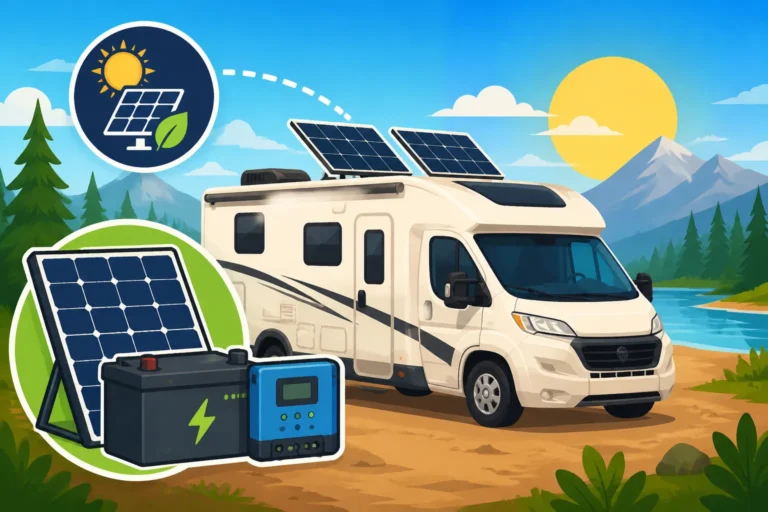
Most jurisdictions do not require permits for installing solar panels on the roof of an RV or van. The electrical systems in these vehicles are usually 12V or 24V DC, and they're designed for self-contained operation. The main concerns here are ensuring the installation is safe for occupants and doesn't interfere with the vehicle's operation. This means secure panel mounting that can withstand highway speeds and vibrations, proper waterproofing where cables penetrate the roof, and robust How to Wire a 12V Off-Grid System or 24V wiring. The NEC does have Article 551 for Recreational Vehicles, which outlines electrical safety for these setups, and it's always wise to follow its guidelines even if no permit is required.
However, there's a caveat: if your mobile home is permanently affixed to a foundation and no longer considered truly "mobile," it might then be subject to standard residential building and electrical codes, just like a stick-built house. This is often the case in mobile home parks where units are semi-permanently installed. Always check with the local county or park management if you're unsure about the status of your "mobile" home. For transient RV or van life, however, the focus shifts more to practical, robust installation and personal safety rather than bureaucratic permits. For more specific advice, check out How to Install Off-Grid Solar on a Rv.
Off-Grid Solar for Cabins, Tiny Homes, and Outbuildings
This is often where things get tricky and fall into a grey area. Many people building cabins or tiny homes are looking for simplicity and to avoid extensive regulatory oversight. The reality is, if a cabin or tiny home is intended for human habitation, even part-time, it will almost certainly be subject to building and electrical codes, especially if it's connected to a significant off-grid power system.
For a standalone cabin in a rural area, you might encounter more relaxed codes than in a city. Some very remote counties might not have strict enforcement for small, owner-built structures, but this is becoming less common. Generally, if your cabin has plumbing, heating, and full electrical amenities (even if off-grid), it's likely considered a dwelling and will need building and electrical permits. The structural integrity for snow loads, wind, and the safe routing of How to Wire an Off-Grid Solar System will be key inspection points. The battery bank enclosure will also need to meet ventilation and safety standards.
Tiny homes are a particularly interesting case. Depending on whether they are built on a permanent foundation or on a trailer chassis, the rules change. A tiny home on a permanent foundation is typically treated like any other small dwelling and will require full building and electrical permits. A tiny home on wheels, legally classified as an RV or travel trailer, may be exempt from traditional building codes but still needs to meet RVIA (Recreational Vehicle Industry Association) standards or similar state-level mobile structure codes, which include electrical safety provisions. Even if your tiny home is mobile, if you are providing a permanent solar array for it at a fixed location, the array itself might need permits.
Outbuildings like sheds, workshops, or barns are another common application for off-grid solar. For small, simple sheds only powering a few lights or tools, you might find permits aren't required, especially if the structure itself didn't need a building permit. However, if your shed becomes a dedicated battery/inverter housing for a larger system, or if your workshop has extensive electrical loads, then electrical and potentially building permits for the solar components will likely apply. The rule of thumb: if it looks like a permanent structure with significant power, assume permits are needed. Our guide on Off-Grid Solar Cost for a Workshop delves into these specifics.
Expanding Your Existing Off-Grid System
So you've got your basic off-grid system up and running, and now you want more power – maybe adding more panels, increasing battery capacity, or upgrading your inverter to handle a new appliance like an AC unit. Do you need new permits? In most cases, yes, you will.
Any significant modification or expansion to a permitted electrical system typically requires a new or amended permit. This is because increasing your solar array size changes the current and voltage of your DC circuits, potentially requiring thicker wires, larger fuses, or a new charge controller. Adding more batteries affects your battery bank's capacity and overall energy storage, which can have safety implications for charging and discharging. Upgrading your inverter to a larger size means dealing with higher AC loads and potentially heavier surge currents, necessitating checks on your AC wiring and circuit breakers.
The process for expansion usually involves submitting an updated set of plans to your local building department, detailing the proposed additions and changes. They will review these plans against current codes and issue an amended permit. You will then likely need a final inspection for the new components to ensure they're installed safely and correctly. Just like the initial installation, document everything, update your one-line diagrams, and provide spec sheets for any new equipment. This ensures that your entire system, both old and new components, remains compliant and safe. Thinking about Cost of Expanding an Off-Grid System should always include potential permit fees and the time investment for new approvals.
Disclaimer
The information provided in this article is for general informational purposes only and does not constitute professional advice. Building codes, electrical codes (like the NEC), and local permitting requirements are complex, subject to change, and vary significantly by location. Always consult with your local authority having jurisdiction (AHJ), a licensed electrician, and/or a qualified solar professional before designing, purchasing, or installing any off-grid solar power system. Failure to comply with applicable codes and obtain necessary permits can result in legal penalties, safety hazards, insurance claim denials, and significant financial costs. The authors and publishers are not responsible for any direct, indirect, or consequential loss or damage incurred as a result of relying on this information.