Best Server-Rack Battery for Off-Grid
Choosing the right battery storage for your off-grid solar setup can feel like navigating a maze, especially when you're moving beyond basic portable power and aiming for a more robust, long-term solution. Many folks find themselves frustrated by the clutter and complexity of traditional battery banks, leaving them wondering if there's a more integrated, efficient, and aesthetically pleasing way to store their hard-won solar energy. This guide is here to shed some light on the world of server-rack style batteries, explaining why they've become a game-changer for many off-gridders and what makes a particular unit stand out as the best fit for your independent power needs.
Why Consider Server-Rack Batteries for Your Off-Grid System
When you think about going off-grid, often the image that comes to mind is a shed or a basement filled with bulky lead-acid batteries, connected by thick cables, and taking up a significant amount of floor space. While effective, this traditional approach can be a bit of a headache. This is where server-rack batteries come into their own, offering a much more streamlined and sophisticated solution that addresses many of these common frustrations.
Space-Saving and Organized Design
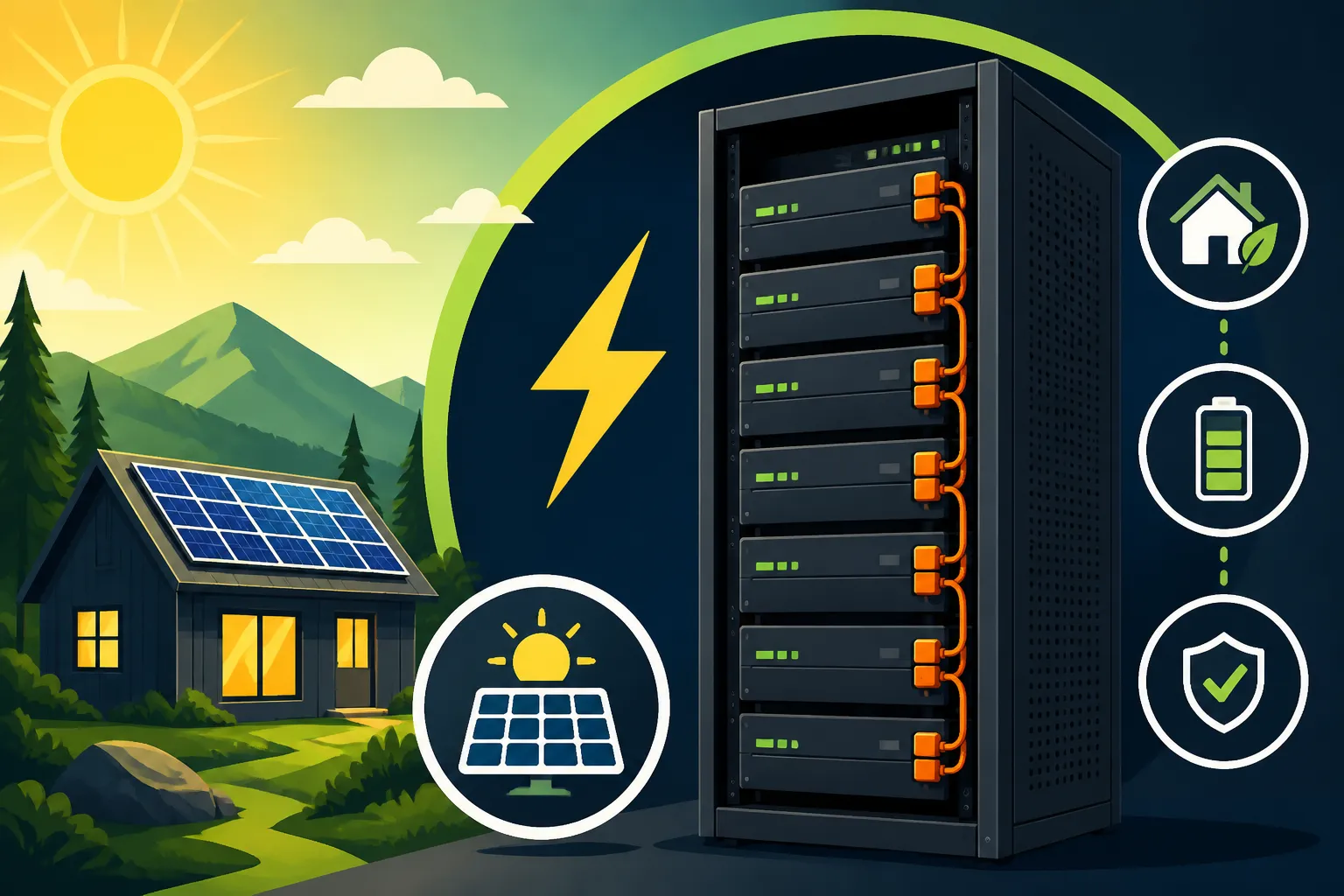
One of the most immediate benefits of server-rack style batteries is their physical design. Unlike individual deep-cycle batteries that demand custom shelving or careful stacking, these units are designed to slot neatly into standard 19-inch server racks. Think of it like a library bookshelf for your power: each battery slides in horizontally, presenting a clean, organized front panel. This compact form factor is a huge advantage, especially for smaller off-grid cabins, workshops, or even larger RVs where space is always at a premium. Instead of a scattered array of batteries, you get a single, consolidated power center that looks professional and takes up far less horizontal footprint. This organization also makes wiring simpler and neater, reducing potential trip hazards and making maintenance access much more straightforward.
Imagine trying to fit a bulky battery bank into a corner of your tiny home, only to have it look like a haphazard collection of boxes. A server-rack battery system, on the other hand, can be housed in a purpose-built rack that integrates seamlessly into a utility room or even a living space if designed well. This allows for a much cleaner installation, which, let's be honest, makes the whole off-grid experience feel a lot more refined and less like a science experiment gone wild.
Scalability and Modularity for Growing Needs
Another significant draw of server-rack batteries is their inherent scalability and modularity. Starting an off-grid system often involves estimates, and sometimes, those estimates fall short as your power demands grow or you add more appliances. With traditional battery banks, expanding capacity often means adding more batteries wherever you can fit them, which can complicate wiring and lead to imbalances if not managed perfectly.
Server-rack batteries, however, are designed for easy expansion. Most systems allow you to simply add another battery module into an empty slot in your existing rack, or to a new rack if you run out of vertical space. These units are typically designed to communicate with each other and your inverter/charge controller system seamlessly, balancing the load and charge cycles across all connected batteries. This "plug-and-play" capability (though you still have to physically wire them, of course) takes a lot of the guesswork and complexity out of future upgrades. You can start with a modest setup, say two 48V batteries, and then easily double or triple your capacity down the line without a complete system overhaul. This flexibility is a godsend for anyone anticipating evolving power needs, whether it's adding a new workshop tool or planning for a larger family in your off-grid homestead.
Advanced Battery Management System Features
The brains of any good battery system are its Battery Management System, or BMS. Server-rack batteries typically come equipped with highly advanced, integrated BMS units that offer a level of sophistication rarely found in individual bare batteries. These BMS units do a whole lot more than just prevent overcharging and over-discharging. They actively monitor individual cell voltages, temperatures, and currents, performing active cell balancing to ensure all cells within the battery pack are working in harmony. This meticulous management is critical for extending the overall lifespan of your expensive battery bank and ensuring optimal performance.
Beyond internal cell management, many server-rack BMS units offer advanced communication protocols like CANBUS or RS485. This allows the battery to "talk" directly to compatible inverters and charge controllers from brands like Victron, Sol-Ark, or Growatt. This intelligent communication means your entire solar system can operate more efficiently and safely. For instance, the inverter can request the battery to provide more power when demand spikes, or the charge controller can precisely tailor the charging profile based on the battery's real-time state of charge and temperature. This prevents common issues like overcharging, undercharging, or drawing too much current, all of which can significantly shorten battery life or even pose safety risks. Having a smart BMS is like having a dedicated technician constantly monitoring and optimizing your battery performance, giving you peace of mind that your power source is running reliably. This is a huge advantage over simpler setups where you might only get basic voltage readouts.
Key Considerations for Choosing Your Off-Grid Server-Rack Battery
Diving into the market for server-rack batteries can still feel a little overwhelming, even with all their clear advantages. To make the best decision for your unique off-grid lifestyle, you'll want to focus on a few critical factors that separate the good from the truly exceptional.
Battery Chemistry: The Power Within
For off-grid applications, especially when looking at server-rack style units, the undisputed champion of battery chemistry is Lithium Iron Phosphate (LiFePO4). While you might encounter some older or cheaper options using lead-acid derivatives, LiFePO4 batteries are superior in almost every measurable way for long-term off-grid power storage, and they dominate the server-rack format.
Here’s why LiFePO4 stands out:
- Cycle Life: LiFePO4 batteries boast an incredibly long cycle life, often rated for 3,000 to 8,000 cycles or more to 80% depth of discharge (DoD). This means you can regularly discharge them deeply without significantly shortening their lifespan, unlike lead-acid batteries which prefer shallower discharges. For a full-time off-grid home that cycles its batteries daily, this translates into decades of reliable service. Consider that a typical lead-acid battery might only last 500-1,000 cycles with moderate discharge. The difference in Lifetime Cost of an Off-Grid Solar System is substantial.
- Depth of Discharge (DoD): You can safely discharge LiFePO4 batteries much deeper, often to 80-100% of their rated capacity, without causing damage. This means a 100 Ah LiFePO4 battery gives you almost 100 Ah of usable energy, whereas a 100 Ah lead-acid battery might only give you 50 Ah before you risk damaging it. This effectively means you need less stated capacity with LiFePO4 to achieve the same usable power.
- Efficiency: They are highly efficient, typically converting 99% of the energy stored into usable power, with very little lost to heat during charging or discharging. This maximizes the energy harvested from your solar panels.
- Weight and Size: LiFePO4 batteries are significantly lighter and more compact than lead-acid alternatives, making installation and transportation easier. This is particularly noticeable in a server-rack format, where density is key.
- Safety: While all batteries require careful handling, LiFePOPO4 chemistry is known for its thermal stability and reduced risk of thermal runaway compared to other lithium-ion chemistries. They are generally considered safer for residential and off-grid use.
- Maintenance-Free: Unlike lead-acid batteries that require periodic watering and cleaning, LiFePO4 batteries are essentially maintenance-free, saving you time and effort.
When you're looking for the best server-rack battery, prioritizing LiFePO4 is a non-negotiable step toward a robust and reliable off-grid system. It directly impacts your Off-Grid Solar Payback Period Explained and overall satisfaction.
Capacity and Voltage: Sizing Your Powerhouse
Getting the capacity and voltage right for your server-rack battery bank is crucial. Most server-rack batteries are designed for 48V systems, and for good reason.
- 48V Systems: For medium to large off-grid systems powering a home, cabin, or even a robust RV setup, 48V is the sweet spot. Higher voltage systems mean lower amperage for the same power output (Power = Volts x Amps). Lower amperage translates to thinner, less expensive wiring, less heat loss, and greater efficiency throughout your system, from your solar charge controllers to your inverter. Running How Much Solar to Run A Well Pump or How Much Solar to Run An Air Conditioner becomes far more efficient at 48V than at 12V or 24V.
- Capacity (kWh or Ah): The capacity of your battery bank dictates how much energy you can store and how long you can run your appliances without sun. Server-rack batteries are typically rated in Amp-hours (Ah) at their nominal voltage, or in kilowatt-hours (kWh). A common 48V server-rack battery might be 100 Ah, which translates to 4.8 kWh (48V * 100Ah = 4800 Wh or 4.8 kWh). To determine how many you need, you'll need to conduct a thorough Off-Grid Solar Load Calculation Explained. This involves listing all your appliances, their wattage, and how many hours per day you'll run them to get your daily Watt-hour (Wh) or kilowatt-hour (kWh) consumption.
A good rule of thumb is to aim for at least 2-3 days of autonomy (power without solar input) to account for cloudy weather. If your daily usage is, say, 10 kWh, you'd want at least 20-30 kWh of usable battery capacity. Remember the high DoD of LiFePO4 when calculating usable capacity! For an in-depth understanding of how much battery capacity you need, check out our guide on How Many Batteries for an Off-Grid System.
Brand Reputation and Support
When you're investing a significant amount of money into your off-grid power system, the brand you choose matters immensely. A strong brand reputation usually signifies quality, reliability, and robust customer support. This is particularly important for server-rack batteries, as they are a long-term investment.
Look for brands with:
- Proven Track Record: Companies that have been in the off-grid or energy storage space for years, with many positive user reviews and documented successes.
- Excellent Customer Service: When you inevitably have questions during installation or troubleshooting, accessible and knowledgeable support is invaluable. Online forums and dedicated technical support lines are good indicators.
- Comprehensive Warranty: A good warranty (e.g., 5-10 years) shows the manufacturer stands behind their product. Understand what the warranty covers and what it doesn't.
- Integration with Other Components: Check if the battery brand is known to play well with popular off-grid inverters and charge controllers like those from Victron Energy, Sol-Ark, Growatt, or Schneider Electric. Compatibility ensures seamless communication and optimal system performance.
While finding deals on platforms like Amazon is tempting, ensure you're buying from reputable sellers and that the manufacturer's warranty will be honored. Sometimes, a slightly higher price from a specialist off-grid supplier might come with better pre-sale advice and after-sale support. Brands like Renogy have carved out a significant niche in the off-grid market, offering a range of solar equipment, including batteries, that are widely available and well-supported, making them a good option for many looking for reliable components.
Integration with Inverters and Charge Controllers
The magic of a high-performing off-grid system lies in how seamlessly its components communicate. This is especially true for server-rack batteries. Many premium server-rack battery systems offer advanced communication protocols (like CANBUS or RS485) that allow them to "talk" directly to your inverter and charge controller.
Why is this important?
- Optimized Charging: The battery's BMS can tell the charge controller its exact state of charge, temperature, and current limits. This allows the charge controller to adjust its charging profile (voltage and current) in real-time, preventing overcharging or undercharging, which are both detrimental to battery life.
- Load Management: The battery can communicate its available capacity to the inverter, allowing the inverter to make smarter decisions about power delivery, or even to trigger alerts if capacity is getting low. Some advanced inverters can even adjust load priorities or start a backup generator based on battery data.
- Enhanced Safety: Direct communication allows for rapid shutdown in case of critical faults (like over-temperature or over-current) to protect your entire system.
- Accurate Monitoring: With integrated communication, your system's monitoring panel or app can display highly accurate information about battery health, state of charge, and performance, giving you a clear picture of your power situation.
Before purchasing, always verify that your chosen server-rack battery is compatible with your specific inverter and charge controller models. Many brands list compatible inverters on their product pages, and forums are a great place to find real-world experiences. Investing in a battery that integrates well will reduce headaches during Off-Grid Solar Installation Guide and provide a more robust, efficient system overall.
Top Server-Rack Battery Contenders for Off-Grid Systems
When it comes to server-rack batteries for off-grid applications, a few key players and characteristics stand out. While I won't recommend a single "best" battery (as the ideal choice truly depends on your specific needs and budget), I can highlight the features and types of units that consistently receive high marks in the off-grid community.
What Makes a Server-Rack Battery a "Contender"?
The best server-rack batteries for off-grid use share several core qualities:
- Robust LiFePO4 Cells: As discussed, this chemistry is paramount for longevity, safety, and performance. Reputable brands use high-grade prismatic LiFePO4 cells from trusted manufacturers.
- Advanced Internal BMS: A strong contender will have a sophisticated BMS that not only manages cell voltage and temperature but also actively balances cells, provides comprehensive protection against over/under-voltage, over-current, and short circuits, and includes low-temperature charging cutoff for safety.
- Seamless Communication: The ability to communicate via CANBUS or RS485 with leading off-grid inverter brands (like Victron, Sol-Ark, Growatt, Schneider Electric, SMA) is essential for optimized system performance and reliable data monitoring.
- Scalability: Easy parallel connection for capacity expansion is a standard feature. Many units can be expanded up to 16 or more batteries in a single bank.
- Build Quality: A durable, well-ventilated metal enclosure that fits standard 19-inch racks, along with high-quality terminals and internal wiring, indicates a well-engineered product.
- Certifications: Look for safety certifications such as UL1973 (for battery safety) and UL9540 (for energy storage systems) if you are building a larger, more permanent installation that might require permits.
Popular Options and Brands
Many excellent manufacturers offer server-rack batteries that meet these criteria. Brands like EG4 (a popular choice for its balance of performance and cost), SOK, and many other specialized battery manufacturers have well-regarded offerings. You'll often find these units come in a 48V, 100Ah (4.8 kWh) or 200Ah (9.6 kWh) configuration, making them highly versatile for various system sizes.
For example, a Renogy 48V LiFePO4 server-rack battery, often available on Amazon or directly from Renogy's website, would typically feature a robust BMS, good communication protocols, and a strong warranty. These batteries are designed for easy integration into a larger Renogy ecosystem, but also play well with other major component brands. Their competitive pricing and wide availability make them accessible for many DIY off-gridders. Similarly, other brands offer units with similar specifications, often differing in subtle BMS features, cell quality, or warranty terms.
When comparing specific models, pay attention to:
- Maximum Charge/Discharge Current: Ensure it can handle the peak power demands of your inverter and the charging output of your solar array.
- Operating Temperature Range: Critical for those in extreme climates. Some batteries have built-in heating elements for cold-weather charging.
- Display/Monitoring: Does it have a built-in LCD for quick status checks, or does it rely solely on external monitoring systems?
Here's a simplified comparison table highlighting typical features you might find across different server-rack battery options:
| Feature | Typical Server-Rack LiFePO4 Battery | Considerations for Off-Grid |
|---|---|---|
| Chemistry | LiFePO4 (Lithium Iron Phosphate) | Essential for longevity, safety, and deep cycling. |
| Nominal Voltage | 48V | Ideal for efficiency in most off-grid homes/cabins. |
| Capacity (per unit) | 100Ah (4.8kWh) to 200Ah (9.6kWh) | Determine based on daily energy usage and desired days of autonomy. |
| Cycle Life (to 80% DoD) | 6,000+ cycles | Indicates long-term value; higher is better for daily use. |
| Max DoD | 100% (recommended 80-90%) | Maximize usable energy from rated capacity. |
| Integrated BMS | Yes, advanced with cell balancing | Crucial for safety, performance, and extending battery life. |
| Communication | CANBUS, RS485 | Ensures seamless interaction with compatible inverters/charge controllers. |
| Scalability | Parallel up to 16+ units | Allows for future capacity expansion. |
| Enclosure | 19-inch standard rack mount | Facilitates neat, organized installation. |
| Warranty | 5-10 years | Indicates manufacturer confidence in product durability. |
| Low-Temp Cutoff | Yes (often with optional heating) | Protects battery from damage when charging in freezing temperatures. |
When you're ready to make a purchase, remember to account for the Cost of an Off-Grid Solar Battery Bank in your overall budget. While the initial investment might seem higher than lead-acid, the long-term savings and superior performance of LiFePO4 server-rack batteries often make them the most cost-effective choice for Off-Grid Solar Return on Investment.
Installation and Maintenance Tips for Server-Rack Batteries
Once you've chosen your server-rack batteries, proper installation and ongoing care are key to maximizing their performance and lifespan. Even with their advanced features, a little human intervention goes a long way.
Rack Mounting and Ventilation
Mounting your server-rack batteries correctly isn't just about aesthetics; it's about safety and efficiency. These batteries are heavy, so a robust server rack designed for their weight capacity is essential.
- Stable Surface: The rack itself needs to be on a level, stable surface, securely fastened if necessary to prevent tipping.
- Airflow is King: Even though LiFePO4 batteries are thermally stable, they still generate some heat during charge and discharge cycles. Proper ventilation within the server rack is critical to prevent heat buildup, which can degrade battery performance and shorten its lifespan. Ensure there’s adequate space around each battery unit and that any rack doors or panels allow for good airflow. If your utility room is enclosed, consider adding an exhaust fan to remove warm air. Some advanced racks even have built-in cooling systems, but for most off-grid setups, passive ventilation with well-placed fans is usually sufficient. Overheating can lead to the BMS throttling performance or even shutting down the battery, so don't skimp on this aspect.
- Cable Management: Plan your wiring carefully. While server-rack batteries simplify connections, you'll still have thick battery cables running to your inverter. Use appropriate gauge wire for the current, keep cable runs as short as possible, and neatly organize them within the rack using cable ties or trays. Proper cable management helps prevent accidental disconnections, makes troubleshooting easier, and maintains a clean, professional appearance. When you How to Wire a 48V Off-Grid System, remember that neatness counts!
Monitoring and Longevity Practices
One of the greatest advantages of modern server-rack batteries with their integrated BMS is the detailed data they provide. Use this to your advantage to prolong their life and ensure reliable power.
- Regular Monitoring: Most sophisticated off-grid inverters and charge controllers offer remote monitoring apps or web interfaces. These tools, especially from brands like Victron, allow you to see your battery's state of charge, voltage, current, temperature, and even individual cell health in real-time. Make it a habit to check these parameters regularly. This proactive monitoring can alert you to potential issues (like an abnormal cell voltage or persistent over-temperature) before they become major problems. Early detection can save you from costly repairs or premature battery replacement.
- Optimal Charge/Discharge Habits: While LiFePO4 batteries are incredibly robust and tolerate deep discharges, consistently running them down to 0% can still introduce more stress over time. Aim to keep your depth of discharge between 20-90% most of the time. If you have enough solar, try to fully charge your batteries daily, especially during sunny periods. Avoid leaving them in a deeply discharged state for extended periods, as this can lead to sulfation in some battery types or simply put undue stress on the LiFePO4 cells over time.
- Software Updates: Just like your phone or computer, the BMS firmware on your server-rack batteries might receive updates. These updates can improve performance, enhance communication with other components, or fix bugs. Check with your battery manufacturer's website periodically for available firmware updates and follow their instructions carefully for installation. Many of the newer units from brands such as Renogy provide easy-to-use apps or PC interfaces for firmware updates.
- Environmental Protection: While the server-rack batteries are designed for indoor use, ensure the environment isn't subject to extreme temperatures or high humidity. If you're in a very cold climate, consider a battery with a built-in heating element to allow charging even when temperatures drop below freezing, as charging LiFePO4 in sub-zero conditions can damage the cells. Conversely, extreme heat can also degrade battery performance.
By taking these proactive steps in installation and maintenance, you'll ensure your server-rack battery system provides reliable, long-lasting power for your off-grid dreams. For more detailed information, check out our guide on How to Install an Off-Grid Battery Bank and Off-Grid Solar Maintenance Costs.
The Future of Off-Grid Power Storage
The landscape of off-grid solar is constantly evolving, and server-rack batteries are at the forefront of this innovation. As demand for self-sufficiency grows, we can expect to see these battery systems become even more efficient, more affordable, and even smarter. Advances in battery chemistry, coupled with more intelligent battery management systems, will likely lead to even longer lifespans, faster charging capabilities, and increased energy density, meaning more power in a smaller footprint.
The trend towards seamless integration with other smart home technologies and advanced energy management systems will also continue. Imagine your battery system communicating not just with your inverter, but with your smart thermostat to optimize heating and cooling based on available solar power, or with your electric vehicle charger to ensure your car is topped up when energy is plentiful. This level of interconnectedness will truly unlock the full potential of off-grid living, making it more comfortable, reliable, and sustainable than ever before. For anyone looking to build a robust and future-proof off-grid system, choosing a quality server-rack battery is a foundational step.
Disclaimer
The information provided in this article is for general informational purposes only and does not constitute professional advice. Off-grid solar system design and installation can be complex and involve electrical hazards. Always consult with a qualified electrician or solar professional and ensure all installations comply with local codes and regulations. Battery technologies and prices are subject to change.