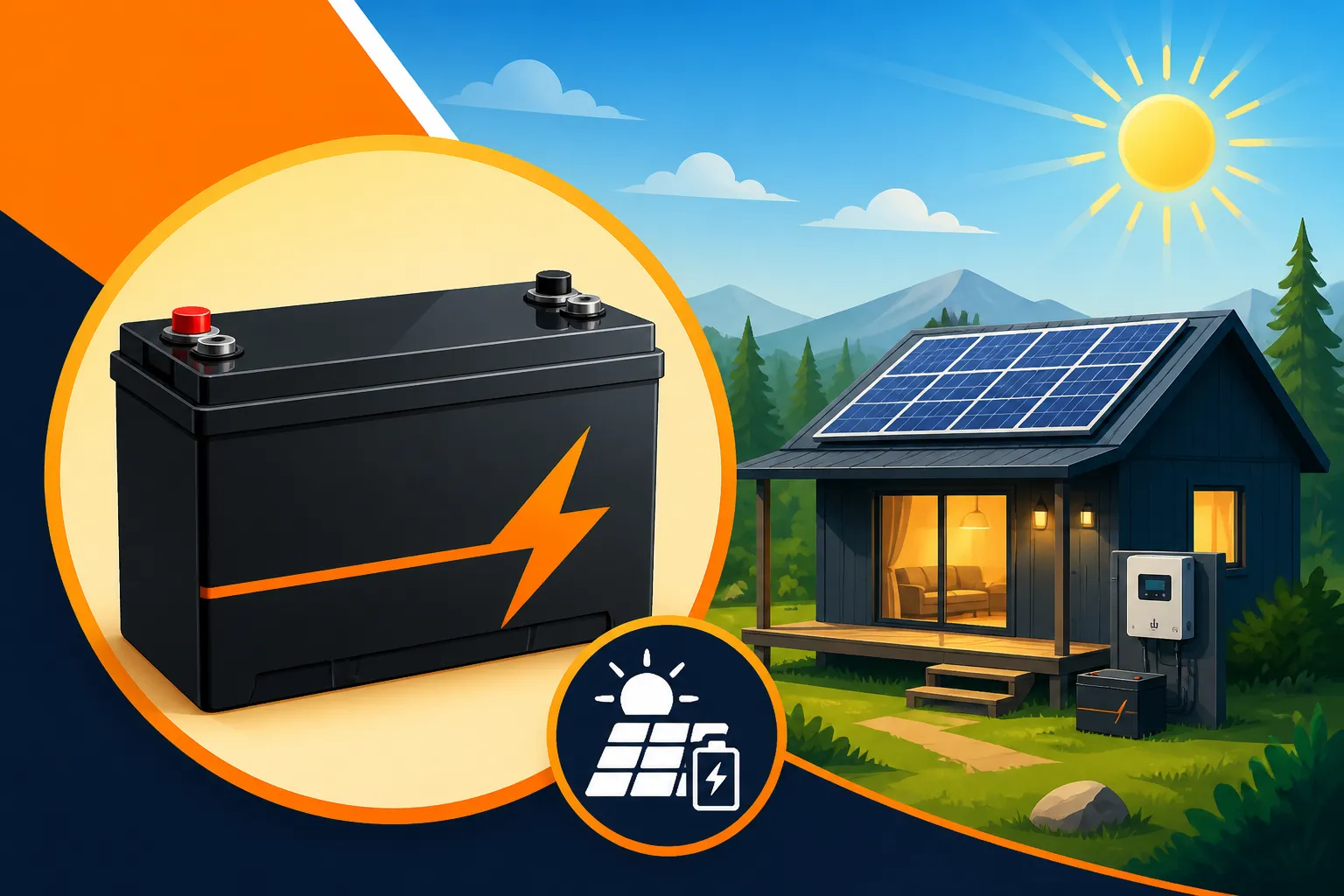
Ampere Time Battery Review for Off-Grid Solar
Stepping into the world of off-grid solar can feel like navigating a maze, especially when it comes to choosing the right batteries. With so many options out there, trying to figure out which brand offers the best bang for your buck without sacrificing reliability can be incredibly daunting. This guide is all about one particular contender: Ampere Time batteries. We'll dive deep into their features, performance, and how they stack up for real-world off-grid living, helping you decide if they're the right fit for your independent power setup.
Understanding Ampere Time Batteries for Off-Grid Power
Ampere Time has carved out a noticeable niche in the off-grid battery market, primarily by focusing on Lithium Iron Phosphate (LiFePO4) technology. For those of us living or planning to live off the grid, LiFePO4 batteries have become incredibly popular due to their long lifespan, efficiency, and consistent power delivery, which are significant upgrades over traditional lead-acid options. But even within the LiFePO4 world, there's a wide range of quality and price points. Ampere Time generally positions itself as a more accessible, value-oriented option for those looking to enjoy the benefits of lithium without breaking the bank.
The Rise of LiFePO4 Technology in Off-Grid Systems
Gone are the days when clunky lead-acid batteries were your only choice for storing solar energy. Those old workhorses, while reliable in their time, brought with them a host of challenges: they were heavy, required constant maintenance, had limited cycles, and couldn't be discharged deeply without damaging them. This meant you often needed twice the rated capacity to get usable power.
Enter LiFePO4. This battery chemistry has revolutionized off-grid power storage. Imagine batteries that are significantly lighter, last for thousands of cycles (often 10 years or more), can be discharged almost completely without harm, and require virtually no maintenance. That's the promise of LiFePO4, and brands like Ampere Time are making this technology more available to the average homesteader, RV enthusiast, or cabin owner. Their batteries are designed to provide stable voltage throughout their discharge cycle, meaning your appliances get consistent power, unlike lead-acid batteries that see a noticeable voltage drop as they deplete. If you're comparing your options, understanding the nuances of LiFePO4 vs Lead-Acid Battery Cost is a critical step in your decision-making process.
Core Features and Technology of Ampere Time Batteries
Ampere Time batteries, like many modern LiFePO4 offerings, come packed with features designed to enhance safety, performance, and longevity. A key component of these batteries is the integrated Battery Management System (BMS). This isn't just a fancy acronym; it's the brain of your battery, constantly monitoring crucial parameters like voltage, current, temperature, and individual cell balance.
This BMS protects the battery from common issues such as overcharging, over-discharging, over-current, and short-circuits. Some Ampere Time models even include low-temperature cut-off protection, which is absolutely vital for anyone using their system in colder climates. Charging LiFePO4 batteries below freezing can cause irreversible damage, so an automatic cut-off feature provides invaluable peace of mind. Many users purchase these batteries through online retailers like Amazon, often citing quick shipping and competitive pricing as major draws, especially for DIY projects. The construction usually involves prismatic cells, which are known for their good energy density and stability, encased in a durable housing that’s often resistant to light impact and vibration, making them suitable for mobile applications like RVs and vans.
Pros and Cons of Ampere Time Batteries for Off-Grid Use
Every piece of equipment in the off-grid world has its strengths and weaknesses, and Ampere Time batteries are no different. It's crucial to weigh these factors against your specific needs and budget to make an informed decision. For many, the appeal lies in getting robust LiFePO4 performance without the premium price tag of some other established brands.
Advantages of Choosing Ampere Time
One of the most significant advantages of Ampere Time batteries is their cost-effectiveness. When you look at the price per usable watt-hour over the battery's lifespan, they often present a much more appealing figure than comparable lead-acid batteries, and even some higher-tier lithium brands. This makes them particularly attractive for those who are building an off-grid system on a budget or for first-time DIYers. They offer a great entry point into the world of lithium power.
Another major plus is their inherent safety features. As mentioned, the integrated BMS handles a lot of the heavy lifting when it comes to protection. This means you don't have to worry as much about accidentally damaging your expensive battery bank through common operational errors. The long cycle life, typically 4,000 to 8,000 cycles at 80% Depth of Discharge (DOD), means these batteries can last a decade or more under typical usage, drastically reducing replacement frequency compared to lead-acid batteries. Their lightweight design is also a huge benefit, especially for mobile applications like an RV or van, where every pound matters. If you're planning your energy storage, you might also want to explore How Many Batteries for an Off-Grid System to ensure you get the right capacity for your setup.
Potential Drawbacks and Considerations
While Ampere Time offers excellent value, there are a few considerations to keep in mind. Some users, particularly those with very demanding or complex systems, occasionally report that the built-in BMS might have slightly lower current limits compared to industrial-grade or high-end batteries from brands like Victron or Battle Born. This isn't usually an issue for most residential or RV setups, but if you're planning on running multiple high-draw appliances simultaneously, it's something to investigate for the specific model you're considering. It's important to cross-reference the continuous discharge current against your peak load demands to ensure compatibility.
Another point for consideration is customer support and warranty claims. While many users have positive experiences, being a value-oriented brand, their customer service may not always match the instantaneous, highly personalized support offered by more premium brands. However, for many, the cost savings more than make up for this. Like all LiFePO4 batteries, they do require a compatible charger and charge controller that has a lithium profile, so you can't just drop them into an old lead-acid system without proper component matching. Make sure your existing or planned charge controller, perhaps a model from Renogy, supports LiFePO4 charging parameters.
Here's a quick comparison of some common Ampere Time LiFePO4 battery models:
| Model | Voltage | Capacity (Ah) | Usable Energy (Wh) | Max Discharge Current (A) | Low-Temp Cut-off | Approx. Price Range (USD) |
|---|---|---|---|---|---|---|
| Ampere Time 100Ah | 12V | 100 | 1280 | 100 | Yes | $250 – $400 |
| Ampere Time 200Ah | 12V | 200 | 2560 | 200 | Yes | $450 – $650 |
| Ampere Time 300Ah | 12V | 300 | 3840 | 200 | Yes | $700 – $900 |
| Ampere Time 400Ah | 12V | 400 | 5120 | 200 | Yes | $900 – $1200 |
| Ampere Time 200Ah (24V) | 24V | 200 | 5120 | 200 | Yes | $900 – $1200 |
Note: Prices are approximate and can vary based on retailer, sales, and specific features of the model.
Real-World Application and Compatibility
When you're building an off-grid system, every component needs to play nicely with the others. Batteries are the heart of your system, so their compatibility and how they fit into your overall design are paramount. Ampere Time batteries are generally designed with broad compatibility in mind, which is a big plus for DIY enthusiasts.
Integrating Ampere Time into Your Off-Grid System
One of the beauties of LiFePO4 batteries like Ampere Time is their flexibility. They can be wired in series and/or parallel to achieve higher voltages and capacities, though always check the manufacturer's specifications for maximum configurations. For instance, you could take two 12V 100Ah batteries and wire them in series to create a 24V 100Ah system, or wire them in parallel to create a 12V 200Ah system. This modularity allows you to scale your system as your power needs evolve. If you're building a larger system, you might be interested in a guide on Battery Bank Wiring Configurations to understand the best setup for your Ampere Time batteries.
They are generally compatible with most MPPT and PWM charge controllers that offer a LiFePO4 charging profile. This is crucial because charging parameters for lithium are different from lead-acid. You'll need to set the bulk/absorption voltage, float voltage, and possibly equalization settings correctly. Many popular charge controller brands, including Renogy and Victron, have these profiles built-in, making integration straightforward. For those looking to build out their systems, learning How to Choose an Off-Grid Charge Controller is a vital step. When it comes to inverters, Ampere Time batteries pair well with most pure sine wave inverters, which are essential for running sensitive electronics smoothly.
Installation and Maintenance Tips
Installing Ampere Time batteries typically involves securing them in a well-ventilated, protected location, connecting them to your charge controller and inverter, and ensuring proper fusing and circuit protection. The lighter weight of LiFePO4 batteries compared to lead-acid often makes installation less physically demanding. However, proper cable sizing and connections are still critical for safety and efficiency. Learning How to Install an Off-Grid Battery Bank properly can save you headaches down the line.
In terms of maintenance, this is where LiFePO4 truly shines. Unlike lead-acid batteries that require regular watering, terminal cleaning, and specific charging cycles to prevent sulfation, LiFePO4 batteries are virtually maintenance-free. Their internal BMS handles cell balancing, overcharge/discharge protection, and temperature management, greatly reducing the user's workload. The main "maintenance" you'll perform is simply monitoring their state of charge through a reliable battery monitor and ensuring they are kept within their recommended operating temperatures. This ease of care is a huge advantage for full-time off-gridders or those who prefer a "set it and forget it" approach.
Comparing Ampere Time to Other Battery Options
The off-grid battery market is competitive, and Ampere Time isn't the only player. It's always wise to see how a brand measures up against its peers, especially when making a significant investment in your power system. Understanding the different options can help clarify if Ampere Time is truly the right choice for your particular off-grid aspirations.
Ampere Time versus Premium LiFePO4 Brands
When you compare Ampere Time to premium LiFePO4 brands like Battle Born or Victron Energy, the most obvious difference is often the price point. Premium brands tend to come with a higher price tag, which can be a significant barrier for many. This higher cost often translates to slightly more robust construction, more advanced BMS features (like higher peak discharge capabilities or more sophisticated monitoring), and typically, a longer or more comprehensive warranty with perhaps more readily available, high-touch customer support. For example, Battle Born batteries are renowned for their ruggedness and excellent customer service.
However, for the average off-grid user, the performance difference in daily operation between Ampere Time and these premium brands might not be as pronounced as the price difference suggests. Ampere Time often delivers very similar core benefits: long cycle life, high depth of discharge, and maintenance-free operation. For many, Ampere Time hits the sweet spot of offering excellent performance at a more accessible price. It's often the go-to choice for individuals looking for Best Budget Off-Grid Solar Kit options. If your primary concern is overall system cost without sacrificing the fundamental advantages of lithium, Ampere Time provides a compelling argument.
Ampere Time versus Other Value-Oriented LiFePO4 Brands
The market for value-oriented LiFePO4 batteries has grown exponentially, with many brands competing in a similar price bracket to Ampere Time. Brands like Renogy, Chins, and LiTime also offer competitive LiFePO4 options, often available through platforms like Amazon. The differences among these brands can be subtle, sometimes boiling down to minor variations in BMS features (e.g., whether low-temperature cut-off is included as standard), case design, or customer service experience.
Many of these brands offer similar capacities and voltage options, such as 12V 100Ah or 24V 200Ah configurations. The choice often comes down to specific sales, availability, and user reviews regarding long-term reliability and support. It's always a good idea to read recent reviews and check the latest specifications. Some brands might offer slightly higher continuous discharge currents, while others might focus on more compact designs. Ultimately, Ampere Time consistently ranks as a strong contender in this segment, offering a solid balance of features, performance, and price that makes it a popular choice for many off-grid applications, from Off-Grid Solar Cost for a Rv to powering a small cabin.
Future Expansion and Scalability
One excellent characteristic of Ampere Time LiFePO4 batteries is their inherent scalability. Because they are modular, you can often start with a smaller battery bank to meet your initial needs and then add more batteries in parallel later to increase your total energy storage capacity. This is a common strategy for off-gridders, allowing them to spread out their initial investment or expand as their energy demands grow. When planning your system, considering How to Design an Expandable System from the outset can save you time and money down the road. Just ensure that any new batteries you add are of the same voltage and capacity, and ideally from the same batch, to maintain optimal performance and balance within the battery bank.
The Verdict: Is Ampere Time Right for Your Off-Grid Journey?
Deciding on the right battery for your off-grid solar setup is a big commitment, and Ampere Time has certainly made a name for itself as a viable option for many. For those venturing into off-grid living, whether in a tiny home, an RV, or a remote cabin, the balance of performance, safety, and cost is often the most critical factor. Ampere Time delivers on the promise of robust LiFePO4 technology without the hefty price tag that can deter many from making the switch to lithium.
If you're a DIY enthusiast or someone looking to maximize your budget while still getting the benefits of a long-lasting, efficient, and maintenance-free battery bank, Ampere Time batteries are absolutely worth serious consideration. They provide reliable power, integrate well with most modern charge controllers and inverters, and offer the essential protection features needed for safe operation. While they might not carry the same premium brand recognition or ultra-high specifications of some top-tier competitors, their real-world performance for the cost is hard to beat, making them a fantastic choice for many off-grid adventurers.
Disclaimer
The information provided in this article is for general informational purposes only and does not constitute professional advice. Off-grid solar system design and installation can be complex and dangerous if not performed correctly. Always consult with qualified professionals and adhere to local electrical codes and safety guidelines when planning or installing any solar power system. Battery performance can vary based on usage, environmental conditions, and manufacturing tolerances.