Growatt Off-Grid Inverter Review
Deciding on the heart of your off-grid solar system – the inverter – can feel like an overwhelming task. With so many options out there, each promising efficiency and reliability, it’s easy to get lost in a sea of specifications and technical jargon. Many of us just want to know if a particular brand truly delivers on its promises in the rough-and-tumble world of off-grid living, especially when it comes to a crucial piece of equipment like an inverter. This comprehensive guide will deep-dive into Growatt off-grid inverters, offering a realistic look at what they bring to your independent power setup.
What Makes Growatt Off-Grid Inverters Tick
Growatt has carved out a significant niche in the solar industry, known for producing a wide range of inverters, from grid-tied to hybrid and, of course, dedicated off-grid solutions. What really sets their off-grid offerings apart is often their integrated design, combining multiple essential components into one robust unit. This is a huge win for many off-gridders, especially those taking the DIY route.
Integrated Design and Functionality
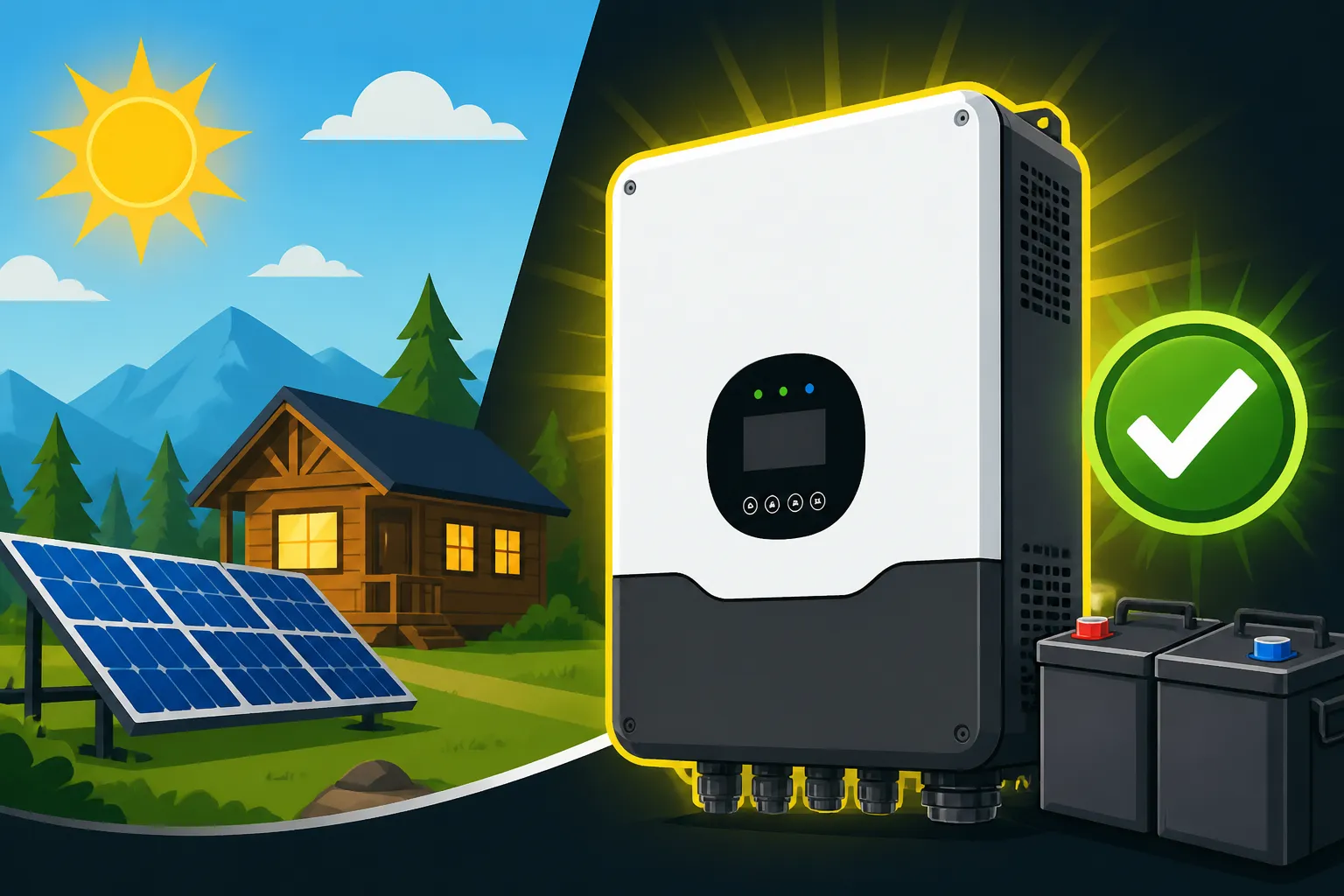
Many Growatt off-grid inverters aren't just inverters; they're powerhouse machines that typically integrate a pure sine wave inverter, a high-efficiency MPPT (Maximum Power Point Tracking) solar charge controller, and a battery charger all into a single enclosure. This "all-in-one" approach simplifies wiring, reduces clutter, and often makes the initial setup process far less daunting than trying to select, purchase, and connect individual components. Imagine trying to juggle an inverter, a separate charge controller, and a separate AC battery charger – it's a lot of connections and potential points of failure. Growatt streamlines this, making it much easier for folks to get their system up and running.
For example, models like the Growatt SPF series are designed precisely with this integration in mind. They intelligently manage power flow between your solar panels, battery bank, and AC loads. If your batteries are low, the built-in charge controller prioritizes charging them from the solar array. If the sun isn't shining, it seamlessly draws power from the batteries. And should you have a generator, the integrated battery charger can even top up your battery bank from that source. This kind of thoughtful design really caters to the dynamic and often unpredictable nature of living off the grid. If you're pondering how these integrated units stack up against separate components, you might want to look at a broader guide on Off-Grid Solar System Components Explained to get a clearer picture of each piece of the puzzle.
Reliability and Durability in Off-Grid Environments
When you're out in the wilderness, or even just tucked away on a remote homestead, your equipment needs to be tough. Growatt has a reputation for building units that are generally solid and reliable for their price point. They often feature robust housings designed to protect the internal electronics from dust and sometimes even moisture, which is a common concern in shed or cabin installations.
However, it's important to have realistic expectations. While Growatt inverters are generally well-built, no piece of electronics is invincible. The real test of durability comes with continuous, heavy-duty use in fluctuating temperatures and varying load demands. Many users report excellent long-term performance, particularly when the inverter is appropriately sized for the load and operating within its specified parameters. It's not uncommon to see these units perform admirably for years, especially when paired with a properly designed battery bank and solar array. Thinking about the overall system, understanding How to Size an Off-Grid Inverter correctly is paramount to ensuring its longevity and avoiding unnecessary strain.
User Interface and Remote Monitoring
One aspect that often gets overlooked until you're deep into off-grid living is how easy it is to interact with and monitor your system. Growatt inverters typically come with a clear, user-friendly LCD display right on the unit. This screen provides real-time data on battery voltage, solar input, load output, and error codes. This immediate feedback is incredibly helpful for troubleshooting or just keeping an eye on your power situation.
Beyond the physical display, many Growatt models offer options for remote monitoring. This often involves a Wi-Fi or GPRS module that connects to a cloud-based platform. Being able to check your system's performance from your phone or computer, even when you're away from your cabin or RV, is a massive convenience. You can see how much solar power you're generating, your battery's state of charge, and even historical data to help you understand your energy consumption patterns. This kind of smart monitoring helps you optimize your usage and proactively address any issues, giving you peace of mind that your off-grid power is doing its job.
A Closer Look at Popular Growatt Off-Grid Models
Growatt offers a range of off-grid inverter models, each designed to meet different power needs and system complexities. Understanding the differences between these can help you pinpoint the best fit for your unique setup, whether you're powering a small camper or a full-sized off-grid home.
The All-in-One Heroes for Various Applications
For many off-gridders, the appeal of an all-in-one inverter-charger-controller cannot be overstated. These units simplify the system design and installation process, making them very popular for cabins, RVs, and smaller residential setups.
The Growatt SPF series, like the SPF 3000TL LVM-ES and the SPF 5000 ES, are excellent examples of these versatile all-in-one solutions. The "ES" often denotes an integrated MPPT charge controller, which is a high-efficiency technology for maximizing power harvest from your solar panels.
- SPF 3000TL LVM-ES: This model, often seen in 24V or 48V configurations, is a popular choice for smaller cabins or medium-sized RVs. It provides 3000 watts of continuous power, which is usually enough to run essential appliances like a refrigerator, lights, water pump, and charge electronics. Its integrated 60-80A MPPT charge controller can handle a decent array of solar panels, and the automatic transfer switch allows for seamless transitions between battery power and a generator or shore power if available. Many folks find this unit to be a workhorse for their basic needs, offering a good balance of features and affordability.
- SPF 5000 ES: Stepping up in power, the 5000 ES is a 48V unit that can handle more substantial loads, making it suitable for larger tiny homes or off-grid workshops where you might need to run power tools, a mini-split AC unit, or multiple heavy-draw appliances simultaneously. With 5000 watts of continuous output, it offers significant headroom. Its larger MPPT charge controller (often 80-100A) can accommodate more solar panels, improving charging times and overall energy independence. The ability to parallel multiple 5000 ES units is also a game-changer for those who anticipate needing even more power down the line, allowing for easy expansion of your off-grid system. This flexibility is a key consideration when you're looking to How to Plan for Future Expansion of your power needs.
Here’s a quick comparison of some popular Growatt off-grid inverter features:
| Feature | Growatt SPF 3000TL LVM-ES | Growatt SPF 5000 ES | Growatt SPF 10000TL HVM |
|---|---|---|---|
| Continuous Power Output | 3000W | 5000W | 10000W |
| Peak Surge Power | ~6000W | ~10000W | ~20000W |
| System Voltage | 24V or 48V | 48V | 48V |
| Integrated Charge Controller | MPPT (60-80A) | MPPT (80-100A) | MPPT (2x100A) |
| Battery Type Compatibility | Lead-acid, LiFePO4 | Lead-acid, LiFePO4 | Lead-acid, LiFePO4 |
| AC Input Voltage Range | Wide range (e.g., 90-280 VAC) | Wide range (e.g., 90-280 VAC) | Wide range (e.g., 120-300 VAC) |
| Parallel Capability | Yes (typically up to 6 units) | Yes (typically up to 6 units) | Yes (typically up to 6 units) |
| Ideal Use Case | Small cabin, RV, tiny home | Larger tiny home, workshop | Full off-grid home, large shop |
(Note: Specifics can vary by exact model variant and region. Always check the manufacturer's datasheet.)
High-Power Solutions for Larger Demands
For those envisioning a full-fledged off-grid homestead or a substantial remote property, Growatt also offers higher-capacity inverters that can handle a much greater energy demand. Units like the SPF 10000TL HVM are designed for these heavy-duty applications. These typically come with dual MPPT charge controllers, meaning you can connect two separate strings of solar panels, which can be beneficial for managing different panel orientations or dealing with partial shading issues.
A 10,000-watt inverter is a serious piece of equipment, capable of running most standard household appliances, including multiple high-draw items like well pumps or even clothes dryers. When you consider the energy required for something like a well pump, which has a significant surge at startup, having an inverter with ample surge capacity, like those in the larger Growatt lineup, is critical. This is where guides like How to Handle Starting Watts vs Running Watts and How to Size for a Well Pump Surge become incredibly important in your planning. These higher-power Growatt units offer the robust performance needed to truly replace grid power in a larger residential setting.
The Good, The Bad, and The Realistic: Pros and Cons of Growatt
Like any piece of critical off-grid equipment, Growatt inverters come with their own set of advantages and potential drawbacks. It's vital to have a balanced perspective to make the most informed decision for your unique off-grid journey.
Advantages for the Off-Grid Homesteader
For many, Growatt offers compelling benefits that make them a strong contender in the off-grid market:
- Cost-Effectiveness: Generally, Growatt inverters provide a significant amount of power and features for a price that is often more budget-friendly than some premium brands. This makes off-grid independence more accessible for more people, reducing the initial financial barrier. When you're calculating the overall Off-Grid Solar Cost: Complete Breakdown, the inverter is a major component, so finding a reliable yet affordable option like Growatt can make a big difference. You can often find great deals on these units on platforms like Amazon or from specialized solar retailers.
- Integrated Solutions: As we discussed, the all-in-one nature of many Growatt models means less hassle with separate components, complex wiring, and compatibility issues. This translates to simpler installation and operation, which is particularly beneficial for those undertaking a DIY solar project. This integration also simplifies troubleshooting, as there are fewer individual boxes to diagnose.
- Ease of Installation: While any solar installation requires careful planning and adherence to safety protocols, the Growatt all-in-one units simplify the core electrical connections. For those delving into DIY Off-Grid Solar Installation Step by Step, having a central unit that combines inverter, charge controller, and battery charger functionality can significantly reduce the complexity of the wiring diagram.
- Good Performance for the Price: For a mid-range inverter, Growatt units typically deliver solid performance. Their pure sine wave output is clean and safe for all types of electronics, and their MPPT charge controllers are efficient at maximizing solar harvest. Many users report these inverters consistently doing their job without fuss, providing reliable power for daily off-grid living.
- Parallel Capability: The ability to easily parallel multiple units means your system can grow with your needs. If you start with a 5000 ES and later decide you need more power for a new workshop or a larger family, you can often add another identical unit to double your capacity, rather than having to scrap your entire inverter setup.
Potential Drawbacks and Considerations
No product is perfect, and Growatt inverters have a few areas where users have expressed concerns or where they might not be the best fit for every scenario:
- Customer Support and Documentation: While Growatt's product quality is generally good, some users have reported that their customer support can be less responsive or comprehensive than some premium brands, especially for technical troubleshooting. This can be a frustration if you run into an obscure issue. Similarly, documentation, while present, might sometimes lack the intricate detail a seasoned solar professional or a highly technical DIYer might desire.
- Learning Curve for Advanced Features: While the basic setup is straightforward, delving into advanced settings or specific programming parameters on some Growatt models can have a slight learning curve. This isn't unique to Growatt, as all sophisticated inverters require some understanding, but it's something to be aware of if you're entirely new to solar electronics.
- Specific Application Limitations: While Growatt excels in integrated solutions, some highly specialized or extremely large-scale off-grid systems might find the modularity and granular control offered by systems like those from Victron Energy to be more appealing. For instance, if you require very specific communications protocols or exceptionally robust monitoring for a complex industrial off-grid site, you might lean towards other brands. However, for the vast majority of residential and recreational off-grid applications, Growatt is more than sufficient.
- Fan Noise: Like many inverters, Growatt units often use internal fans for cooling, especially when under heavy load. While not excessively loud, this fan noise might be a consideration if the inverter is located in a living space rather than a dedicated utility room or shed.
Navigating the Purchase and Expectations
When considering a Growatt inverter, it's wise to read recent reviews, especially from those who have been using the specific model you're interested in for a while. Forums and online communities dedicated to off-grid living are invaluable resources for real-world feedback. When purchasing, reputable solar suppliers are always a good choice, but many individuals find competitive pricing and convenience when buying through large online marketplaces like Amazon. Just ensure you're buying from a verified seller and can easily access warranties if needed.
Remember, the goal is to find an inverter that aligns with your power needs, budget, and comfort level with installation and ongoing management. A good starting point would be to review guides like How to Choose an Off-Grid Inverter to understand the core decision-making factors.
Real-World Performance and Making Your Choice
It's one thing to read about specifications on paper, but how do Growatt inverters actually perform when you're relying on them day in and day out for your off-grid power? This is where the rubber meets the road, and real-world experiences truly shine a light on a product's value.
Common Setups and Performance
Growatt inverters are widely used across a diverse range of off-grid applications. You'll find them humming away in:
- Remote Cabins: Many cabin owners appreciate the all-in-one design, as it simplifies the electrical setup in often tight or remote spaces. A Growatt SPF 3000TL LVM-ES, for instance, can comfortably power LED lighting, a small refrigerator, a composting toilet fan, and charge devices, making weekend getaways or even seasonal living quite comfortable.
- RVs and Van Life: While space is often a premium in mobile setups, the integrated nature of Growatt units means less component footprint. They provide reliable power for travel, allowing adventurers to run microwaves, coffee makers, and even small air conditioners (depending on the model and battery bank). It’s crucial to match your inverter to your mobile needs; exploring a topic like Off-Grid Solar Cost for an RV can give you an idea of the scale required.
- Tiny Homes and Workshops: For those pursuing full-time independent living or setting up a robust workspace, larger units like the SPF 5000 ES or even paralleled systems are common. They reliably handle larger appliances, power tools, and sustained loads. Users often pair them with substantial lithium battery banks (like those from Battle Born or EG4) to ensure ample energy storage, even on cloudy days.
From a performance perspective, Growatt inverters generally prove to be efficient. The MPPT charge controllers are quite effective at extracting maximum power from solar panels, even during less-than-ideal sun conditions. The pure sine wave output is consistently clean, ensuring that sensitive electronics like laptops, medical devices (like CPAP machines), and modern refrigerators operate without issues or damage. Of course, consistent performance relies heavily on proper system sizing and good maintenance practices.
Compatibility with Other Components
One of the great things about the off-grid solar ecosystem today is the level of compatibility between different brands and components. Growatt inverters are designed to be quite flexible in this regard:
- Solar Panels: They are compatible with virtually any standard solar panel on the market, including popular options from brands like Renogy or Rich Solar. The MPPT charge controller's wide input voltage range allows for various panel string configurations (series or parallel), offering flexibility in how you design your solar array. Understanding How to Wire Solar Panels in Series versus parallel can help you optimize your solar input for the inverter's capabilities.
- Batteries: Growatt inverters are highly versatile when it comes to battery compatibility. They typically support both traditional lead-acid batteries (sealed AGM, flooded, or gel) and modern lithium iron phosphate (LiFePO4) batteries. Most models include customizable charging parameters, allowing you to fine-tune the voltage and current settings to perfectly match your chosen battery chemistry. This is a critical feature, as incorrect charging can severely impact battery lifespan. If you're weighing your options, delving into LiFePO4 vs Lead-Acid Battery Cost can help you decide which battery type is best for your setup.
- Generators: For those times when solar just isn't enough (think long stretches of cloudy weather or unexpectedly high loads), Growatt inverters seamlessly integrate with backup generators. The built-in battery charger can utilize AC power from a generator to rapidly recharge your battery bank, ensuring uninterrupted power. Many units also feature an automatic generator start signal, allowing your generator to kick on automatically when battery voltage drops to a certain level, providing true hands-off operation.
Is a Growatt Inverter Right for Your System?
Deciding if a Growatt inverter is the right choice for your off-grid adventure comes down to a few key factors:
- Your Budget: If you're looking for a cost-effective solution that doesn't compromise too much on quality or features, Growatt offers excellent value. It helps keep the overall How Much Does an Off-Grid Solar System Cost manageable.
- Your Technical Comfort Level: If you appreciate the simplicity of an all-in-one unit and want to reduce the complexity of wiring multiple components, a Growatt hybrid inverter is a fantastic choice.
- Your Power Needs: For small to medium-sized off-grid applications (cabins, RVs, tiny homes), Growatt's SPF series offers ample power and reliability. For larger homes, their higher-wattage or parallel-capable units can also be a strong contender. Always begin by calculating your daily energy usage and peak load requirements; a guide on Off-Grid Solar System Sizing Guide is a great place to start.
- Your Desire for Expandability: If you foresee your power needs growing in the future, the parallel capability of many Growatt inverters provides a clear upgrade path.
Ultimately, Growatt off-grid inverters have earned their place in many off-grid systems thanks to their integrated design, competitive pricing, and solid performance. While no brand is without its quirks, they offer a reliable and accessible pathway to energy independence for a wide range of off-gridders.
Disclaimer
This article is intended for informational purposes only and does not constitute professional electrical or solar engineering advice. Always consult with qualified professionals and adhere to local electrical codes and regulations when designing, installing, or modifying an off-grid solar system. Working with electricity can be dangerous, and improper installation can lead to serious injury or damage to property.