How to Choose an Off-Grid Inverter Charger
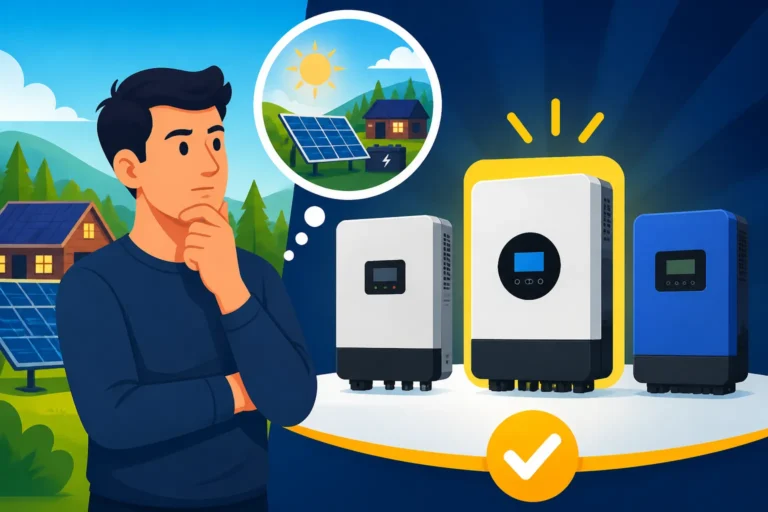
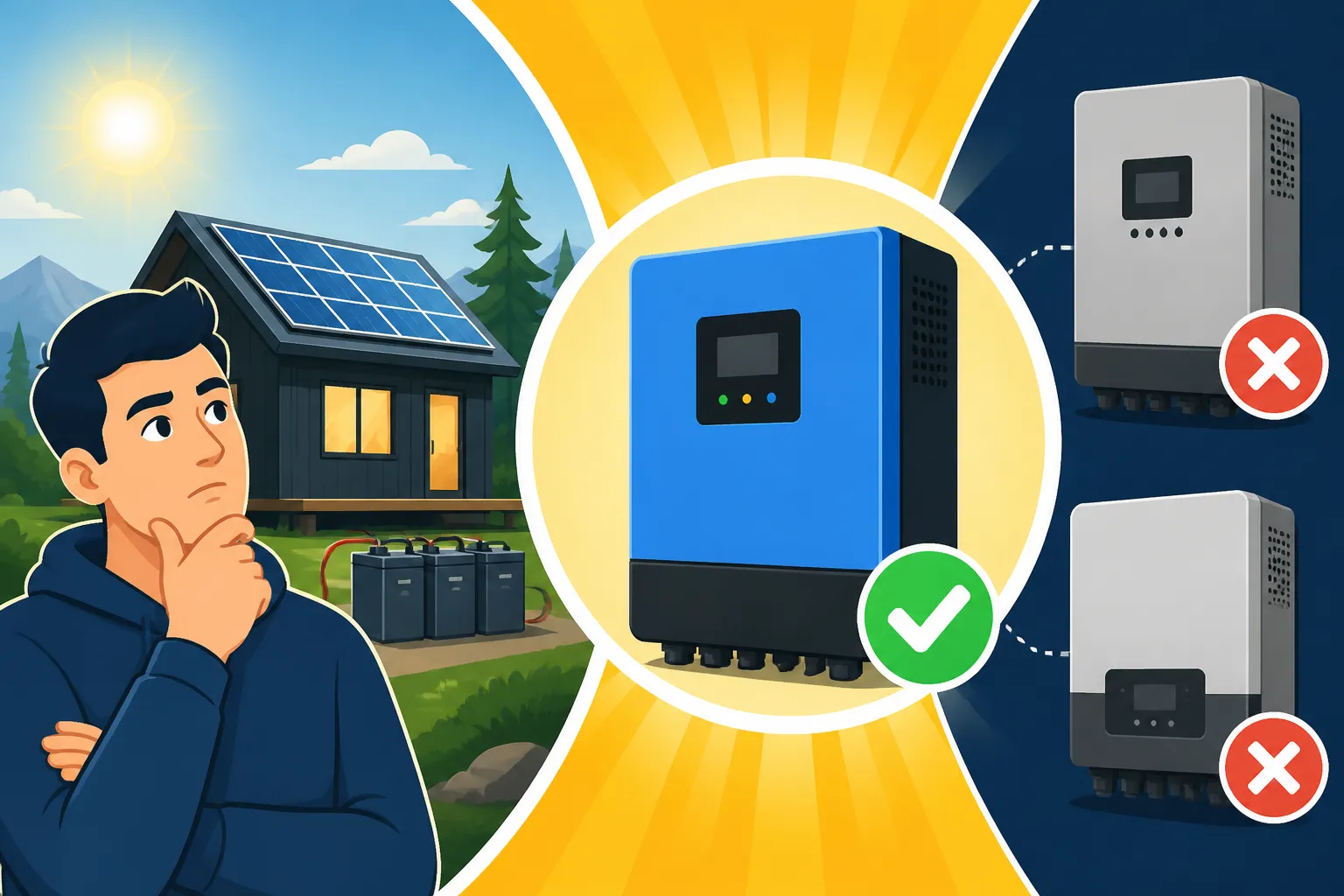
Stepping into the world of off-grid solar can feel like deciphering a secret code, especially when you get to the heart of your system: the inverter charger. This one component, often overlooked in its complexity, is absolutely critical for translating the sun's energy into usable power for your home, RV, or cabin. Many folks feel overwhelmed by the sheer number of specifications and features, leading to decision paralysis or, worse, an undersized system that causes endless headaches. This guide will walk you through everything you need to know to choose the right off-grid inverter charger, ensuring your journey to energy independence is smooth and reliable.
Understanding What an Inverter Charger Does
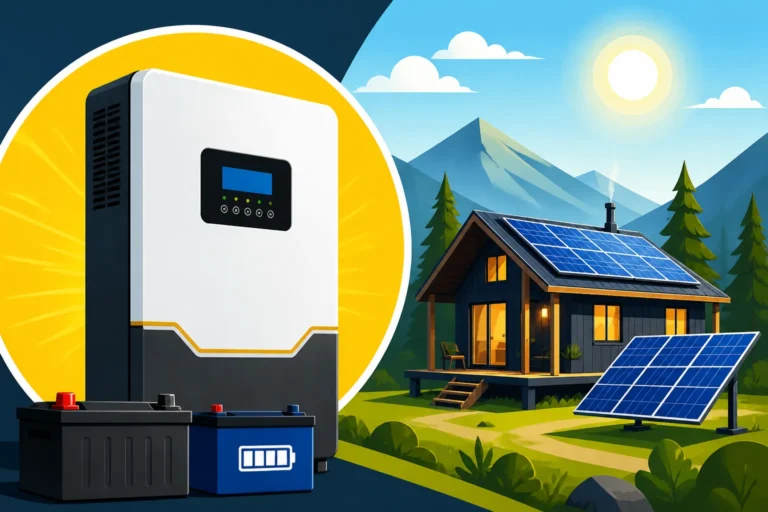
At its core, an inverter charger is a powerful combination of two essential pieces of equipment in one unit: an inverter and a battery charger. For anyone serious about off-grid living, this integrated approach often proves to be the most efficient, reliable, and user-friendly solution. It handles the crucial task of converting the direct current (DC) stored in your batteries into alternating current (AC) for your household appliances, while also managing battery charging from external AC sources like a generator or shore power.
The Core Functions: Inverting and Charging
Let's break down these two critical functions. First, the inverter aspect. Your solar panels produce DC electricity, which is then stored in your battery bank, also as DC. However, most common household appliances, from your refrigerator to your television, operate on AC electricity. The inverter's job is to take that DC power from your batteries and convert it into AC power at the correct voltage (typically 120V or 240V in North America) and frequency (60Hz). Without a capable inverter, all that stored solar energy would be useless for running your everyday comforts. It's the translator that makes your off-grid power comprehensible to your devices.
Secondly, the charger function. While your solar panels are the primary source for topping up your batteries, what happens on long stretches of cloudy weather, or when your power demands temporarily outstrip your solar production? This is where the charger comes in. An inverter charger contains a sophisticated multi-stage battery charger that can take AC power from an external source—like a gas-powered generator, a public utility connection if you're briefly grid-tied, or even an RV park's shore power—and convert it back into DC power to replenish your battery bank. This capability is incredibly important for maintaining system reliability and ensuring you always have backup charging options. It's not just a simple trickle charger; modern inverter chargers offer advanced charging profiles tailored to different battery types, optimizing their health and lifespan.
Why an Integrated Unit is Beneficial for Off-Grid
While you could technically buy a standalone inverter and a separate battery charger, an integrated inverter charger offers significant advantages for off-grid setups, which is why it's the preferred choice for many seasoned off-gridders. The most immediate benefit is simplicity and reduced wiring complexity. Instead of having two separate large devices that need their own connections to the battery bank, the AC loads, and external AC inputs, you have one streamlined unit. This means fewer cables, fewer points of failure, and often a much tidier installation. If you're tackling a DIY Off-Grid Solar Installation Step by Step, simplifying your wiring can save you a lot of headaches.
Beyond the physical setup, an integrated unit typically offers smarter communication and control. Since both the inverter and charger functions are housed within the same device, they can communicate seamlessly. This allows for more intelligent power management, such as prioritizing solar charging when available, automatically switching to generator power when batteries are low (often even initiating the generator start), and providing comprehensive system monitoring through a single interface. This level of integration makes managing your off-grid energy much more efficient and less hands-on. Imagine not having to manually start a generator every time your batteries dip below a certain threshold—the inverter charger can handle that for you, ensuring continuous power without intervention.
Key Specifications to Consider for Off-Grid Performance
When you start looking at specific inverter chargers, you'll quickly encounter a dizzying array of numbers and technical terms. Don't let that intimidate you! Focusing on a few core specifications will help you narrow down your choices and ensure the unit you pick is perfectly suited for your off-grid lifestyle. These aren't just arbitrary numbers; they directly impact how much power you can draw, what appliances you can run, and how efficiently your system will operate.
Power Output Continuous vs Surge
This is perhaps the most crucial specification. Every inverter charger will have a continuous power output rating, usually expressed in watts (W) or kilowatts (kW). This is the amount of power the inverter can supply constantly, day in and day out, without overheating or failing. If your combined running wattage of all the AC appliances you plan to use simultaneously exceeds this continuous rating, your inverter will likely trip or be damaged. For instance, if you're running a refrigerator (around 150-200W), a few lights (50W), a laptop (60W), and a TV (100W) all at once, your continuous load might be around 360-410W.
However, the continuous rating isn't the whole story. Many appliances, especially those with motors or compressors (like refrigerators, freezers, microwaves, or well pumps), require a significantly higher burst of power for a very short duration when they first start up. This is known as surge power. An inverter charger's surge rating indicates how much power it can deliver for a few seconds. If your inverter can't handle the surge from your refrigerator compressor, that fridge simply won't start, even if its running wattage is well within the continuous limit. For example, a refrigerator might run at 150W but surge to 1000-1500W for a split second. A reliable off-grid system needs an inverter charger with a robust surge capability. When you're calculating your off-grid load analysis, always factor in these surge requirements. You might find that you need a 3000W or 5000W inverter charger just to handle the startup of one or two key appliances, even if your average running load is much lower.
Input Voltage Battery Bank Compatibility
Off-grid solar systems typically operate at specific DC voltages: 12V, 24V, or 48V. Your inverter charger must be compatible with the voltage of your battery bank. You can't connect a 12V inverter charger to a 48V battery bank, for instance. Choosing between these voltages depends on the size and demands of your system. Smaller systems, like those for an RV or a tiny shed, might be perfectly fine with 12V. However, as your power needs grow, a higher system voltage becomes much more advantageous.
Why does voltage matter so much? Higher voltage systems (24V or especially 48V) carry current more efficiently, meaning less energy loss over the length of your wires. They also require thinner, less expensive wiring for the same amount of power, which can be a significant cost saving, especially for longer cable runs. For larger cabins or whole homes, 48V is almost always the recommended choice for efficiency and performance. It allows you to use larger inverters and manage more power with less stress on your components. If you're designing an off-grid solar system step by step, deciding on your system voltage early on is crucial, as it dictates many of your component choices, including the inverter charger. Understanding the pros and cons of 12V vs 24V vs 48V: Which to Choose is a foundational step.
Output Waveform Pure Sine Wave is King
When it comes to the quality of the AC power your inverter charger produces, the output waveform is paramount. There are generally two types: modified sine wave (or "modified square wave") and pure sine wave. For any modern off-grid system that plans to run anything more sophisticated than basic light bulbs, pure sine wave is absolutely essential.
A pure sine wave output replicates the smooth, consistent waveform of utility grid power. This is the ideal type of electricity for all electronic devices. Appliances designed to run on grid power will operate efficiently, quietly, and without stress on a pure sine wave inverter. This means your sensitive electronics like laptops, medical devices (like CPAP machines), modern refrigerators, induction cooktops, and audio/video equipment will function correctly and have their full lifespan.
A modified sine wave inverter, on the other hand, produces a stepped or choppy waveform that attempts to approximate a sine wave. While these inverters are often cheaper, they are problematic for many modern appliances. The "rough" power can cause motors to run hotter and less efficiently, create buzzing noises in audio equipment, and can even permanently damage sensitive electronics. Some devices simply won't work, while others might experience reduced efficiency or a shortened lifespan. Using a modified sine wave inverter can also void warranties on certain appliances. For the longevity of your electronics and the reliability of your off-grid system, investing in a pure sine wave inverter charger is non-negotiable.
Charging Capabilities Amperage and Battery Types
The battery charger component of your inverter charger also has important specifications. The charging amperage determines how quickly the unit can replenish your batteries from an AC source (like a generator). A higher amperage means faster charging, which can be particularly useful if you rely on a generator for backup and want to minimize its run time. For instance, a 100-amp charger will fill your battery bank much faster than a 30-amp charger, especially for large battery banks.
Crucially, the charger must also be capable of properly charging your specific battery type. Modern inverter chargers typically offer adjustable charging profiles for various battery chemistries, including flooded lead-acid, sealed AGM, gel, and the increasingly popular lithium iron phosphate (LiFePO4) batteries. Each type has specific voltage and current requirements for optimal charging and longevity. LiFePO4 batteries, for example, require different charging parameters than lead-acid batteries. The ability to program these specific profiles ensures your batteries are charged safely and efficiently, extending their life. Many advanced inverter chargers also offer features like temperature compensation, adjusting charge voltage based on battery temperature, which is vital for battery health in varying climates. When you're considering the LiFePO4 vs Lead-Acid Battery Cost and performance, remember that your inverter charger's charging capabilities play a direct role in getting the most out of your chosen batteries.
Advanced Features and Protections to Look For
Beyond the fundamental functions, modern off-grid inverter chargers come packed with advanced features and critical safety protections that can significantly enhance your system's reliability, ease of use, and overall safety. Ignoring these features could lead to inconvenient power outages or even dangerous electrical hazards.
Built-in Transfer Switch and Generator Integration
One of the standout features of an inverter charger for off-grid living is its built-in automatic transfer switch (ATS). This component allows for seamless switching between your inverter's power and an external AC source, such as a generator or grid connection (if you have a hybrid setup or are temporarily connected). When an external AC source is detected, the transfer switch automatically passes that power through to your AC loads and simultaneously activates the battery charger. When the external source is removed or the batteries are sufficiently charged, it smoothly switches back to inverter power. This means no manual flipping of switches, no interruption to your power supply, and a truly automated system.
Many advanced inverter chargers also offer sophisticated generator integration features. This often includes a generator auto-start function, which allows the inverter charger to automatically start a compatible generator when your battery bank reaches a low state of charge. Once the batteries are topped up to a pre-set level, the inverter charger then shuts the generator down. This not only ensures continuous power without you having to monitor battery levels constantly but also saves fuel and reduces generator wear by only running it when necessary. This level of automation is a game-changer for reliability, especially during extended periods of low solar production. If you plan to How to Add a Generator to Your Design to your off-grid setup, an inverter charger with these capabilities is a must-have.
Monitoring and Communication Features
In today's connected world, the ability to monitor and manage your off-grid system remotely is an invaluable convenience. Modern inverter chargers often come with robust monitoring and communication features. This can range from simple LCD display panels on the unit itself, showing basic system status, to sophisticated remote monitoring portals accessible via a dedicated panel, computer software, or even a smartphone app. Brands like Victron Energy are well-known for their comprehensive monitoring solutions, allowing you to see battery state of charge, power flow, charging history, and even adjust settings from anywhere with an internet connection.
These features aren't just for curiosity; they provide critical insights into your system's health and performance. You can track your daily energy production and consumption, identify potential issues before they become serious problems, and optimize your energy usage patterns. Many systems utilize communication protocols like Bluetooth or Wi-Fi to allow for local or remote access. Some high-end units can even integrate with other system components, like solar charge controllers and battery monitors, to provide a holistic view of your entire off-grid power plant. This data-driven approach allows you to truly understand and manage your independent power supply effectively.
Safety Protections Overload, Short Circuit, etc.
Safety should always be a top priority in any electrical system, and off-grid solar is no exception. A good inverter charger will come equipped with a suite of built-in safety protections designed to prevent damage to the unit, your batteries, and connected appliances, as well as to protect you from electrical hazards. These protections are non-negotiable and you should verify their presence in any unit you consider.
Key safety features include:
- Overload Protection: If too many appliances are drawing power simultaneously, exceeding the inverter's continuous rating, this protection will shut down the inverter to prevent overheating and damage.
- Short Circuit Protection: This immediately cuts power if a short circuit occurs in your AC wiring, preventing fires and component damage.
- Over-Temperature Protection: If the inverter charger starts to overheat due to heavy loads or inadequate ventilation, it will reduce output or shut down completely to prevent internal damage.
- High/Low DC Voltage Cutoffs: To protect your battery bank, the inverter charger will automatically disconnect loads if the battery voltage drops too low (preventing over-discharge, which is especially critical for lead-acid batteries) or rises too high (preventing overcharging). For instance, a 48V LiFePO4 battery bank might have a low voltage cutoff at 40V to preserve battery health.
- Reverse Polarity Protection: While good wiring practices should prevent this, this feature protects the unit and batteries if the positive and negative battery terminals are accidentally connected incorrectly.
- Ground Fault Protection: This protects against electrical shocks by detecting unintended current paths to ground and quickly interrupting the circuit.
These integrated protections provide peace of mind, knowing that your valuable equipment and, more importantly, your family, are safeguarded against common electrical faults and operational mishaps. Always prioritize inverter chargers with comprehensive safety features.
Sizing Your Inverter Charger Correctly
Choosing an inverter charger that's too small for your needs is a common and frustrating mistake in off-grid living. It leads to constant trips, unpowered appliances, and a general feeling of unreliability. On the other hand, grossly oversizing can lead to unnecessary costs and sometimes reduced efficiency. The key is to correctly size your inverter charger based on a thorough understanding of your actual power demands.
Calculating Your AC Load Requirements
The first and most critical step in sizing your inverter charger is to create a detailed list of every AC appliance you intend to power and calculate its individual power consumption. This isn't just a guess; it requires careful consideration. For each appliance, you need to identify two crucial figures:
- Running Wattage (Continuous Load): This is the power an appliance draws when it's actively operating. You can usually find this on the appliance's label (often labeled "Watts" or calculated by "Volts x Amps"). For example, a modern LED TV might draw 80 watts, a laptop 65 watts, or a small coffee maker 1000 watts.
- Surge Wattage (Starting Load): As discussed, appliances with motors or compressors (refrigerators, freezers, well pumps, air conditioners, microwaves, power tools) require a momentary burst of power to start up. This surge can be 2-7 times their running wattage. For example, a refrigerator that runs at 150 watts might surge to 1500 watts for a couple of seconds.
Once you have these figures for all your appliances, you need to determine your peak simultaneous load. This involves envisioning a worst-case scenario: what is the maximum amount of power you could conceivably need at any given moment, with all your high-demand appliances potentially starting or running simultaneously? You'll add up the running wattages of all appliances you expect to use at the same time, and then add the single largest surge wattage of any appliance that might start during that period.
For example, if your continuous load from lights, TV, and laptop is 500 watts, and your refrigerator (which surges to 1500 watts) might kick on during that time, your peak surge demand is 500W (running) + 1500W (largest surge) = 2000 watts. Your inverter charger must be able to handle this 2000-watt surge, even if its continuous rating is only slightly above your 500-watt running load. Neglecting this step is a prime reason why many off-grid systems experience issues. A detailed guide on How to Do an Off-Grid Load Analysis will walk you through this process in depth.
Matching to Your Battery Bank and Solar Array
Once you have your load calculations, you need to ensure your inverter charger is compatible with the rest of your system, particularly your battery bank and indirectly, your solar array.
First, the battery bank voltage compatibility, as mentioned before, is non-negotiable. If you have a 48V battery bank, you need a 48V inverter charger. This choice directly impacts the efficiency and capacity of your overall system. Higher voltage systems are generally preferred for larger power demands because they reduce current, allowing for smaller, more manageable wiring and less energy loss.
Second, consider the charging capacity of the inverter charger in relation to your battery bank size. While solar panels are your primary charging source, the built-in AC charger is your backup. If you have a very large battery bank (e.g., 1000 Ah at 48V), a small 30-amp charger will take a very long time to replenish it using a generator. A more robust 80-amp or 120-amp charger will significantly reduce generator run times. This also affects the size of the generator you'll need; a larger charger needs a larger generator to supply enough AC power. While the inverter charger itself doesn't directly connect to the solar array, its charging capability is part of the overall strategy for how you will replenish your batteries, which are ultimately filled by your solar panels. Making sure you know How Many Batteries for an Off-Grid System will help you dial in the charging needs of your inverter charger.
Future Expansion and Oversizing Considerations
It's common for off-grid power needs to grow over time. You might start with powering a basic cabin, then decide to add a larger well pump, an air conditioner, or more power tools for a workshop. When choosing your inverter charger, it's often a smart strategy to slightly oversize it from your initial calculated needs.
Why oversize?
- Accommodation for Future Growth: If you anticipate adding more appliances or expanding your living space, a slightly larger inverter charger means you won't have to replace it prematurely. It's often more cost-effective in the long run to buy a slightly bigger unit once than to buy a small one and then a larger one later.
- Increased Reliability: Running an inverter at its absolute maximum continuous capacity constantly can lead to increased wear and tear, and potentially shorten its lifespan. Having some headroom means the unit operates under less stress, runs cooler, and is generally more reliable.
- Better Surge Capacity: A larger inverter often comes with a higher surge rating, giving you more flexibility for starting unexpected high-demand appliances.
- System Efficiency: While oversizing too much can sometimes lead to slightly lower efficiency at very low loads, a modest amount of oversizing (e.g., 20-30% above your calculated peak continuous load) is a sensible approach.
Consider if the inverter charger you're looking at is stackable or can be paralleled. Some advanced units allow you to connect multiple inverter chargers together in parallel to increase your total power output. This offers fantastic flexibility for future expansion without having to replace your core equipment. It effectively allows you to How to Design an Expandable System that can grow with your needs, adding another unit rather than replacing the first.
Brands and Where to Buy
Navigating the landscape of off-grid solar equipment can feel like a maze, with countless brands and retailers vying for your attention. When it comes to inverter chargers, quality, reliability, and support are paramount. You're investing in the heart of your power system, so choosing wisely is essential.
Reputable Off-Grid Inverter Charger Brands
Over the years, certain brands have earned a stellar reputation in the off-grid solar community for their robust, reliable, and feature-rich inverter chargers. These brands are known for their engineering quality, longevity, and often, excellent customer support.
One of the top contenders in the high-end market is Victron Energy. Hailing from the Netherlands, Victron is renowned for its premium quality, exceptional reliability, and deep integration across its entire product line, from batteries and charge controllers to their powerful MultiPlus and Quattro inverter chargers. Their systems are highly configurable, offer extensive monitoring capabilities, and are a favorite among full-time off-gridders and marine applications where dependability is critical. Their MultiPlus-II series, for example, is incredibly popular for its versatility and robust performance.
Another established name is OutBack Power. Based in the USA, Outback has been a long-time leader in the off-grid space, known for its durable and heavy-duty products designed to withstand demanding environments. Their Radian and VFXR series inverter chargers are workhorses, favored by many for their reliability and ability to handle large loads. They often integrate well with other Outback components, creating a cohesive system.
For those looking for a strong blend of performance and value, or who are building smaller to mid-sized systems, brands like Renogy offer a variety of inverter chargers that cater to different needs. Renogy provides options that are particularly popular for RV and van life setups, as well as smaller cabin systems. Their inverter chargers often strike a good balance between features, performance, and affordability, making them a solid choice for many DIY enthusiasts entering the off-grid world. Other notable brands include Sol-Ark, which specializes in hybrid inverter chargers known for their all-in-one capabilities and ease of installation, and Schneider Electric (formerly Xantrex), which offers robust industrial-grade solutions often found in larger residential or commercial off-grid installations.
Choosing a reputable brand often means you're getting tested technology, a comprehensive warranty, and access to technical support and a community of users who can offer advice and troubleshooting tips.
Where to Purchase
The landscape of where to buy off-grid solar equipment has expanded considerably. You have several options, each with its own advantages:
- Specialized Solar Distributors: These are often the best source for high-end equipment from brands like Victron or Outback. Distributors typically have in-depth product knowledge, offer technical support, and sometimes provide system design assistance. They might also have better pricing for larger components or complete systems. Examples include altE Store, NAZ Solar Electric, and Wholesale Solar.
- Online Retailers: For convenience and competitive pricing, online giants like Amazon carry a wide range of inverter chargers, especially from brands like Renogy, AIMS Power, and other popular options for DIY setups. The benefit here is often quick shipping and a vast selection, plus customer reviews to help inform your decision. However, for highly specialized or very large units, a dedicated solar distributor might be a better bet for support and expertise.
- Direct from Manufacturer: Some brands allow you to purchase directly from their website. This ensures you're getting genuine products and direct warranty support.
- Local RV or Marine Supply Stores: If you're building a smaller system for an RV, van, or boat, these stores might carry basic inverter chargers suitable for mobile applications, often from brands like Go Power! or Xantrex Freedom.
When purchasing, always verify the seller's return policy, warranty process, and availability of technical support. For critical components like an inverter charger, having reliable support can be invaluable if you encounter any issues during installation or operation.
| Feature / System Voltage | 12V System | 24V System | 48V System |
|---|---|---|---|
| Typical Continuous Wattage Range | 300W – 2000W | 1000W – 4000W | 3000W – 15000W+ |
| Max Surge Capability | Moderate | Good | Excellent |
| Cable Sizing (for same wattage) | Largest (highest current) | Medium | Smallest (lowest current) |
| Recommended Battery Bank Size | Small to Medium (e.g., RV, small cabin) | Medium to Large (e.g., larger RV, small home) | Large (e.g., whole home, substantial loads) |
| Efficiency | Generally good for small loads | Better for medium loads | Best for large loads and long runs |
| Cost Implications | Initial low cost, but can be less efficient for larger loads; thicker cables needed | Balanced cost-efficiency | Higher initial component cost, but better efficiency, scalability, and long-term value for large systems |
| Common Application Examples | Van life, small campers, shed power, emergency backup | Mid-size RVs, small off-grid cabins, workshops | Full-time off-grid homes, large homesteads, heavy appliance use |
Disclaimer
Please remember that while this guide provides comprehensive information, off-grid solar system design and installation can be complex and potentially dangerous if not done correctly. Always consult with a qualified electrician or solar professional for specific advice tailored to your situation, and ensure all installations comply with local electrical codes and safety standards. The information provided herein is for educational purposes only and should not be considered professional advice.