How Much Solar to Run A Washing Machine
There’s nothing quite like the convenience of throwing a load of laundry into the washing machine, especially when you’re living off the grid. But if you’re trying to figure out how to power that seemingly simple act with solar energy, you've likely run into a wall of confusing numbers and calculations. Don’t fret, you're not alone! This guide is here to demystify the process and help you accurately determine how much solar power you'll need to keep your clothes clean and your off-grid system humming.
Understanding Your Washing Machine's Power Demands
Before we dive into watts and amp-hours, it's crucial to understand that not all washing machines are created equal when it comes to power consumption. What works for a tiny apartment-sized unit might not even budge a heavy-duty family machine. The first step is always to get a good handle on what your specific appliance actually needs.
The Difference Between Starting and Running Watts
This is where many folks get tripped up. Most appliances with motors, like a washing machine, have two distinct power draw figures: starting (or surge) watts and running watts.
- Running Watts: This is the continuous power your washing machine uses once it's already going, performing its wash, rinse, and spin cycles. This is the more stable power draw you'll see for most of the wash cycle.
- Starting Watts: This is a momentary, much higher burst of power required to start the motor. Think of it like a cold engine needing more fuel to get going. A washing machine motor, especially during the agitation and spin phases, can draw significantly more power for a few seconds when it first kicks on. If your inverter isn't sized to handle this surge, your system will simply shut down or trip.
For example, a washing machine might typically run at 500-800 watts, but its motor might demand a surge of 1,500-2,500 watts for a brief moment to get things moving. You absolutely need to account for this higher starting wattage when selecting your inverter, otherwise, you'll be left with error codes and unwashed clothes.
How to Find Your Washing Machine's Wattage
Pinpointing the exact wattage of your washing machine is the first detective job on your hands. There are a few reliable places to look:
- Appliance Nameplate or Sticker: Most appliances have a data sticker, often on the back, side, or near the door opening. This sticker usually lists the voltage (V), amperage (A), and sometimes the wattage (W) or horsepower (HP). If it only gives you volts and amps, you can multiply them (V x A = W) to get a rough wattage. Keep an eye out for both "rated power" (running watts) and "peak power" (starting watts).
- User Manual: The owner's manual for your washing machine will almost certainly contain a section detailing its electrical specifications. This is often the most accurate source, providing both continuous and surge wattage. If you don't have the physical manual, most manufacturers like LG, Samsung, or Whirlpool have them available for download on their websites.
- Energy Monitor: For the truly precise, an energy monitor (like a Kill-A-Watt meter, which you can often find on Amazon) can be plugged in between your appliance and the wall outlet. This device will show you real-time power consumption, including both running and peak surge watts. This is a fantastic way to see exactly what your machine is drawing in your specific usage scenario, factoring in cold vs. hot washes, different cycles, and the actual wear and tear on your particular machine.
Factoring in Cycle Length and Frequency
Once you know the wattage, you need to consider how long your washing machine runs and how often. This is crucial for calculating your total daily energy consumption in Watt-hours (Wh).
Let’s say your washing machine runs at an average of 700 watts (running watts) and a typical cycle lasts about 45 minutes (0.75 hours).
- Energy per cycle = 700 watts * 0.75 hours = 525 Watt-hours.
Now, think about how often you do laundry. Do you do one load every other day, or three loads on a single "laundry day" once a week?
- If you do one load every other day, your daily average might be 525 Wh / 2 = 262.5 Wh.
- If you do three loads once a week, that’s 3 * 525 Wh = 1575 Wh for that day, and 1575 Wh / 7 days = 225 Wh daily average.
These calculations are vital because they tell you how much energy your solar panels need to generate and your batteries need to store each day to keep up with your laundry habits. Don't forget that using hot water can significantly increase consumption, as the machine might have an internal heater. Most off-grid setups aim to minimize heated water usage by using external water heaters or washing with cold water only.
Calculating Your Solar Power Needs for a Washing Machine
Now that we understand the demands of your washing machine, let's translate that into actual solar system components. This isn't just about throwing a few panels on the roof; it's a careful balance of generation and storage. If you want to dive deeper into broader system needs, take a look at our guide on How Many Solar Panels for Off-Grid Living.
Step-by-Step Energy Consumption Calculation
Let's do a more robust example for calculating the energy consumption for a typical off-grid homestead running a washing machine.
-
List your washing machine's details:
- Running Watts: 800 W (example)
- Starting Watts (Surge): 2500 W (example)
- Cycle Length: 1 hour (example, this can vary wildly)
- Washes per week: 3 loads
- Considering hot water usage: For simplicity in off-grid, let's assume cold water or externally heated water, so we're focusing on the machine's motor and electronics. If your machine heats water, that's a huge additional load.
-
Calculate Watt-hours per cycle:
- Energy (Wh) per cycle = Running Watts x Cycle Length (hours)
- Energy (Wh) per cycle = 800 W x 1 hour = 800 Wh
-
Calculate total weekly energy consumption for laundry:
- Total Weekly Wh = Wh per cycle x Washes per week
- Total Weekly Wh = 800 Wh x 3 = 2400 Wh
-
Calculate average daily energy consumption for laundry:
- Average Daily Wh = Total Weekly Wh / 7 days
- Average Daily Wh = 2400 Wh / 7 ≈ 343 Wh per day
This 343 Wh per day is the average energy your solar system needs to generate to cover your washing machine usage. Remember, this is just for the washing machine; you'll need to do this for all your appliances to get your total daily energy usage. Our guide on How to Calculate Daily Energy Usage can help with that.
Determining Solar Panel Wattage Required
Now, let's figure out how many solar panels you’ll need to generate that 343 Wh per day (plus all your other loads!). This isn't a direct 1:1 calculation because solar panel output varies significantly.
-
Peak Sun Hours (PSH): This is the average number of hours per day your solar panels receive optimal sunlight. This varies greatly by your geographic location and the time of year. For example, in sunny Arizona, you might get 5-6 PSH in winter, while in a cloudy region of the Pacific Northwest, you might only get 2-3 PSH in winter. You can find PSH data for your location online from resources like the National Renewable Energy Laboratory (NREL). Let's use 4 PSH as a common average for calculation purposes.
-
System Inefficiencies: No solar system is 100% efficient. You lose power to wiring, the charge controller, the inverter, and temperature effects. A common efficiency factor is around 70-80%. Let's use 75% for this example.
-
Calculate required panel output:
- Daily energy needed (accounting for inefficiencies) = Average Daily Wh / System Efficiency
- Daily energy needed = 343 Wh / 0.75 ≈ 457 Wh
-
Calculate total solar panel wattage:
- Total Panel Watts = Daily energy needed / Peak Sun Hours
- Total Panel Watts = 457 Wh / 4 PSH ≈ 114 Watts
So, for just the washing machine, you'd need roughly 114 watts of solar panel capacity. If you have other appliances, you'd add this to their requirements. For a full off-grid system, you're likely looking at multiple panels. A typical 300-400W solar panel from brands like Renogy could easily cover this portion of your load, but you'll need many more for a whole house.
Sizing the Battery Bank for Storage
Batteries are the heart of your off-grid system, storing the energy generated by your panels for when the sun isn’t shining. Sizing your battery bank is critical to ensure you can run your washing machine (and everything else) even on cloudy days or at night.
-
Days of Autonomy (DoA): This refers to how many days your battery bank can power your home without any new solar input. For critical appliances like a well pump or refrigerator, you might want 3-5 days of autonomy, especially in areas with frequent cloudy weather. For a washing machine, you might aim for 1-2 days to ensure you don't miss laundry day due to a storm. Let's aim for 2 days of autonomy for our washing machine load.
-
Total energy needed for autonomy:
- Total Wh for Autonomy = Average Daily Wh (for washing machine) x Days of Autonomy
- Total Wh for Autonomy = 343 Wh x 2 days = 686 Wh
-
Battery Depth of Discharge (DoD): Batteries perform best and last longest if they aren't fully discharged.
- LiFePO4 (Lithium Iron Phosphate) batteries: Can typically be discharged to 80-90% or even 100% without significant damage, though 80% is common for longevity.
- Lead-acid (AGM, Gel, Flooded) batteries: Should generally not be discharged below 50% to maximize their lifespan.
-
Calculate Usable Battery Capacity:
- Required Usable Capacity (Wh) = Total Wh for Autonomy
- Required Raw Battery Capacity (Wh) = Required Usable Capacity / DoD
- If using LiFePO4 (80% DoD): 686 Wh / 0.80 ≈ 858 Wh
- If using Lead-Acid (50% DoD): 686 Wh / 0.50 ≈ 1372 Wh
-
Convert to Amp-hours (Ah): Battery capacity is often measured in Amp-hours (Ah) at a specific voltage (e.g., 12V, 24V, 48V). Let's assume a 12V system for a small setup, or 48V for a larger home.
- For a 12V LiFePO4 system: 858 Wh / 12V ≈ 71.5 Ah. So, a single 100Ah 12V LiFePO4 battery would be more than enough for just the washing machine's 2-day autonomy.
- For a 12V Lead-Acid system: 1372 Wh / 12V ≈ 114 Ah. A single 200Ah 12V lead-acid battery would be needed (since you can only use half its capacity).
Again, this is only for the washing machine. You’ll multiply your total daily energy consumption (for all appliances) by your desired days of autonomy and then divide by your chosen battery’s DoD to get the full battery bank size. To learn more about this, check out our guide on How Many Batteries for an Off-Grid System.
Key Components for Running a Washing Machine on Off-Grid Solar
Beyond panels and batteries, several other critical components work together to make your off-grid washing machine a reality. Each plays a vital role in converting raw solar energy into usable power for your home appliances.
Selecting the Right Inverter
The inverter is the unsung hero that converts the DC (Direct Current) electricity from your solar panels and batteries into AC (Alternating Current) electricity that your washing machine (and most other household appliances) uses.
- Pure Sine Wave vs. Modified Sine Wave: For a washing machine, you absolutely need a pure sine wave inverter. Modified sine wave inverters are cheaper, but they produce a "choppy" power wave that can damage sensitive electronics and motors over time, causing them to run less efficiently, hum, or even fail prematurely. A pure sine wave inverter ensures clean, consistent power that mimics grid electricity.
- Surge Capacity: This is the most crucial specification for running a washing machine. As discussed earlier, washing machine motors require a significant power surge to start. Your inverter must have a surge rating that comfortably exceeds your washing machine's starting watts. If your washing machine needs 2500W to start, you'll want an inverter with at least a 3000W continuous rating and a surge rating well above that, typically double the continuous rating for a few seconds. Brands like Victron Energy or Sol-Ark are popular for their robust inverters with excellent surge capabilities, but there are also more budget-friendly options from companies like Renogy that offer reliable pure sine wave inverters suitable for many off-grid applications.
- Voltage: Inverters come in various voltages (12V, 24V, 48V). The inverter's voltage needs to match your battery bank's voltage. For powering high-draw appliances like washing machines, a 24V or, even better, a 48V system is generally more efficient and can handle larger loads with smaller wire gauges compared to a 12V system.
Choosing Solar Panels for the Job
Your solar panels are the workhorses, converting sunlight into electricity. The total wattage of your solar array needs to be sufficient to recharge your battery bank daily, especially after a heavy load like running a washing machine.
- Monocrystalline vs. Polycrystalline: Most modern panels are monocrystalline, offering higher efficiency in smaller footprints, which is great if you have limited space. Polycrystalline panels are slightly less efficient but often more budget-friendly. Either type will work, but prioritize efficiency for space optimization.
- Panel Wattage: Panels typically range from 100W for smaller applications (like RVs) to over 400W for larger residential setups. As calculated, for just a washing machine, you might need around 114W, but for a full off-grid home, you'll easily be looking at multiple panels totaling several kilowatts.
- Placement and Tilt: Maximize your panel output by ensuring they are optimally angled toward the sun (usually south-facing in the Northern Hemisphere) and free from shading. This directly impacts your effective peak sun hours.
Battery Bank Considerations
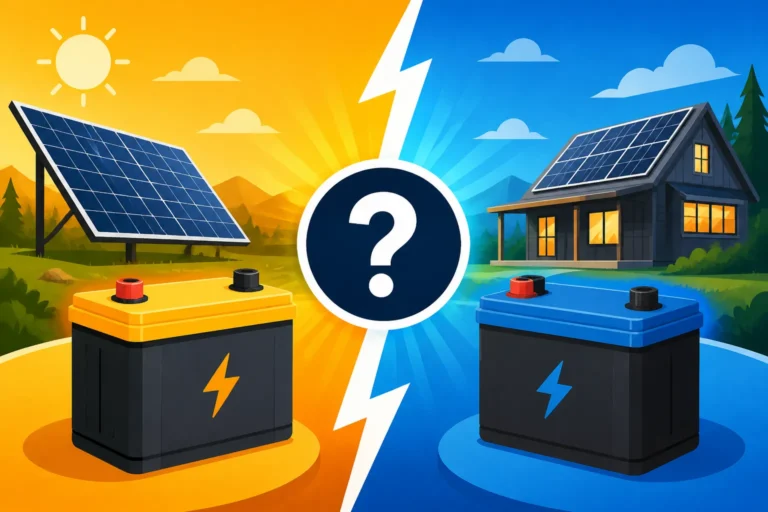
Your batteries store the energy for when the sun isn't shining. The choice of battery chemistry greatly impacts cost, performance, and longevity.
- LiFePO4 (Lithium Iron Phosphate): These are the gold standard for off-grid systems due to their high energy density, long cycle life (thousands of cycles), faster charging capabilities, and high depth of discharge (80-100%). While the upfront cost is higher, their longevity and performance often make them more cost-effective over the system's lifetime. They also perform better in colder temperatures compared to lead-acid, though extreme cold still requires protection. Brands like Battle Born and EG4 offer excellent LiFePO4 options.
- Lead-Acid (AGM, Gel, Flooded): These are a more traditional, budget-friendly option. However, they have a shorter cycle life, lower depth of discharge (typically 50% max), and require more careful maintenance (especially flooded batteries). They also don't charge as quickly or efficiently as lithium. For serious off-grid living, LiFePO4 is generally preferred if the budget allows.
When determining your Cost of an Off-Grid Solar Battery Bank, remember that capacity and chemistry are the main drivers.
Charge Controller Importance
The charge controller is the "brain" between your solar panels and your battery bank. Its job is to regulate the voltage and current coming from the panels to prevent overcharging and damage to your batteries.
- MPPT (Maximum Power Point Tracking) Controllers: These are highly efficient (95-99%) and are recommended for most off-grid systems, especially larger ones. They can convert excess voltage from the panels into additional current, optimizing charging, particularly in fluctuating light conditions or when panel voltage is higher than battery voltage.
- PWM (Pulse Width Modulation) Controllers: These are simpler and less expensive, but also less efficient (70-80%). They essentially regulate voltage by switching the current on and off rapidly. They are generally only suitable for smaller systems where the solar panel voltage closely matches the battery bank voltage.
Given the investment in panels and batteries, an MPPT charge controller is usually the wise choice for an off-grid system that will power a washing machine, ensuring you get the most out of your solar array. To understand the differences, take a look at our guide on MPPT vs PWM Charge Controllers.
Real-World Scenarios and Practical Tips
Knowing the numbers is one thing, but making it work in the unpredictable environment of off-grid living requires some practical adjustments and smart habits. Running a washing machine is a significant energy draw, and optimizing its use can make a huge difference in your system's performance and longevity.
Washing Machine Types and Their Impact on Solar Sizing
Not all washing machines are created equal in the energy efficiency department. Understanding the different types can help you make an informed decision if you're buying a new one, or adjust your usage if you're working with an existing machine.
- High-Efficiency (HE) Machines: These are your best friends for off-grid living. Front-loading and some newer top-loading HE machines use significantly less water and electricity than older, traditional agitator models. They typically spin clothes much faster, extracting more water, which also reduces drying time – another energy-saving bonus if you use an electric dryer (though line drying is ideal off-grid!). While the initial spin may have a brief surge, their overall running wattage and water usage are lower.
- Traditional Agitator Top-Loaders: These older models often use a lot more water and have less efficient motors, meaning higher power consumption per cycle. If you have one of these, you'll need to size your solar system considerably larger to accommodate its thirst for power.
- Hot Water Usage: This is probably the biggest factor influencing washing machine energy consumption. If your washing machine has an internal heater to warm the water, it can easily be the largest single load in your off-grid home, potentially drawing 1,000-3,000 watts continuously for a good portion of the cycle. Many off-gridders opt to use cold water only for laundry or rely on an external, efficient water heating source like a propane on-demand heater or solar thermal hot water system. Integrating a machine that relies on an external hot water hookup, rather than its own heater, is almost always the way to go for off-grid use.
Consider upgrading to an ENERGY STAR certified washing machine if you’re serious about minimizing your energy footprint and therefore your solar system size. This is one area where investing in efficiency pays dividends in reduced solar costs down the line.
Tips for Optimizing Washing Machine Use with Solar
Once you have your off-grid solar system installed, smart usage habits are key to keeping everything running smoothly.
- Run During Peak Sun Hours: This is the golden rule for high-draw appliances. Schedule your laundry days for sunny afternoons when your solar panels are producing their maximum output. This allows your panels to directly supply most of the power needed, rather than heavily drawing from your battery bank, which can stress batteries and reduce their lifespan. Imagine running your washing machine on a bright sunny day in Joshua Tree, California. Your panels are working overtime! This is the perfect time to run your high-demand appliances.
- Use Cold Water Washes: As mentioned, avoid internal water heaters at all costs. Modern detergents are highly effective in cold water. Using cold water can cut your washing machine’s energy consumption by 75-90%!
- Full Loads Only: Don't waste precious solar energy washing half-empty loads. Consolidate your laundry until you have enough for a full machine.
- Utilize Eco or Quick Wash Cycles: If your machine has these options, they are designed to minimize water and energy use. They might not be suitable for heavily soiled items, but for everyday laundry, they’re perfect.
- Consider a Portable Manual Washer for Small Loads: For small items or emergencies, a hand-crank or pedal-powered washing machine can save your solar system from a heavy load entirely. These can be surprisingly effective for light laundry.
What to Do on Cloudy Days
The reality of off-grid living is that the sun doesn’t always shine. Cloudy days, or even stretches of several days, are inevitable, and they can severely impact your solar production.
- Days of Autonomy: This is why we calculate days of autonomy for your battery bank. If you've sized your batteries for two days of autonomy, you should be able to run your washing machine (and other critical loads) for two full days without sun. If a third cloudy day hits, you might need to make some tough decisions about what appliances to run.
- Backup Generators: For many off-gridders, a backup generator (gasoline, propane, or diesel) is an indispensable component, especially for powering high-draw appliances like a washing machine during extended periods of low solar production. A generator can quickly recharge your battery bank and provide direct power to your inverter for high-demand tasks. Integrating a generator into your system is a smart way to ensure you never run out of power. You can read more about the Cost of Adding a Generator to Off-Grid Solar.
- Delay Laundry: Sometimes the simplest solution is to just wait for the sun to come back out. If it’s been raining for three days straight and your batteries are getting low, postpone your laundry until a sunny day allows your solar array to fully recharge your system. This is a common practice in off-grid life.
| Washing Machine Type | Approx. Running Watts (Cold Wash) | Approx. Starting/Surge Watts | Daily Wh (1 load/day) | Solar Panels Needed (1 load/day, 4 PSH) | Battery Ah (12V, 2 days autonomy, 80% DoD) |
|---|---|---|---|---|---|
| High-Efficiency Front Loader | 300-500 W (for 45-60 min) | 1500-2000 W | 225-375 Wh | 56-94 W | 38-63 Ah |
| High-Efficiency Top Loader | 400-600 W (for 45-60 min) | 1800-2200 W | 300-450 Wh | 75-113 W | 50-75 Ah |
| Traditional Agitator Top Loader | 600-900 W (for 60-75 min) | 2000-3000 W | 600-1125 Wh | 150-281 W | 100-188 Ah |
| With Internal Water Heater (Hot Wash) | Add 1000-3000 W (for 30-45 min) | (No significant additional surge) | Add 500-2250 Wh | Add 125-563 W | Add 84-375 Ah |
Note: All figures are approximations and can vary greatly by model, age, and specific cycle. Always check your appliance's label. Calculations assume 75% system efficiency and cold water wash unless specified. PSH = Peak Sun Hours, DoD = Depth of Discharge.
Going off-grid requires careful planning and a realistic understanding of your energy needs. While powering a washing machine might seem daunting, by diligently calculating its energy consumption, correctly sizing your components, and adopting smart usage habits, you can enjoy the convenience of clean clothes no matter where you are. Remember to consider expanding your system down the line; our article on the Cost of Expanding an Off-Grid System can provide valuable insights. Also, getting into the nitty-gritty of How to Size an Off-Grid Inverter and How Many Watts of Solar You Need are essential steps for any aspiring off-gridder.
Always keep safety in mind when working with electrical systems. For a detailed overview of what goes into an off-grid setup, you might find our guide on Off-Grid Solar System Components Explained helpful. And if you're looking to run specific high-demand appliances, we have articles like How Much Solar to Run A Refrigerator and How Much Solar to Run An Air Conditioner that can offer more tailored advice. Finally, don't forget to consider all the pieces of the puzzle for a complete build, including what you need to know about How to Wire an Off-Grid Solar System.
Disclaimer
The information provided in this guide is for general informational purposes only and does not constitute professional advice. Off-grid solar system design and installation can be complex and involve significant electrical hazards. Always consult with a qualified solar professional or licensed electrician before undertaking any off-grid solar project. Incorrect installation can lead to property damage, injury, or death. The author and publisher are not responsible for any actions taken based on the information presented herein.